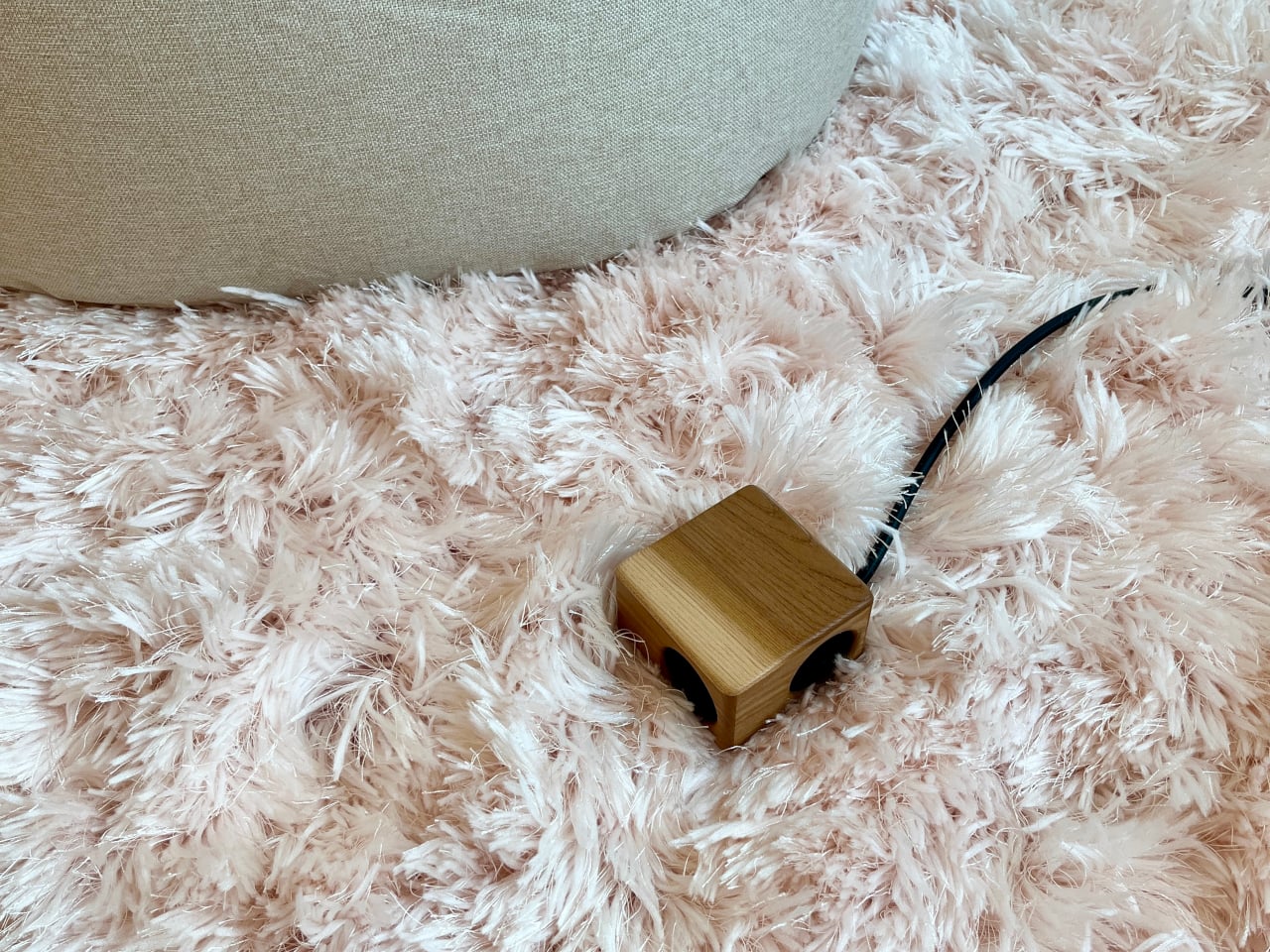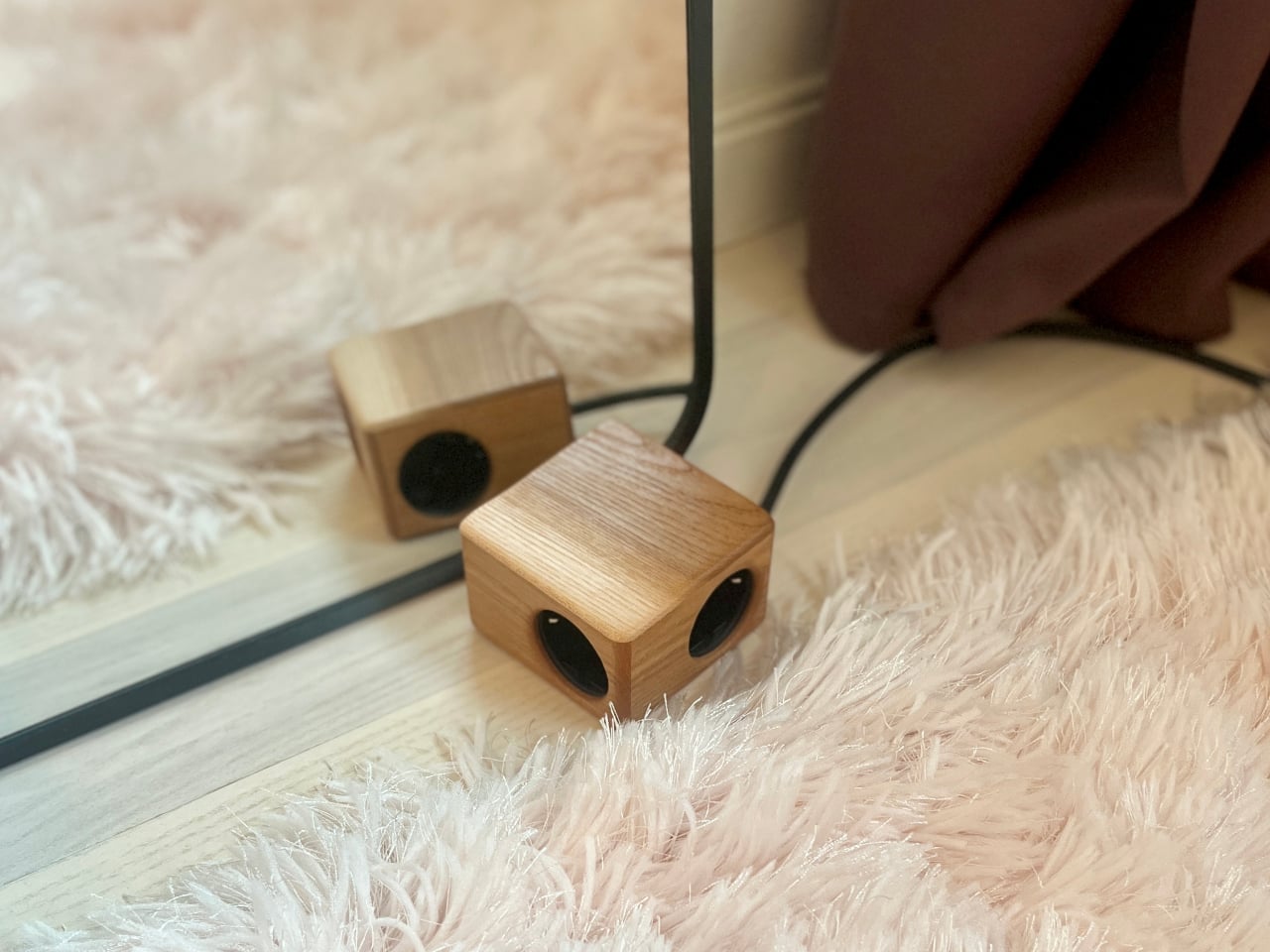

Power strips tend to get the least glamorous spot in a room, usually behind furniture or underneath a desk. That’s understandable when the alternative is leaving a plastic block beside your carefully chosen furnishings. Kord and Bark Sweden offer another option with their Wooden Case for Cuboid+, wrapping the compact power strip in reclaimed elm that looks more at home beside wooden furniture.
The shape remains fairly simple, with a broad square top, softly rounded edges, and circular openings around the sides. Those openings leave the sockets accessible, while two smaller cutouts accommodate the USB-C ports and a notch clears the cable. The wood changes the surrounding surfaces rather than disguising what the object does. It still looks like somewhere to plug things in, thankfully.
Designer: Gustav Rosén (Kord) x Bark Sweden
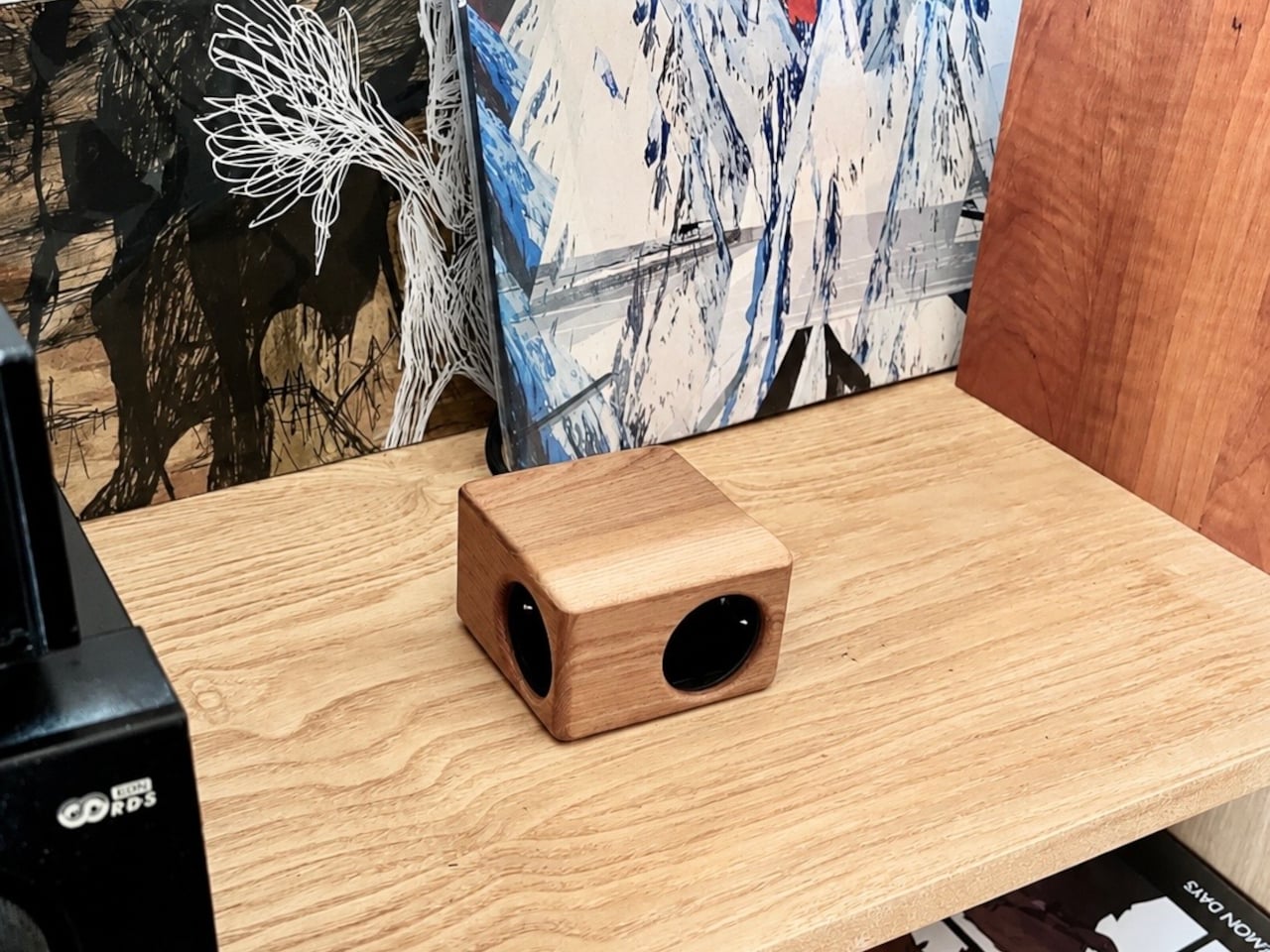
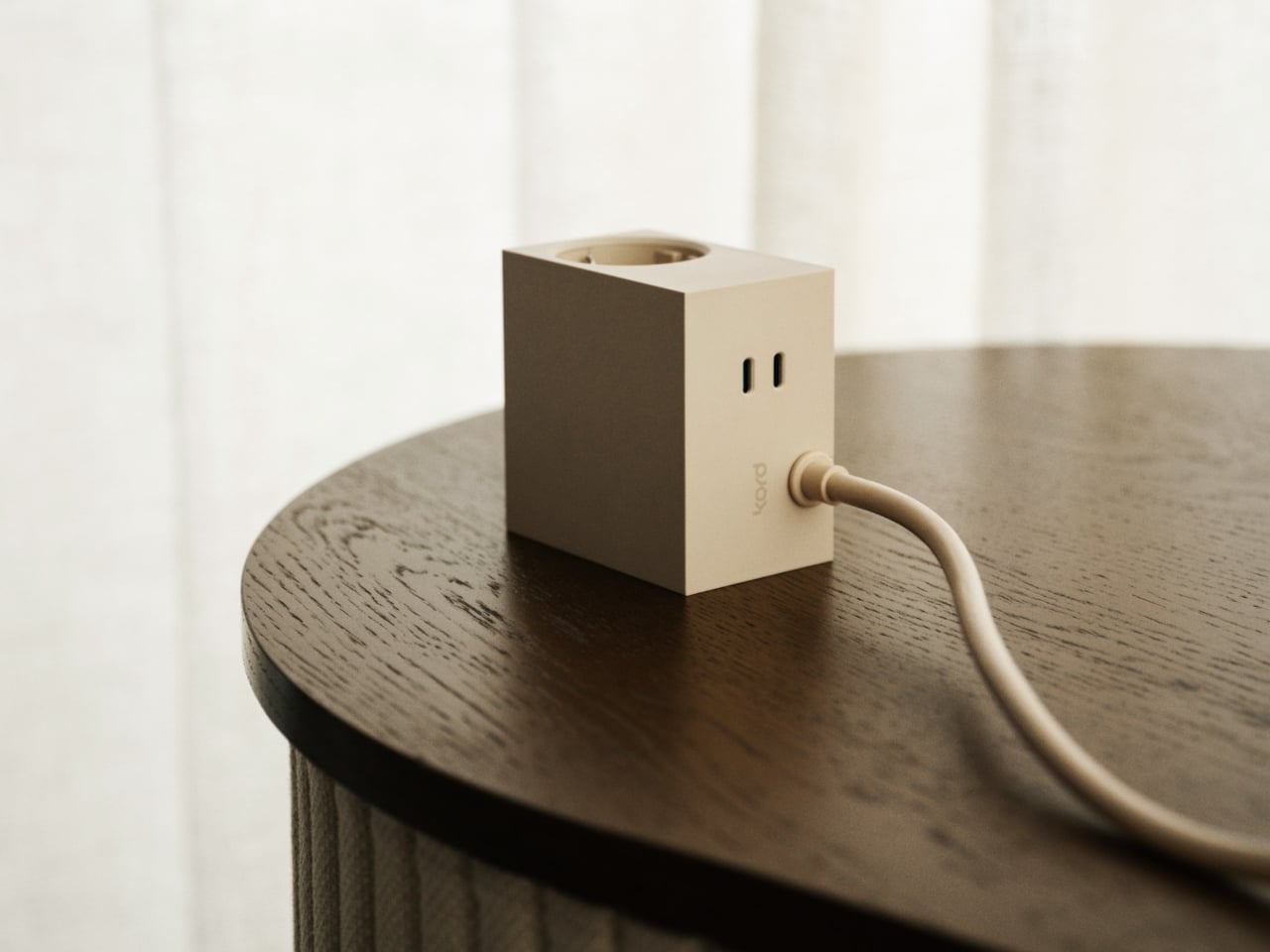
The case doesn’t add any outlets or charging features, of course. The Cuboid+ underneath still supplies three sockets and two USB-C ports, letting a lamp and charging cables share one compact connection point. Kord says the shell slides on and off, so changing its appearance doesn’t require buying another power strip simply because the old one no longer suits the rest of the room.
The material has a more specific history than the usual reference to Scandinavian forests. According to Kord and Bark, the elm grew beside the River Tidan at Åreberg Farm in Sweden’s Skaraborg region. When Dutch elm disease forced the tree to be felled, Bark reclaimed the timber. Its natural variations now give the cases different patterns, despite their otherwise identical shapes.
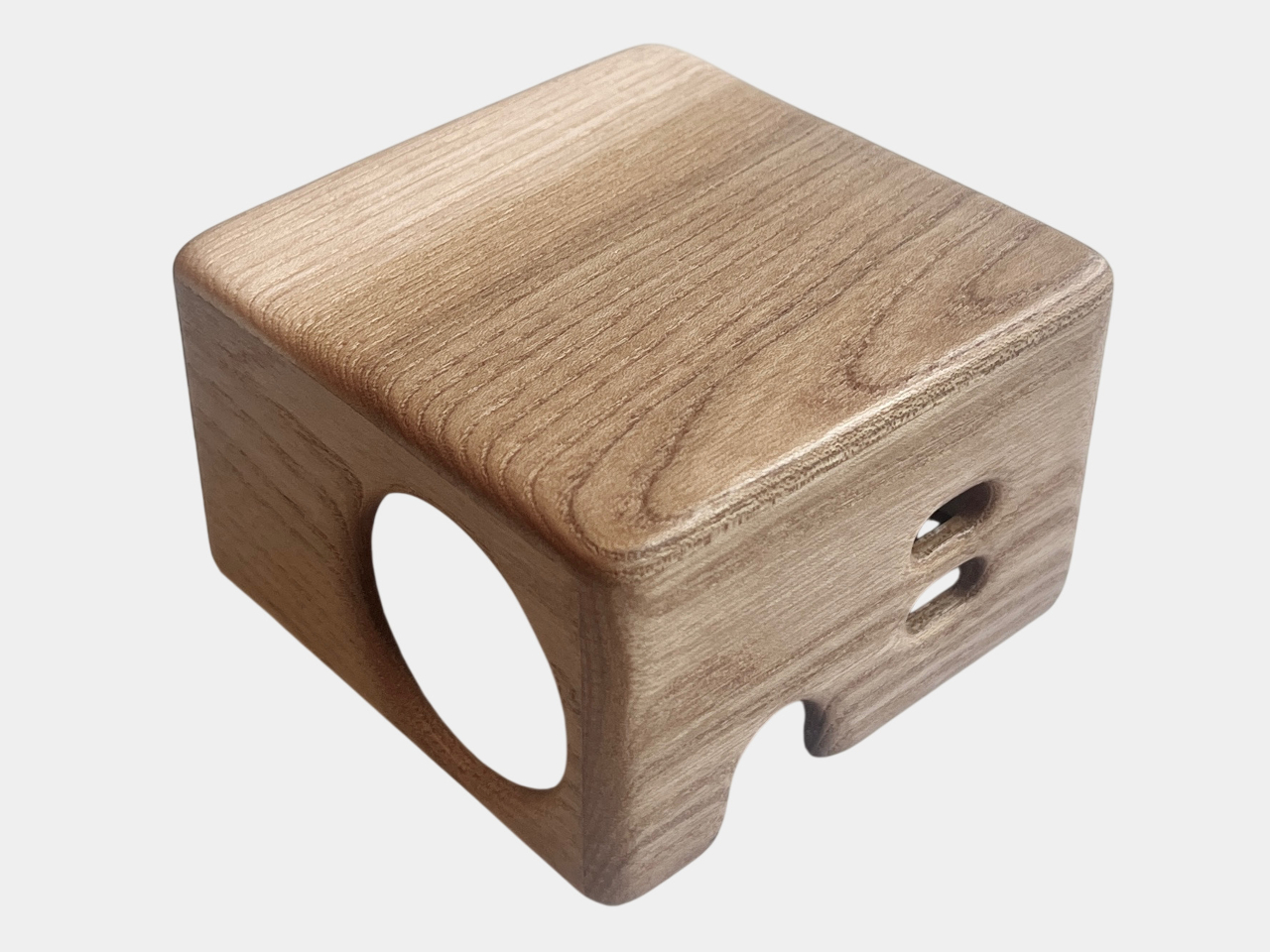
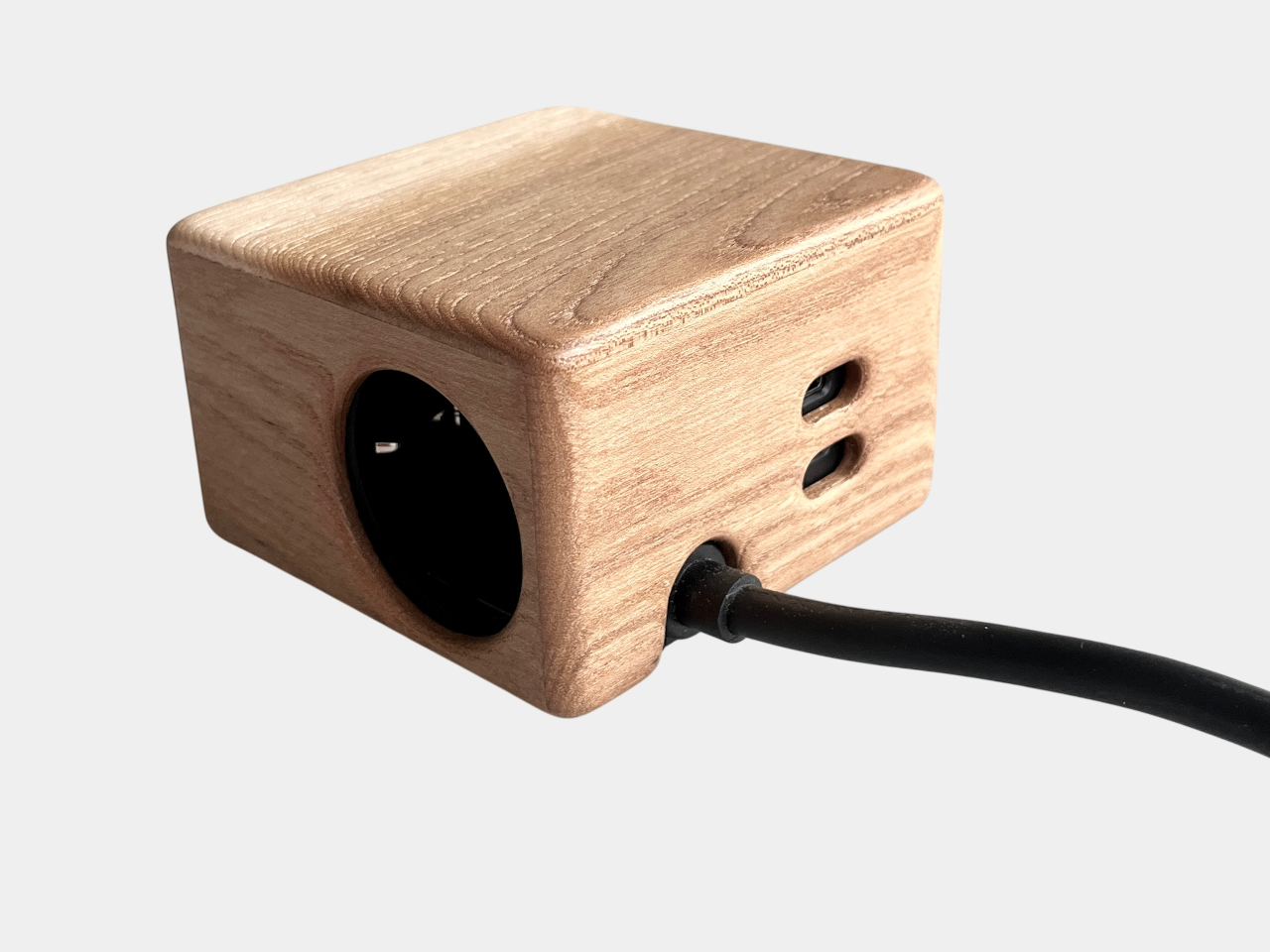
Getting that timber around an existing electrical product takes more than carving out a rough opening. Bark uses precision woodworking and CNC machining to shape the cases, which are designed and manufactured in Sweden. The curved edges and carefully placed apertures follow the Cuboid+’s layout, leaving the elm to supply the decoration. There’s no need to print a pattern when the material already provides one.
There’s a personal connection behind the two companies, too. Kord’s co-founder and Bark’s founder studied mechanical engineering together at KTH Royal Institute of Technology in Stockholm before following their own paths in design and manufacturing. Their reunion is a fairly practical meeting of those skills, matching the existing Cuboid+ geometry with Bark’s experience in machining reclaimed hardwood into everyday accessories.
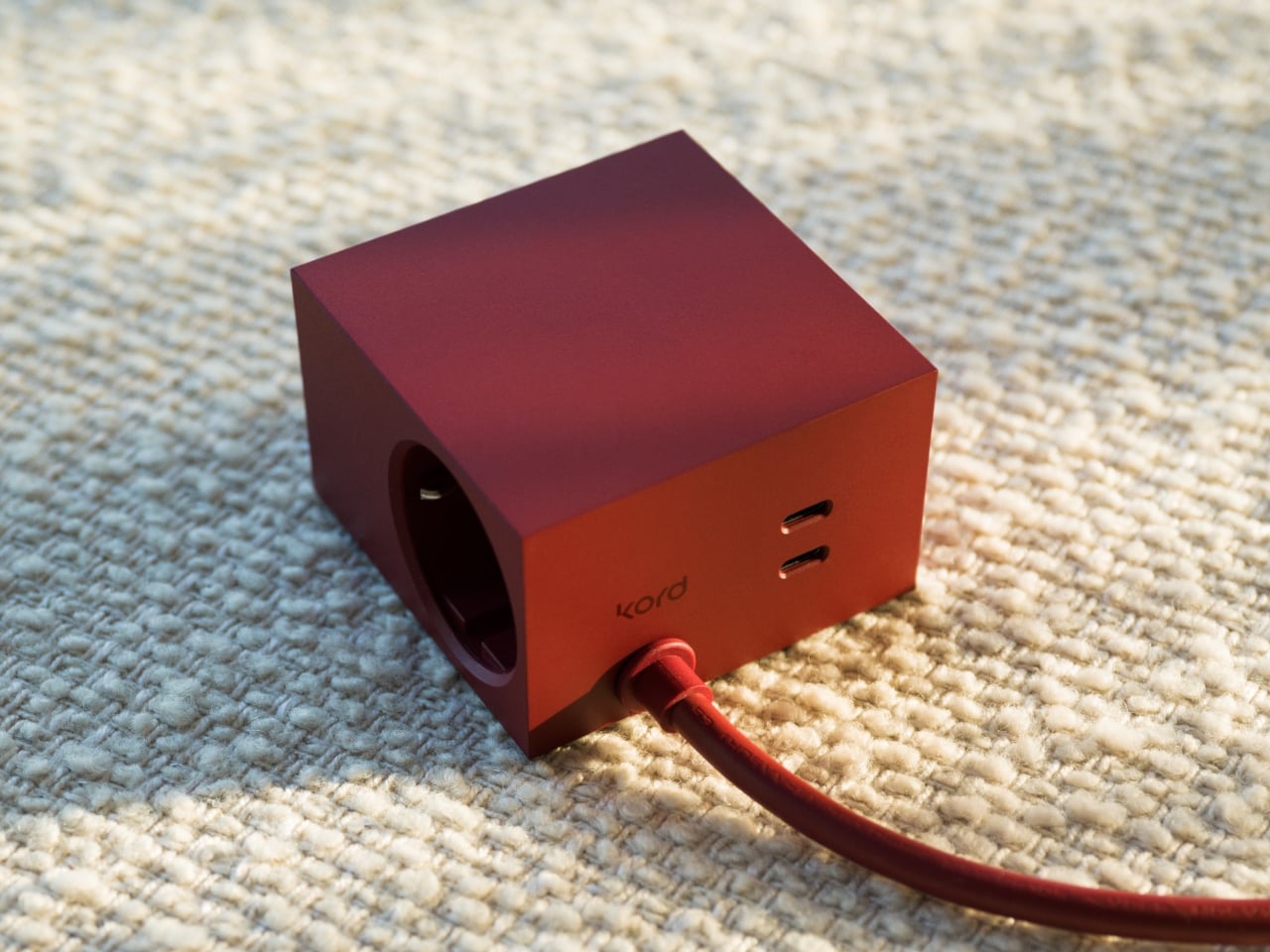
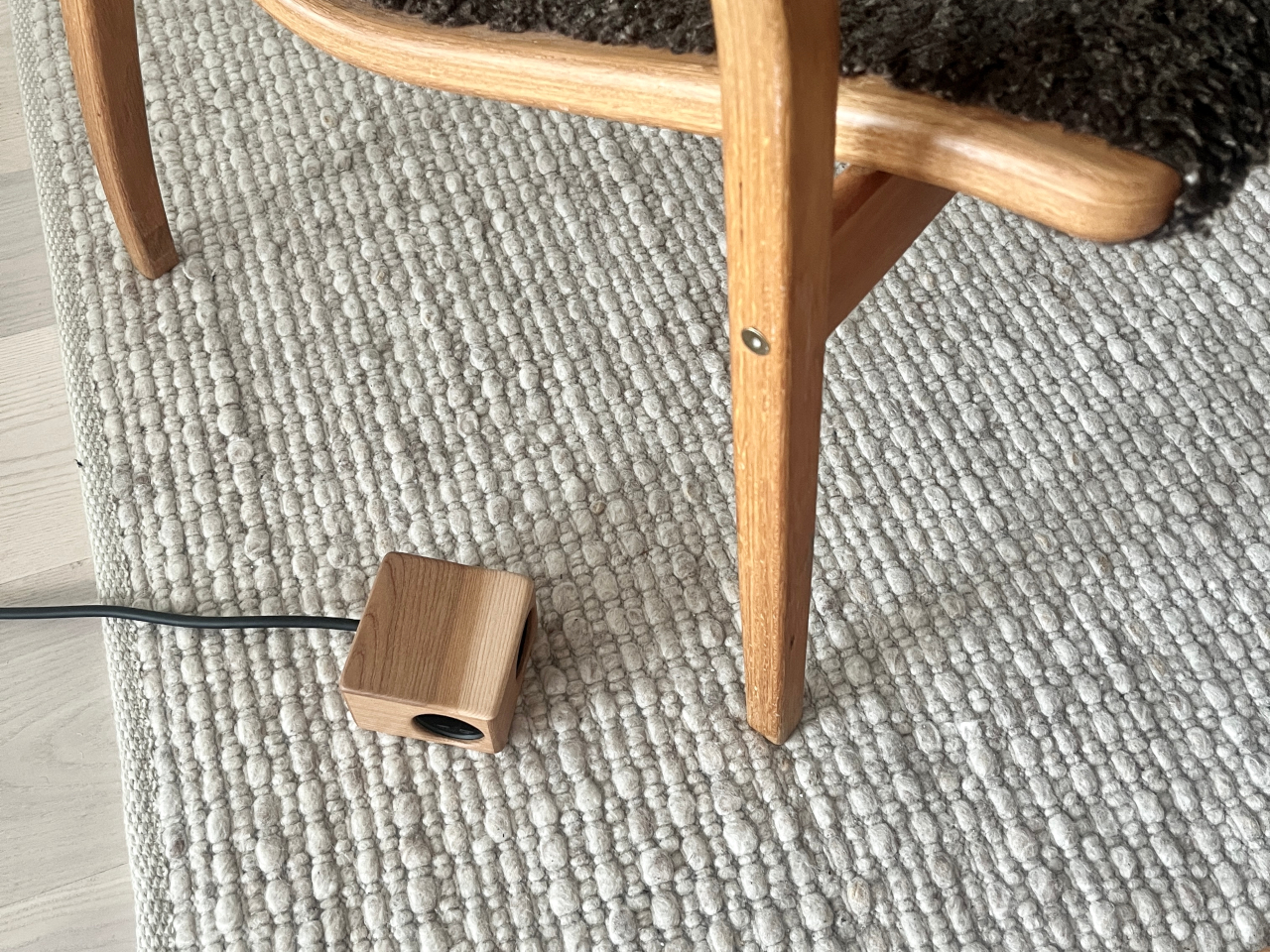
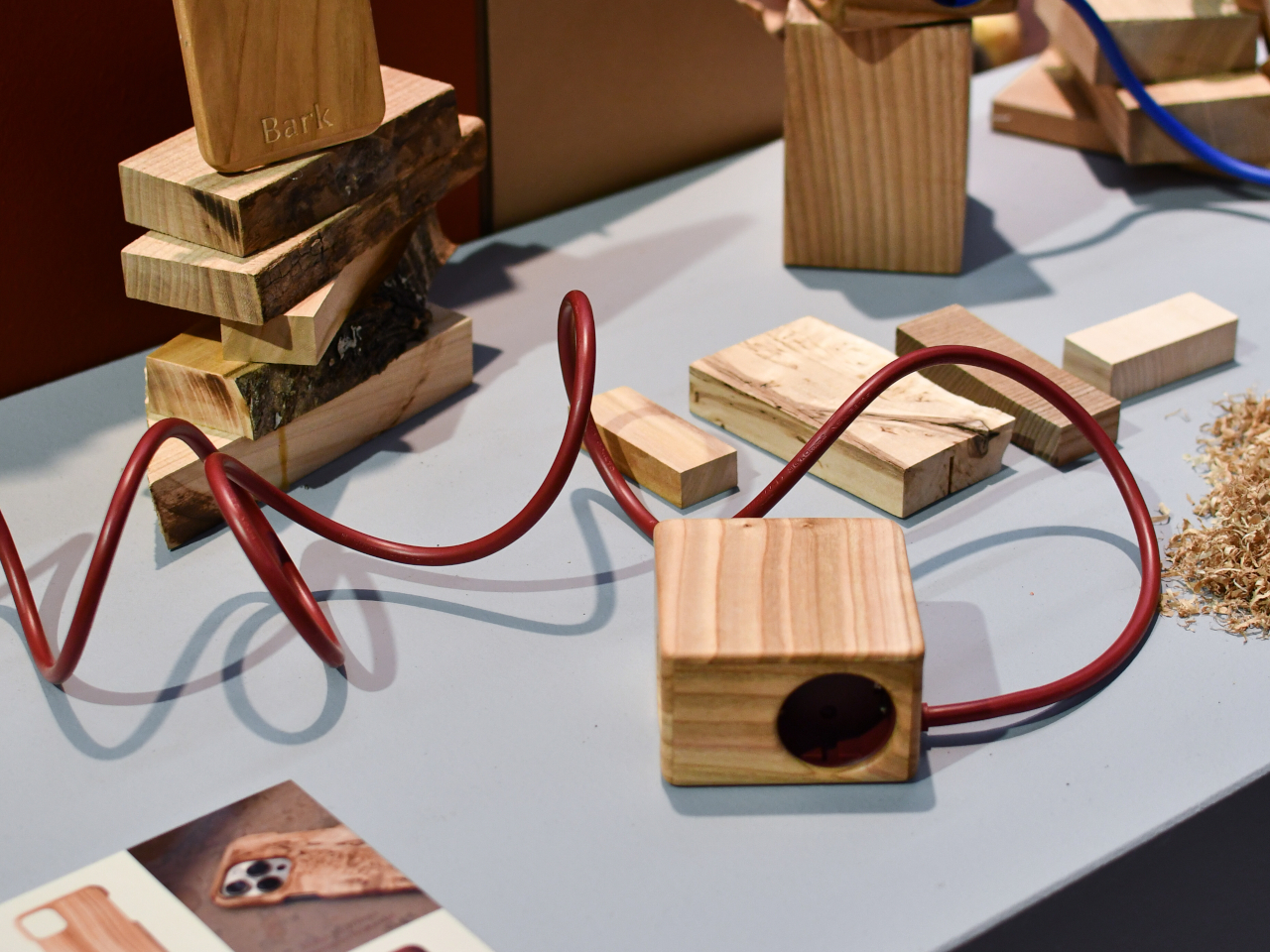
Kord’s Swedish list price is SEK 695 (about $70) starting November 14, 2026, with the Cuboid+ sold separately. For US consumers, there’s another consideration before getting attached to that grain. The Cuboid+ uses European Schuko Type F outlets, rather than the sockets found in American homes.
Of course, a wooden shell won’t untangle the leads or hide the chargers plugged into those round openings. It also adds material around a perfectly functional device, even if that material has been reclaimed. What changes is where you might be willing to leave it. Reaching beside the sofa to charge a phone sounds preferable to fishing behind it for a power strip you’ve hidden.