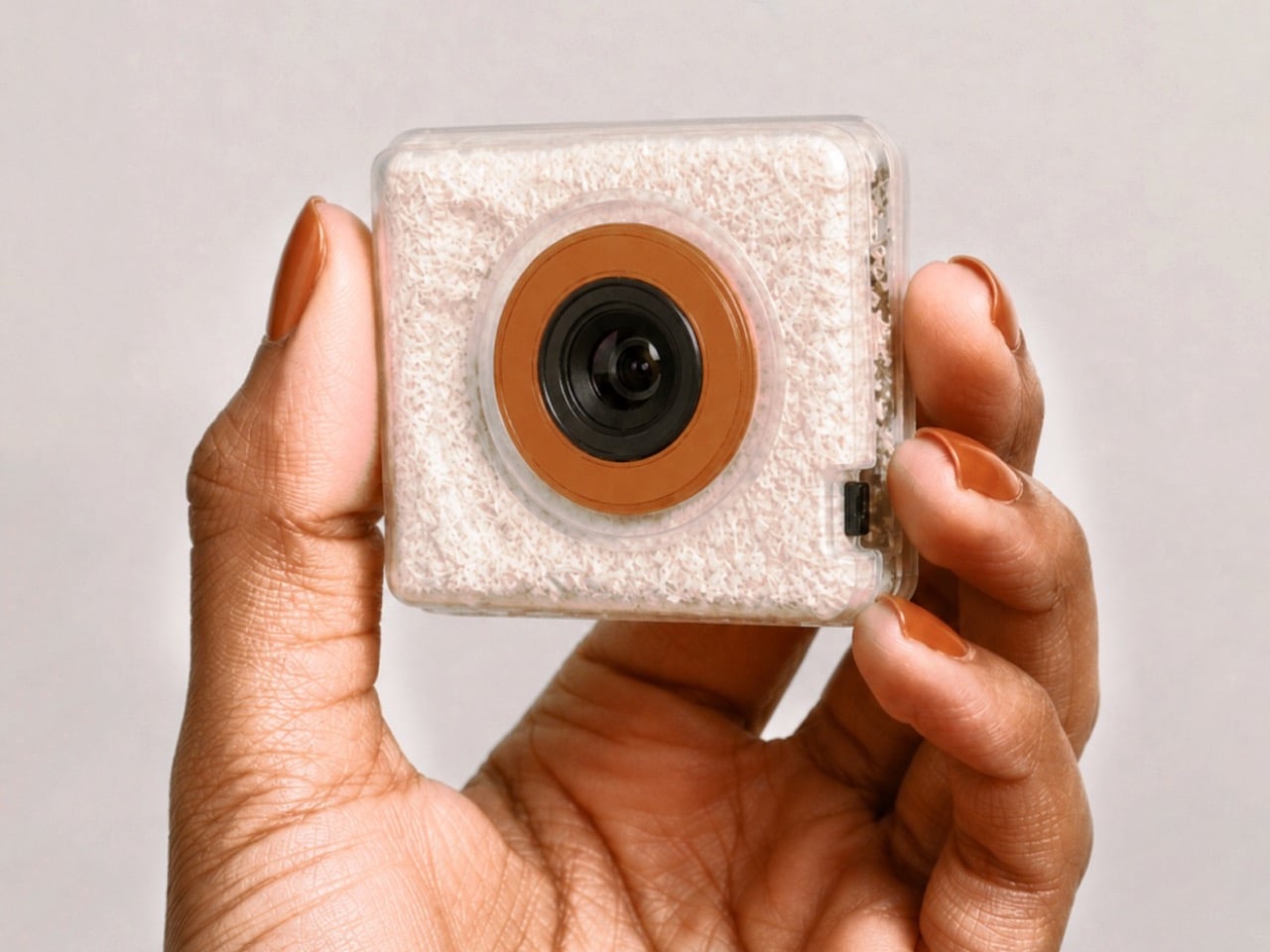

Forty years ago, Fujifilm launched the QuickSnap, a plastic box of film you shot, dropped off at the drugstore, and never saw again. The disposable camera became the unofficial sidekick of wedding tables, spring breaks, and summer camps in the ’90s. In 2026, a would-be spiritual successor comes from a Brooklyn mushroom farmer. Sree Krishna Pillarisetti’s Soft-pixel is a digital camera project with an enclosure made from mycelium, hemp, and PHA bioplastic, designed to keep your photos local rather than in the cloud. The proposed compostable shell gives the disposable-camera idea a more interesting question: which part should actually be disposable?
Pillarisetti first experimented with fungus-wrapped electronics in Soft-Drive, his Parsons thesis project, which enclosed a memory card and heat sink in a shell made from mycelium, hemp, and PLA. Soft-pixel trades that PLA for PHA. The European Product Design Award named it Best Eco-Design for 2026, alongside a Top Design win in digital cameras. Somewhere in a junk drawer, an old Kodak Fling is feeling very insecure.
Designer: Sree Krishna Pillarisetti
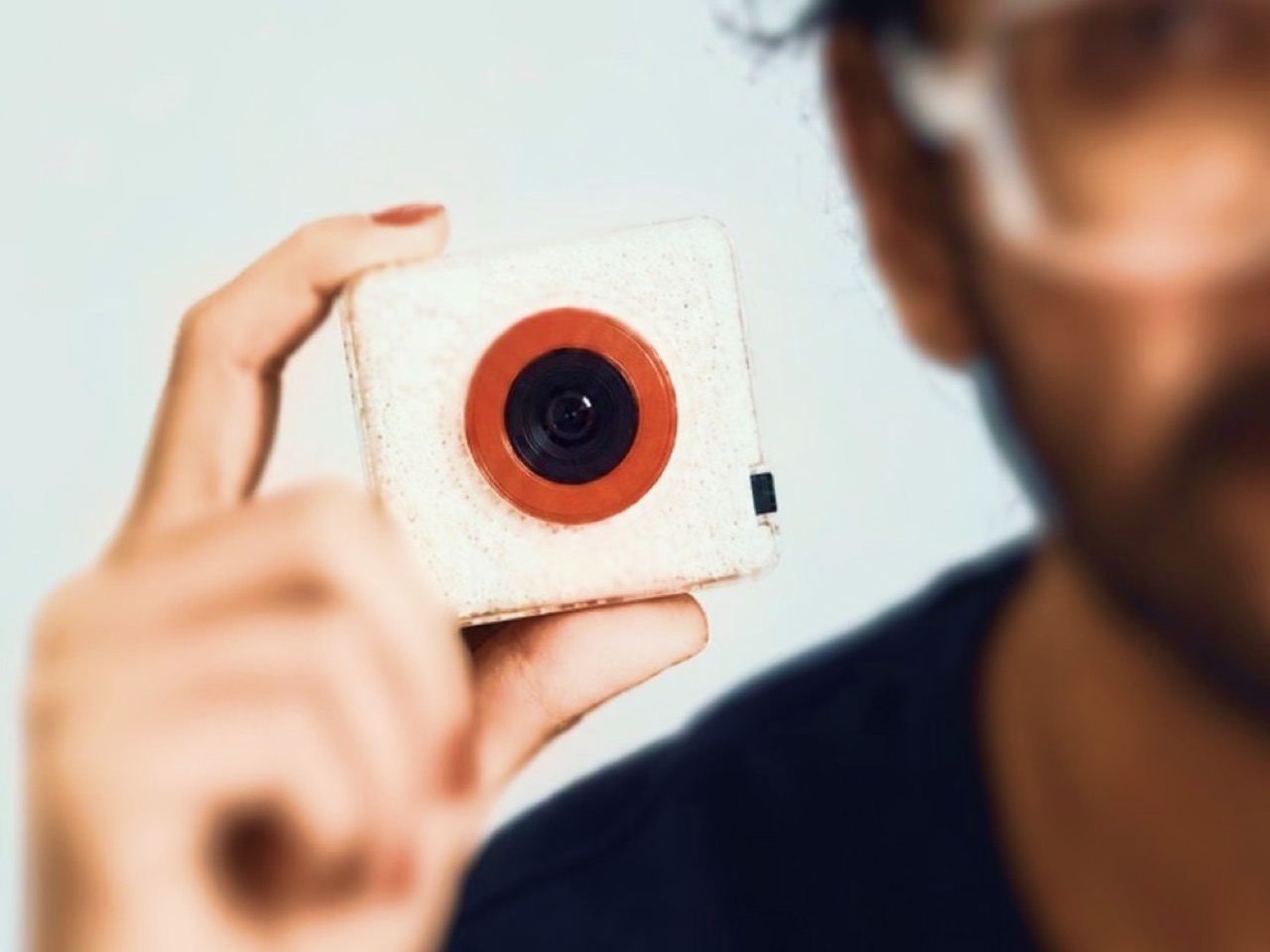
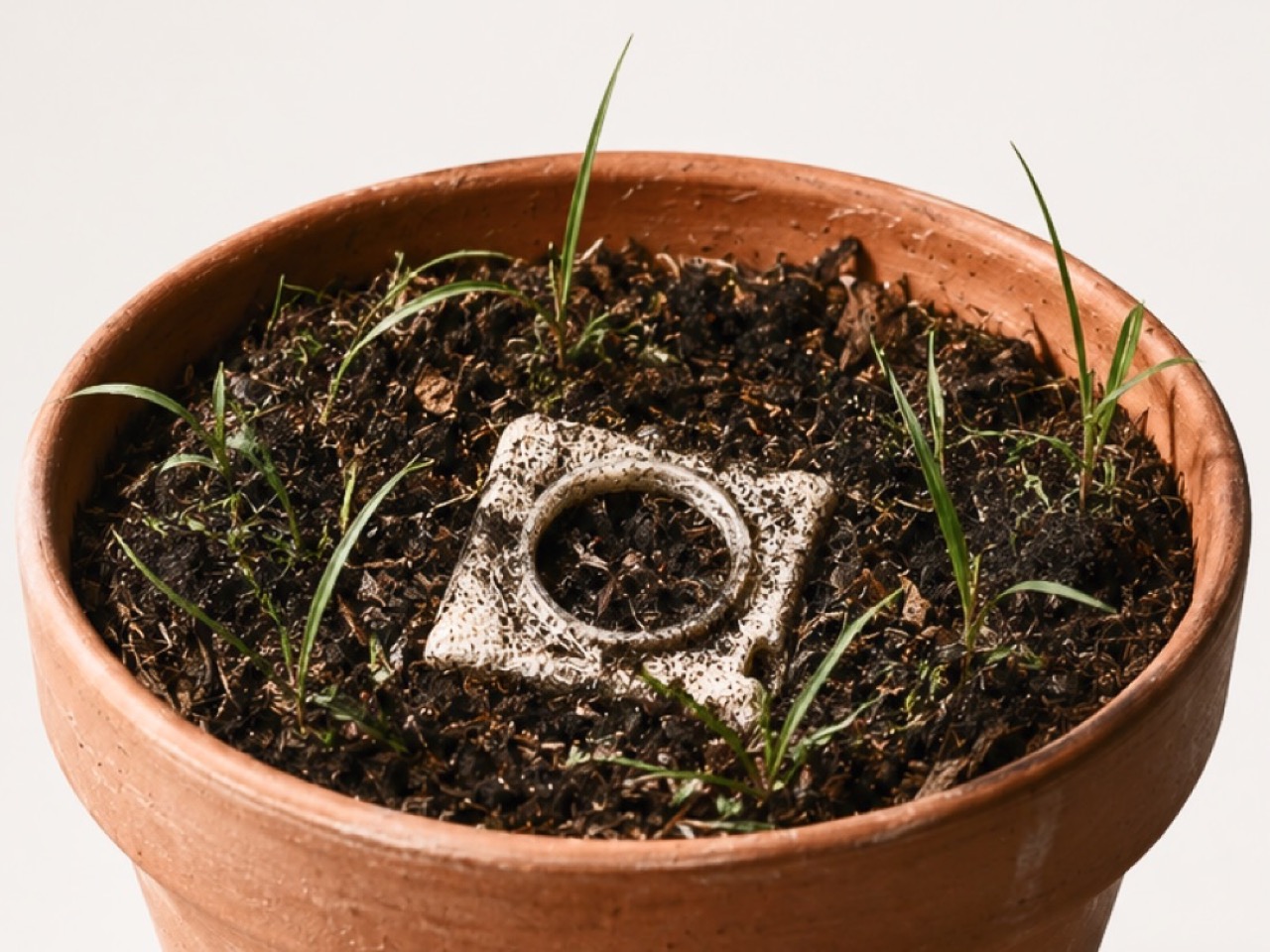
Mycelium is the threadlike network of a fungus. Soft-pixel’s award entry describes a process combining biological growth and heat-press fabrication to produce what the designer calls a lightweight, impact-absorbing enclosure. PHA is the material change worth watching here. PLA generally needs the heat and moisture of industrial composting to break down effectively; some PHAs can biodegrade in home compost, but their behavior depends on the formulation and conditions. Putting PHA in a camera shell doesn’t automatically make the finished casing ready for your garden pot.
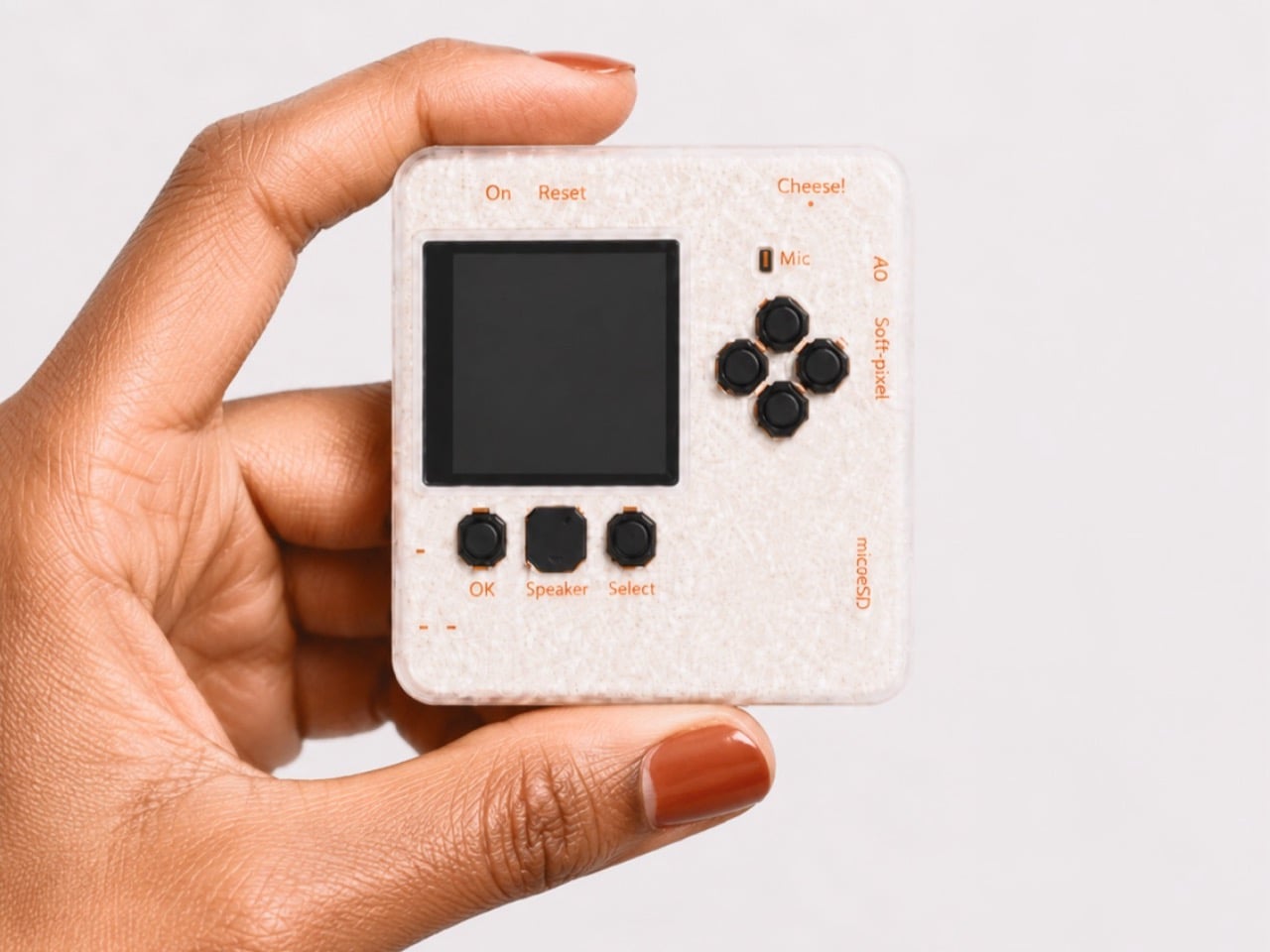
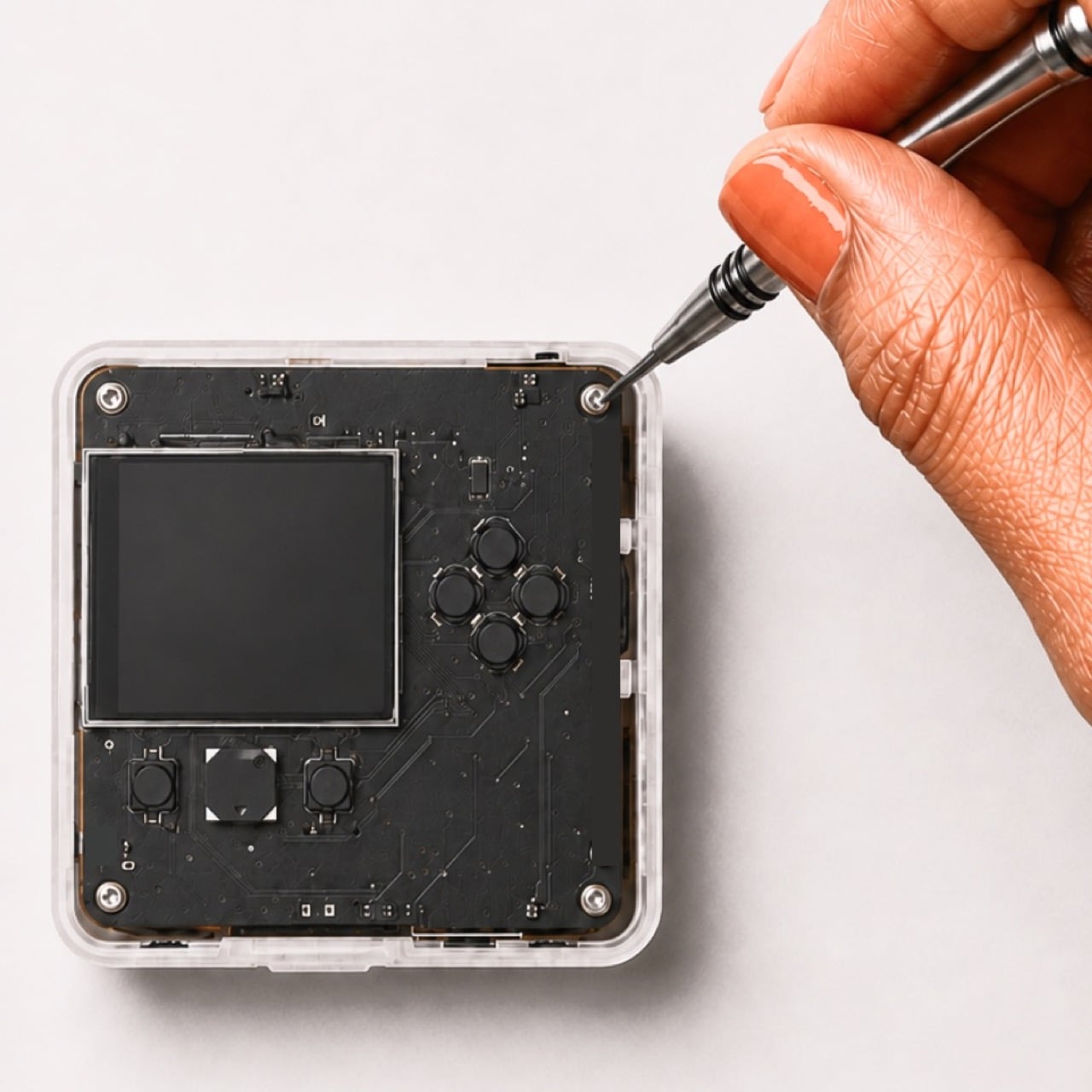
The translucent outer layer shows off the fibrous interior, so the camera looks a bit like a granola bar that takes pictures. Around the back, there’s a square screen, four directional buttons, and orange labels for the controls, speaker, and mic, like a hobbyist dev board. The shutter label literally says “Cheese!” A microSD label hints at where your photos end up. The award entry doesn’t list the sensor, resolution, battery capacity, or storage capacity. The best tell is the image showing four screws holding the circuit board in place, with a precision driver positioned over one. Visible screws suggest someone expects you to open the thing, a spicy idea for a design borrowing the disposable-camera playbook.

The obvious comparison is Camp Snap, the screen-free digital camera that makes you wait to review your photos on another device. Soft-pixel keeps the screen and takes aim at a different villain, the cloud. The scale of that infrastructure is worth understanding: in its 2025 Energy and AI report, the International Energy Agency estimated that data centers consumed about 415 terawatt-hours of electricity in 2024, roughly 1.5% of global electricity consumption. Its base-case projection put that figure at about 945 TWh by 2030. Those totals cover far more than photo storage, though; they aren’t a measure of what this camera would save.
Soft-pixel’s award entry gives no price or release date, since it’s clearly a concept for now. That’s fine by me, because the idea already lands: keep the electronics, keep the photos, and give the shell a different end of life. Before it goes off to feed a few blades of grass, though, we need to know how the finished casing actually composts.