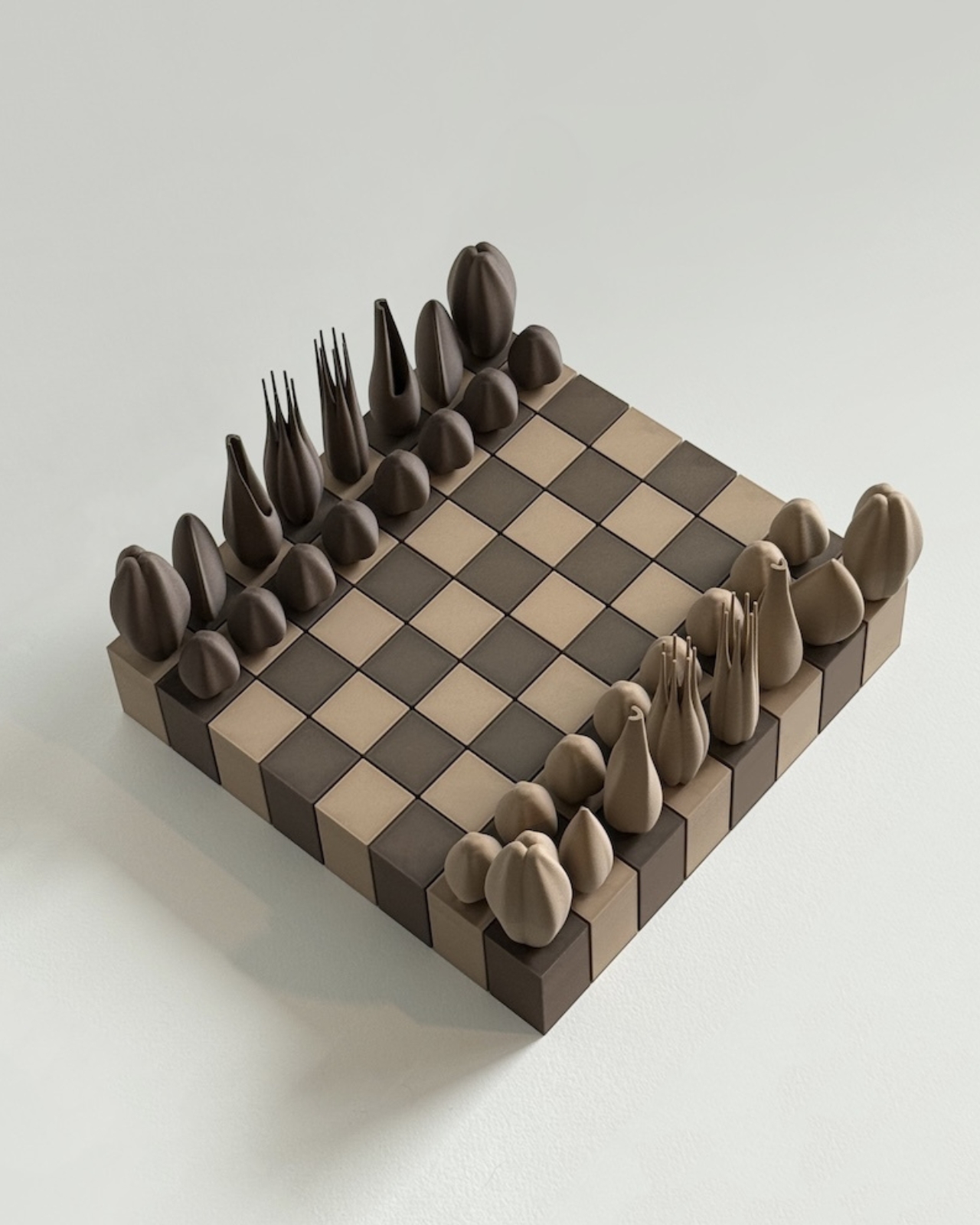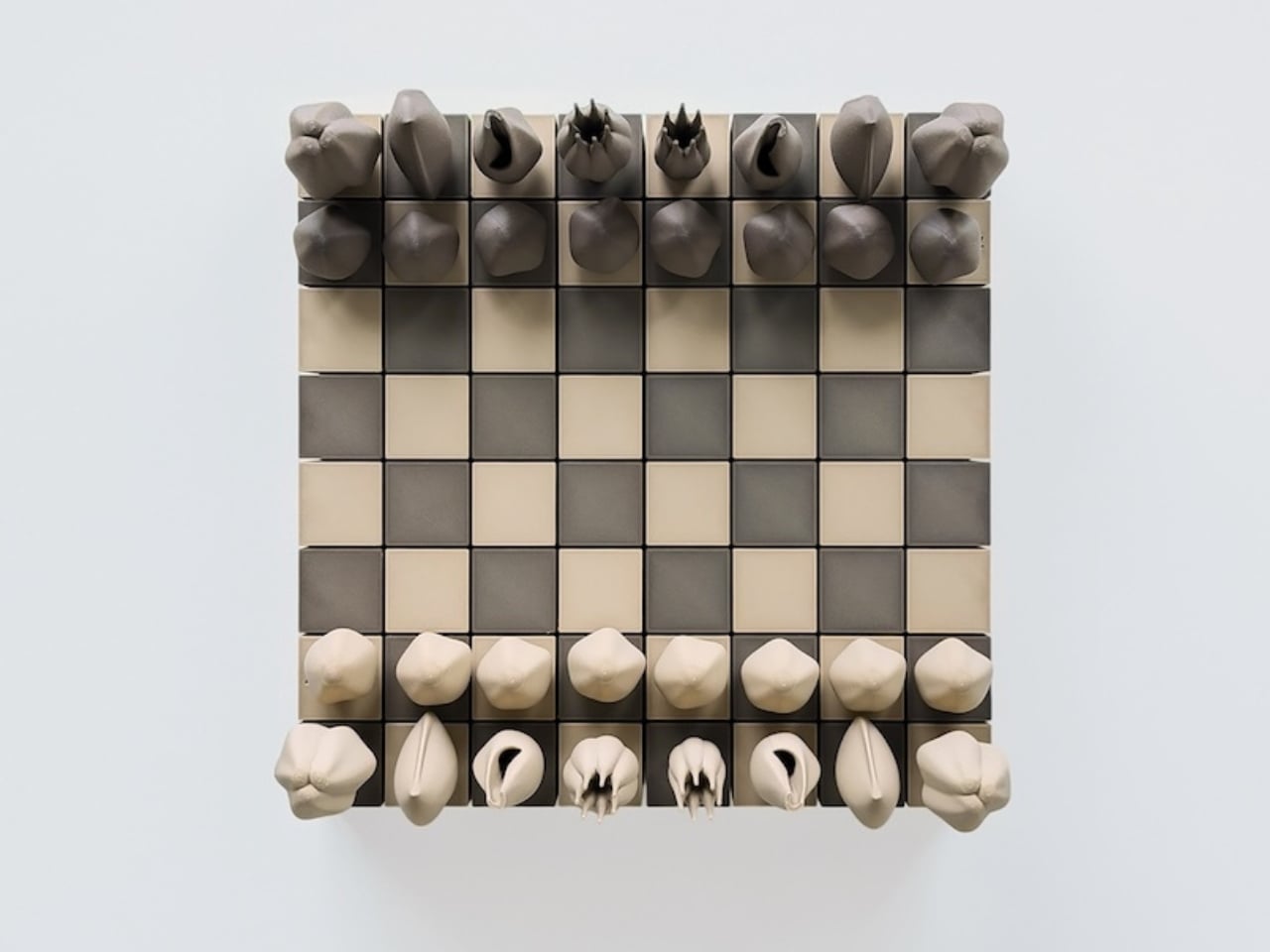

A chess piece has a job to do before any strategy enters the picture: you need to recognize it, pick it up, and put it down. That sounds obvious until a sculptural set makes those simple actions feel secondary to its appearance. I’m all for a beautiful board on the coffee table, but I’d rather not solve a little identification puzzle before making an already questionable move.
Flora, a tactile chess project by industrial designer Lucy Aboonour, tackles that tension with pieces intended to be identified and handled primarily through touch. Its development draws on four years of observation in New York City parks and chess clubs. The premise appeals to me because it starts with the hand doing the playing, rather than the camera documenting the object. A chess set should make sense once someone reaches for it.
Designer: Lucy Aboonour
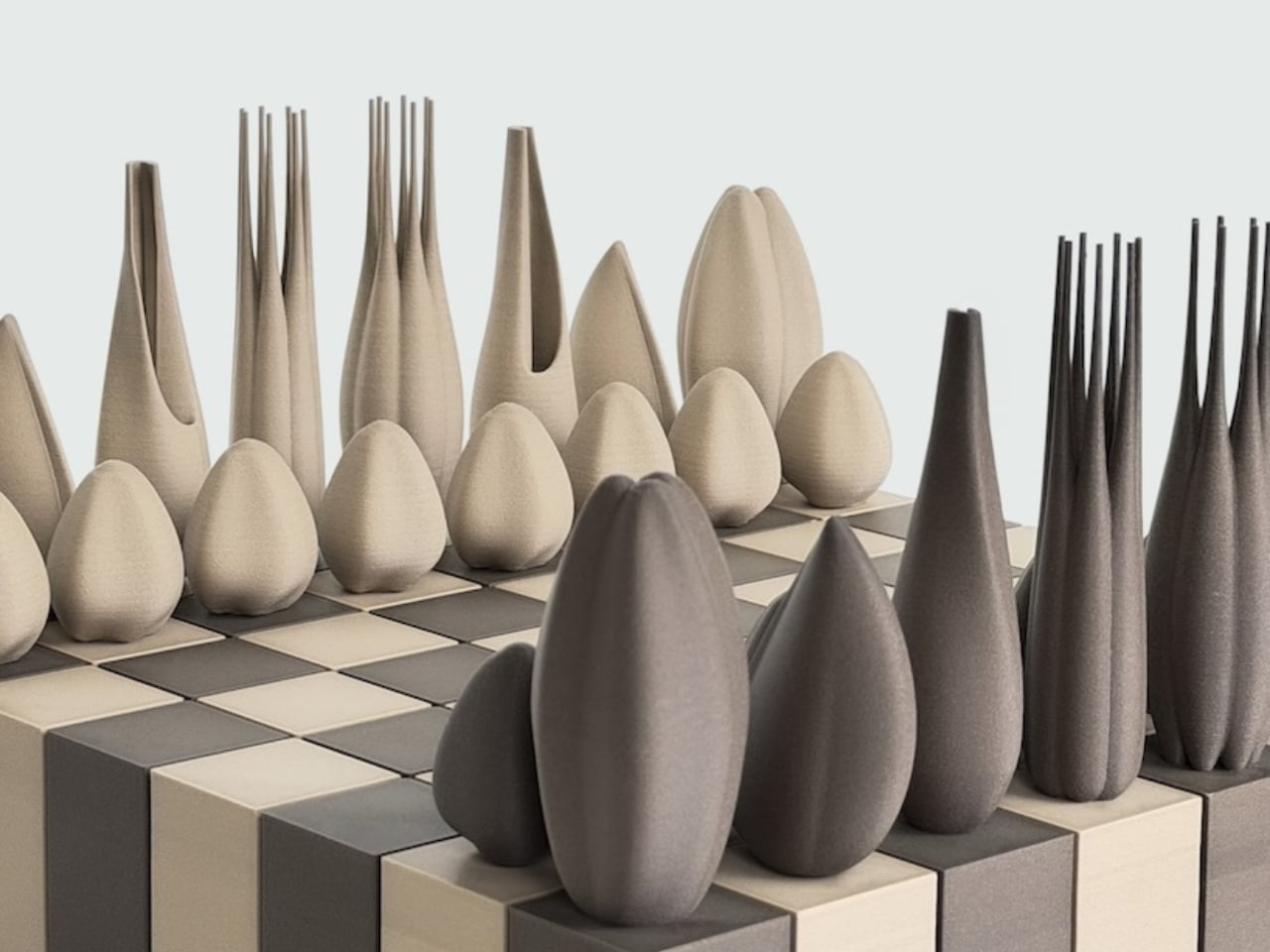
The project images suggest a miniature botanical collection: rounded, budlike pawns, elongated forms with deep openings, and tall pieces ending in slender projections. There’s a family resemblance across the board, though the silhouettes vary considerably. I like how the repeated curves give the set a consistent identity without making every piece an identical shape stretched to a different height. It looks designed as a group, with room for individual personalities.
The name feels apt, although the appeal goes beyond a flower reference. To my eye, the forms suggest growth and unfolding rather than miniature royalty. That softens the mood of the board. I can imagine it appealing to someone who enjoys chess but doesn’t particularly want a tiny medieval court as living room decor.
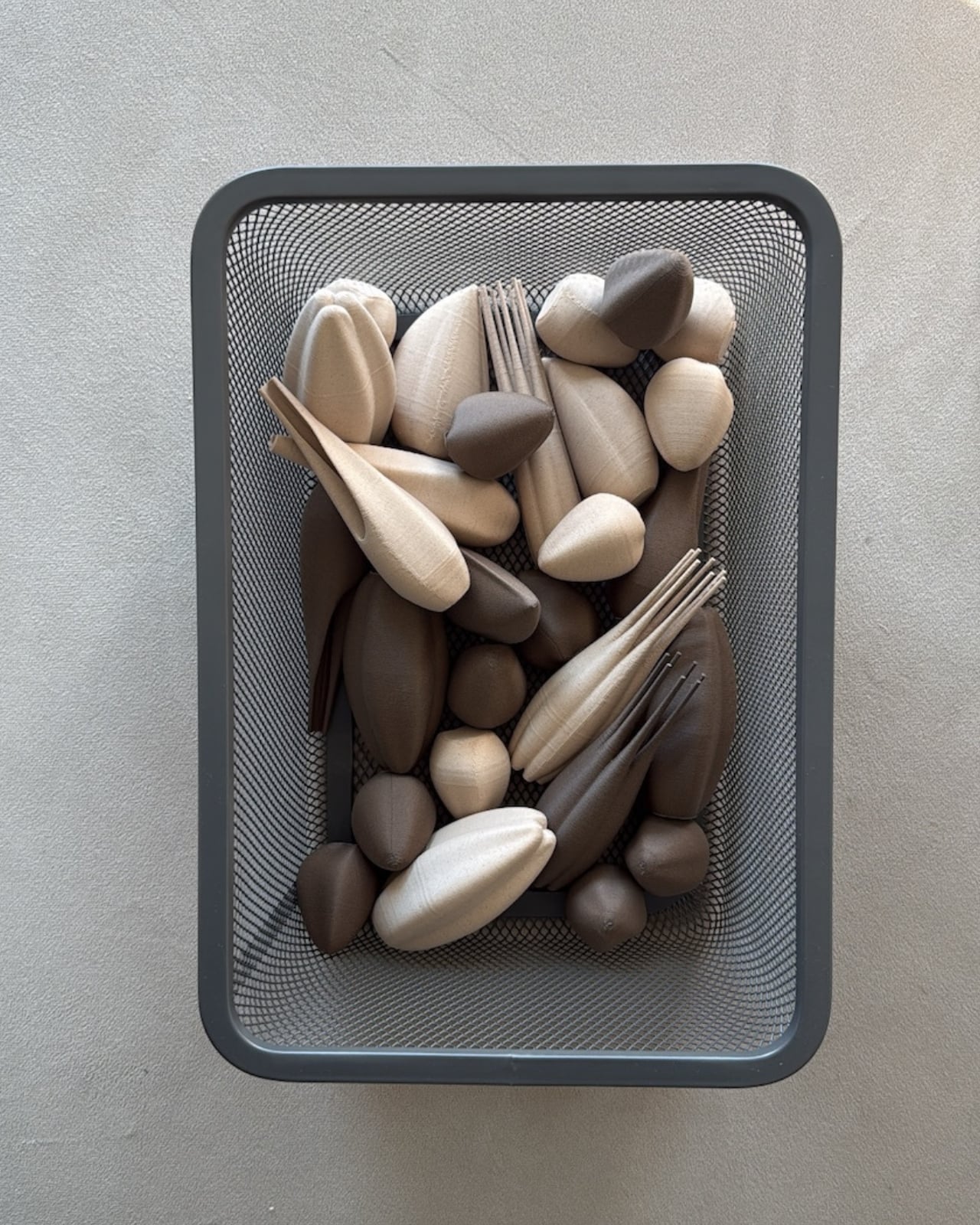

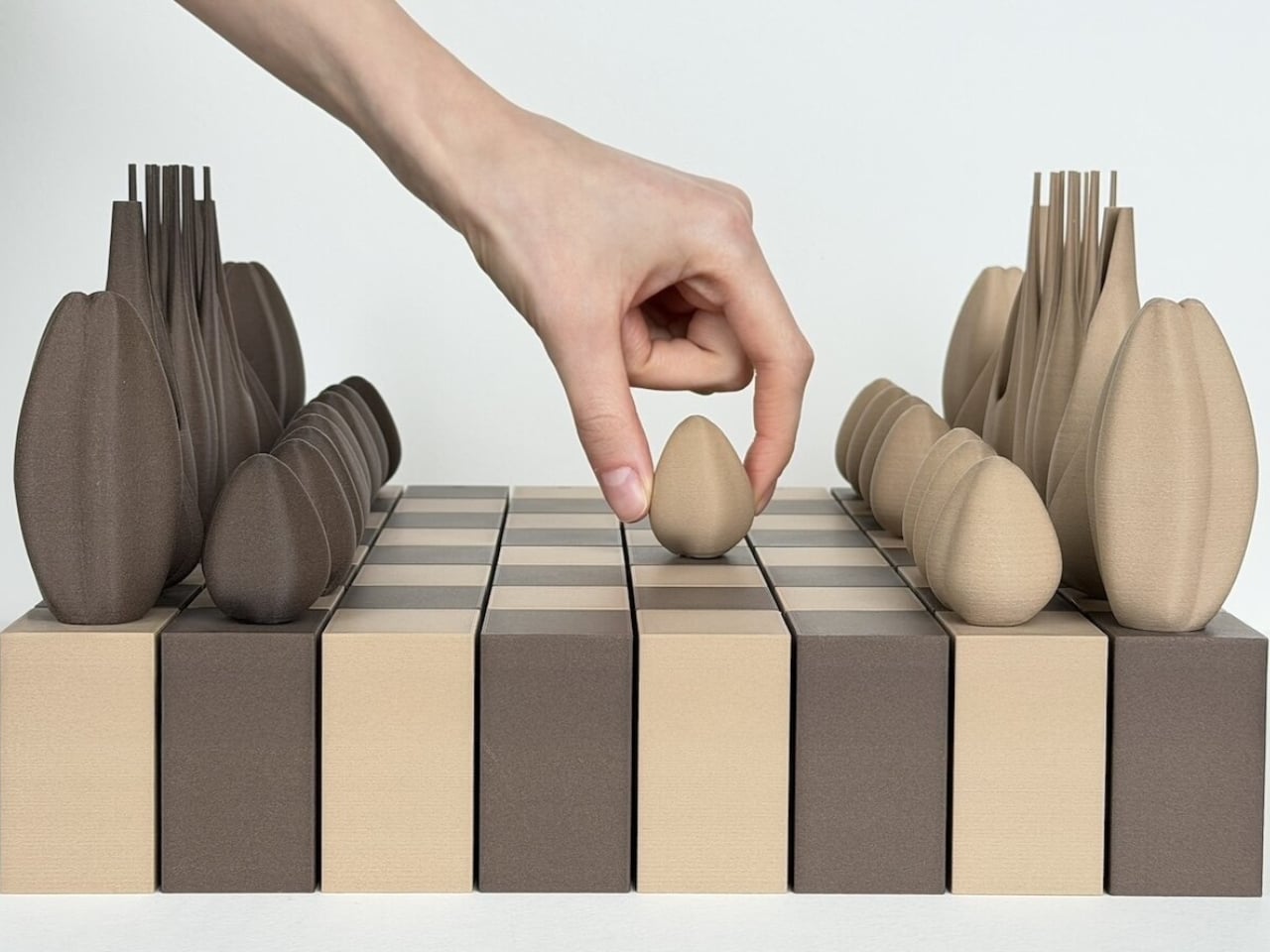
Those curves have a practical brief. Aboonour shaped the convex profiles around a two-finger pinch grip, with broad footprints and tapered bodies. The stated aim is to distribute fingertip pressure and support stable handling during quick moves. That’s a more interesting justification for an unusual silhouette than simply wanting chess to look futuristic. Your thumb and index finger become part of the design discussion, as they should.
Weighted bases place the center of gravity low, an approach intended to reduce tipping. Here, I’d want to distinguish the design’s intention from a tested result: the published description doesn’t establish how Flora performs against other sets. Still, prioritizing the base feels sensible. A satisfying piece needs to behave convincingly when it lands, not merely look elegant while someone holds it up for a photograph.
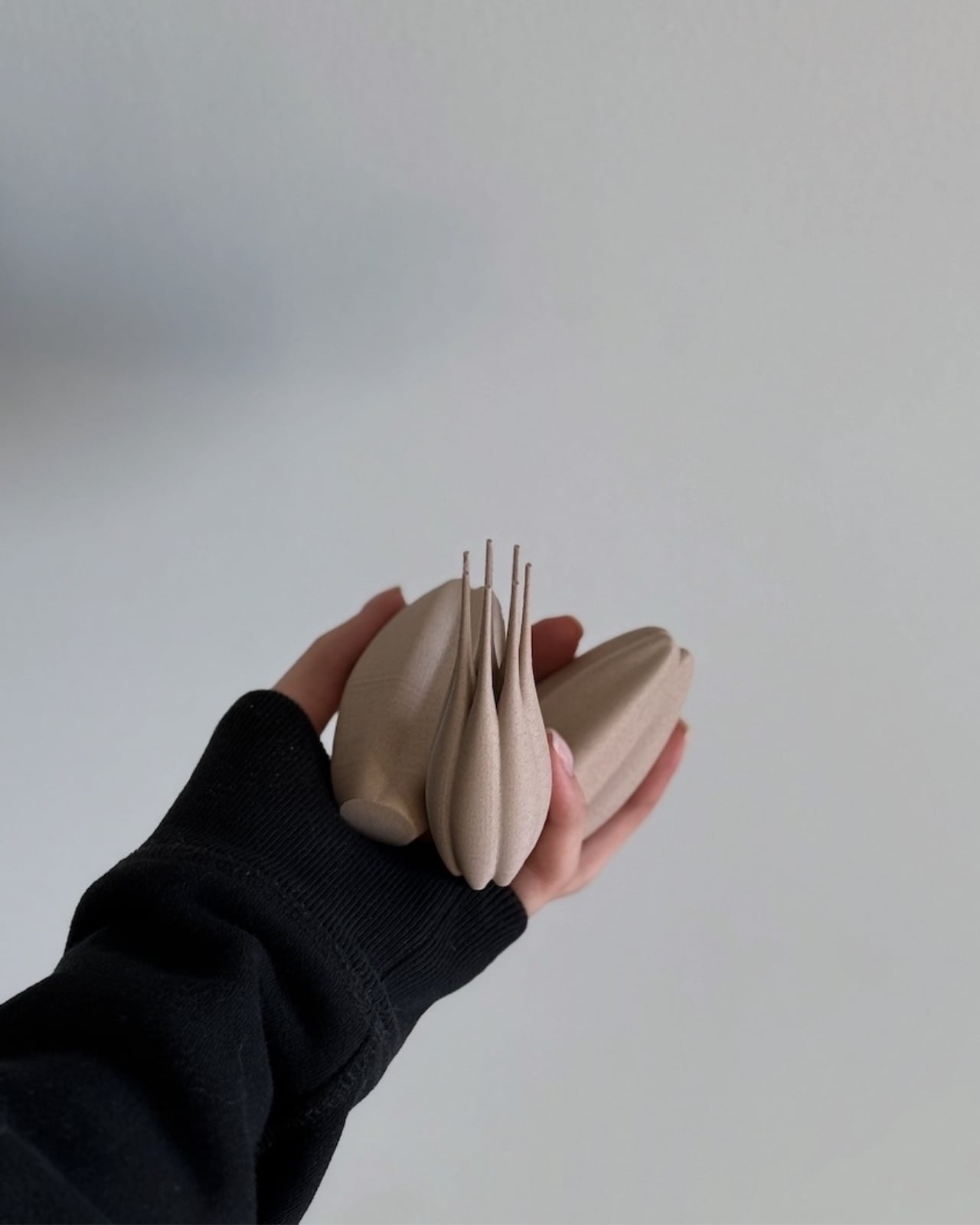
I do have a reservation about the taller, finer projections visible in the imagery. They make the collection more expressive, but I’d want to know how they handle an accidental knock or being packed away between games. A generous gripping surface doesn’t answer every handling question. That tension is worth acknowledging without dismissing the work: the most memorable feature can also be the one that deserves the closest practical scrutiny.
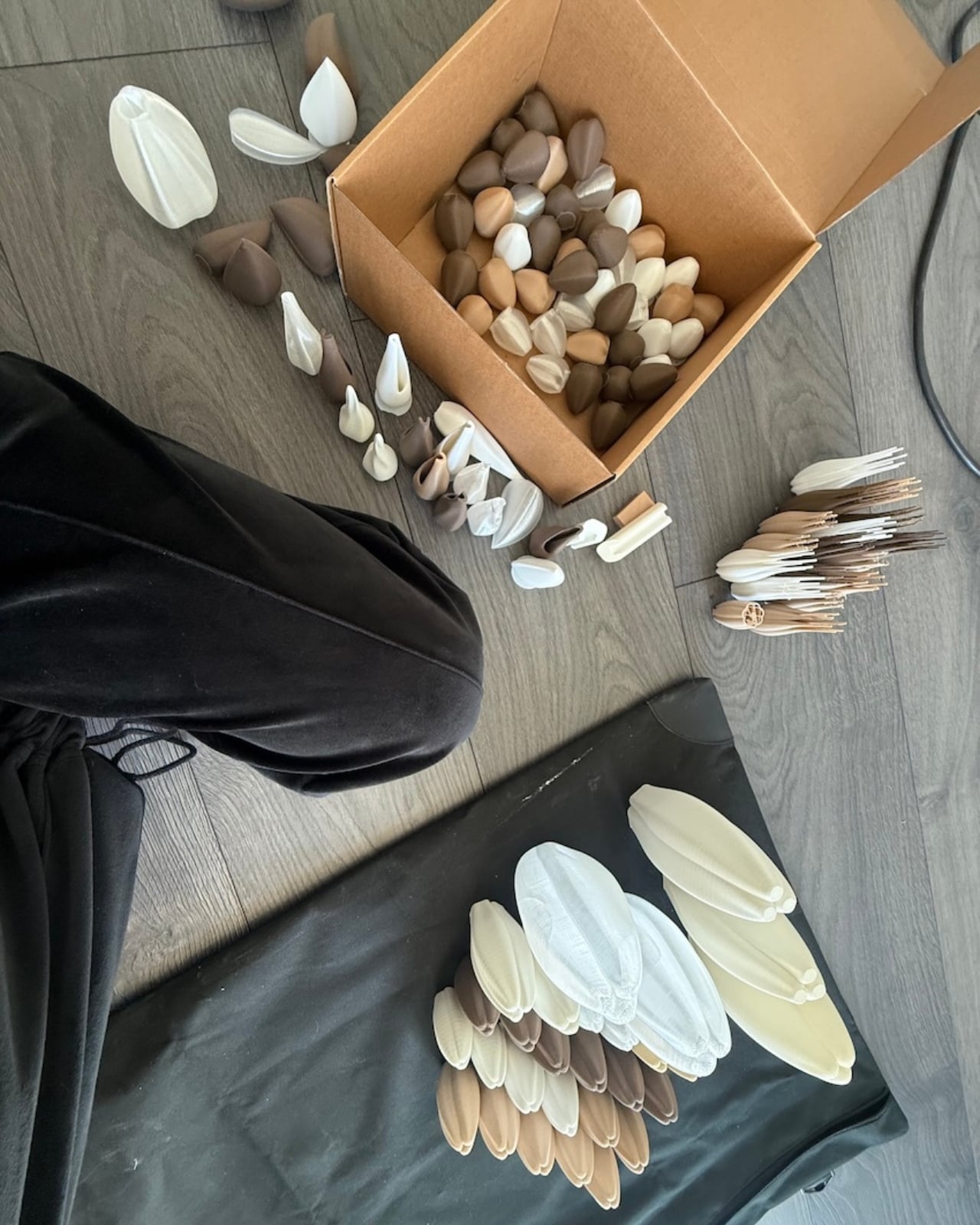
According to Aboonour’s project description, development included iterative 3D-printed prototypes in recycled PLA and wood composites between 2021 and 2025, followed by a final set milled in American white oak and American walnut. Those contrasting woods strike me as a fitting choice for an object meant to live within reach. I’d happily give a chess set space on a shelf, provided taking it down to play never feels like disturbing a precious display.
The bigger question, for me, is how quickly a new player learns Flora’s visual vocabulary. Distinctive shapes offer a promising starting point, but looking different and becoming instantly recognizable aren’t necessarily the same achievement. I’d want time at the board before calling that problem solved. The value of the project lies in treating recognition as a design responsibility, rather than leaving the player to accommodate whatever shapes happen to look most striking.
Flora is presented as a design project, with no price or ordering information in the published coverage. It’s a set to consider as a design proposition for now, rather than a shopping recommendation. I appreciate the proposition: give an everyday gesture enough attention that a familiar object starts to look different for a reason. Chess already asks plenty of your brain. Picking up the pieces shouldn’t require extra thought.