
Ask any American watch nerd about space watches and you’ll hear one word within three seconds: Speedmaster. Moon landing, NASA certification, the whole legend. Meanwhile, eight years before Apollo 11, a Soviet pilot strapped on a standard-issue navigator’s watch and went around the planet first, and that story gets a fraction of the airtime. I love a Speedy as much as anyone. Still, the first human in orbit deserves a little more wrist love, and a Moscow designer just delivered some.
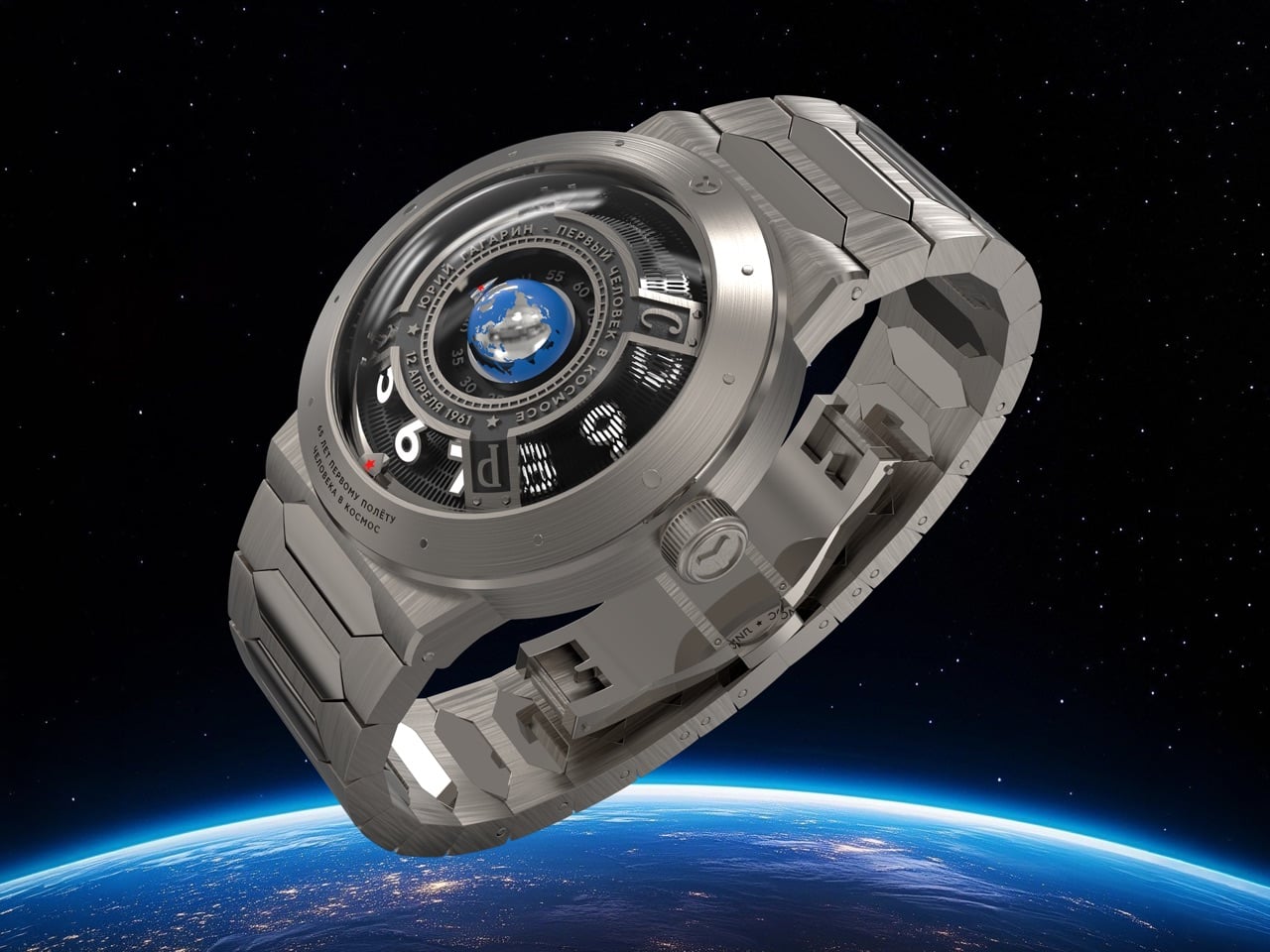
Alexey Yakushik’s Yuri Gagarin: First in Space is that delivery. His brand launched in 2025, and this is a big step up from its earlier releases on Vostok and Luch movements. The case is Grade 5 titanium, 45mm across (about 1.8 inches), with a domed sapphire crystal, a Miyota 8215 automatic sits under a custom module, and a rocket hand circles a blue Earth every hour. It collected two European Product Design Award wins this year. The run is 130 pieces, split between natural titanium and black PVD, at about $4,150 each, sold only through the brand’s Russian site.
Designer: Alexey Yakushik
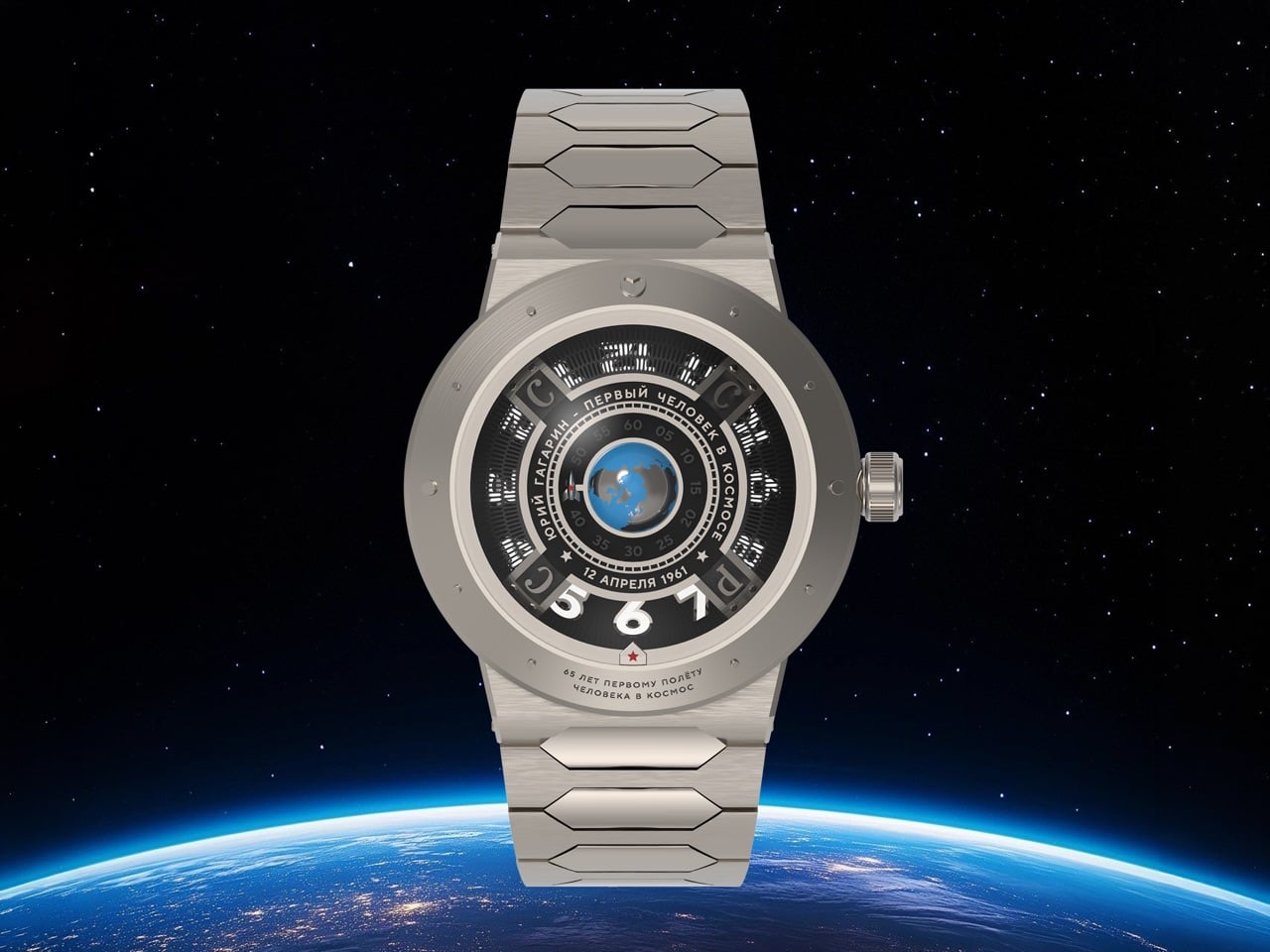
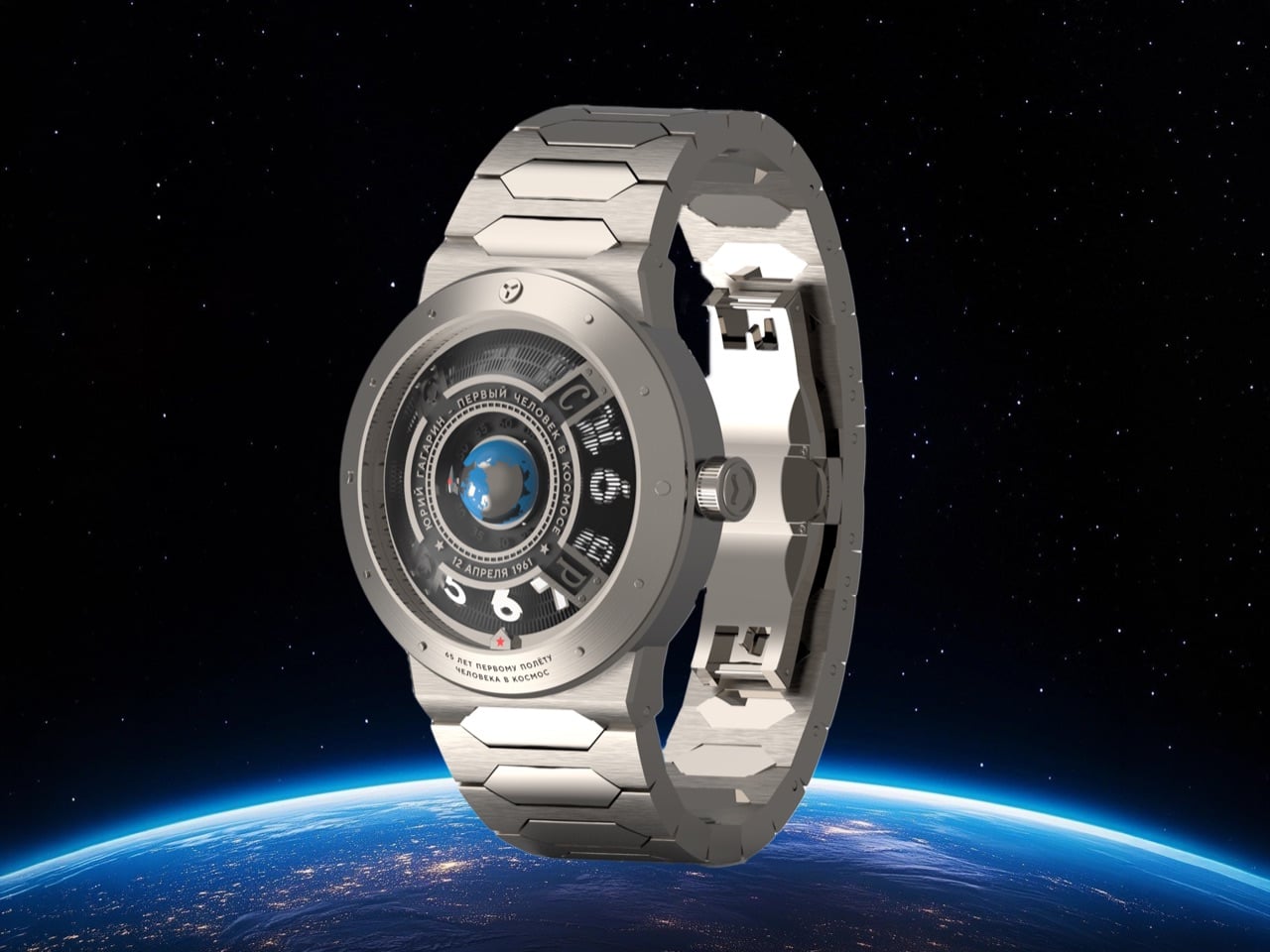
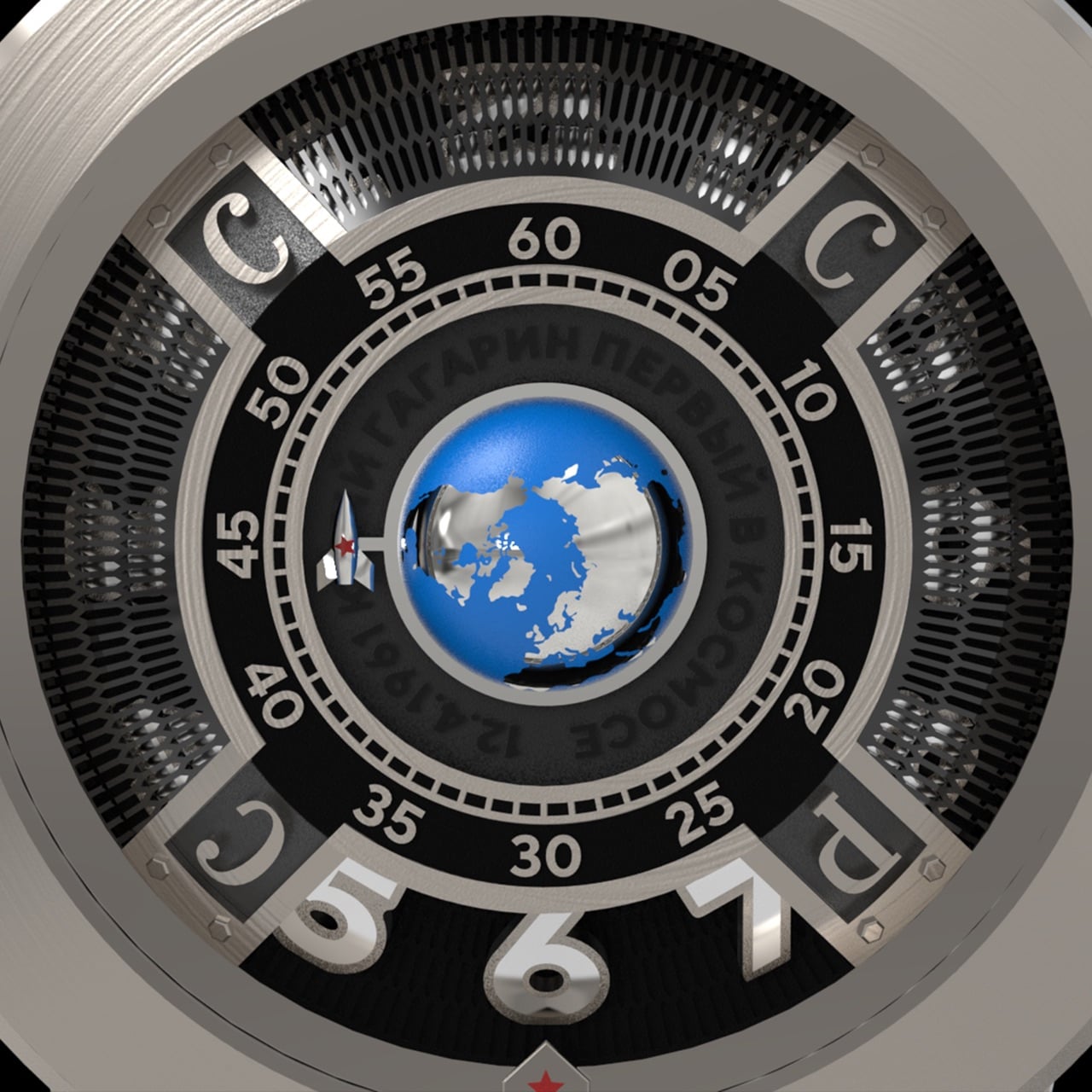
A polished blue Earth sits dead center of the dial, and a rocket-shaped minute hand laps it once an hour. Minute numerals ring the globe like a launch-control readout. Hours sit lower down as bold Arabic numerals, with a red marker picking out the current one. Four plates on the diagonals spell СССР in Cyrillic, which is about as subtle as a Soviet space poster should be. For the record, Vostok 1 took roughly 89 minutes to orbit the planet and the rocket does it in 60, but I won’t be filing a complaint about the pacing.
The case and the integrated bracelet are both Grade 5 titanium, the alloy aerospace engineers love because it is strong, light, and unbothered by most of what life throws at it. At 45mm the case is large on paper, though titanium weighs far less than steel, and the brand hasn’t published the weight or thickness. The domed sapphire crystal is 35mm across and bulges up over the globe like a capsule window, which is the whole porthole idea in one piece of glass. Water resistance is 100 meters, the lume is BGW9, and the links look faceted and angular in the renders. Nobody is mistaking it for a dress watch.


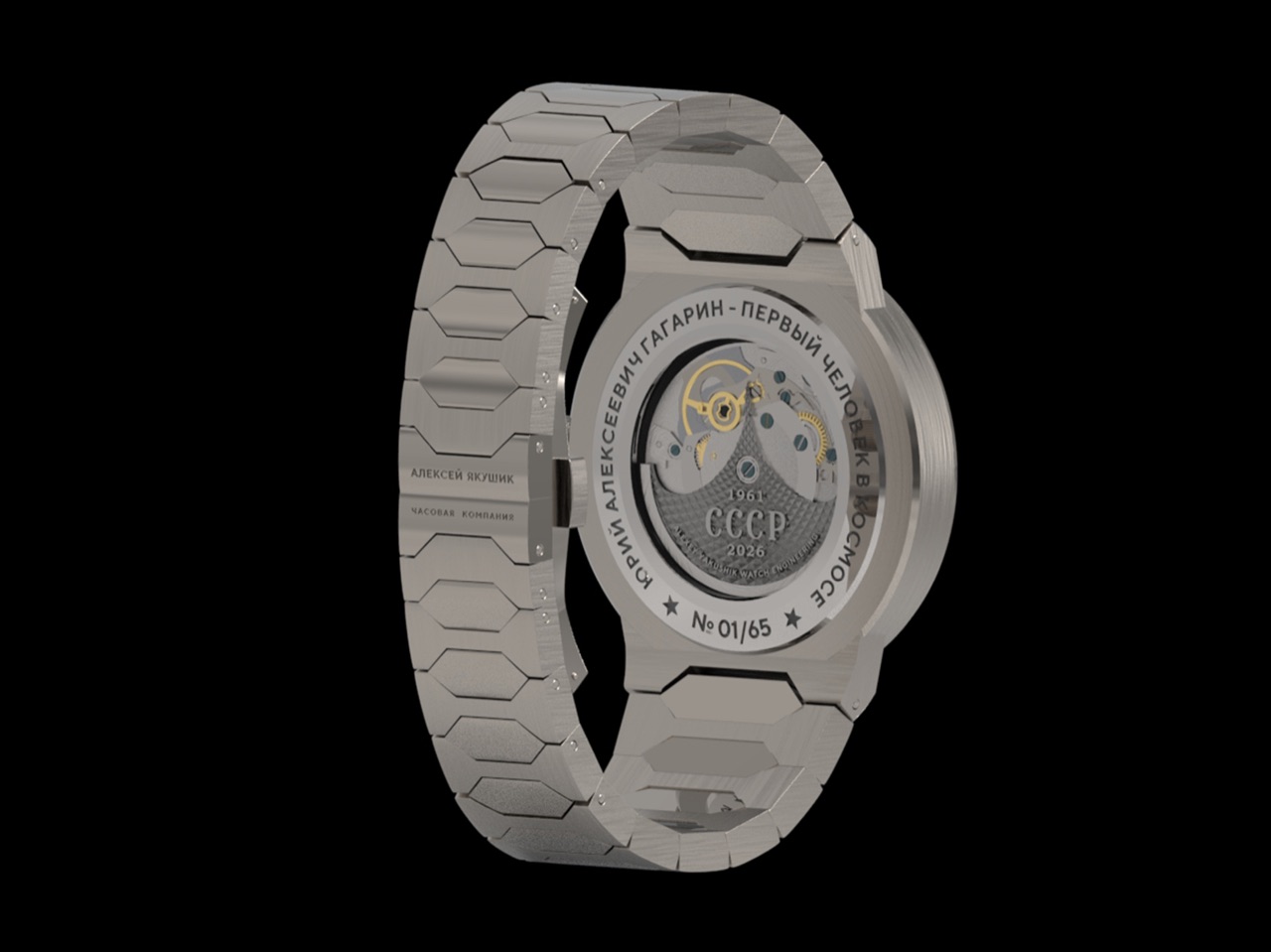
Underneath sits the Miyota 8215, a 21-jewel Japanese automatic workhorse that keeps time reliably and stays out of the dial’s way, with the brand’s AYW001.1 module built on top. The renders show a custom rotor stamped with 1961, СССР, and 2026, the sort of detail only the owner will ever see. Yuri Alekseyevich Gagarin’s full name wraps the sapphire caseback window, and every watch carries its own number, such as 01/65. Hiding a love letter on the back of a watch is a wearer-only flex, and I’m here for it. Nobody across the table will ever read it, which is exactly the point.
Yakushik says the project has the blessing of Gagarin’s daughters, Galina and Elena, along with Roscosmos support. It launched April 16, 2026, timed to the flight’s 65th anniversary, and the first piece went to the Moscow Museum of Cosmonautics. The European Product Design Award is a paid-entry Farmani Group competition that covers concepts and finished products, so read the two wins as a nod to the design and leave the horological verdict to others. At about $4,150, the money goes to the titanium, the bracelet, the dome, and the custom display more than the base caliber. Gagarin carried a 33mm brass tool into orbit, and sixty-five years later his flight has a 45mm titanium watch of its own.