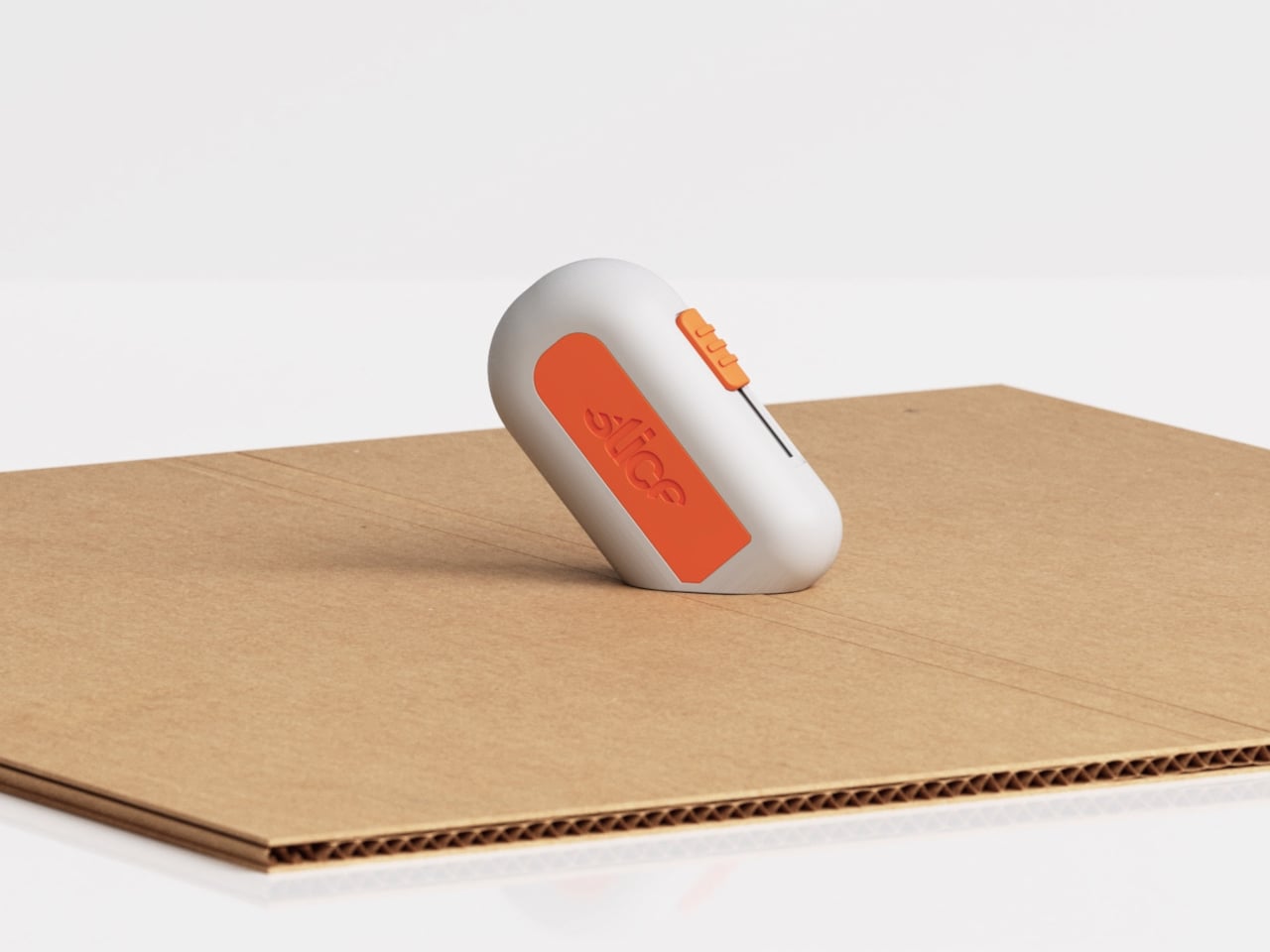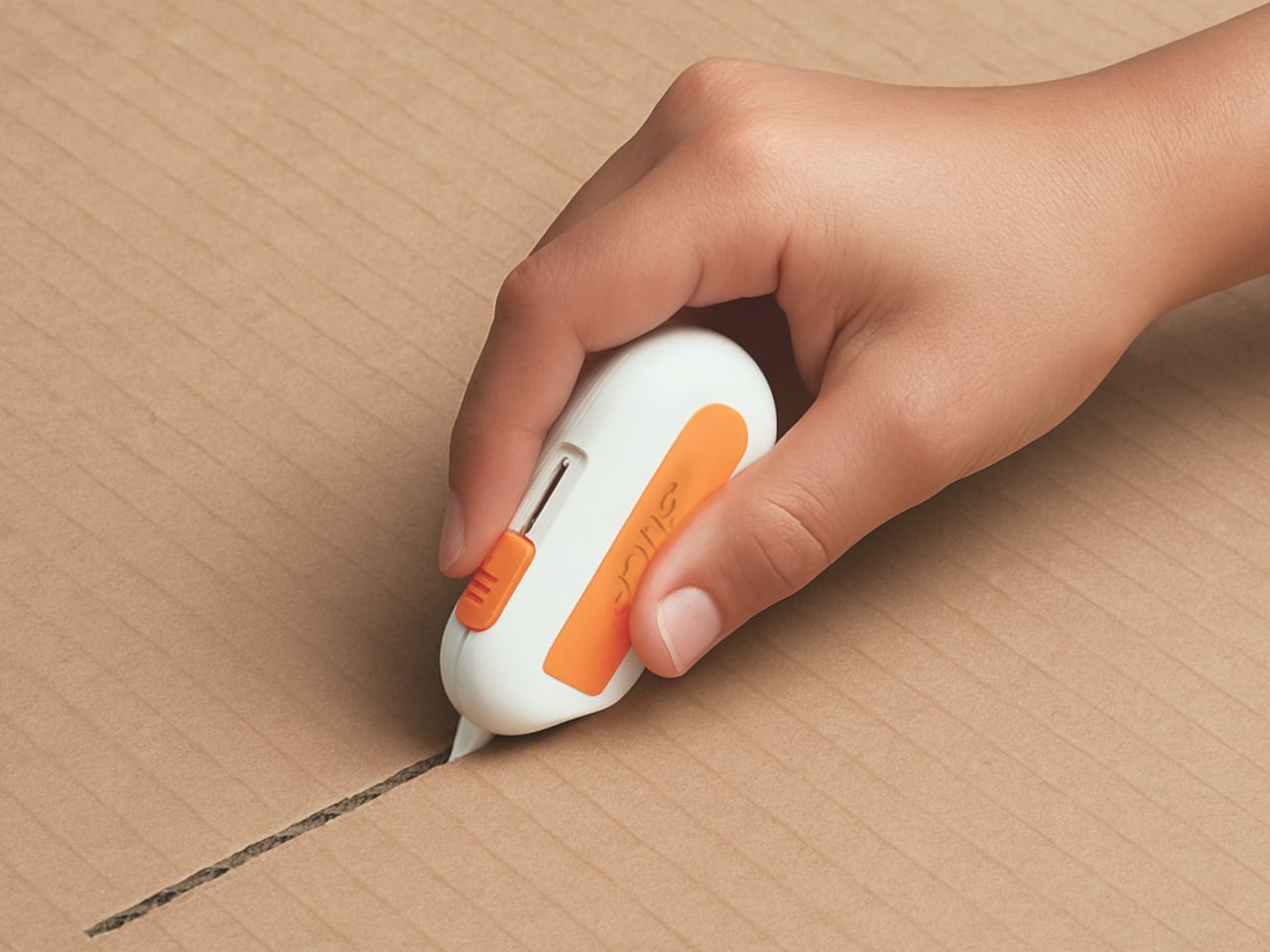

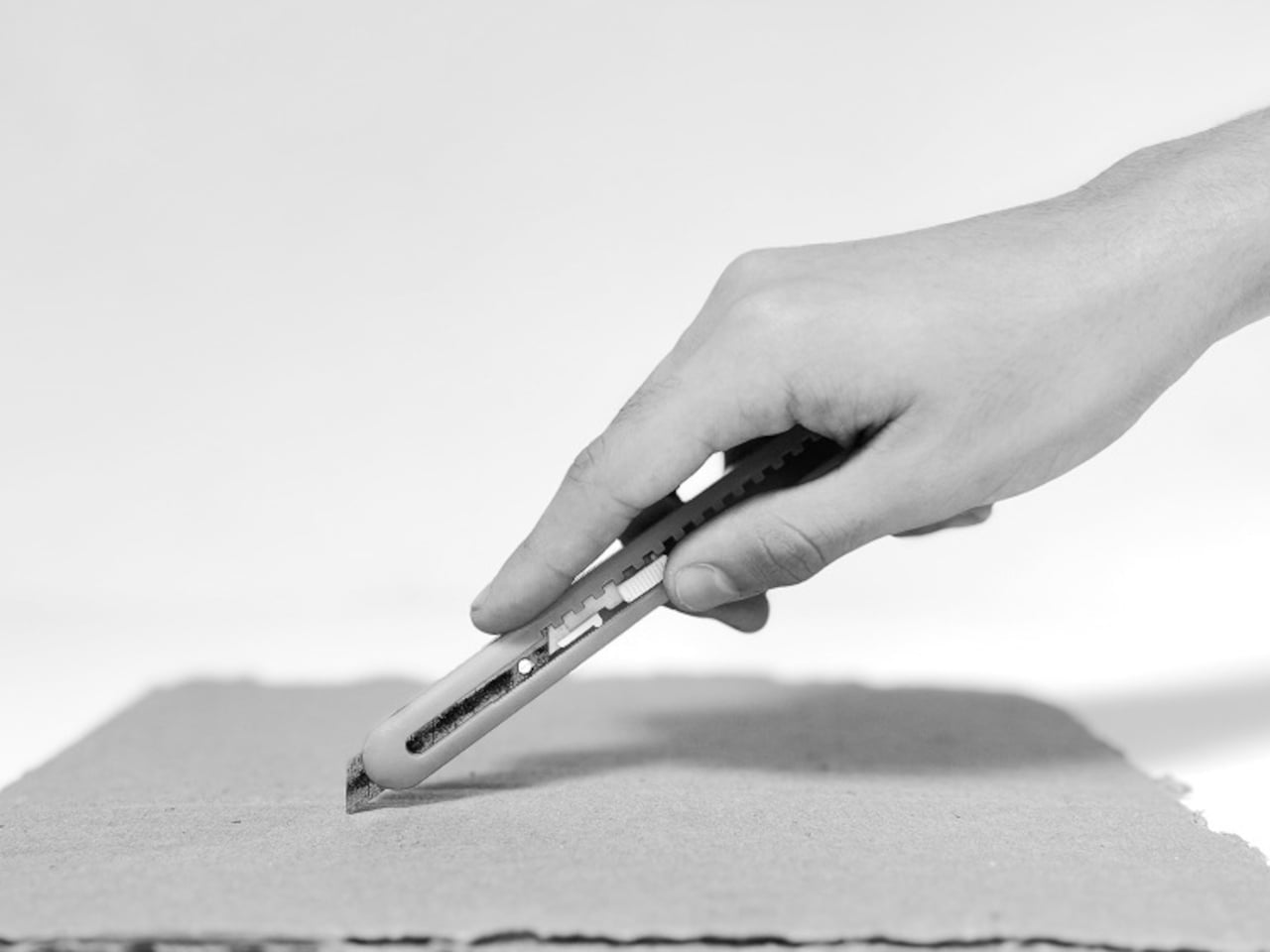
Cardboard can become a castle, a spaceship, or the walls of a school project, but cutting it into shape is often where an adult takes over. Kids Cutter proposes a tool designed around smaller hands instead of expecting children to manage a conventional utility knife. Developed as a student concept, its broad, rounded body is intended to make craft cutting easier to control.
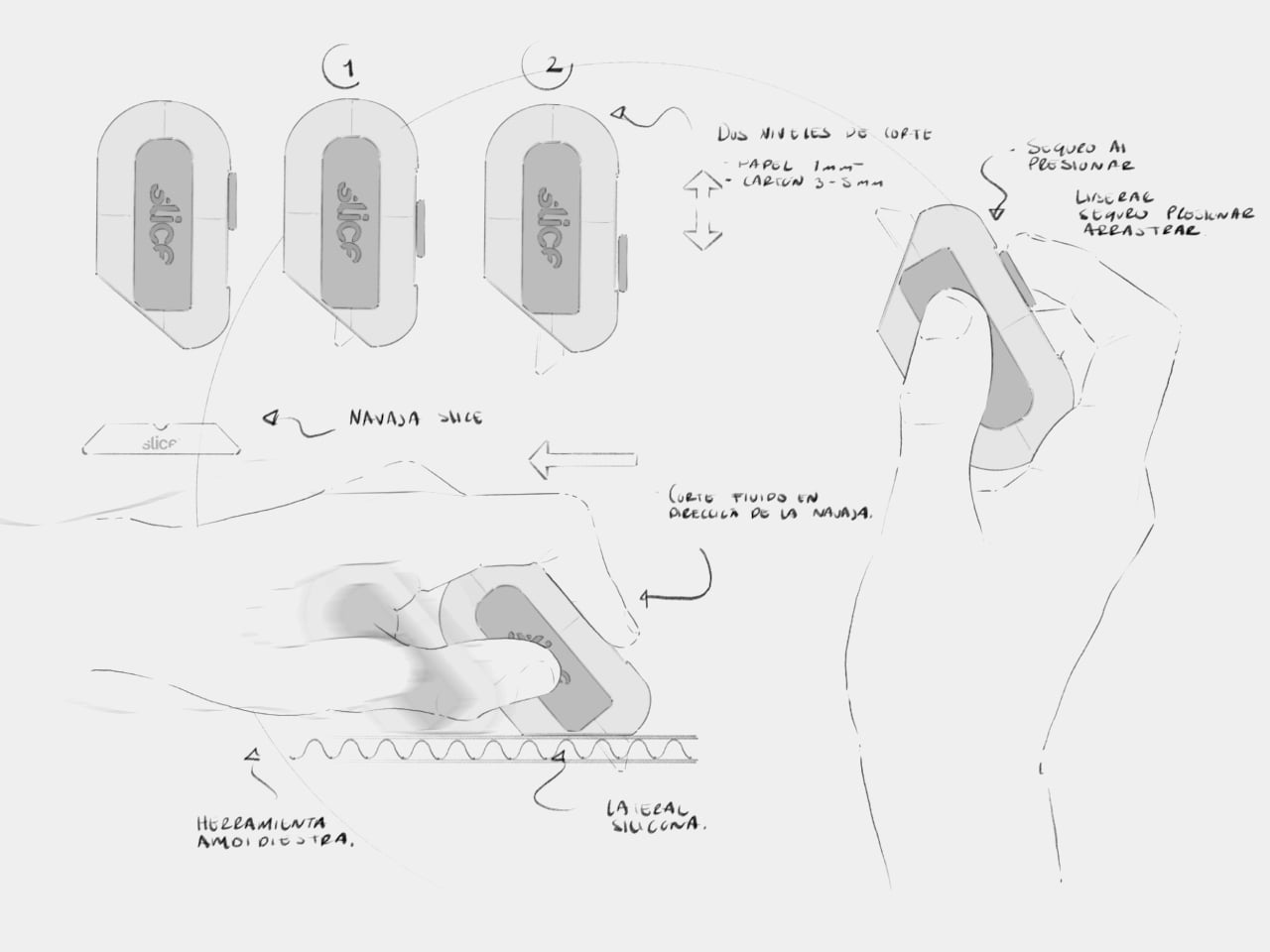
The difference begins with how you hold it. Rather than gripping a long, narrow handle above the work, your fingers wrap around a chunky shell with a curved top and angled bottom. That lower surface is designed to rest against the material as you cut, providing support beneath your hand. The aim is to reduce sideways slipping while keeping the cutting angle consistent.
Designer: Jorge Enrique Reyes Flandes
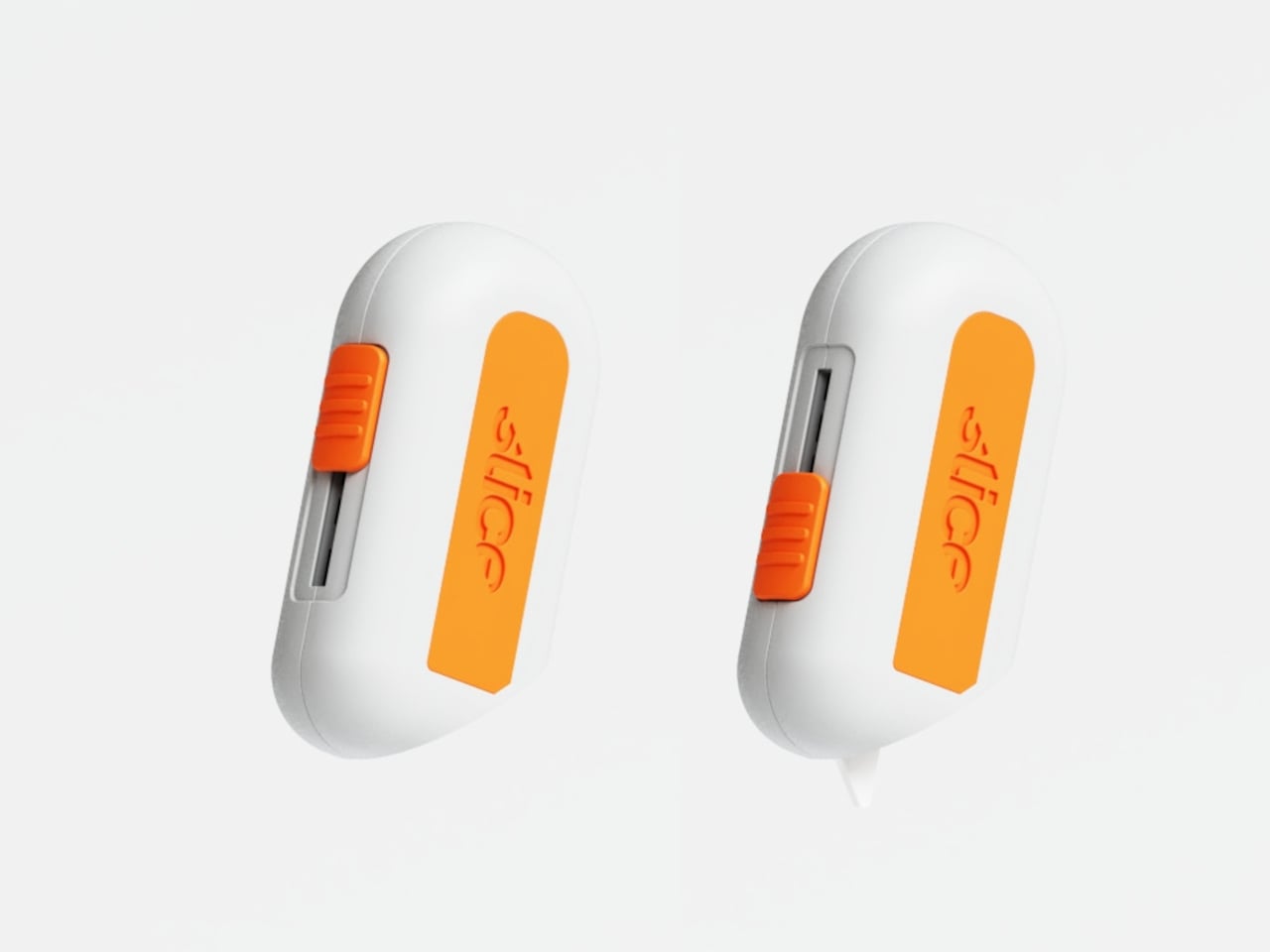
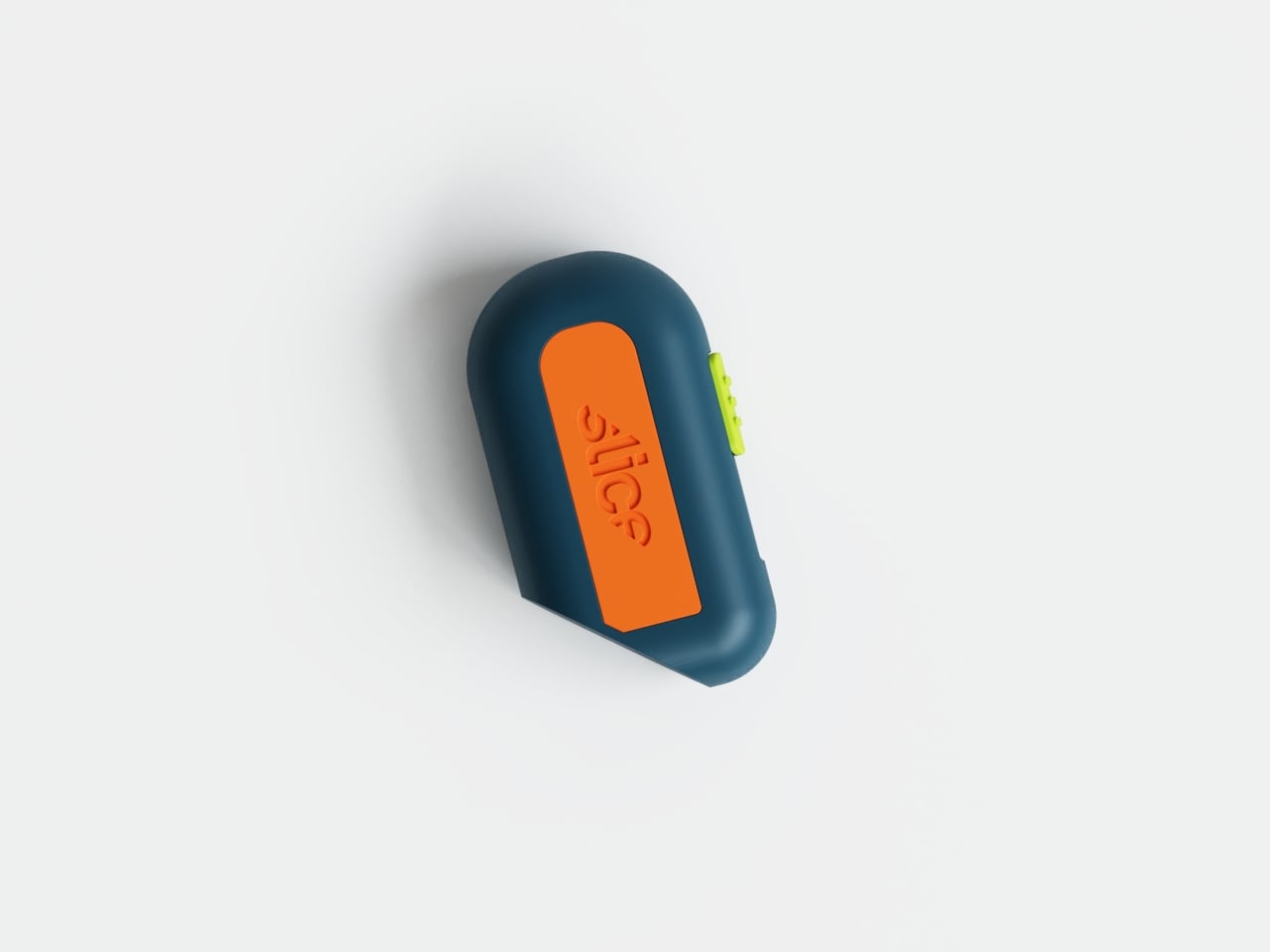
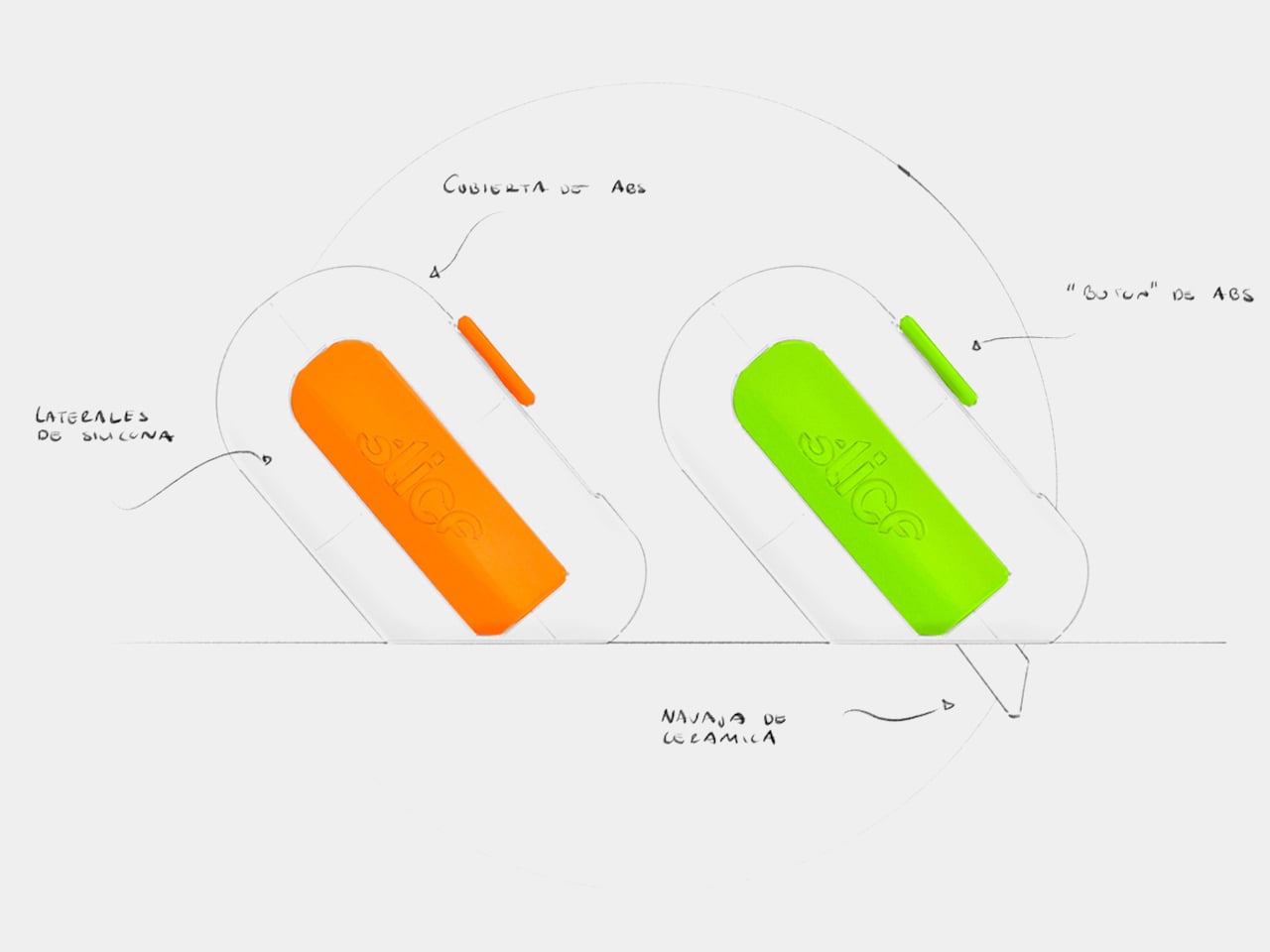
A proposed ABS shell surrounds silicone side panels, combining a firmer housing with softer contact areas. The white body and orange accents borrow Slice’s visual identity, while another treatment pairs a dark blue shell with brighter colors. These choices keep the tool approachable without covering it in cartoon characters, although friendly styling shouldn’t be mistaken for permission to treat it like a toy.
A ridged slider on the edge controls the blade, which extends only a short distance below the housing. That keeps the cutting end close to the supporting base rather than projecting far beyond it. For cutting paper, cardstock, or cardboard, the intention is to give children a compact tool they can guide across a surface, with their hand positioned around the body.
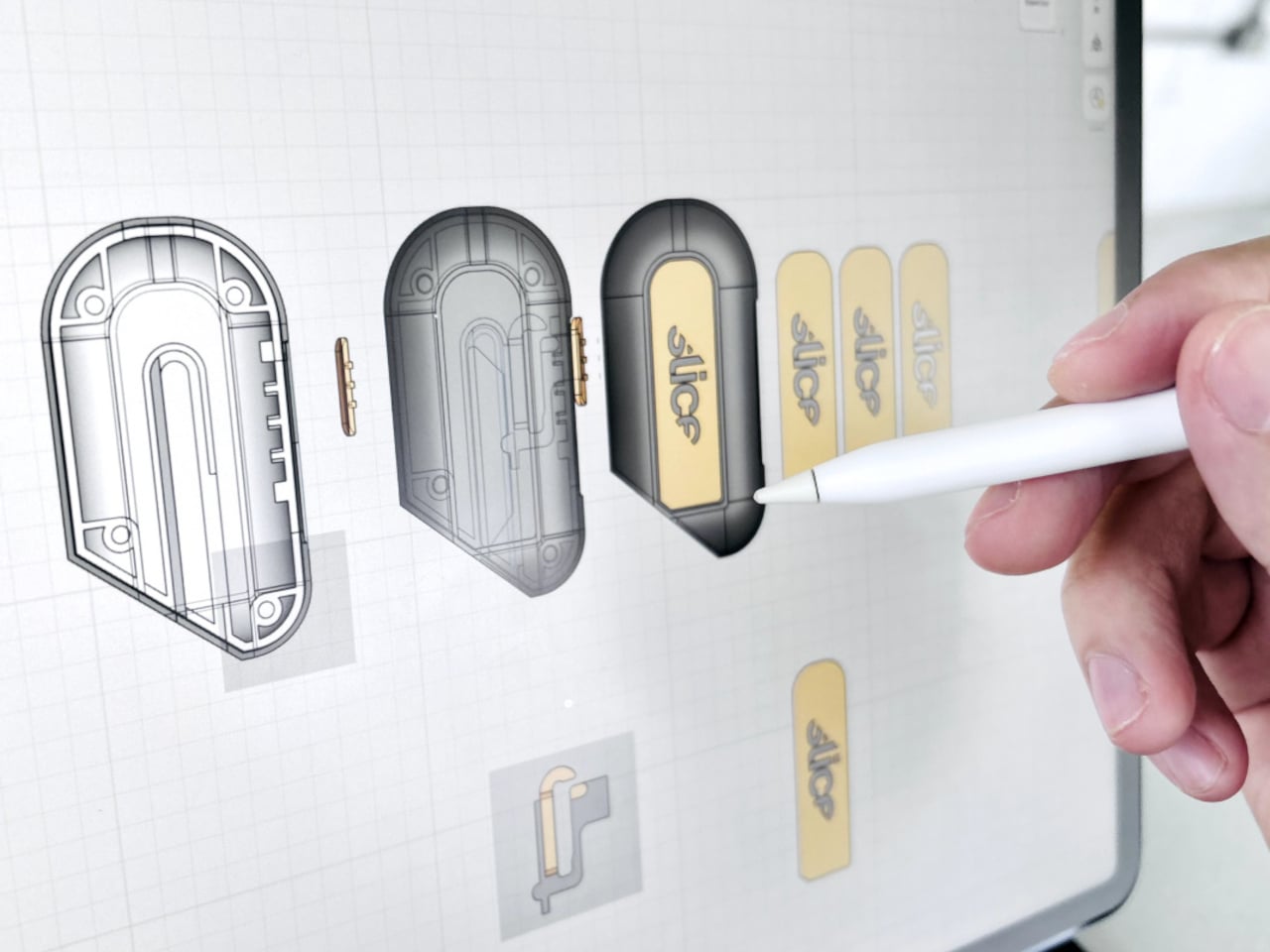
The project draws on Slice’s ceramic blade technology, but that doesn’t make it an announced Slice product. Nor does ceramic automatically mean harmless. Slice says its particular edge geometry reduces injury risk, while acknowledging that its blades can still cut skin. Those distinctions matter here, because a concept intended for children needs more than a reassuring material choice to establish its safety.
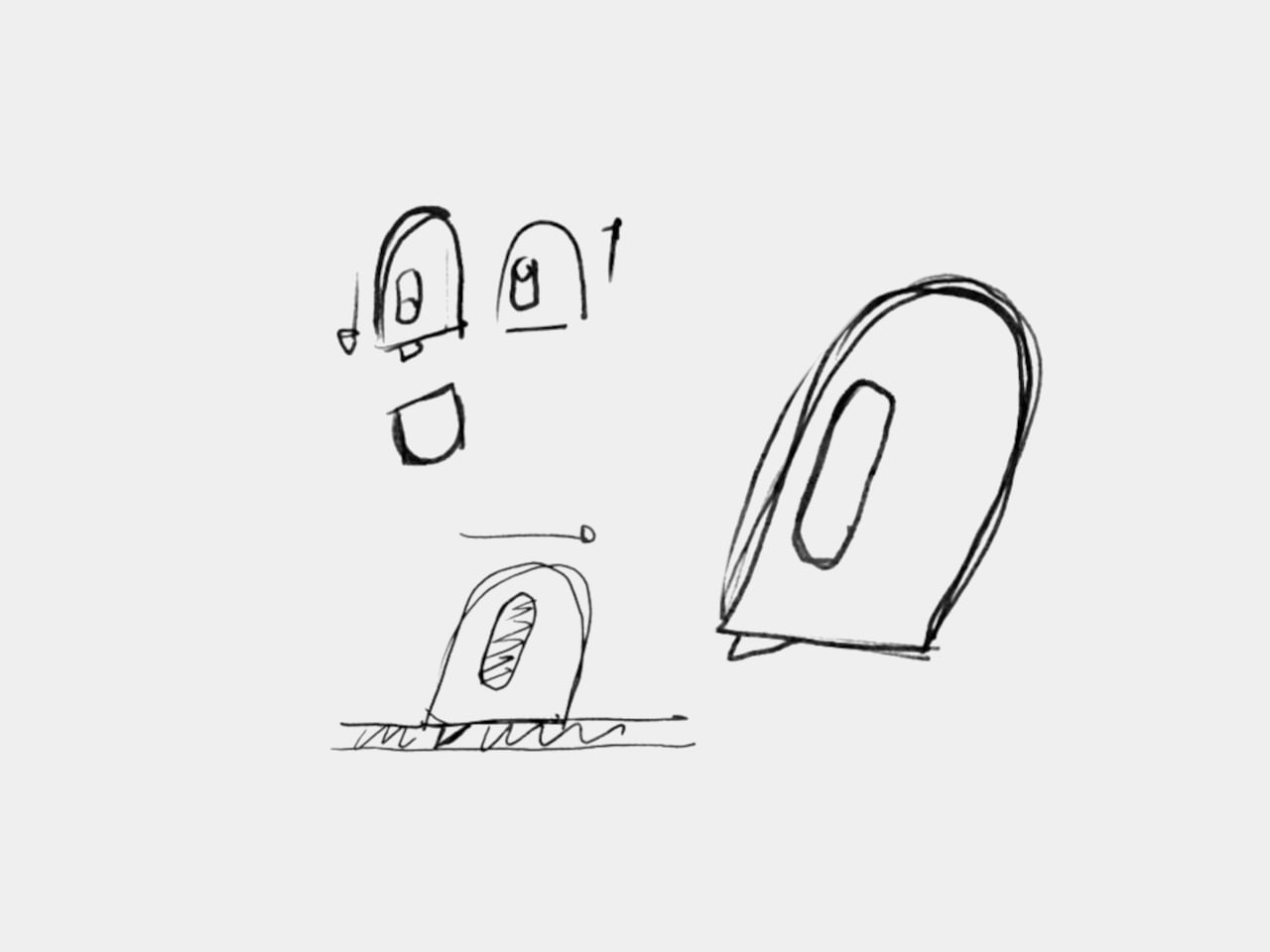
Considerable work has gone into the shape, however. Foam models explored different widths, curves, and base angles before the design moved into digital modeling and 3D-printed prototypes. Development involved six different design versions, including experiments with magnets in the blade-release mechanism. Holding those physical models helped explore how the form sits in a hand, rather than judging the rounded silhouette on appearance alone.
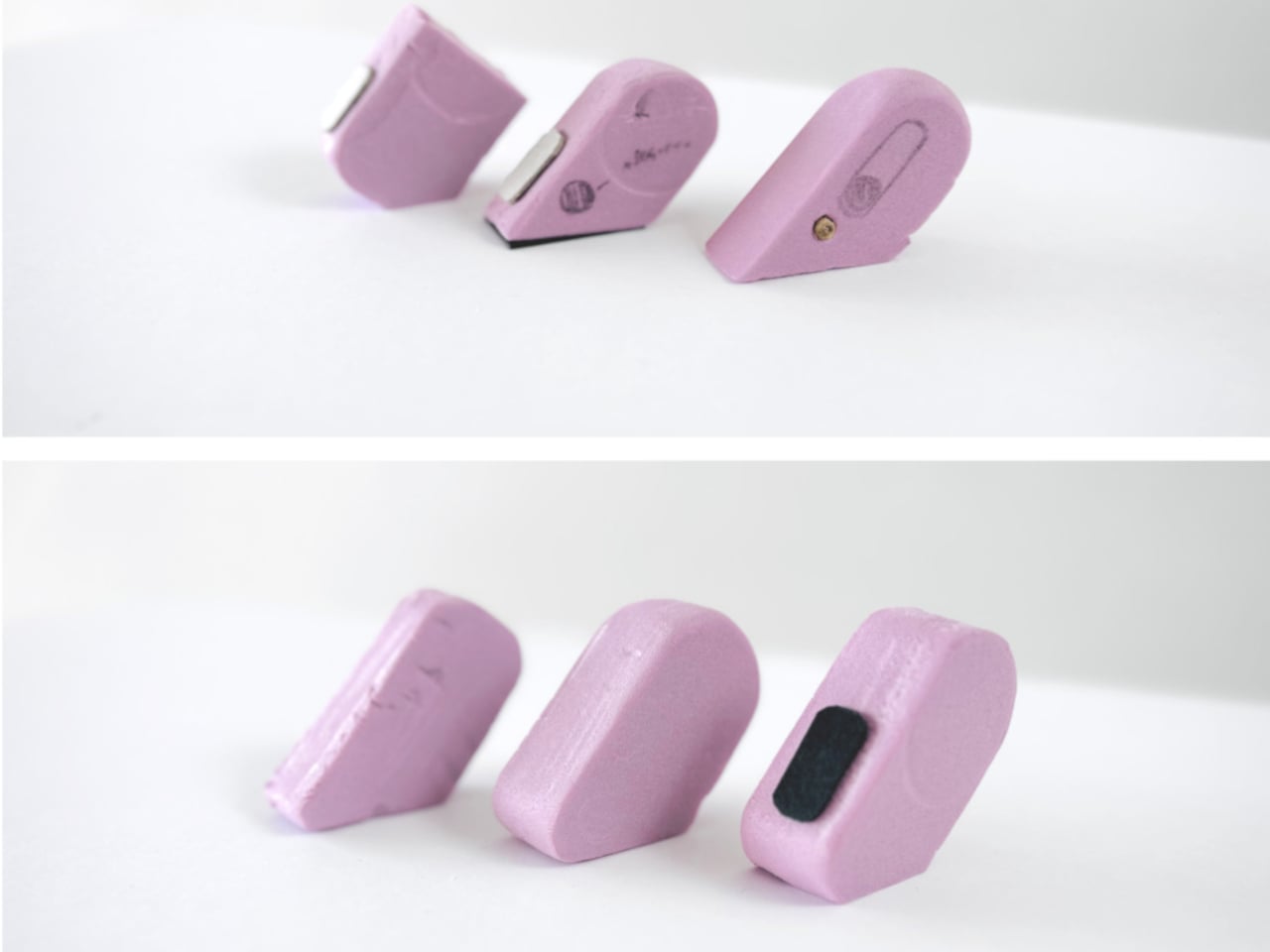
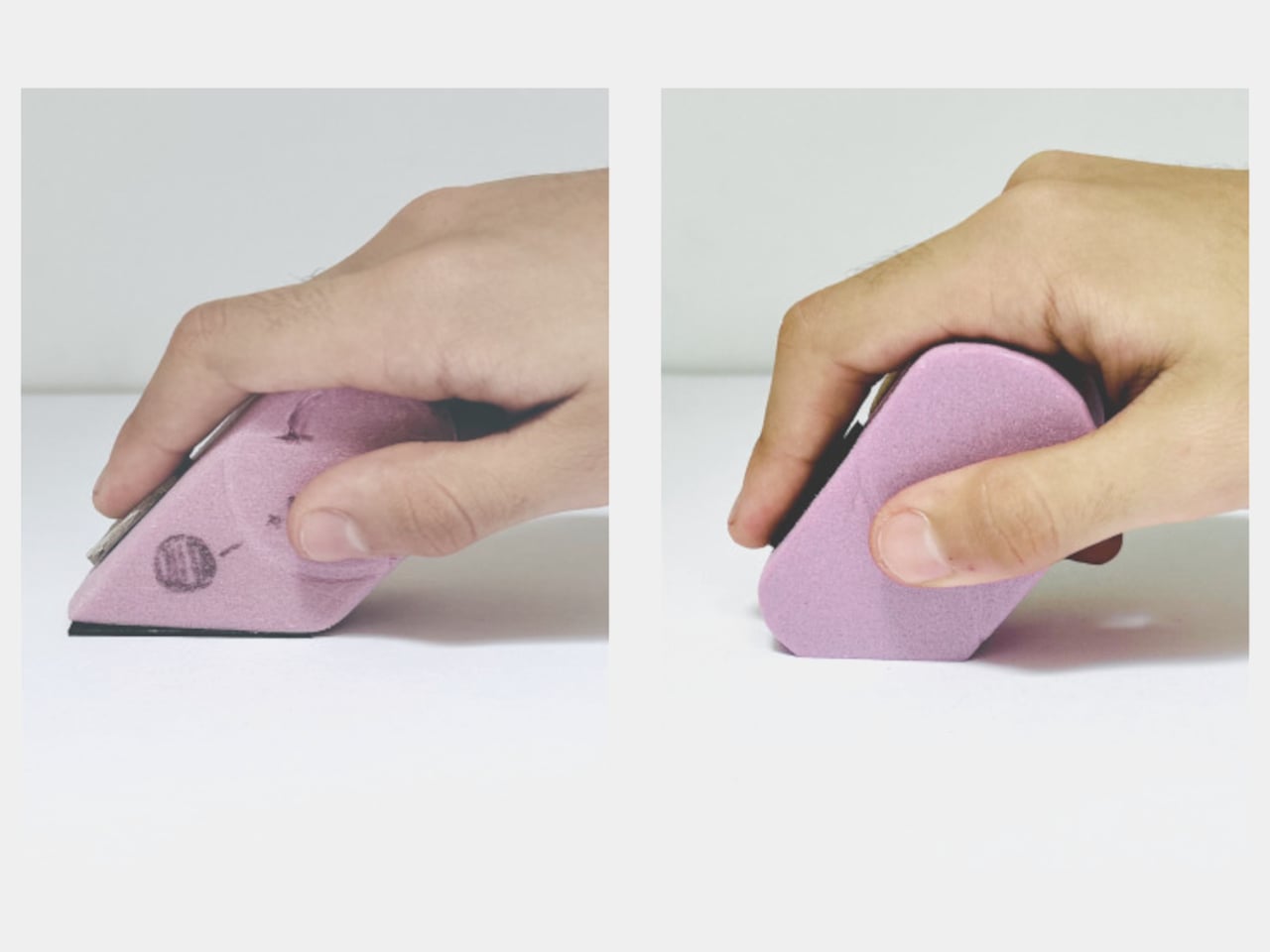
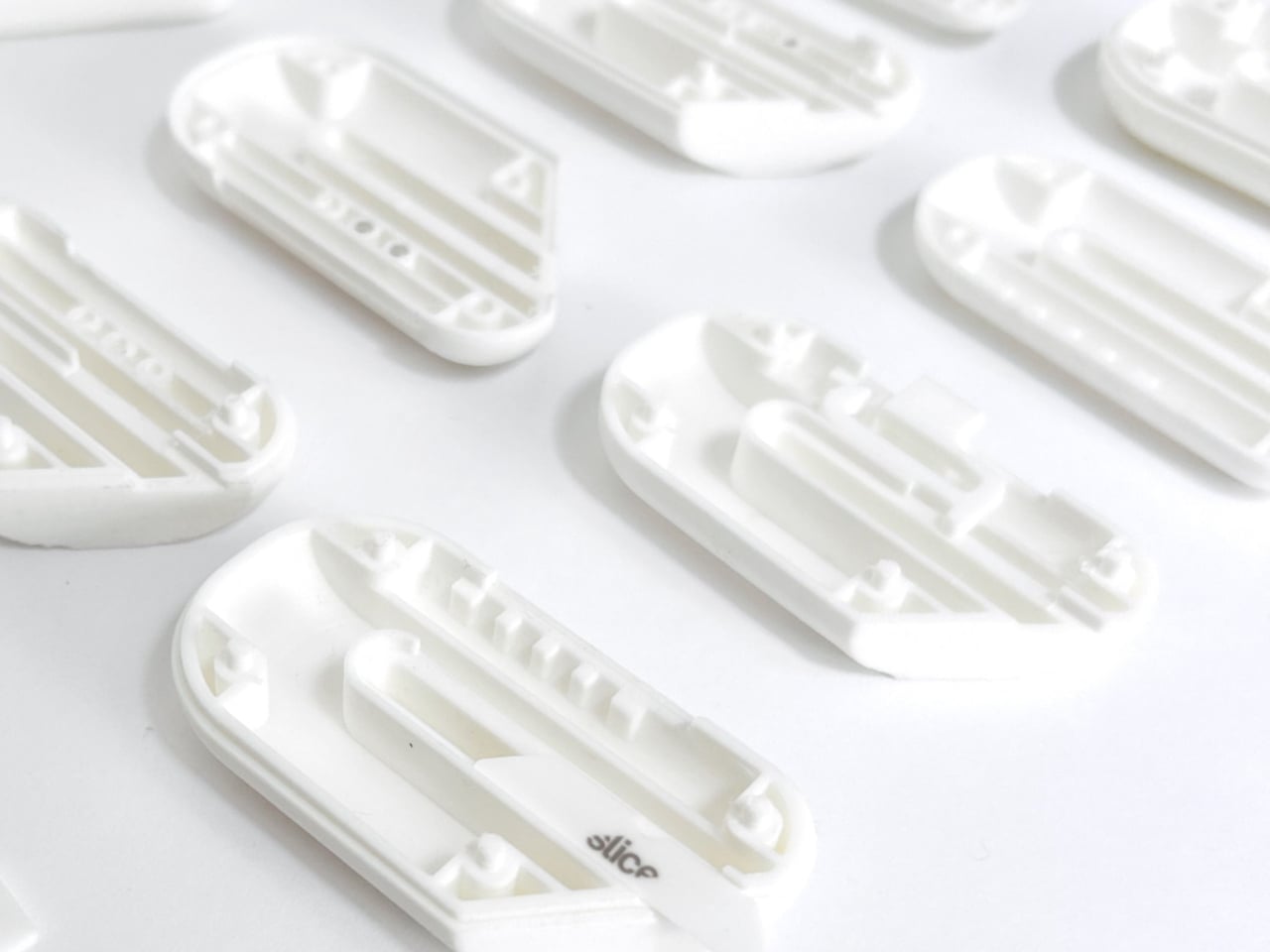
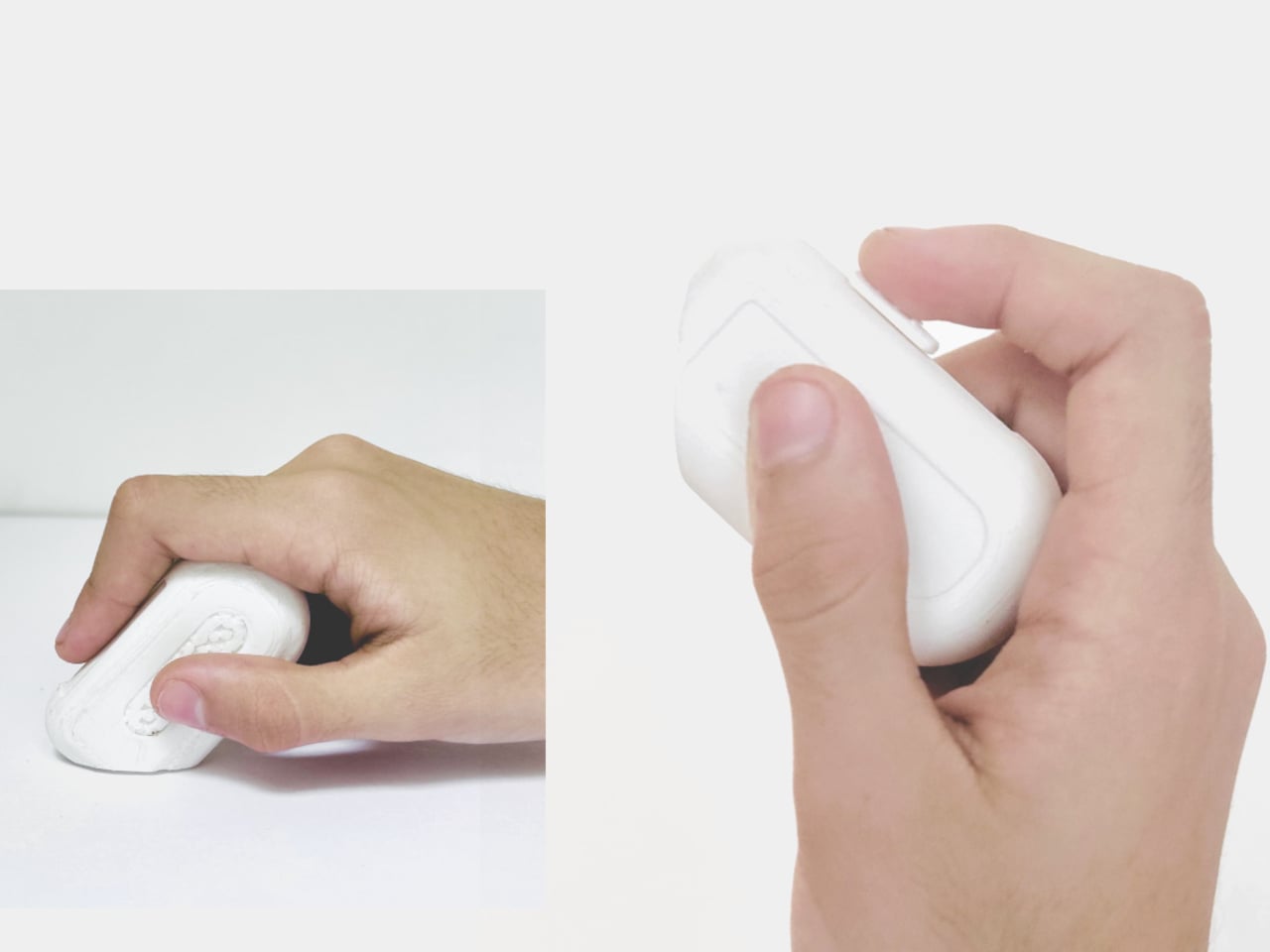
For a child making windows in a cardboard house, that attention to grip could be useful. The tool is intended for ages seven to 12, when the same classroom activity can involve quite different hand sizes and abilities. A broad body offers another way to hold the cutter, but successful straight lines and curves would still depend on the material, technique, and practice.
There’s still work to do before this belongs in a classroom supply drawer. The prototype’s blade lock, slider feedback, and blade-changing process are identified as areas needing improvement, not finished solutions. Adult supervision would remain important, too. Letting children do more of their own making shouldn’t mean leaving them alone with the sharp part, however comfortably the rest of the tool fits.