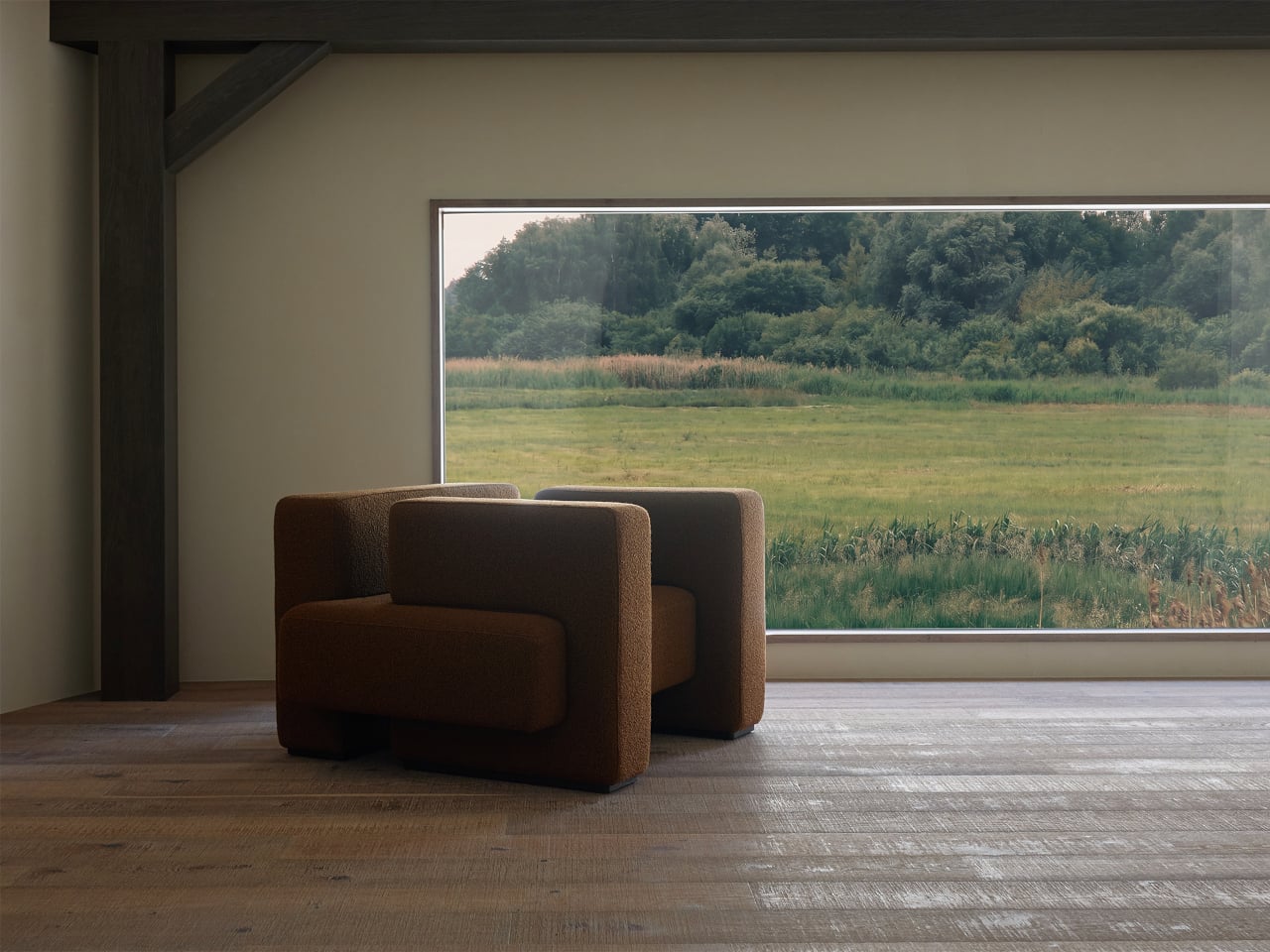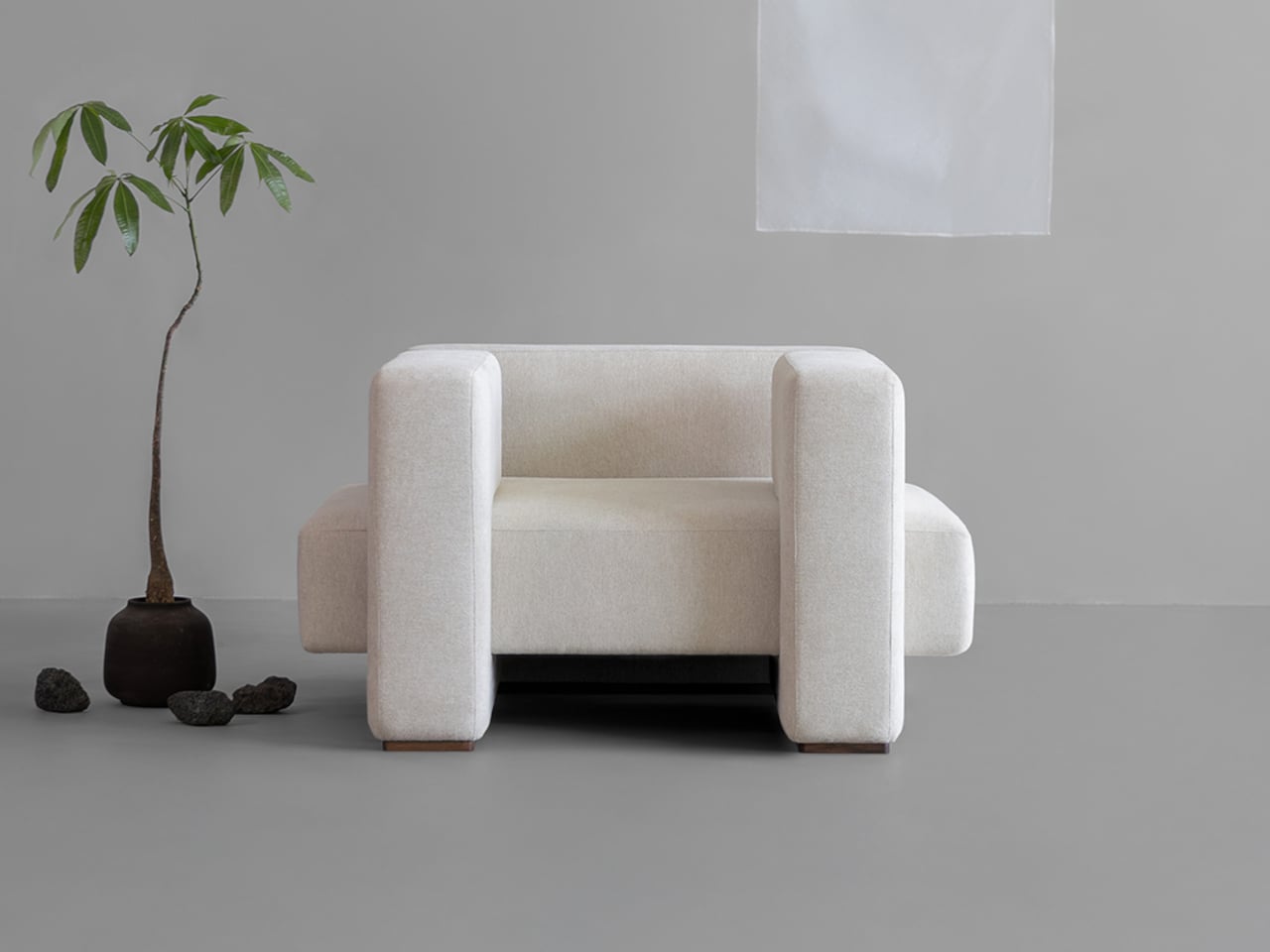

A sofa usually hides its structure beneath cushions, leaving you to think about it only when something creaks. Haesi’s Gyeolgu one-seater brings that structure into the conversation, borrowing the logic of traditional Korean hanok construction for an upholstered chair. Its seat, backrest, and arms meet as distinct volumes, so the furniture feels assembled rather than molded into one anonymous cushion.
The connection to architecture isn’t about putting a miniature house in your living room. Hanok buildings rely on parts meeting with care, and Gyeolgu translates that relationship into thick, intersecting upholstered forms. Two upright armrests frame the seat, while the backrest completes the arrangement behind it. You can follow how each element meets the next, even though their actual construction stays beneath the fabric.
Designers: Jaewon Yeo, Byungwook Gang, Kikang Kim (GANG Studio) for Haesi
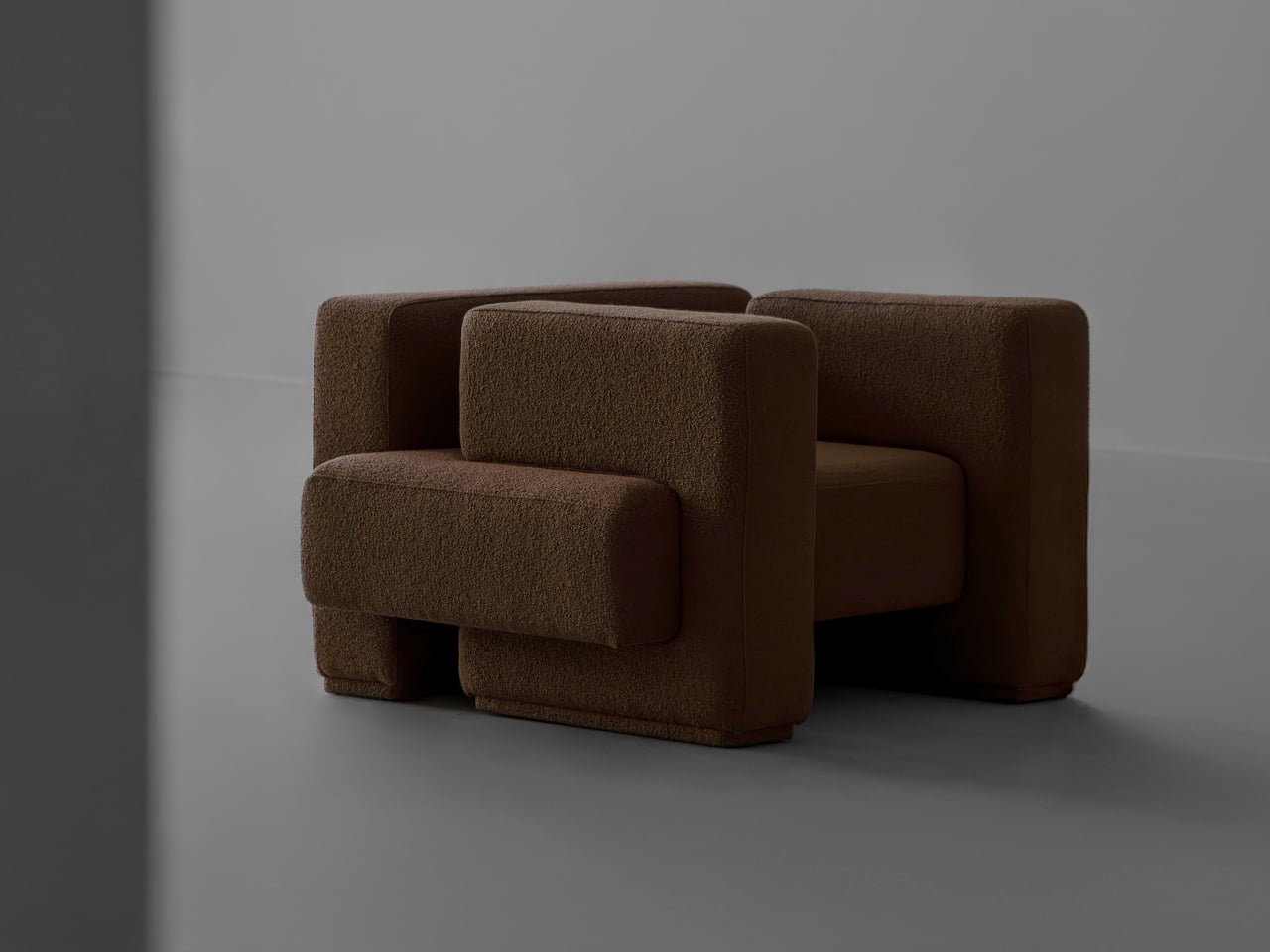
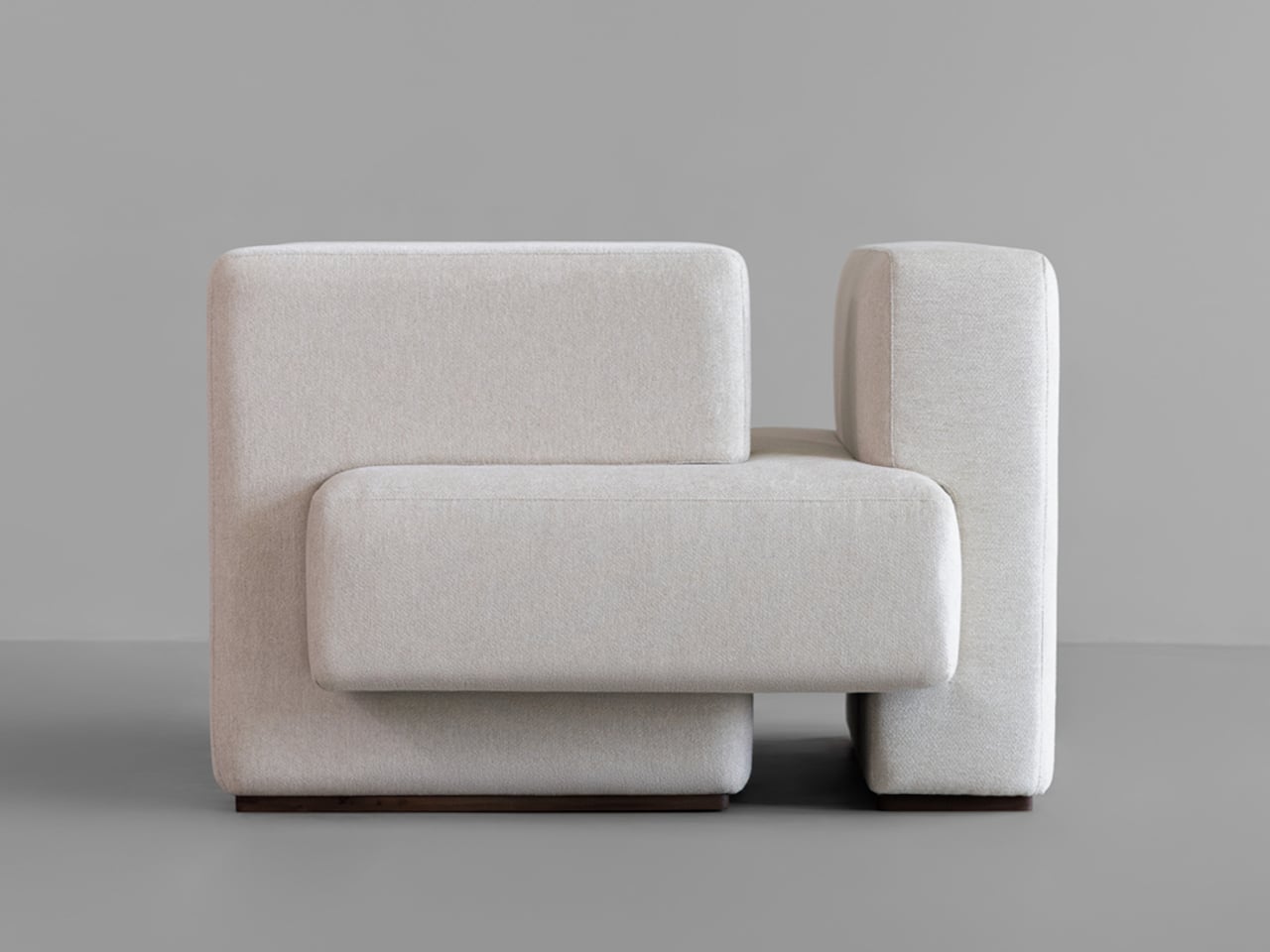
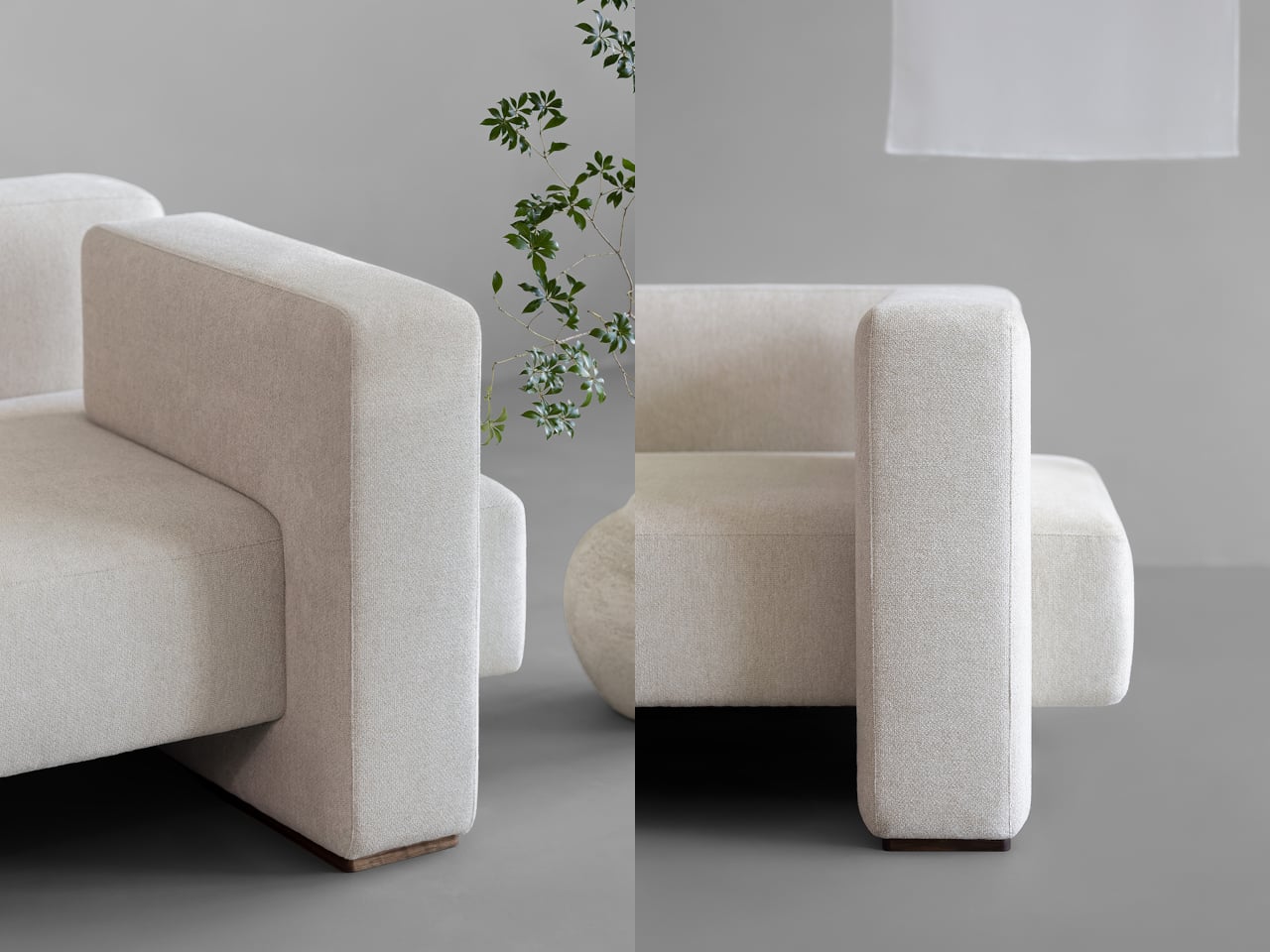
That arrangement gives the chair an unexpectedly generous presence. At about 47 inches wide and 40 inches deep, this is a seat for one that asks for space around it. Yet it rises only about 26 inches, keeping its profile low enough to avoid dominating the room. The seat sits around 16 inches from the floor, inviting you to pause rather than perch.
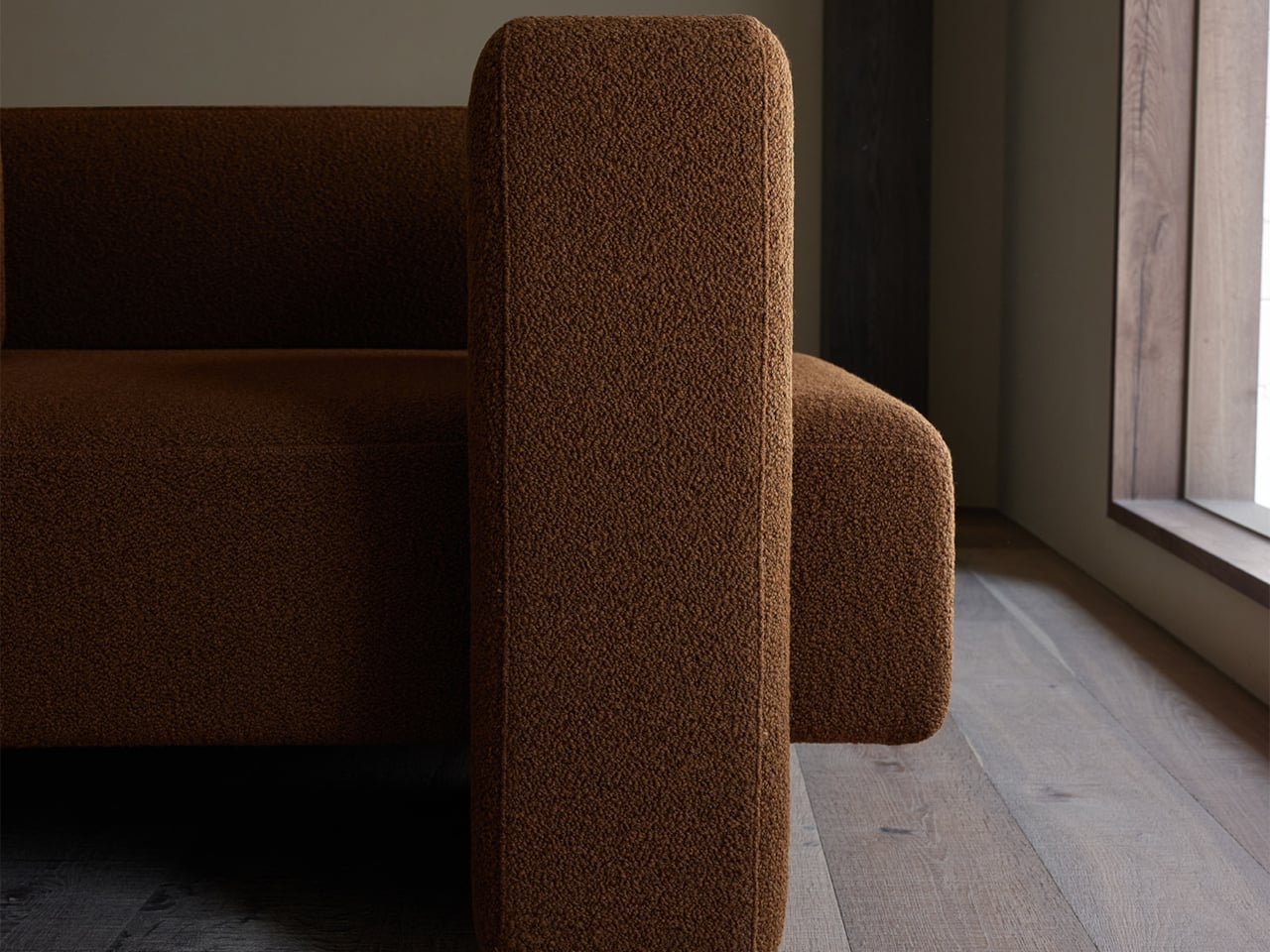
Set it near a window with a book, and the broad arms make a frame around your little corner of the room. They don’t promise room for a cup or replace a side table; their purpose is to support the seated arrangement and give your hands somewhere to settle. The seat projects beyond those uprights, adding a little visual tension to an otherwise quiet piece.
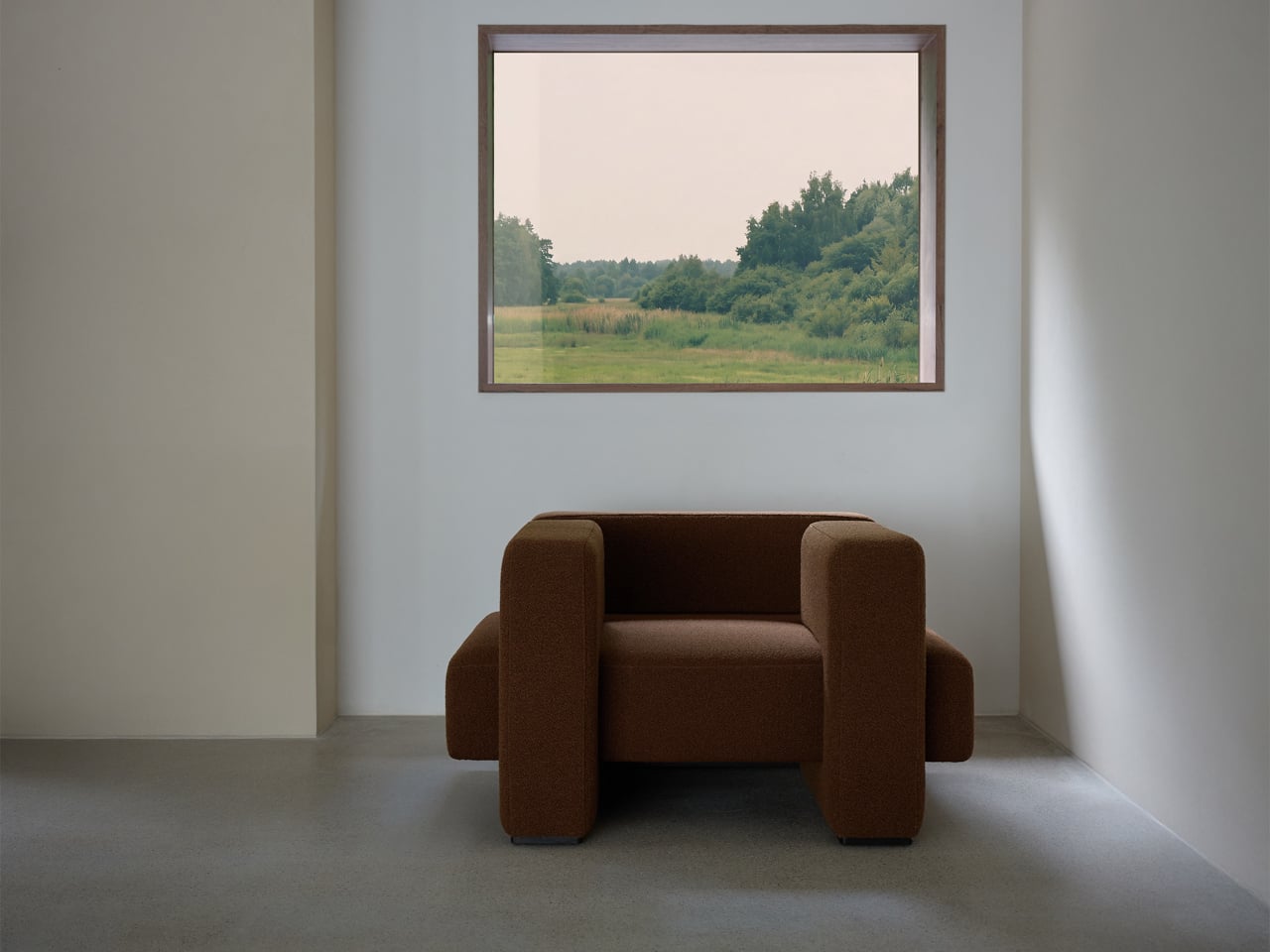
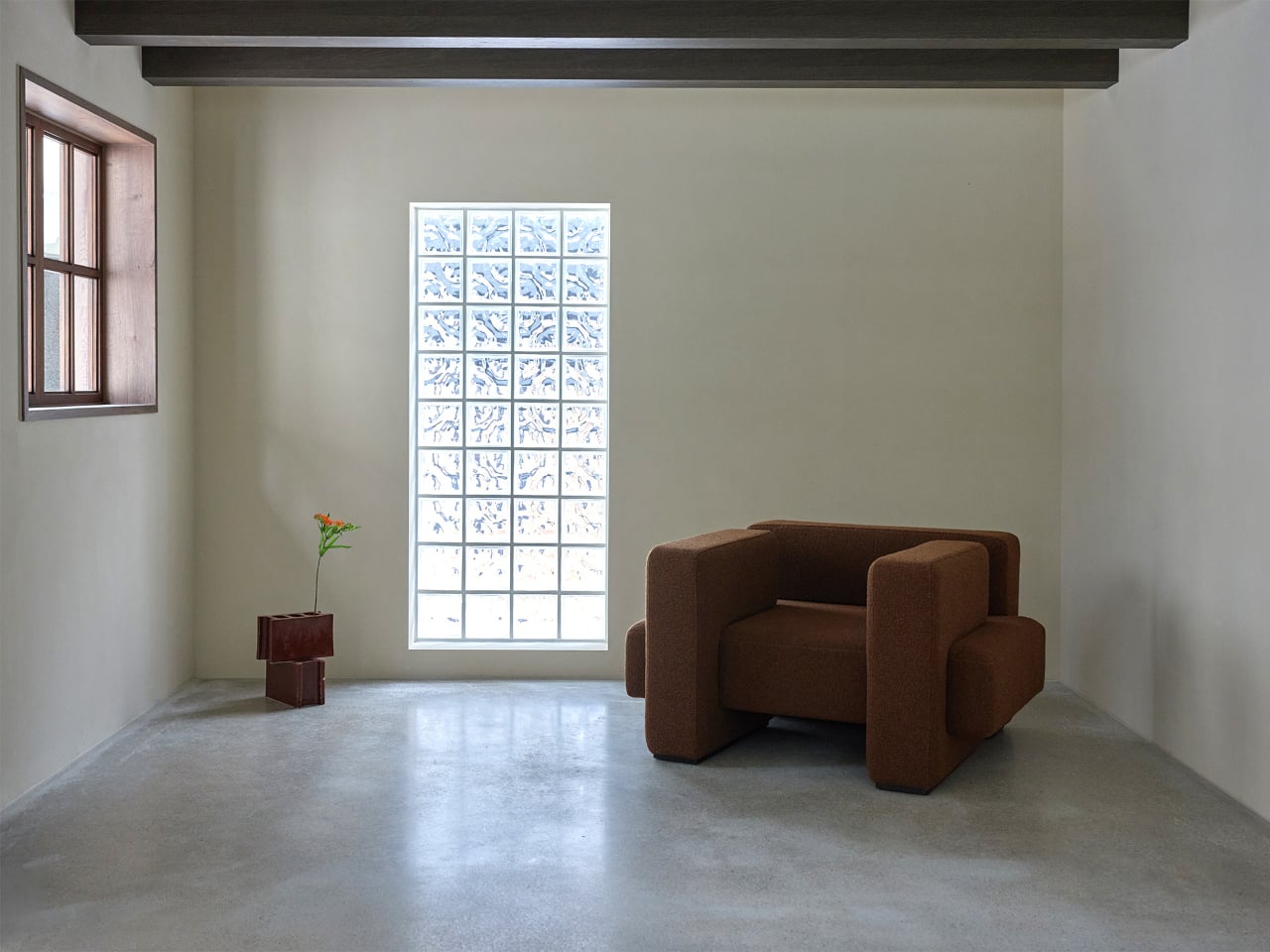
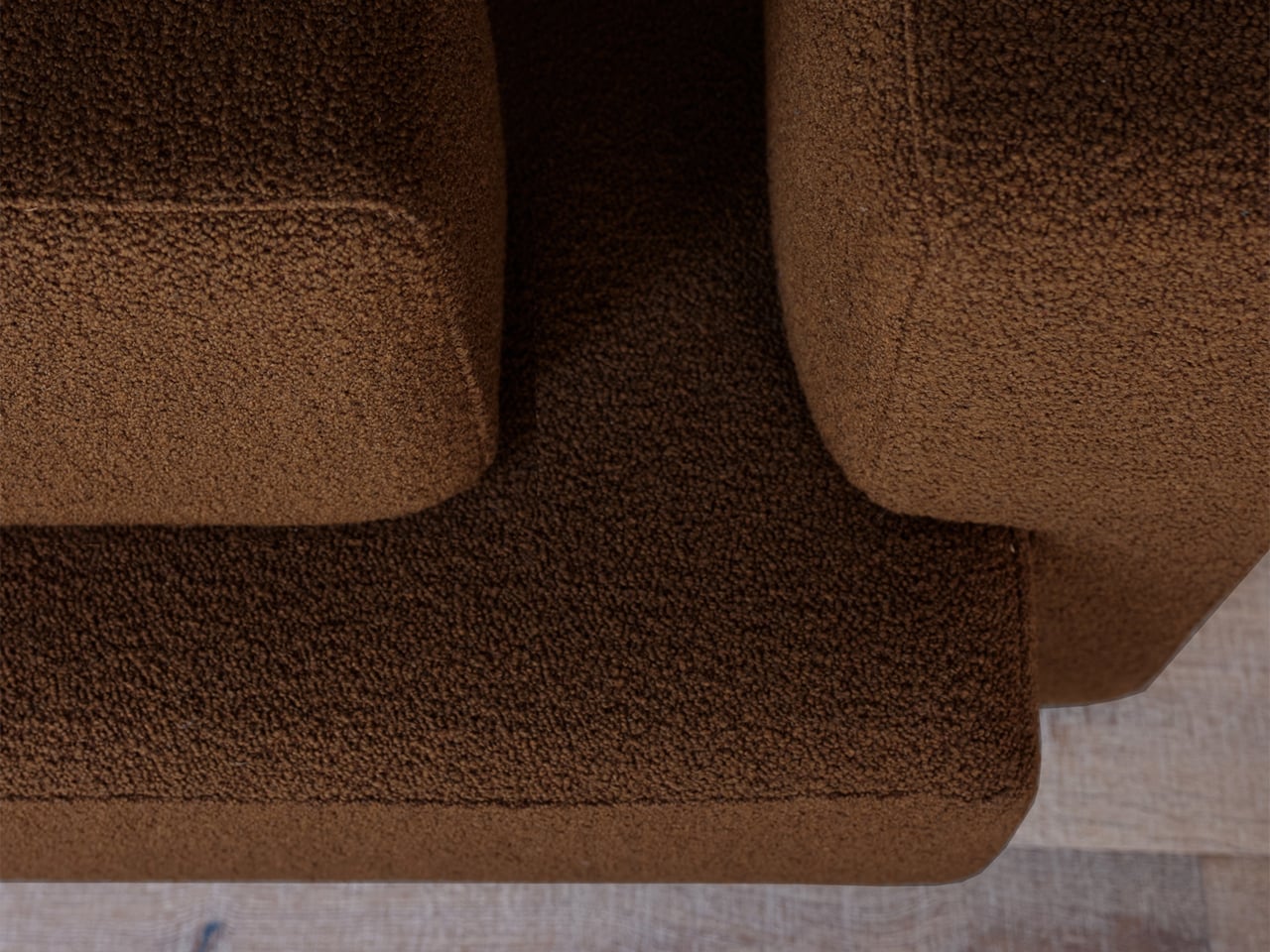
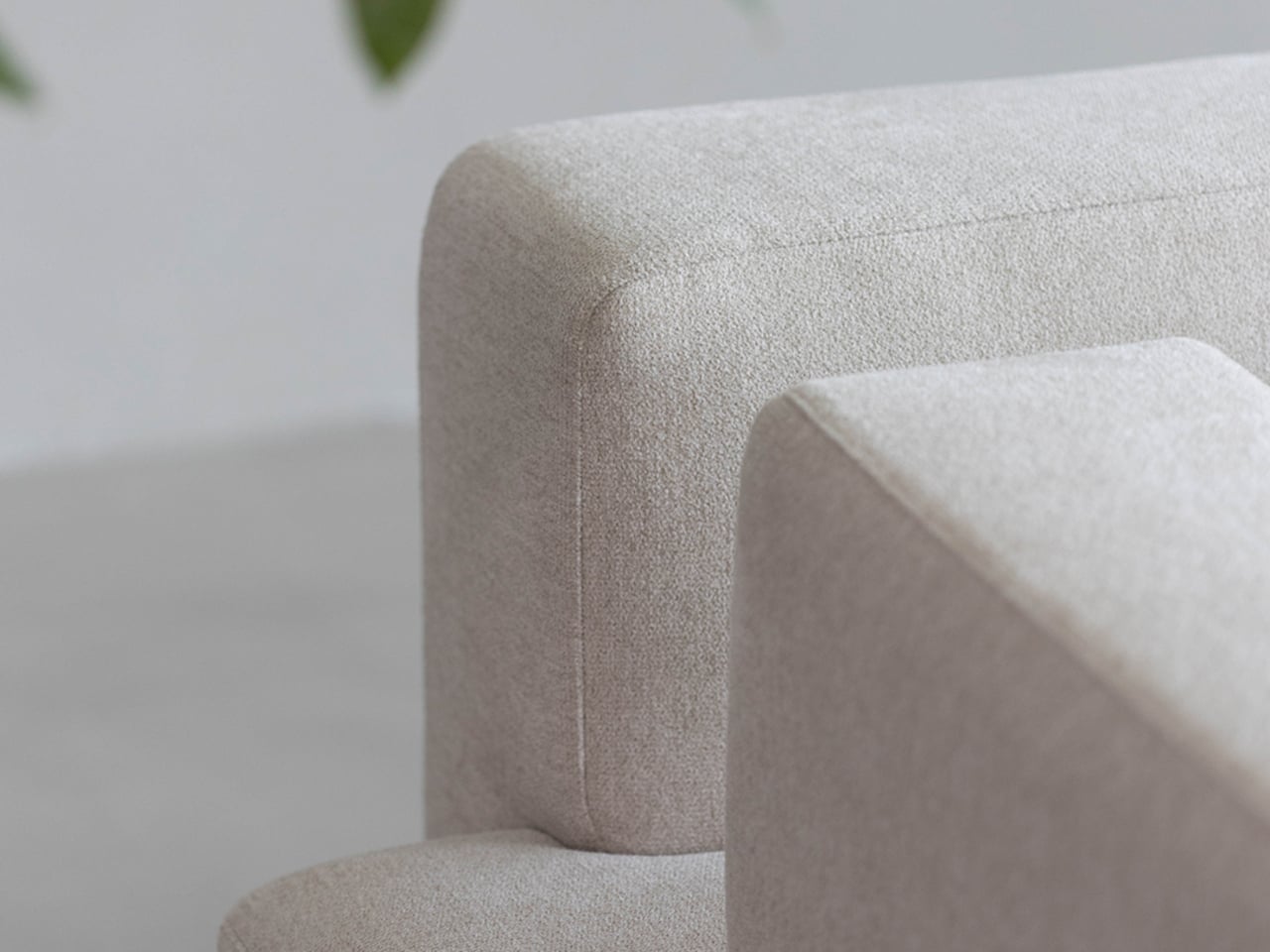
Softness keeps the architectural idea from feeling too stern. The upholstery can be ordered in functional fabric, vegan leather, or bouclé, whose nubby surface draws attention to the rounded edges. A chocolate-brown version feels especially grounded, while pale upholstery lets the forms feel lighter. Underneath, engineered wood and polyurethane foam provide structure and cushioning, rather than the exposed timber the inspiration might suggest.
Haesi’s store lists the one-seater at ₩2,100,000 (about $1,500), so it isn’t the sort of purchase you’d make on looks alone. It also takes up considerably more space than a compact accent chair, especially if that corner has to accommodate other furniture. Its low back may appeal beside a window, although anyone seeking shoulder support should sit in it before deciding where it belongs.
Gyeolgu works best as a quiet place with room to breathe, where its overlapping forms can give a corner its own sense of order. Sit down and the elaborate reference to architecture becomes something simpler: a seat with substantial arms, soft upholstery, and a generous footprint. The idea of parts holding together remains, but now it’s there to hold you for a while.