
Is there anything titanium can’t do? It holds jets together, replaces hips, and turns up everywhere else as pens, bottle openers, and spatulas. At some point you have to assume someone is just showing off. Yet one gig always stayed out of reach, because metal and microwaves have been feuding since the first foil-wrapped food item went in and the kitchen turned into a laser show. For decades it’s been either glass, ceramic, or that trusty Tupperware you’ve been using everyday… but not anymore.
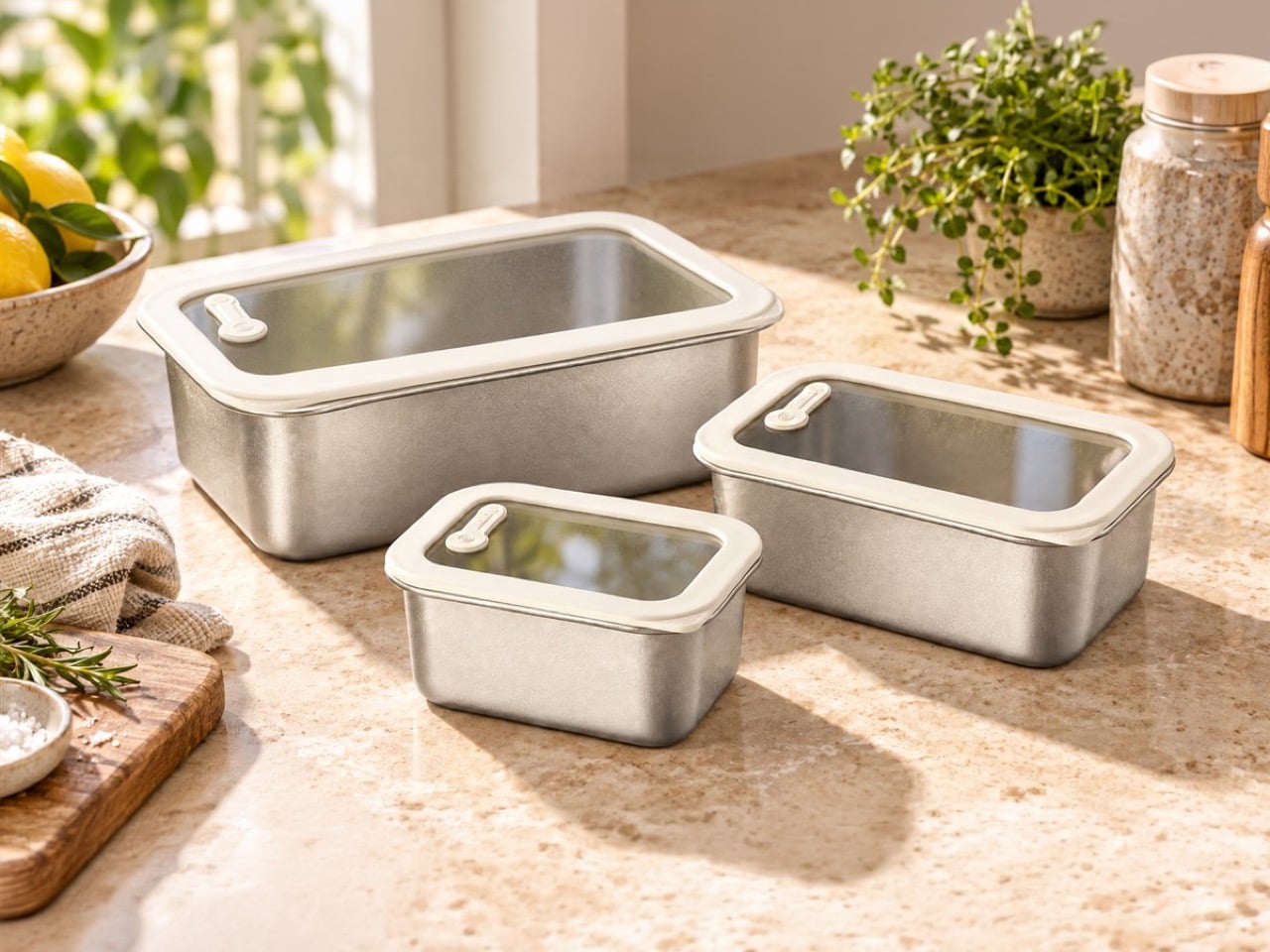
Hong Kong-based OSIMT finally cracked the code to microwave-safe metal boxes with the Titanium Storage System – three nesting containers (450, 1000, and 1500 ml, or about 15, 34, and 51 fl oz) crafted from 0.5 mm thick titanium sheet. Here’s how it works… sparks need sharp corners and rolled rims to fly off of, so OSIMT rounded every corner to an R20+ radius and made the rim a seamless flare. The result? Metal that goes into the ‘wave just like your silicone or plastic food container would. Pop off the clear lid and the titanium base goes straight into the microwave. It also works fine with the oven, freezer, and dishwasher without breaking a sweat. The containers start at $49, which sounds like way more than a Tupperware would cost – but does your tupperware also go into the oven? Nope. And does it come with a lifetime warranty? I thought not.
Designer: OSIMT
Click Here to Buy Now: $49 $69 ($20 off) Hurry! Only 4 days left. Raised over $420,000.
How rounded corners and a flared rim keep titanium from sparking
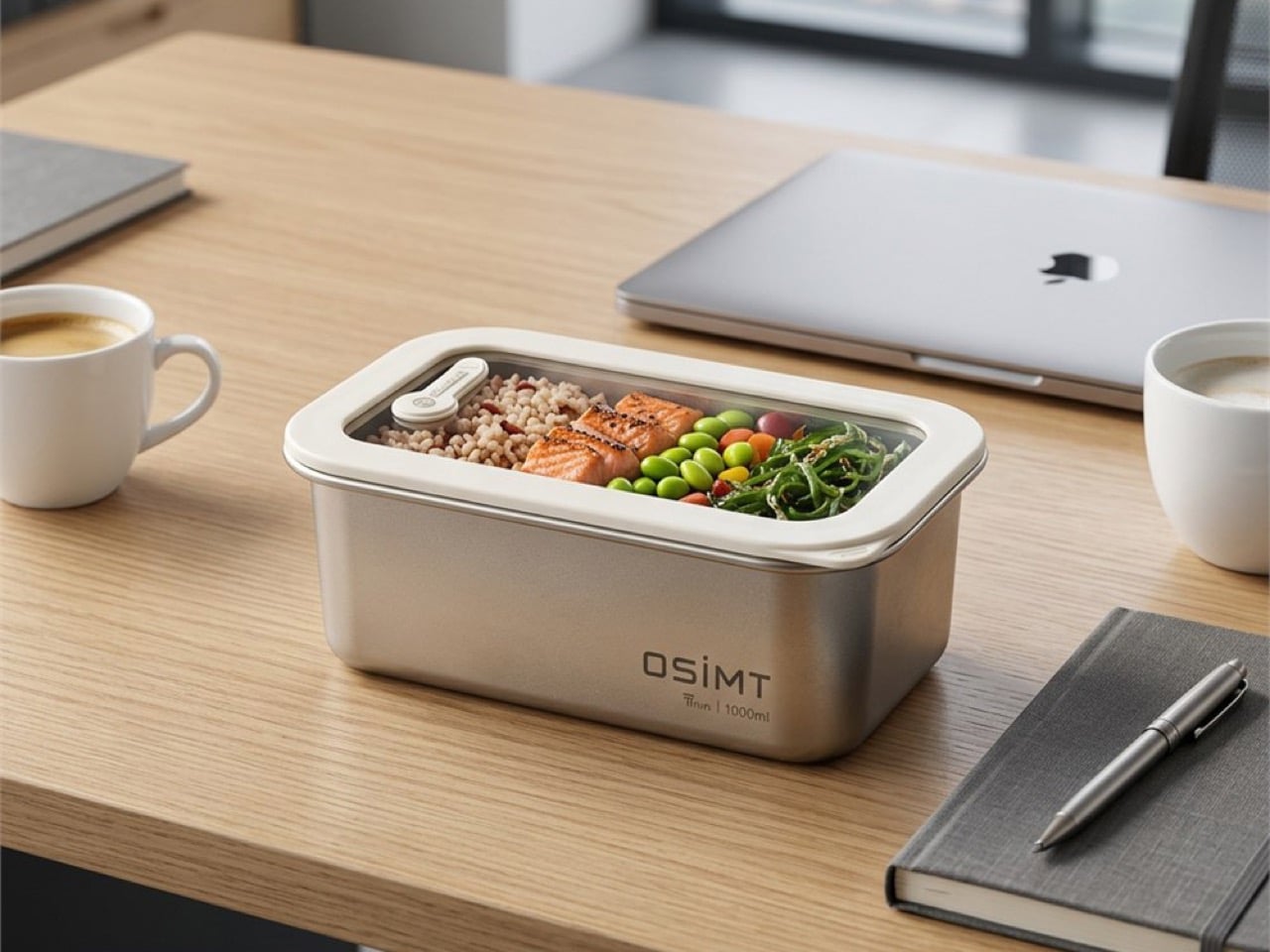


Sharp metal edges concentrate the electric field inside a microwave, and when the buildup gets high enough, it jumps as a spark. That is the physics behind every fork-in-the-microwave horror story. OSIMT’s fix is geometry. Every corner follows a continuous R20+ radius (0.8 in or larger), so there is no sharp point for energy to gather. The rim gets the same treatment, because most metal bowls roll their edges inward and leave tiny trapped gaps that act like capacitors. OSIMT draws its flared lip from a single sheet, laser-cuts it, and hand-polishes it, leaving no seam, crease, or hidden cavity.
One rule applies: the glass lid comes off before the container goes in the microwave. OSIMT’s sketch sheet lists up to 800 W for a limited time with the lid off, so think of the base as a very good bowl. I appreciate that the page says this out loud, since a brand that admits the limit is easier to trust on the rest. Give the container some distance from the oven walls, as you would with any metal, and retire it if it gets badly dented. The lid still handles the fridge, the bag, and the table.
Why TA1 titanium and 0.5 mm walls make these so light
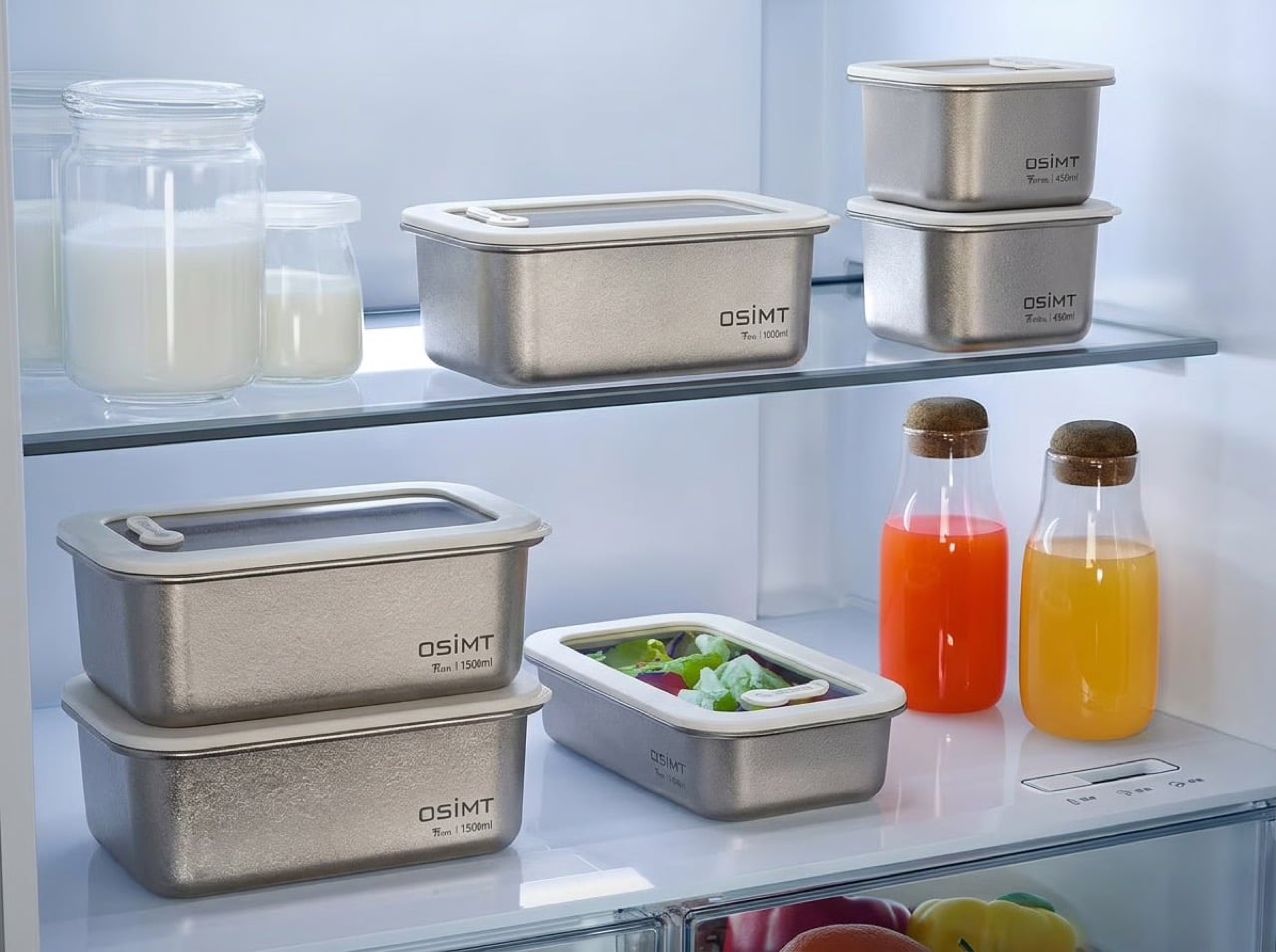

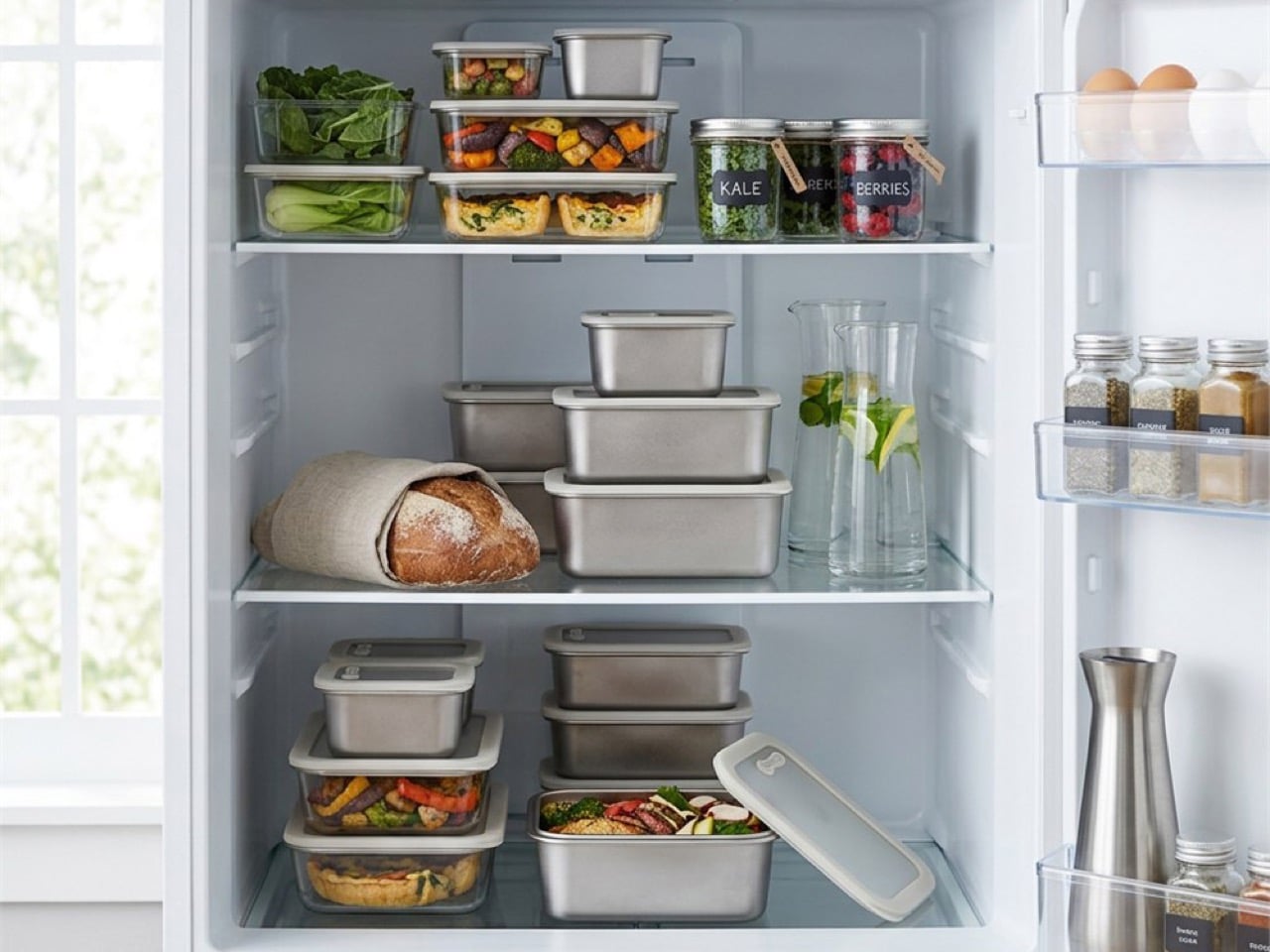
OSIMT builds the containers from TA1, the Chinese designation for commercially pure Grade 1 titanium. The page lists 99.9% purity, while the Grade 1 spec starts at 99.5%. Grade 1 is the softest and most ductile of the pure grades, which makes it the one you pick when you want to deep draw metal into a seamless box. The softness suits OSIMT’s R20 curves, and the ribs and corrugation supply the stiffness the alloy does not. Your food gets an inert surface with no rust, no metallic taste, and no stain or odor memory.
Each wall is 0.5 mm (0.02 in) thick, and that number explains the weight. Titanium runs about 4.5 g/cm³ against roughly 8 for stainless steel, so OSIMT says its containers weigh half as much as stainless ones. Glass is actually less dense than titanium, but glass containers need walls a few millimeters thick, so the metal wins on gauge. As a former industrial designer, I find that oddly satisfying, because density loses the argument and thin sheet wins it. For scale, a Pyrex 3-cup rectangle with its lid weighs about 1.2 lb (545 g), while OSIMT’s 1000 ml container lists at 10.5 oz (299 g).
A ridged floor and a see-through lid
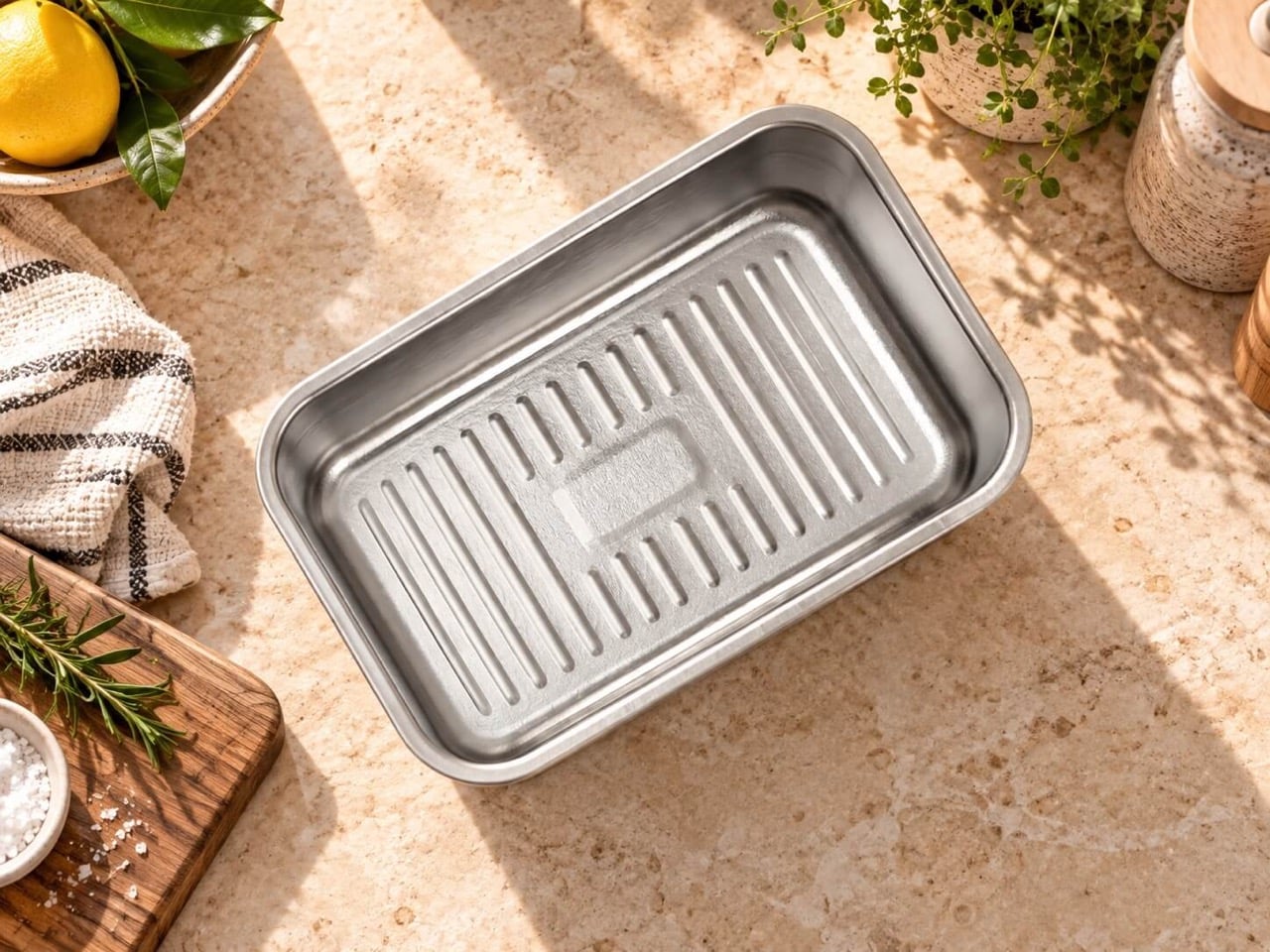
Every container has deep ridges pressed into its floor, and they do two jobs. They stiffen a very thin base against warping, whether it goes from freezer to oven or hits the kitchen floor. They also lift food off the surface, so juices, water, and oil drain into the valleys and your crispy things stay crisp. Nearly every titanium container on the market has a flat bottom, since pure titanium fights being stamped. OSIMT says its custom high-pressure mold raised tooling costs by 20%, which tells me somebody paid for a detail most buyers will only notice at dinner.
The glass lid fixes the oldest complaint about metal containers, which is that you cannot see what is inside. It sits in a cream-colored silicone frame, and glass does not hold stains, grease, or smells the way plastic lids do. OSIMT says a platinum silicone seal keeps the bag dry, and it shows the containers packed sideways to prove it. A small press-to-open-or-close valve on the lid relieves pressure. The result is a metal box with a window, which makes fridge hunting much faster.
Three nesting sizes, pricing, and availability
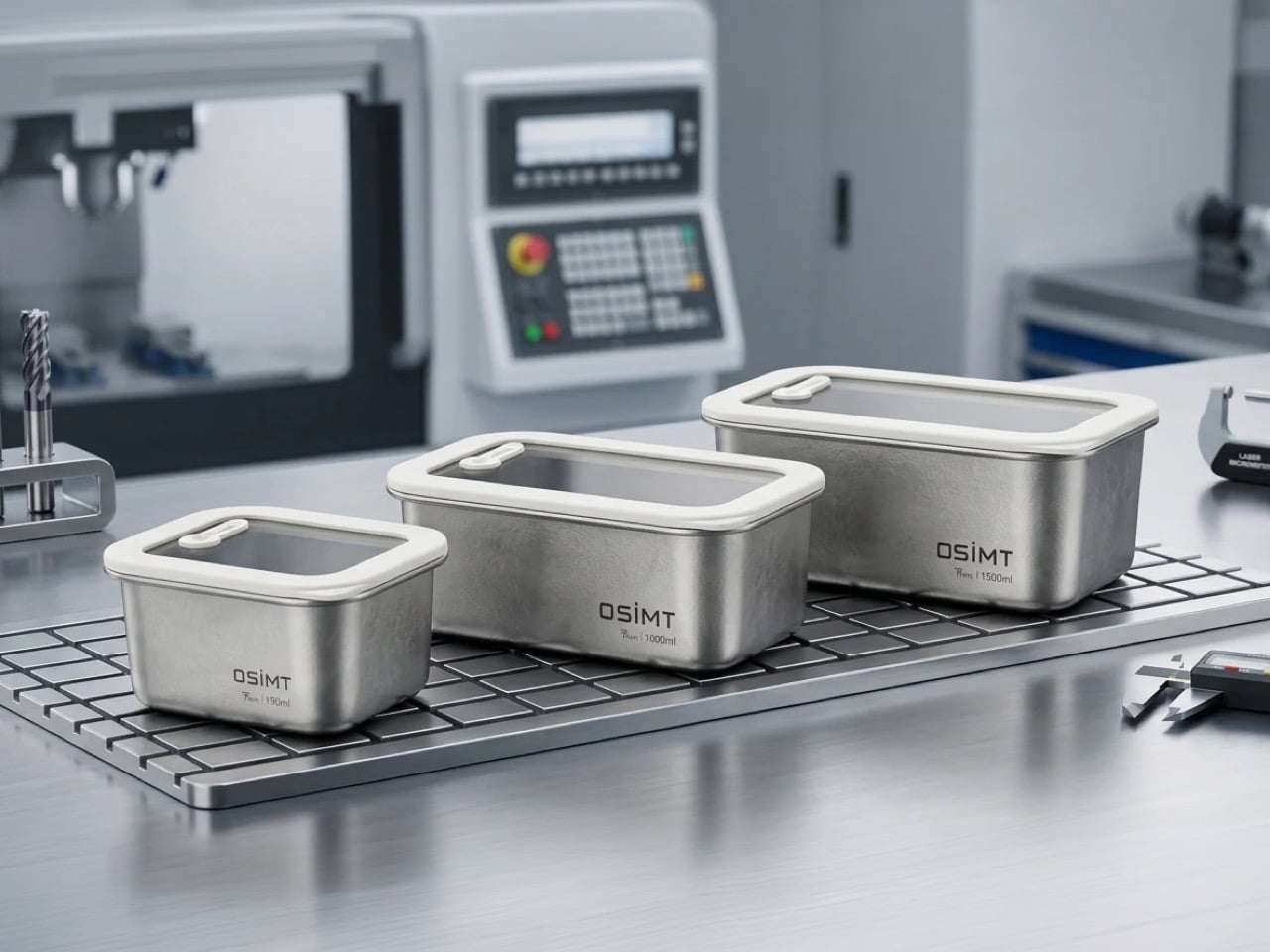
All three sizes nest inside one another, stacking with lids on and collapsing into one footprint with lids off. The small holds 450 ml (15 fl oz), measures 4.5 x 3.7 x 2.8 in (115 x 93 x 71 mm), and weighs 4.9 oz (140 g). The medium holds 1000 ml (34 fl oz), measures 7.4 x 4.4 x 3.0 in (189 x 113 x 75 mm), and weighs 10.5 oz (299 g). The large holds 1500 ml (51 fl oz), measures 8.3 x 5.3 x 3.0 in (210 x 135 x 77 mm), and weighs 13.7 oz (387 g). Snack, lunch, and meal prep batch, all covered.
Pricing starts at $49 for the Solo Luncher, one 1000 ml container with a glass lid (listed retail $69). The three-size set with three lids is $89 (listed retail $179). Five pairs of titanium chopsticks are a $29 add-on (listed retail $59), and any container reward includes a free titanium spoon and fork set. OSIMT ships worldwide from China, with shipping to be calculated based on the set you buy. Delivery is estimated for February 2027, and a lifetime warranty covers manufacturing defects.
Click Here to Buy Now: $49 $69 ($20 off) Hurry! Only 4 days left. Raised over $420,000.