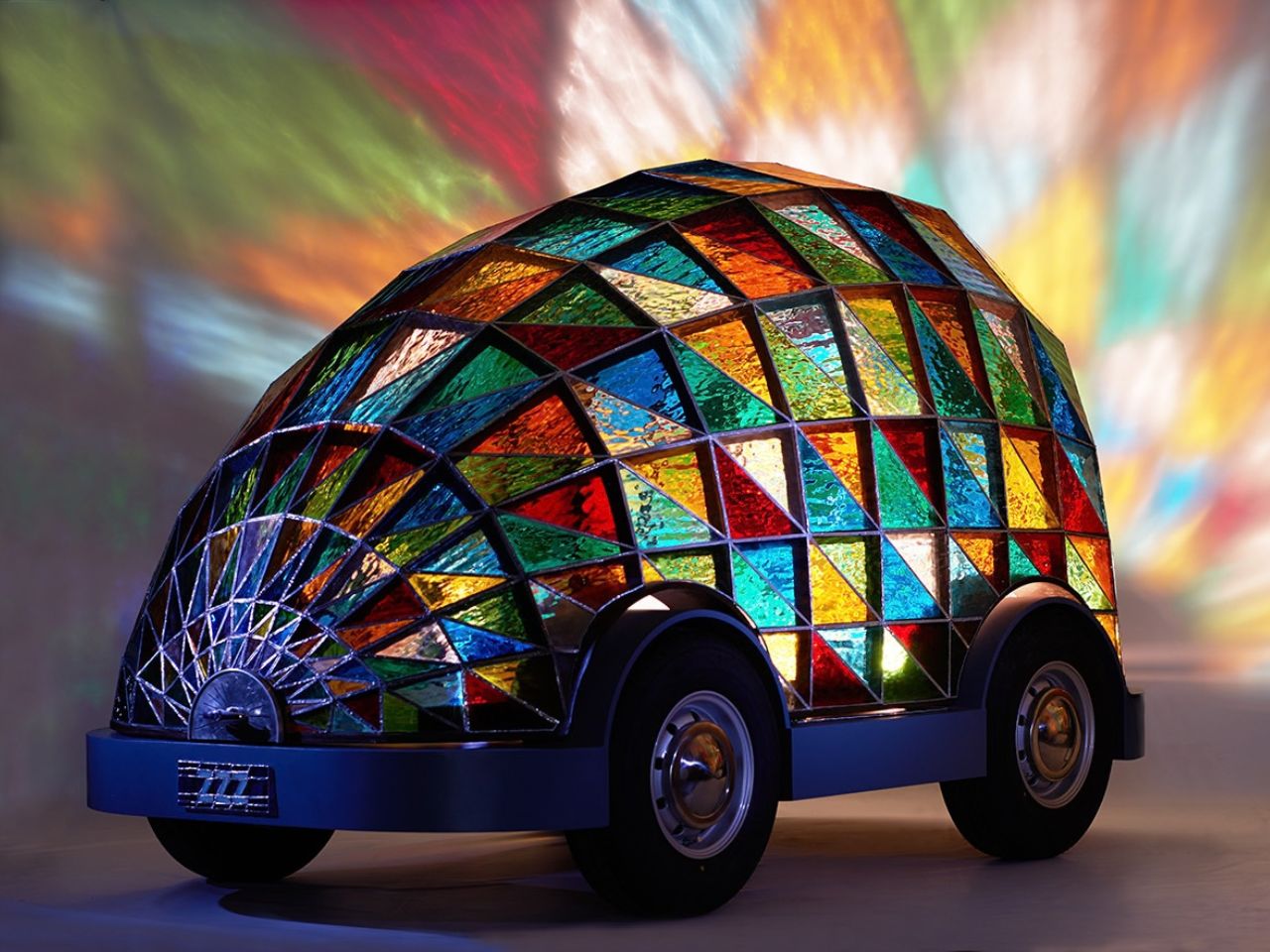

Cars of the future are usually imagined as sleek metallic pods packed with screens, sensors, and glowing interfaces. Dominic Wilcox went in almost the opposite direction. His vision of autonomous transportation looks more like a miniature cathedral on wheels, made from hundreds of pieces of hand-cut stained glass with little more than a bed inside.
Called the Stained Glass Driverless Sleeper Car, the concept was created for the Dezeen and MINI Frontiers exhibition during the London Design Festival. Wilcox imagines the vehicle existing in 2059, at a point when autonomous driving has become so dependable that the architecture of the car itself can finally change. Instead of designing another futuristic cockpit, he asks a much more entertaining question: if nobody needs to drive anymore, why should a car still be designed around a driver?
Designer: Dominic Wilcox
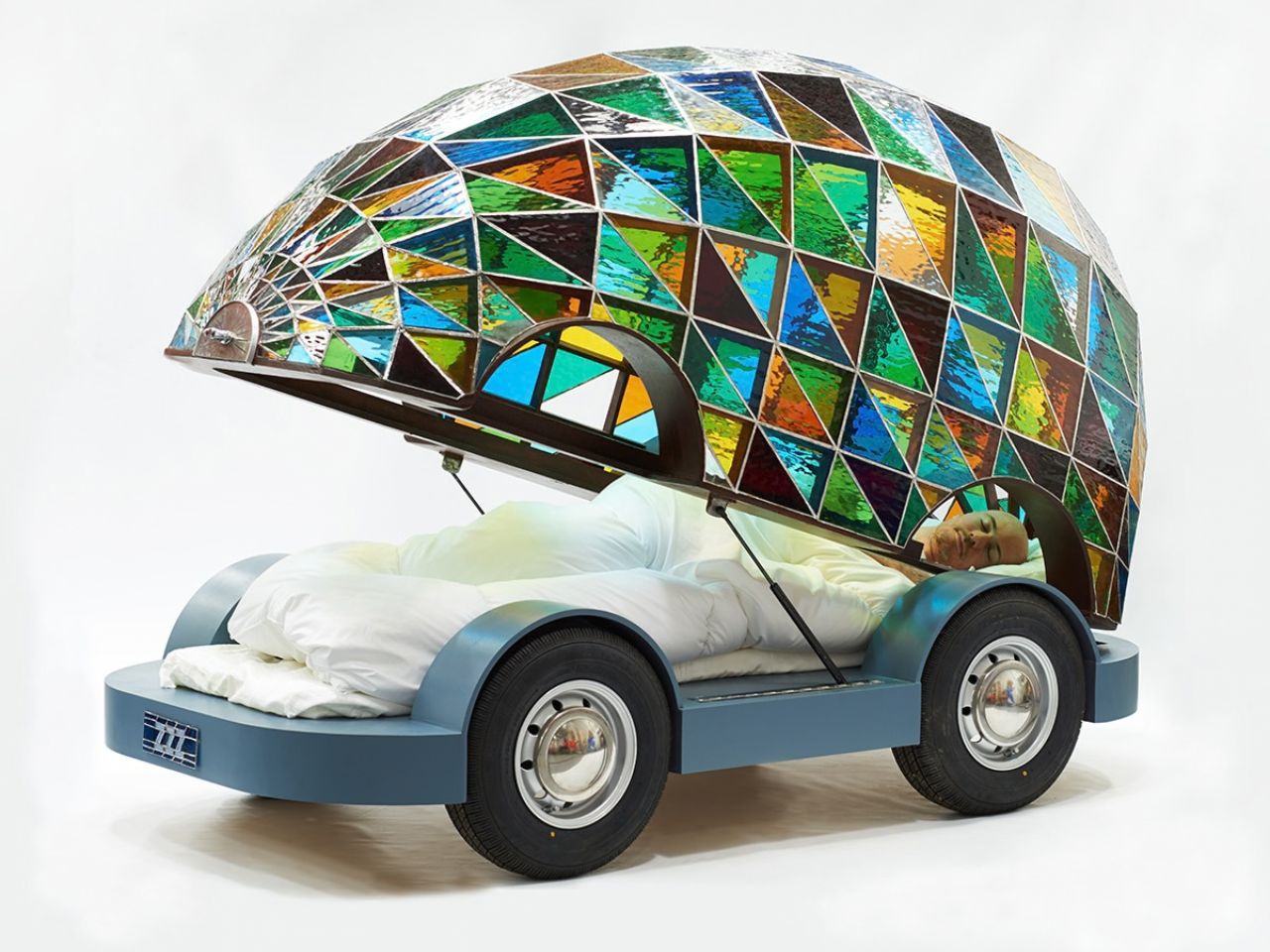
In Wilcox’s imagined 2059, computer-controlled vehicles have statistically become safer than human-driven cars. He even proposes a fictional future in which the Digital M1 motorway goes through 2058 without a single collision because only autonomous vehicles are allowed on it. Within that scenario, familiar automotive features such as steering wheels, bumpers, and even some forms of conventional safety equipment begin to lose their importance. What remains is essentially a moving room.
That idea becomes the foundation of the entire project. The motor and automated navigation technology would be contained inside a standardized modular chassis, while almost any kind of living space could be constructed above it. Wilcox’s prototype happens to be designed for one sleeping passenger. There is a bed inside; the passenger selects a destination, climbs in, and can quite literally sleep through the commute.
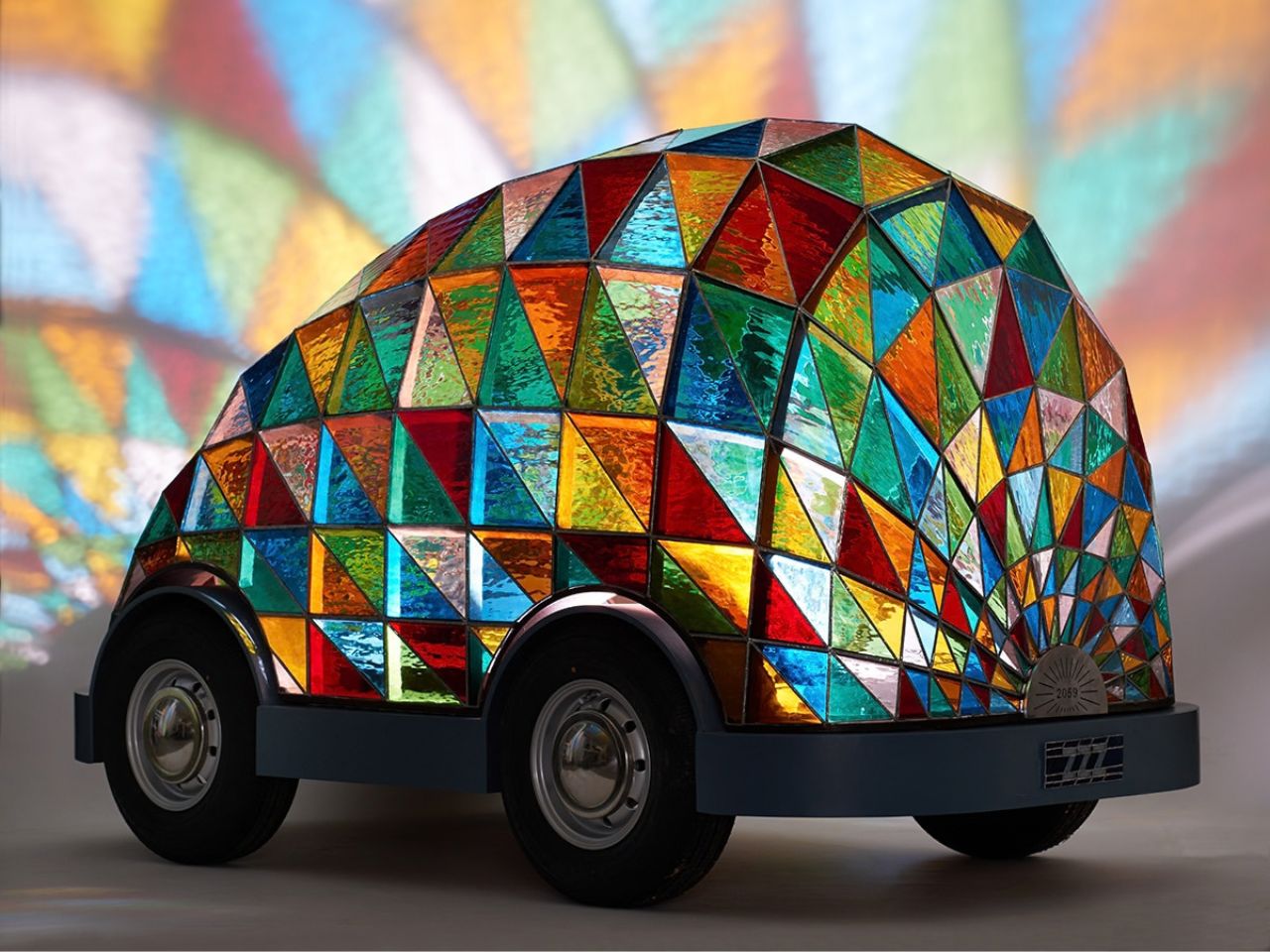
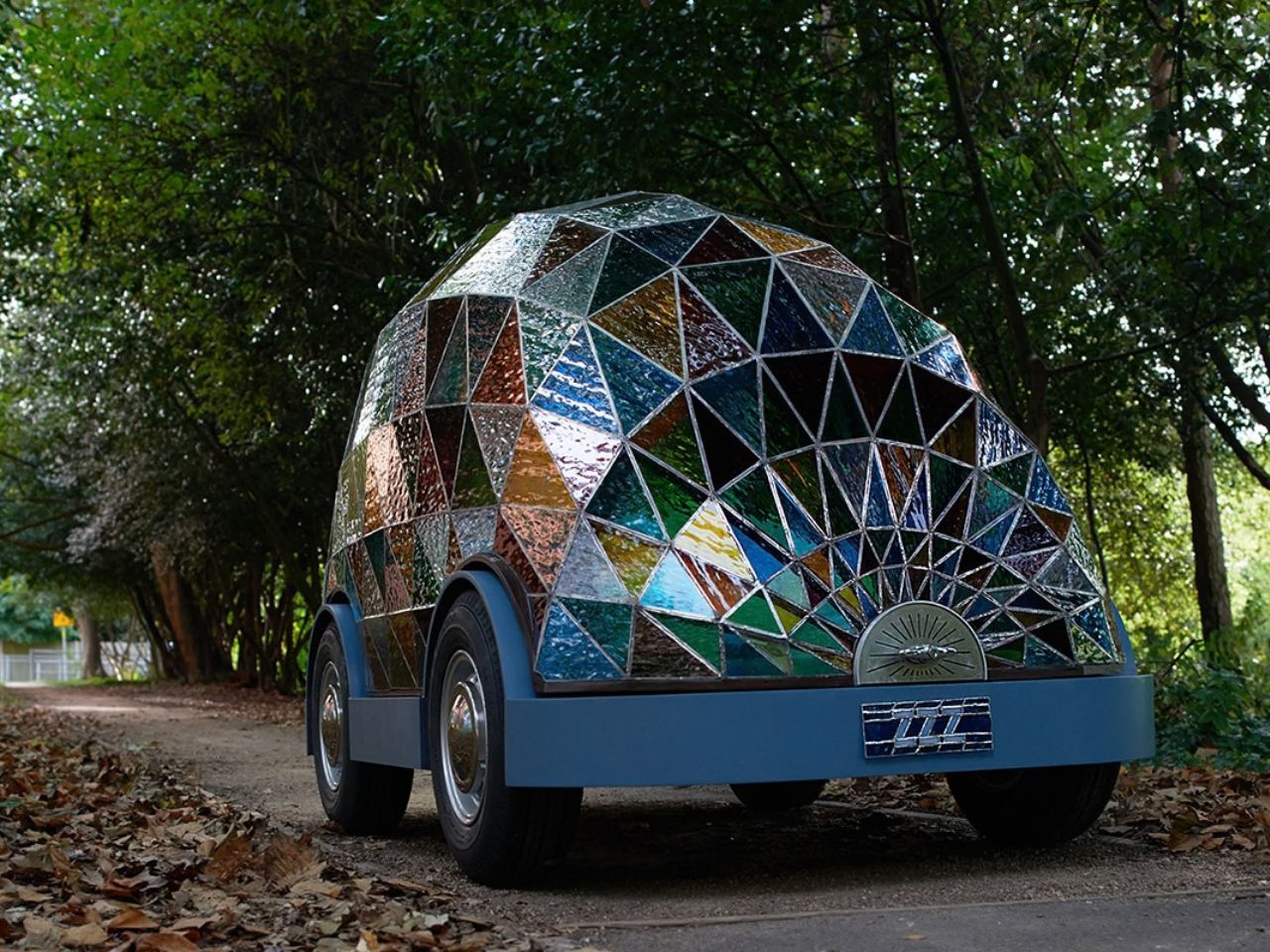
The exterior makes the concept even stranger and more memorable. Instead of carbon fiber or polished aluminum, Wilcox built the shell from stained glass using the copper foil technique. The inspiration came after visiting Durham Cathedral and being struck by its stained glass windows. He wanted to take that visual experience, associated with centuries-old architecture and craftsmanship, and pull it into an entirely different context.
It is a recurring approach in Wilcox’s work. He has previously embedded GPS technology into traditional brogue shoes, pairing something familiar and almost nostalgic with contemporary technology. The sleeper car follows the same logic on a much larger scale. Its shell may look historic, decorative, and fragile, but underneath sits a computer-designed structure representing a highly automated future.
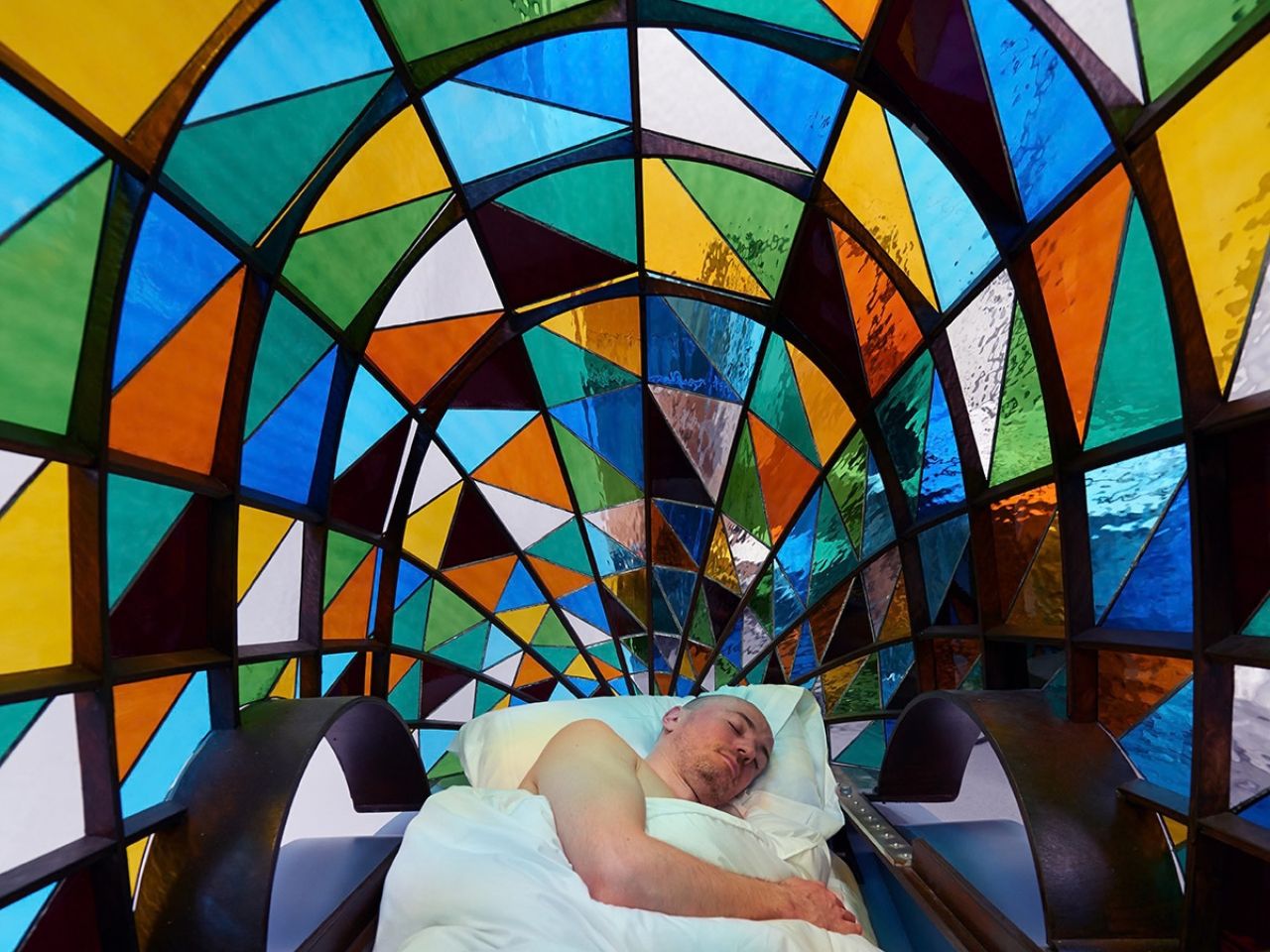
Building it was appropriately hands-on. Middlesex University’s product design department helped develop the chassis base and wooden support frame before Wilcox moved the structure to Lead and Light, a stained glass workshop in Camden, London. Having never worked with glass before, he first completed a five-day workshop with glass artist Lynette Wrigley.
He then spent six weeks cutting individual pieces of glass by hand and soldering them onto the frame, with assistance from recent graduate Massimo Cappella. The finished shell sits over the underlying structure almost like a piece of inhabitable stained glass sculpture. Photographs of the project show the transparent shell opening upward to allow its passenger inside, then glowing when illuminated.
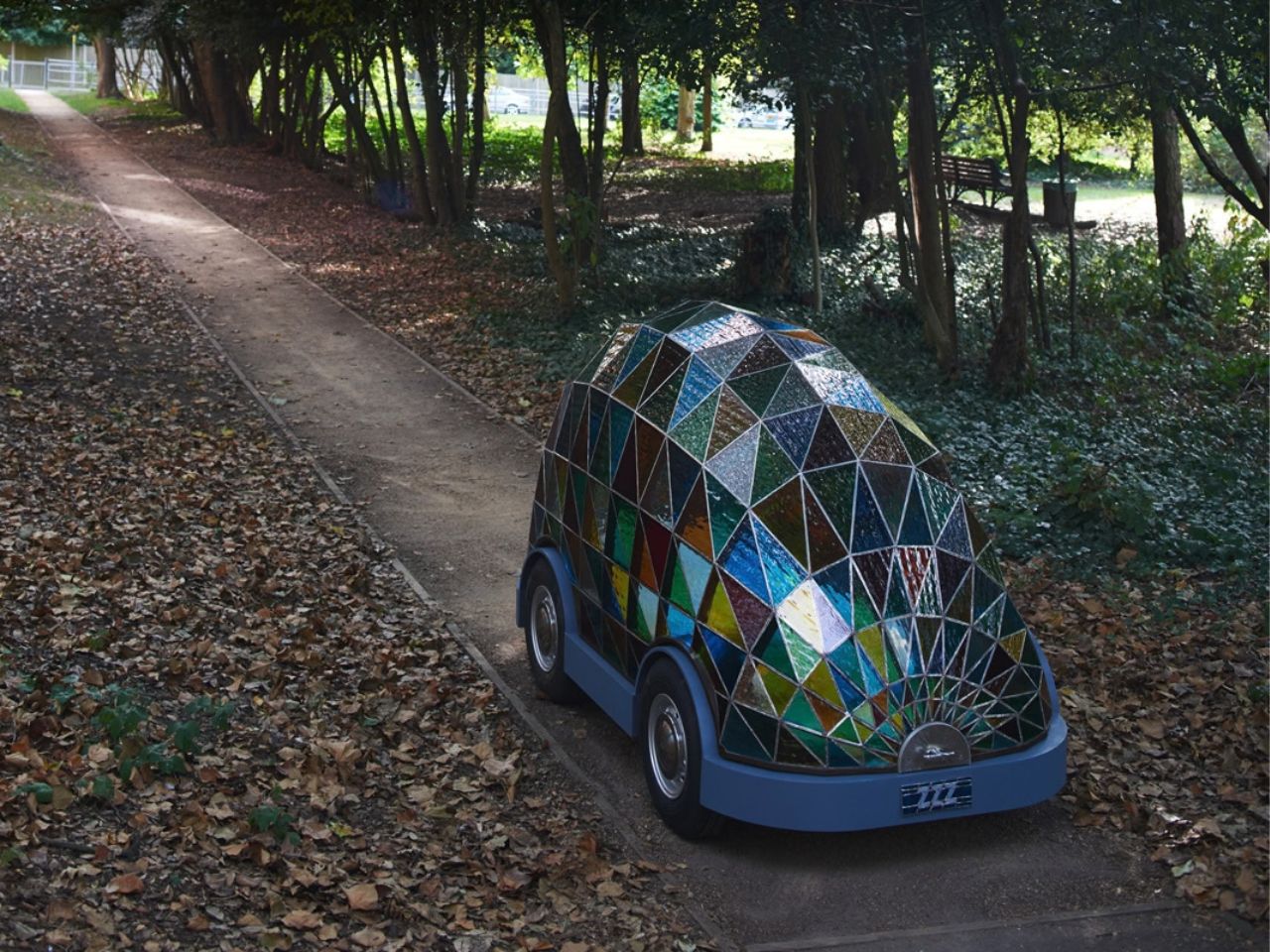
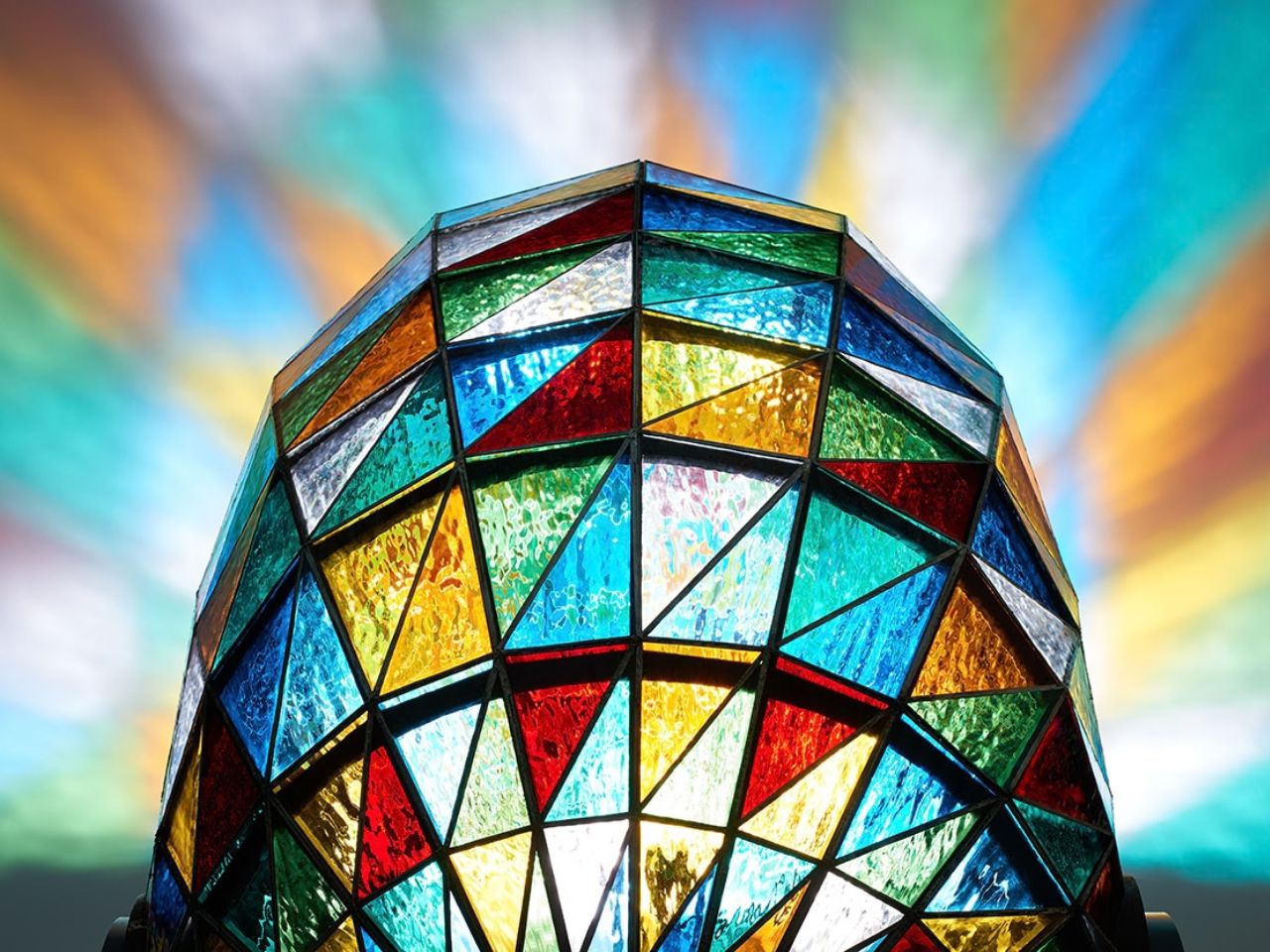
There are small pieces of automotive history hidden within the design as well. Since the exhibition was supported by MINI, Wilcox referenced the original Mini introduced in 1959, exactly one century before his imagined 2059 scenario. Classic Mini tires appear beneath the glass body, while a traditional Mini boot handle has been repurposed as the handle used to lift the hydraulically assisted shell.
The sleeper car is really just one possible outcome of a much bigger transportation idea. Wilcox also developed Taxirobot, a website concept imagining how people might order autonomous vehicles in 2059 instead of owning one permanently. Passengers could choose a vehicle based on the number of people traveling, then select an interior such as a restaurant, office, jacuzzi, or bed. Even the exterior could be selected, with possibilities ranging from a wooden cabin to a retro 2015 car or Wilcox’s stained glass mini cathedral.
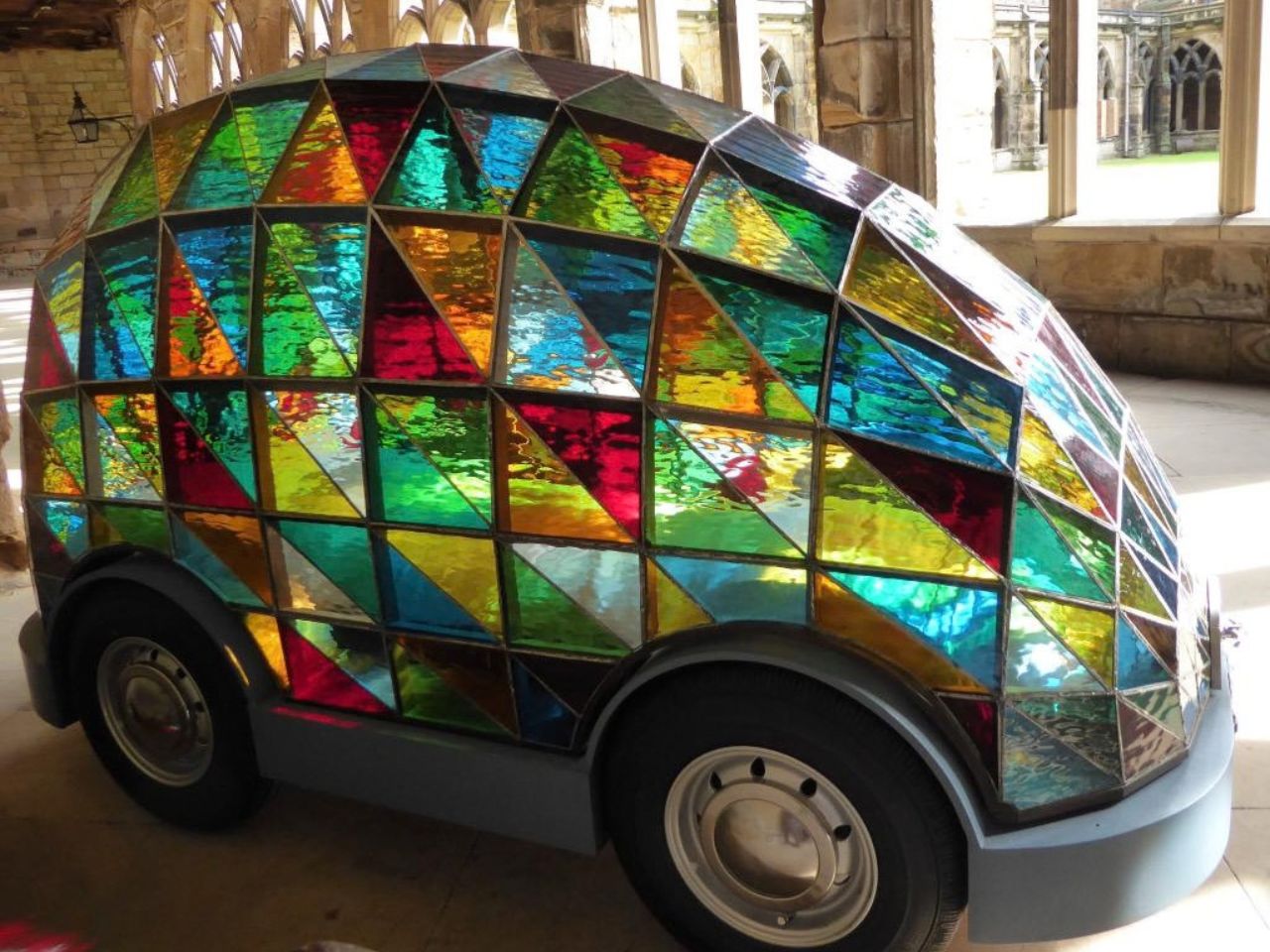
It turns the car from a product into a temporary piece of architecture. Your morning commute could happen inside an office. A longer journey could become dinner. A late-night ride home could simply become sleep. And that may be the most interesting part of Wilcox’s concept. Autonomous driving is usually treated as a technological problem centered around making the existing car smarter.
The Stained Glass Driverless Sleeper Car imagines what happens after that problem has already been solved. Once nobody has to drive, perhaps the most exciting question is no longer what the car can do, but what the space inside it can become.