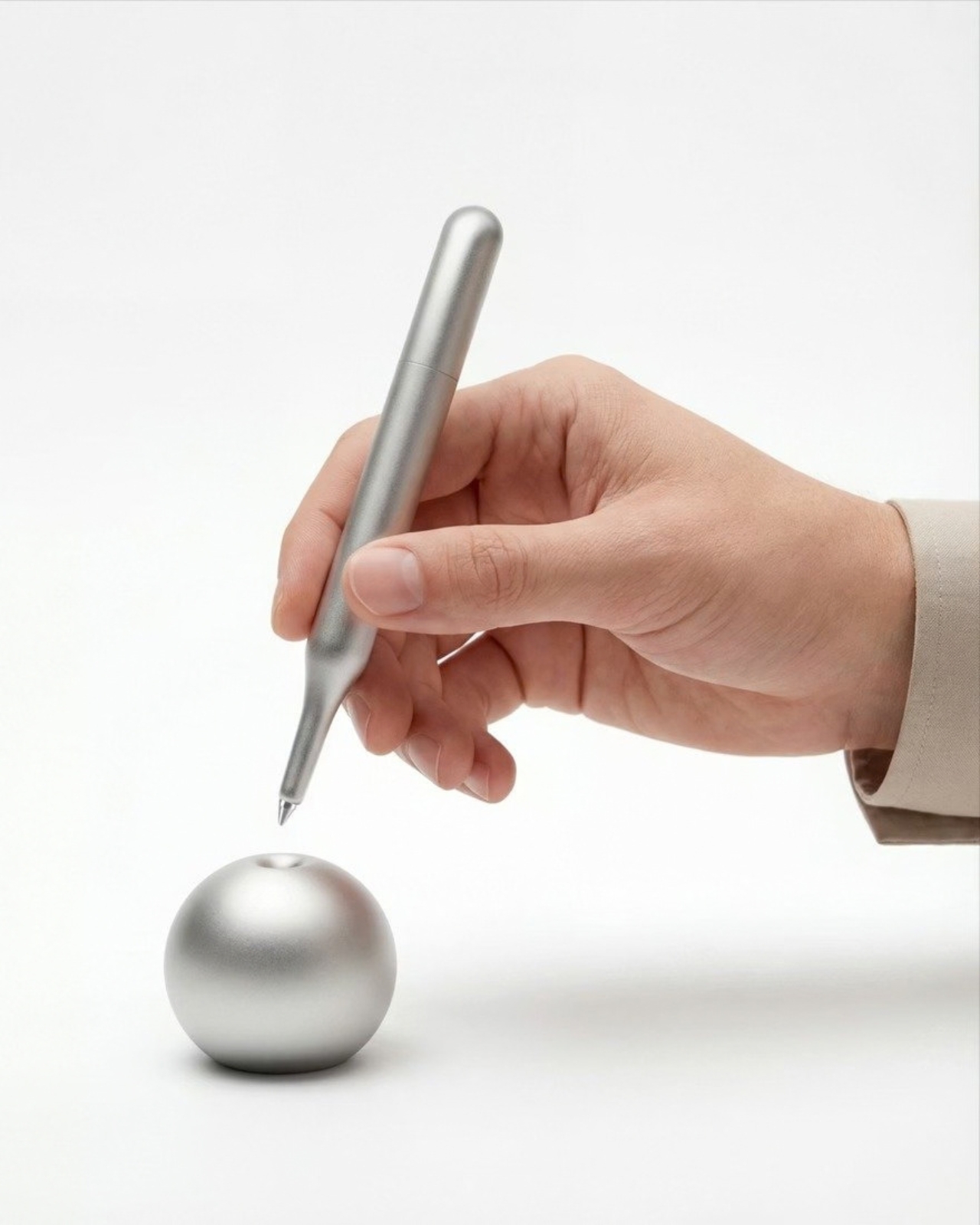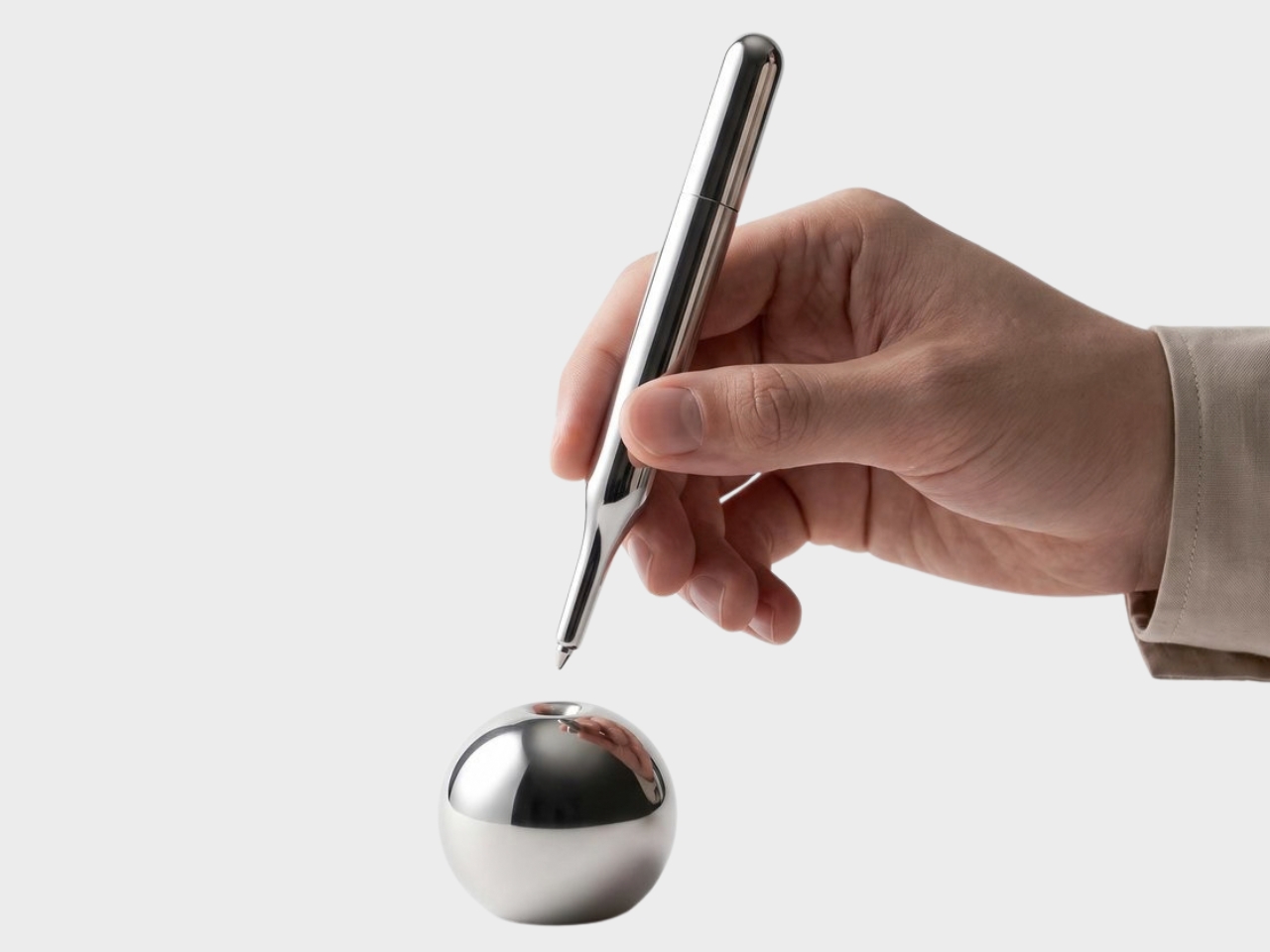

Every designer who has ever sketched with a fat marker or a clumsy ballpoint knows the same small frustration. The barrel gets in the way of the exact point you’re trying to control, and by the time you glance past your own knuckles, the line has already wandered somewhere you didn’t plan. That is the specific annoyance Milan-based industrial designer Alberto Essesi set out to fix with the Exclamation Pen, a slim aluminum instrument built around one idea: let the person holding it see straight down to the tip, every single time.
Most pens are not designed for sketching. They are designed for writing, which is a different task with different demands. A note-taker doesn’t need to watch the nib travel across the page with surgical precision. A designer roughing out a form, a joint, or a curve does. Essesi, who has spent his career working across design and technology companies before starting his own studio, apparently got tired of choosing between tools that felt good in the hand and tools that actually showed him where the line would land. So he machined his own answer.
Designer: Alberto Essesi
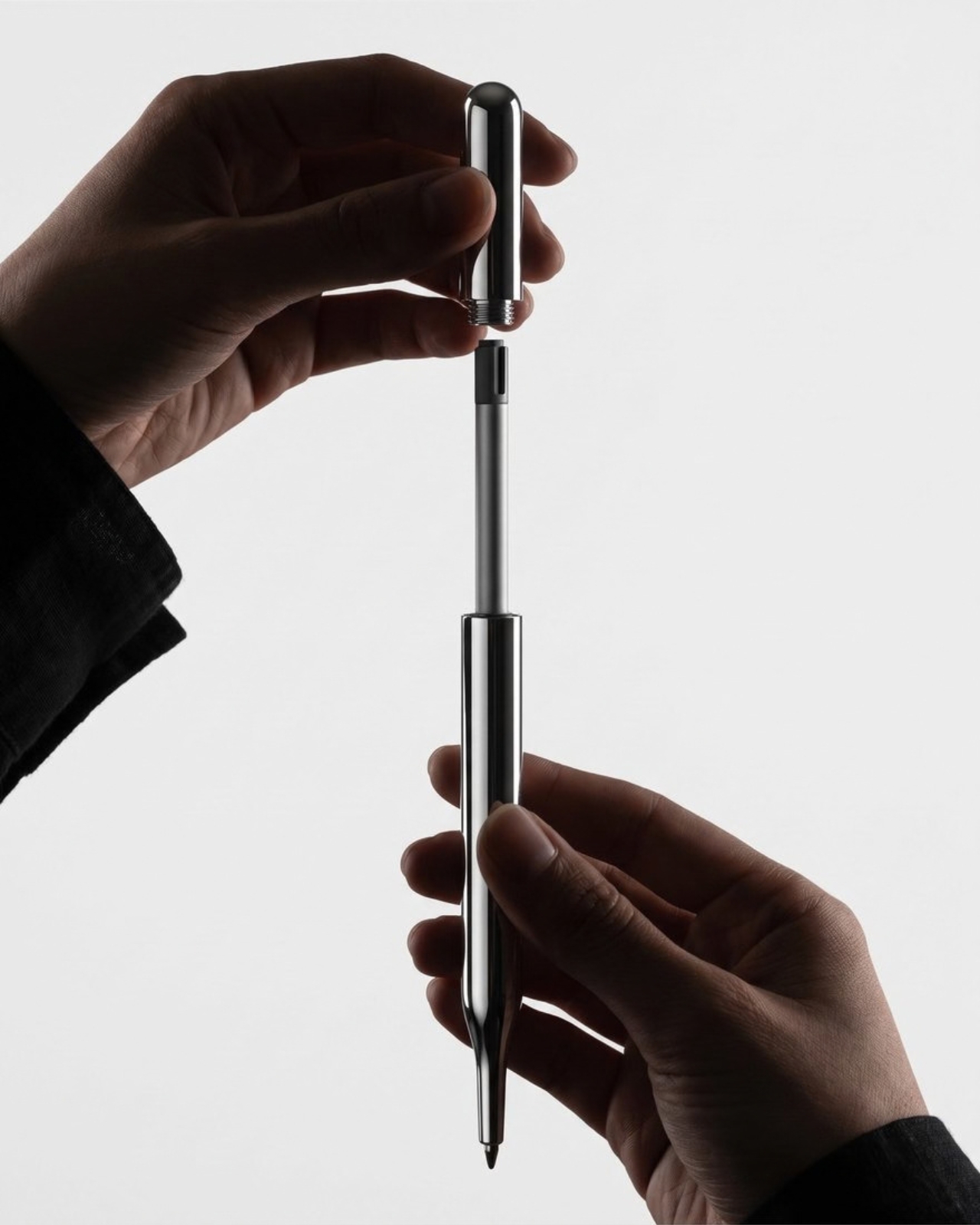

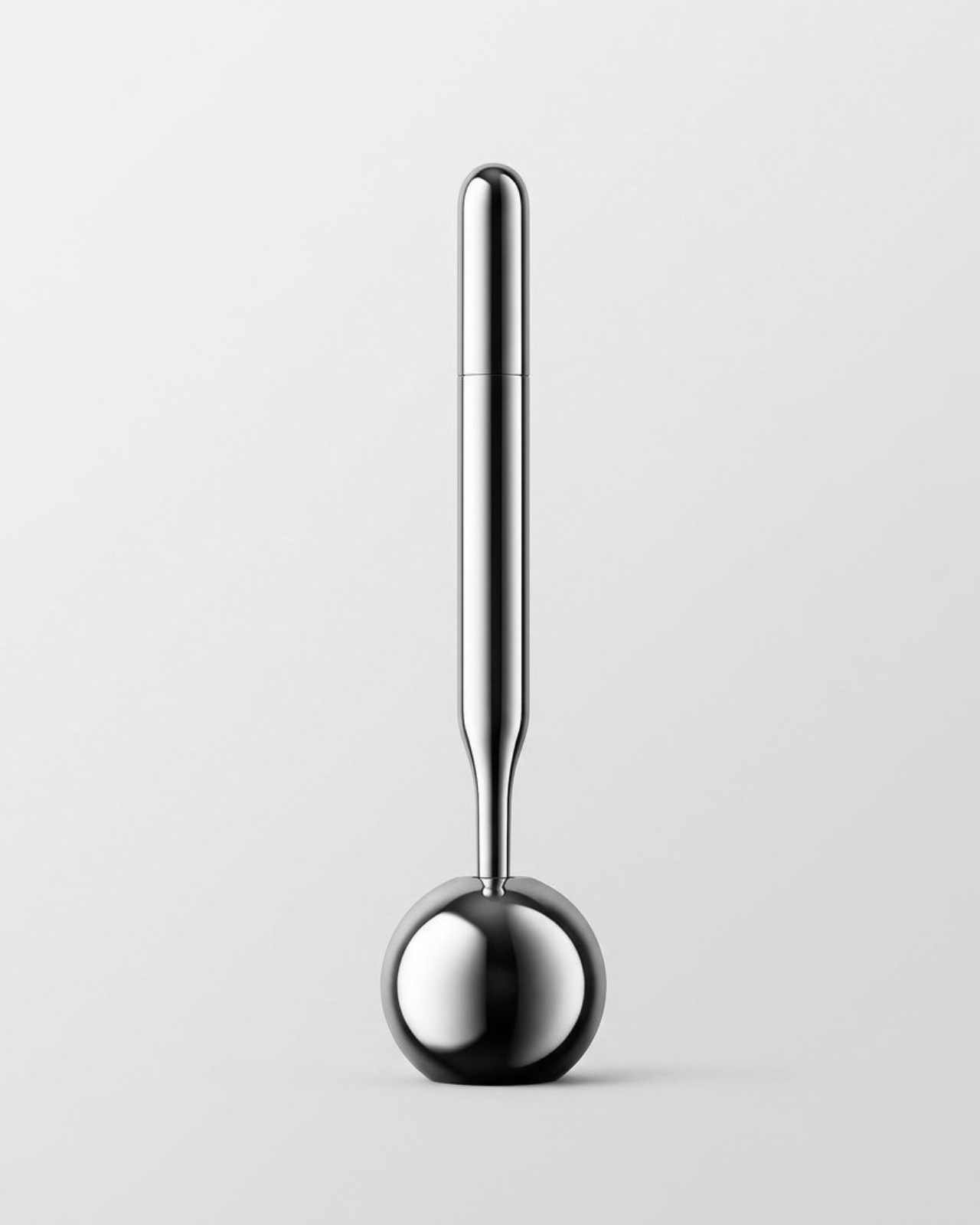
The pen itself is carved from solid aluminum blocks and finished in a matte satin coat, and it comes apart into three simple pieces, including a stand that doubles as a cap. The tip is severely tapered, almost aggressively so, which is the whole point. That taper is what clears the sightline and lets the tip stay visible no matter the angle of the hand. When the pen and its stand are placed together, the silhouette reads like a punctuation mark, which is where the name comes from. It’s a small joke buried in a very serious object, and it works because the pen never oversells the gag. The humor sits quietly in the shape, not in the marketing copy.
What strikes me most about this project is how confidently it ignores trends. Pen design right now is dominated by refillable systems, smart pens, and gadgets that track your handwriting for an app you’ll open twice. Essesi went the opposite direction and stripped a writing tool down to geometry and material, betting that the right taper and the right balance point matter more than any added feature. I happen to think that bet pays off. There is something satisfying about a tool that solves a real, physical problem instead of inventing a digital one to sell you a subscription for.
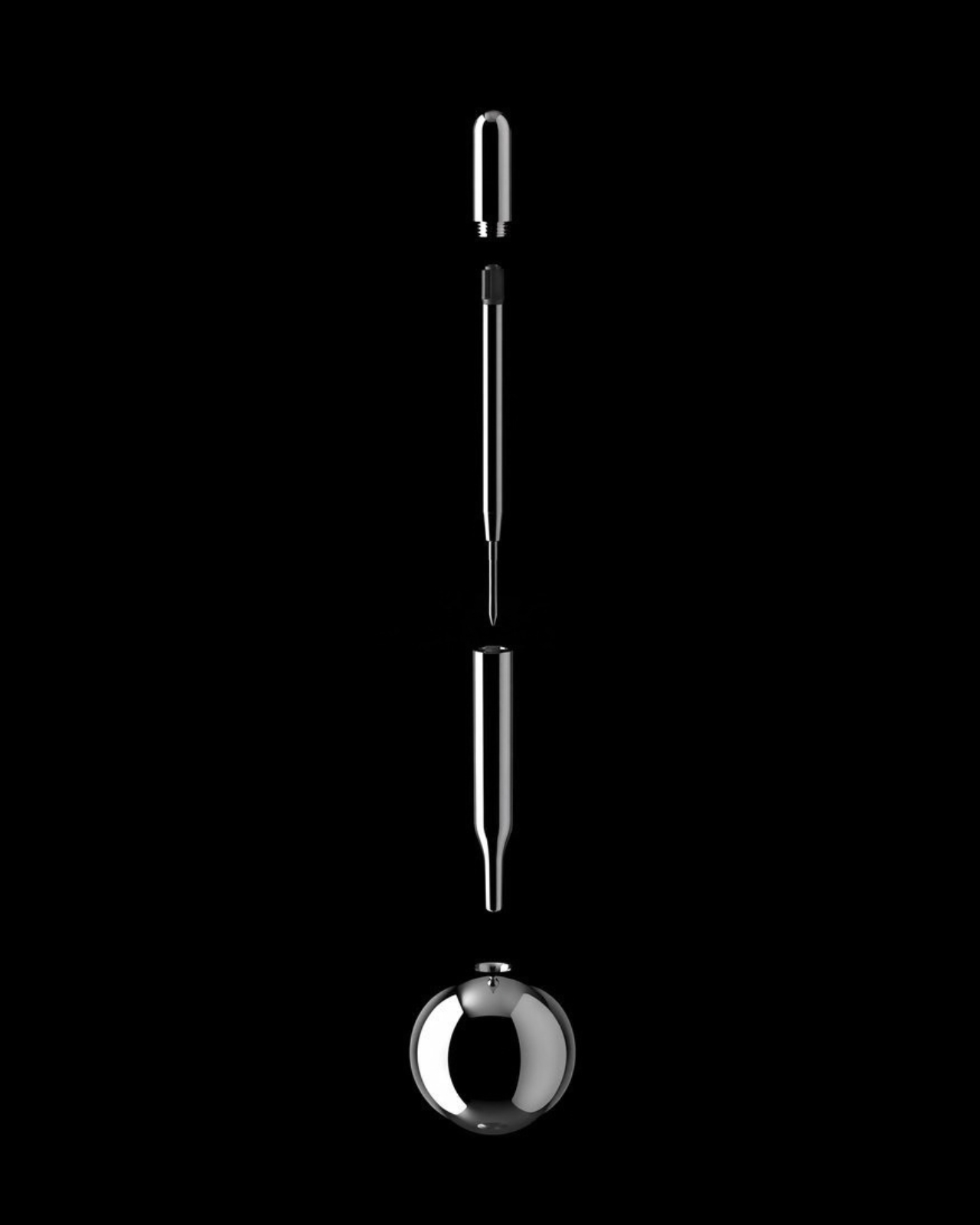
The pen also isn’t new to Essesi’s practice. Around a year before the Exclamation Pen appeared, he shared an earlier, rougher concept online, inspired by a documentary about how early humans used rocks to mark walls. That instinct, wanting a tool stripped back to its most basic gesture, clearly followed him into this refined version. It’s rare to watch a designer’s idea mature in public like that, from a raw sketching stick to a numbered, limited-run object sold through Normal Objects for $168.
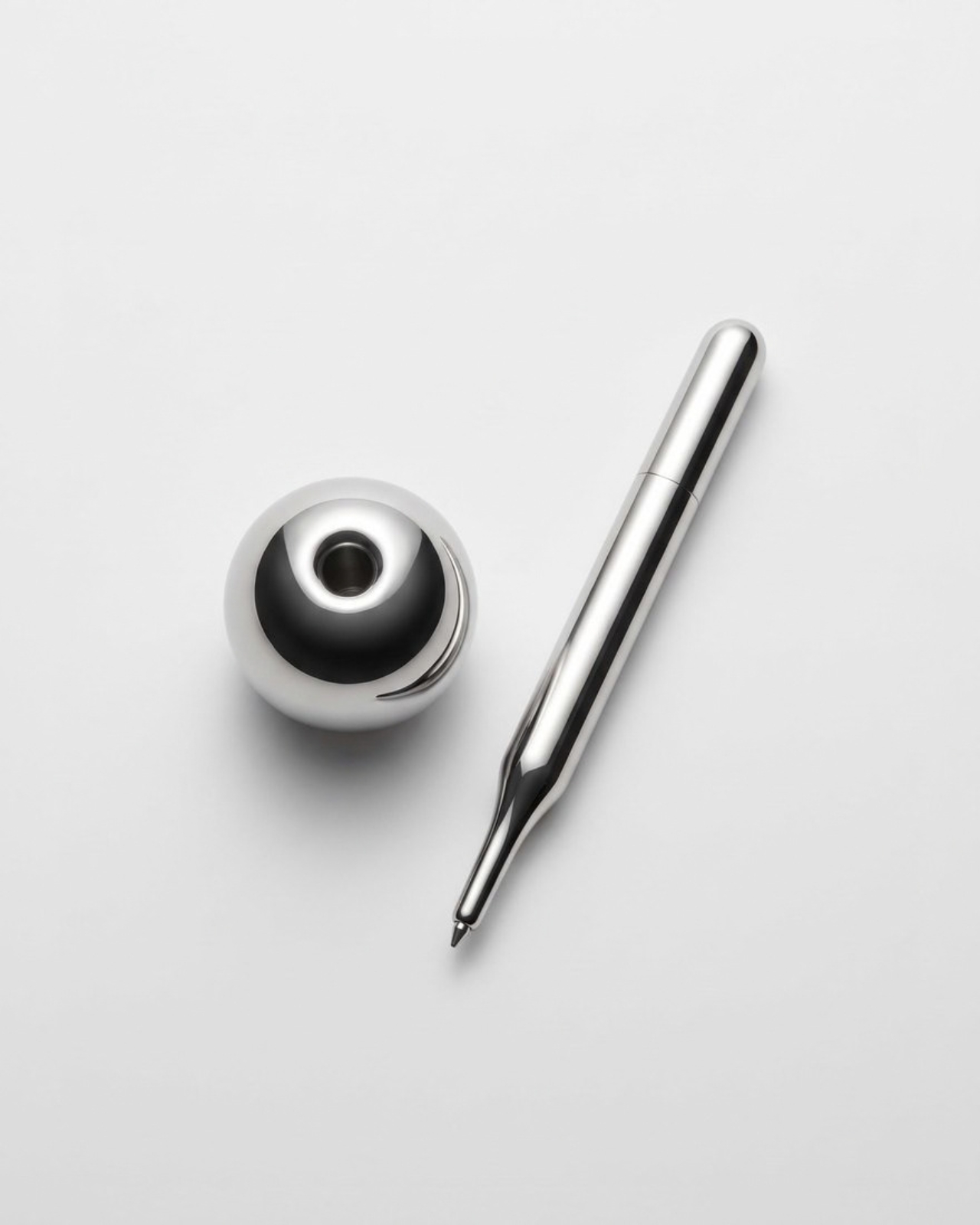
And limited is not an exaggeration. Essesi self-produces every batch, and the first three runs reportedly sold out before he could restock. He’s now considering a mirror-polished version alongside the current satin finish, which tells me demand caught even him off guard. There’s a version of this story where that scarcity feels like a marketing trick, but knowing this is a one-person operation machining aluminum by hand, it reads more like a production bottleneck than a strategy.
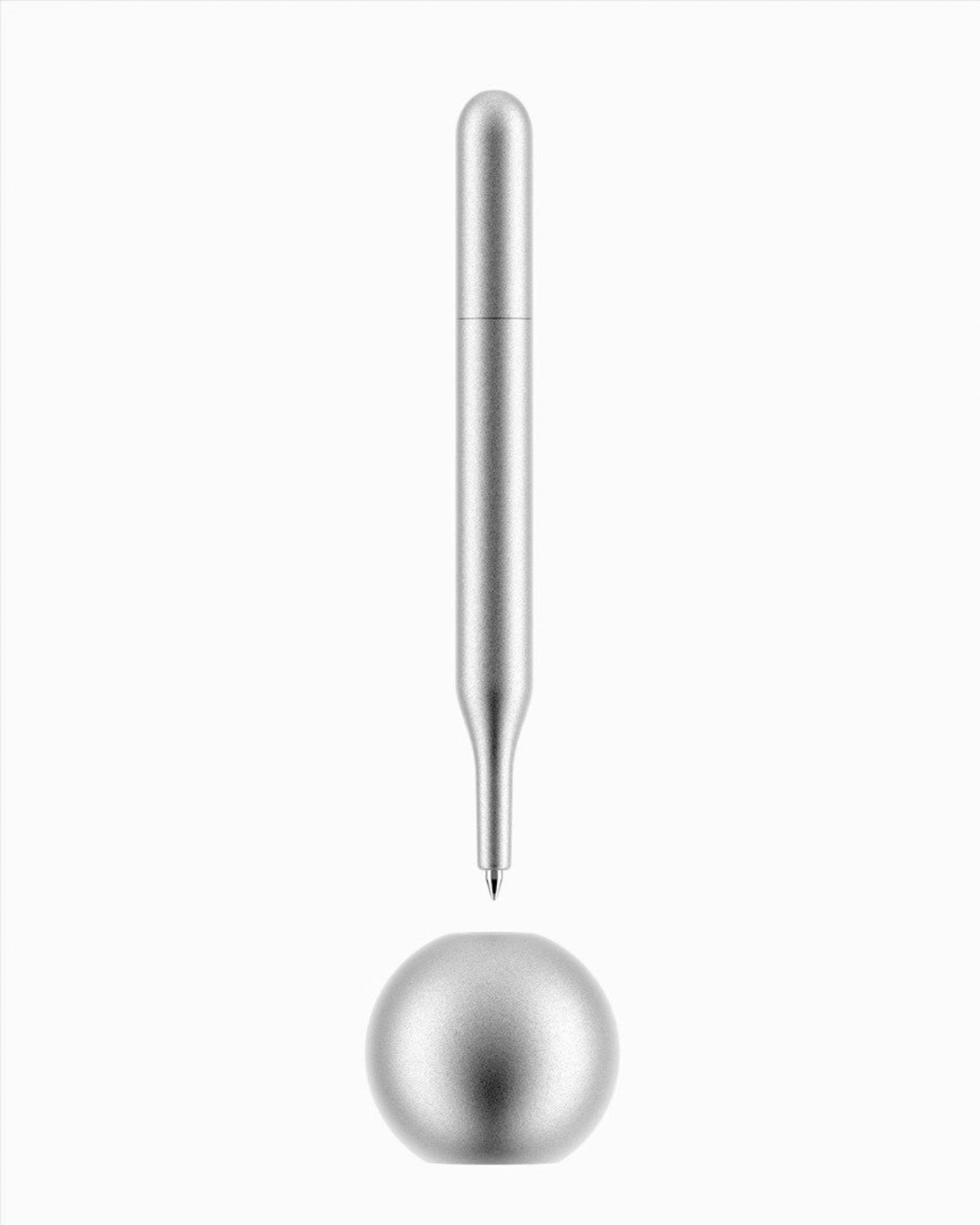
None of this makes the Exclamation Pen a mass-market object, and it probably shouldn’t be. It’s priced and positioned for people who already care about how a tool feels between their fingers, the same audience that lines up for a well-made notebook or a Japanese mechanical pencil. But the underlying idea, that visibility at the tip is worth designing an entire object around, is one that any pen maker could learn from. Sometimes the most useful design decision isn’t adding something new. It’s removing whatever was blocking the view in the first place.