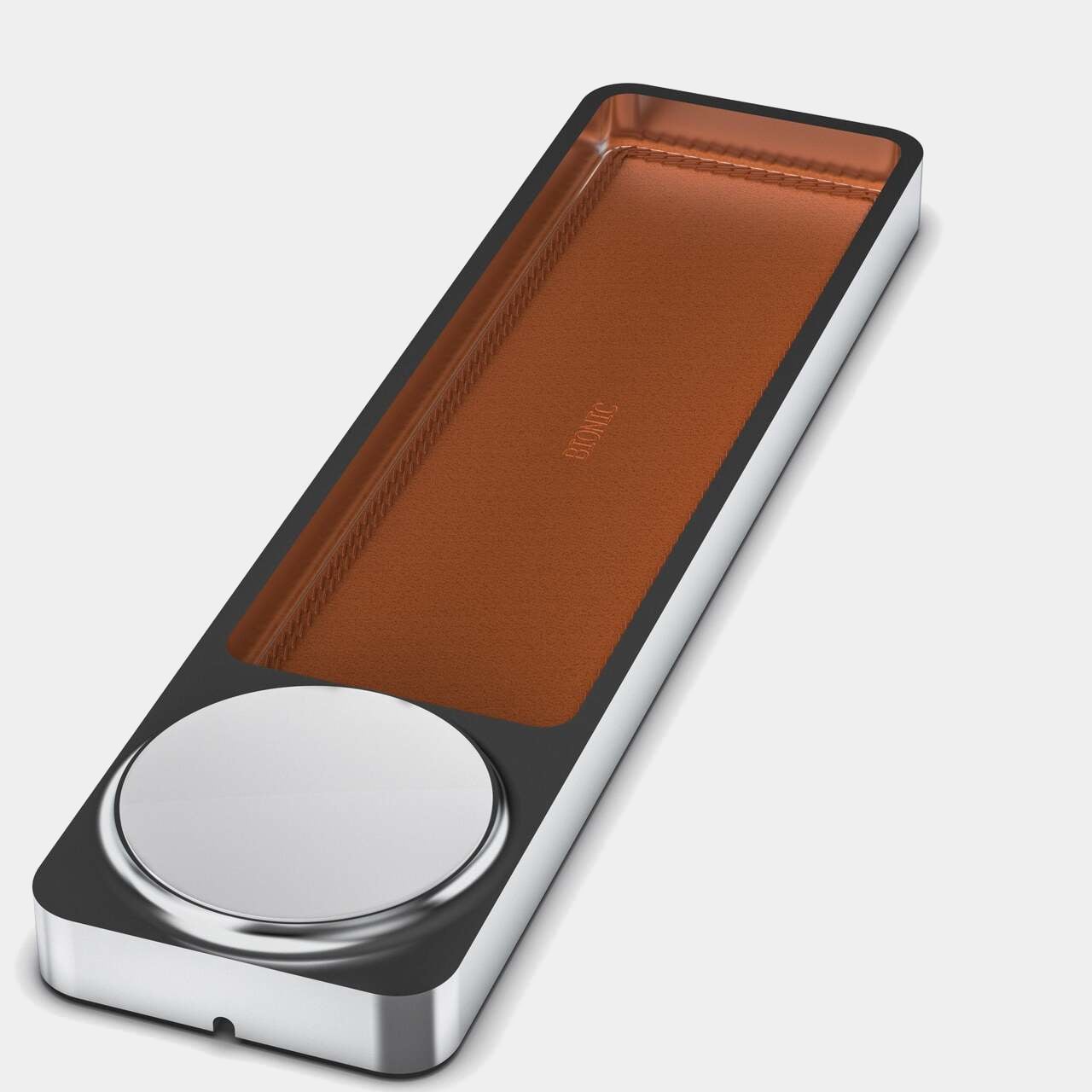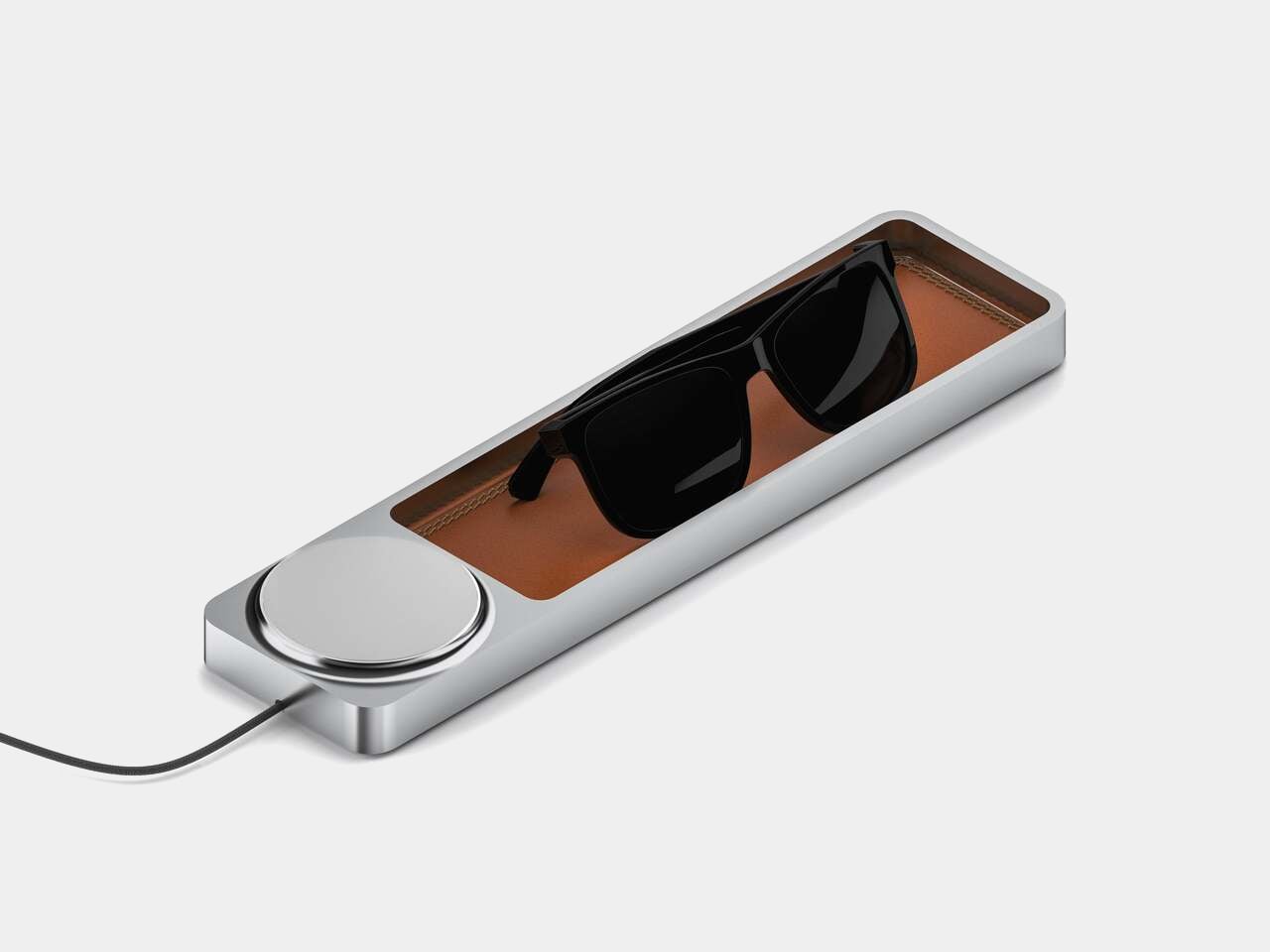

Every home eventually collects the same small pile near the door or nightstand, a phone, a set of AirPods, keys, maybe a pair of glasses set down without much thought. The BIONIC Valet Charger treats that daily pile as a design problem worth solving. It combines a wireless charging surface with an integrated tray, giving all of those scattered objects one considered surface to land on instead of several.
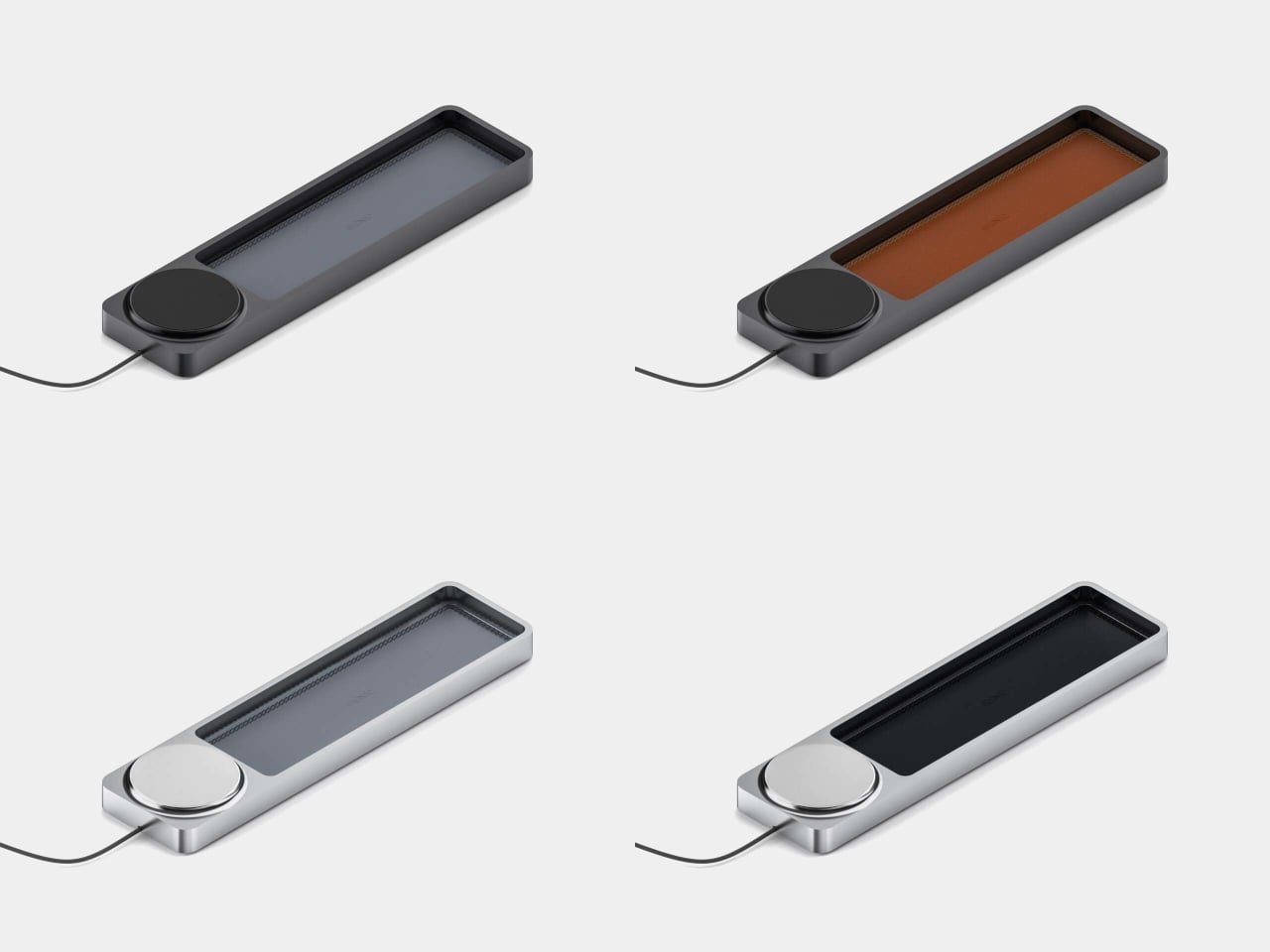
The body is precision machined from a single block of anodized aluminum, a process BIONIC uses across its entire catalog rather than reserving for one flagship piece. That machining produces a slim bar with no visible seams or fasteners, finished in either silver or black. Small production runs keep tolerances tight, letting the studio catch finishing flaws before a unit ever reaches a customer’s desk or entryway table.
Designer: BIONIC
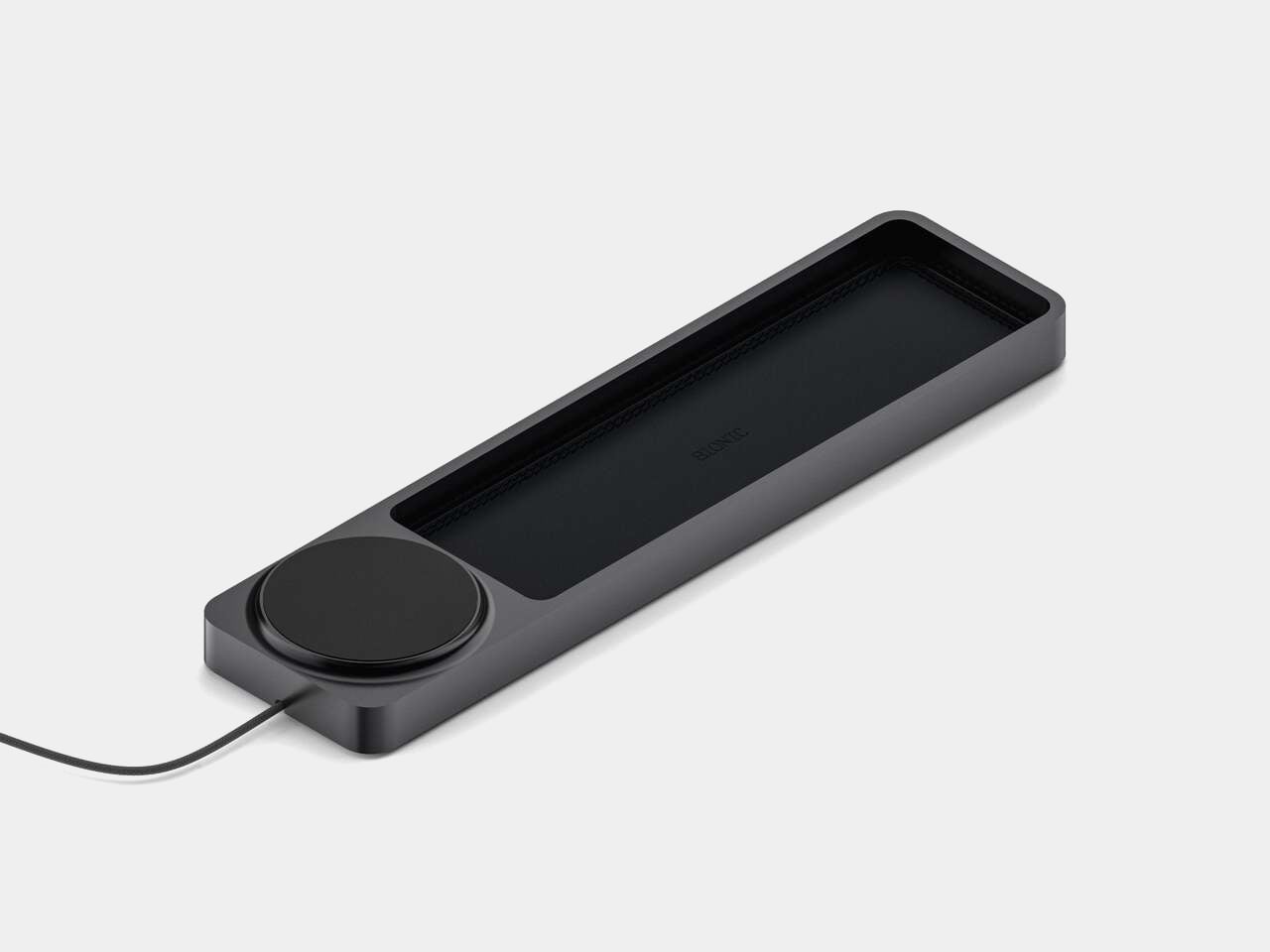
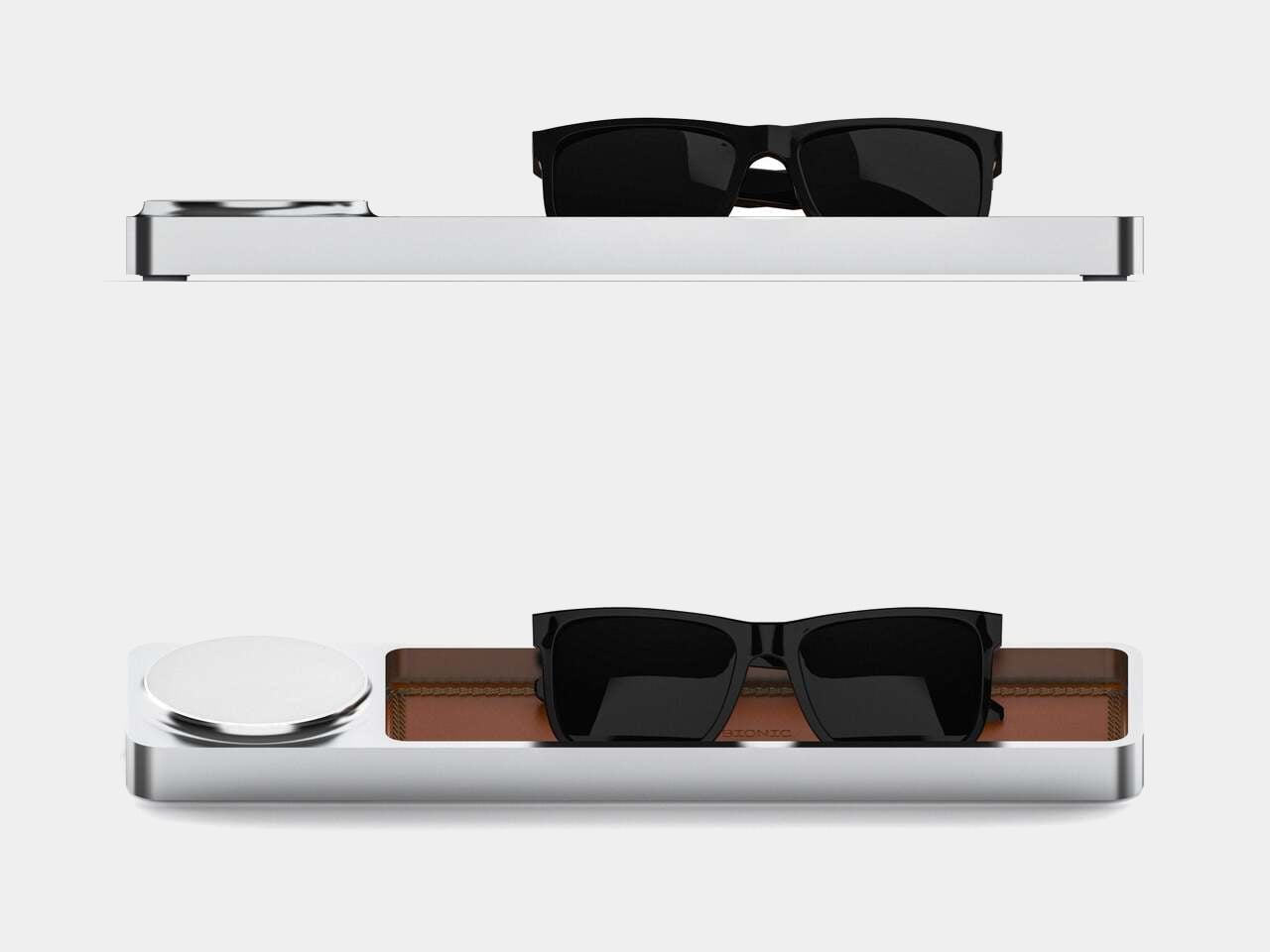
Nothing about the shape asks for attention. At 10.43 by 2.64 by 0.79 inches and just 10.6 ounces, the Valet Charger reads as a thin, low bar rather than a bulky charging dock, the kind of object that disappears into a bedside table instead of dominating it. That restraint runs through the whole BIONIC catalog, where the guiding rule stays simple: nothing gets added without a reason behind it.
A dedicated wireless charging zone sits along the surface, ready for a phone or a set of AirPods without needing either one centered just right. Power runs through a single USB-C cable built into the base, so there’s no separate brick or cord tangling behind furniture. Set a phone down on the way out the door, and it’s topped up again before anyone reaches for it.

Beside that charging zone runs a shallow tray built into the same aluminum body, meant for the smaller things a phone charger usually ignores. Sunglasses, a house key, a wedding ring pulled off before bed, all of it lands in the same narrow channel instead of drifting across a counter. Emptying pockets at the end of a day becomes one motion, not several separate decisions about where things go.
A full-grain leather pad sits inset into the tray, available in black, gray, or brown, warming up what would otherwise be an all-metal surface. Cow leather like this tends to darken and soften with handling rather than wear out, picking up a patina that a synthetic pad never quite manages. Paired with the cool aluminum shell, it gives the object two textures instead of one flat surface throughout.
The Valet Charger isn’t a standalone experiment either. Priced at €240 (about $260), it sits inside a wider BIONIC catalog built on the same small-batch approach, where aluminum, leather, and glass get chosen for how they age, not how they photograph on day one. It’s designed to pair with the brand’s existing Valet Tray, letting a desk or entryway grow its own system of matching pieces over time.
A Corning Gorilla Glass panel caps the charging zone, adding a hard, scratch-resistant surface right where a phone gets set down and picked up dozens of times a day. Months in, the aluminum keeps its finish, the leather deepens in color, and the small pile by the door quietly stops being a pile. It becomes the one spot where a phone, keys, and glasses already belong.