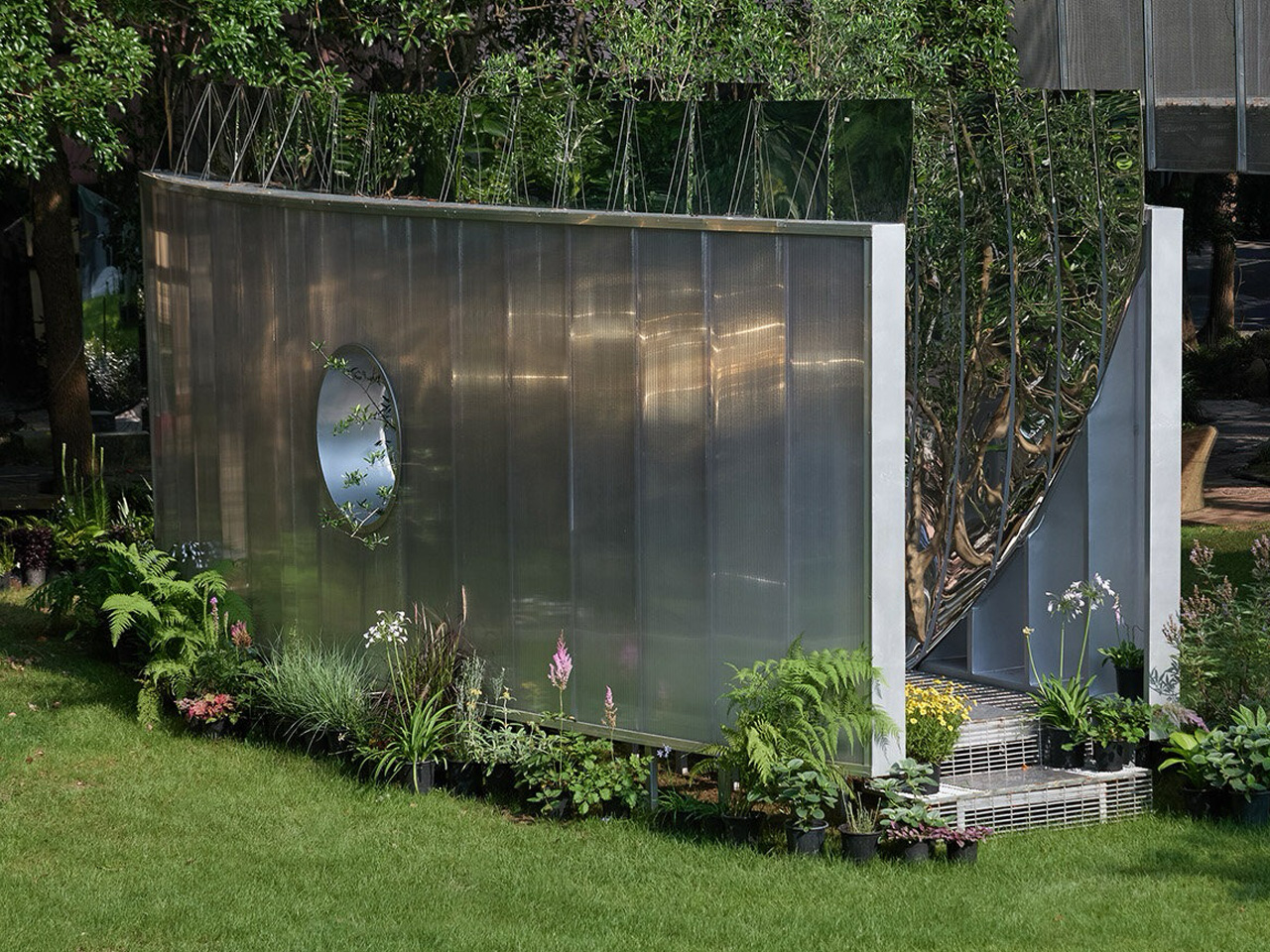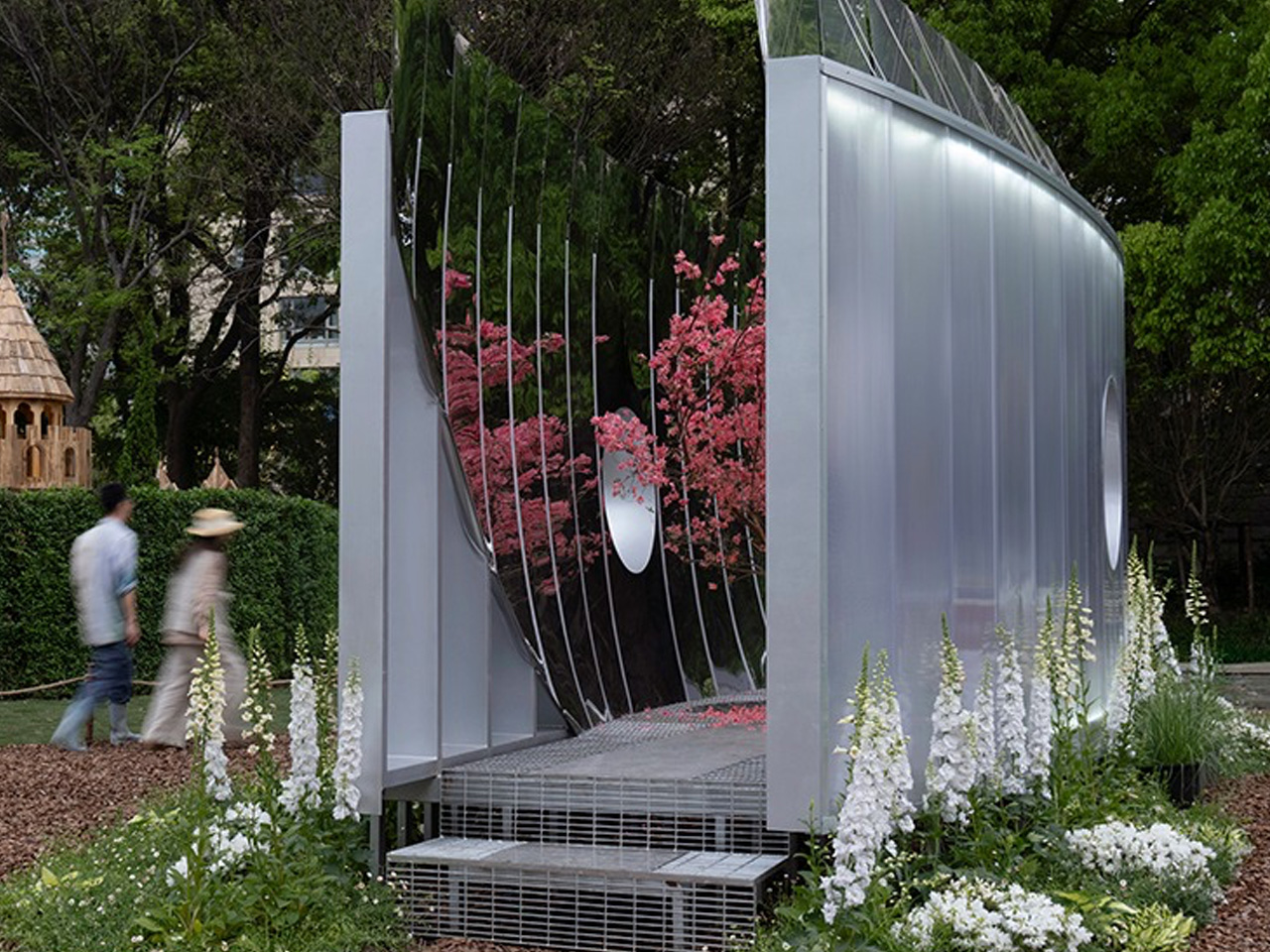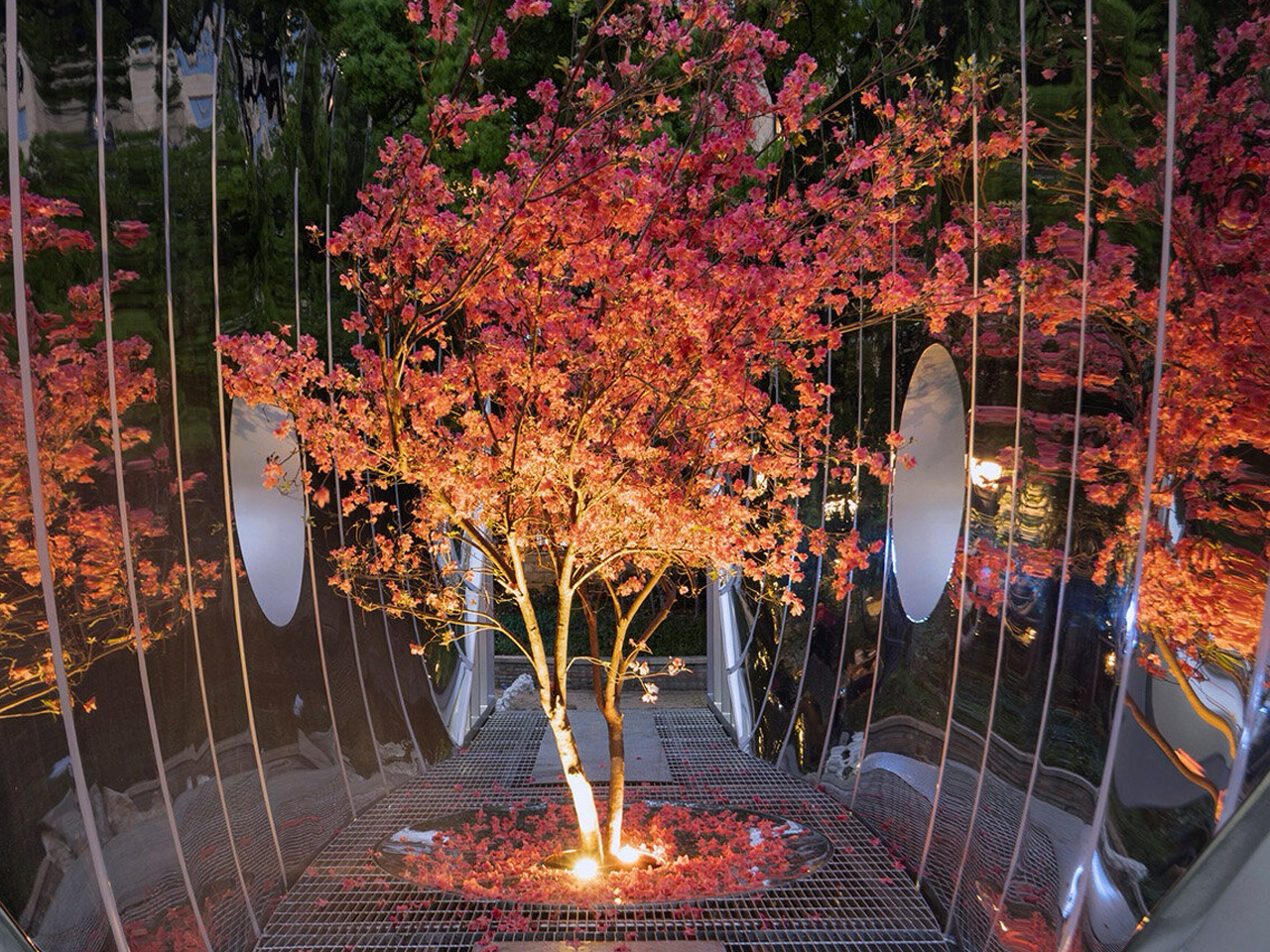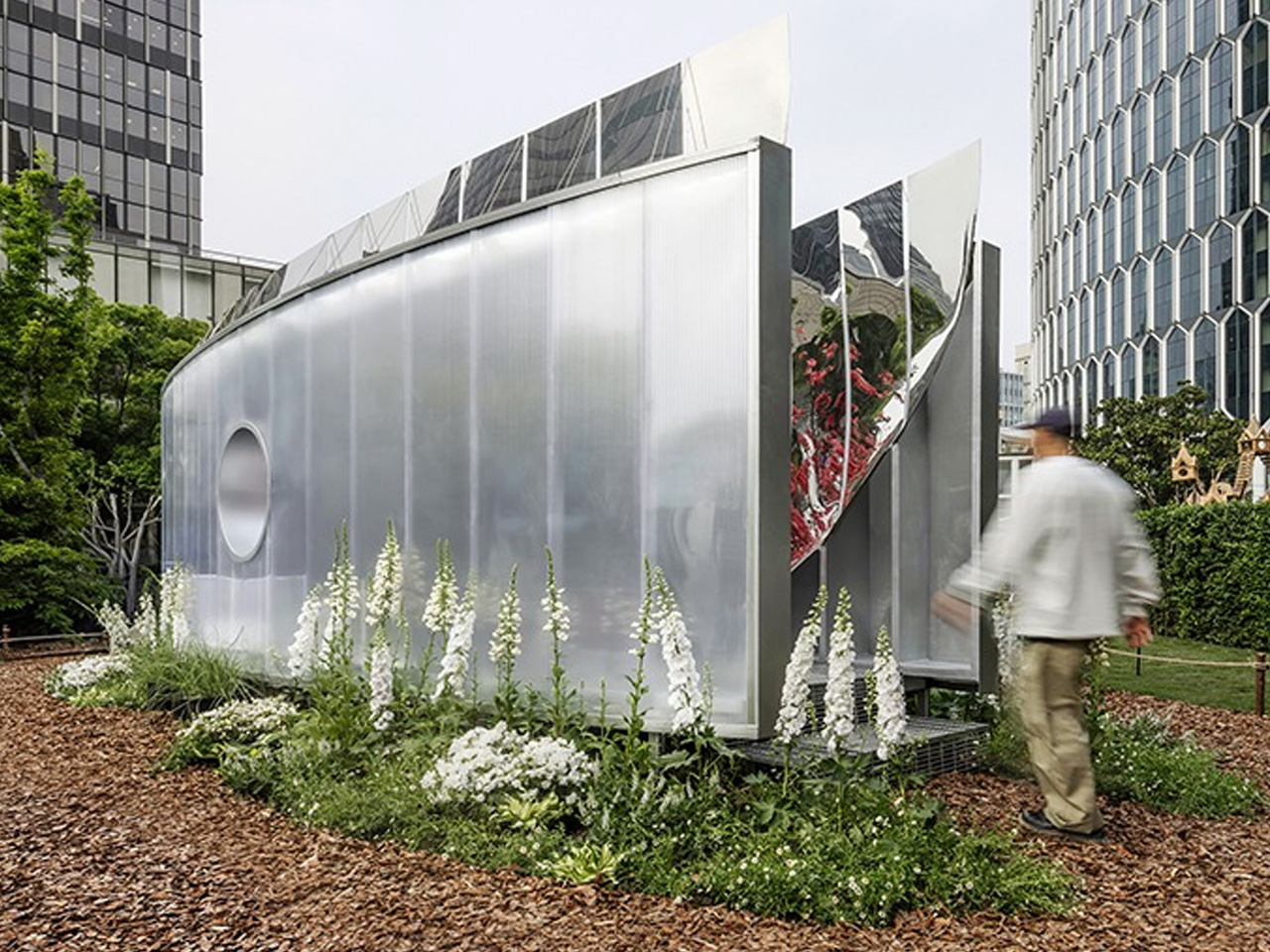

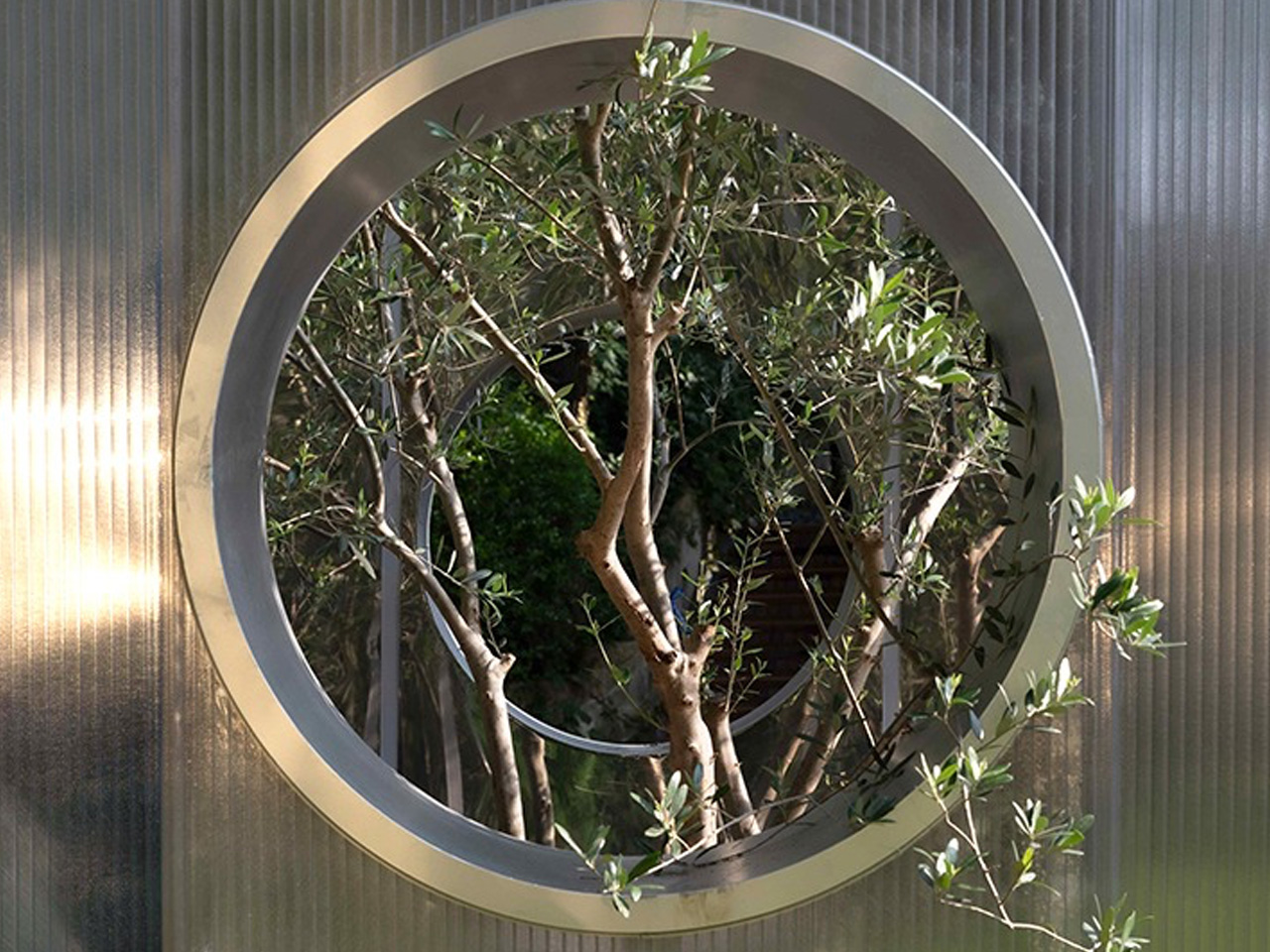
One tree. Two curved walls. A circular entrance that withholds as much as it reveals. That’s the complete material inventory of Infinite Grove, a traveling pop-up pavilion by Chang Hao Studio that debuted at the 2026 Shanghai International Flower Festival before relocating across the city with the seasons. The premise reads like a thought experiment: position a single tree between two inward-facing mirrored-steel surfaces and see how many times geometry can double it before the eye stops counting.
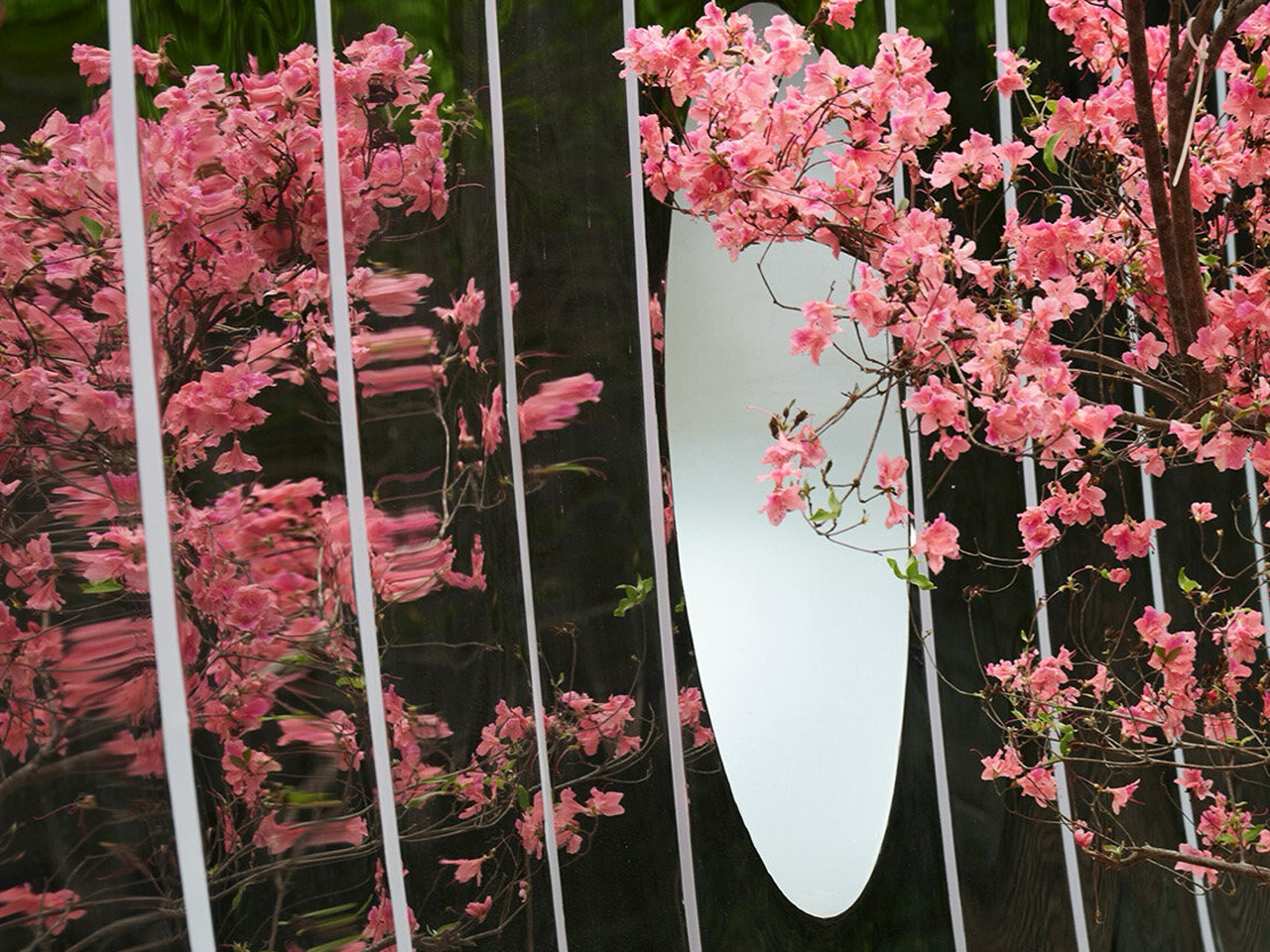
The optics deserve a brief diagram. Imagine a plan view — visitor at the entrance, tree at center, two curved walls arcing on either side. Your eye-line reaches the nearest surface and catches the tree. That surface reflects the opposing wall. The opposing wall reflects. The sequence continues until reflections soften, overlap, and blur into something the brain reads as spatial depth. Curvature is what separates this from a simple mirror corridor. Flat panels produce tidy, linear repetition; curved ones shift the angle of incidence at every height, so reflected images lean, compress at the edges, and multiply at uneven rates. Frosted panels overhead diffuse daylight into a sourceless haze, stripping away the shadow cues that would otherwise confirm which tree is real.
Designer: Chang Hao Studio
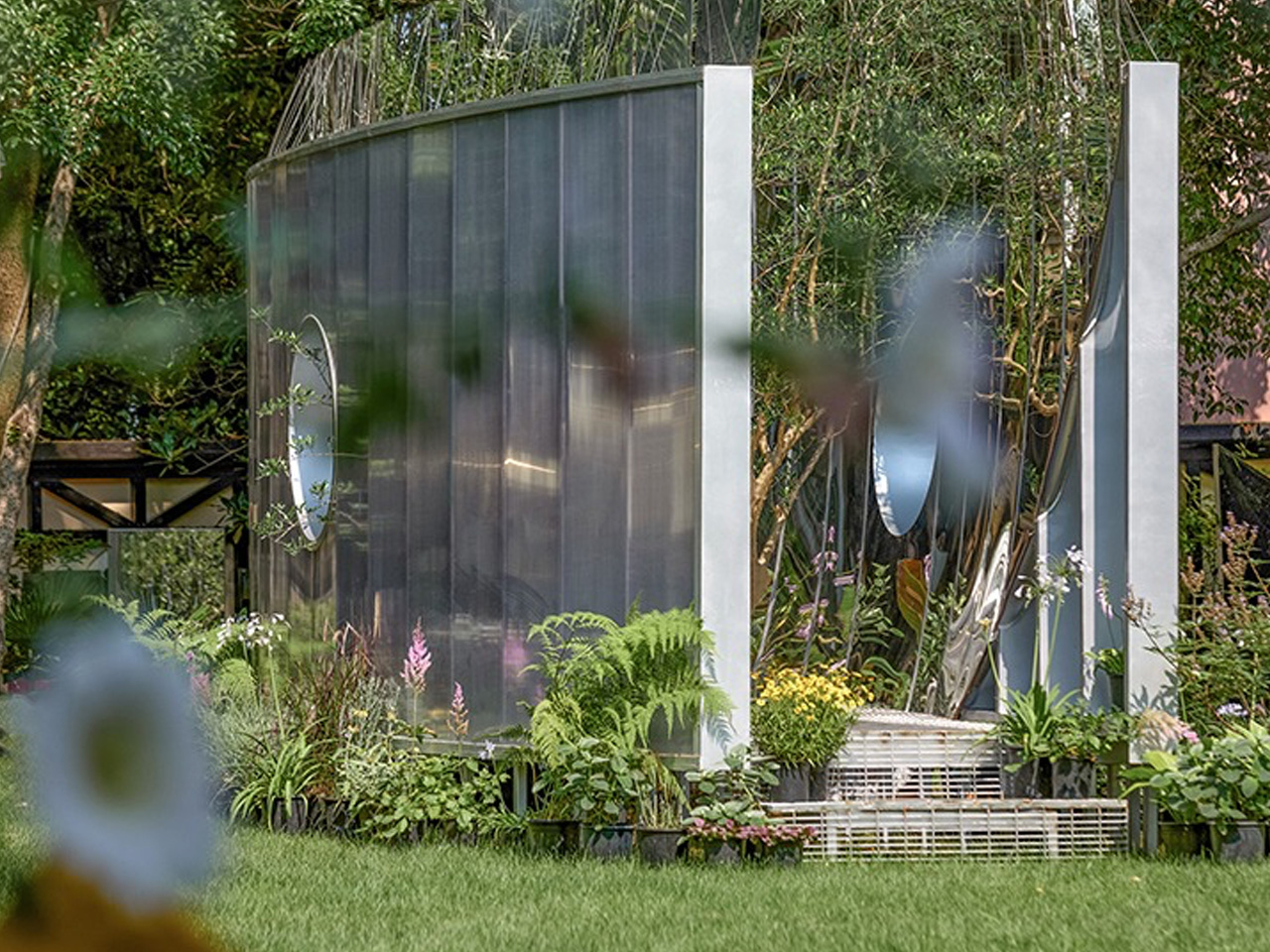
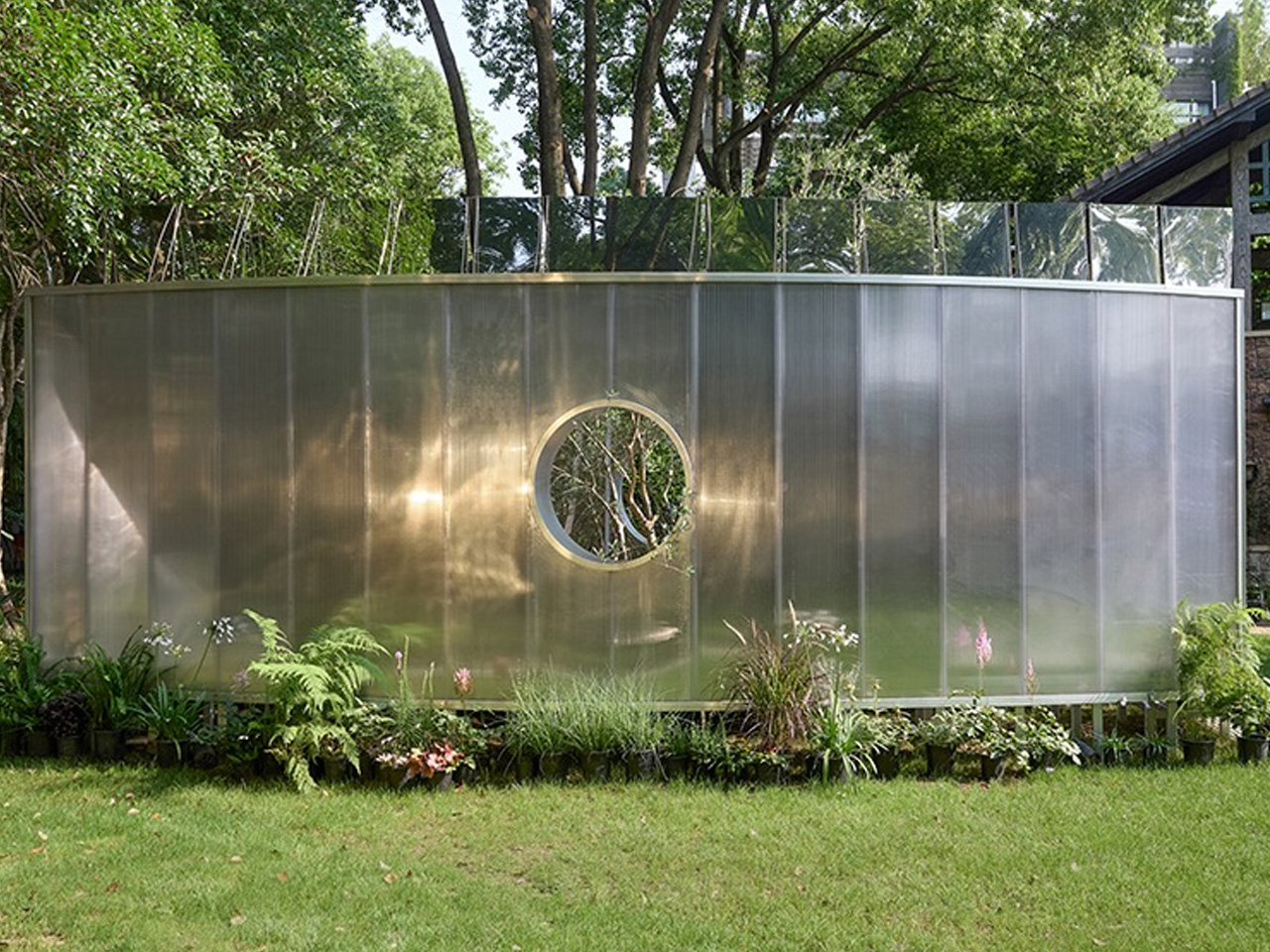
Chang Hao Studio draws the circular aperture from the framed-view tradition of Chinese garden design, and the pavilion has changed host trees with each move. A flowering azalea anchored the spring installation; later pairings introduced different species, with the studio noting that each tree reshapes the reflected landscape while the steel frame stays the same.
Several questions are worth directing to the studio before it travels again. What are the panel dimensions and wall heights? What stainless-steel finish specification does the surface carry, and who fabricated and installed the structure? As the pavilion relocates repeatedly, what does surface maintenance look like at visitor height, where fingerprints and humidity accumulate fastest? Does the circular entrance meet accessibility requirements at each host site?
Has any reflected-glare assessment been carried out for pedestrians in adjacent areas? No thermal, optical, or bird-collision data has been published, and the soil and root-protection conditions for each host tree remain undocumented. Whether the installation is temporary at each site, and what happens to the materials at end of life, is also unconfirmed.
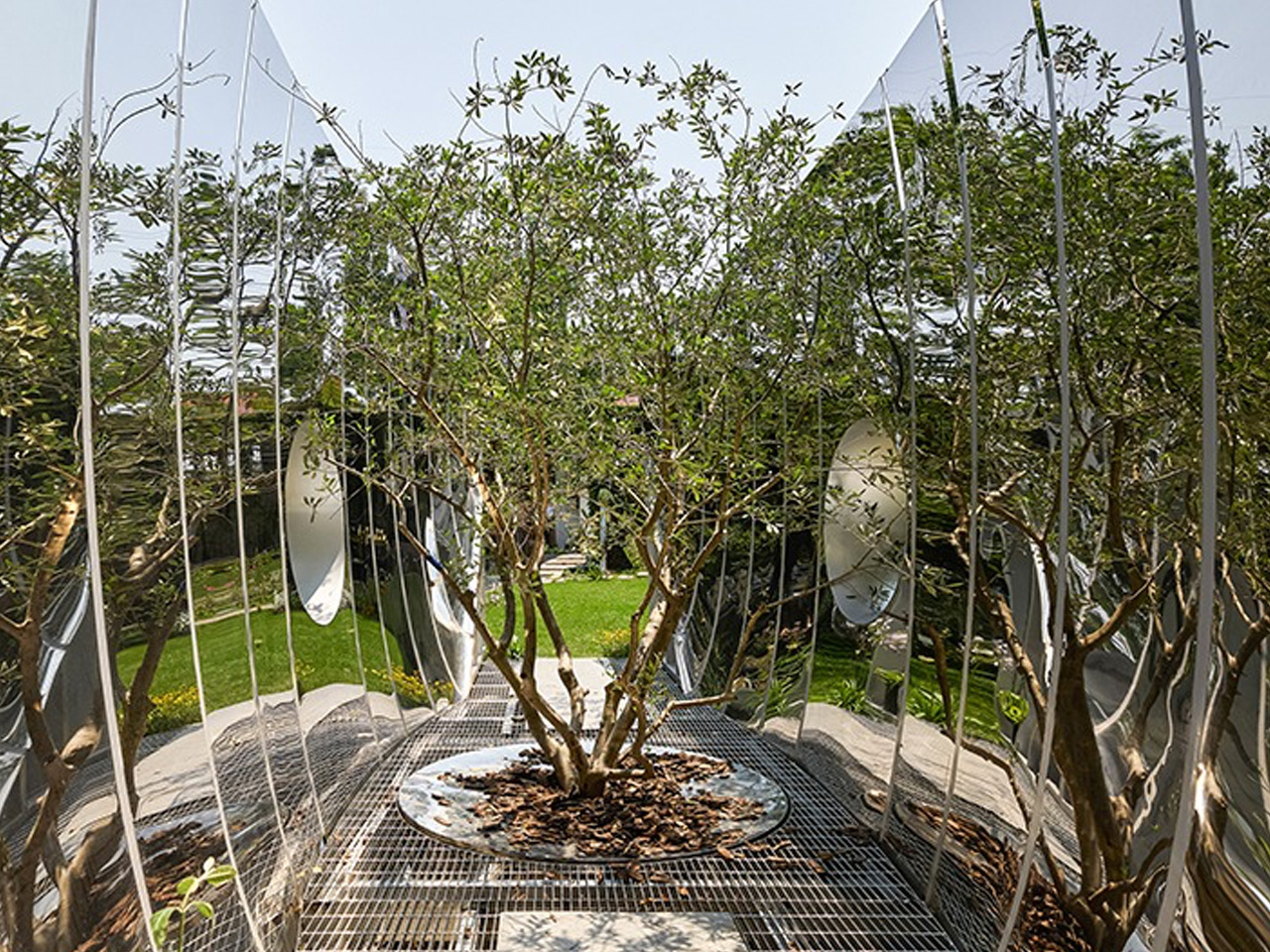
None of that diminishes the concept. Infinite Grove pavilion is tightly reasoned spatial design, turning a familiar industrial material into a perceptual argument about scale and multiplicity. It doesn’t create a forest. It asks whether the difference between one tree and many is a matter of number, or simply of attention.