
Nobody really chooses a pen. They use whatever is closest and hasn’t run dry. Most of us spend more time optimizing digital workflows than we do choosing the notebook we reach for every morning. These five picks are for people who think that choice is worth making, and worth making well.
What this list gets right is range. Two pens approach the act of writing from completely different angles: one that never runs out, one you will always be able to find. Two notebooks built with the kind of paper that makes you slow down and pay attention. And one that earns its place by being worth looking at before you even pick it up, which turns out to be a more effective writing habit than any reminder app has ever managed to build.
1. Inseparable Notebook Pen
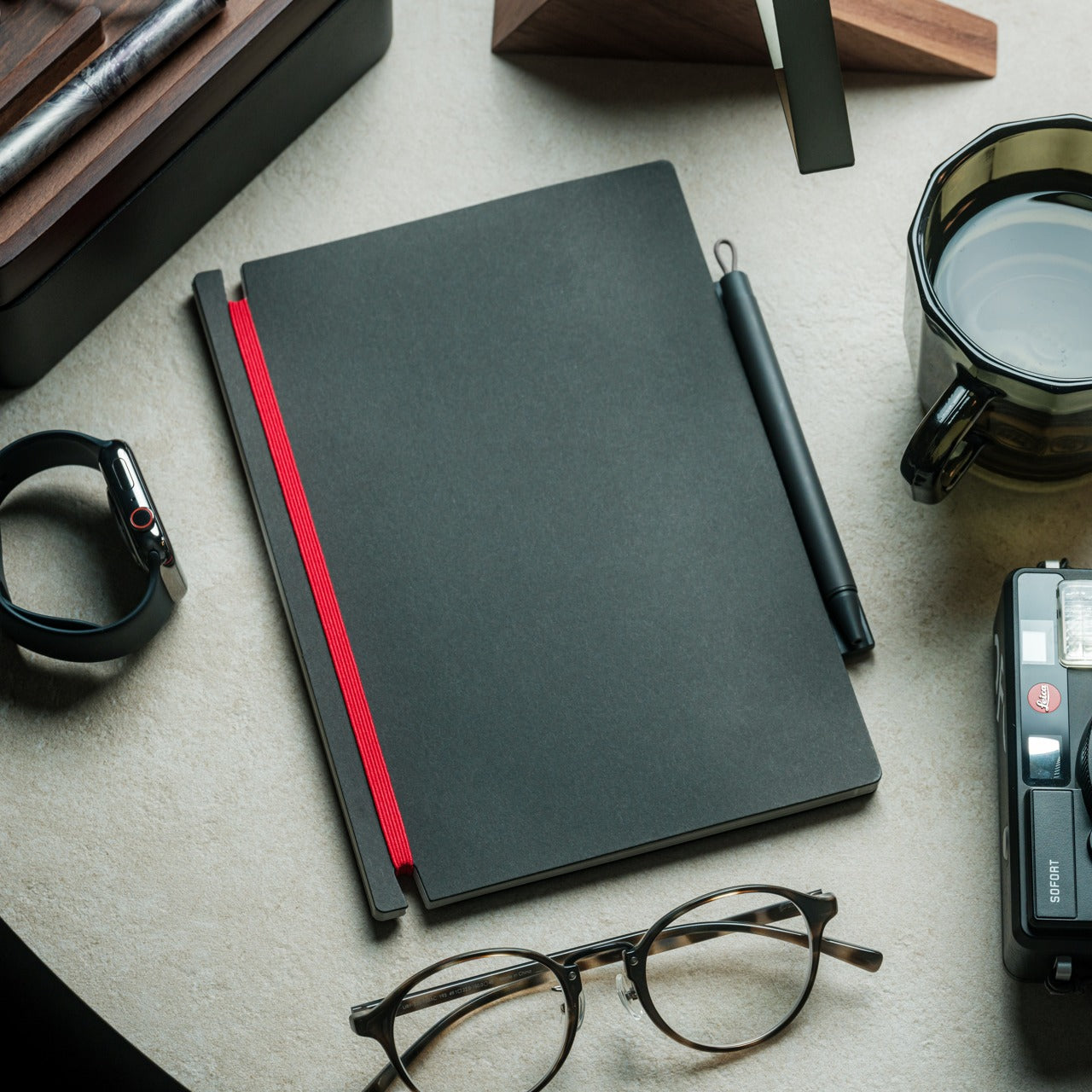

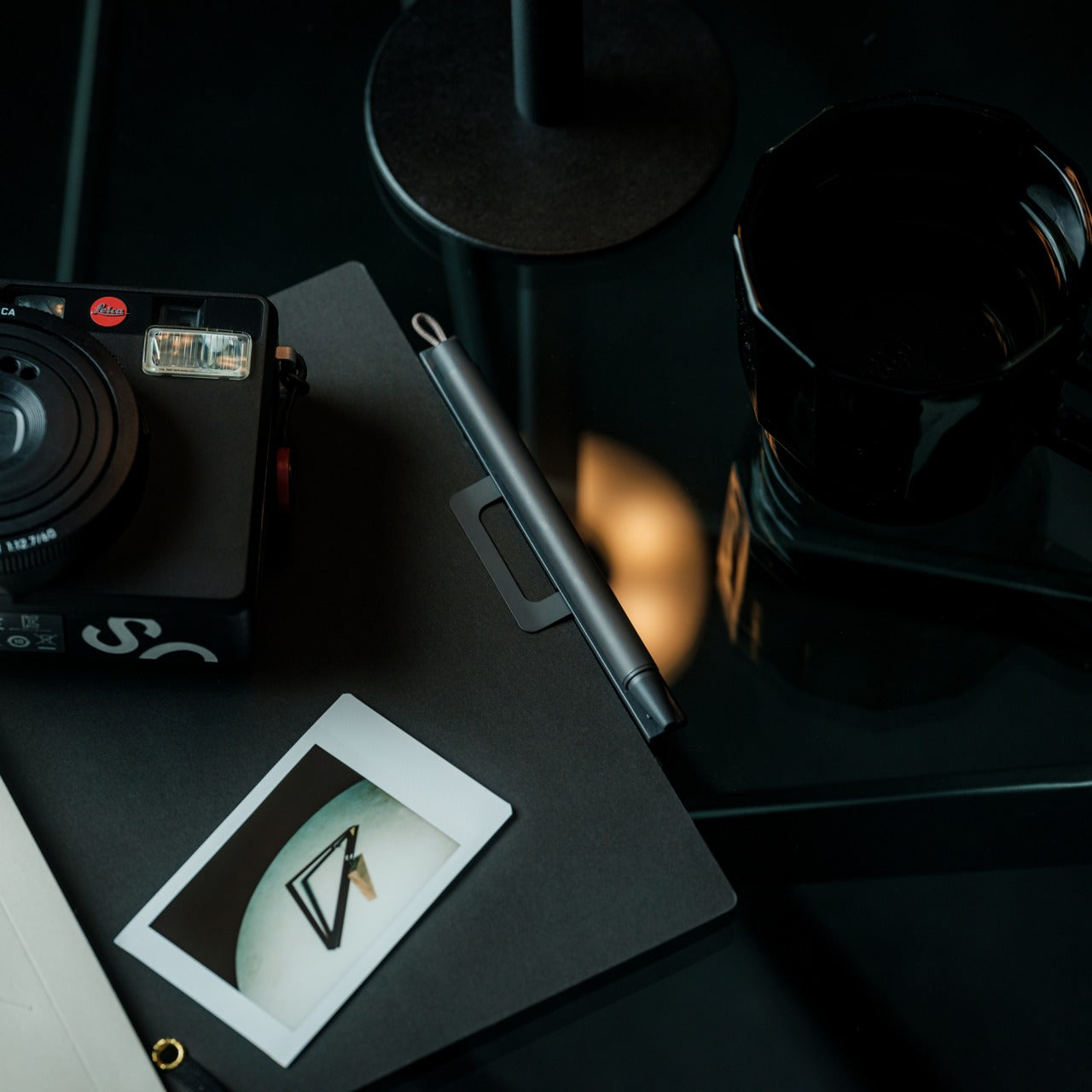
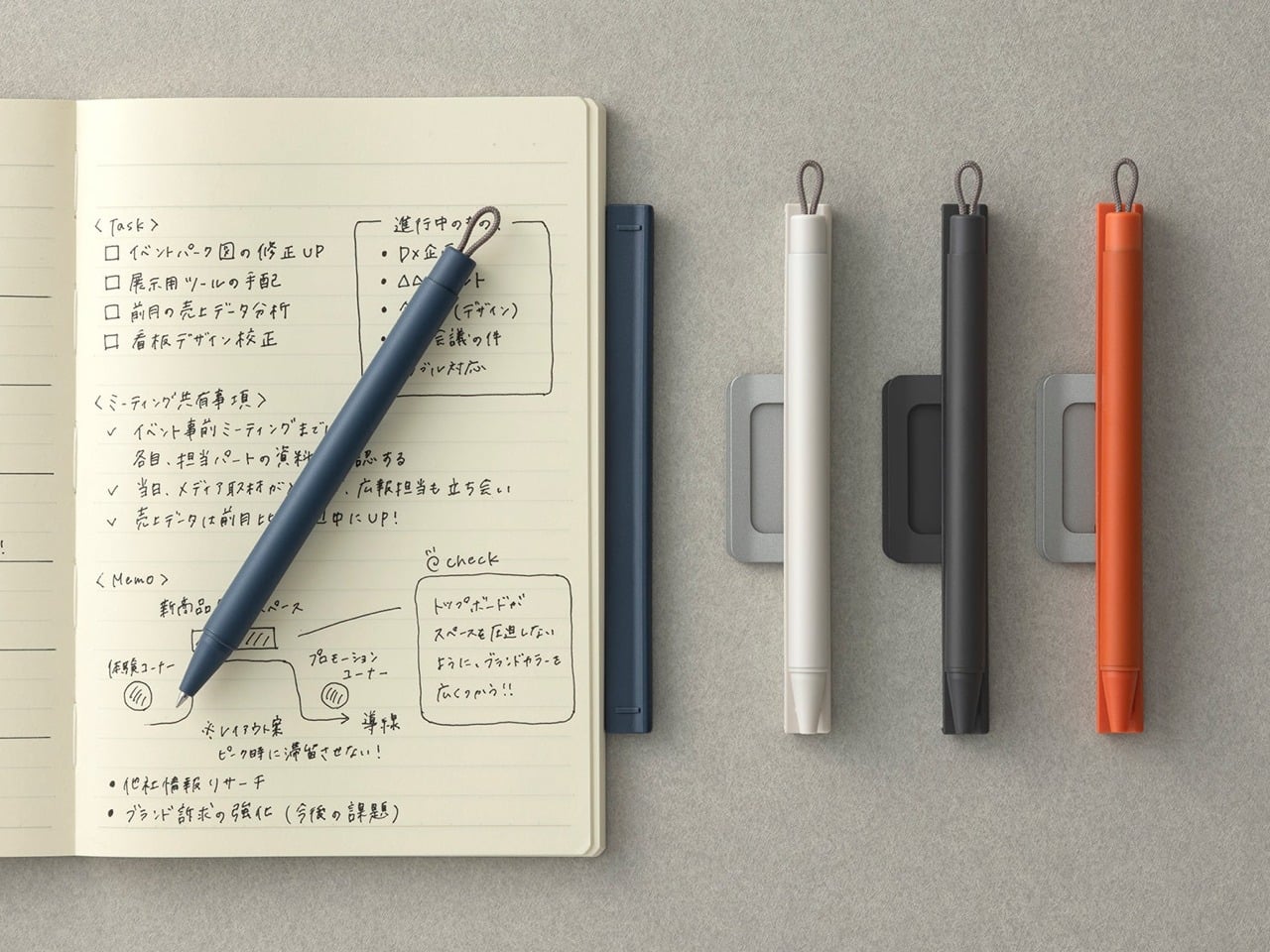
The oldest handwriting problem is not finding the right pen. The pen is never where the notebook is. You find one, lose the other, and the moment passes. The Inseparable Notebook Pen solves that specific frustration by clipping directly to your notebook and staying there. At $19.95, it is the kind of fix that sounds almost too simple until you realize how often a missing pen is the only thing standing between you and actually writing something down.
The benefit here is behavioral, not aesthetic. When the pen lives on the notebook, you stop negotiating with friction. You pick up the notebook; you have a pen. That sounds obvious, but most stationery objects are sold as experiences, and this one is sold as a solution. It is the rare writing tool that is entirely about removing the obstacle rather than deepening the ritual, and at this price point, that clarity of purpose is genuinely hard to argue against.
What we like:
- Eliminates the one friction point that breaks most analog writing habits
- The $20 price makes it a commitment with no real downside
What we dislike:
- The pen stays with the notebook, so you cannot reach for it independently when you need a quick signature elsewhere
- Both always travel as a pair, which adds a little bulk to the stack
2. MD Notebook A5
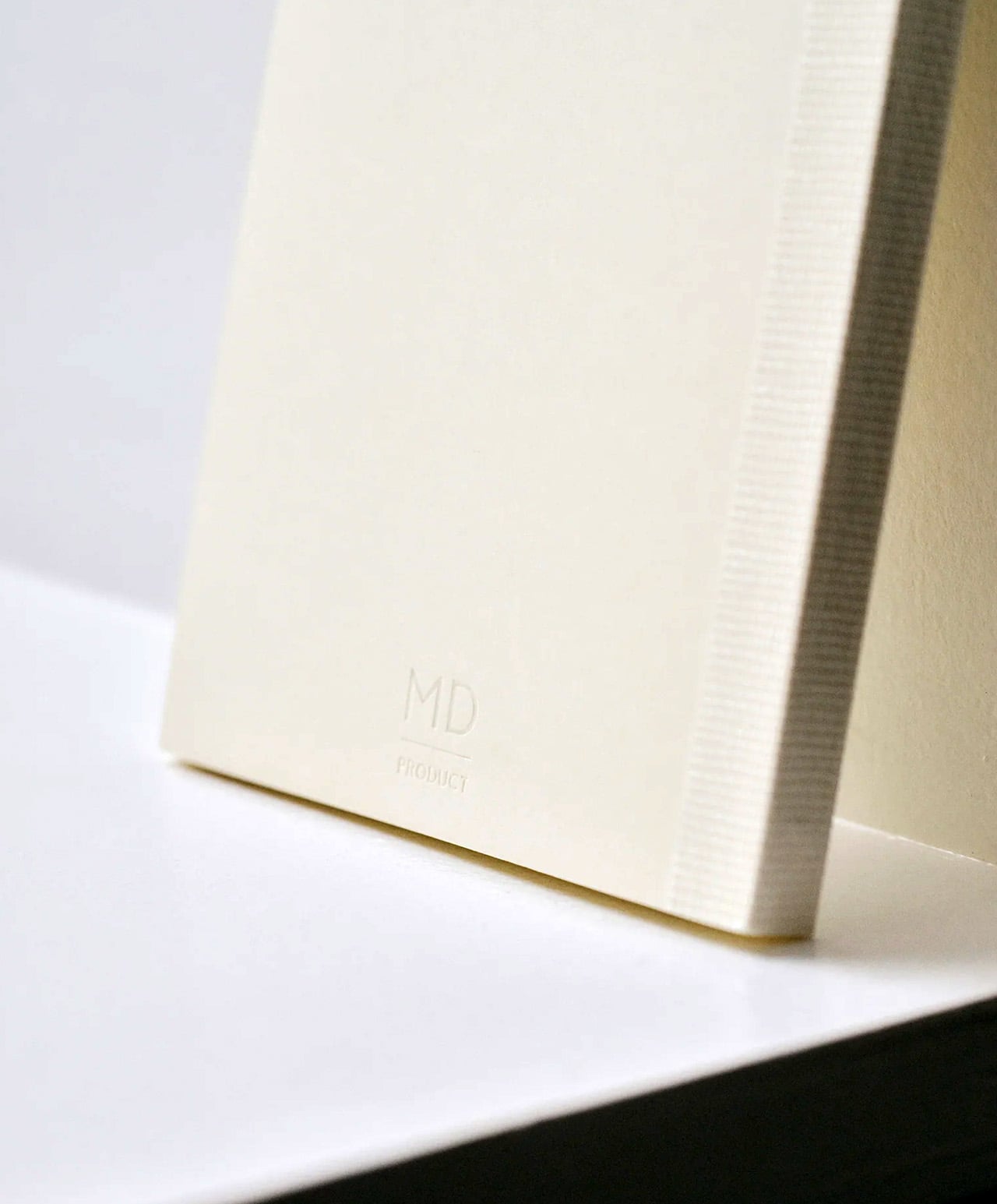

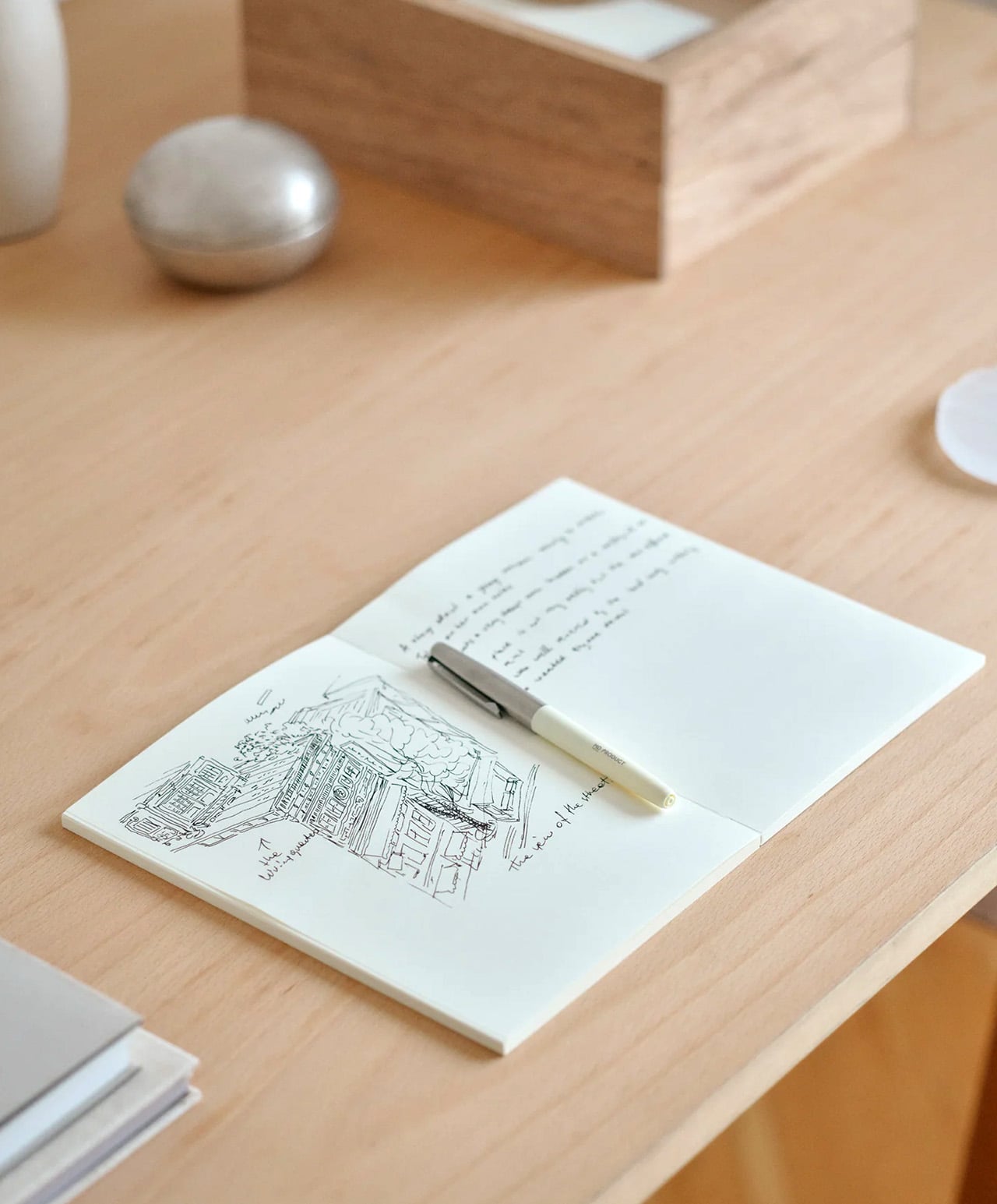
Japan’s MD PRODUCT has been refining this notebook’s paper since the 1960s. What they arrived at is MD PAPER: a cream-colored, 80g/m² sheet that handles fountain pens, ballpoints, and light watercolor washes without bleed-through. The A5 holds 176 pages, uses a thread-stitched binding that opens completely flat at 180 degrees, and comes wrapped in glassine paper reminiscent of an old paperback jacket. Four layouts are available: blank, lined at 7mm, grid at 5mm, and dot grid at 5mm.
What makes the MD Notebook A5 worth having on your desk is not any single feature but the way those features cooperate. The lay-flat binding means you never lose writing space to the gutter. The cream paper gives your handwriting a warmth that bright white pages simply do not. At around $14.40, it is the kind of notebook that makes the act of writing feel considered without asking you to spend as if it is. Once filled, it shelves alongside books in a way that genuinely feels earned.
What we like:
- Thread-stitched binding opens completely flat from the first page to the last
- MD PAPER handles fountain pens without bleed-through and is smooth enough to feel like writing on proper stationery
What we dislike:
- The plain cover has no pen loop or elastic closure, so a separate cover purchase is effectively required for everyday bag use
- The glassine jacket, while beautiful, tears easily with regular handling
3. Pininfarina Aero Ethergraf
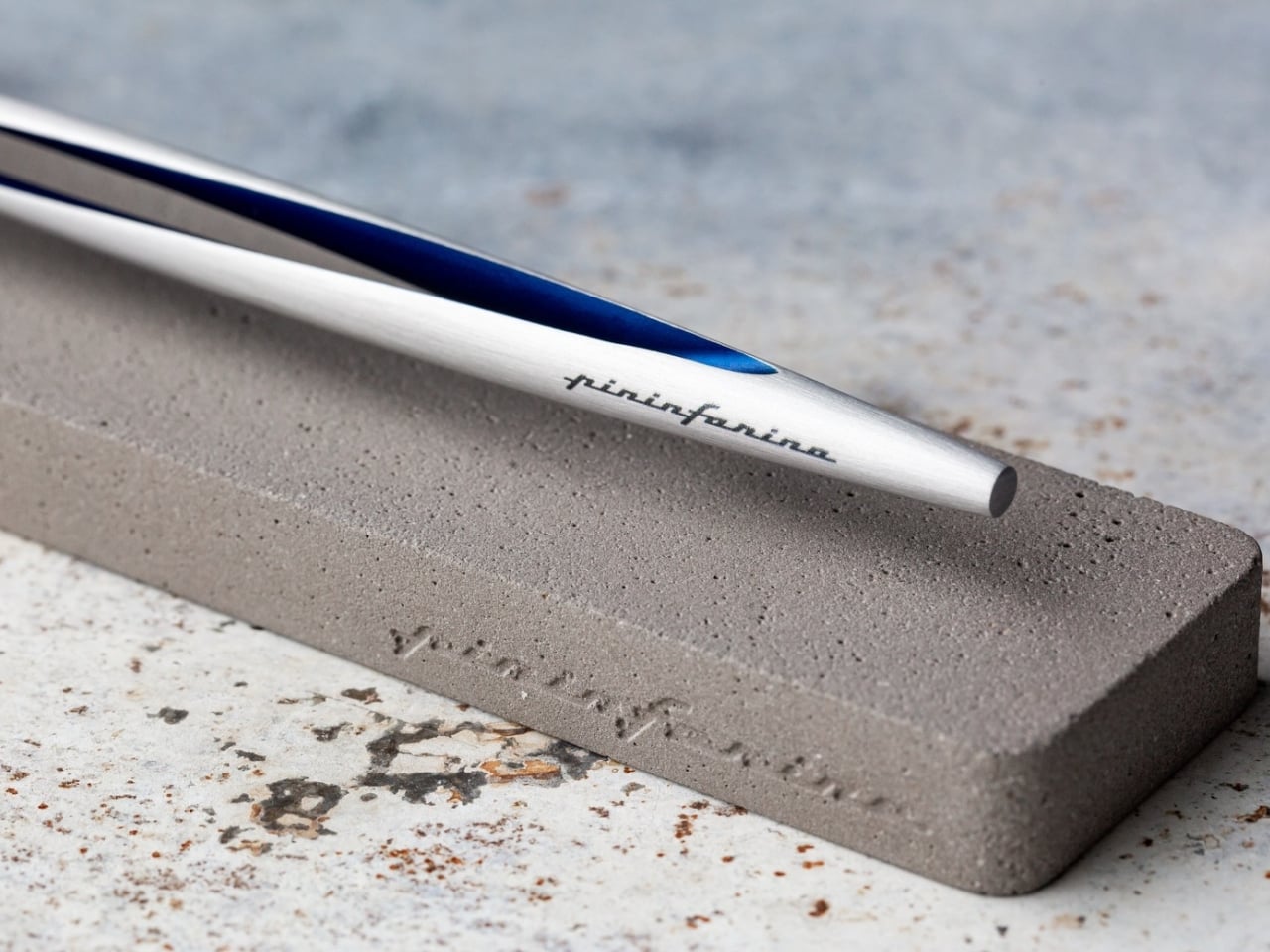
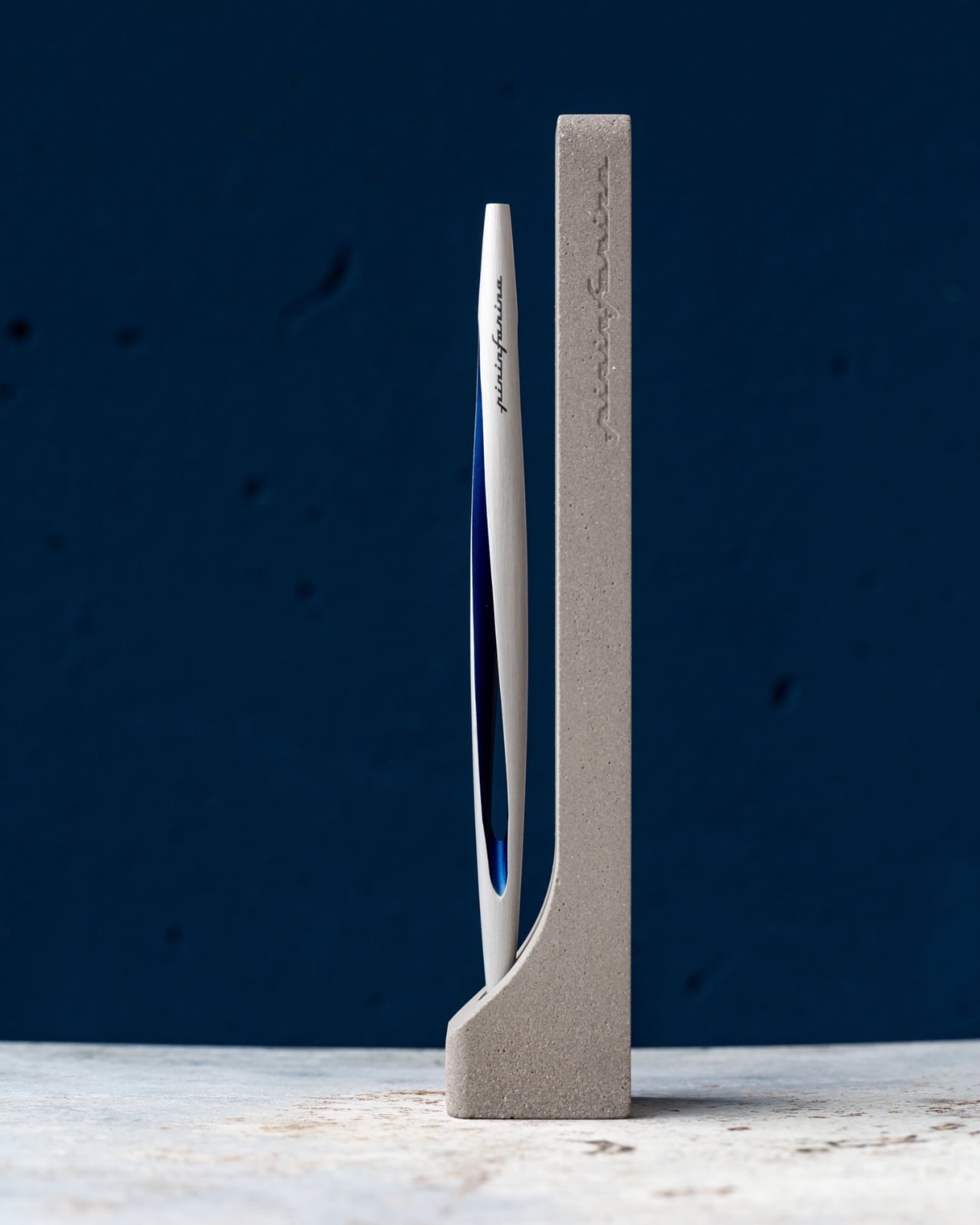

Pininfarina is the Italian studio behind some of the most iconic automotive silhouettes ever drawn, including decades of Ferrari and Maserati bodies. The Aero Ethergraf takes that same line-first design sensibility and applies it to something you hold between two fingers. Made from aerospace-grade aluminum at 17 grams and 160mm long, it uses a nib made from Ethergraf, a patented metallic alloy that deposits graphite-like marks on paper without a single drop of ink, and those marks can be erased just like a pencil stroke.
The practical benefit is that you never replace a cartridge, never run out mid-thought, and never throw it away. It is a pen designed to outlast the habits built around it. The marks it leaves look like hard-pencil strokes: precise, erasable, and permanent enough to matter on the page. Handcrafted in Italy and built to last without any maintenance, it makes a quiet argument for choosing objects with intention. If you are deliberate about what sits on your desk, this is the pen that earns that deliberateness back.
What we like:
- No ink, no cartridges, no refills ever required
- Made in Italy by a design house with one of the strongest aesthetic track records in the world
What we dislike:
- The Ethergraf line is notably lighter in tone than a standard ink pen, which takes real adjustment for anyone used to bold ballpoint or gel line weights
- The marks can smudge on smooth paper surfaces more readily than ink
4. Field Notes Paletas
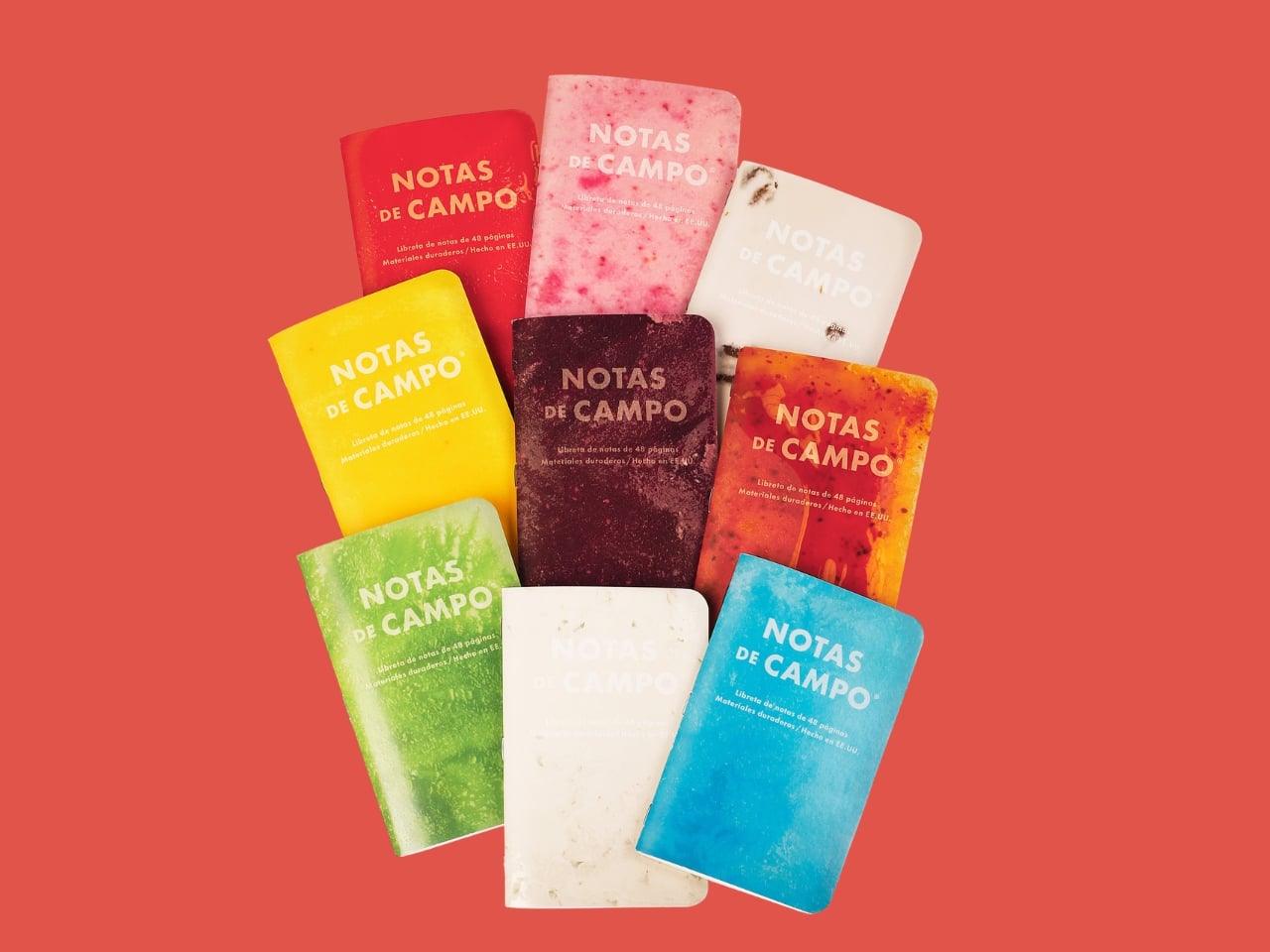
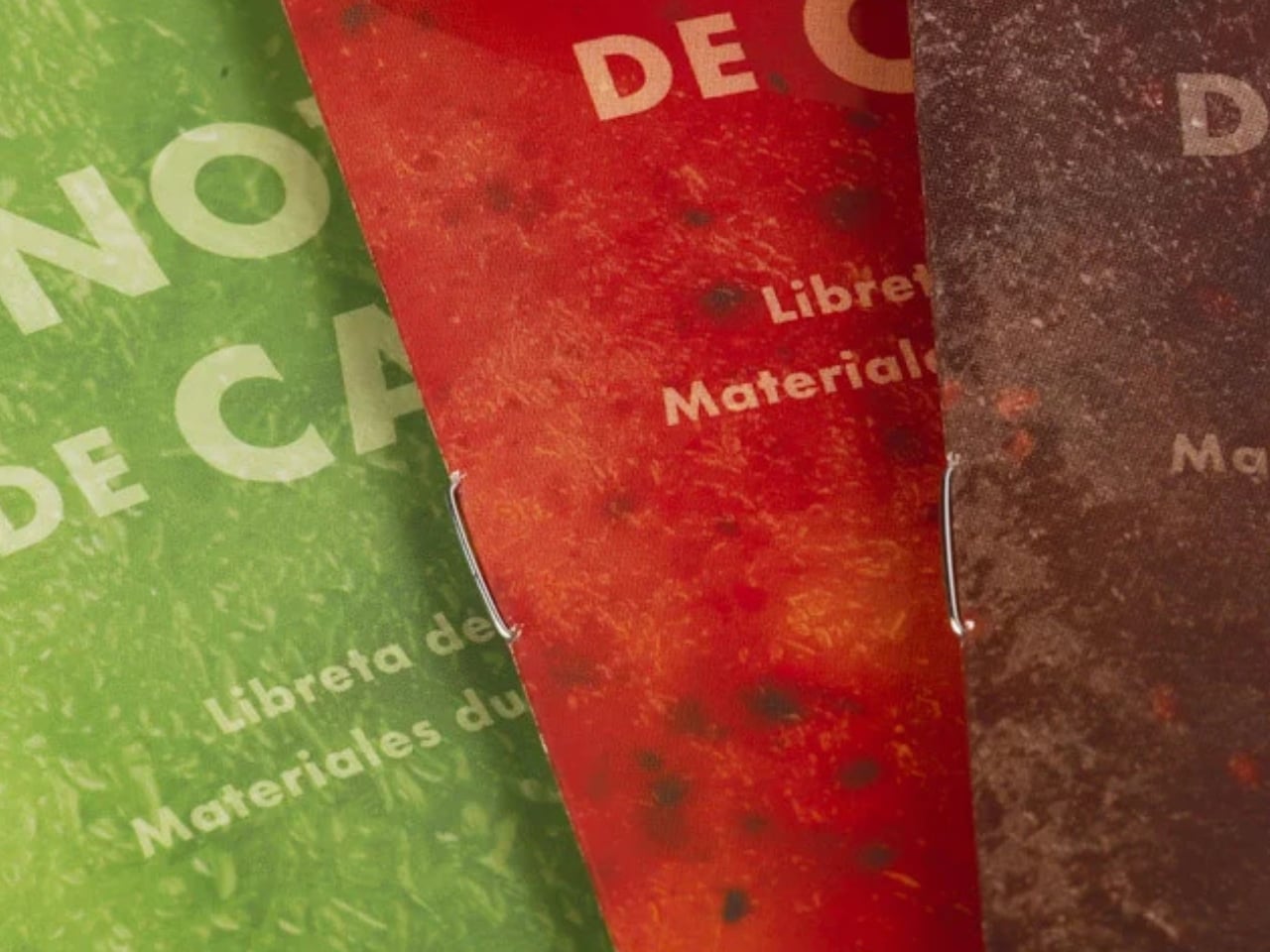
Field Notes has always made notebooks that disappear into a back pocket and get used. The Paletas edition keeps that utility and adds something unexpected: covers finished with a combination of shiny gloss and frosty matte varnish designed to look like frozen paleta bars. Each pack contains three notebooks across three flavor collections totaling nine varieties. Inside, 48 pages of cream-colored dot-grid paper printed with soy-based inks, and a backing card illustration by artist Atlan Arceo-Witzl.
The combination of gloss and matte on the cover catches light differently depending on the angle, making it the kind of object people pick up off your desk to examine. That shift in attention is a different kind of motivation to write. The dot-grid interior works equally well for notes, sketching, and layout planning. For Field Notes subscribers, the full set of all nine flavors arrives together, which is the way to own this collection.
What we like:
- The cover treatment is genuinely beautiful without tipping into novelty for its own sake
- Soy-based inks and the Arceo-Witzl backing illustration show real production care at this price point
What we dislike:
- 48 pages fill faster than most notebook users expect, especially if you write long-form or sketch regularly
- The limited-edition run means restocking is not guaranteed once a flavor sells through
5. Levitating Pen 3.0
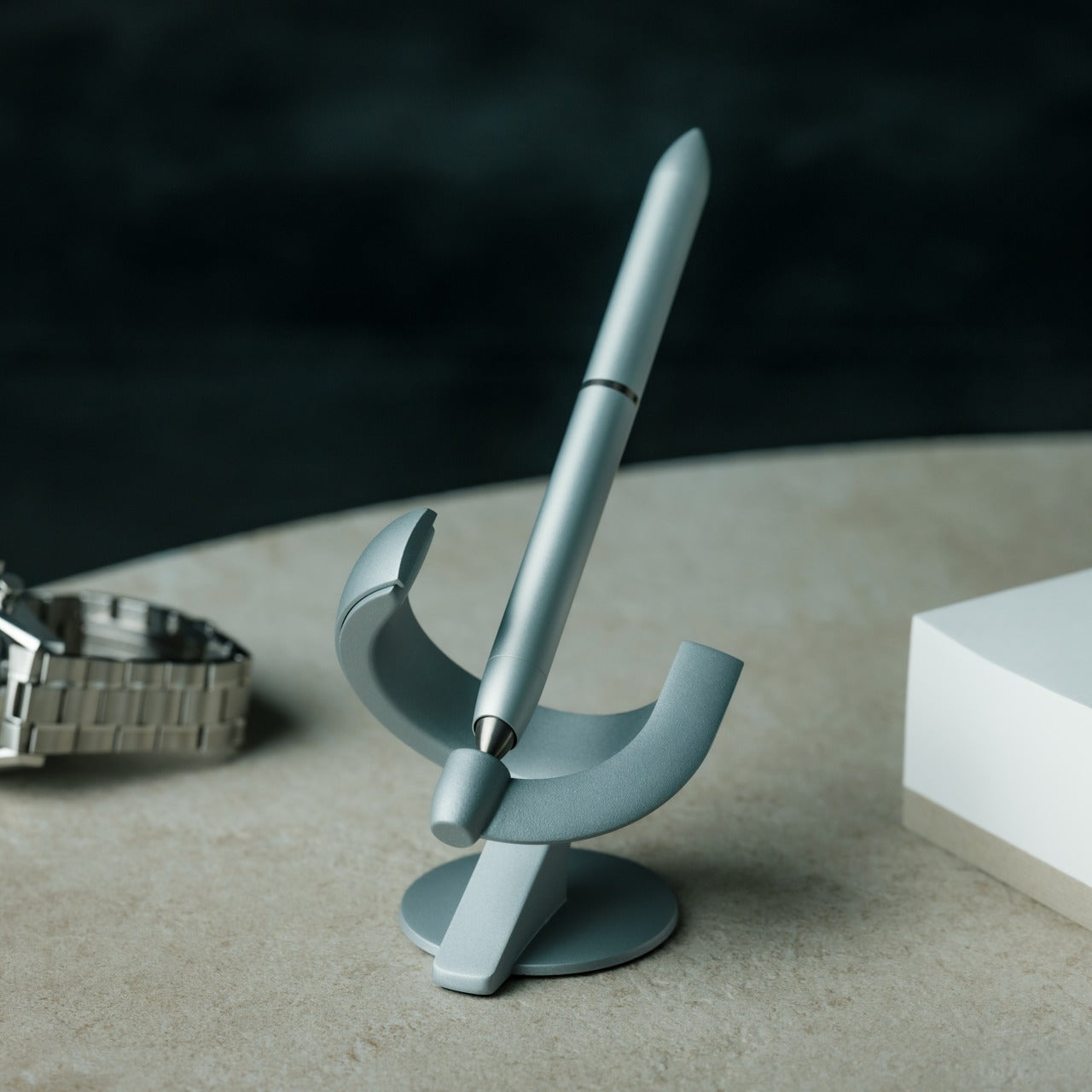
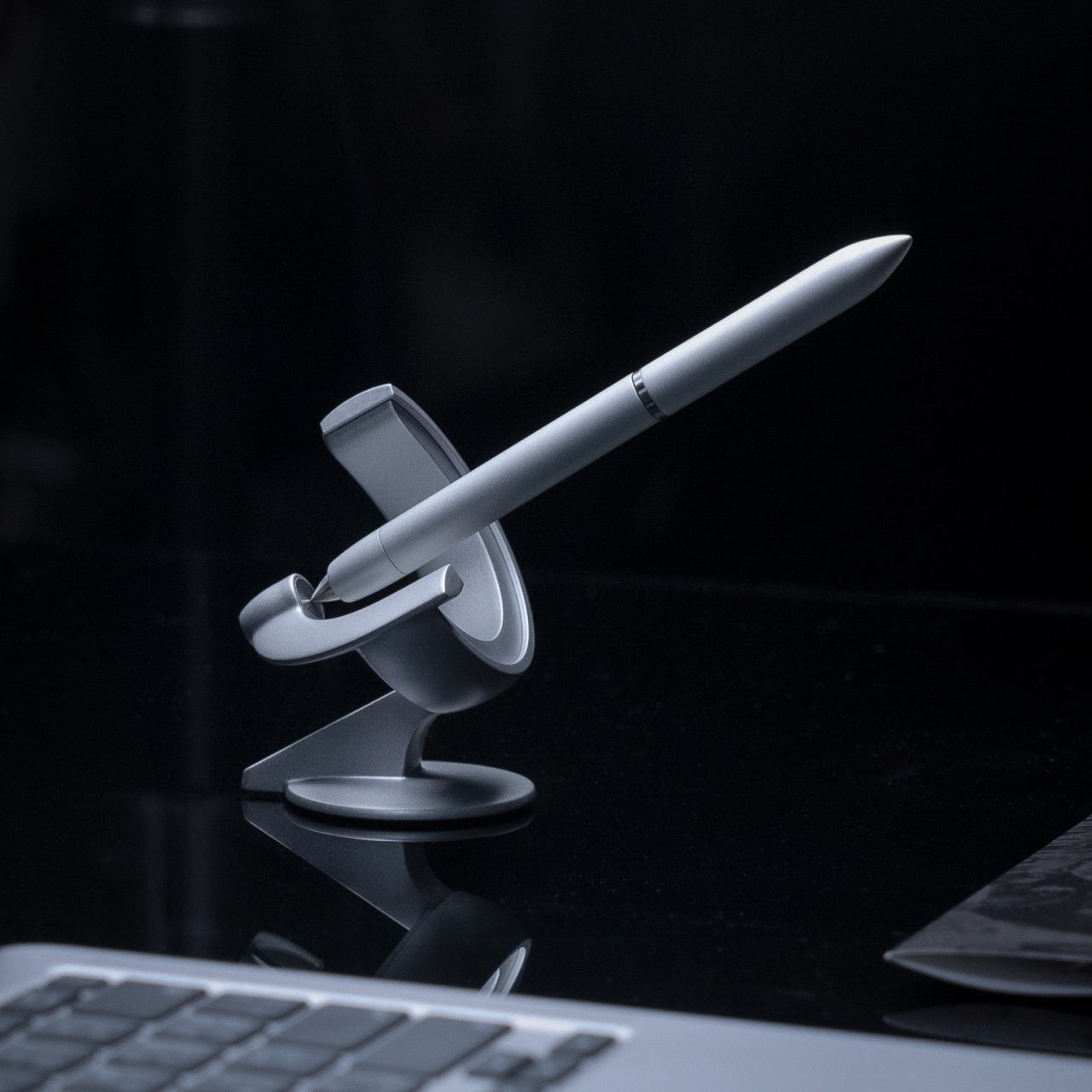
The Levitating Pen 3.0 is the third iteration of a genuinely unusual idea: remove the pen from the desk surface entirely. Using magnetic suspension, it hovers above its base, turning a writing instrument into the kind of desk object that earns a second look from everyone who encounters it. What makes this more than a novelty is that the levitation creates a deliberate pause. You reach for it consciously, and that shift in intention has a way of carrying through to what you put on the page.
That is the real case for it as a writing tool rather than just a desk sculpture. The act of returning the pen to its hover after a writing session closes the moment in a way that clicking a ballpoint cap or capping a marker never quite does. The third generation builds on the concept with the confidence of an idea that has had the time to understand what it is. If any item on this list earns its place by making you genuinely want to sit down and write, it is this one.
Click Here to Buy Now: $129.00
What we like:
- The magnetic suspension makes it the most visually distinctive object on any desk
- The hover-and-retrieve motion builds a writing ritual that is hard to replicate with any other pen
What we dislike:
- The levitation base is not travel-friendly, so this works as a desk pen only
- The spectacle of the mechanism risks making it more of a conversation piece than a working writing instrument for some users
The Best Writing Tools Are the Ones You Actually Use
The case for handwriting has never really been about nostalgia. It is about attention. When you slow down to write by hand, you process differently, choose words more carefully, and produce something that carries the physical evidence of the thought behind it. These five tools are not trying to replace the keyboard. They are trying to make the moments when you choose not to use it feel like they actually matter.
What they share is a design conviction: that the quality of what you write with shapes the quality of how you write. A notebook that opens flat, a pen that never runs out, a cover that catches light, a clip that keeps both together, a hover that makes picking up the pen feel worth doing. None of these are essential features. All of them are reasons to close the laptop and start a page.

