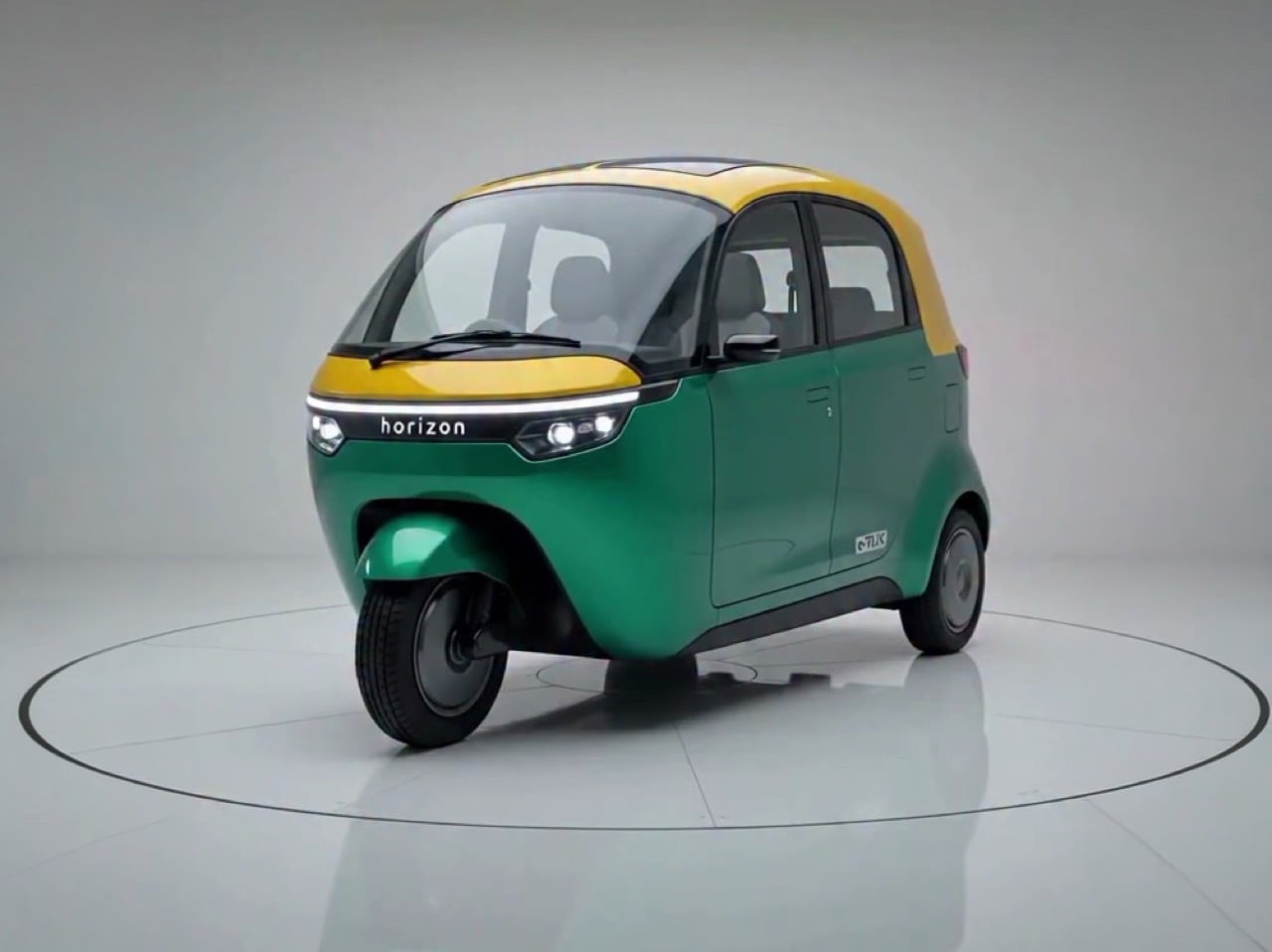

The Tuk-tuk, also called the ‘Auto Rickshaw’ in South Asia, actually comes from Italy! The original three-wheeled vehicle was manufactured by Piaggio and popularized in the continent under the model name Apé before other brands caught on. The vehicular category is now an unshakeable part of Indian automotive culture. In its regular form, the Auto Rickshaw (as opposed to the hand-pulled carts called Rickshaws) is a mode of public transport, seating up to three people at the back. Swap the back seat out for a truck bed and the Auto Rickshaw becomes a transport vehicle for all sorts of cargo, from furniture to fresh produce. The only problem with the Auto Rickshaw is that it hasn’t fundamentally changed in its aesthetic in decades. Carbon Noir proposes an alternative.
Dubbed the ‘Cyberpunk 2077 Auto Rickshaw’, this concept vehicle has a few changes on and under the hood. For starters, it comes with an electric powertrain, making it way more energy efficient than the fuel and CNG guzzling autos you see on Indian roads. Secondly, the exterior gets an absolute makeover, which I have mixed feelings on.
Designer: Carbon Noir
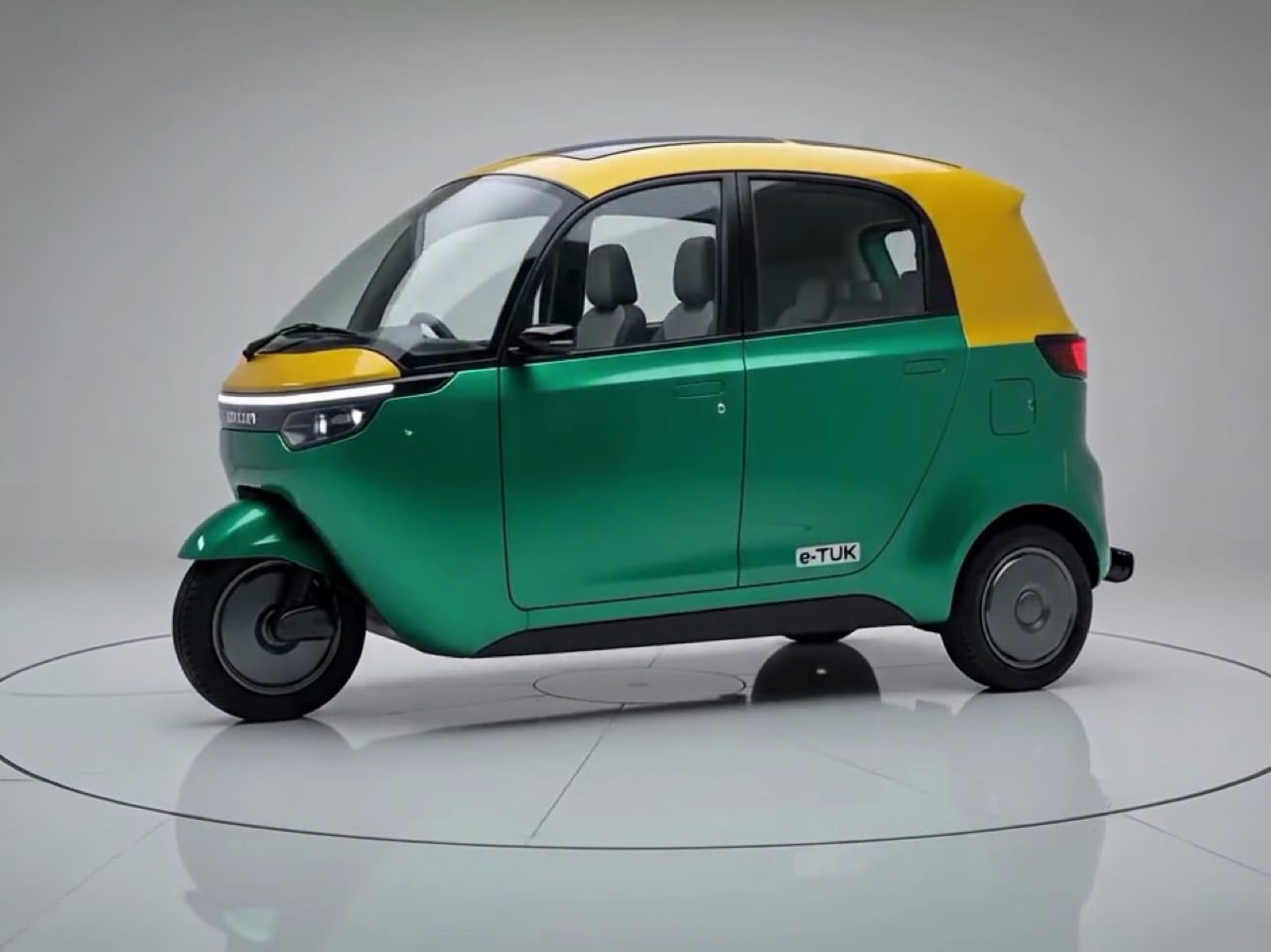

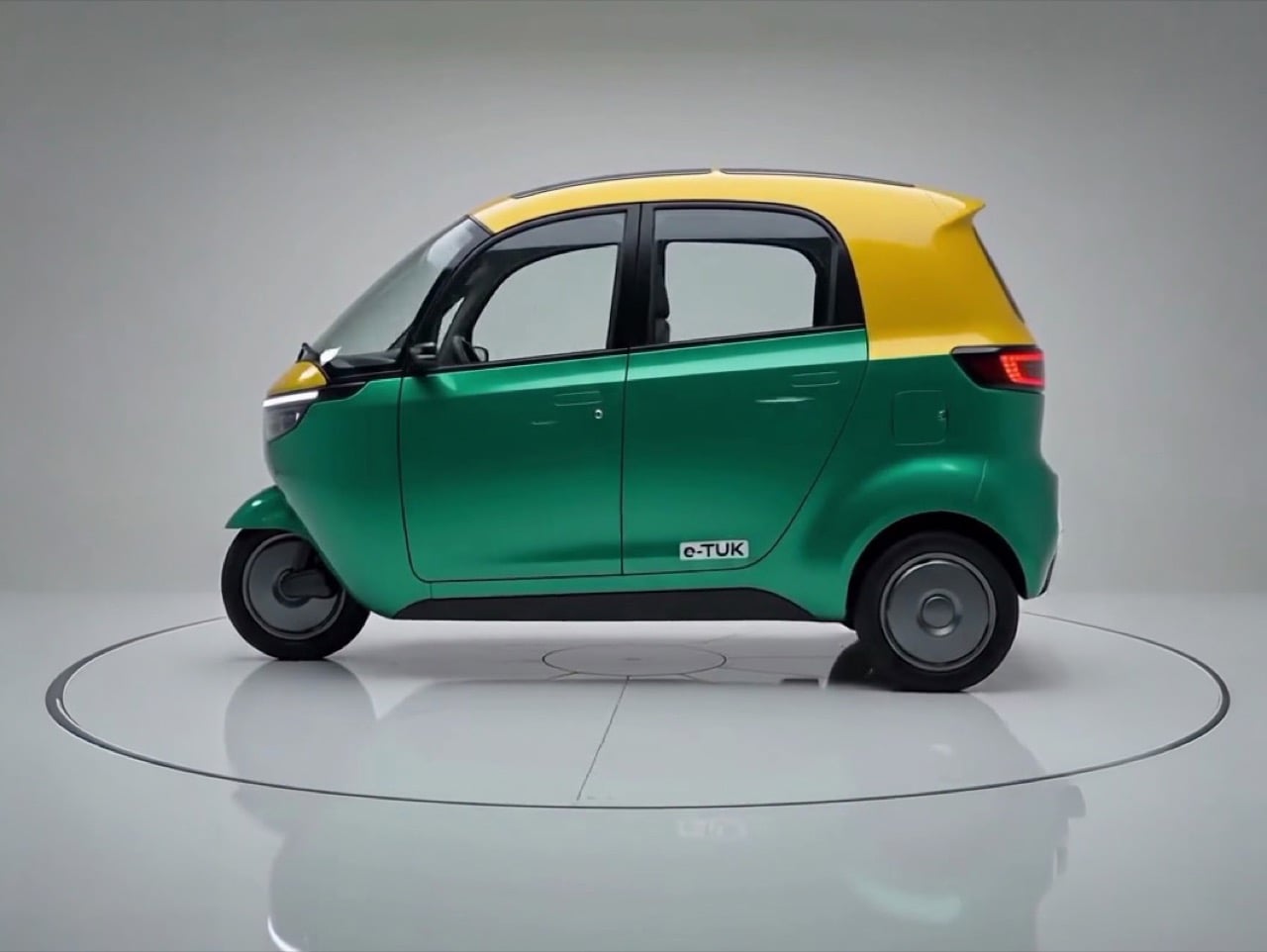

There’s a lot to appreciate about the makeover – you’ve got modernized headlights and taillights, an actual hardbody design that isn’t a metal armature roof with fabric pulled over it, and an aesthetic that feels very Renault Twizy but dialed back. The only real problem (and this is entirely in my head) is the dual-tone design, which gives the E-tuk (electric tuk-tuk) the stature and vibe of the Fisher Price toy car, but with a green base. That’s quite literally the only gripe I have. Ditch the two-tone and you have a winner on your hands.
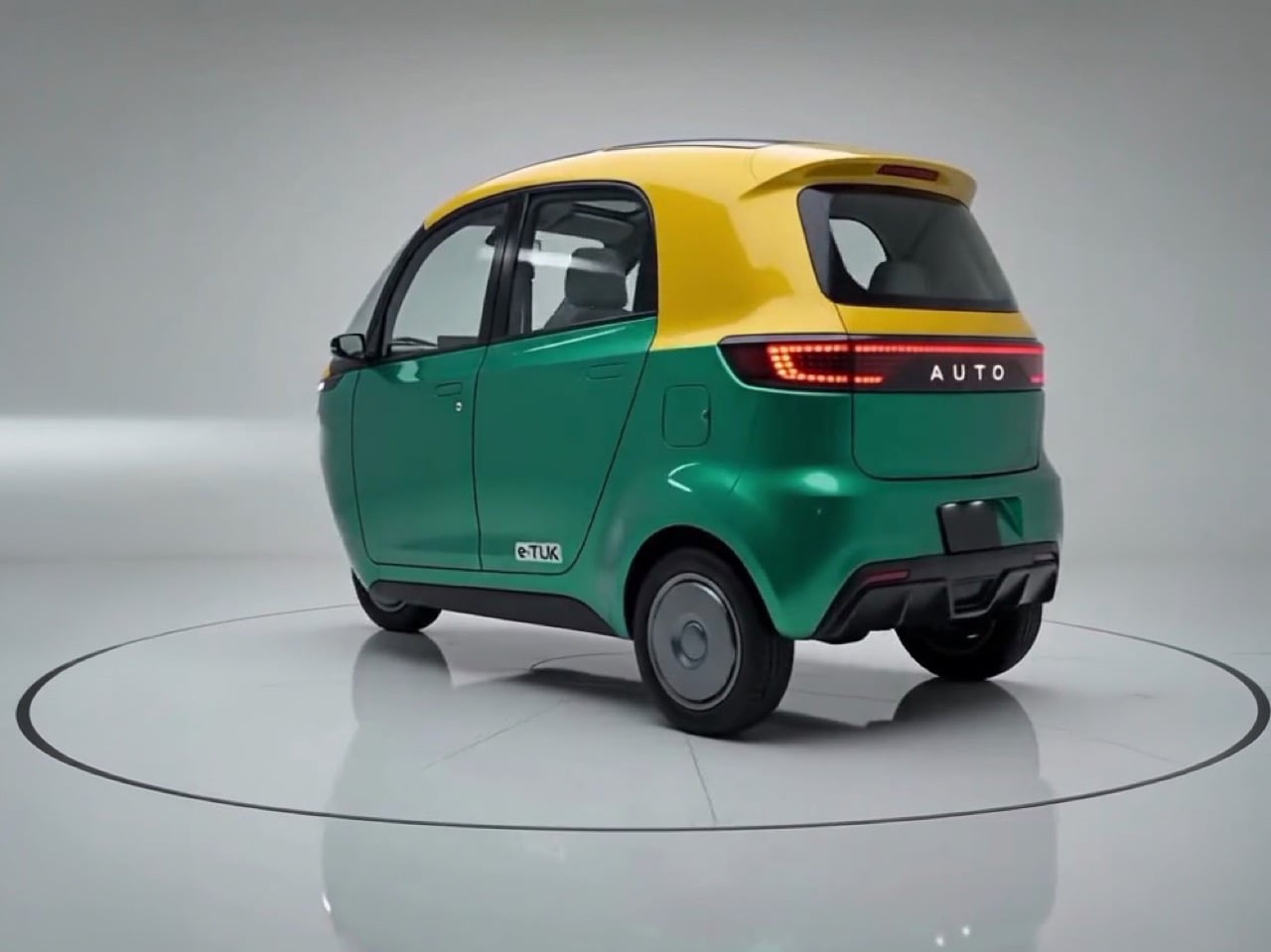
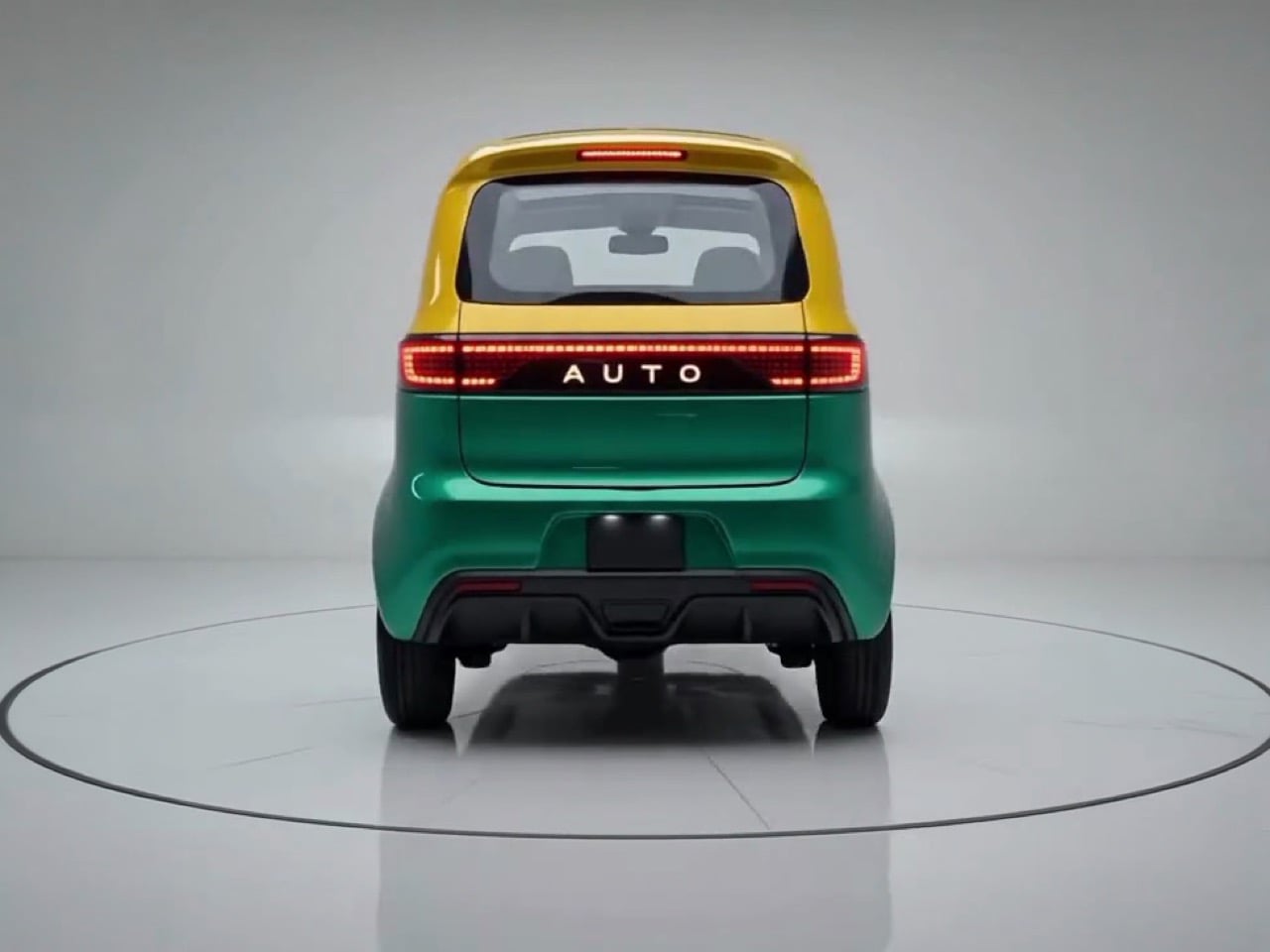

The E-tuk sports a few interesting design details. It contains a usable boot, which most auto rickshaws don’t have. The conventional auto rickshaw packs the engine in the back, but one can assume that an electrified platform frees the boot up, letting people store luggage inside. Speaking of inside, the interiors see a pretty remarkable change too. The original auto rickshaw seats one in the cockpit, and 2-3 at the back. This revised model opts for a traditional 2×2 seating structure, while retaining the handlebar controls instead of swapping it for a steering wheel. Spiritually, this still feels like an auto rickshaw.
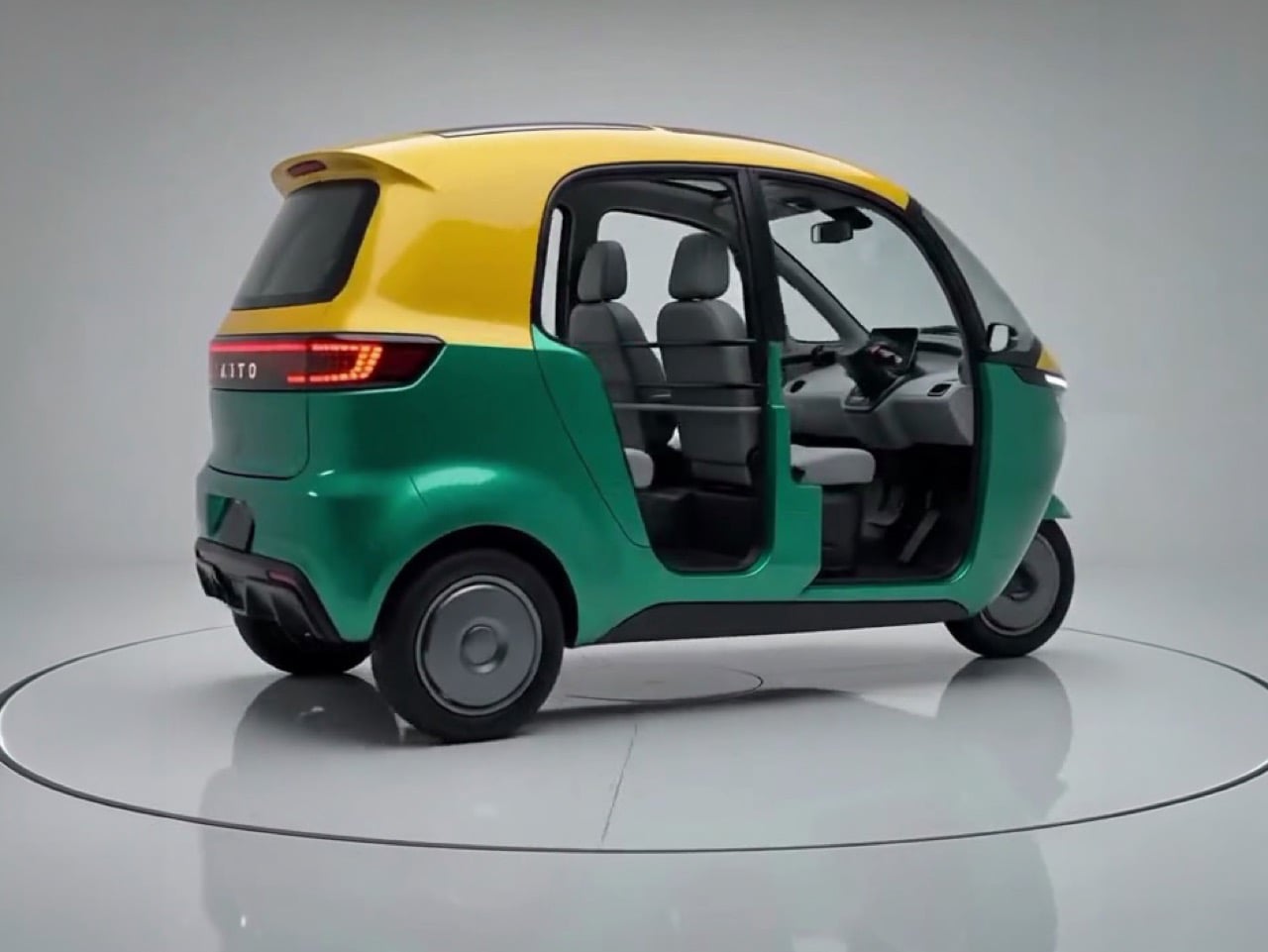

Like most auto rickshaws in India, the E-tuk sports doors on the left side of the vehicle, leaving the right bare. A mere bar on the right side blocks passengers in the back from falling off (or jumping out of a moving ride), but the front still lets the driver enter and exit freely. For riders, entry and exit happens purely through the left, using the doors on both the front as well as the back.
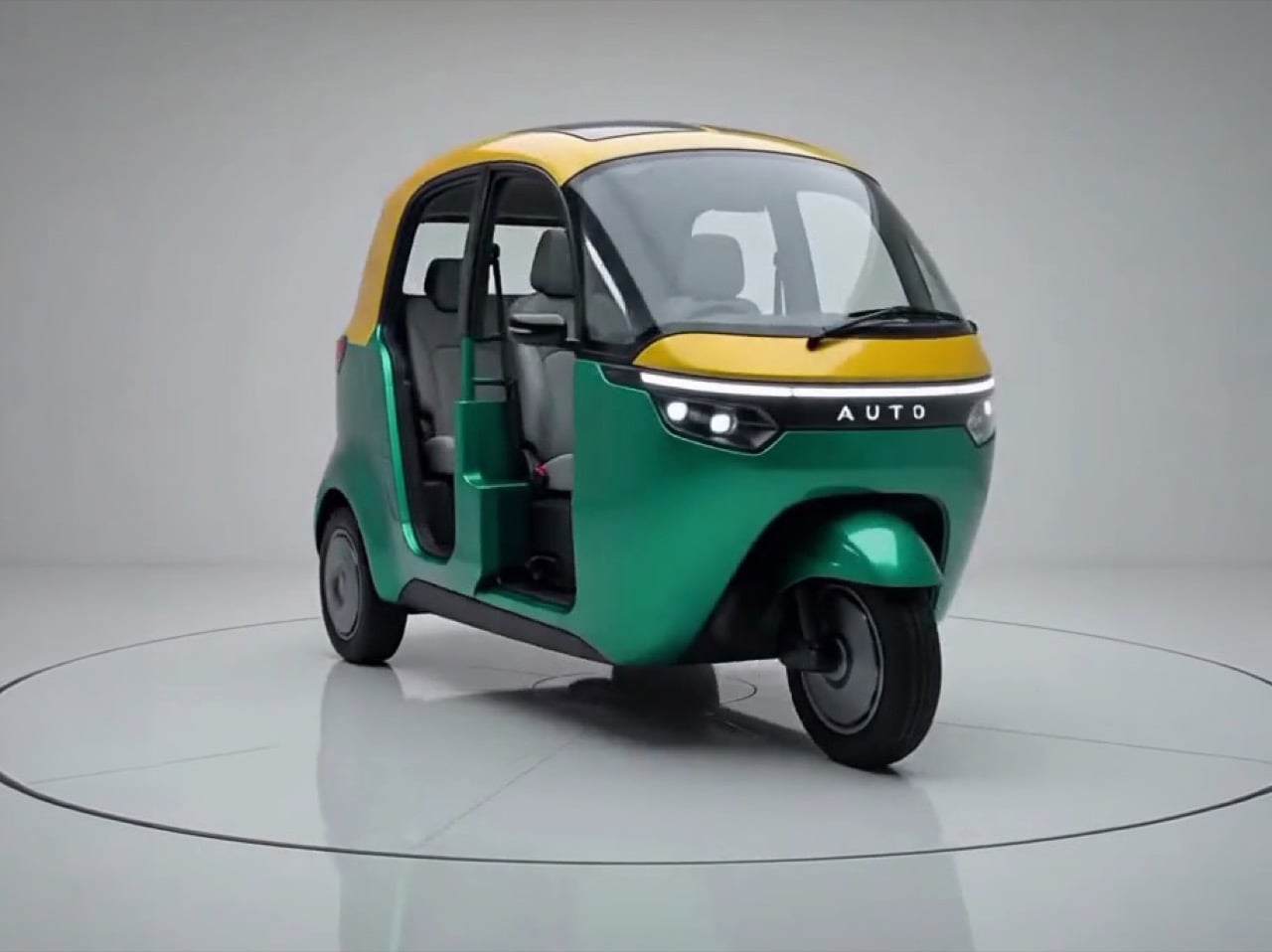
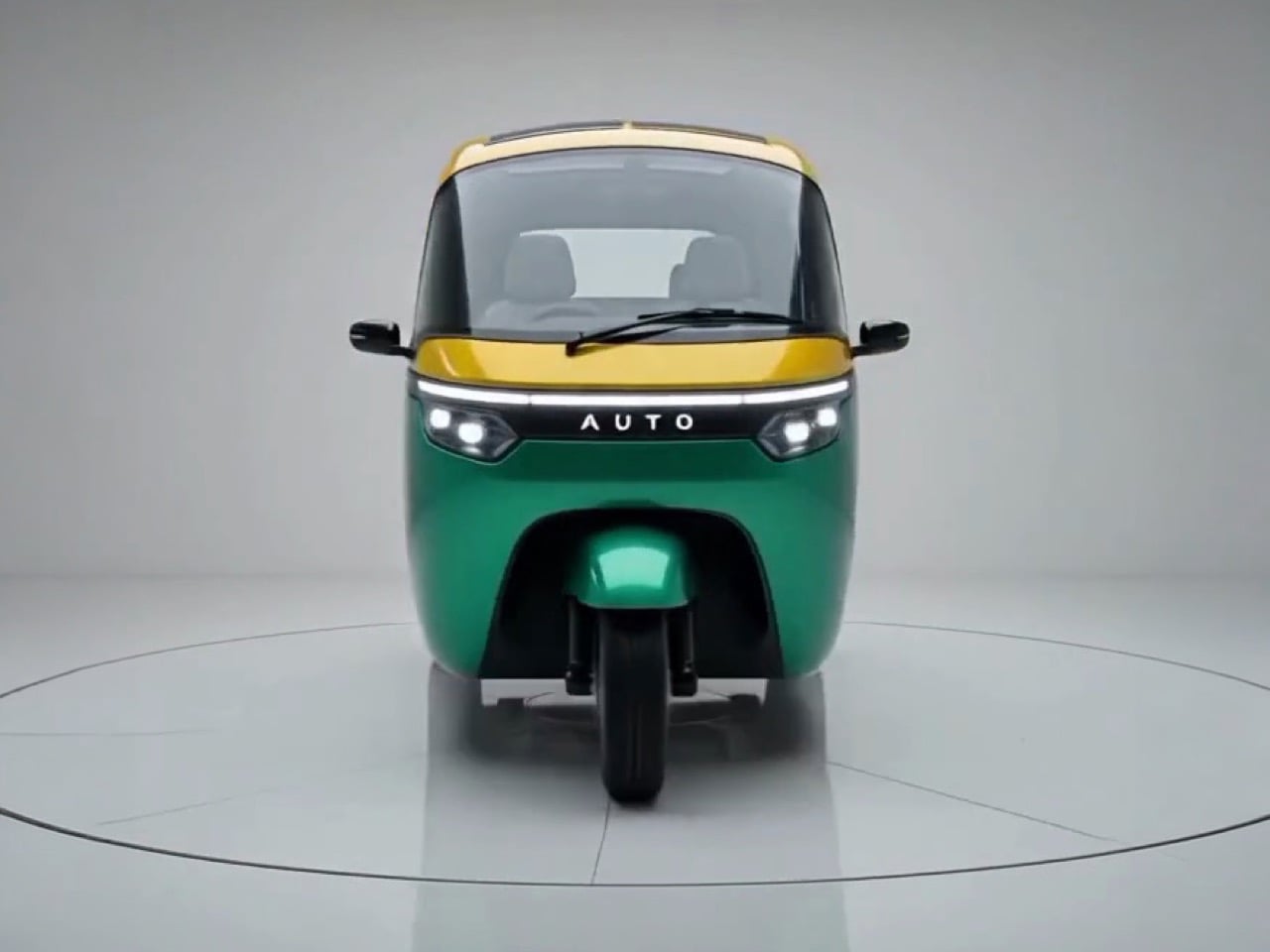
Like I said, spiritually, this is still the quintessential Auto Rickshaw. That two-tone design is iconic, although it serves no purpose here since the green-bottom Auto Rickshaws are painted to denote that they run on Compressed Natural Gas and not petrol. The handlebars for the auto-rider are iconic too, and an open-side design means accepting the weather the city gives you – sun on hot days, wind on good days, and dust or rain on bad days. That’s the non-verbal contract you sign when you sit in an ‘auto’. Yeah, and sure the thing is powered by an electric drivetrain, but that doesn’t mean we’re getting in-vehicle air-conditioning anytime soon!

