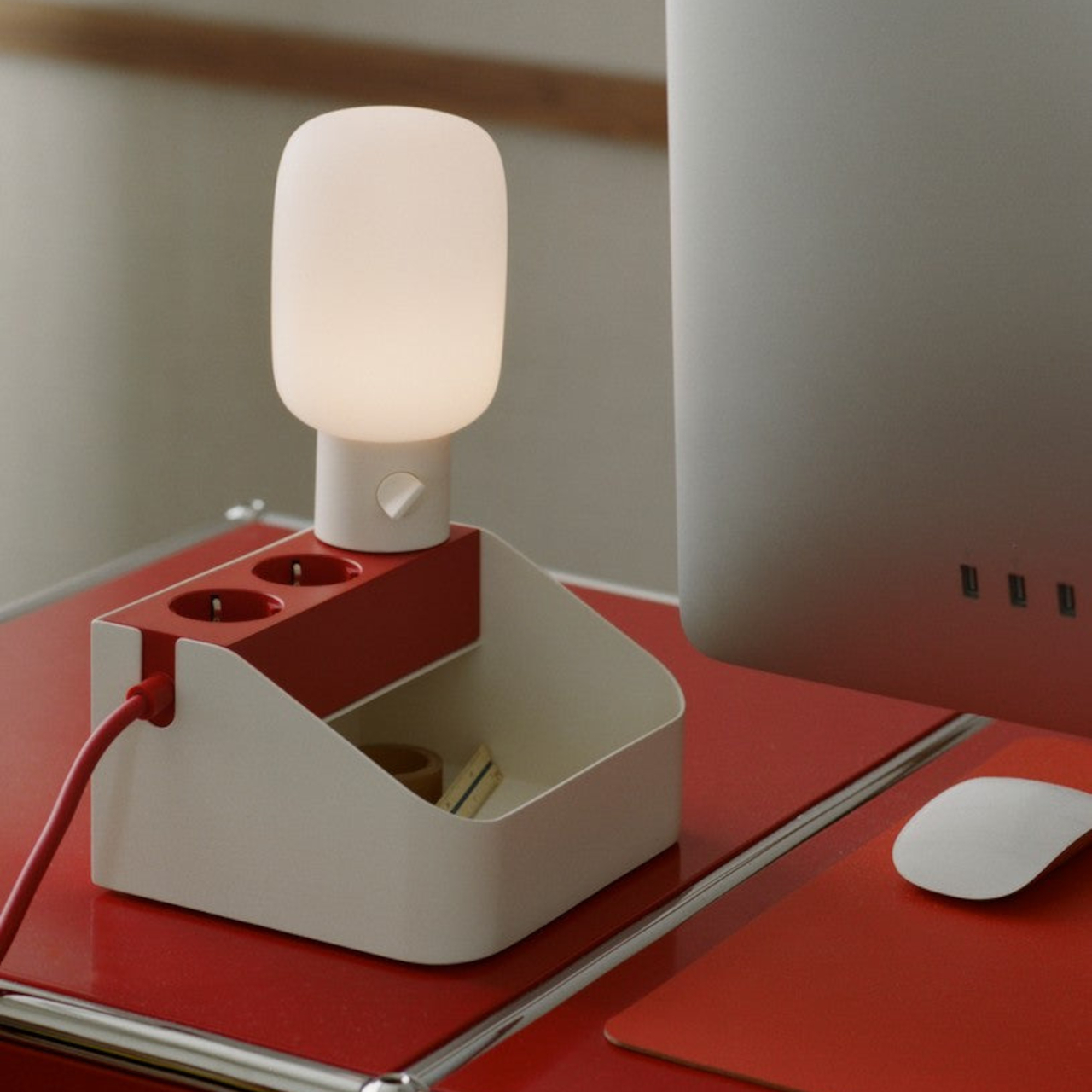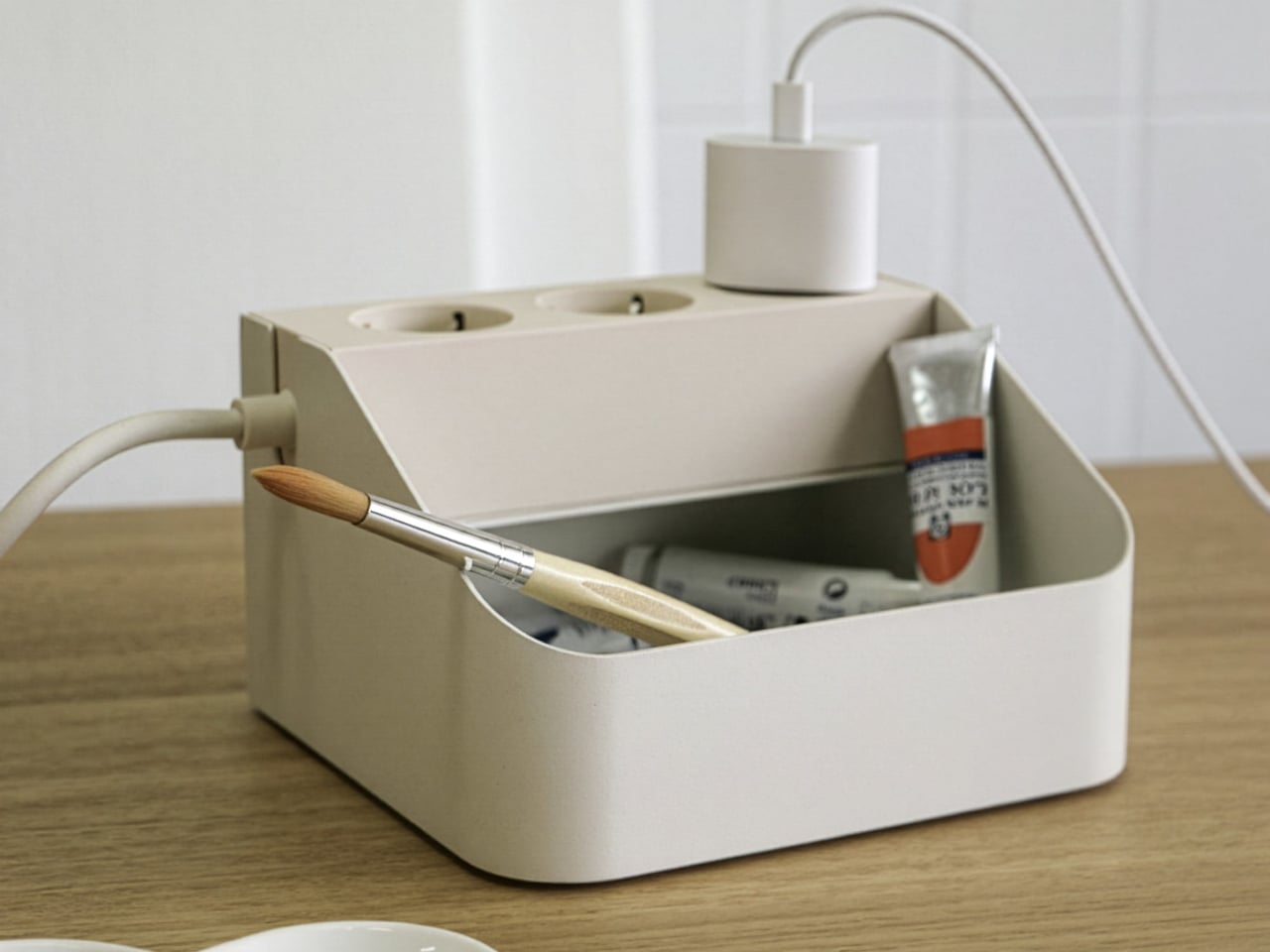

Power strips have sat on the floor under desks for decades, tangled and forgotten, without anyone treating that as a design problem worth solving. Pedestal’s Power Bar Tray changes that quietly, giving its companion power strip an actual home instead of a random spot on the carpet. Made from powder-coated steel with a matte charcoal finish, the tray turns a neglected object into something that belongs on top of a desk in plain sight.
The shape does the real work here. A wedge-profile steel shell holds the Power Bar strip snugly in place, while an open front compartment catches adapters, dongles, and the small electronics clutter that otherwise drifts into drawers. A cord notch lets cables exit cleanly to the side, so nothing bunches up against a wall or gets pinched under the tray’s own weight. That single cutout solves a problem most cable organizers ignore entirely.
Designer: Pedestal
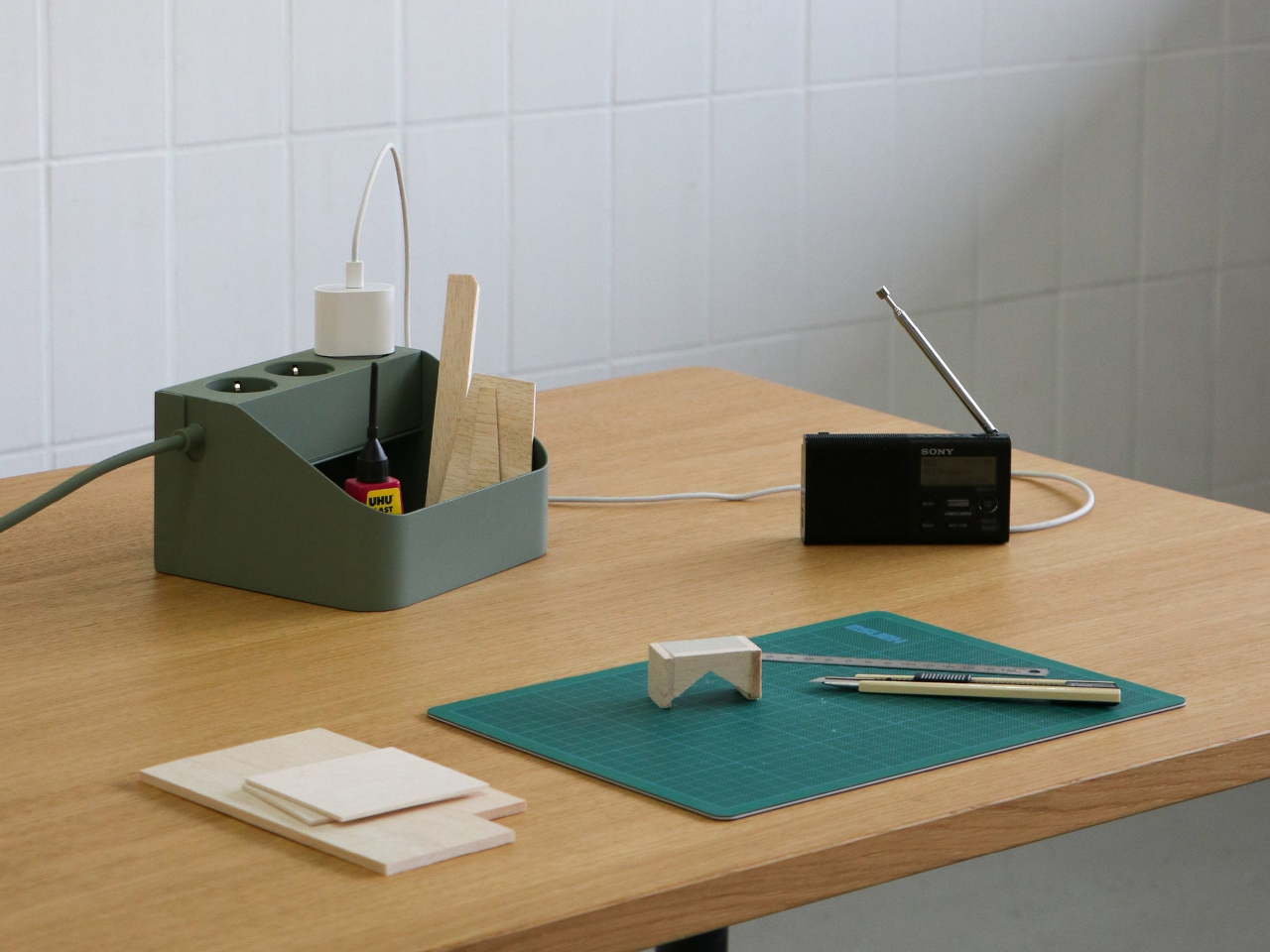
Who hasn’t seen a home office where a laptop charger, a phone brick, and a pair of earbuds all fight for the same corner of a desk? Drop the Power Bar Tray there, and each of those pieces gets one dedicated spot instead of a loose pile. The tray measures just 6.7 by 5.9 by 3.9 inches, small enough to disappear next to a monitor stand without eating into usable desk space.
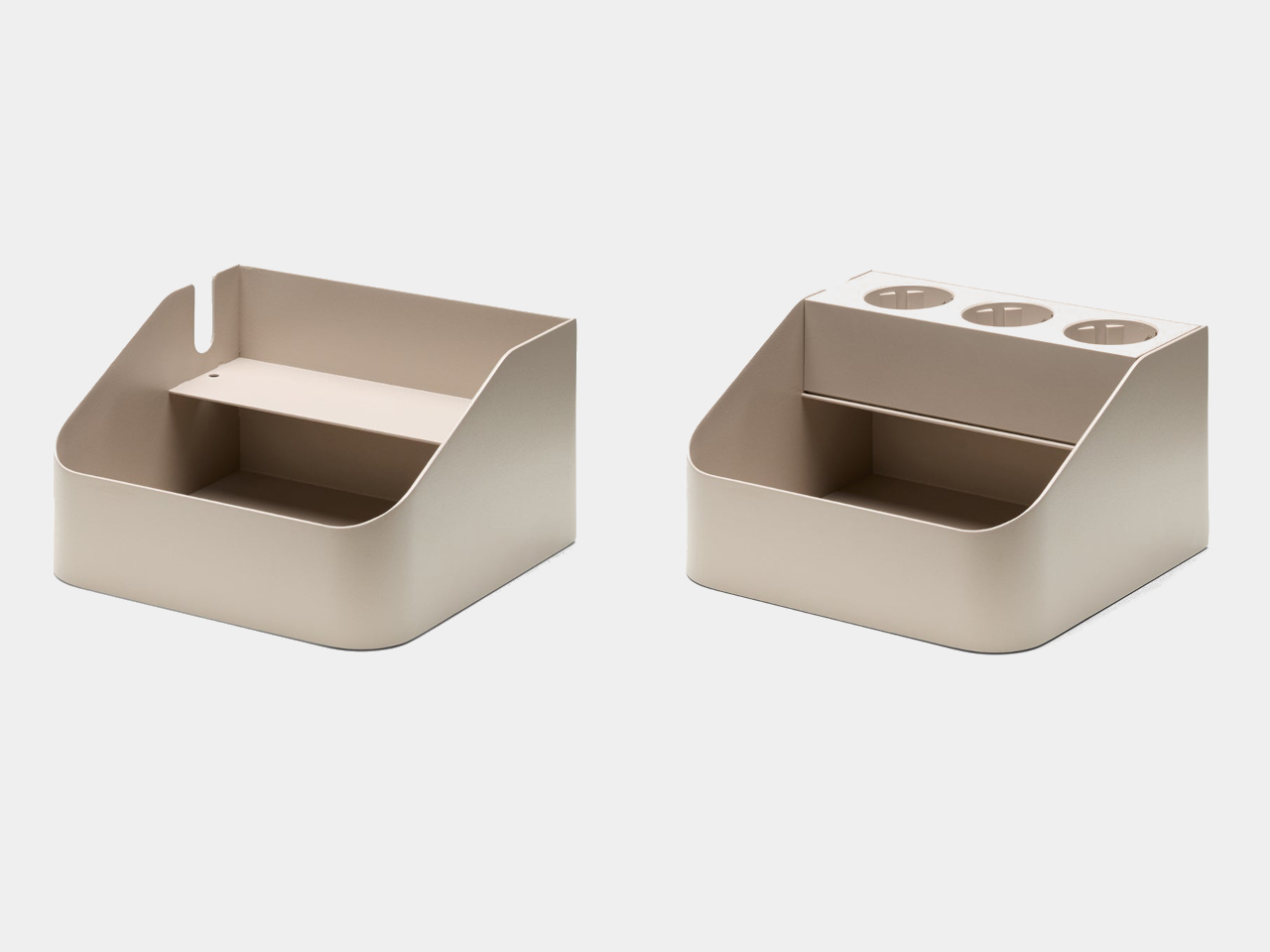
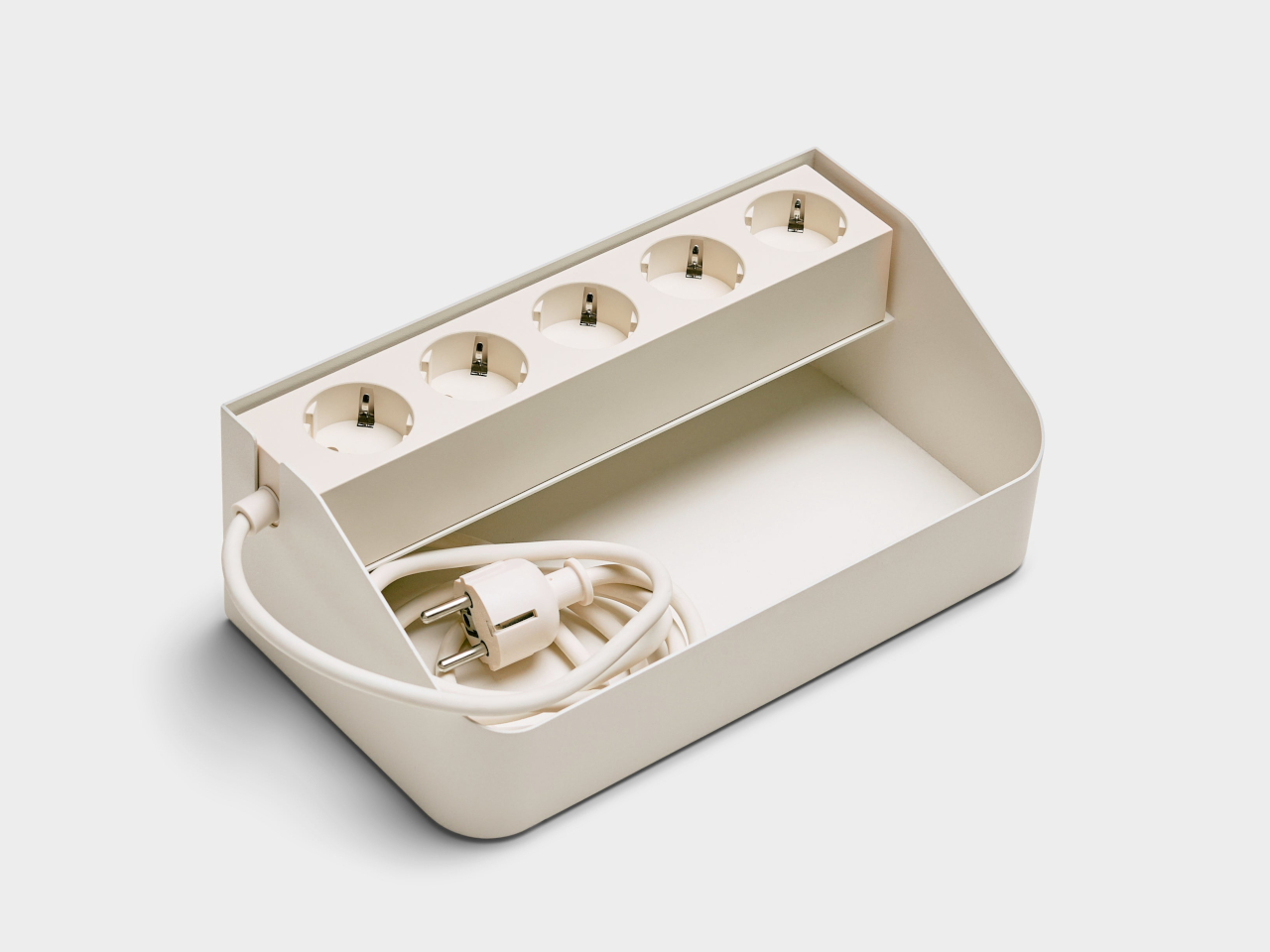
For setups that outgrow the single bay, the Power Bar Tray Double doubles the footprint to 9.8 inches wide, splitting the interior into two separate compartments. It’s built for anyone juggling a second power strip’s worth of gear, a gaming console’s tangle of accessories, or a home studio where cables multiply faster than shelf space allows. The extra width still keeps that same matte steel finish, so nothing about the design reads as an afterthought.
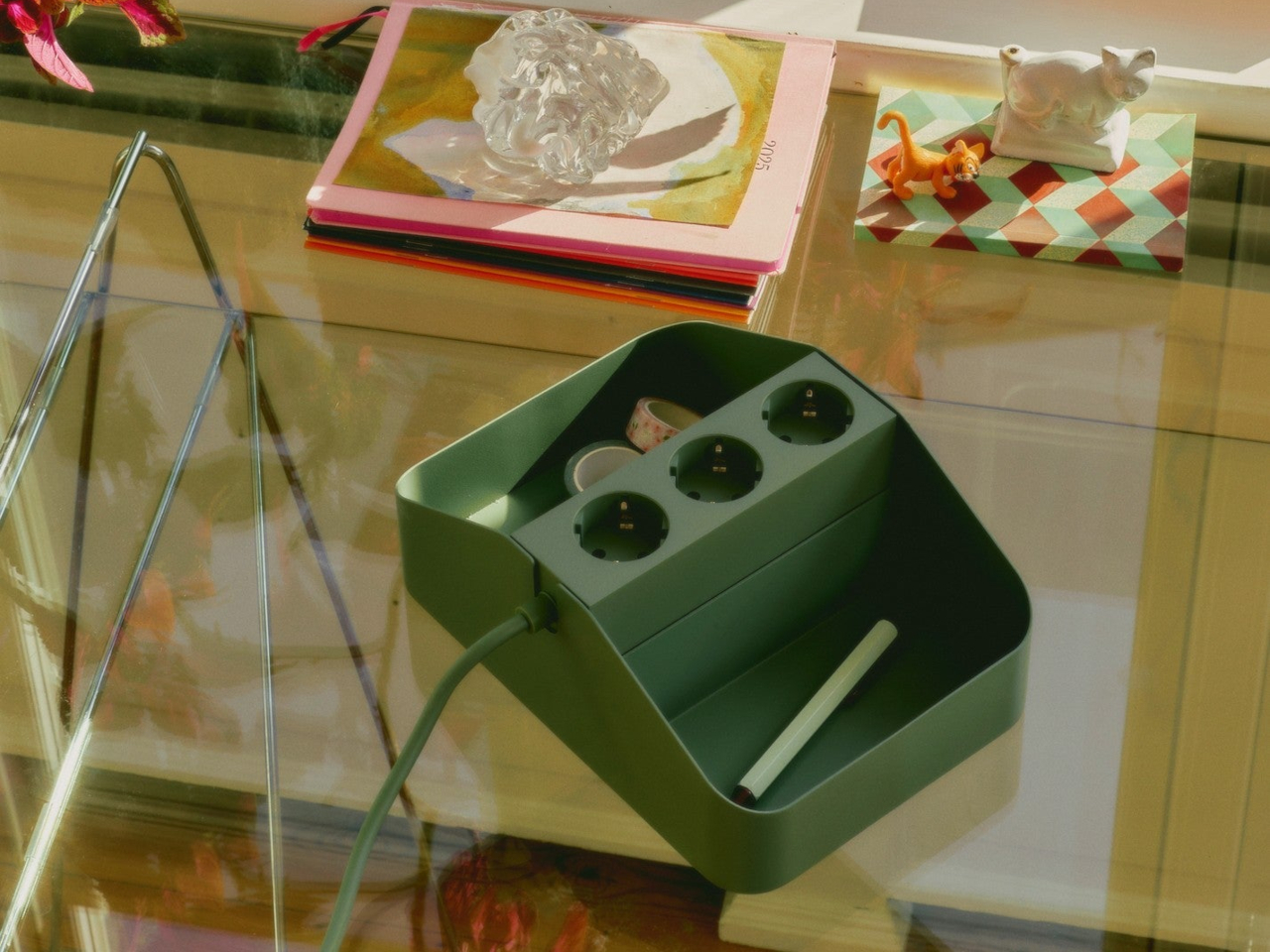
Both trays lean on a straightforward idea: a power strip left loose on a desk looks messy no matter how expensive the desk is. Docking it inside a steel enclosure with a defined shape gives the whole setup a sense of intention, the kind that makes a cluttered corner suddenly look considered. It’s a small piece of furniture doing a job that most people never thought to assign to furniture at all.
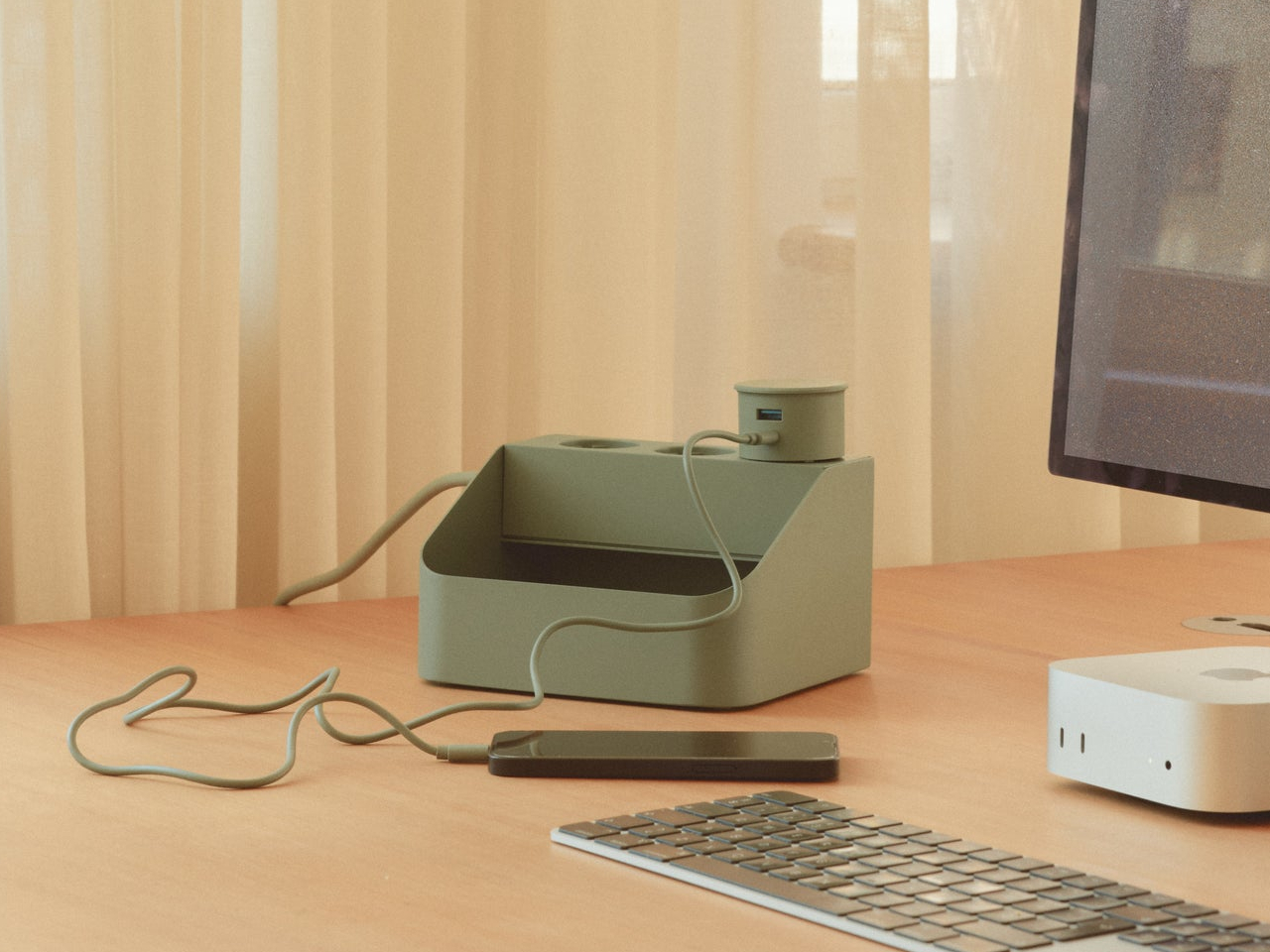
What makes this pairing work is restraint. Neither tray tries to hide the power strip completely or wrap it in unnecessary bulk. Instead, they frame it, treating a mundane object as something that deserves a proper edge and a stable base rather than a tangle of cords hidden behind a monitor. That’s a small shift in thinking, but it changes how a desk actually looks once the strip has somewhere to live.


At $50 for the single tray and $85 for the Double, the price tracks with what a well-made steel accessory should cost, not what a plastic cable box usually runs. The charcoal finish keeps both versions visually quiet enough to sit next to almost any desk material, from raw wood to brushed aluminum. Cable management rarely gets this much attention to form, and that’s precisely what separates a tray from a genuine accessory.