
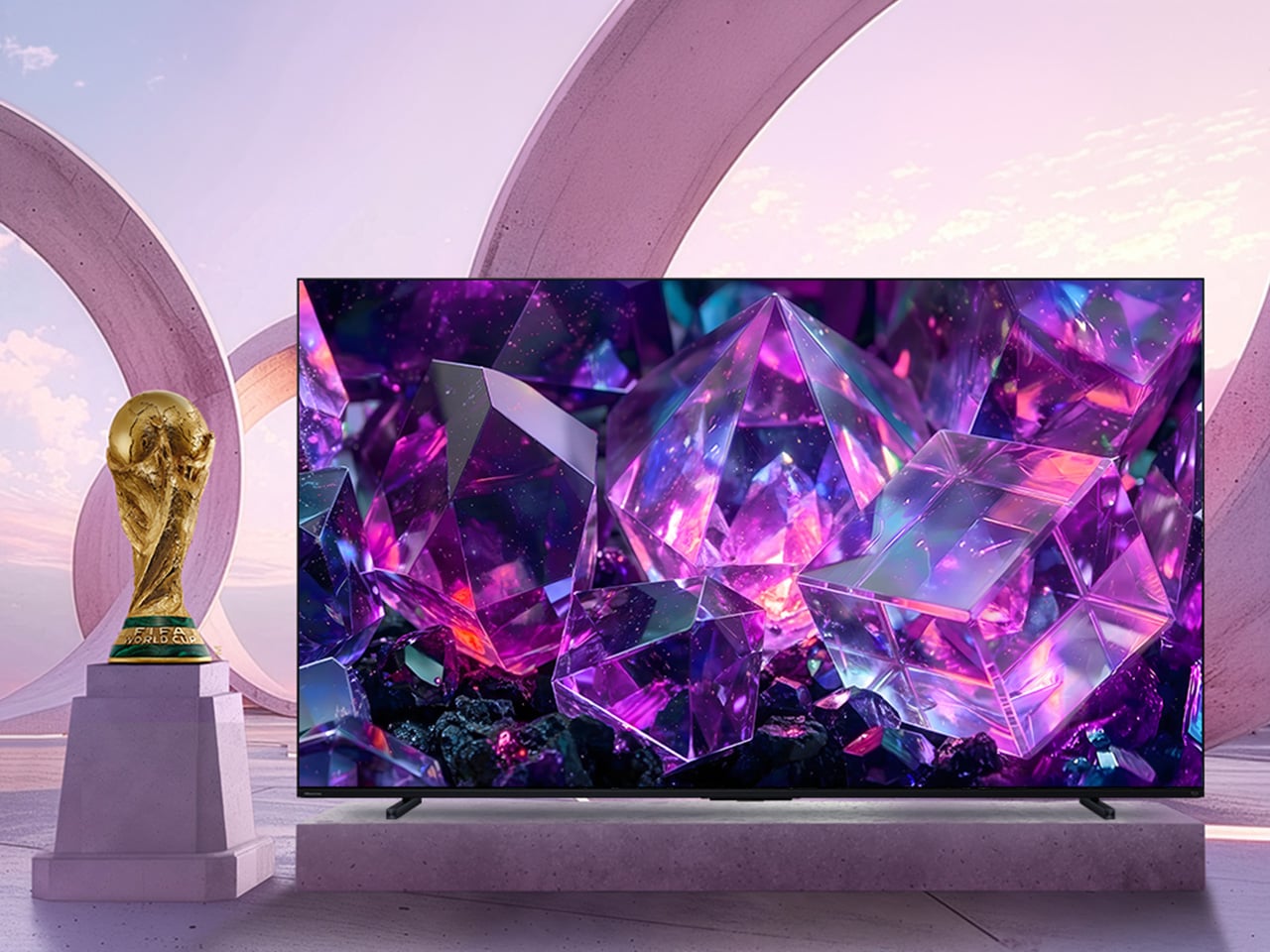
There used to be two ways to buy a TV. Go cheap and squint through a mediocre picture, or spend enough that your banking app sends a concerned notification. Hisense’s E7SF exists to blow up that choice entirely. It runs a native 144Hz MiniLED panel, Hi-QLED color, and as many as 260 local dimming zones, paired with Fire TV and Alexa+, across six sizes from 50 inches up to a genuinely massive 100. The 50 inch model has already been spotted selling for under $400.
That price point used to buy a TV that struggled in daylight and looked worse the second a game turned on. MiniLED is the technology that fixed most of that, and until recently it was reserved for sets that cost real money. Hisense’s approach over the past few years has been to move formerly premium display technology down the price stack faster than the rest of the industry, and the E7SF is that philosophy in its most direct form. The brand’s role as the Official Sponsor of the FIFA World Cup 2026 and its standing as the number one brand globally in 100-inch and larger TVs gave it a huge stage this year, but the bigger takeaway is simpler: everyone now wants a bigger, brighter screen at home, and far more people can actually afford one.
Designer: Hisense
Click Here to Buy Now: $697.96 $799.99 (13% off). Hurry, deal ends in 48-hours!

MiniLED backlighting replaces the standard LED array behind an LCD panel with a system that improves how light is managed across the screen and brings out more detail in every scene. More zones means tighter control over which parts of the image are bright and which go dark, producing better contrast, deeper blacks, and more vivid highlights across the panel. On the E7SF, that backlight scales to up to 260 dimming zones depending on the screen size selected. Hi-QLED color technology layers on top of that foundation, designed to keep every shade, scene, and skin tone looking true to life, rendering every scene convincingly real, just as the creator intended. The result is a picture that competes meaningfully with displays that cost significantly more just two or three years ago.
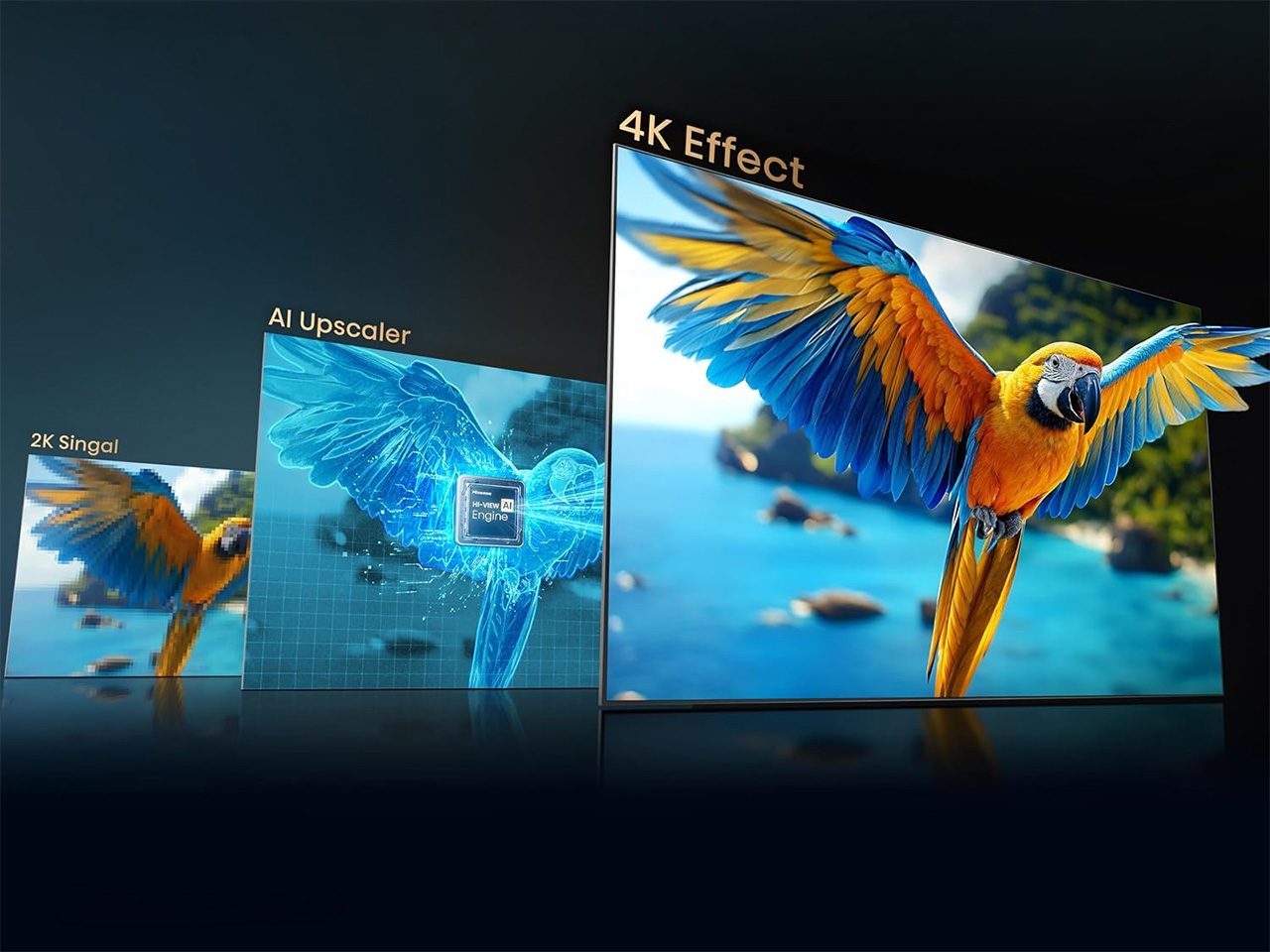
AI Picture runs continuously in the background, reading what’s on screen and instantly fine-tuning the picture so colors pop, details shine, and everything looks natural and clear, without any manual settings required. The E7SF supports Dolby Vision IQ, HDR10+ Adaptive, HDR10, and HLG, covering every major HDR format, which brings brighter highlights, deeper contrast, and richer color in every scene no matter what’s on screen. Dolby Vision IQ adjusts the picture based on ambient lighting in the room, keeping the image calibrated whether the curtains are open or the lights are off. Filmmaker Mode preserves the original aspect ratio, color, frame rate, and sound so viewers watch movies exactly as directors intended. The full HDR stack future-proofs the set against whatever content the studios push out over the next few years, which matters more than any single format badge on the box.
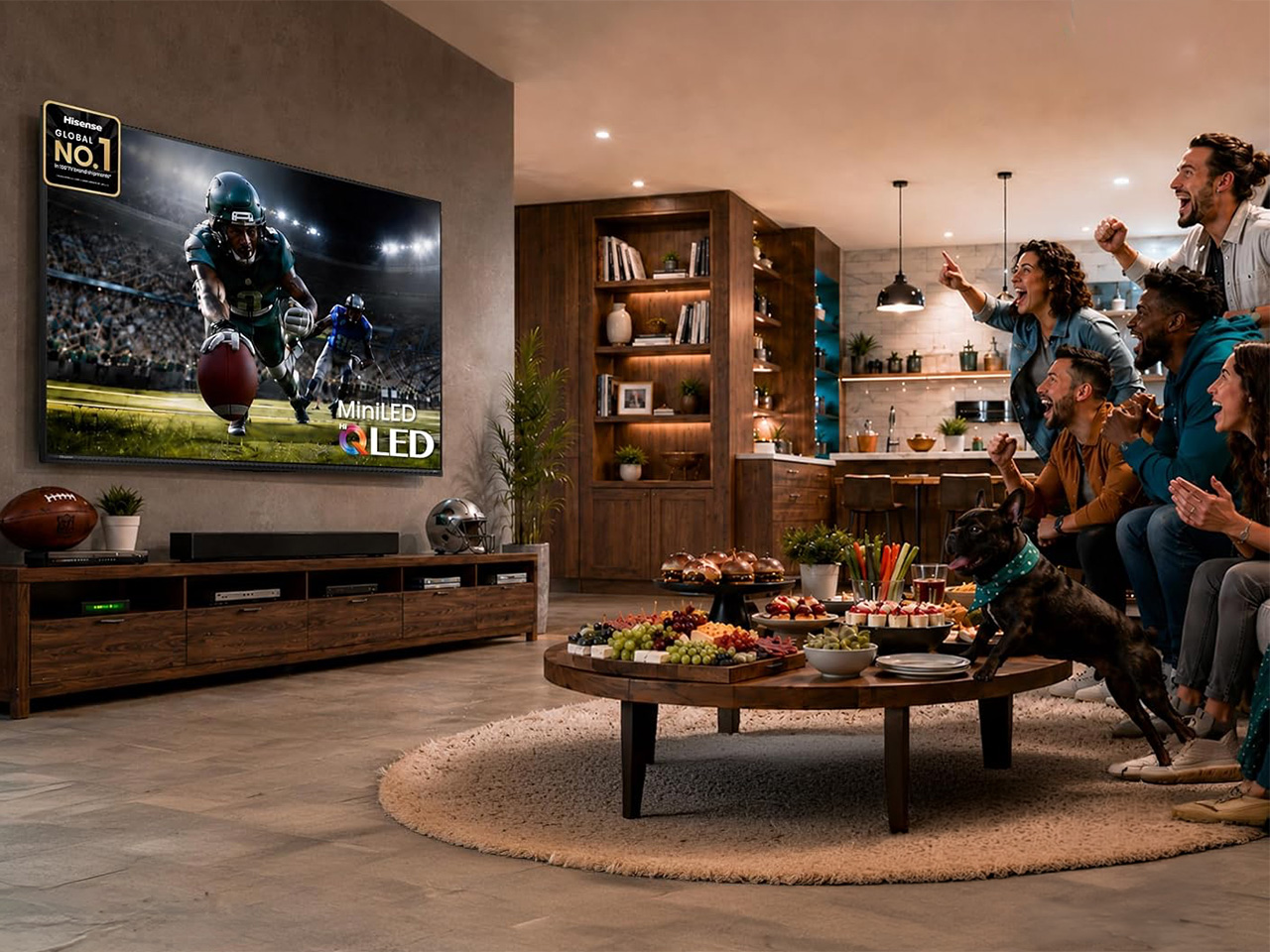
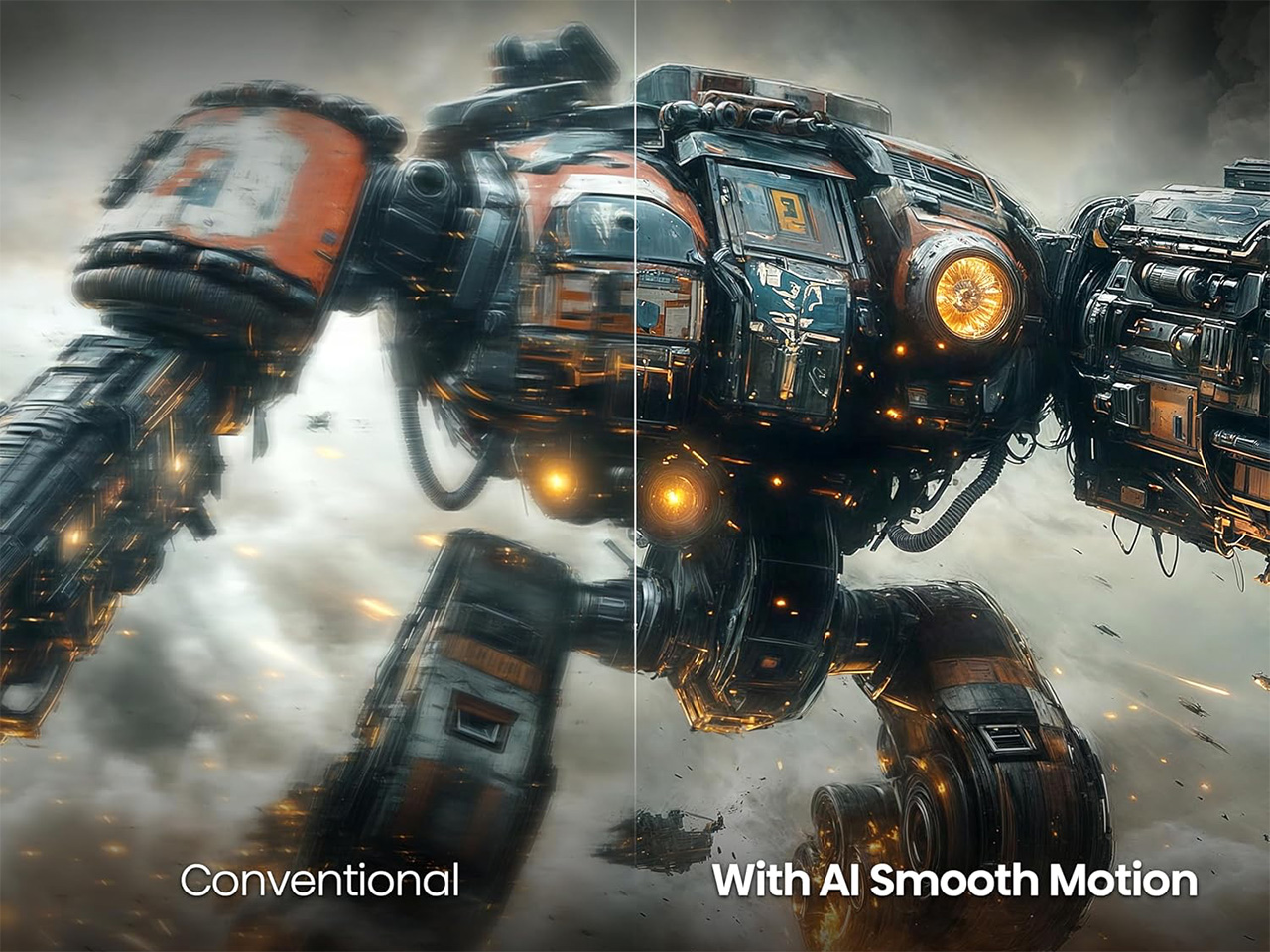
Sports content gets dedicated handling, with the TV automatically recognizing sports content and adjusting picture and sound settings for the action, delivering smoother motion, clearer details, and boosted crowd audio that recreates the excitement of being in the stadium. Dolby Atmos handles the immersive audio experience more broadly, pulling picture and sound together so viewers see, hear, and feel like they’re right in the middle of the action. The E7SF carries a 20W 2.0 multi-channel system on the 50 to 85 inch models and steps up to a 50W 2.1 system with a dedicated woofer channel on the 100 inch. Bluetooth Audio rounds it out for wireless headphone setups, and the whole audio package scales sensibly with the screen size it’s attached to.
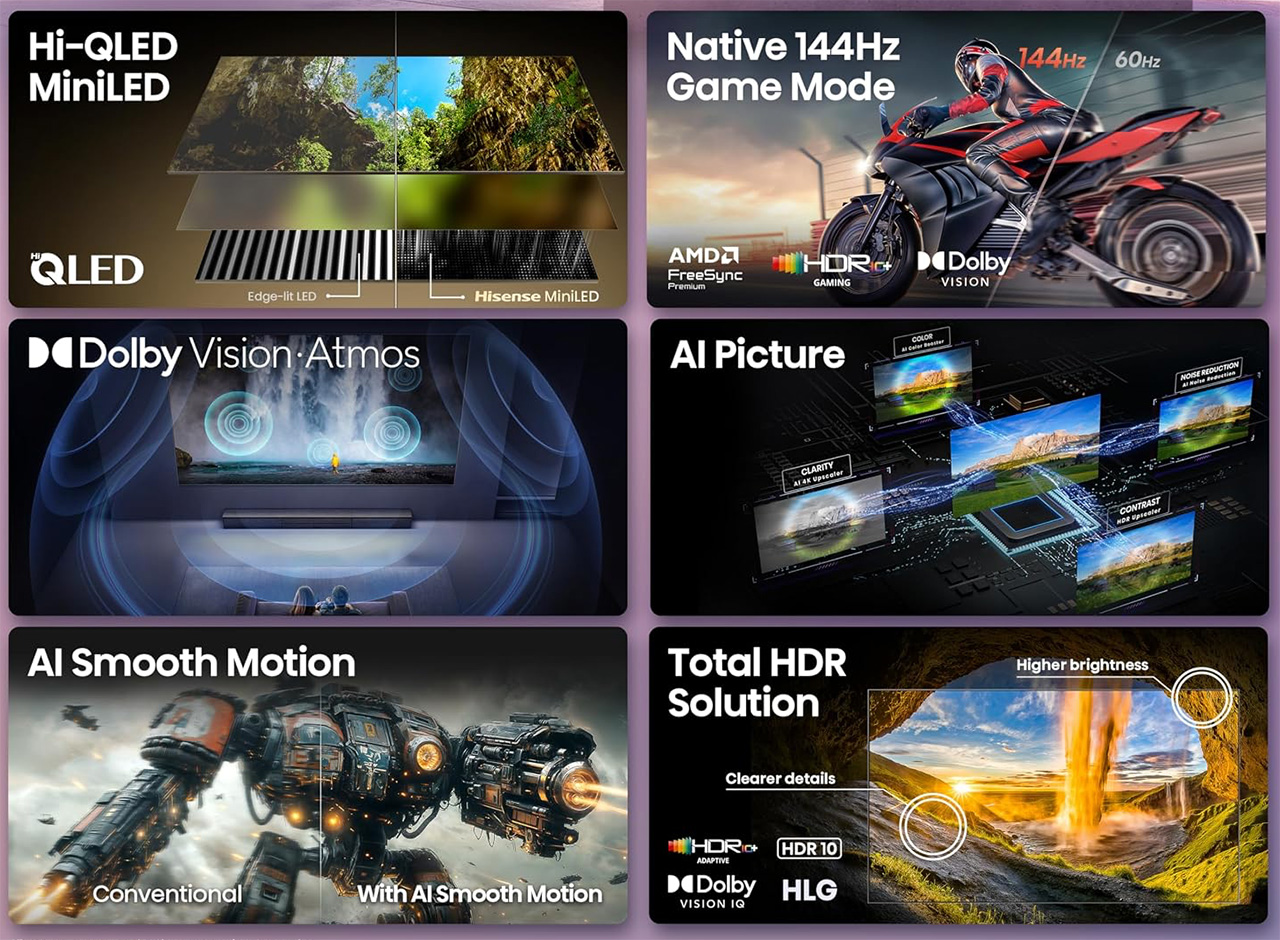

Native 144Hz on a TV at this price tier does real work, particularly in gaming, where many competing sets still pad the marketed refresh number through motion interpolation rather than delivering it natively from the panel. Two HDMI 2.1 ports run at full 4K at 144Hz, keeping the signal chain from a PlayStation 5 or Xbox Series X completely uncompromised. AMD FreeSync Premium matches the TV’s refresh rate to the connected graphics card, delivering reduced lag, minimized tearing, and fluid motion for a more immersive gaming experience. Dolby Vision Gaming and HDR10+ Gaming keep HDR active during play without requiring a manual mode switch. Game Booster 240 and ALLM, which switches the set into game mode automatically when a gaming device is detected, round out a feature set that sits well above what most TVs at this price level bother to include.
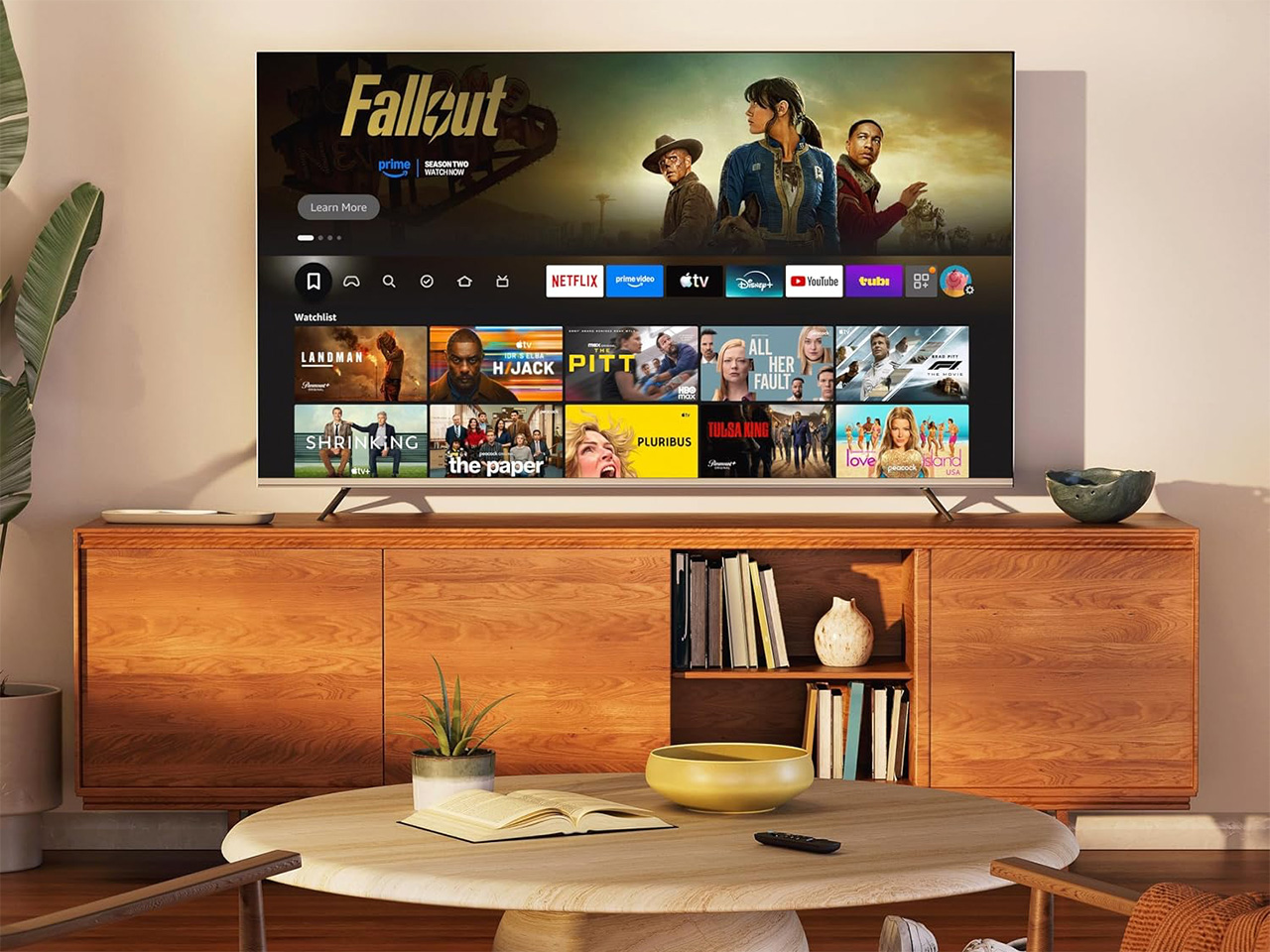
Hisense spent the World Cup cycle positioning itself as the brand for communal, big-screen viewing, and the E7SF still feels like the clearest expression of that idea after the tournament dust has settled. Fire TV manages the smart platform, with Alexa+ built into the voice remote for cross-app content search, smart home management, and watchlist sync, all handled through natural speech. Six sizes span from 50 to 100 inches, and a 100-inch MiniLED television at a mainstream price point is genuinely new territory. A screen that size used to require a custom installation budget. Now it’s an off-the-shelf decision. That shift is arguably the bigger story the E7SF is telling, and at the price Hisense is asking, it’s a hard argument to walk away from.
Click Here to Buy Now: $697.96 $799.99 (13% off). Hurry, deal ends in 48-hours!

