
Small kitchen appliances have a design problem nobody talks about enough. They are boxy, beige, and built to disappear into a countertop rather than earn a place on it. A toaster’s entire personality, for most of modern history, has been two slots and a lever. That’s fine for function, but it leaves a strange gap in a kitchen otherwise filled with objects people actually chose to love, the ceramic mugs, the patterned dish towels, the vintage cutting board. The toaster just sits there, doing its job and asking for nothing in return, including attention.
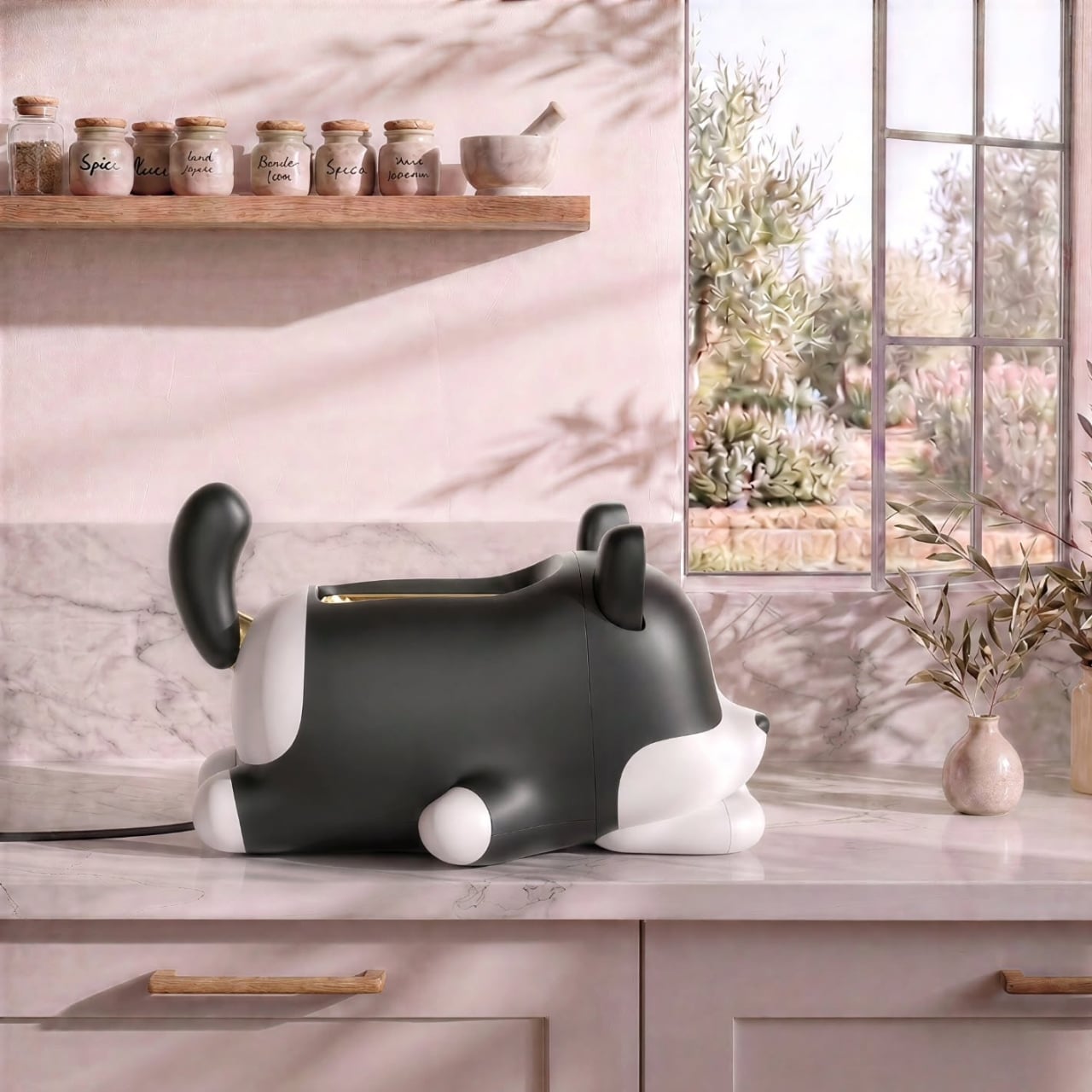
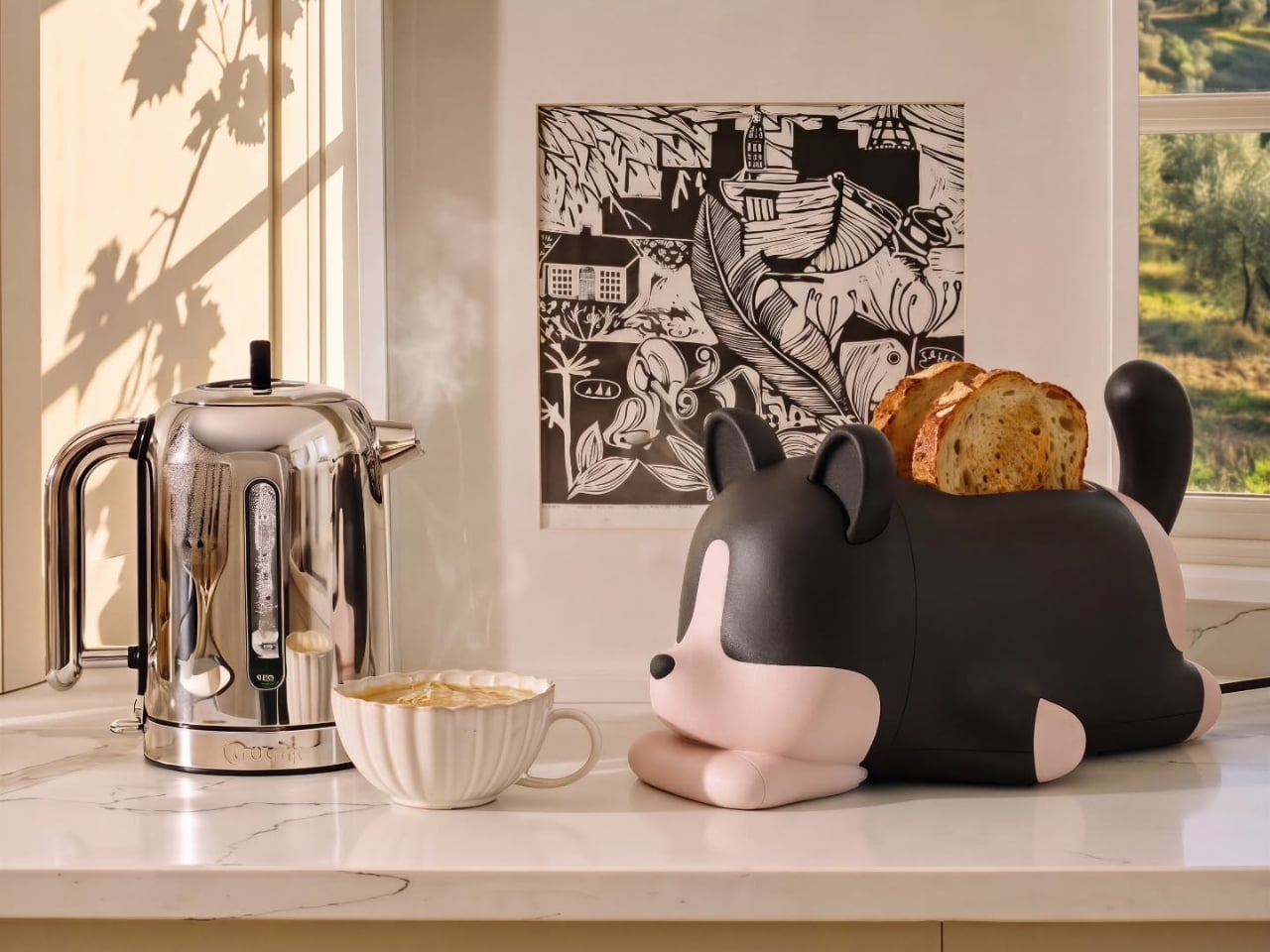
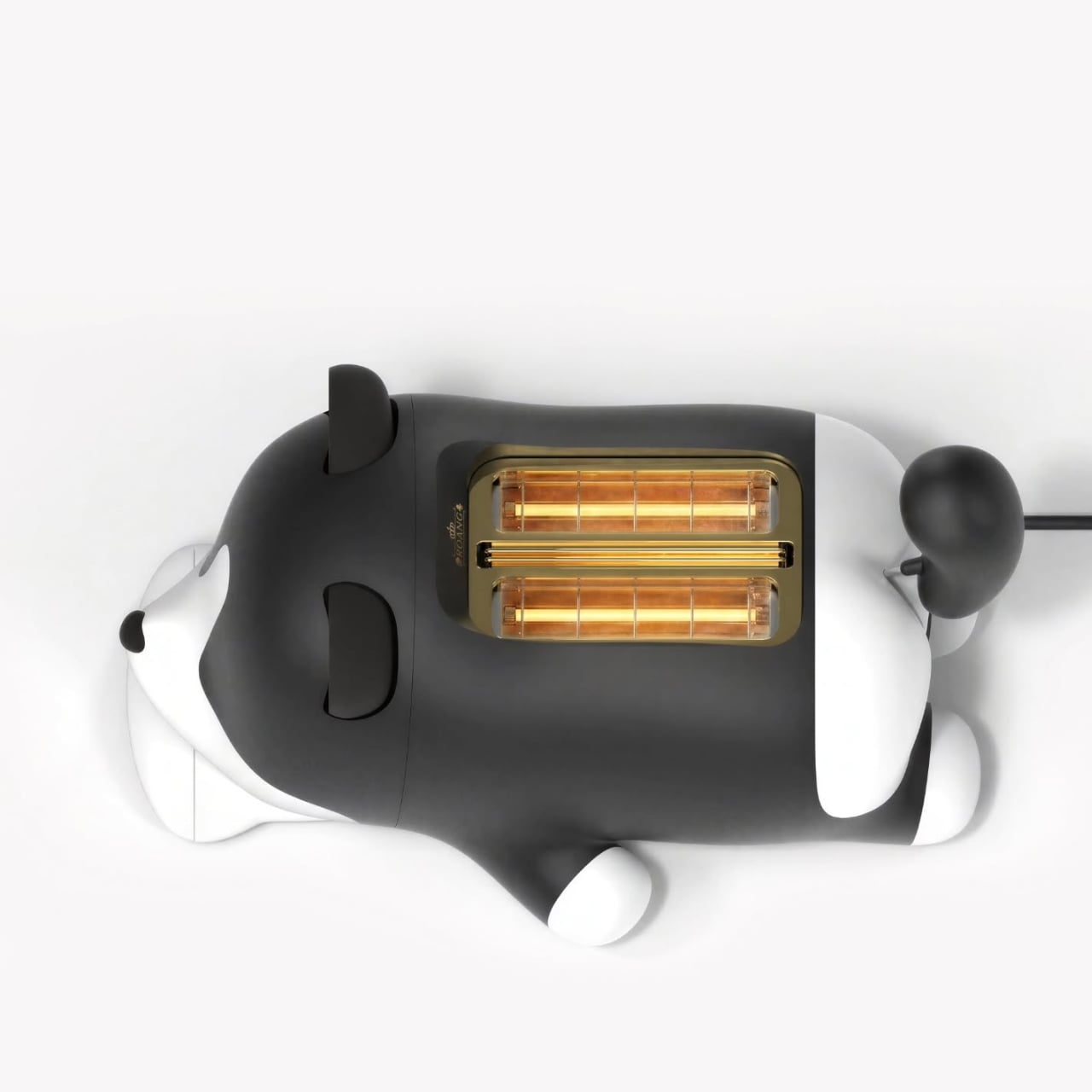
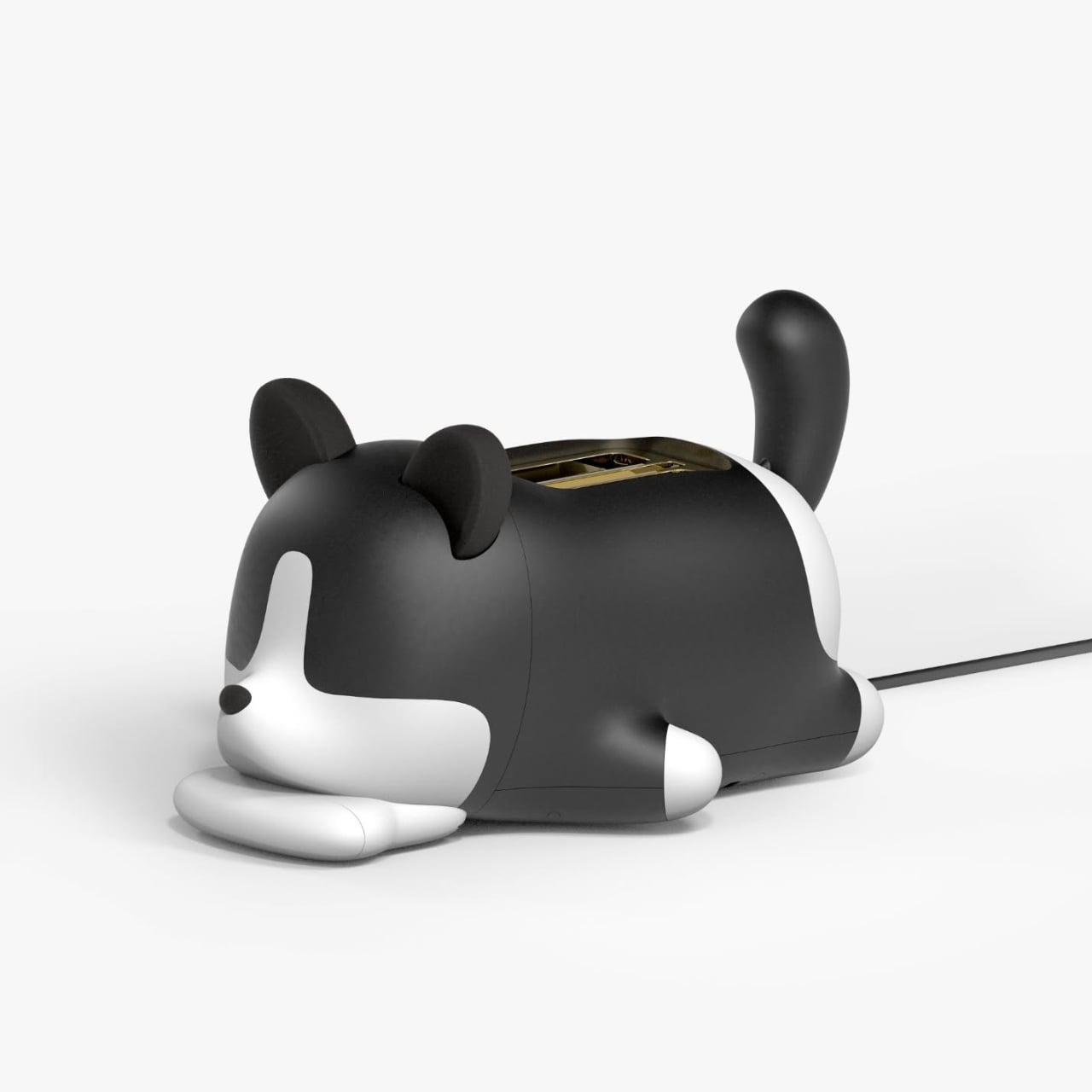
That gap is exactly what a new concept from designer Kwanghyun Kim seems to fill. Rather than dressing up a standard rectangle, the design reimagines the entire toaster as a corgi lying down in that classic “sploot” position dogs do when they’ve fully given up on being dignified. The bread doesn’t pop out of a slot on the front. It rises from a channel built into the dog’s back, right between two folded ears, so the toast looks like it’s emerging from the animal itself.
Designer: Kwanghyun Kim
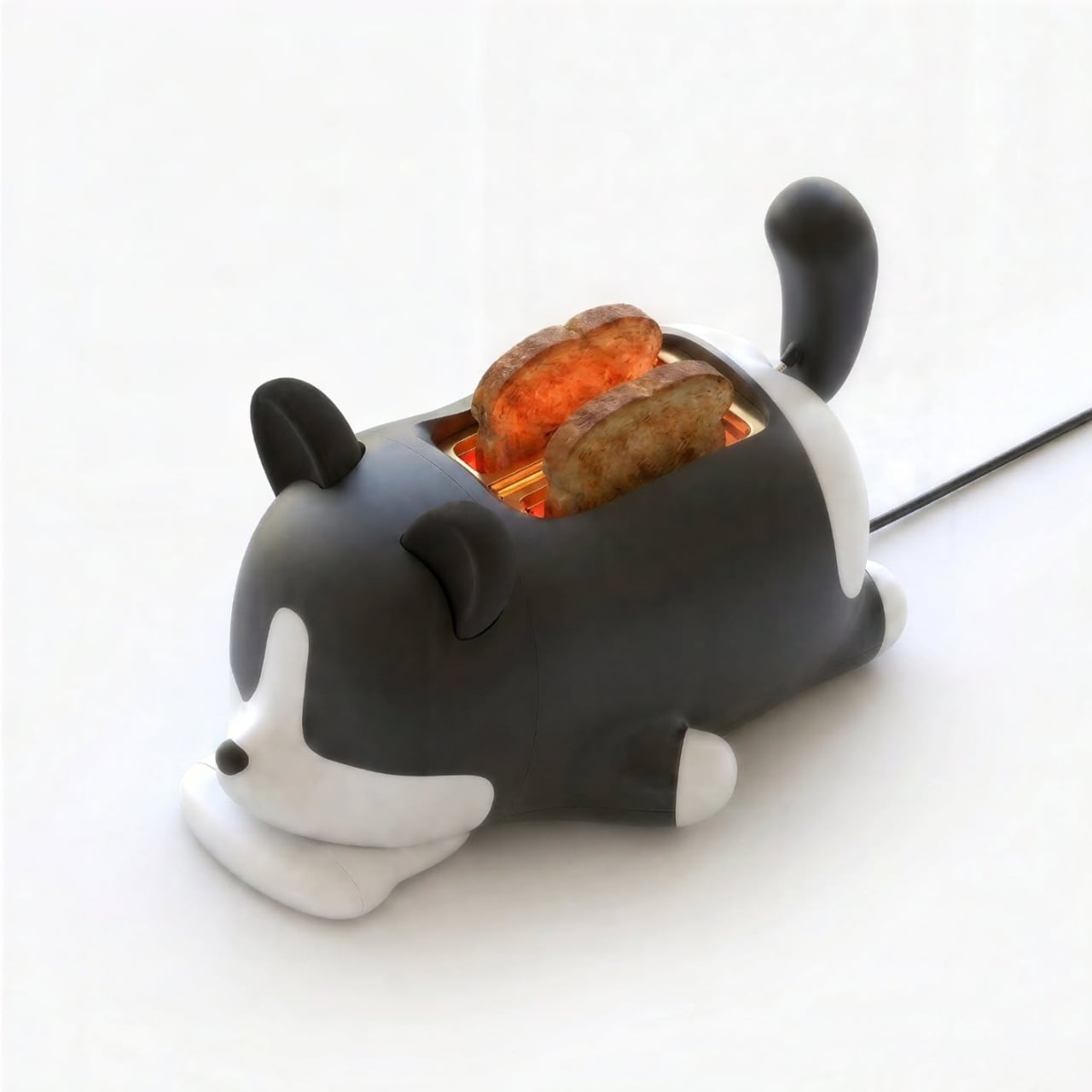

The proportions are what sell it. This isn’t a toaster with dog ears glued on as an afterthought. The body is low and rounded like an actual sleeping corgi, front paws tucked forward, a stub of a tail curled up at the rear that doubles as a handle. The classic black, white, and tan corgi coat gets translated into the plastic shell itself, with a white muzzle and belly wrapping around a darker back, so the color-blocking does the work that most toasters try to fake with a chrome finish.
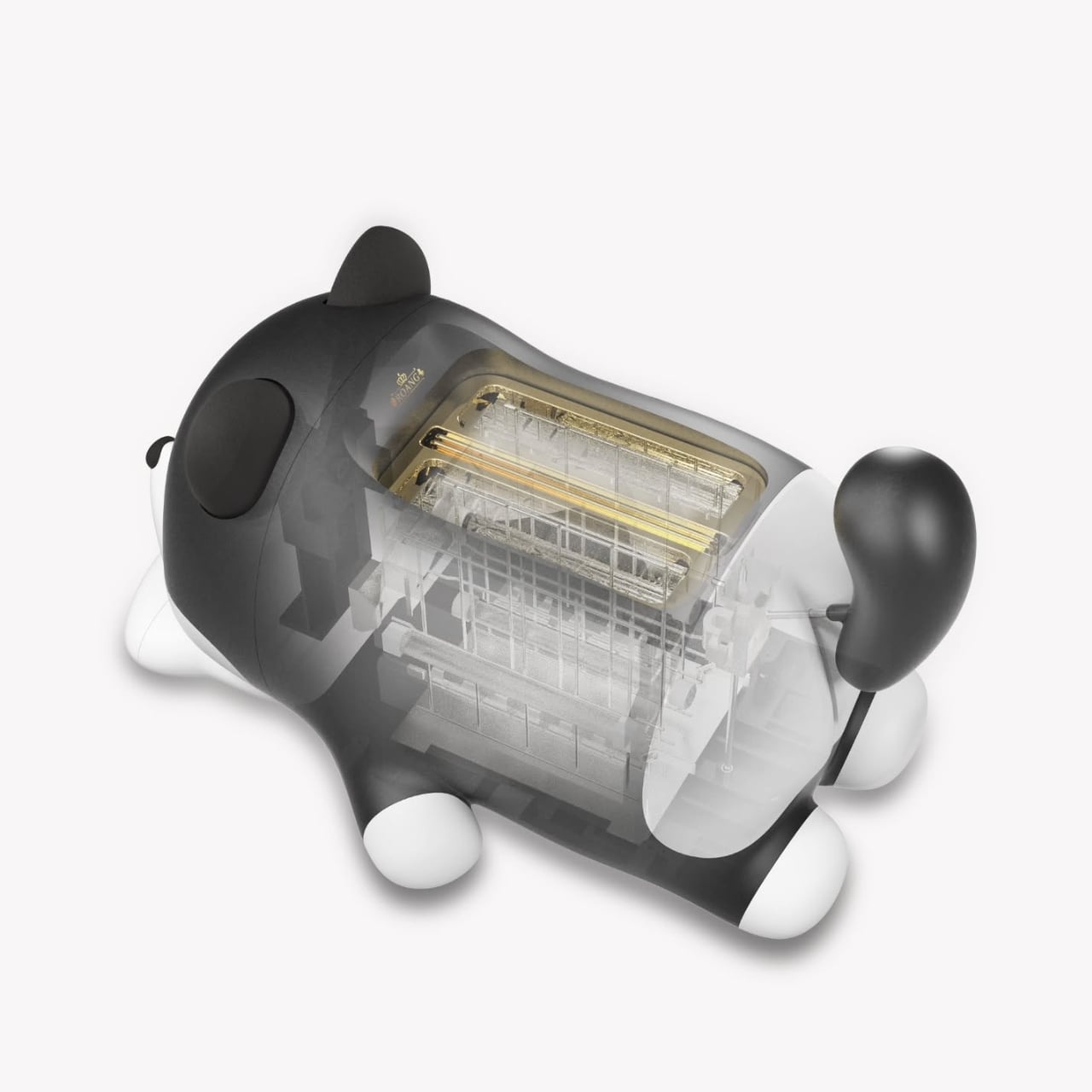
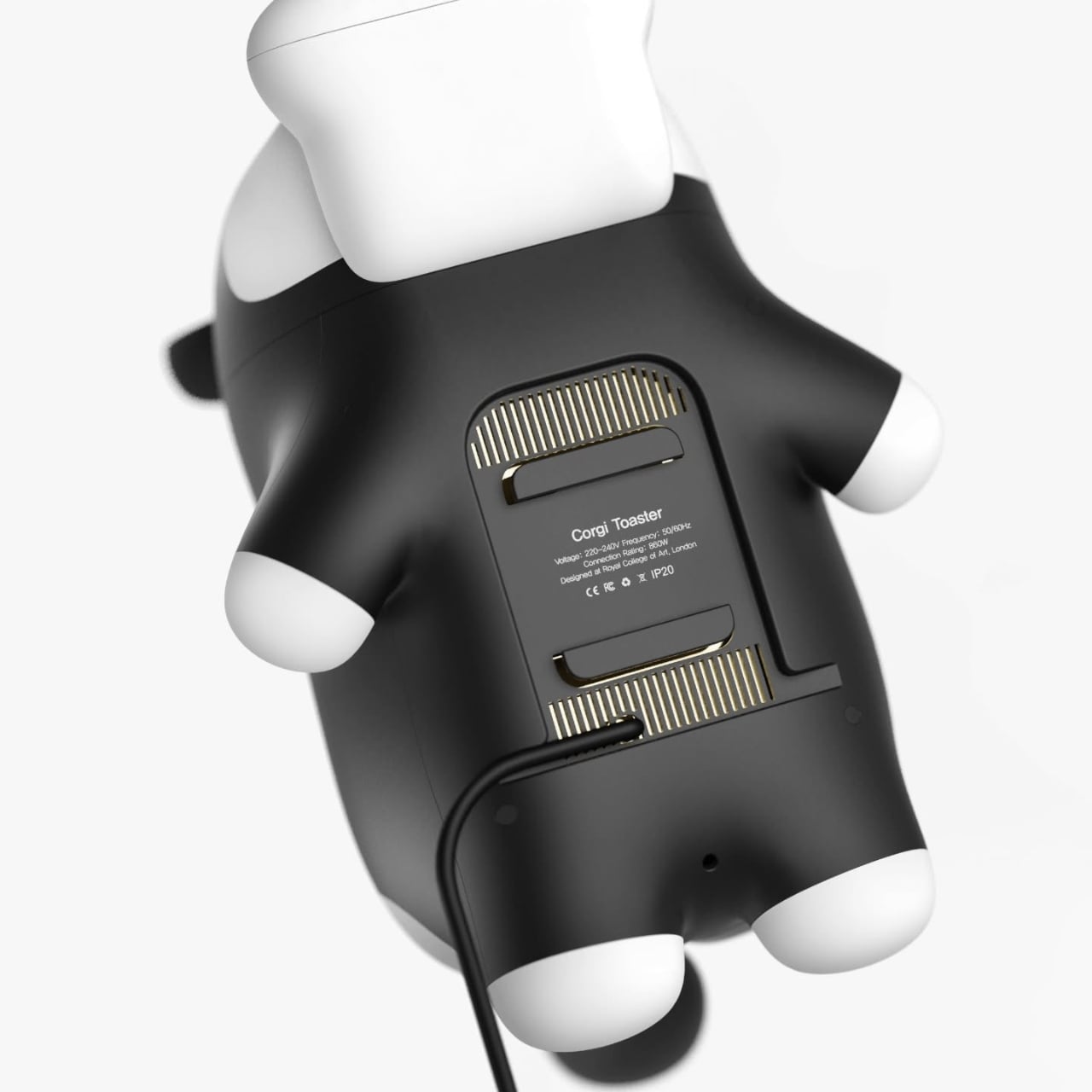
Flip it over and the design gets more serious. The underside carries actual certification markings, voltage ratings, and a wattage spec, plus a small note crediting the Royal College of Art in London. That detail matters. This reads less like a novelty gadget rendered for internet clicks and more like a legitimate industrial design exercise, the kind where a student has to prove the concept could survive contact with an actual electrical inspector. A cutaway render backs that up, showing a completely standard toasting mechanism, heating coils, crumb tray, spring-loaded carriage, tucked neatly inside the dog-shaped shell. The whimsy is on the outside. The engineering underneath refuses to cut corners.
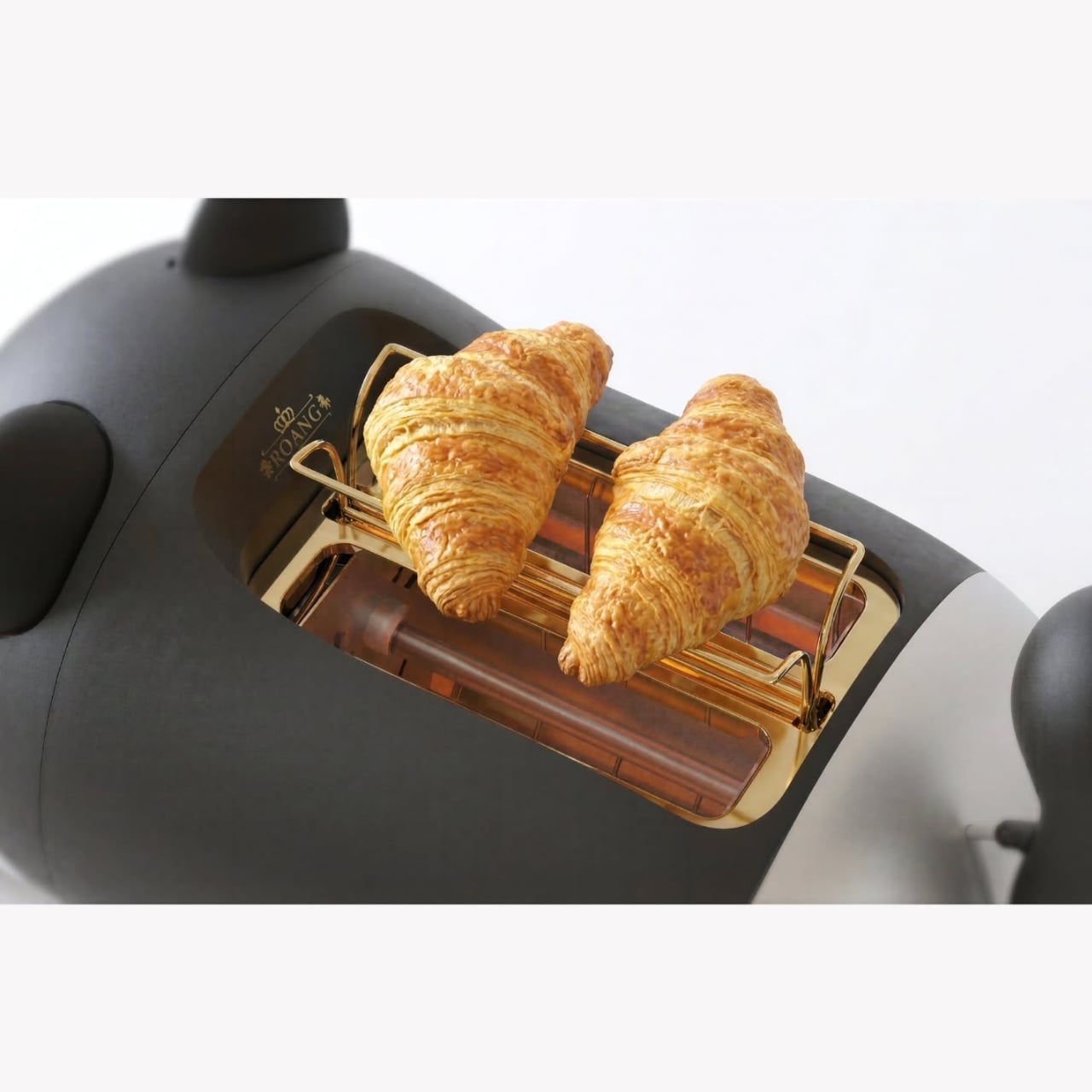
There’s a branding touch too. A small crown logo sits near the toast slot under the name ROANG, a nod that isn’t subtle once you remember corgis have been tied to British royalty since Queen Elizabeth II kept a small army of them at the palace. It’s a clever bit of storytelling that gives the object a lineage instead of just a punchline.
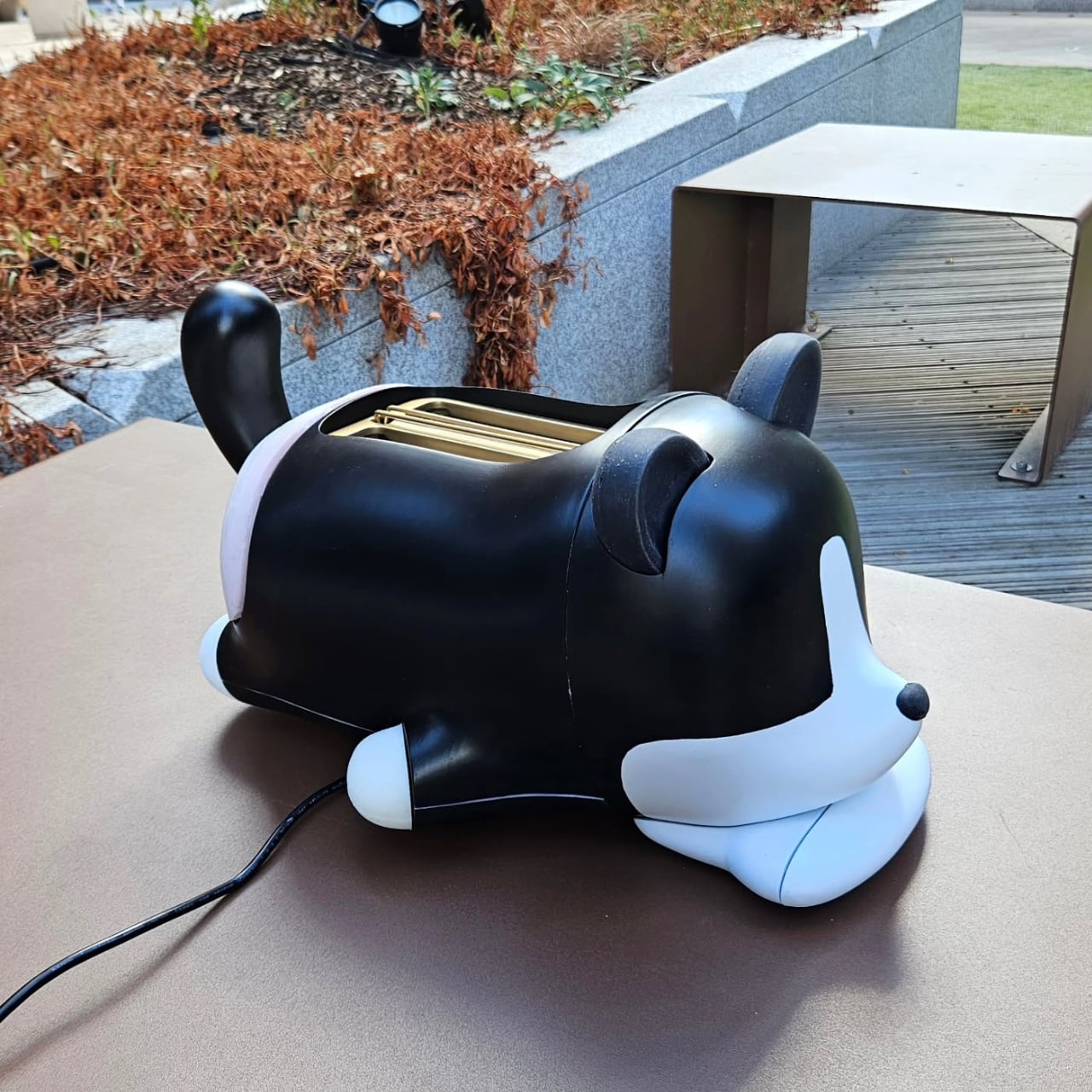
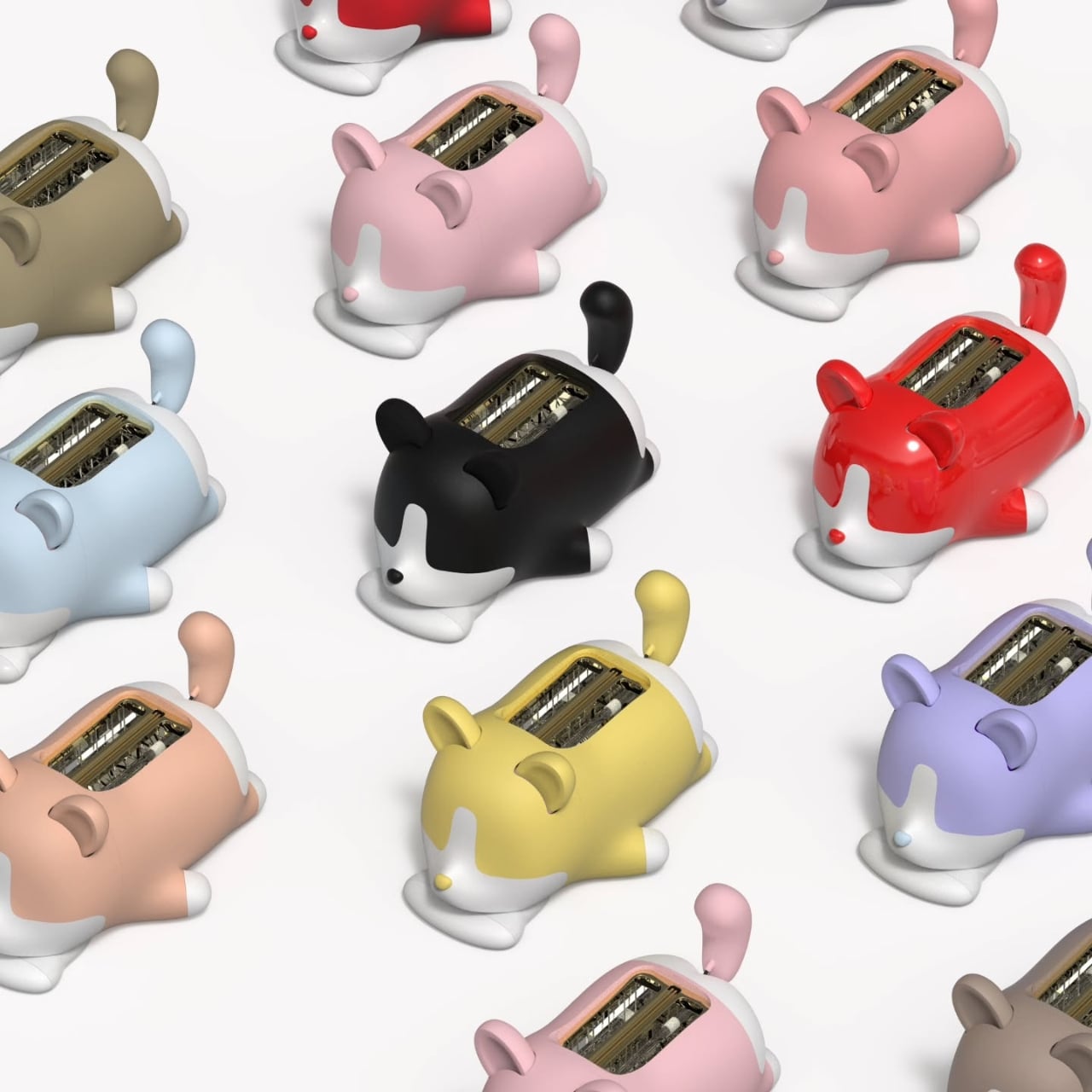
What actually makes this design smart, rather than just cute, is the restraint. There are no blinking lights, no sensors, no app pairing required. The dog doesn’t move or react. It just sits on the counter, shaped like something you’d want to pet, and does the one thing a toaster is supposed to do. The renders show it in a full lineup of colors, pink, red, mustard yellow, lavender, powder blue, each keeping the same white paws and muzzle, which suggests the designer is thinking about this as a real product line and not a one-off stunt.
Kitchens have quietly been ready for this kind of object for a while now. Look at how fast novelty shapes took over other categories, the cloud-shaped humidifiers, the frog-shaped desk lamps, the countless AirPods cases shaped like fruit. We’ve already decided small objects are allowed to be adorable. Appliances that actually cook or heat something have mostly been left out of that shift, treated as too technical to also be charming.
A toaster shaped like a napping dog won’t change how anyone’s morning actually goes. The bread still takes the same two minutes. But it changes what you look at while you wait, and that’s a fair trade for a piece of hardware that used to ask for nothing and, in return, gave nothing back.