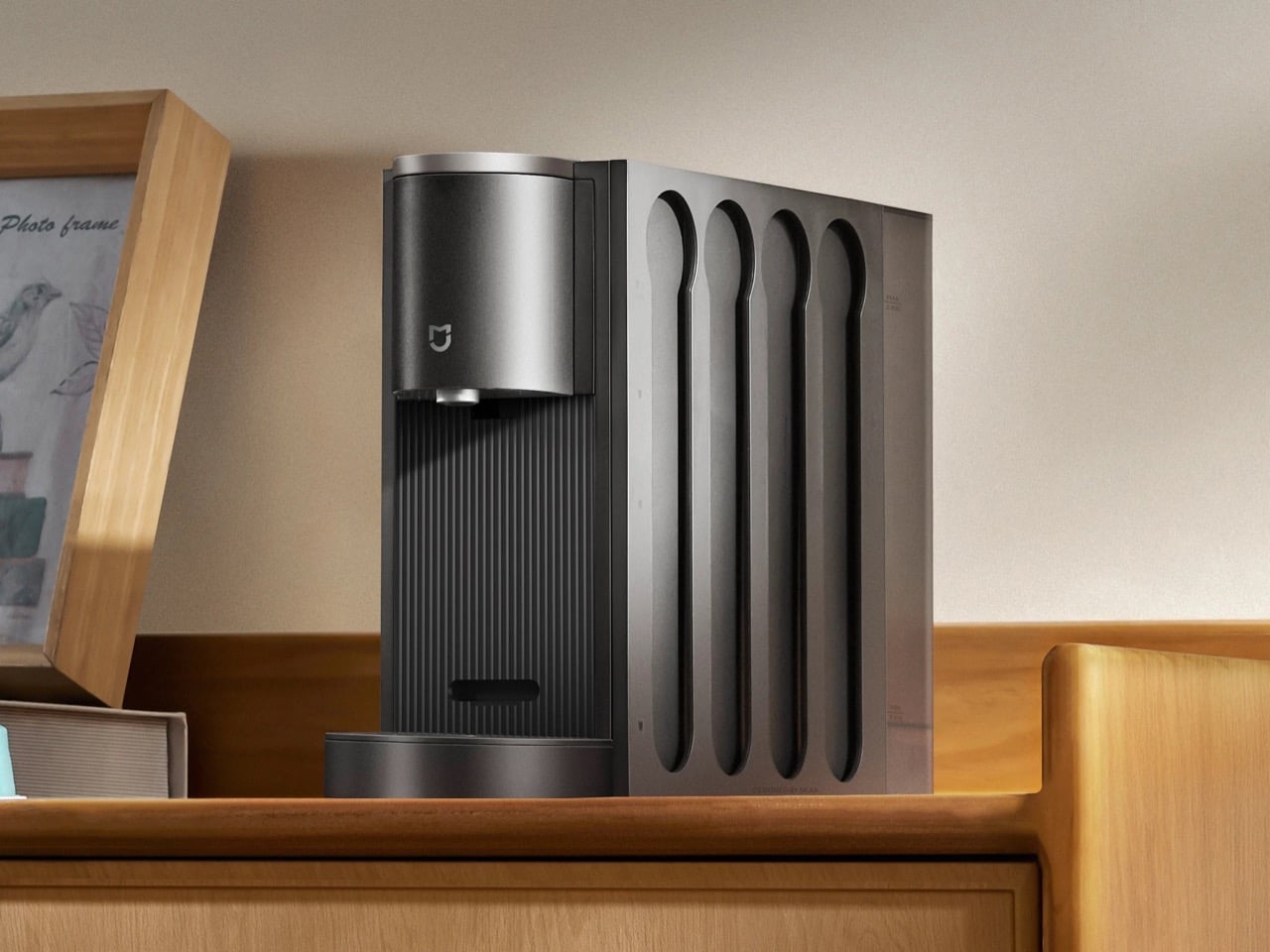

Xiaomi sells phones, electric cars, rice cookers, robot vacuums, air fryers, and now a capsule coffee machine, which means the company has quietly built a catalogue capable of furnishing your entire apartment and then driving you out of the garage. The playbook has not changed since: pick a category ruled by expensive Western brands, strip it to the essentials, price it like a provocation, and make it look far better than the price suggests. The Mijia Capsule Coffee Machine has been a China exclusive since February 2025. It just went international at €104.90 ($121 USD), sold directly by Xiaomi.
Xiaomi designed it in-house under the Mijia sub-brand with no external studio credited, and the object measures 33.2 x 9.0 x 21.2cm, roughly an A4 sheet standing on its edge. Inside sits a 19-bar ULKA pump from Italian manufacturer CEME, the same pump family Nespresso machines have used for years, alongside a 650ml removable tank and a 25-second preheat. The detail that actually matters is a magnetic capsule rack holding 20 capsules, sitting flush against the machine’s flank or clipping straight onto your fridge door. At ¥499 in China, this thing was a weapon. At €104.90 it lands in Nespresso Essenza Mini territory, which makes the argument far more interesting.
Designer: Xiaomi
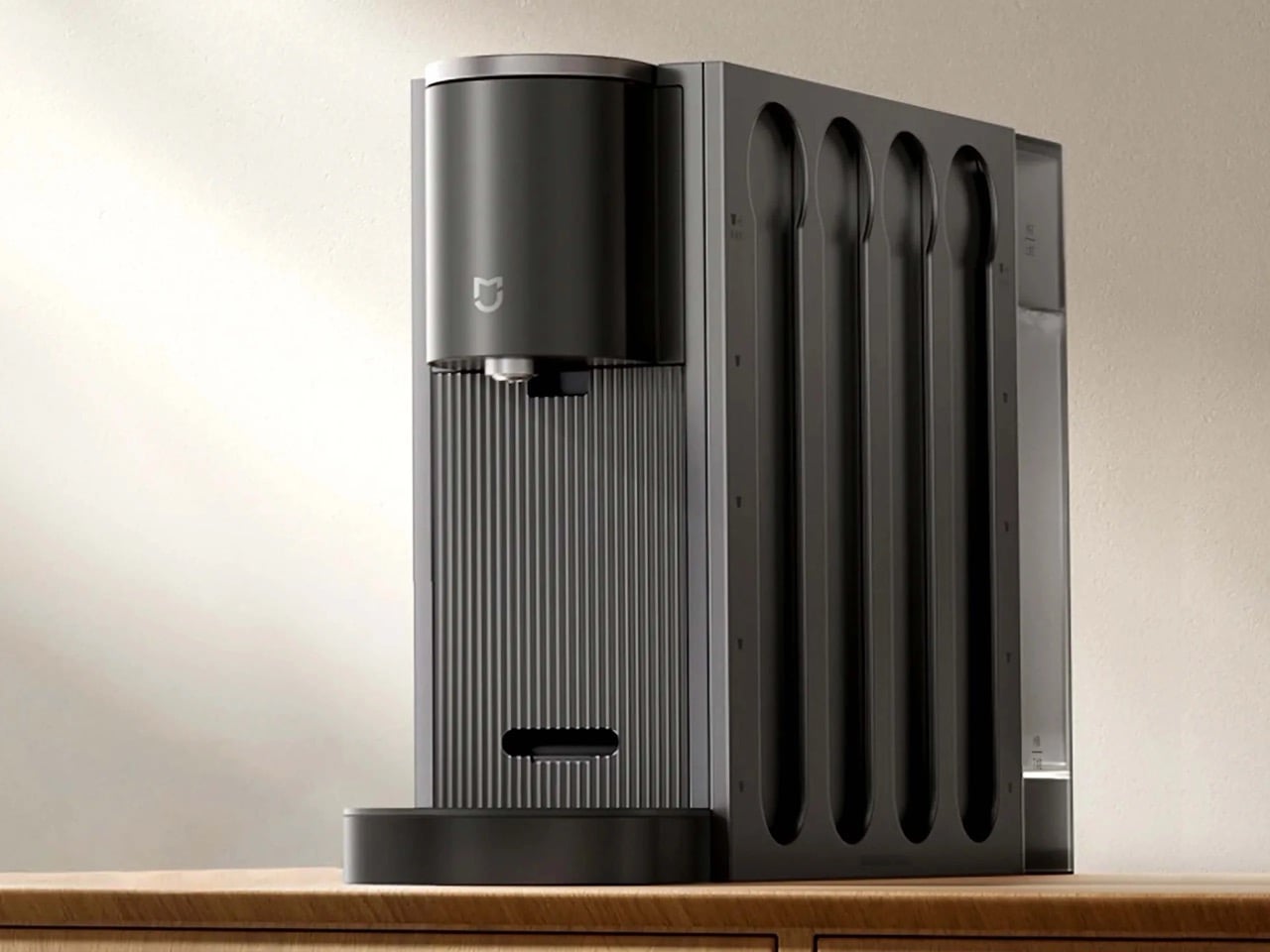
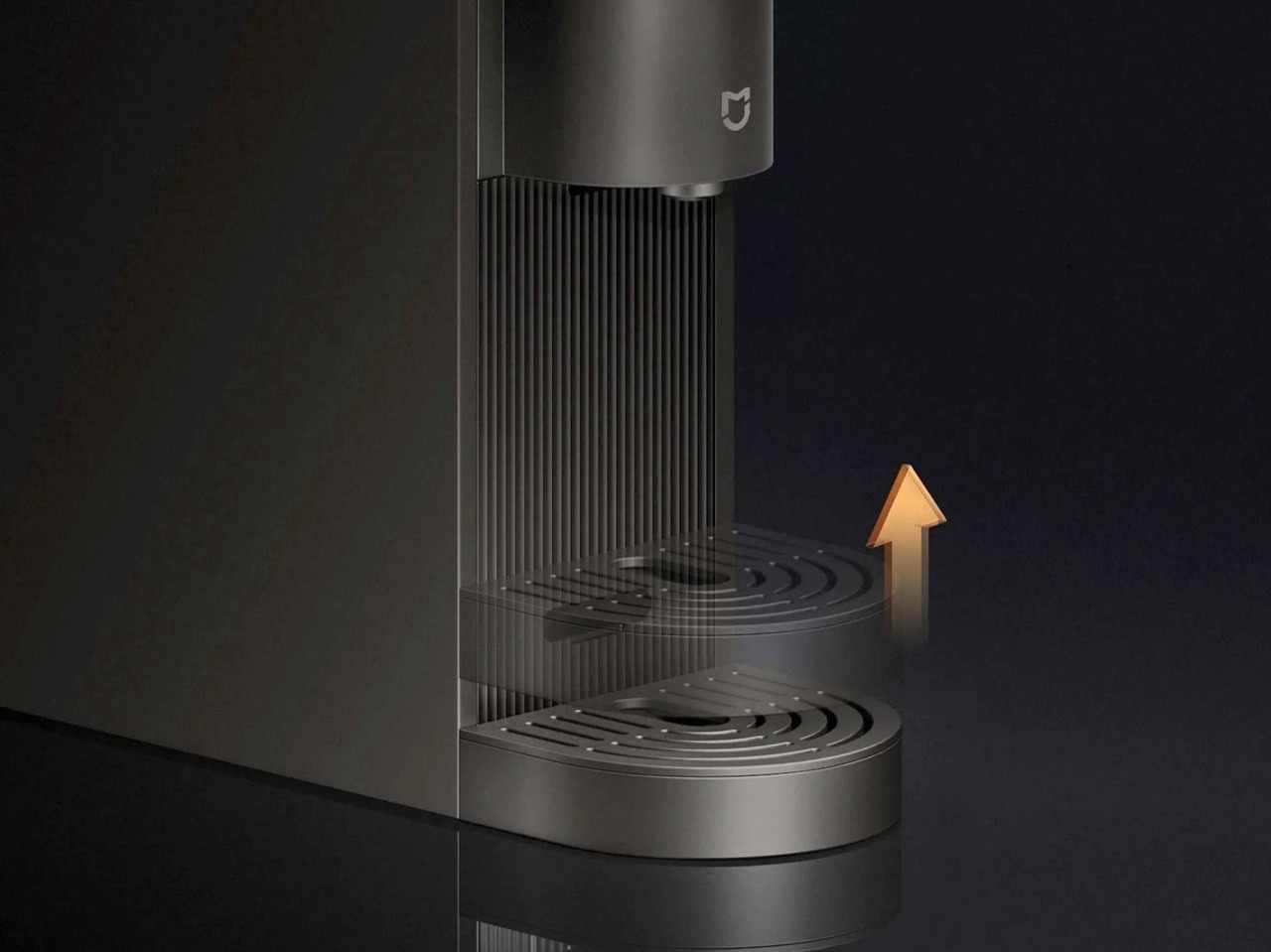
Most capsule machines are wide and squat, built to disappear into a corner counter next to the toaster. Xiaomi went the other direction and made this one narrow enough to stand like a book on a shelf, which is exactly how the brand shot it for launch, next to a picture frame rather than a fruit bowl. The front is split into a rounded brew head sitting above a column of fine vertical fluting, with a smoked panel at the back revealing the water level. Nothing here is flashy. It is the kind of quiet, considered grey object that photographs better than it has any right to, and Xiaomi clearly knew that when it wrote “extraordinary craftsmanship” into the marketing copy.

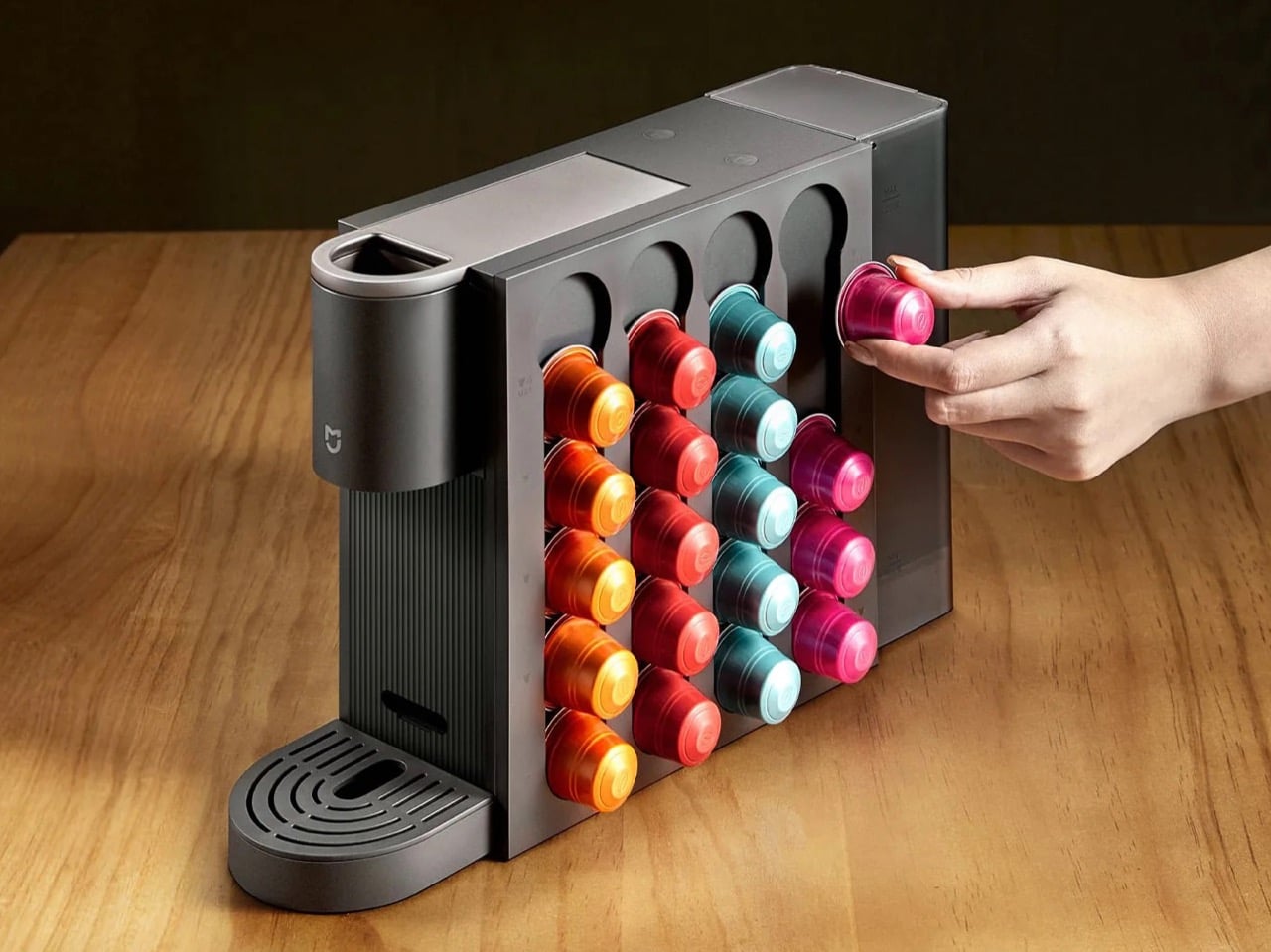
The rack is the smartest move in the whole design. Instead of selling capsule storage as a separate accessory the way Nespresso does, Xiaomi built it into the silhouette, a slab of twenty vertical slots that clips onto the machine’s side or peels off entirely to stick on a fridge door. It also happens to be the only place color shows up on the entire product, since every capsule you load is a small bright object against an otherwise monochrome machine. That is either genuinely clever industrial design or the tidiest lock-in mechanism I have seen on a kitchen appliance in a while, and honestly it can be both at once.

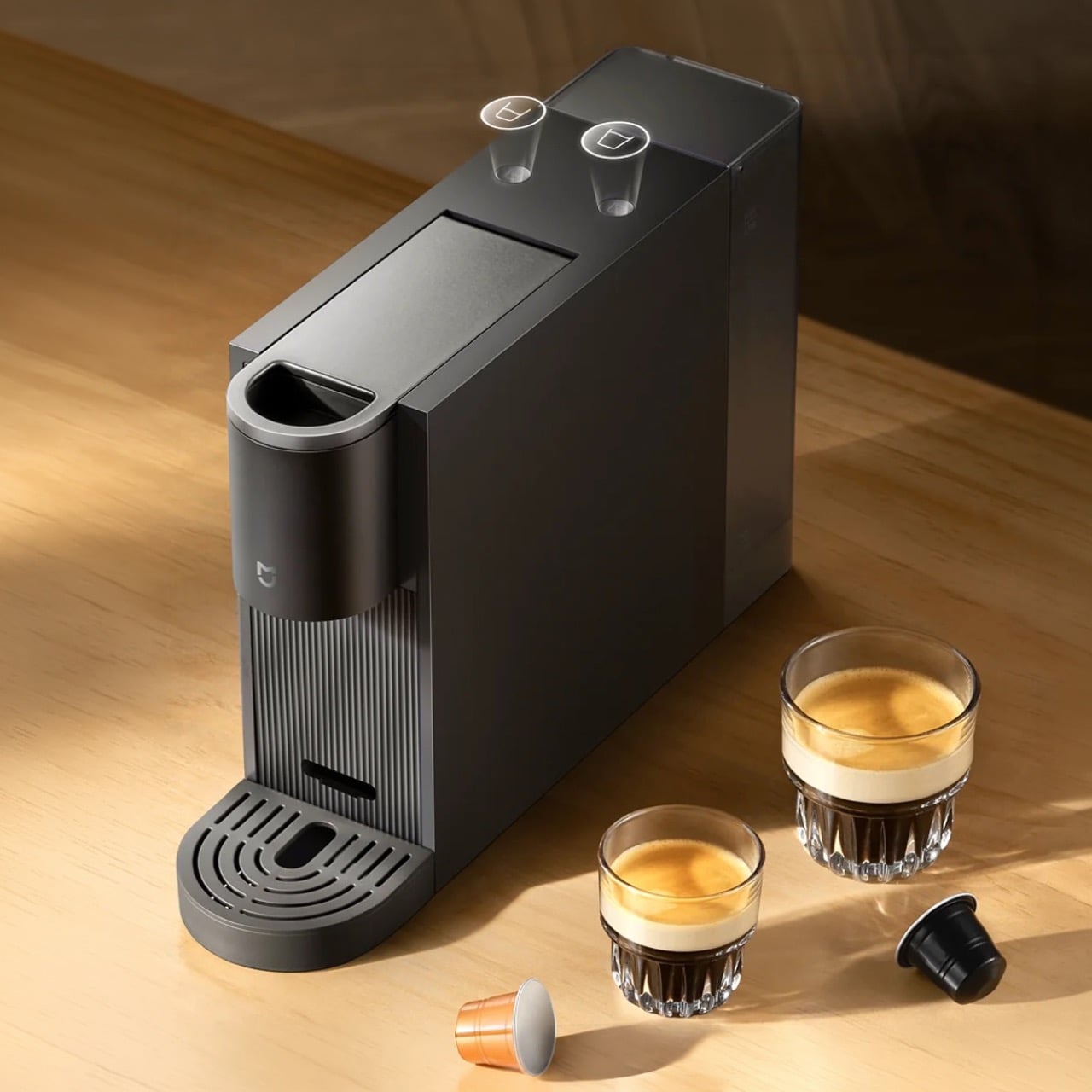
The internals are competent rather than flashy, which is fine, because this machine was never going to out-engineer a Breville. A 19-bar ULKA pump built by CEME S.P.A. in Italy handles pressure, paired with an NTC sensor and PID algorithm for temperature control, plus a 1400W heater and a 650ml tank you can pull off and rinse at the sink. Two cup sizes come preset at 40ml and 110ml, and both are adjustable by holding the button and tapping again once you hit your preferred pour. Xiaomi rates the whole thing at 55dB(A), quiet enough that it will not wake anyone sleeping down the hall. None of it screams for attention, and that restraint is sort of the point.
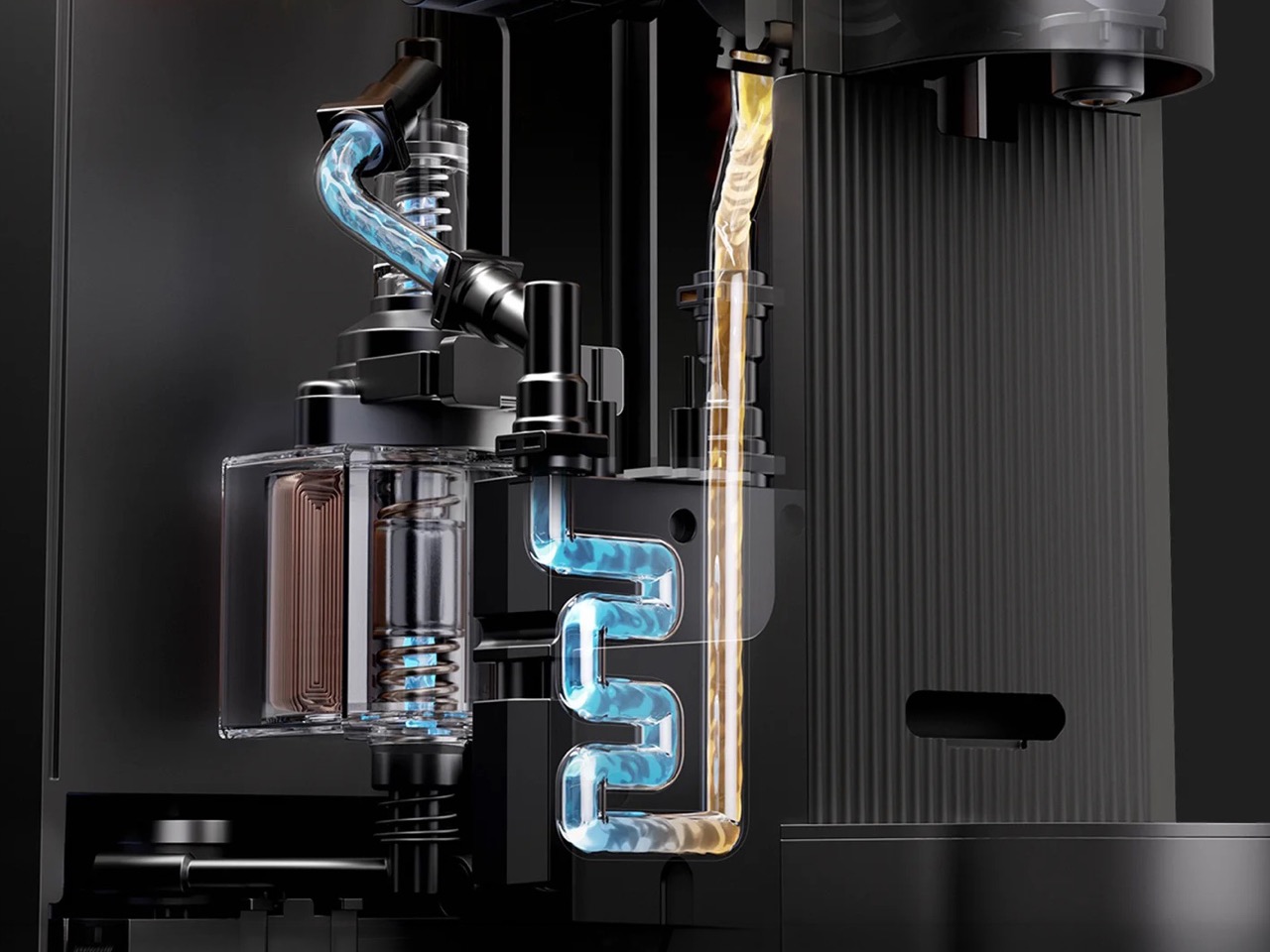
The internals are competent rather than flashy, which is fine, because this machine was never going to out-engineer a Breville. A 19-bar ULKA pump built by CEME S.P.A. in Italy handles pressure, paired with an NTC sensor and PID algorithm for temperature control, plus a 1400W heater and a 650ml tank you can pull off and rinse at the sink. Two cup sizes come preset at 40ml and 110ml, and both are adjustable by holding the button and tapping again once you hit your preferred pour. Xiaomi rates the whole thing at 55dB(A), quiet enough that it will not wake anyone sleeping down the hall. None of it screams for attention, and that restraint is sort of the point.
Worth saying plainly: Xiaomi never claims Nespresso compatibility. It lists four capsule diameter ranges instead and lets you do the math yourself, which is a neat bit of legal sidestepping dressed up as a spec sheet. It is also worth remembering that capsules cost more per cup than ground coffee and are harder on the planet, no matter how good the machine holding them looks. The bigger question is what happens to the price argument now that it has left China. At ¥499 this machine undercut everyone. At €104.90 it is going toe to toe with Nespresso on cost and betting the design carries the rest. Given what is actually sitting on that shelf, I would not bet against it.