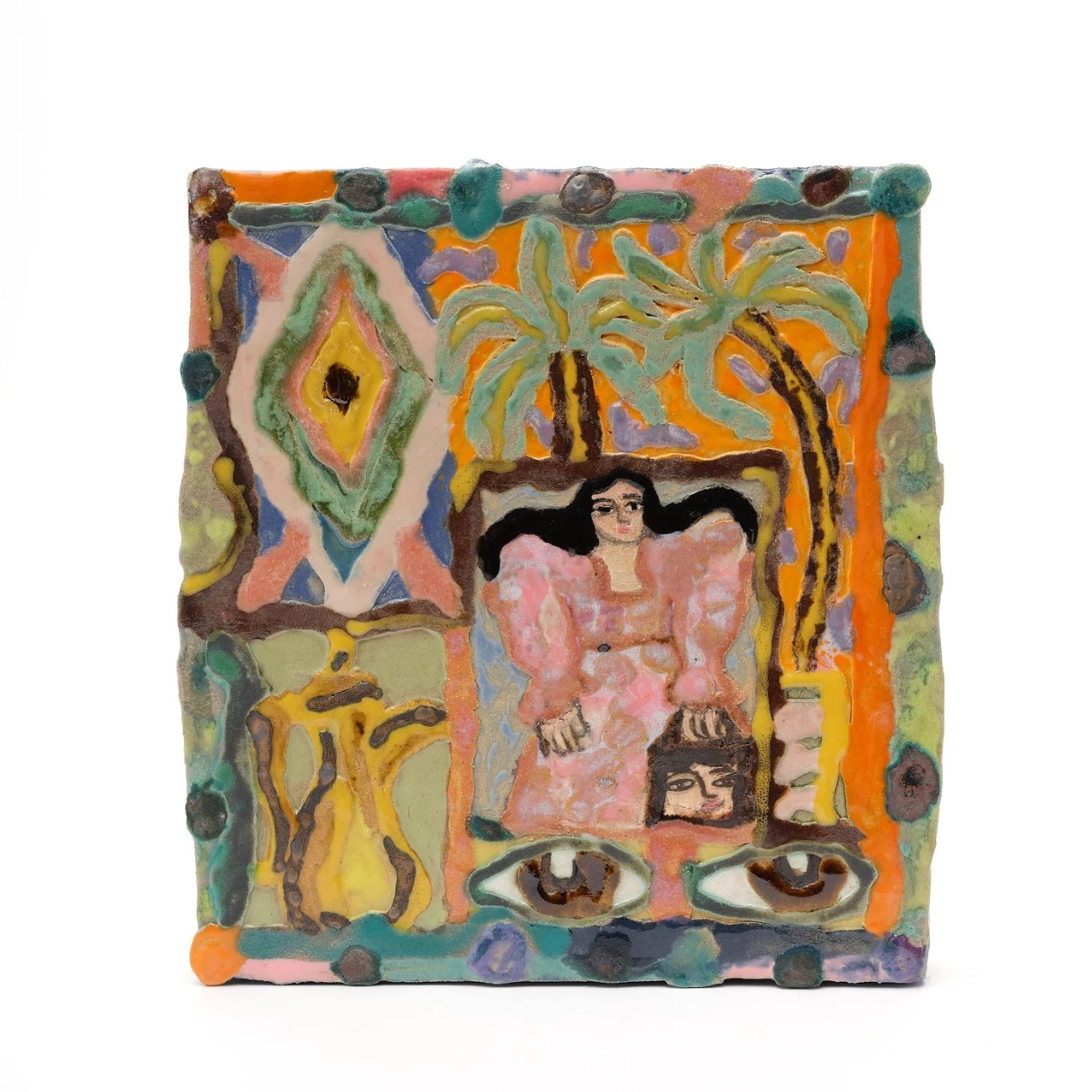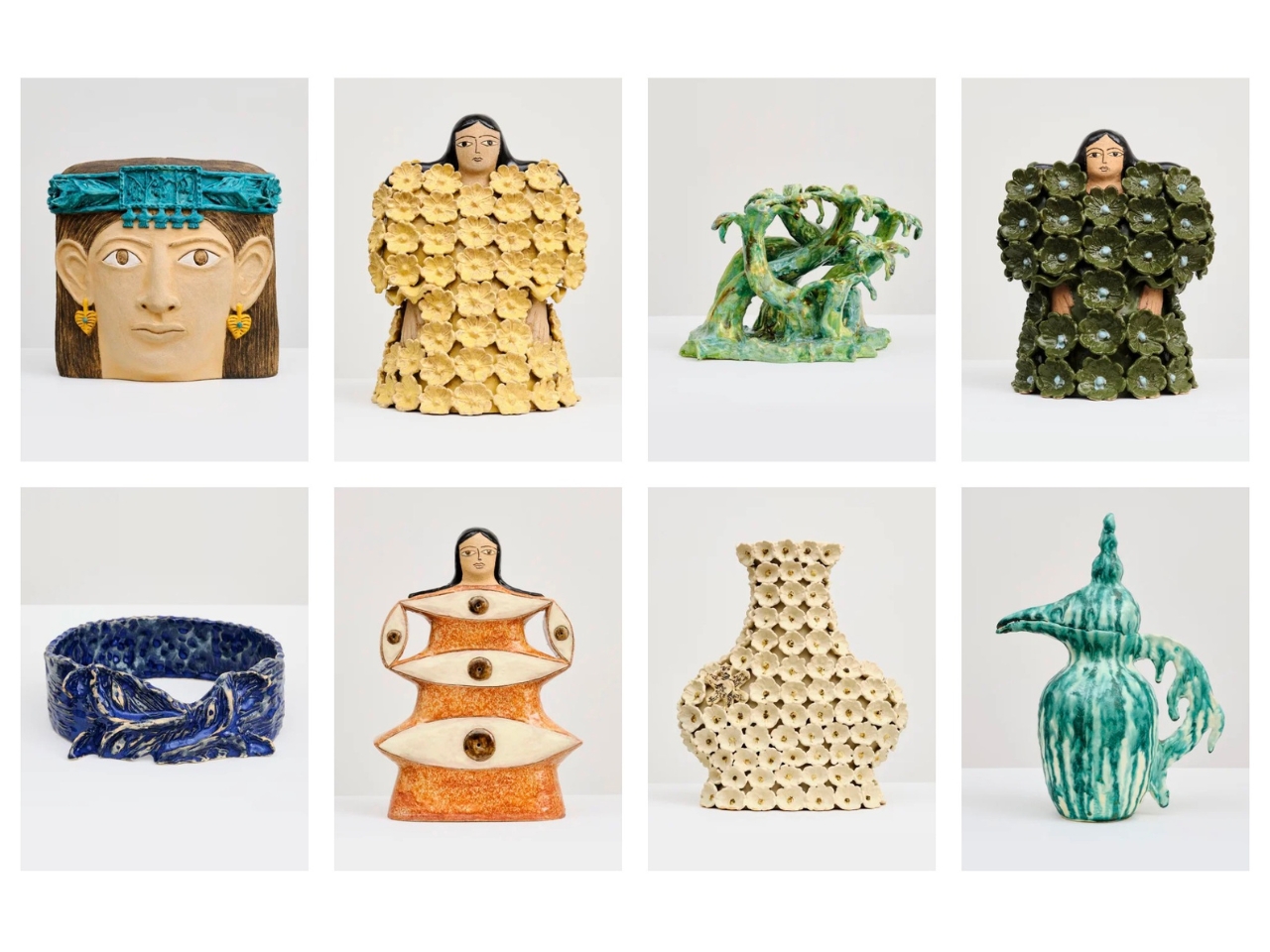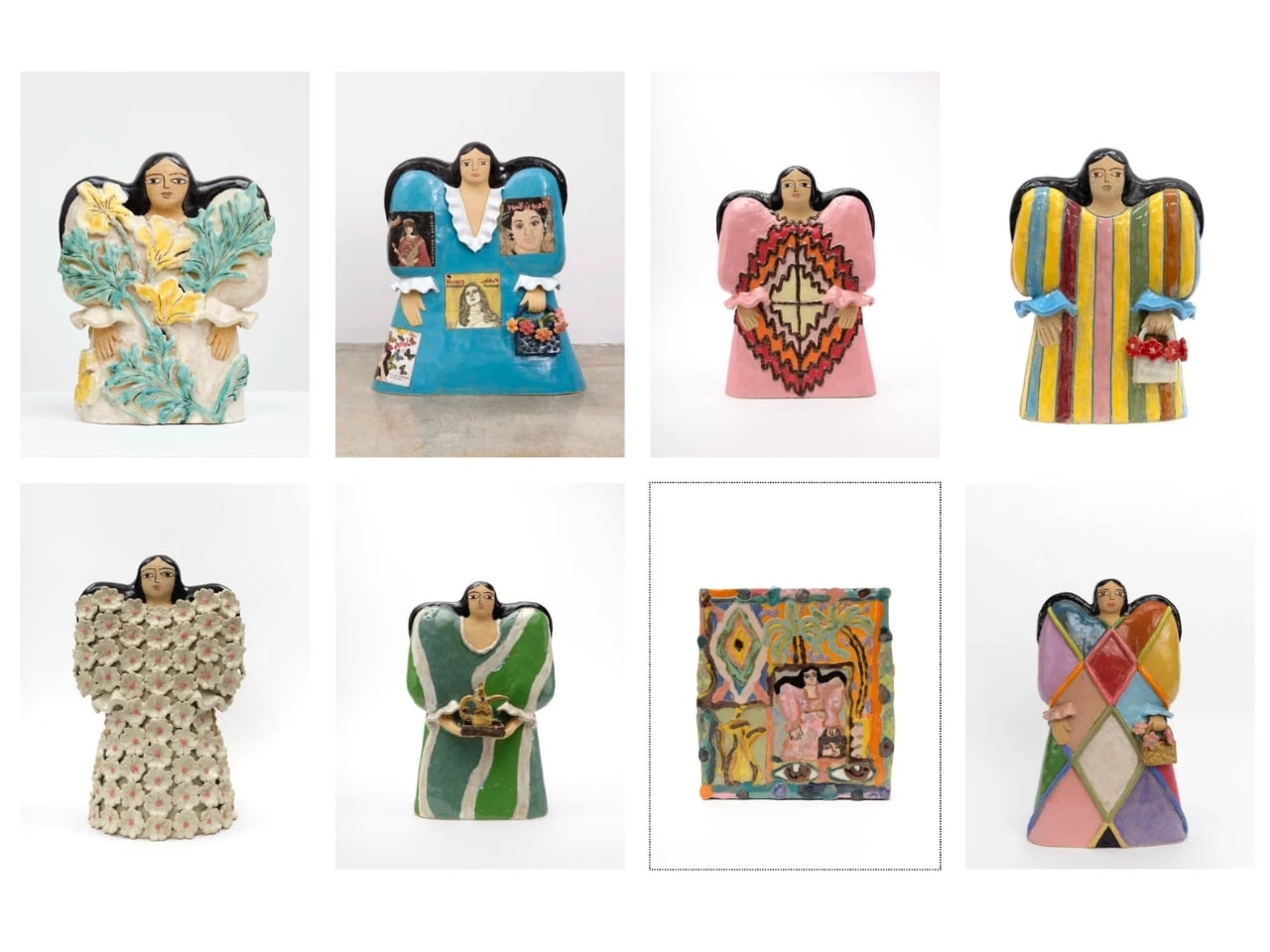

The first time you see Maryam Yousif’s ceramic figures, you feel like you’re being introduced to someone. Not admiring an object, not reading a plaque. Actually meeting a person who has a lot to say.
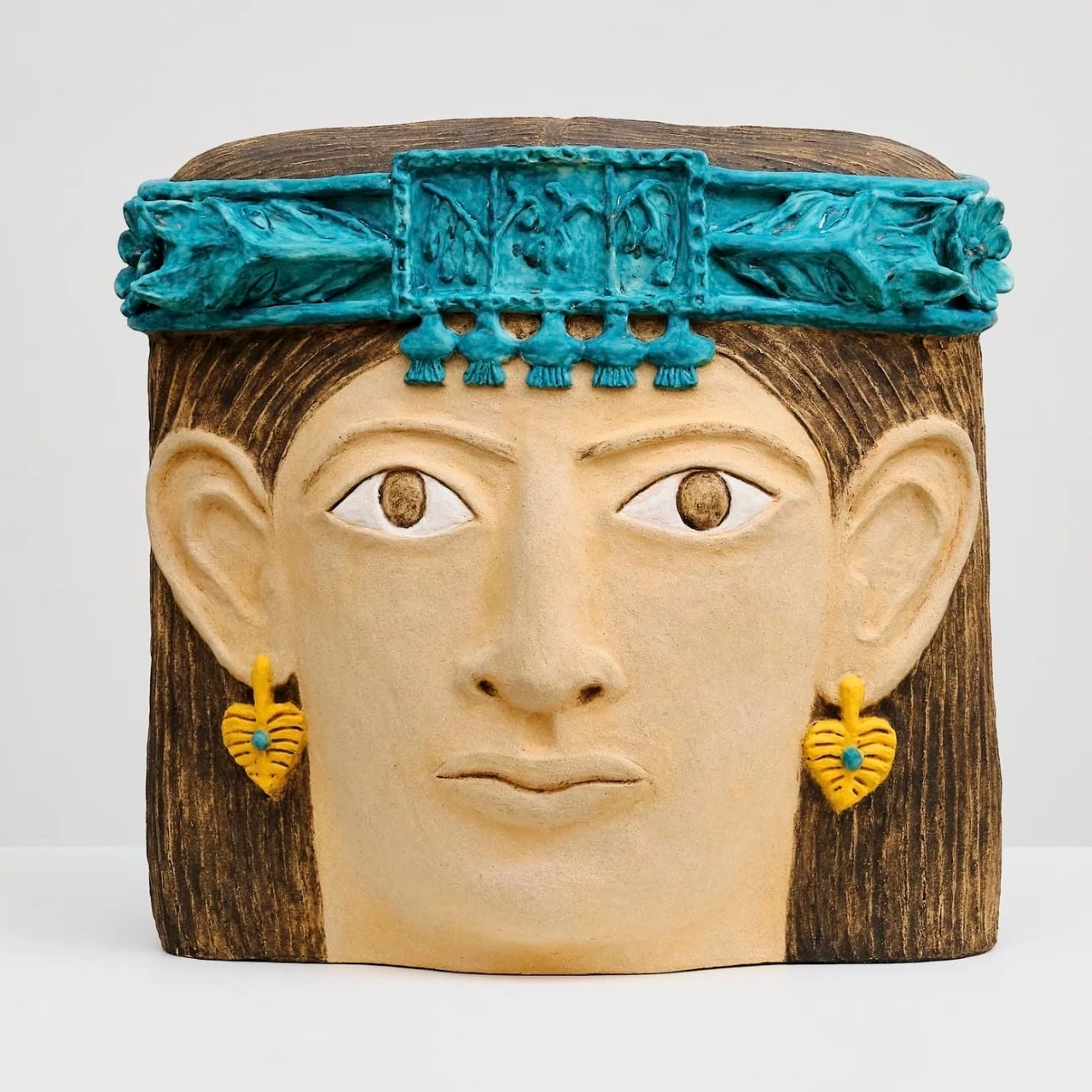
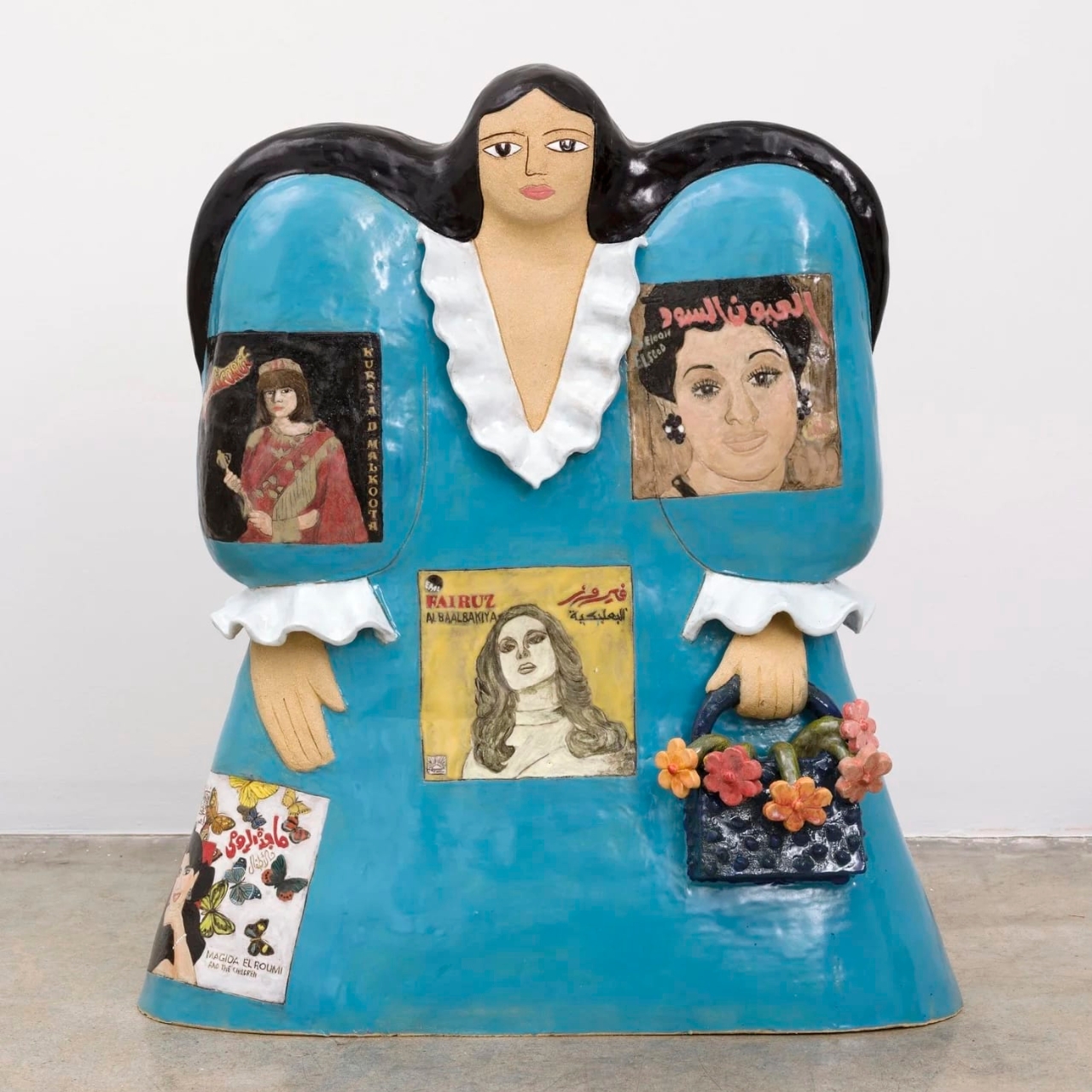
That is the whole idea. Yousif, an Iraqi-American artist based in San Francisco, has spent years building a universe of glazed ceramic figures she calls the “Habibti,” Arabic for “sweetheart” or “my love.” They are not decorative in the passive sense. They stand with quiet confidence, robed in dresses made of repeating rosette patterns, eye motifs, pomegranate shapes, and even other women’s faces. They look at you. Or rather, they look past you, the way the oldest, most self-assured things tend to do.
Designer: Maryam Yousif
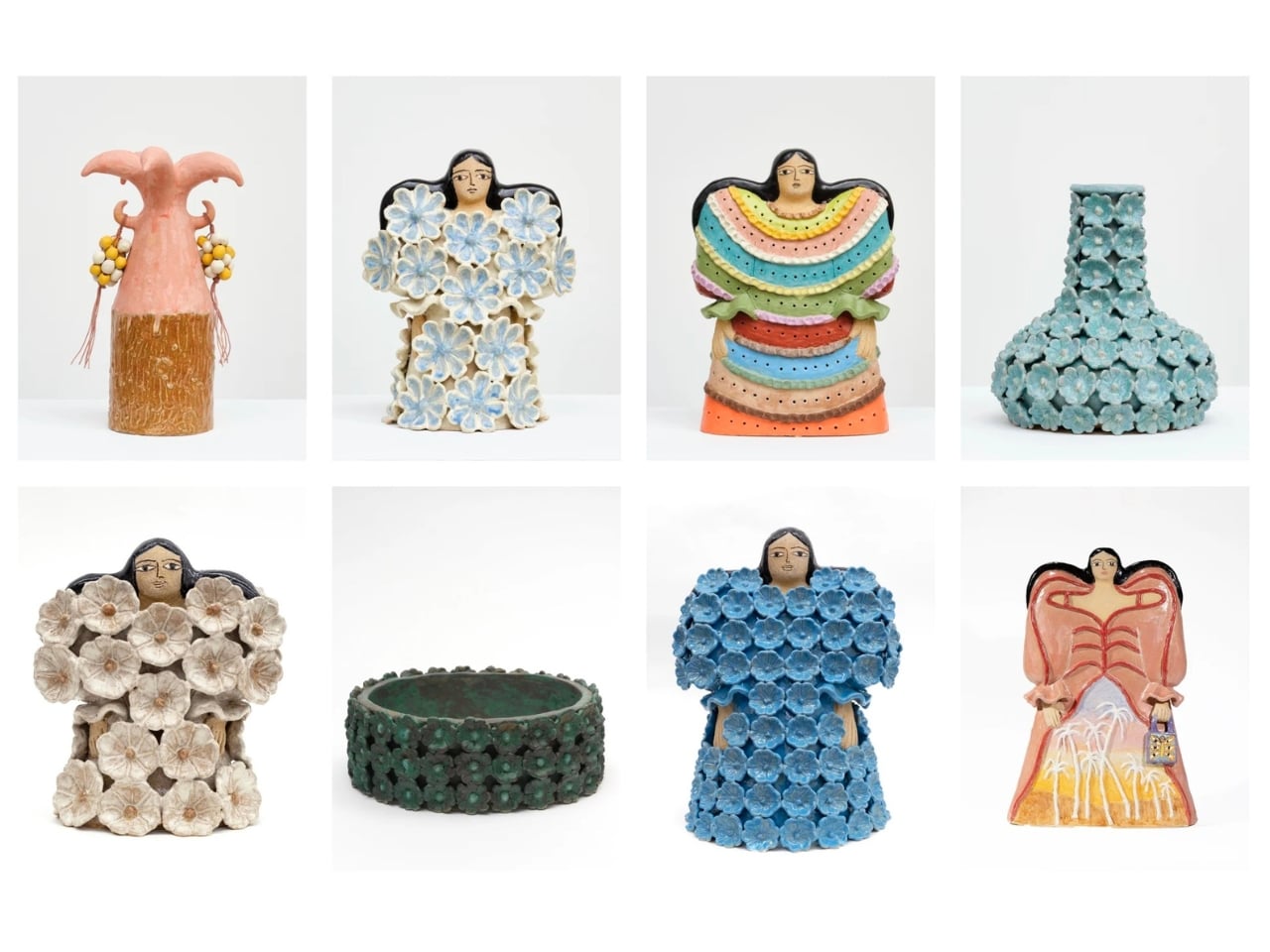
What makes these figures so compelling to spend time with is the dresses. Each Habibti is draped in a pattern that functions almost like a visual archive. Rosettes borrowed from ancient Mesopotamian and Assyrian design. Repeating eye motifs that nod to protection and evil eye traditions woven throughout Middle Eastern and North African cultures. Sometimes the fabric of the dress is made entirely of other women’s faces, stacked and repeating like a tessellation of solidarity. Each pattern is distinct, but they all share the same quality of layering meaning without demanding that you decode it. Yousif renders all of it in vivid glaze, tangerine, wedgwood blue, desert yellow, green, giving what could have been scholarly reference the warmth and personality of something made with genuine affection.

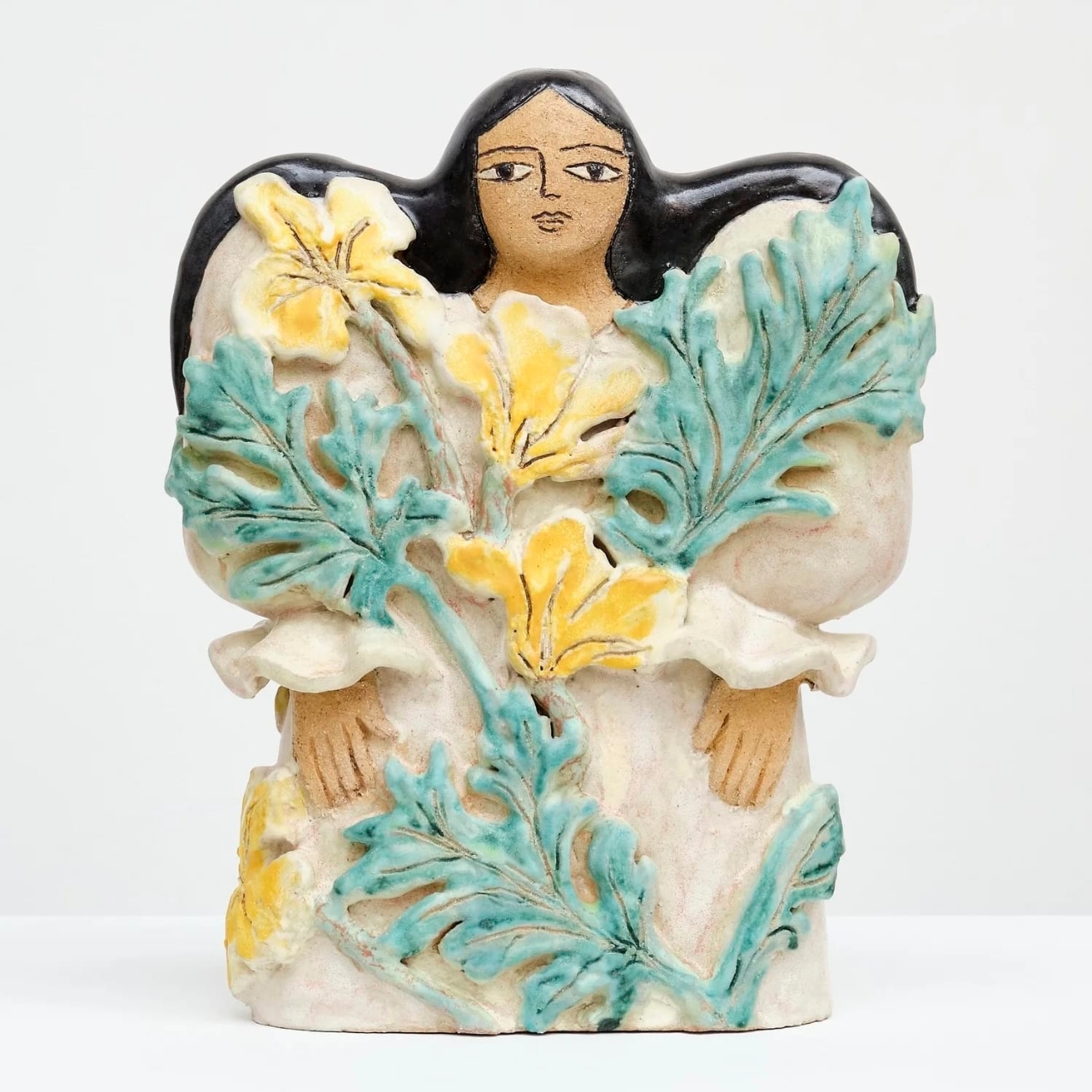
The figures themselves are elegant and simplified. Black hair. Arms quietly at their sides. Some carry what looks like a structured bag, a detail lifted from ancient Assyrian carvings, where divine figures are often depicted holding a similar vessel. Yousif doesn’t footnote this for you. She trusts that the image works whether you recognize the source or not, and she is right to. The Habibti figures have a presence that operates independently of art history knowledge. You don’t need context to feel their composure.
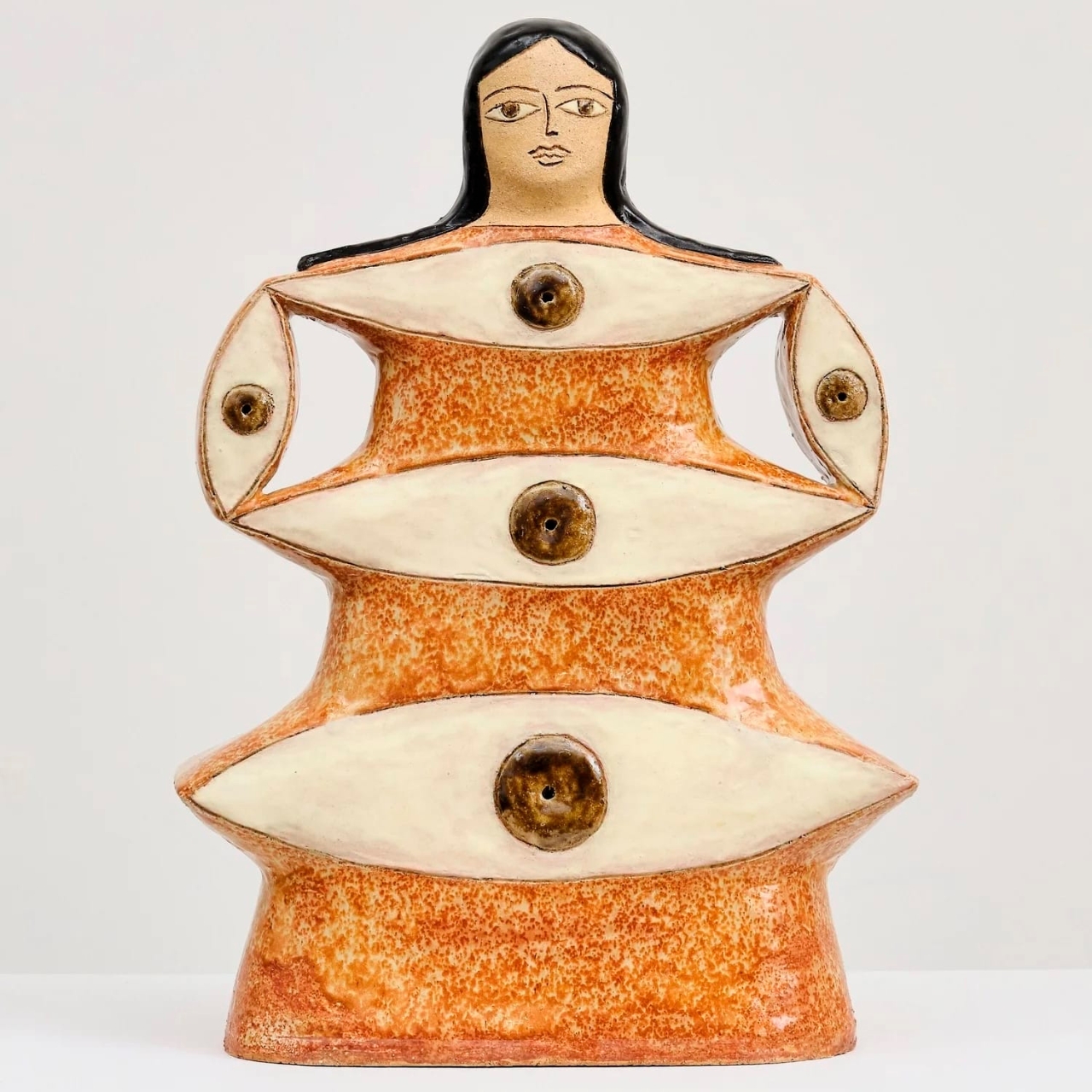
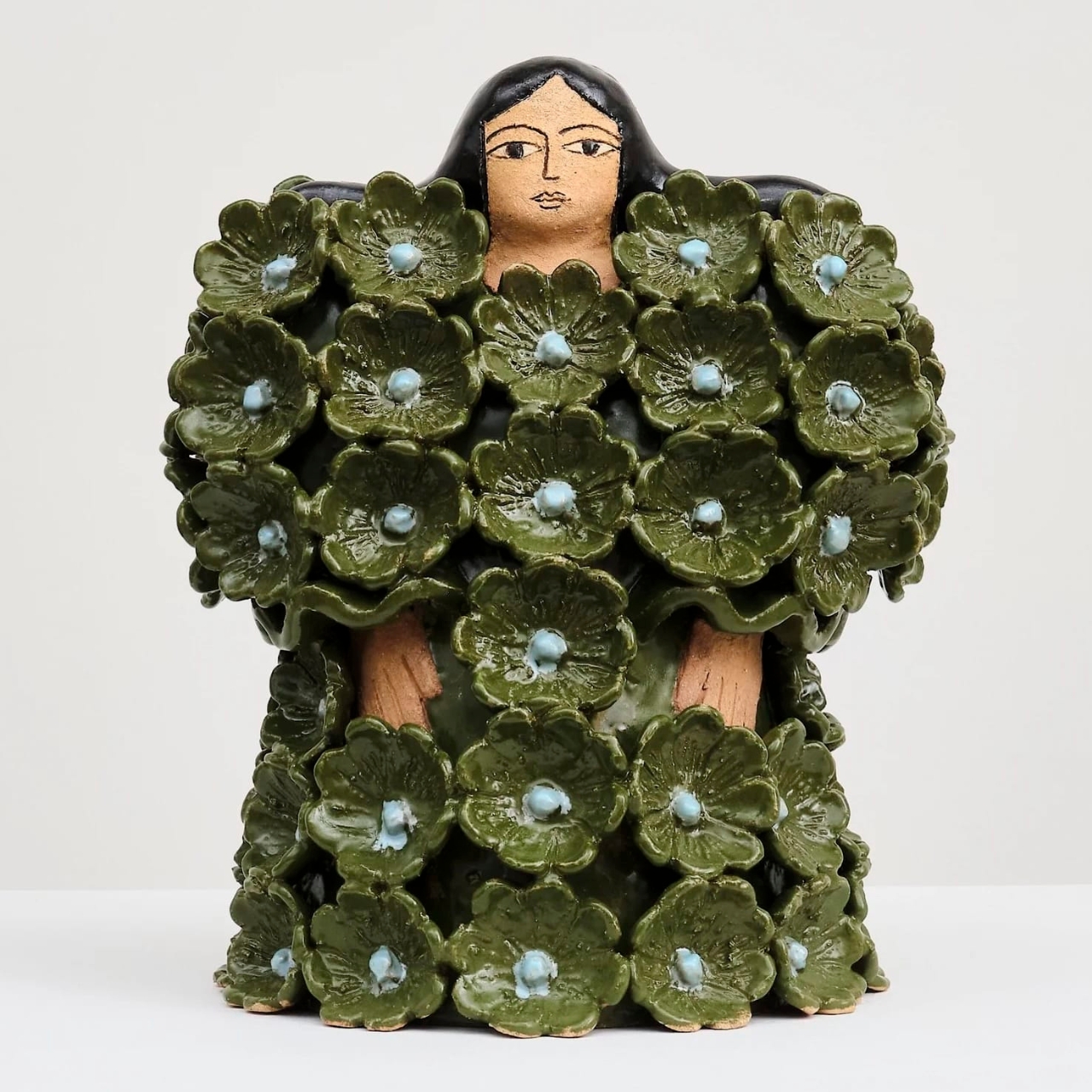
What Yousif has built here is not a series so much as a cast of characters. Each figure has a distinct personality that comes through in color palette and patterning. Habibti in Yellow Desert Rosette Dress reads as ceremonial, almost solar. Habibti in Tangerine Rosette Dress is warmer, more intimate. Habibti in Green Rosette Dress feels grounded, earthly. The variation is intentional, and it matters. These are not multiples. They are individuals.
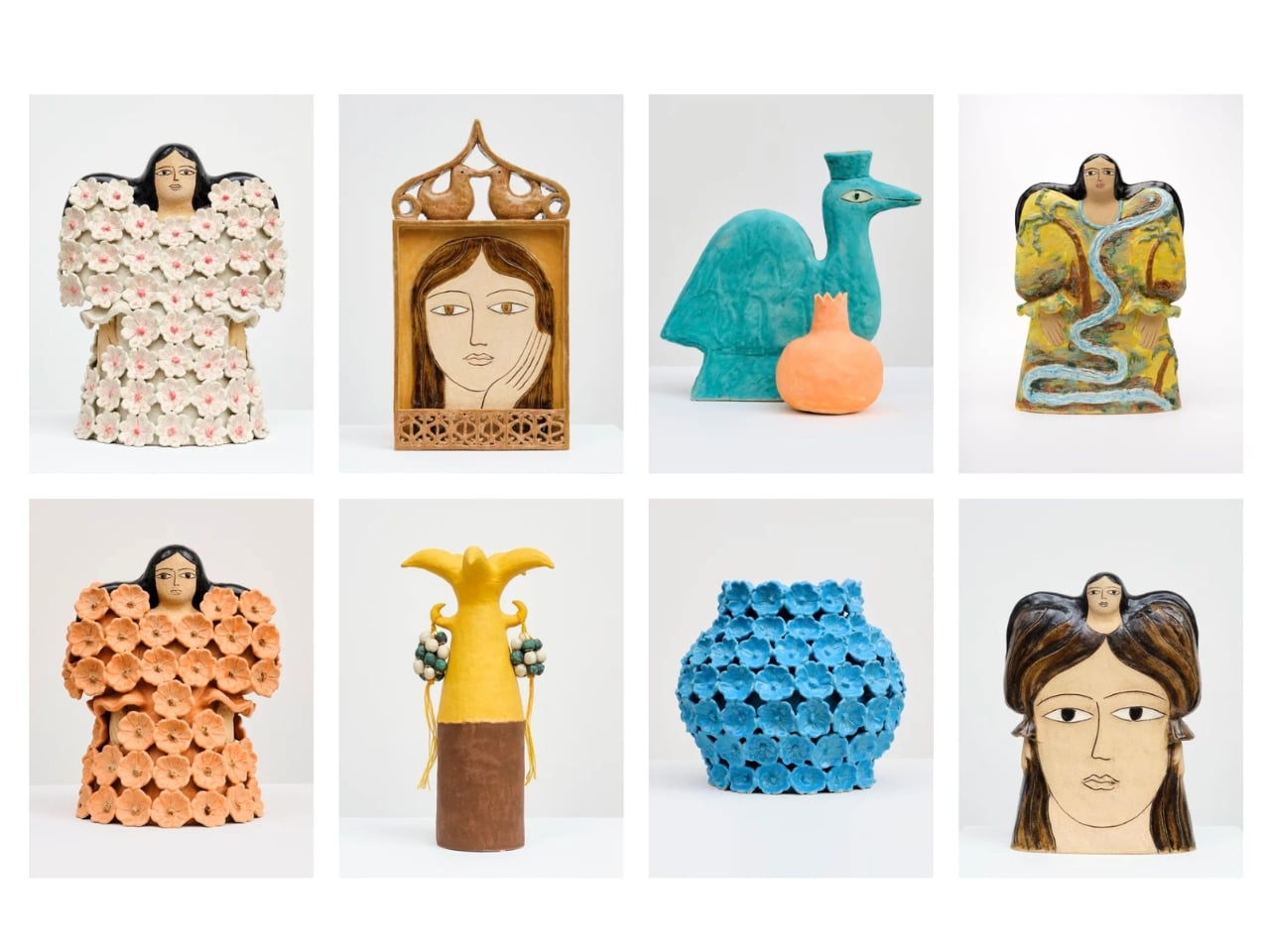
The Habibti concept draws from the Sumerian votive tradition, the practice of placing small clay figures in temples as stand-ins for worshippers who could not always be physically present. Those ancient figures were made to pray on behalf of the living. Yousif updates that idea with bold color, contemporary craft, and the Bay Area’s funk art sensibility, placing women at the center and naming each one after a term of endearment. The gesture reframes devotion entirely.
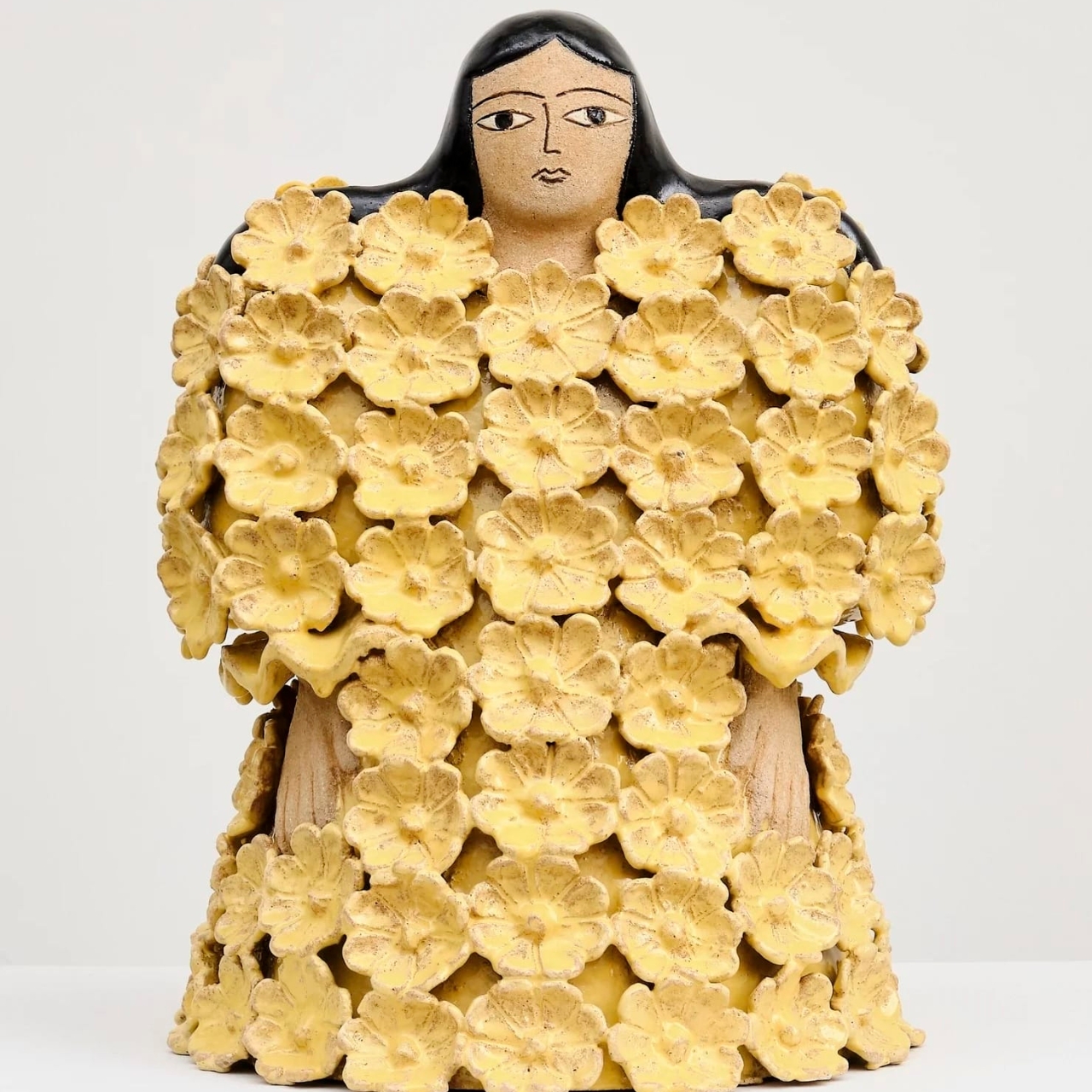
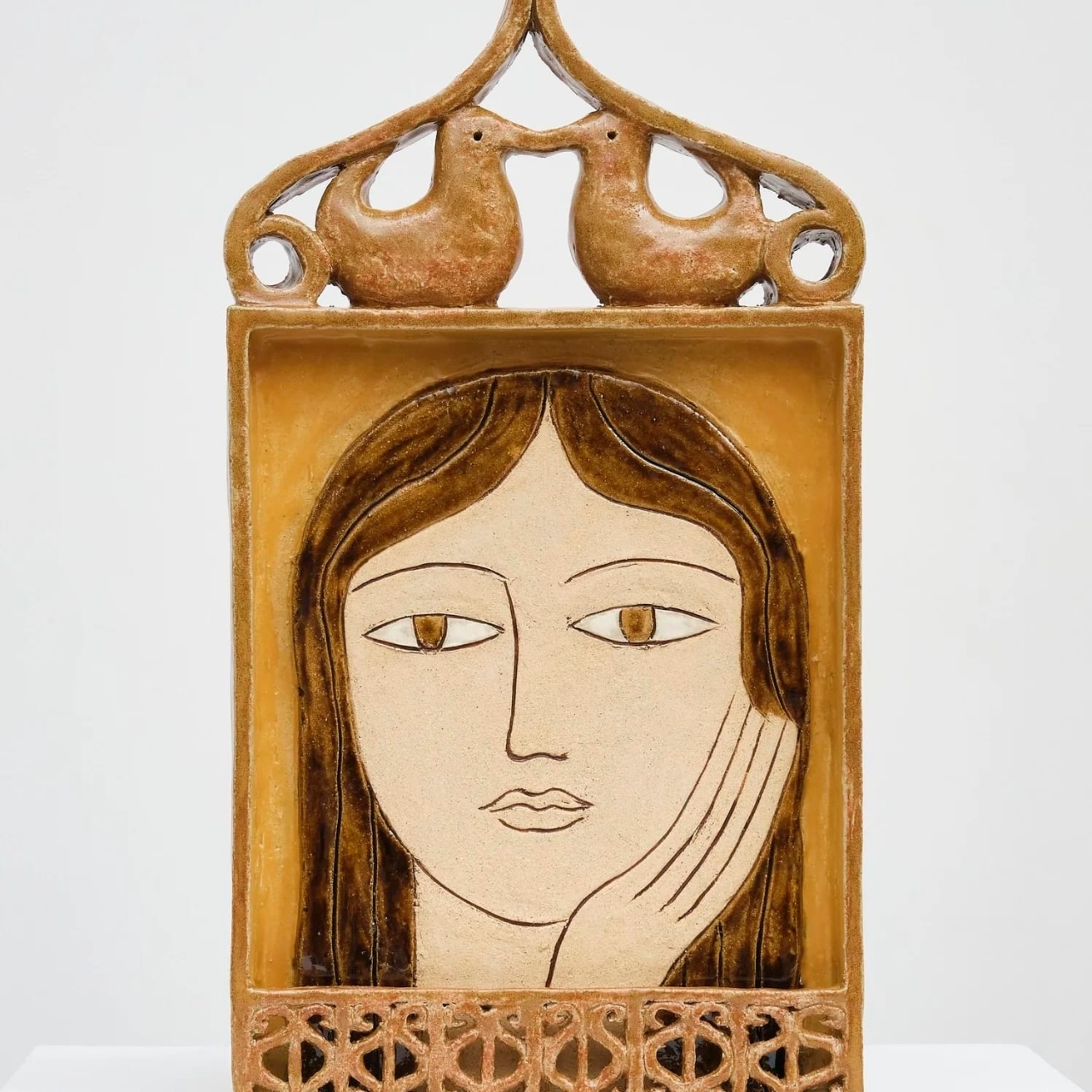
I keep thinking about the craft itself. Ceramics as a medium has a complicated relationship with fine art hierarchies. It has historically been positioned as craft, as decorative, as lesser than painting or sculpture. Yousif doesn’t seem particularly interested in resolving that tension. She just makes work that demands to be taken seriously on its own terms, which is arguably a more effective argument than any theoretical position could make. The glaze work is rich and precise. The forms are confident. The scale, mostly under 20 inches tall, makes the figures feel personal rather than monumental, like objects meant to share a room with you rather than be observed from a distance.
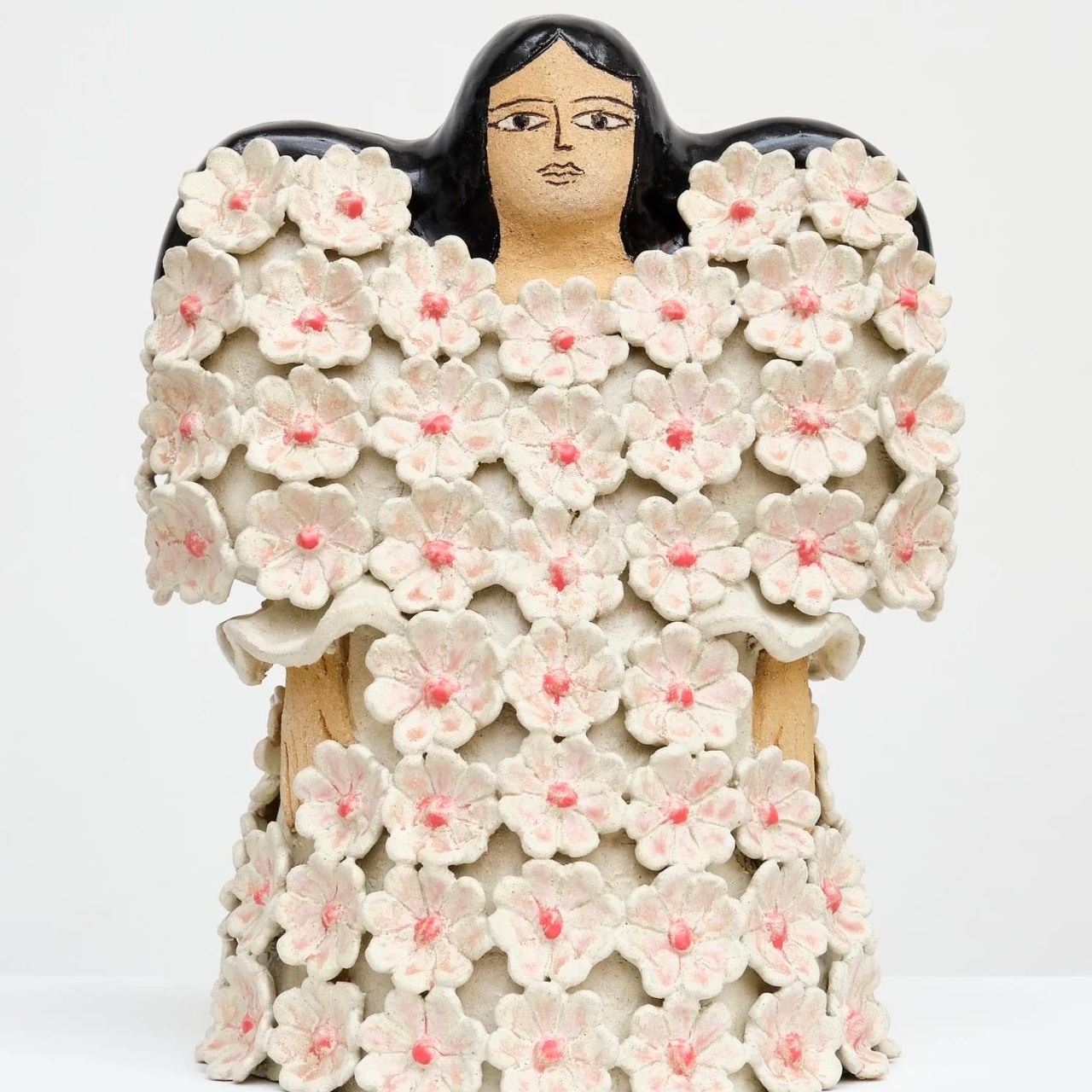
The Habibti sculptures are, at their core, about presence. The presence of women. The presence of culture across time. The presence of craft as a living, breathing carrier of memory. Maryam Yousif built an entire world out of glazed clay and ancient references, and it looks like nothing else being made right now. Not a revival. Not a tribute. Something genuinely new. That, more than anything, is the point.