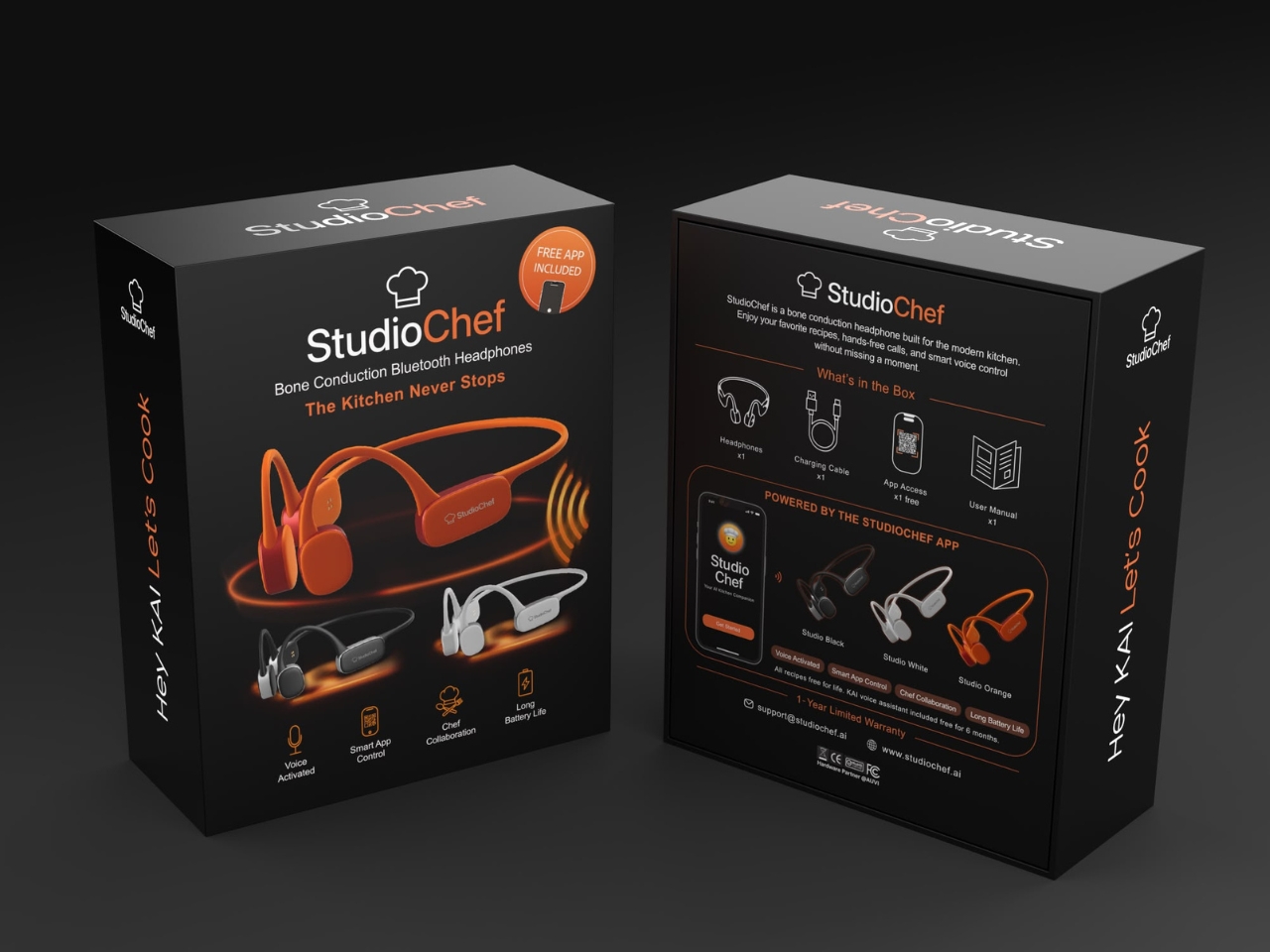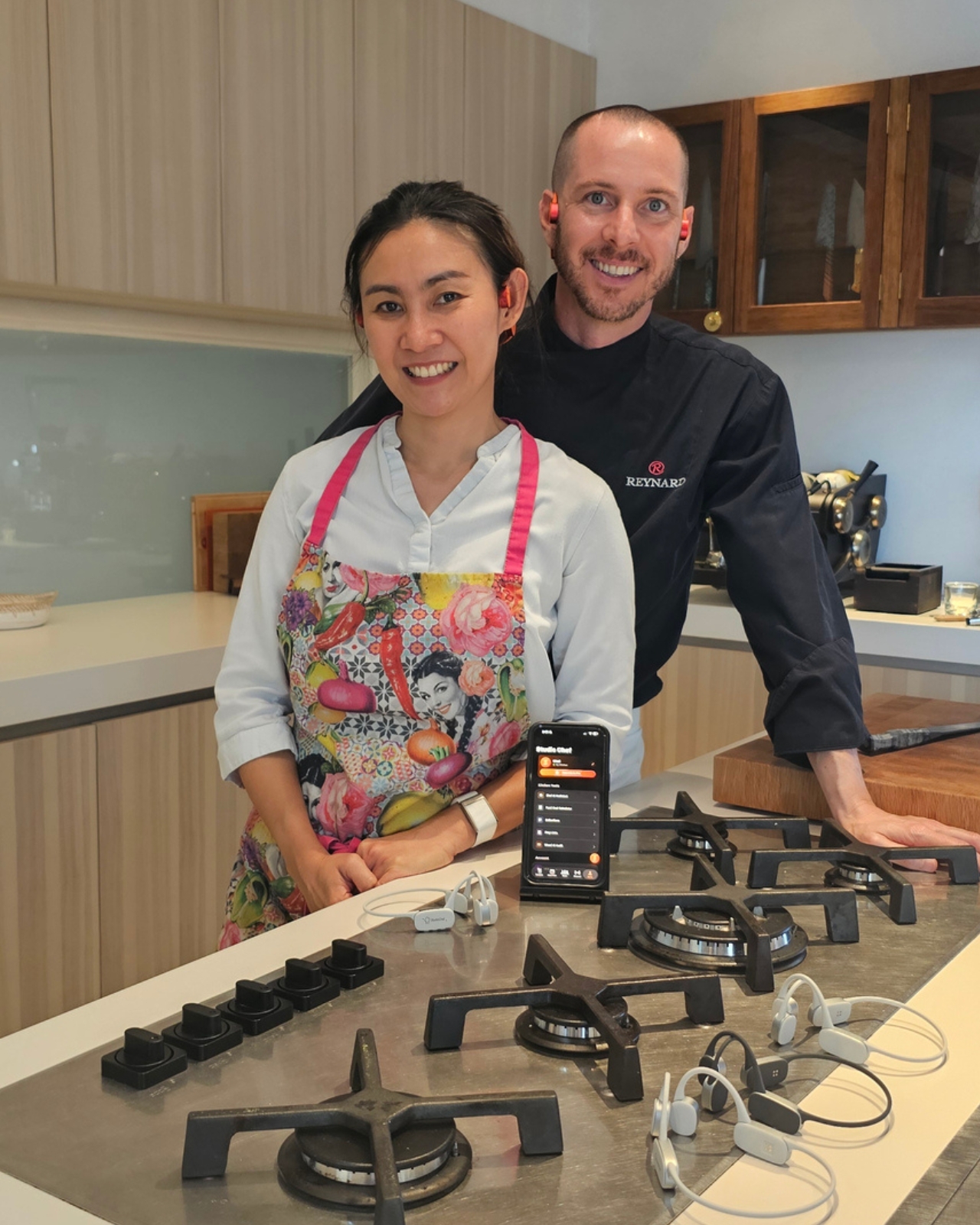
Most kitchen tech is designed by people who think about kitchens. Nicolas Reynard’s StudioChef KAI was designed by someone who has actually worked in one for 26 years. That distinction matters more than you might think. The gap between what your hands are doing and what your brain needs to know is real in a professional kitchen. You’re managing heat, timing, texture, and a dozen other variables all at once. In a restaurant brigade, you shout across the pass and someone shouts back. But private chefs work alone. There’s no one to call out to, no one to double-check the temperature on the duck, no one to remind you that the soufflé has four minutes left.
Reynard sat with that problem for two years before he decided to build a solution. What he came up with is genuinely interesting, not because it’s flashy, but because it’s specific in exactly the right way. KAI is an AI sous chef that lives in a pair of bone-conduction headphones. If you’re not familiar with bone conduction, here’s the short version: instead of sitting inside or over your ears, the headphones rest against your cheekbones and send sound directly through bone to your inner ear. Your ear canal stays completely open. You hear KAI reading you a recipe step, and at the same time you hear the sizzle in the pan, the beep of the oven timer, the sound of someone walking into the kitchen.
Designer: Nicolas Reynard
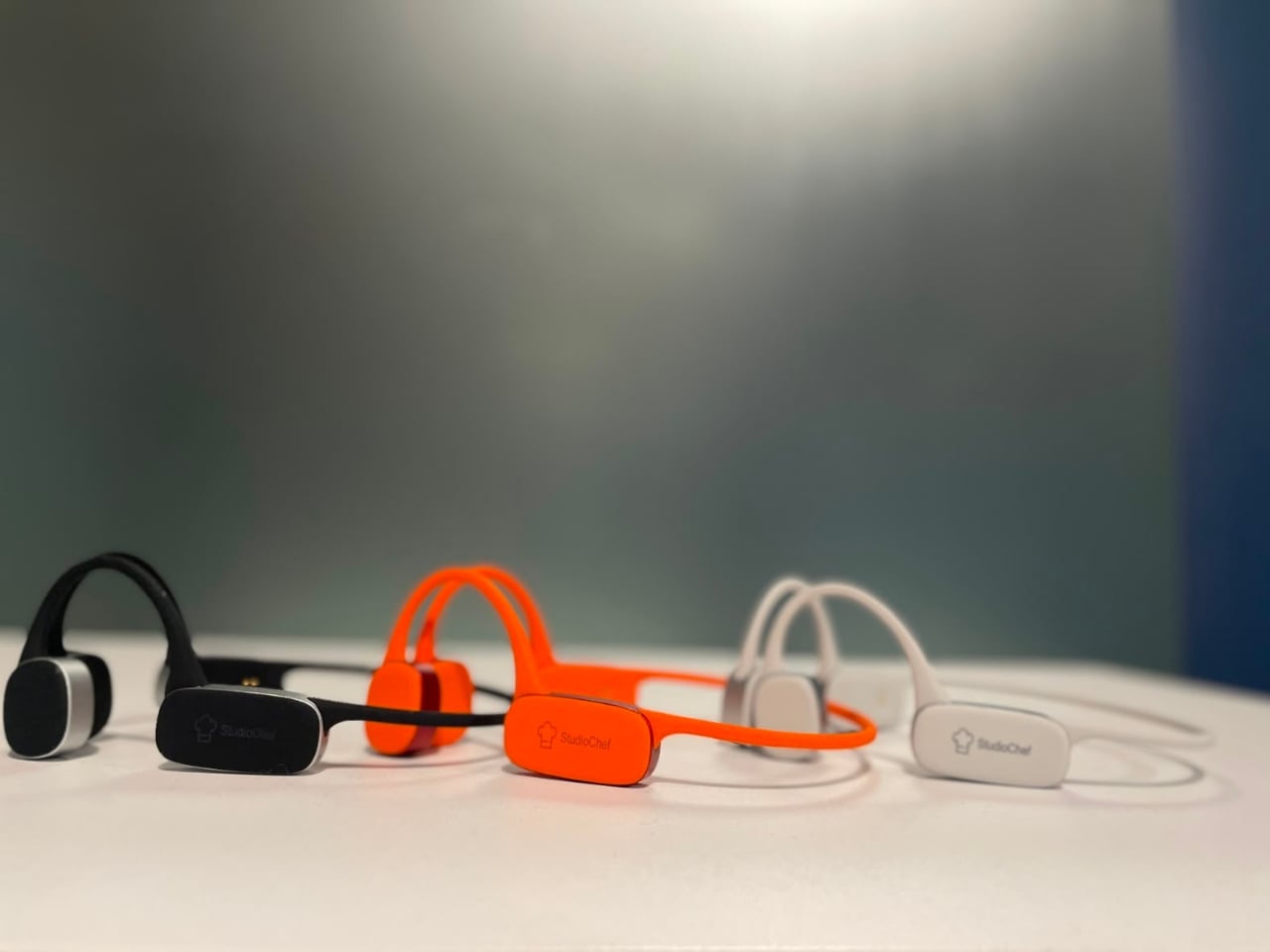

That last part is the design decision I keep thinking about. It would have been easy to build a smart speaker for the kitchen, or another Bluetooth earbud with a voice assistant baked in. But closed ears are a real hazard in a kitchen. You need to hear your environment. Bone conduction is the rare case where the technical choice and the functional choice are exactly the same choice. Reynard didn’t just pick a format. He picked the right one.
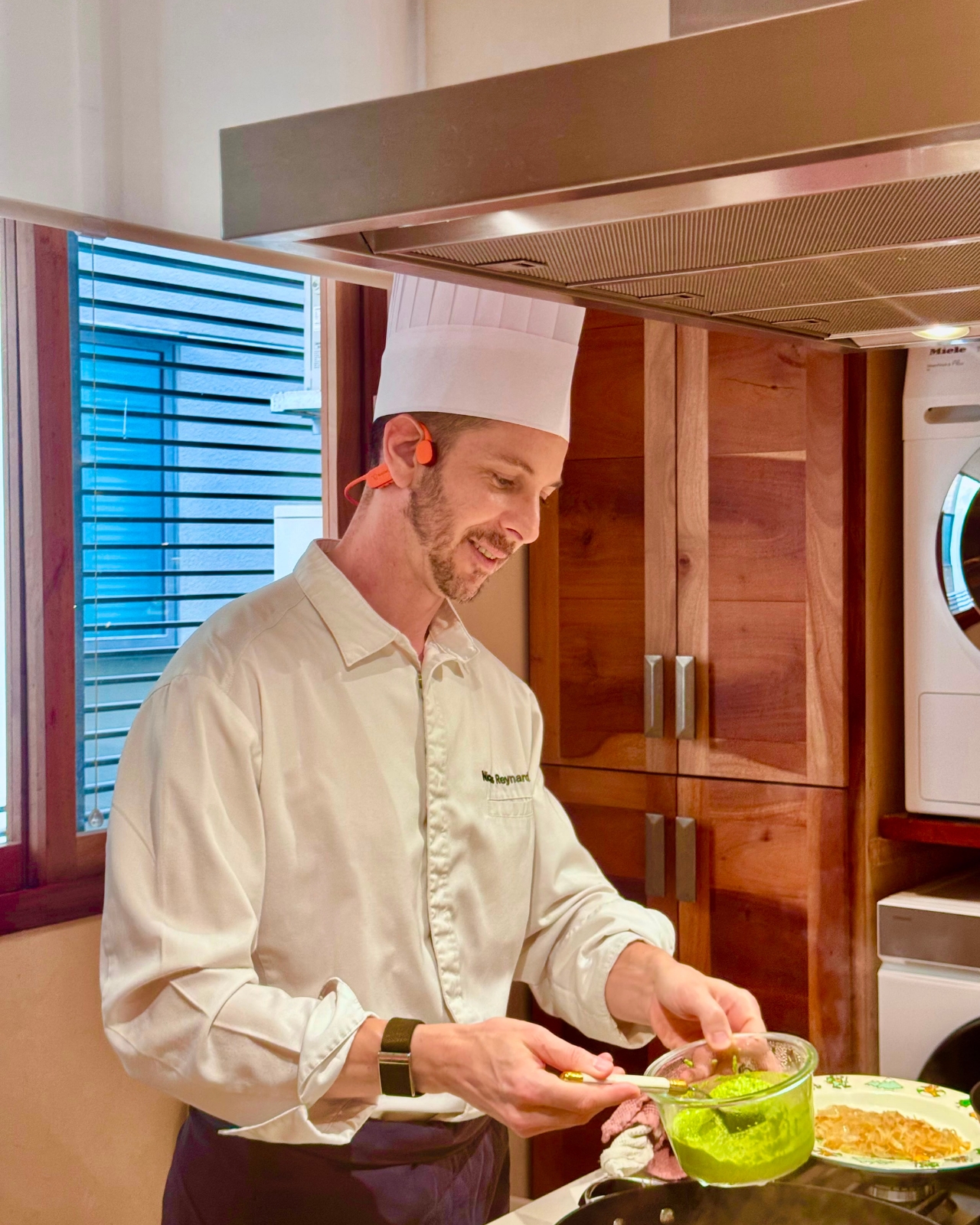

KAI itself handles the things that typically require a second person. It reads recipes aloud, step by step. It runs your timers. It answers questions while your hands are covered in flour or butter or whatever you’ve gotten yourself into. The hands-free part sounds like a small convenience until you’ve ever had to scroll through a recipe on your phone with oily fingers, which is a special kind of frustration that I suspect every home cook has experienced at least once.
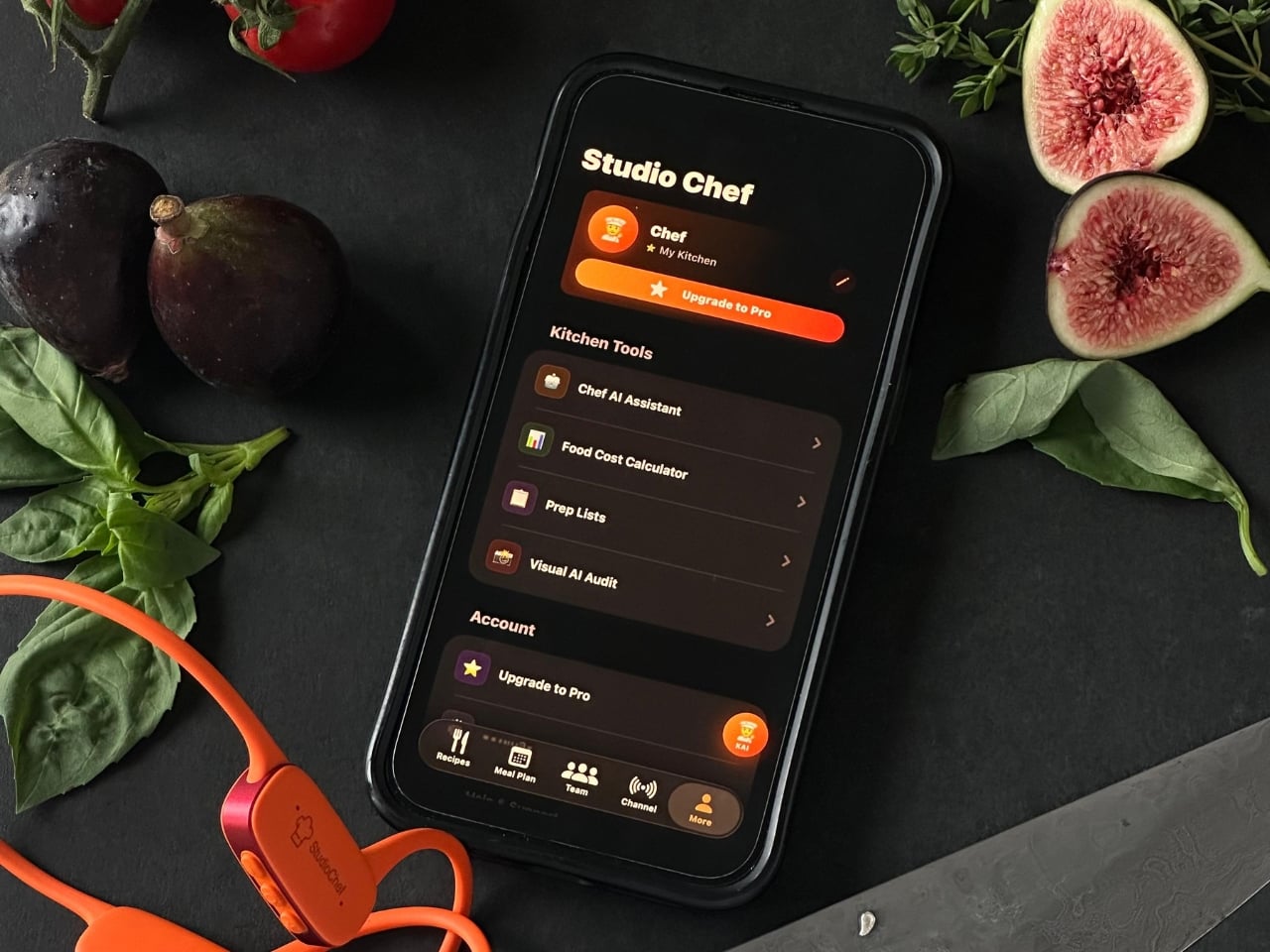
What I appreciate about StudioChef’s approach is how grounded it is. We’re at a moment when AI tools are being layered onto everything, often because they can be rather than because they should be. KAI doesn’t feel like a gimmick. It feels like a problem that was studied for a long time and then solved. The chef-as-designer origin story isn’t marketing fluff; it’s the actual reason the product makes sense. The specificity of the bone conduction choice, the focus on keeping ears open, the voice-first interface that doesn’t require you to look at a screen, these aren’t features a generalist tech team would have landed on. They’re the product of someone who has been standing in a professional kitchen for over two decades and knew exactly what he was missing.
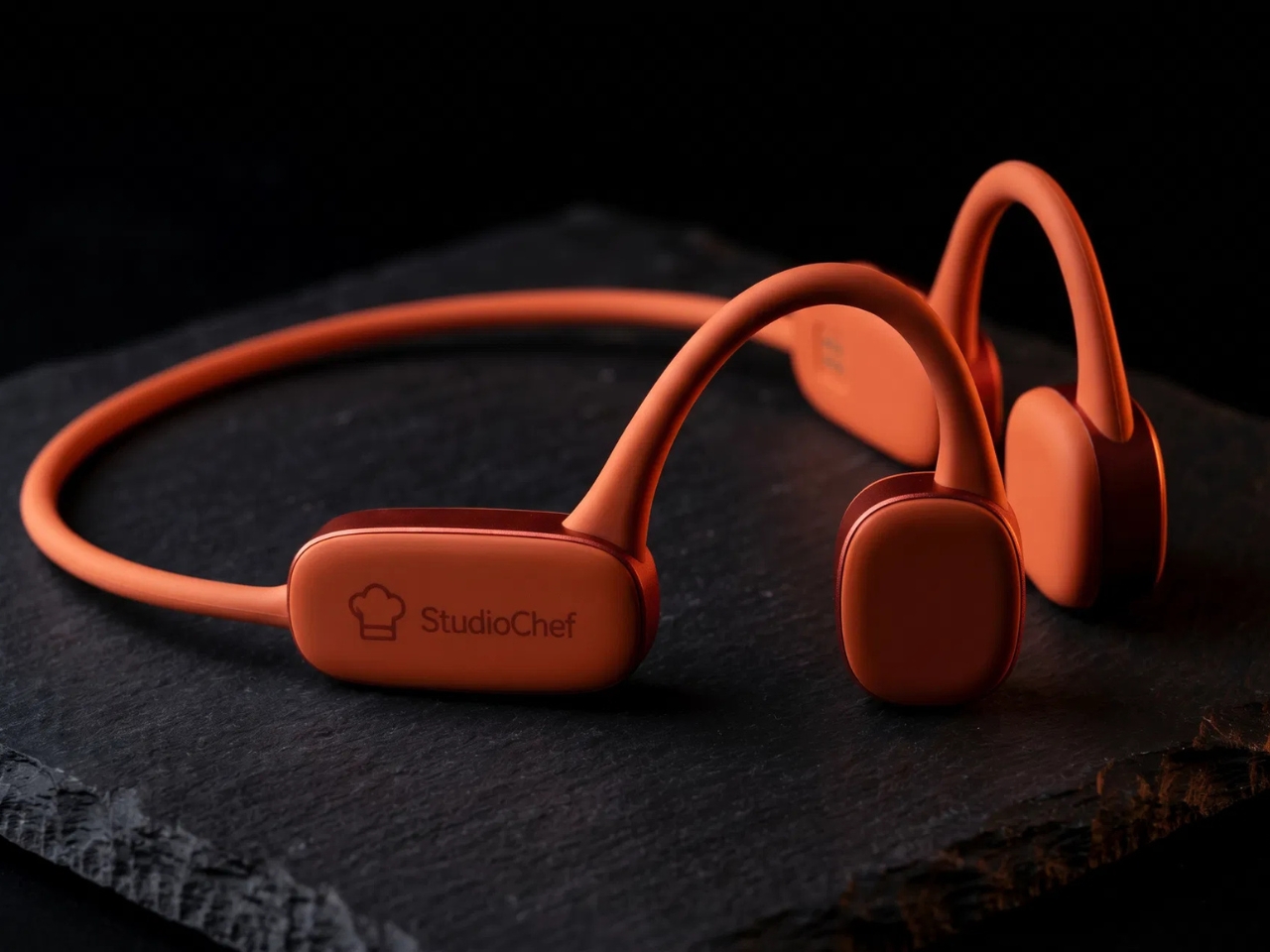
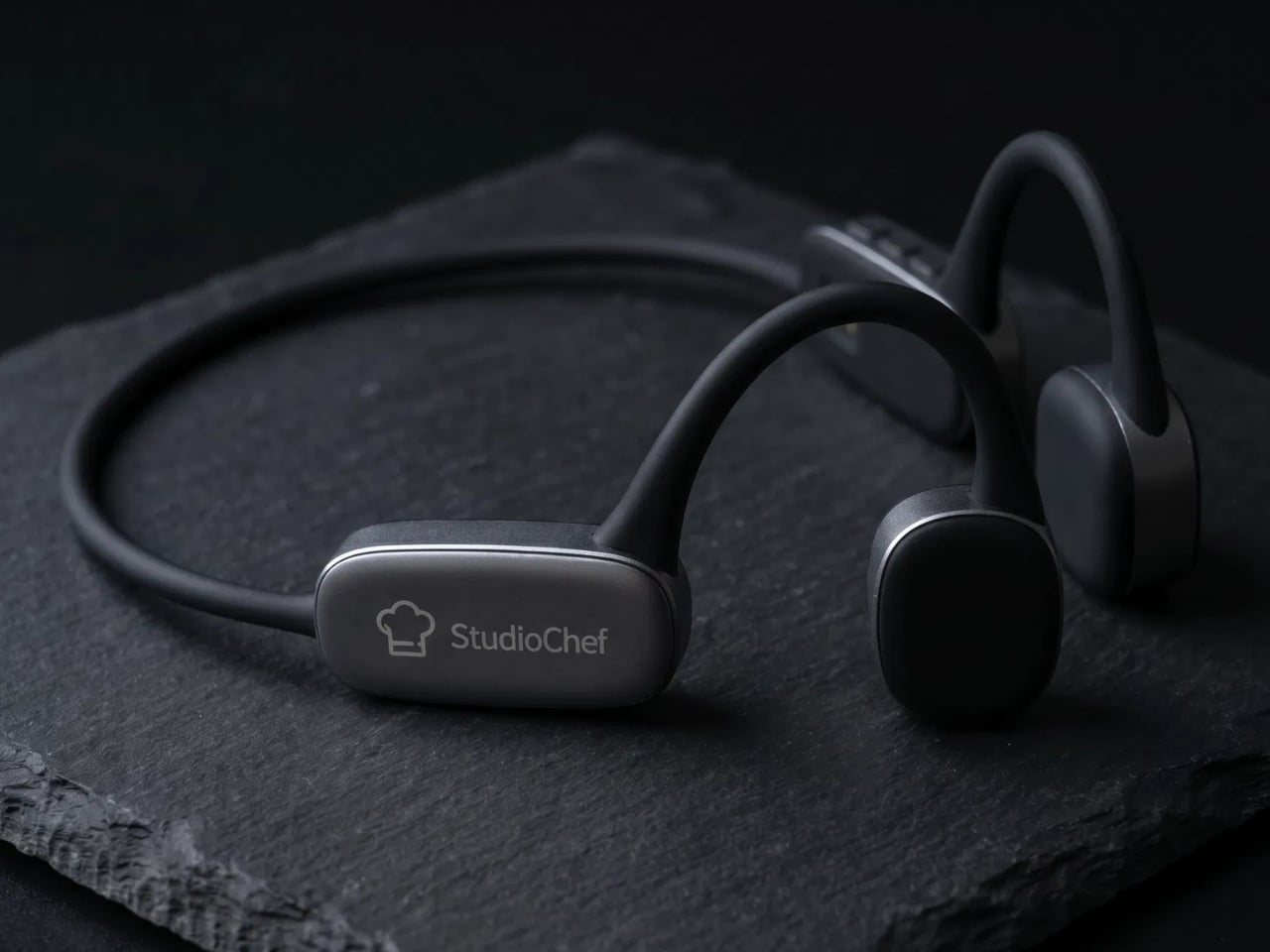
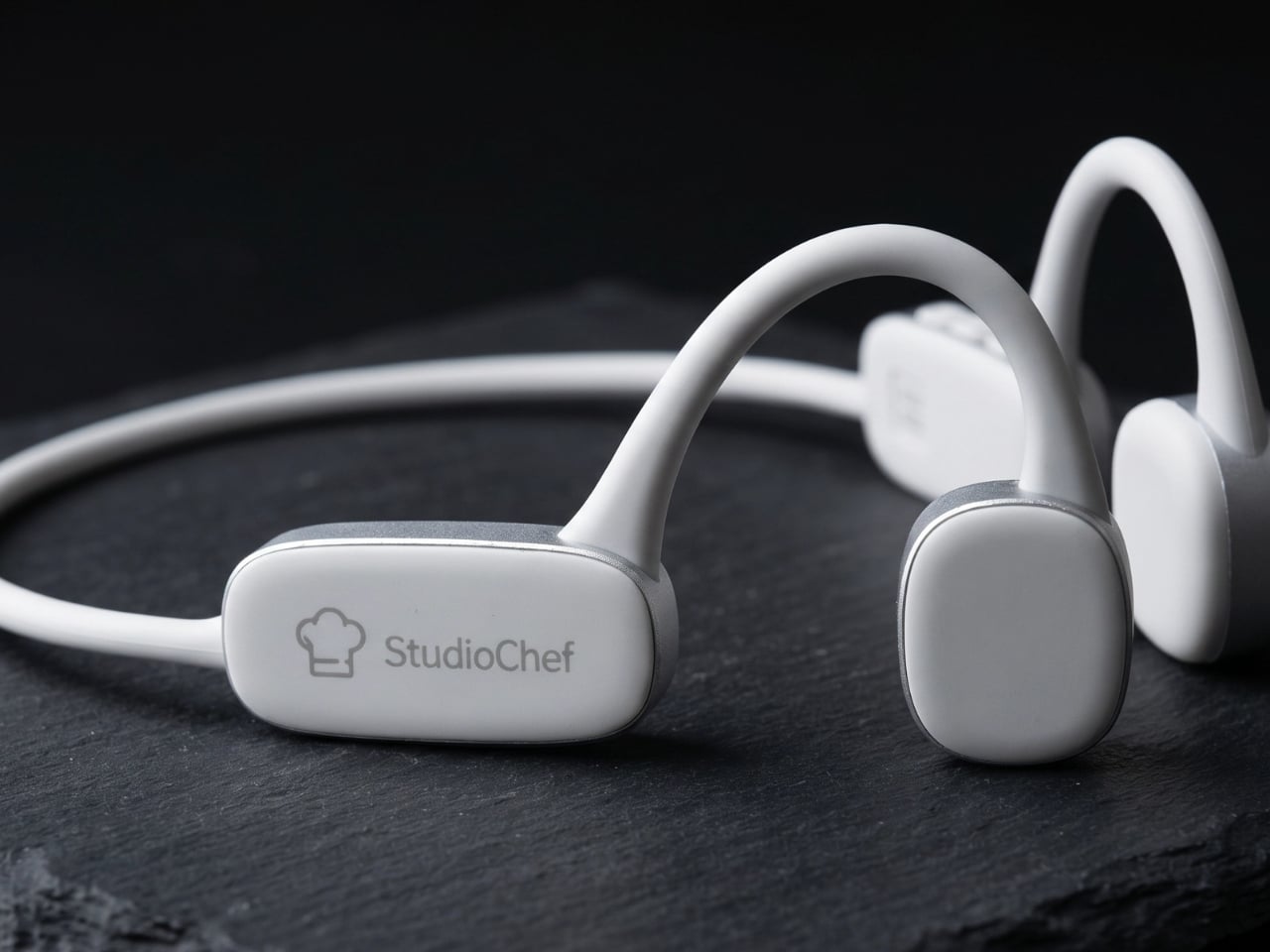
StudioChef KAI is heading to crowdfunding in September, and I’ll be watching it closely. Not because I think AI is the answer to everything happening in food culture right now, but because this is one of the rare cases where the technology actually fits the task. Good design, at its best, makes you wonder how you managed before it existed. A voice in your ear that tracks your recipe, runs your timers, and answers your questions while the rest of your senses stay focused on the food? That’s not a novelty. For anyone who cooks seriously, that might just be the tool they didn’t know they were waiting for.