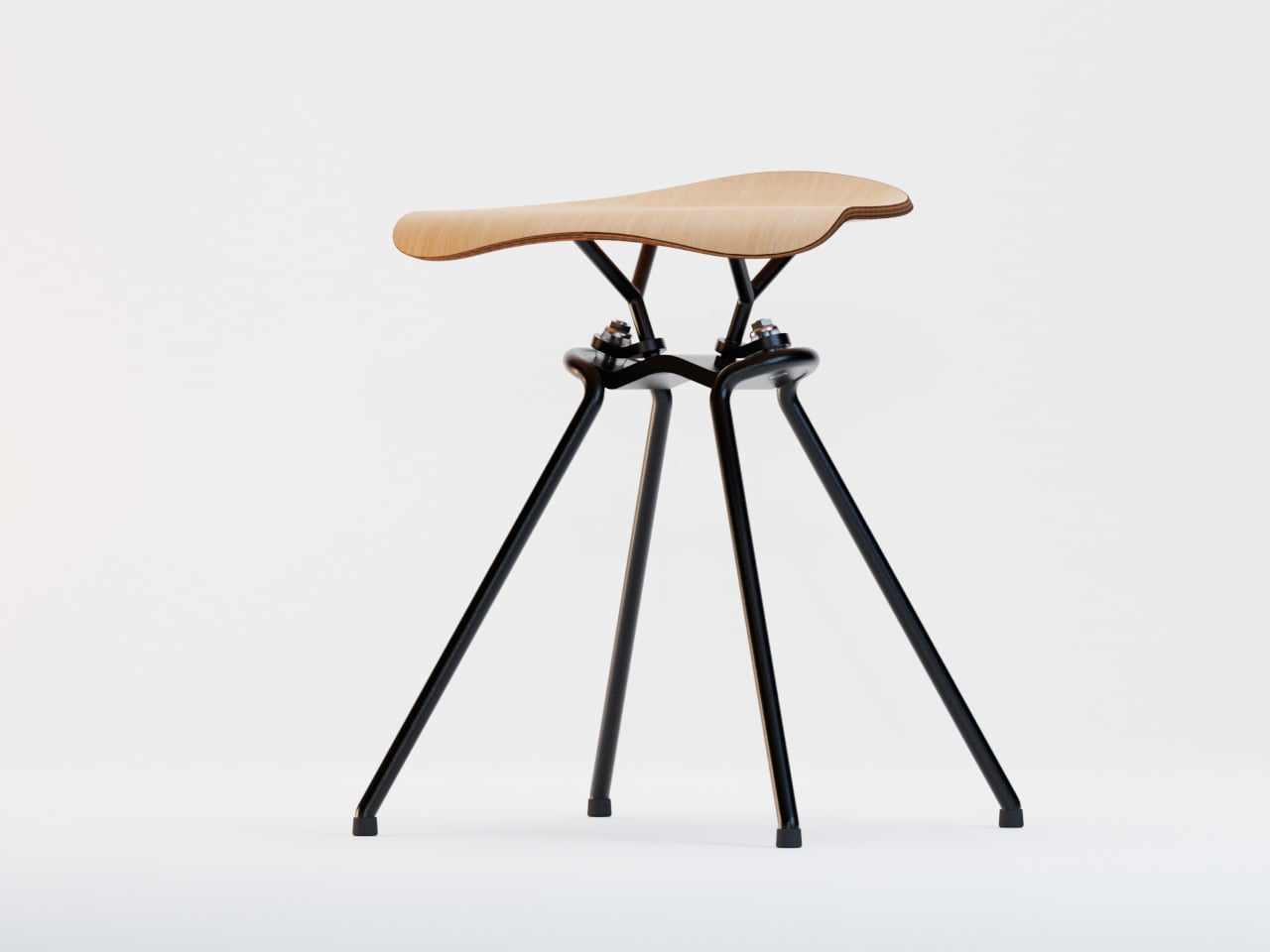

The active sitting market has been trying to solve the same problem for years by adding instability to an otherwise conventional seat. Balance boards, wobble stools, and kneeling chairs attempt to make sitting less sedentary through varying degrees of discomfort and compromise. Most solutions lean toward one extreme: either too unstable for focused work, or barely different from a regular chair once the body learns to compensate.
Ollie is a concept that emerged during the pandemic, when the question of how to stay physically active without leaving home became unusually pressing. Developed in collaboration with Italian furniture brand Magis, it approaches active sitting from an unexpected direction: the same equilibrium-based mechanism that makes a skateboard respond to a rider’s weight shifts turns out to be an ideal platform for a seat that keeps the body in motion.
Designers: Heitor Lobo Campos, Alessia Pinna
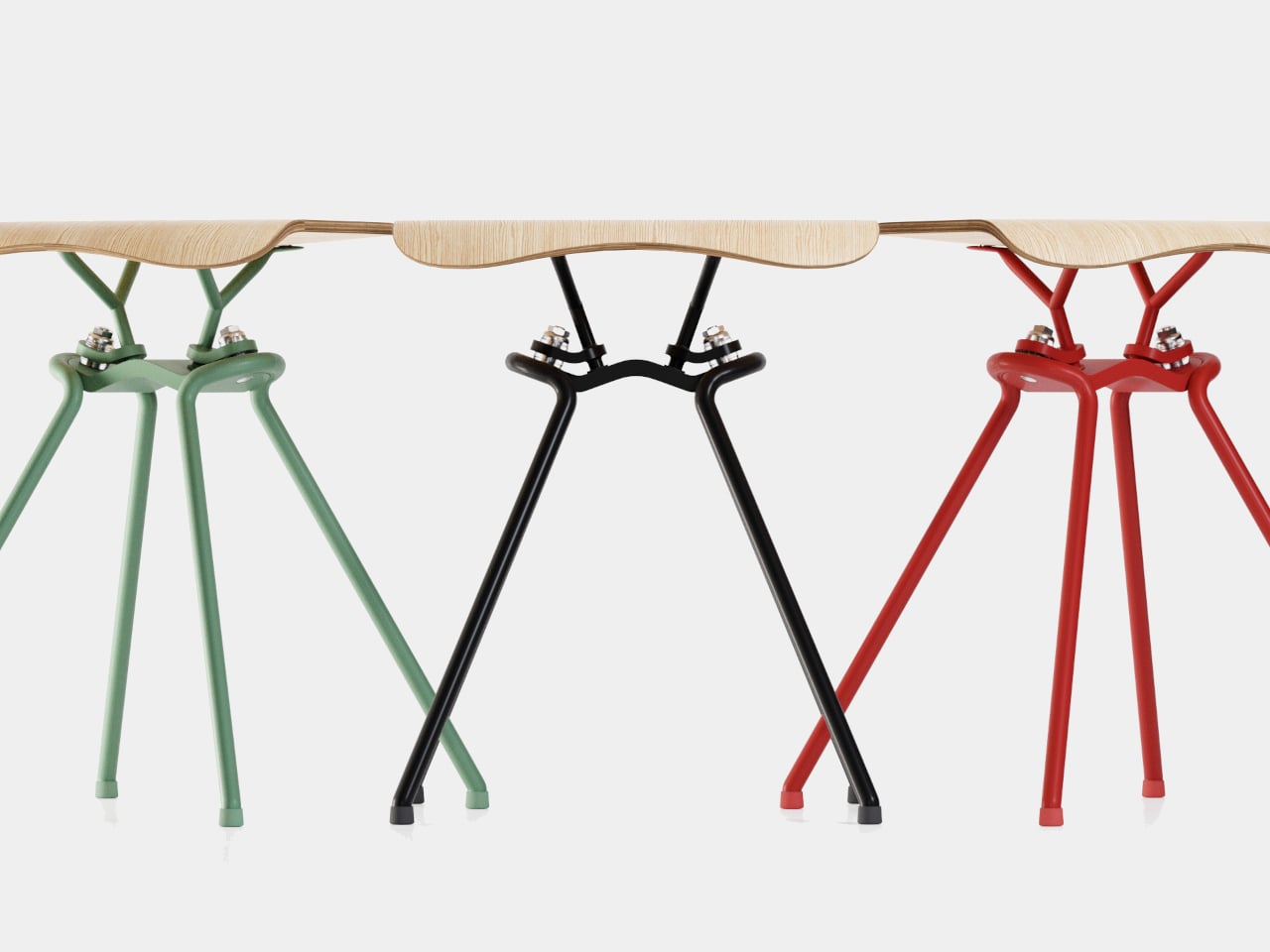
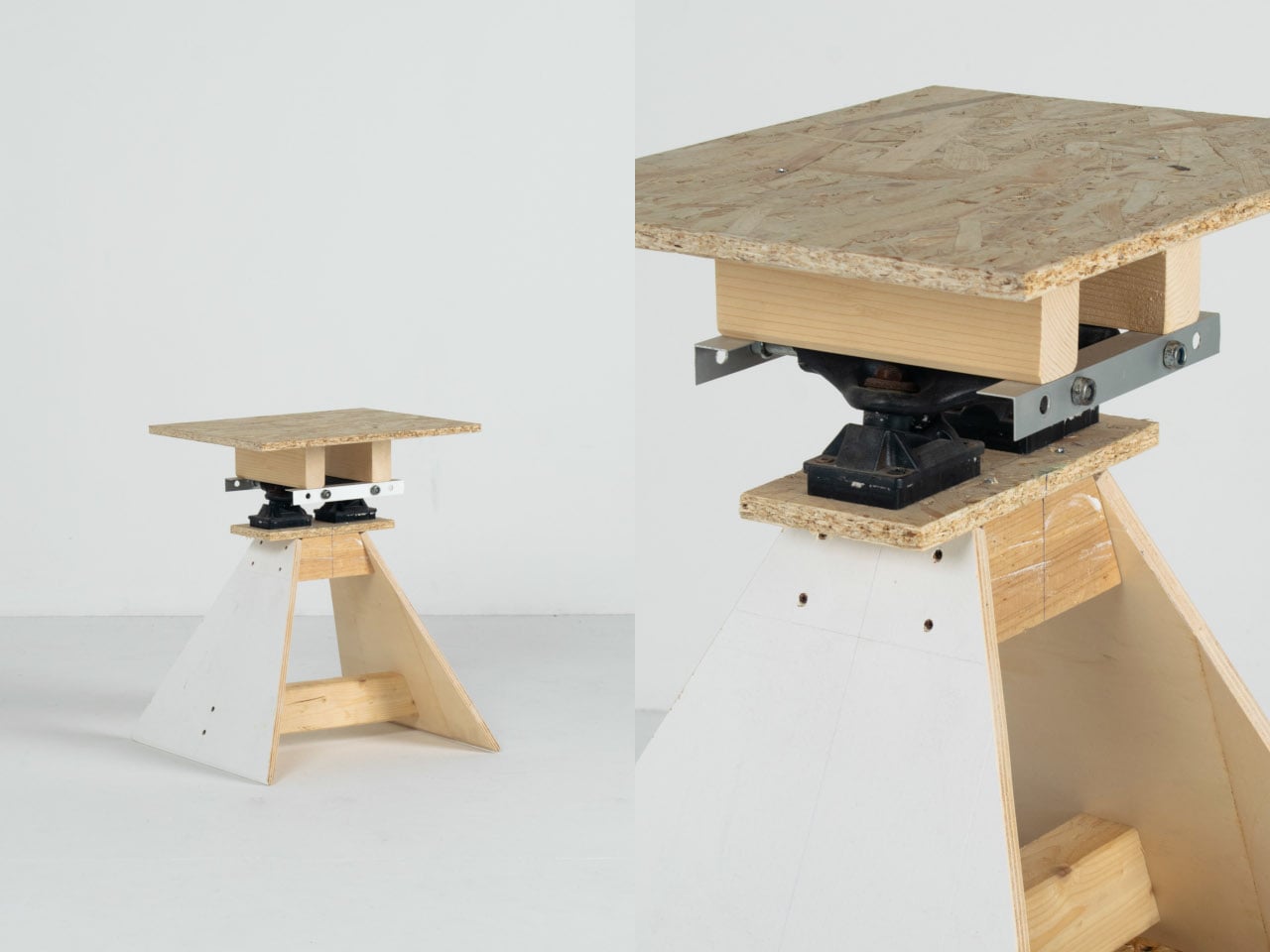
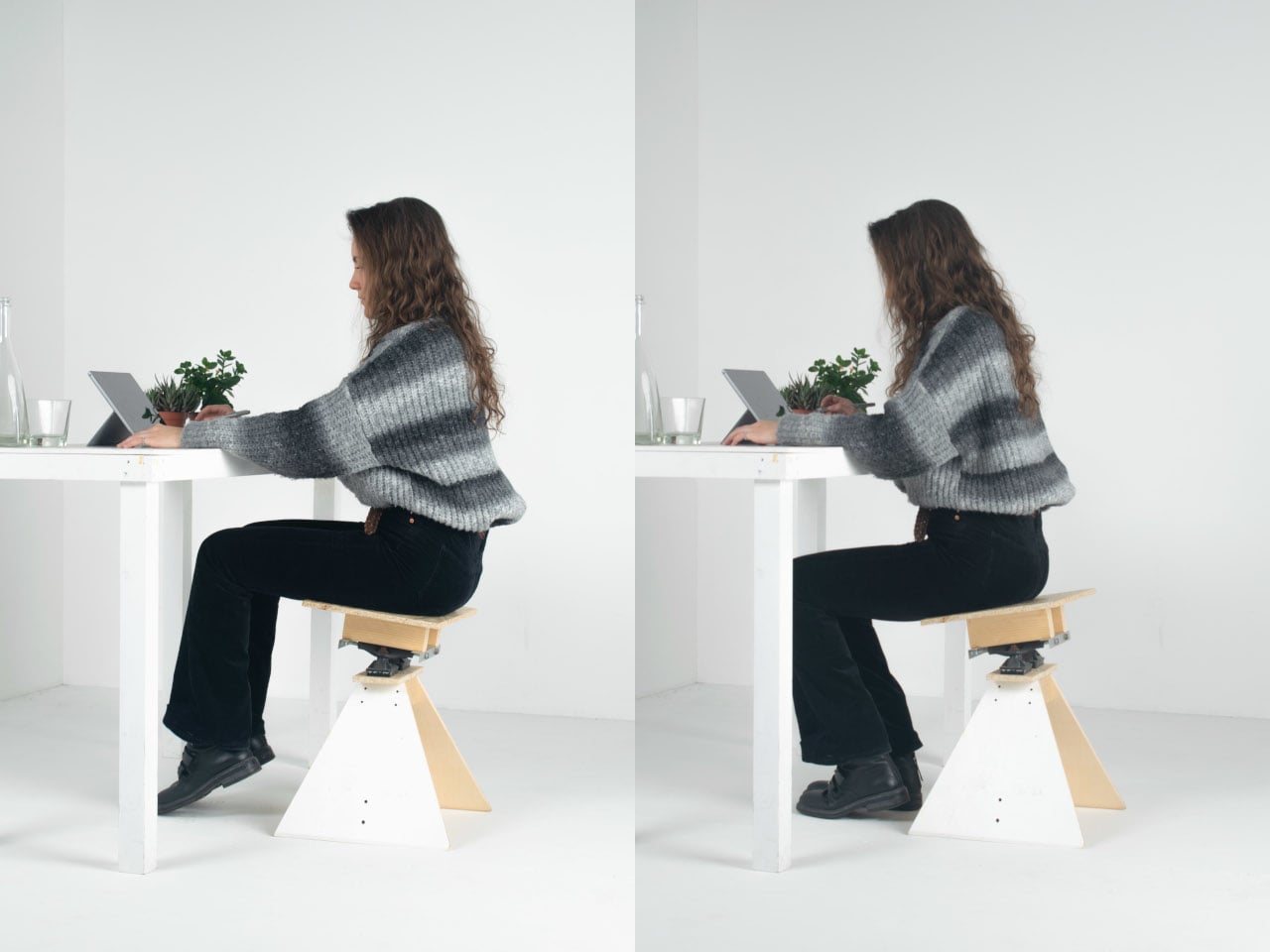
The connection to skateboarding goes beyond metaphor. The mechanism uses two skateboard trucks connected in parallel below the seat, with a central point pivoting on an axis controlled by a bearing. What lets a skateboard maneuver through a turn becomes what lets a seated person shift their weight, tilt, and continuously engage their core without interrupting what they’re working on.
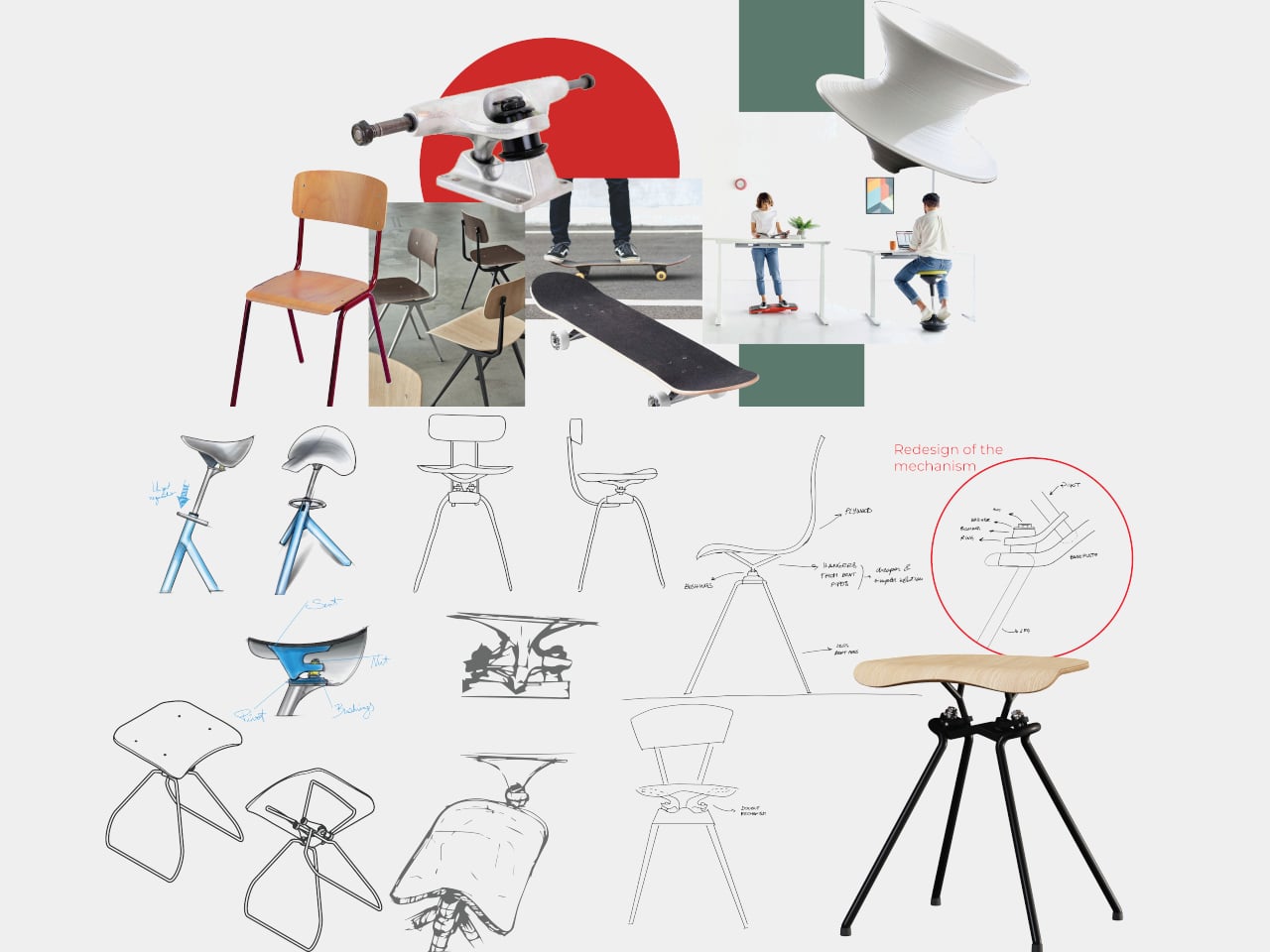
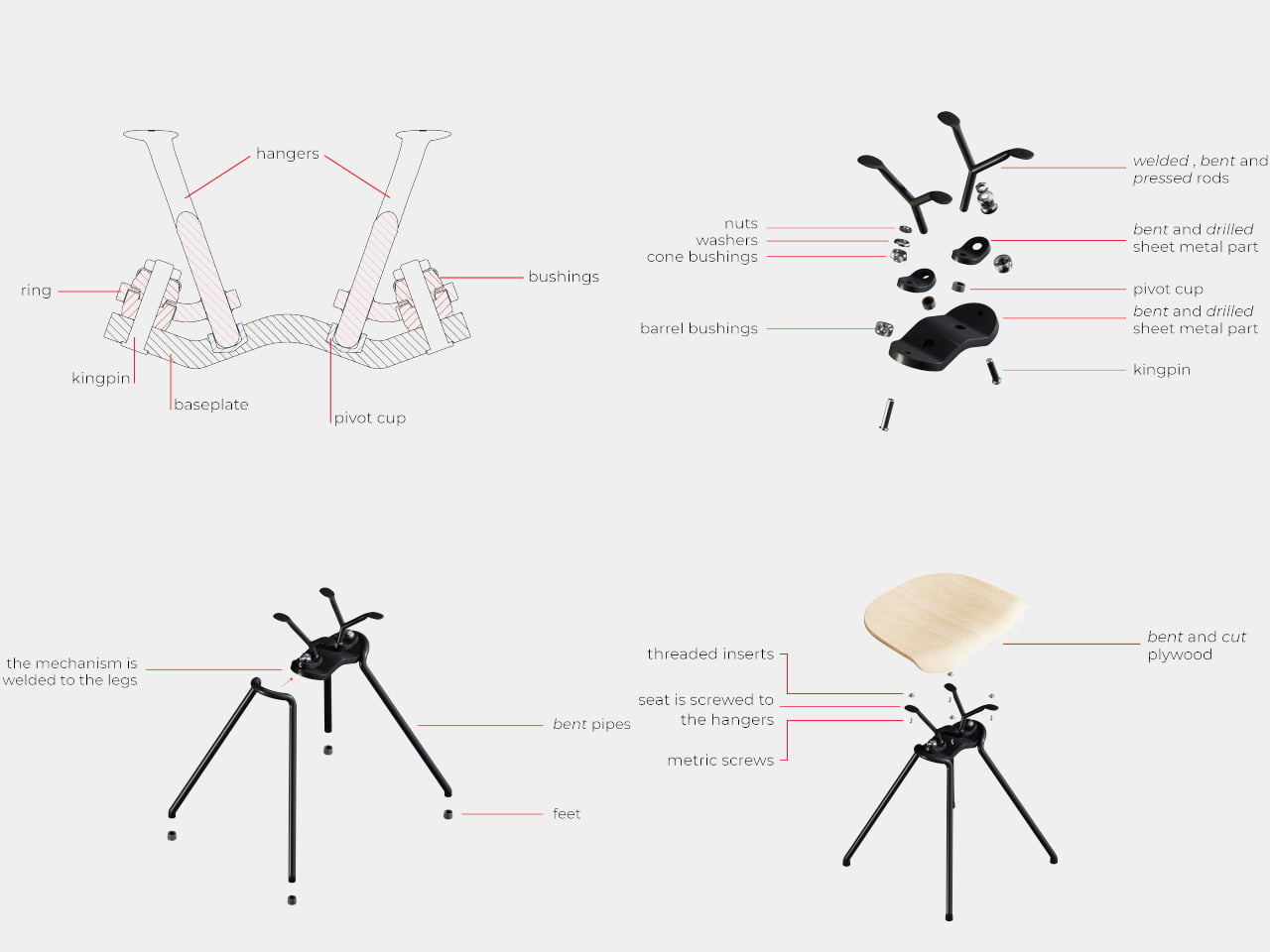
Resistance is tunable. The tightness of the bushings, the rubber rings that skaters adjust to control how stiff or responsive a truck feels, determines how much effort the seat requires to tilt. Tighten them for a more stable platform that still allows movement; loosen them for a seat that demands continuous micro-adjustments. That range makes Ollie adaptable to different users and different tasks without changing anything fundamental about the design.
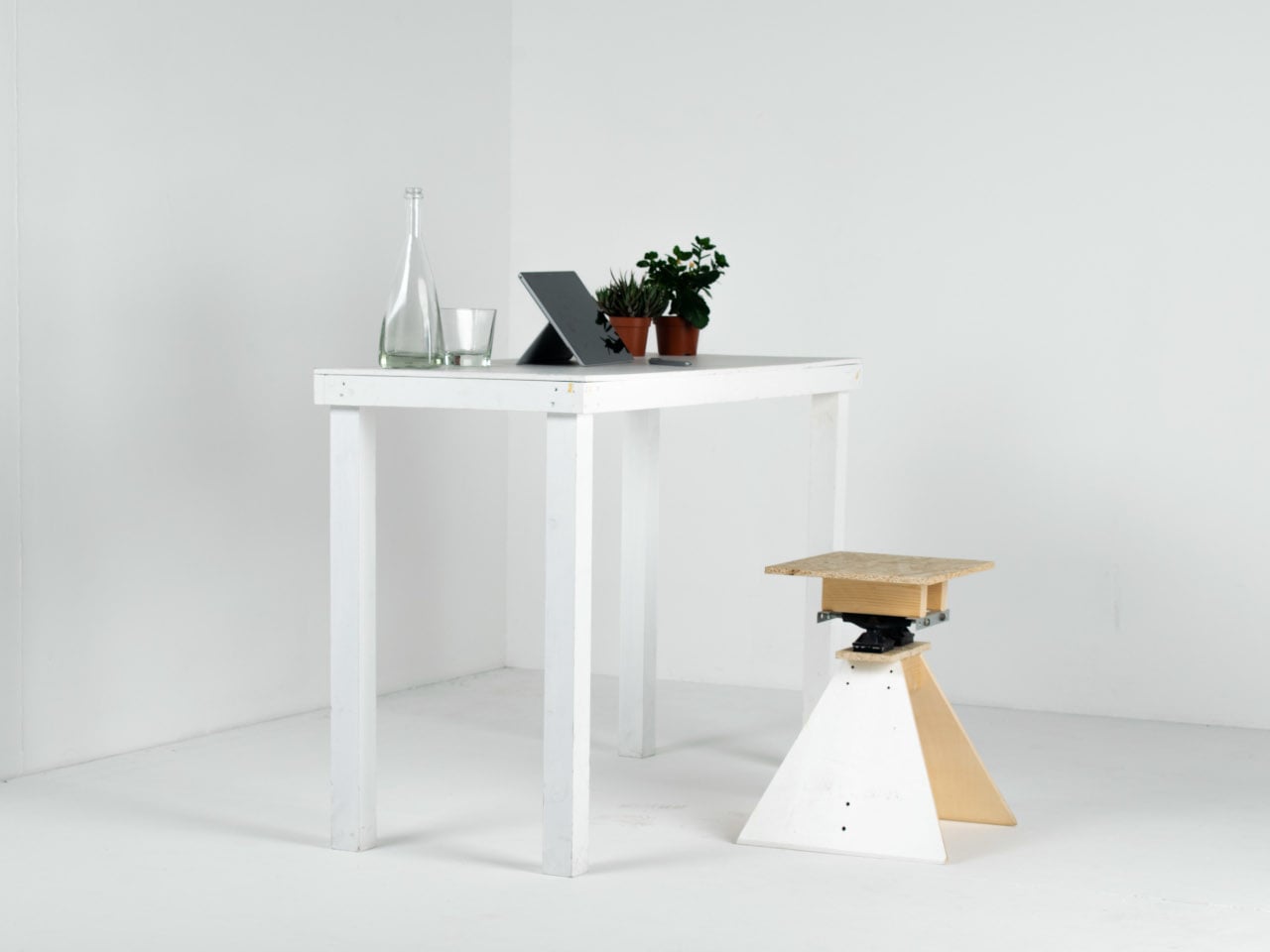
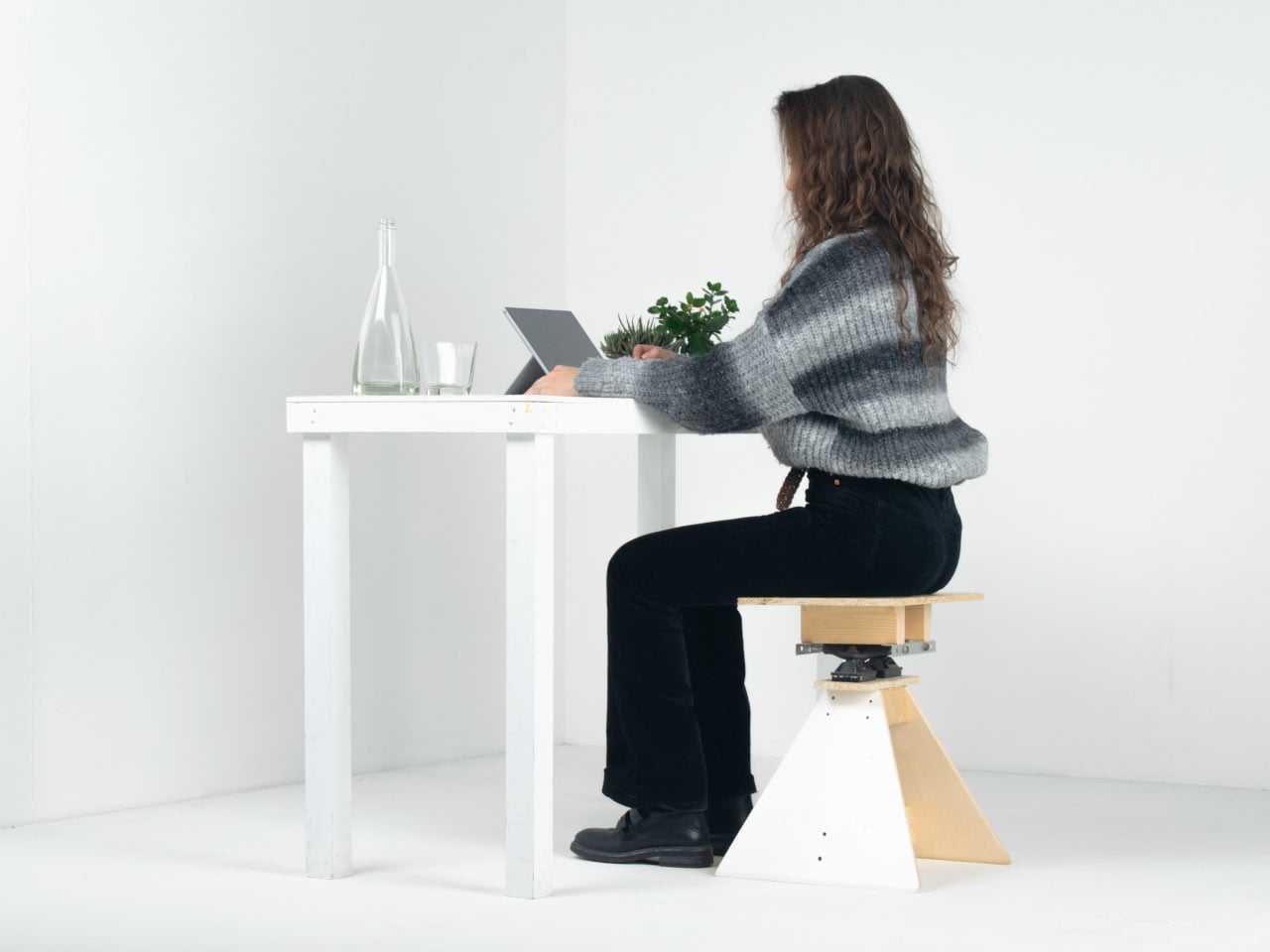
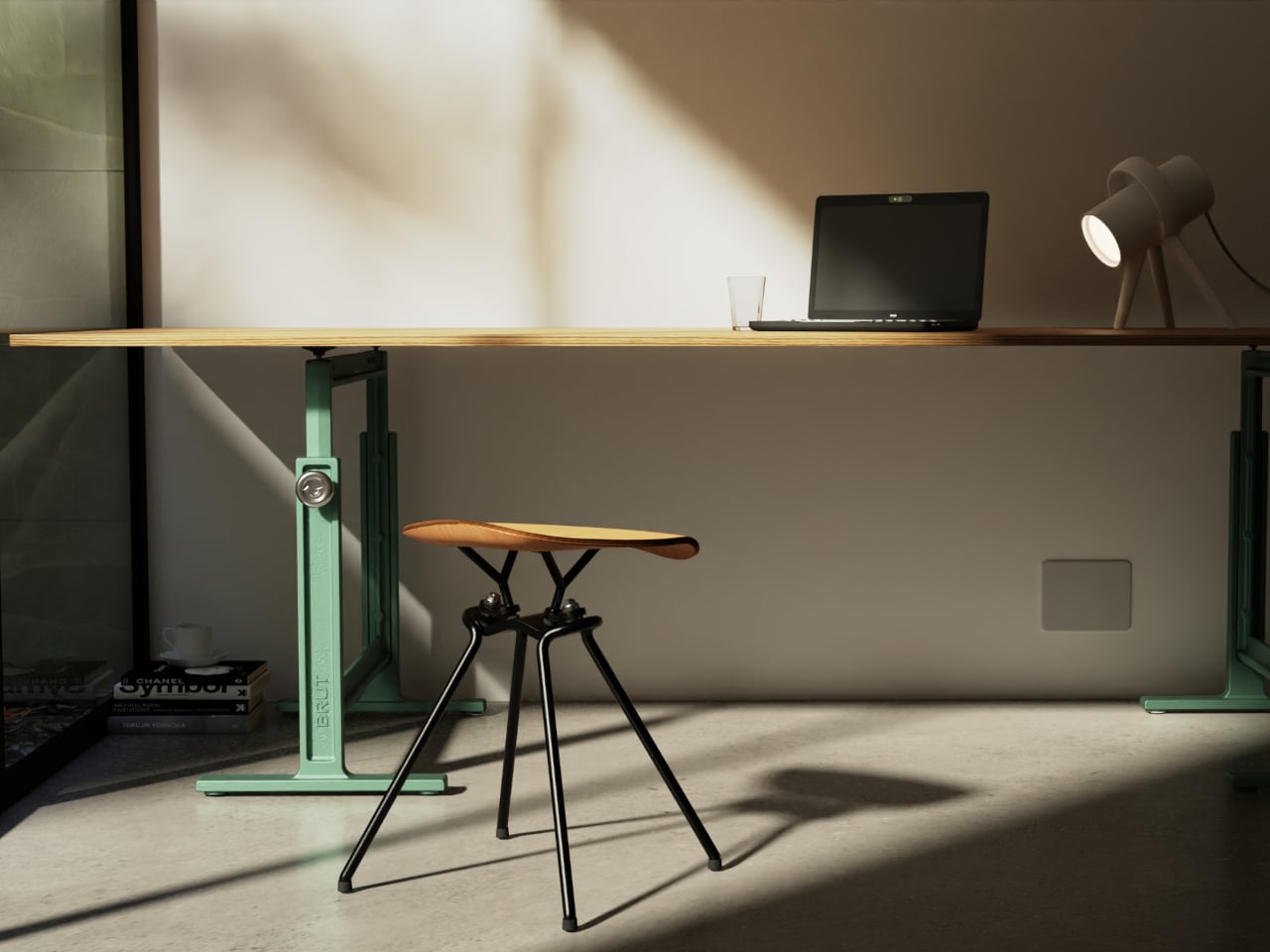
At a standing-height desk, Ollie puts the body in a middle position between sitting and standing, where the core and lower back engage in small amounts of stabilizing work throughout the session. The movement it introduces isn’t dramatic; it’s subtle enough that focus on work isn’t interrupted, but persistent enough that it adds up over the course of a day, particularly for anyone spending several hours at a screen.
The seat is a bent plywood saddle that screws to the truck hangers through threaded inserts, making it removable with standard metric fasteners. The base uses bent steel pipes welded to the mechanism, keeping the frame visually minimal despite the mechanical complexity at its center. Three colorways, green, black, and red, give the frame character that ergonomic seating rarely attempts, preferring to disappear behind neutral plastics and black foam.
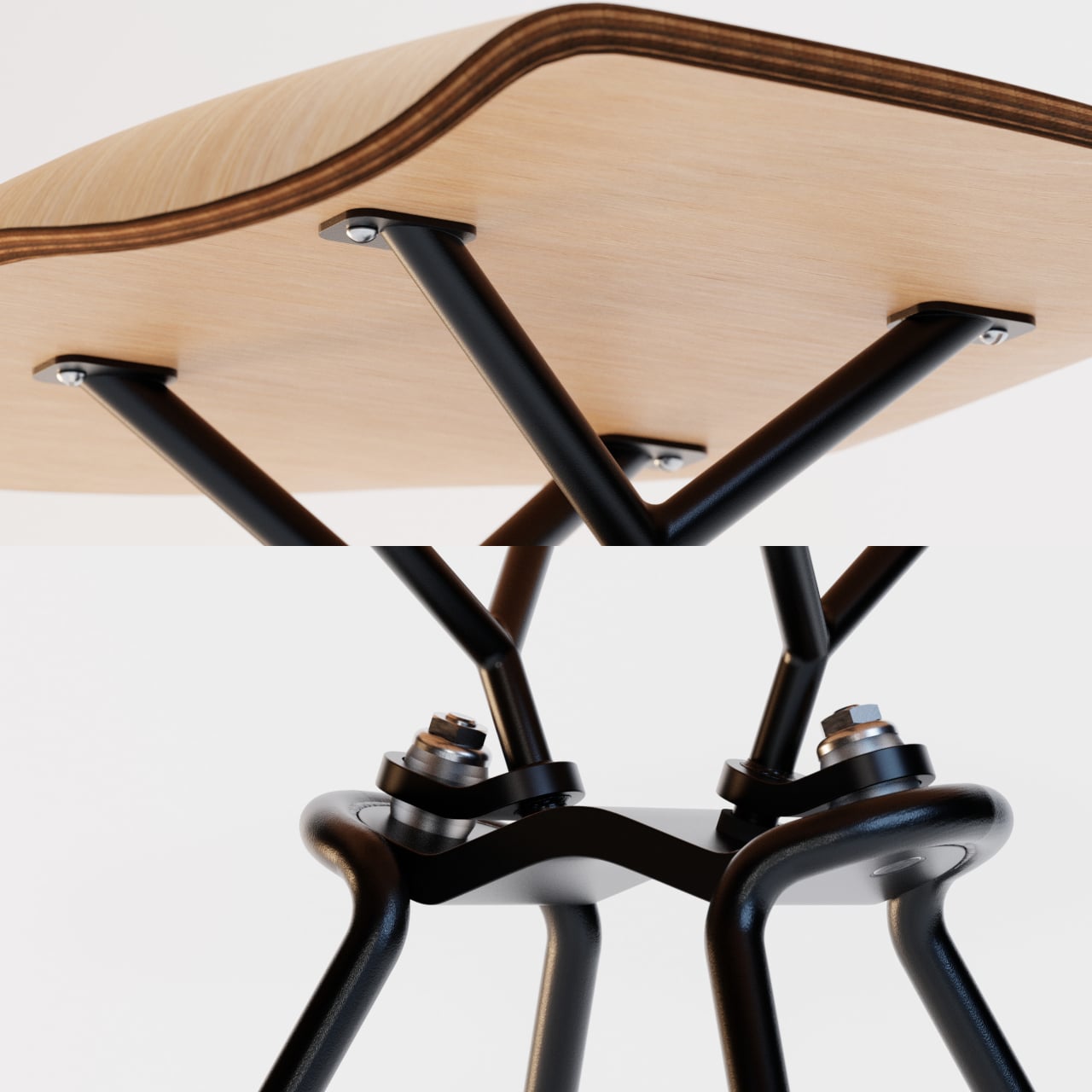

Repairability is a design principle rather than an afterthought. Every component on the Ollie can be removed and replaced individually, mirroring how skateboard culture has always approached maintenance. A worn bushing or a cracked seat doesn’t require replacing the whole stool, only the failed part. That approach extends the product’s useful life considerably without adding design complexity, and keeps manufacturing costs down on components that see the most stress.
The name explains the concept more precisely than most product names manage. An ollie in skateboarding is the foundational jump, the first trick a skater learns and the prerequisite for everything that follows. The same equilibrium-based logic that gives a skateboard its flexibility in maneuvering gives Ollie its range of active response, which is a more direct lineage than most furniture carries from its sources of inspiration.