Dedicated e-bikes have become a convincing answer to the urban commuting question, but they come with their own set of problems. They’re expensive to buy, awkward to carry on public transit, and they make the bike itself the investment rather than the ride. For anyone who already has a bicycle they like, replacing it entirely to gain electric assist has always felt like the wrong solution to a solvable problem.
The ASUS Oxiis E250G1 takes a different approach. Instead of replacing a bike, it adds to one. The unit clamps directly to the seatpost, pressing a motorized roller against the rear tire, and the friction-drive mechanism converts pedaling into electrically assisted riding without touching the existing drivetrain. Installation doesn’t require tools or a visit to a shop, and removal takes about the same amount of time.
Designer: ASUS
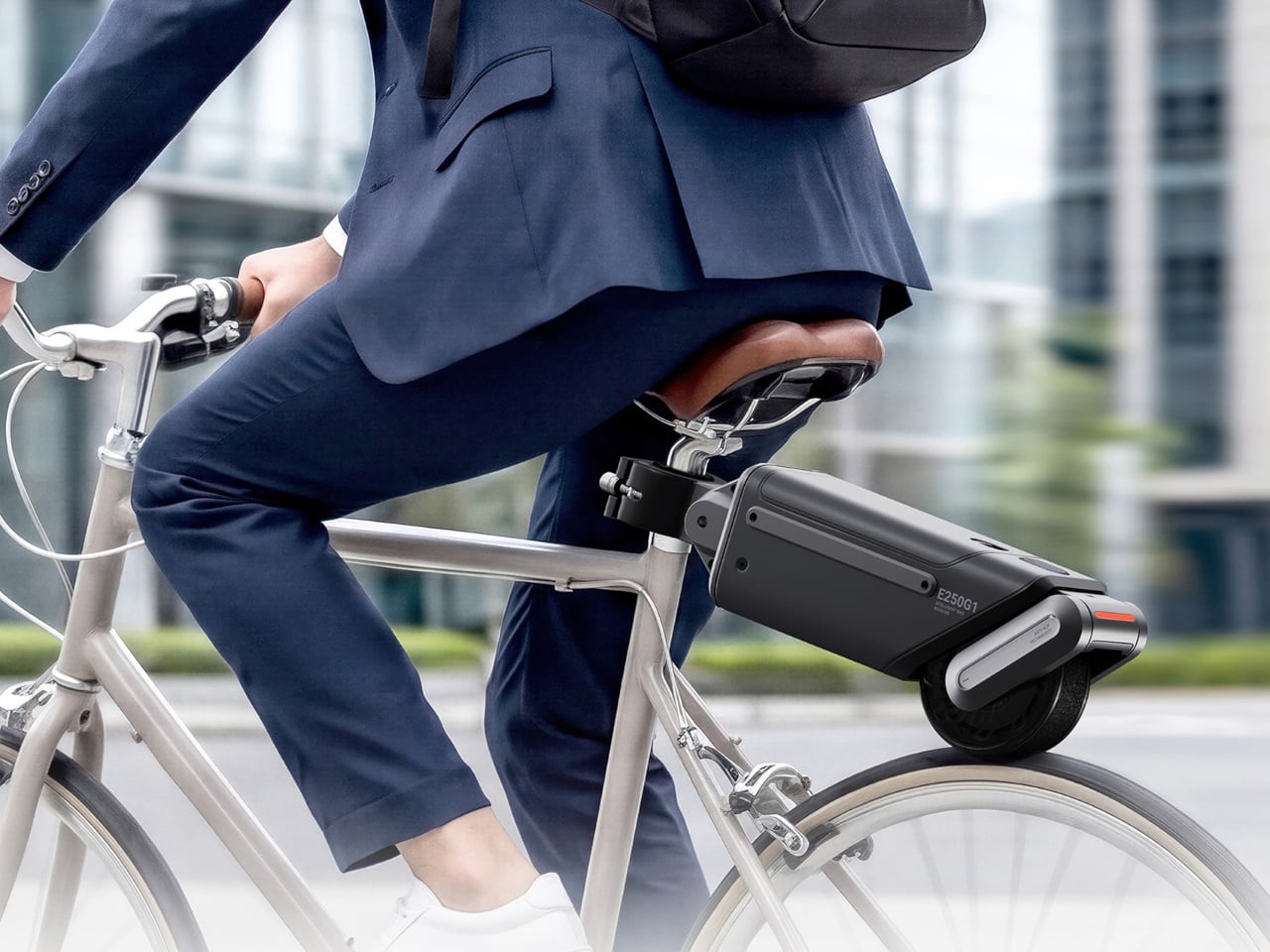

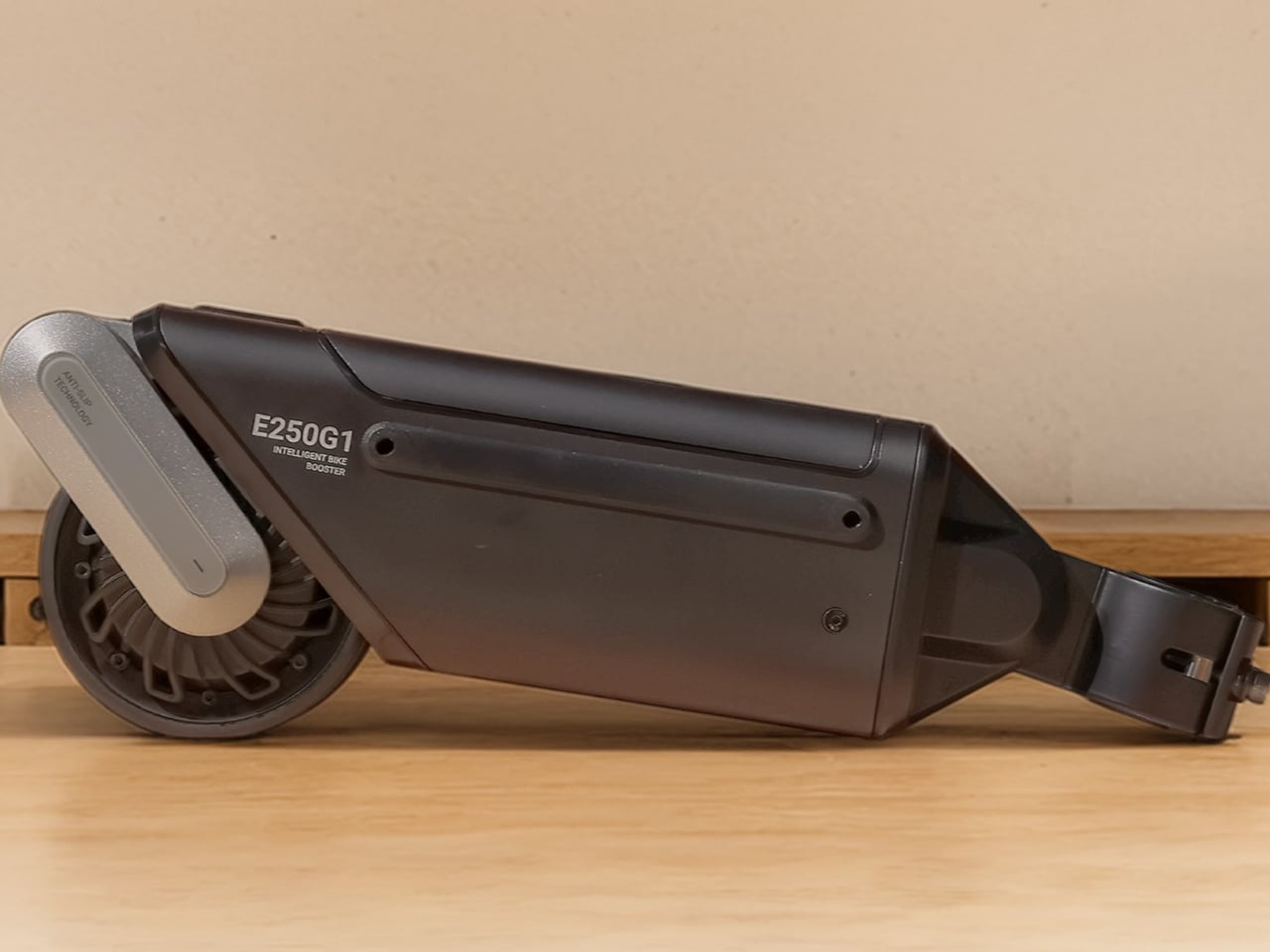
At the heart of the system is Adaptive Boost Technology, which reads the terrain and automatically increases power on climbs or against headwinds. Riders can also select between Eco, Normal, and Sport modes manually, either through a button on the unit itself or via the companion app on Android and iOS. Sport mode keeps range to about 10 km; Eco mode extends it to 50 km on a single charge.
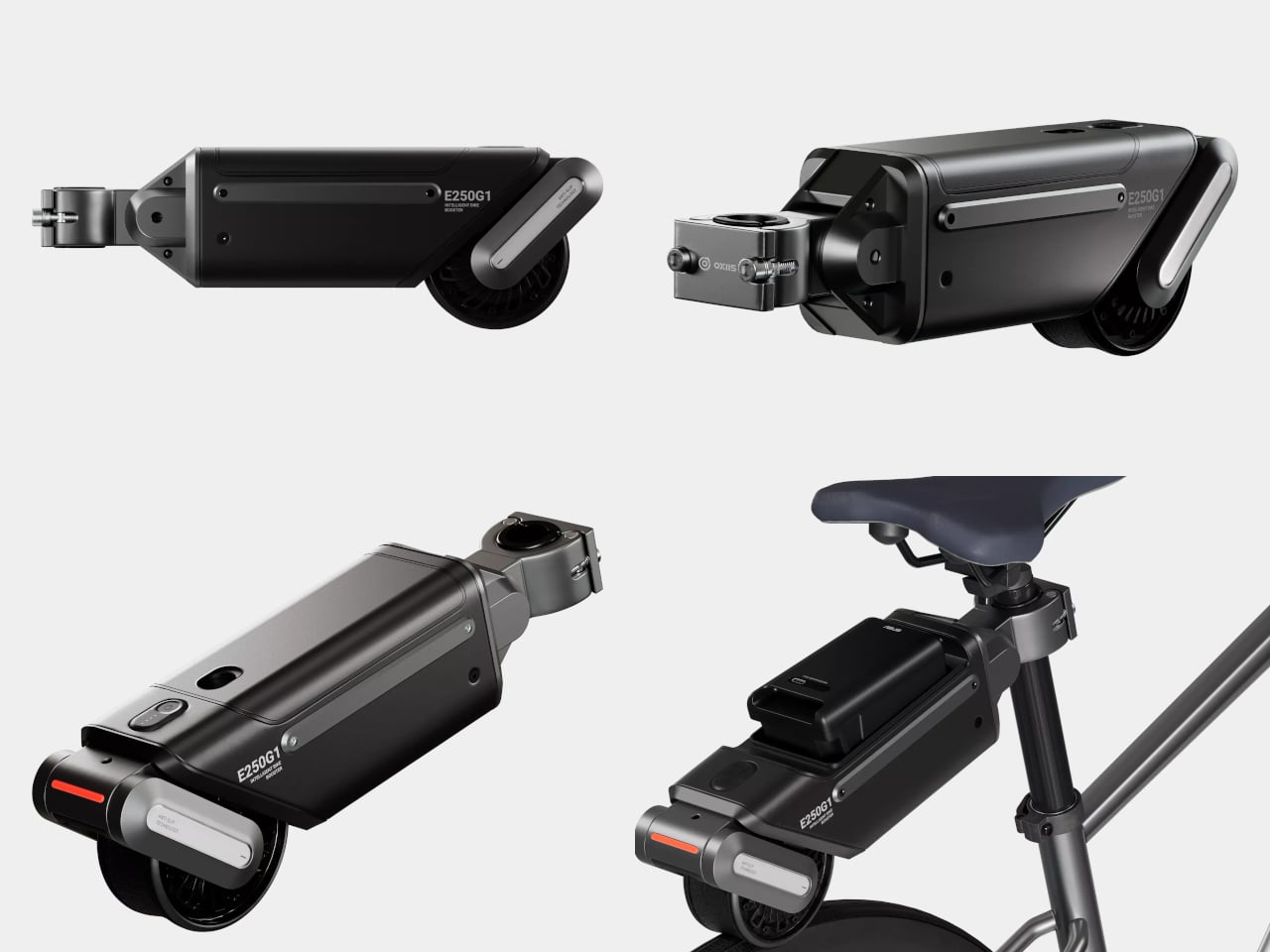
That 50km ceiling comes from a 158.4Wh battery rated at 36V, which charges to full in two hours using a 100W USB-C PD connection. The battery is removable and certified as flight-safe for carry-on luggage with airline approval, which opens up a category of travel where bringing an electric bike along typically requires checking oversized bags or renting locally. A round trip on a familiar bike instead of a rental changes the experience considerably.
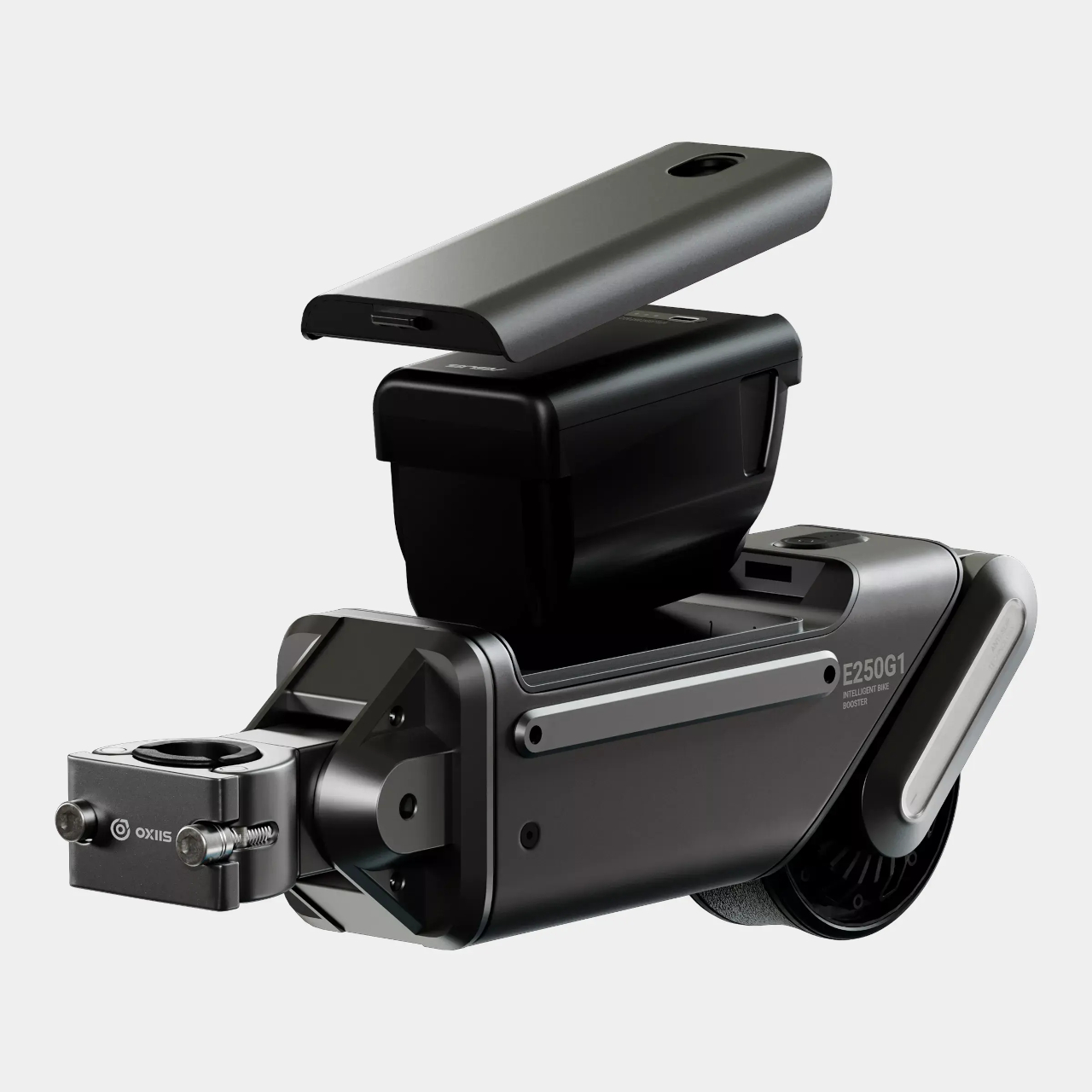

The anti-slip mechanism keeps the roller seated against the tire consistently, even over uneven surfaces, so power delivery stays smooth rather than intermittent under load. The unit weighs 3.7kg with the battery in place, puts out 250W rated and 500W at peak, and tops out at 32km/h. A built-in tail light uses brake detection to signal the rider slowing down to anyone behind, which is one of those small safety details that matters more in traffic than spec sheets tend to convey.

Compatibility stretches across most city, road, gravel, folding, and hardtail mountain bikes, fitting wheel sizes from 16 inches up to 700C. Full-suspension frames and carbon fiber seatposts are the noted exceptions, which rule out a portion of higher-end mountain bikes. For slick, semi-slick, and textured tires, the roller has enough grip to handle regular commuting conditions; knobby off-road tires aren’t recommended for obvious reasons.
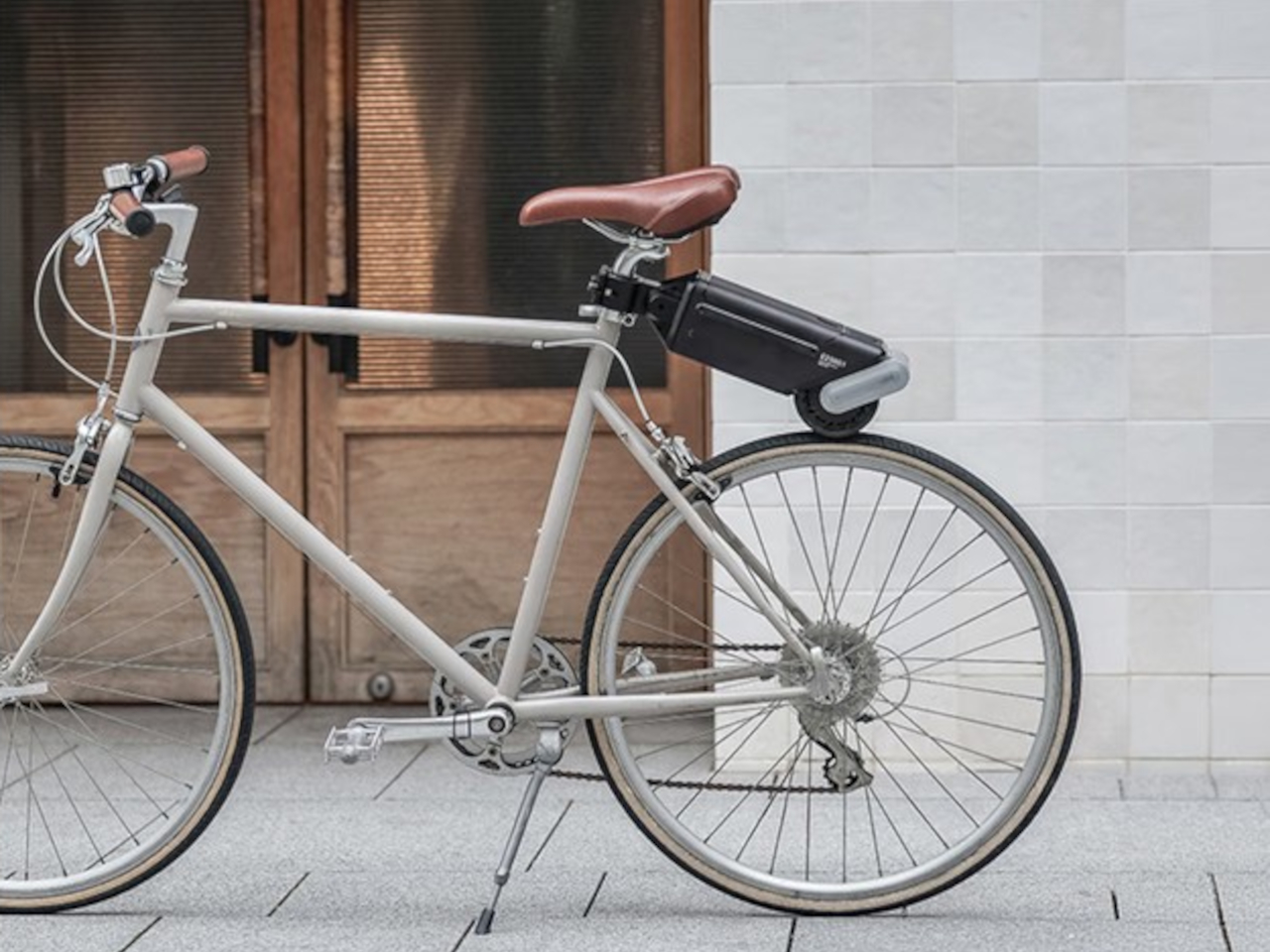
When the ride ends and the commuter reaches their destination, the Oxiis comes off the bike and goes into a backpack. That portability reframes what an e-bike conversion kit can mean: not a permanent modification that commits the bike to one configuration, but a system that travels with the rider and attaches only when the assist is wanted. The bike stays as it is the rest of the time.