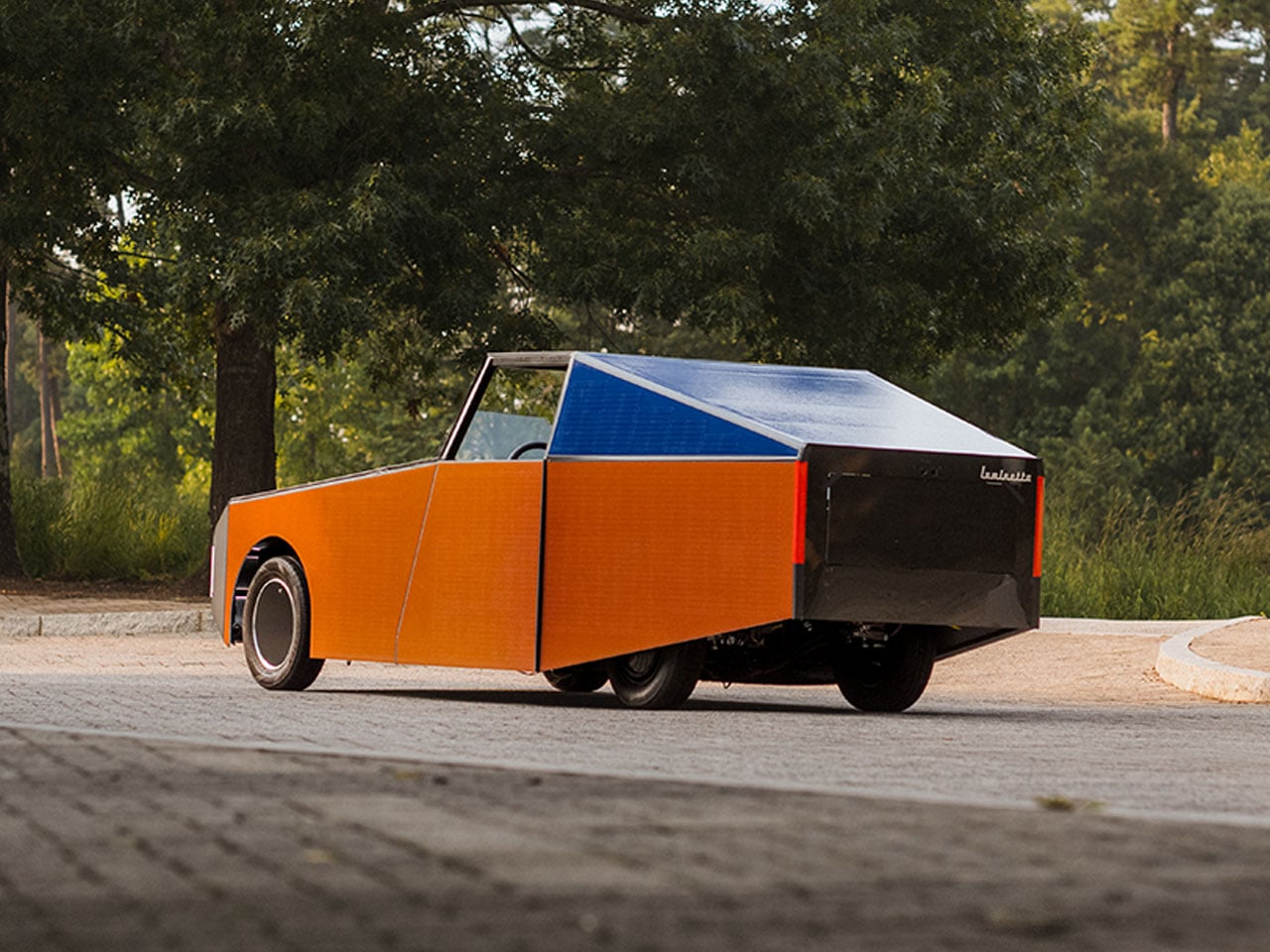
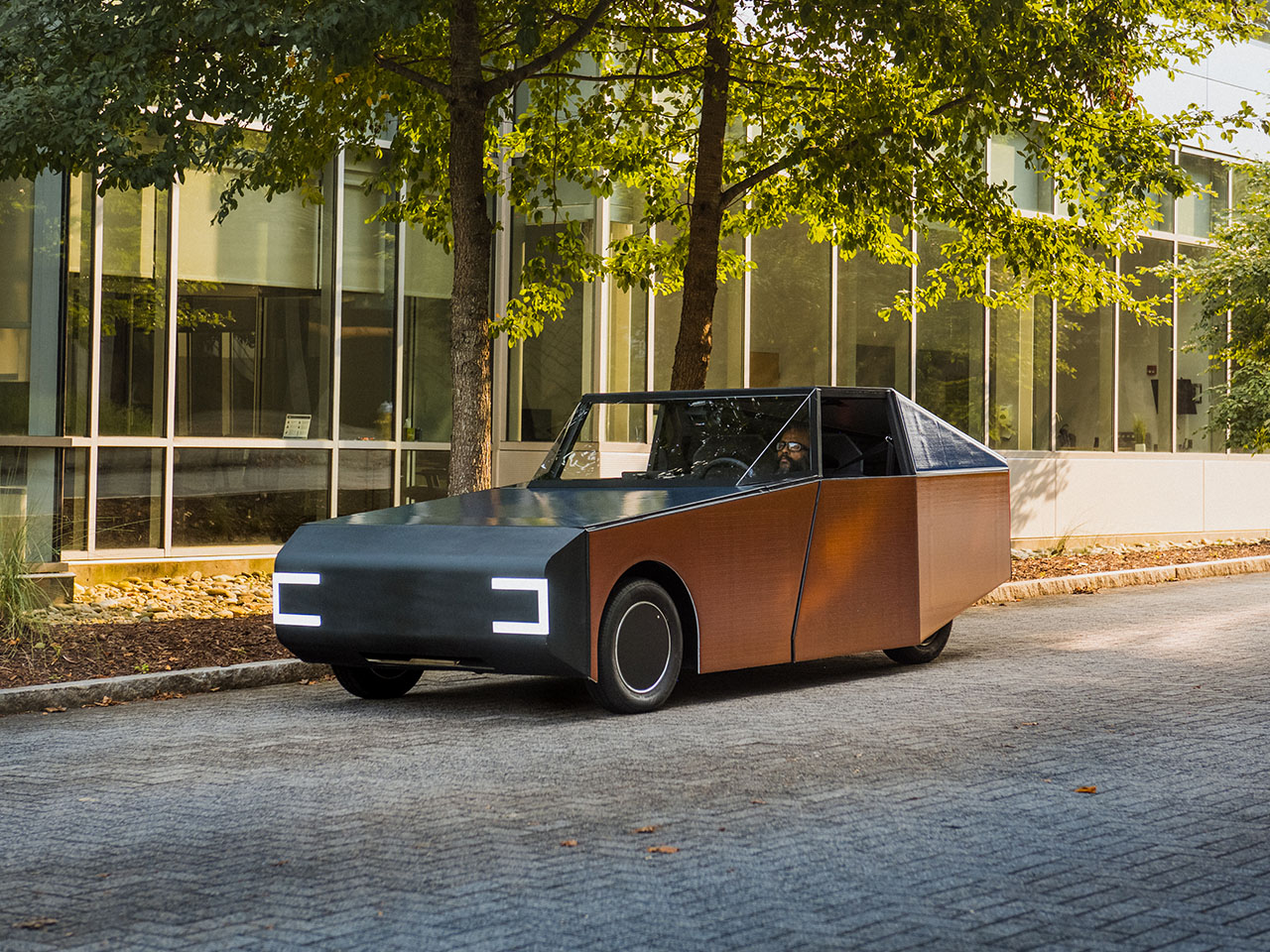
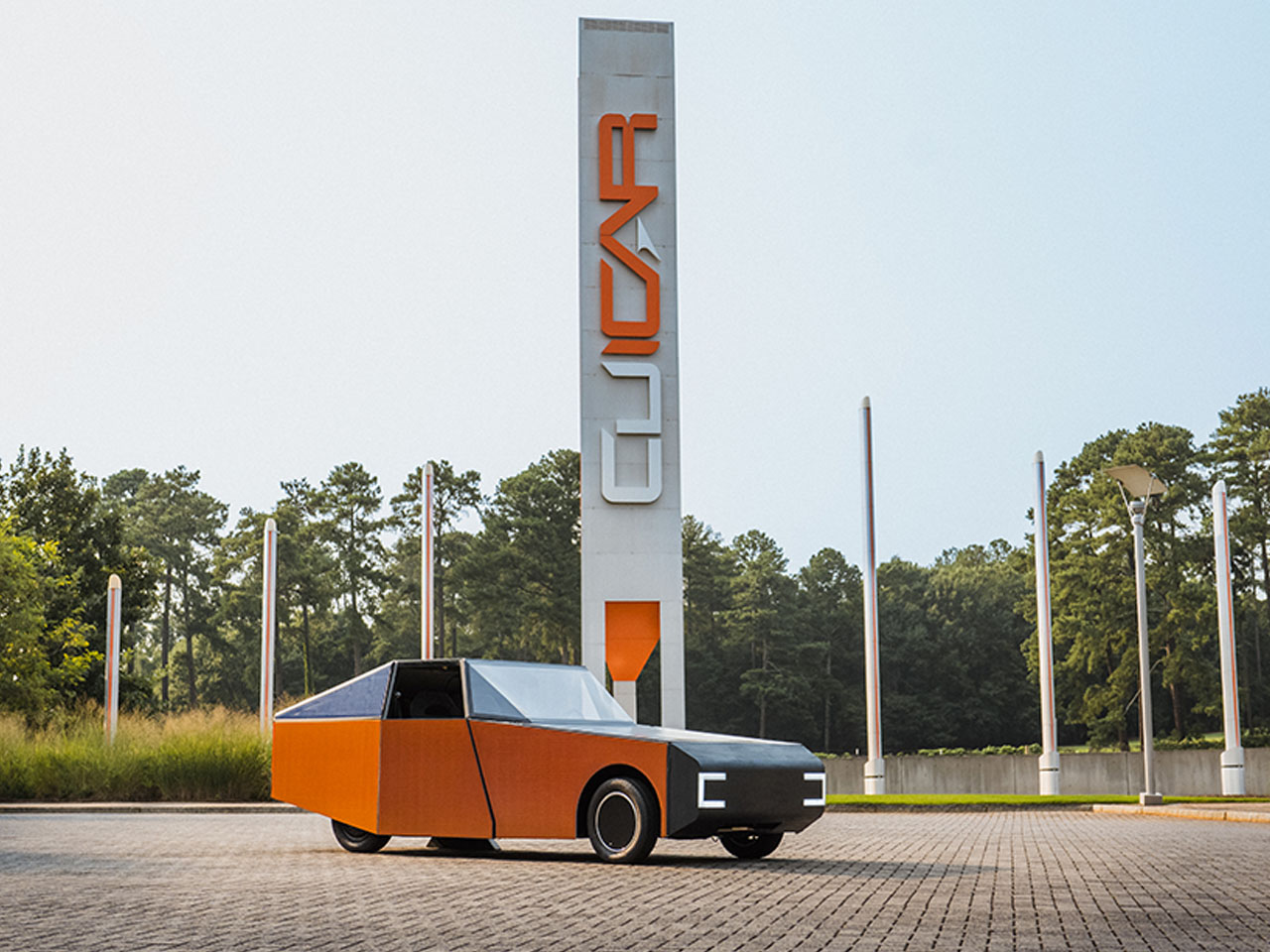
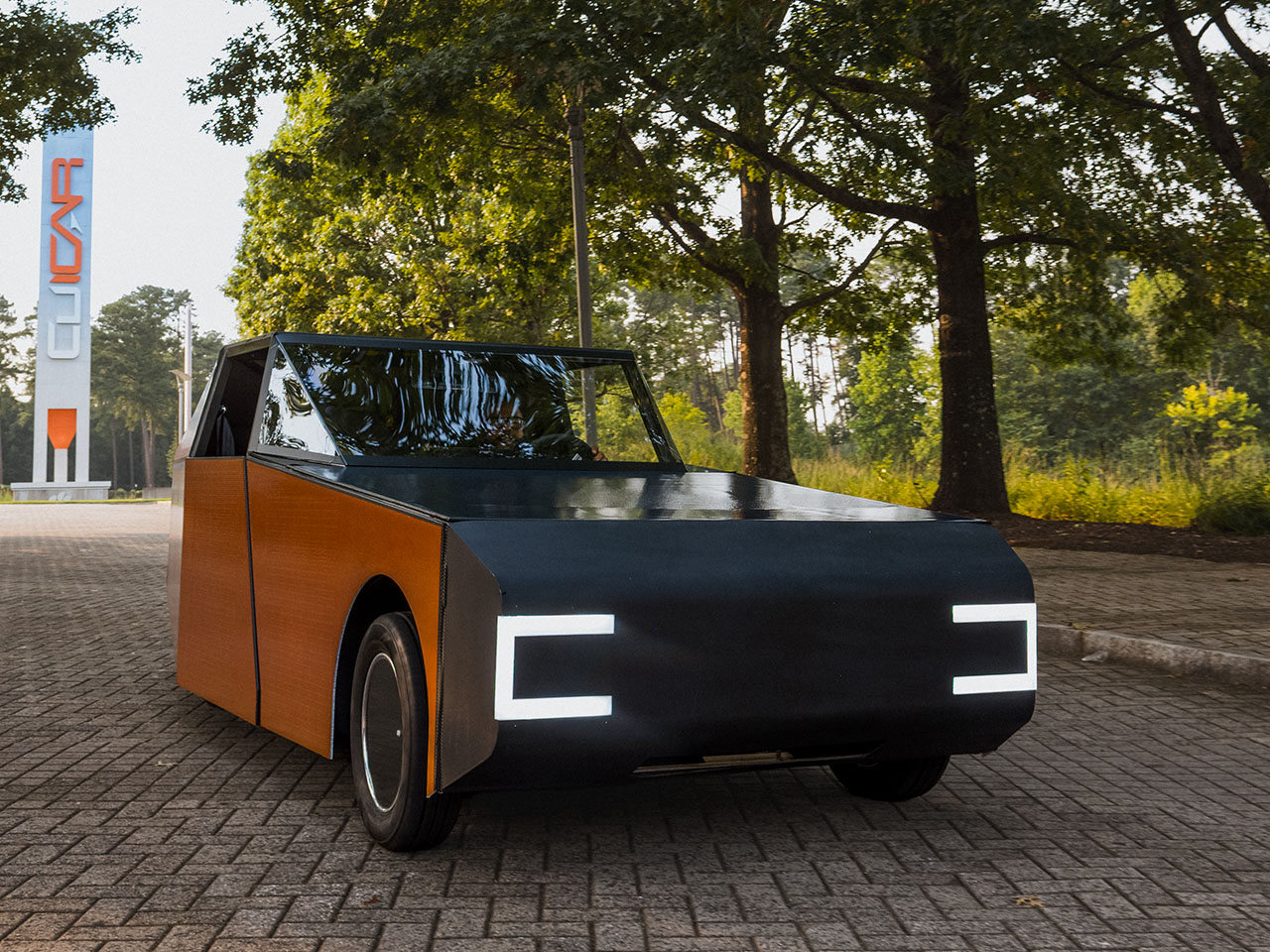
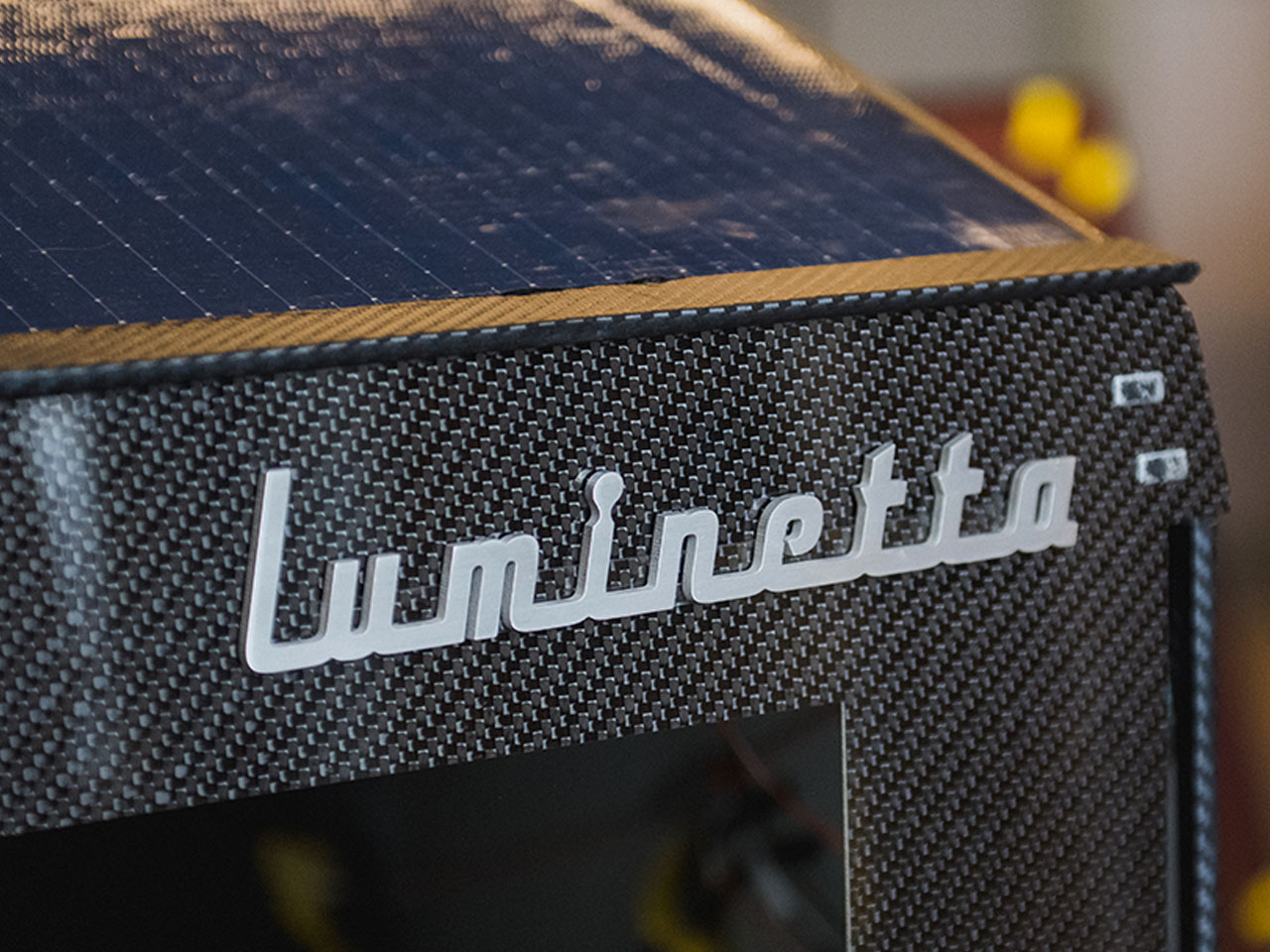
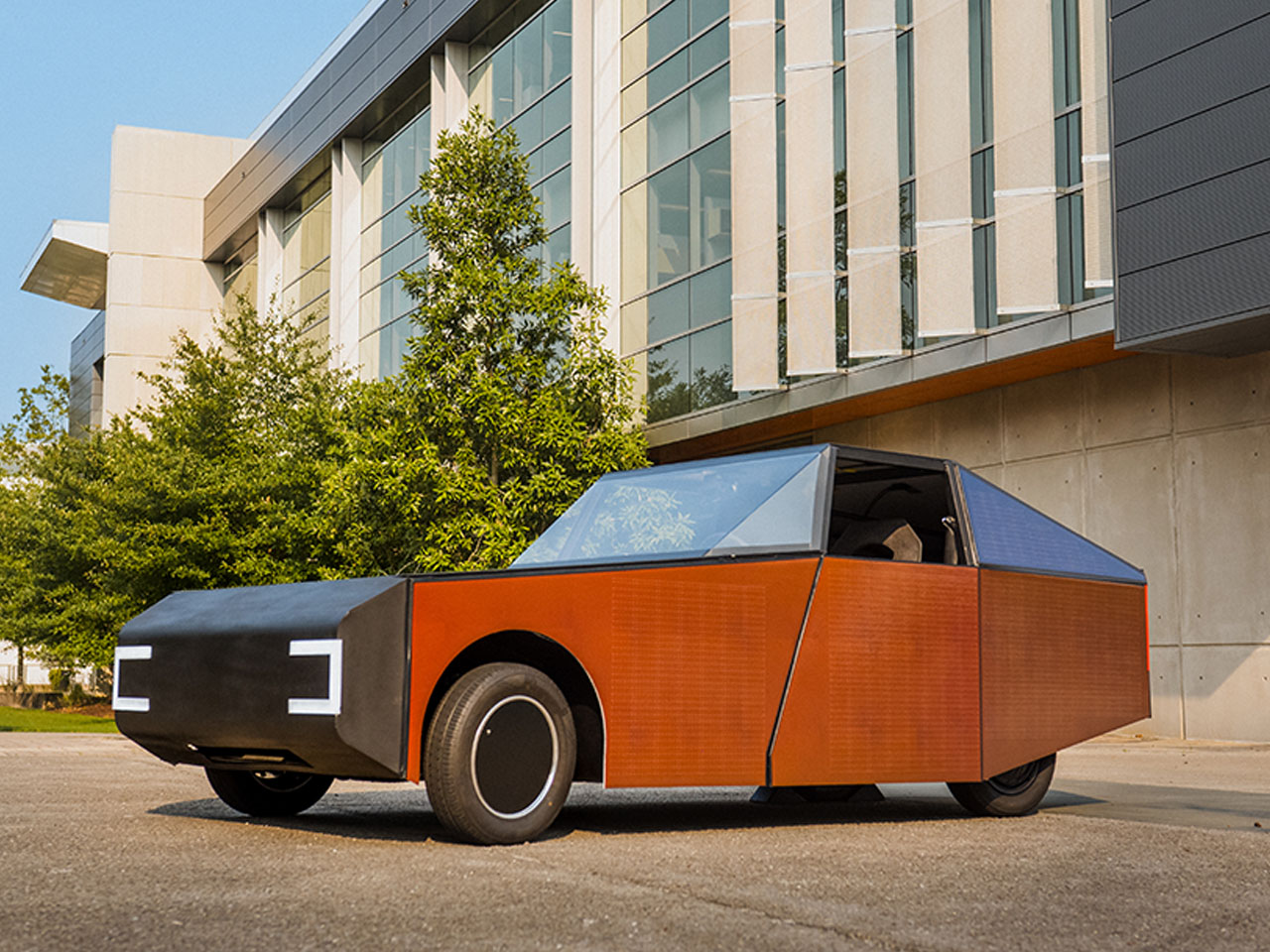
What if an electric vehicle didn’t just consume energy, but quietly made more of it while sitting in the sun? That is the premise behind Clemson University’s Deep Orange 17, a boxy two-seat EV concept developed with BMW of North America. Also called Luminetta, the experimental coupe rethinks the relationship between a car’s body and its energy needs, turning the exterior into something more than a protective shell.
The most unusual part is its photovoltaic skin. Instead of placing a conventional solar panel on the roof, the student engineers integrated more than 1,781 solar cells across the vehicle’s exterior. Developed with Germany’s Fraunhofer Institute for Solar Energy Systems, the system is designed to keep generating electricity even when parts of the surface are shaded. It essentially turns the car itself into a mobile solar collector, capturing energy whether Luminetta is driving or simply parked outside.
Designer: Clemson University
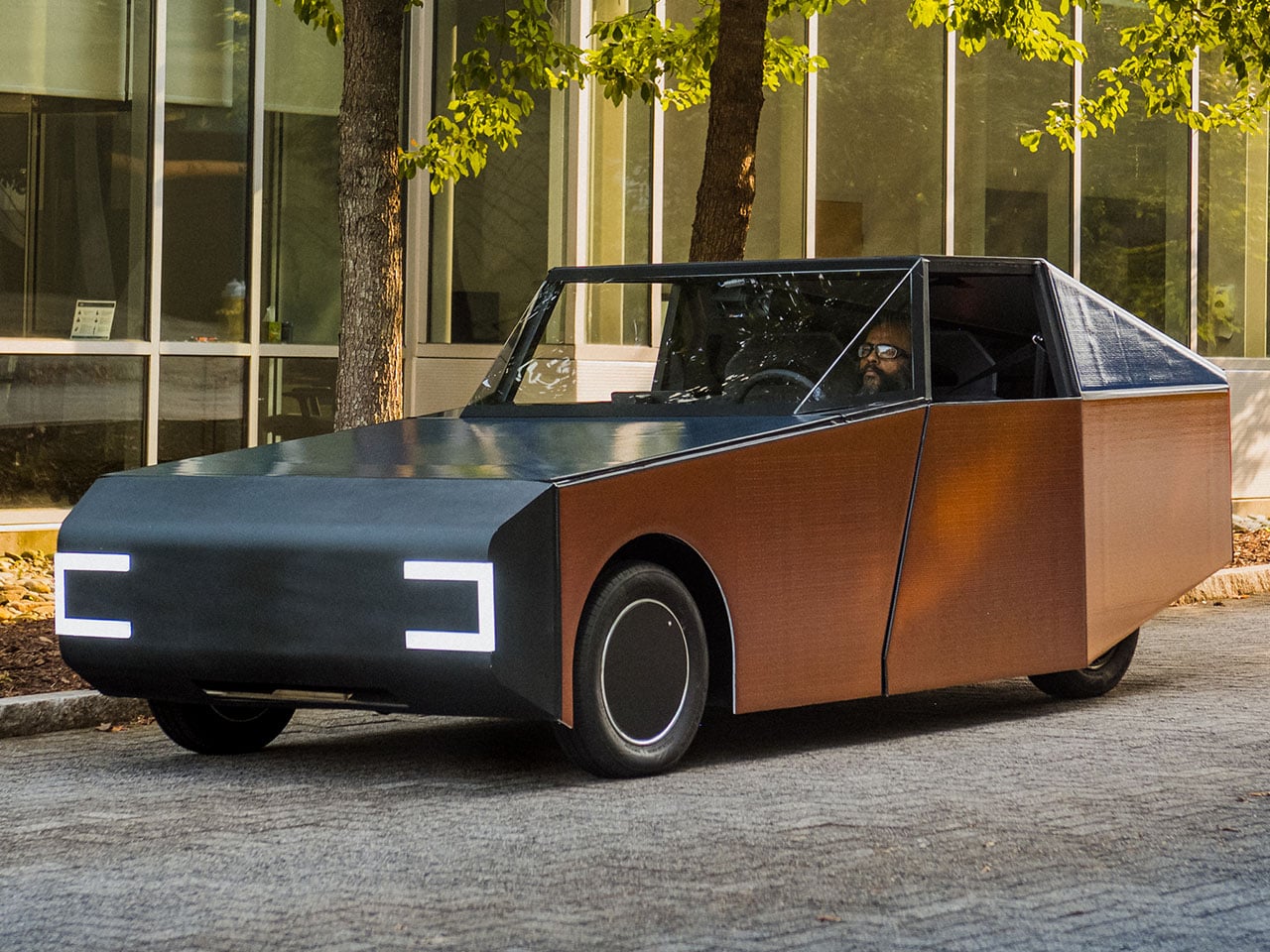

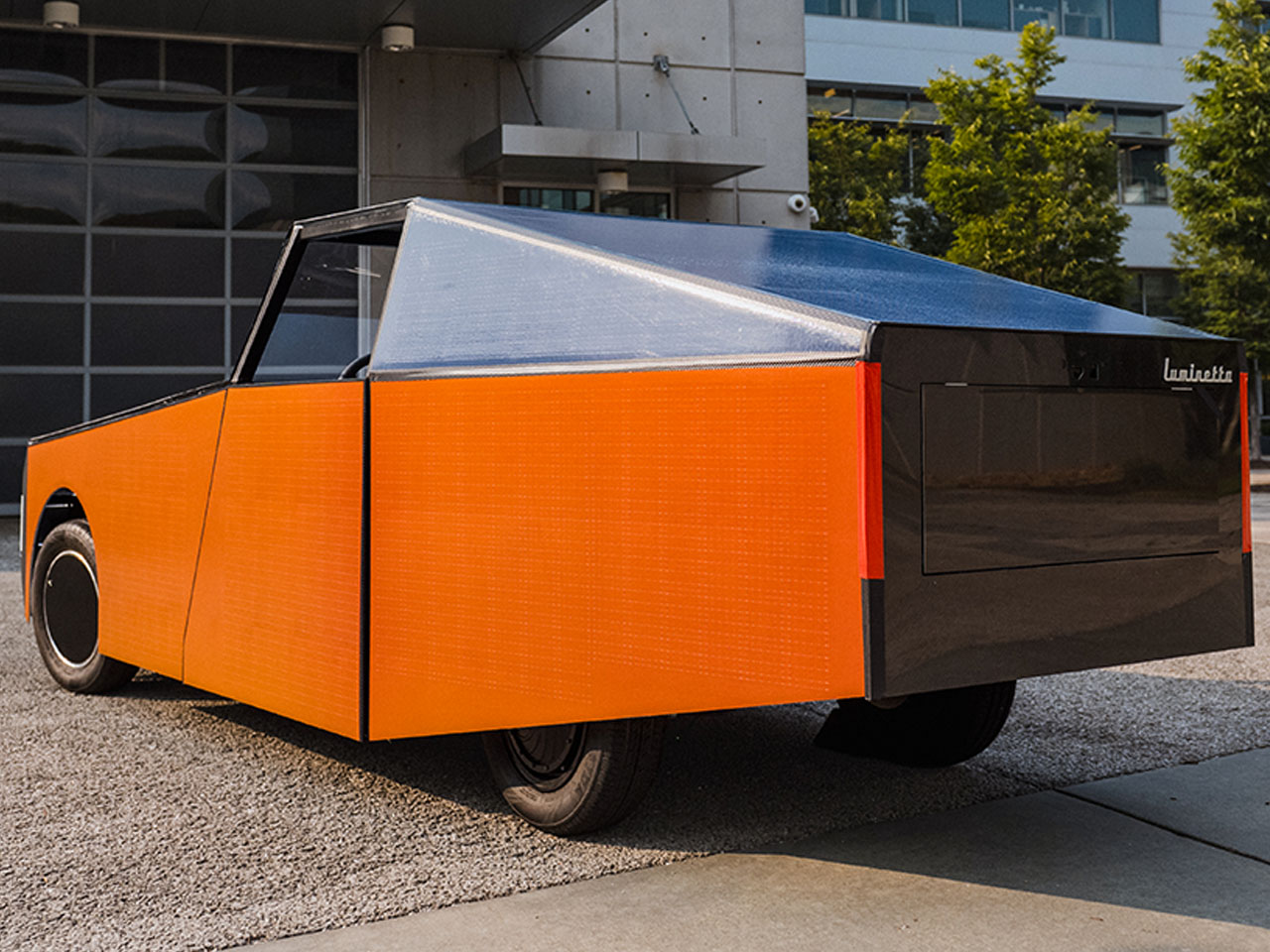
That idea makes particular sense for an EV. Cars spend most of their time stationary, often exposed to sunlight for hours. Deep Orange 17 uses that otherwise idle time to replenish its energy reserves. According to simulations conducted using weather and sunlight data from Greenville, South Carolina, Frankfurt, Madrid, and Mumbai, the concept could generate enough additional energy to deliver an average of around 31 miles of driving range from a typical 12-mile daily commute.
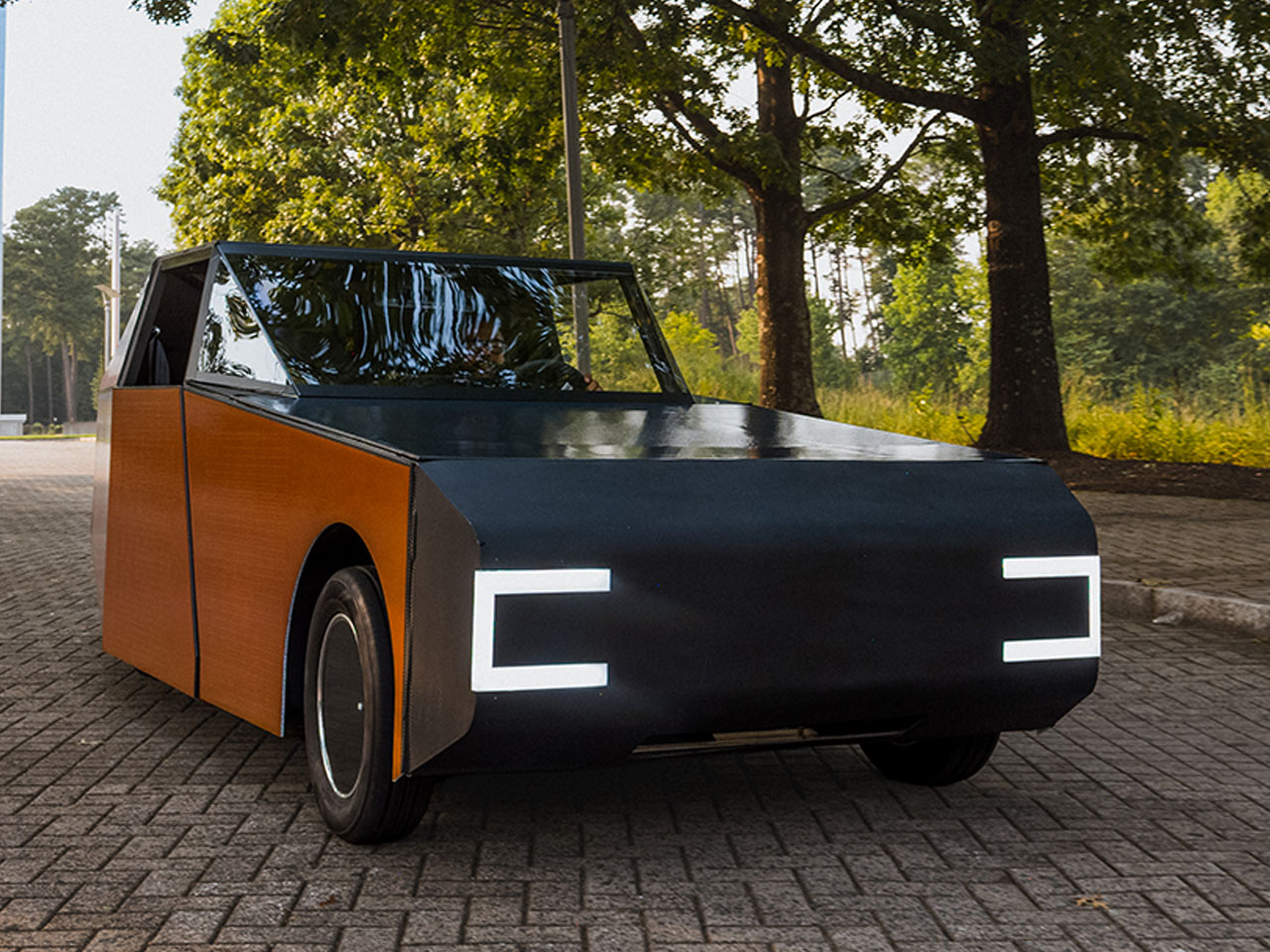
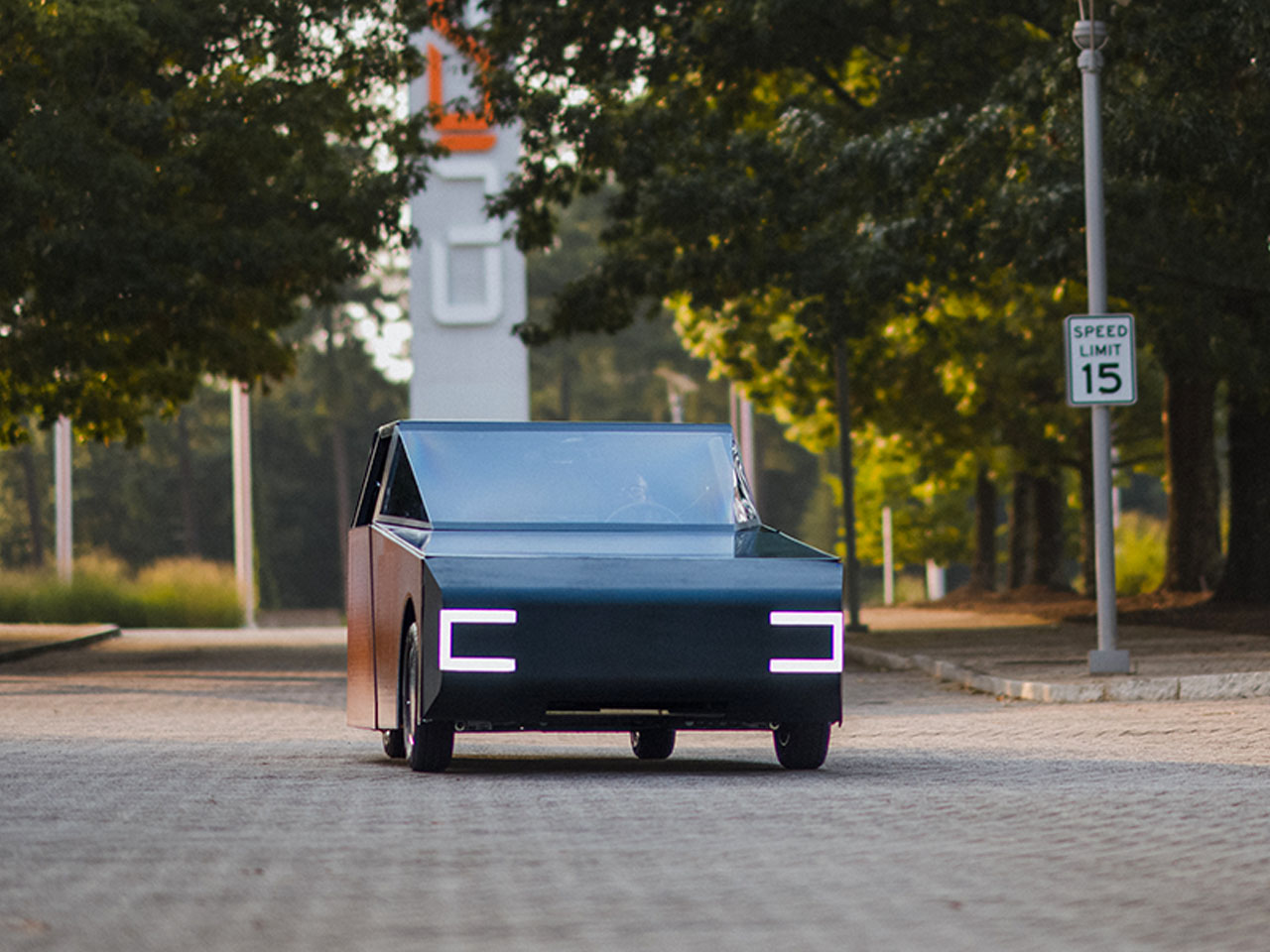
But the solar technology is only half of the equation. To make the most of every watt it generates, Clemson’s team designed the vehicle to be exceptionally light. The prototype weighs just 550 kilograms (1,212 pounds), achieved through a multi-material structure combining steel, aluminum, carbon fiber, and 3D-printed metal joints. With considerably less mass to move, the electric drivetrain needs less energy in the first place.
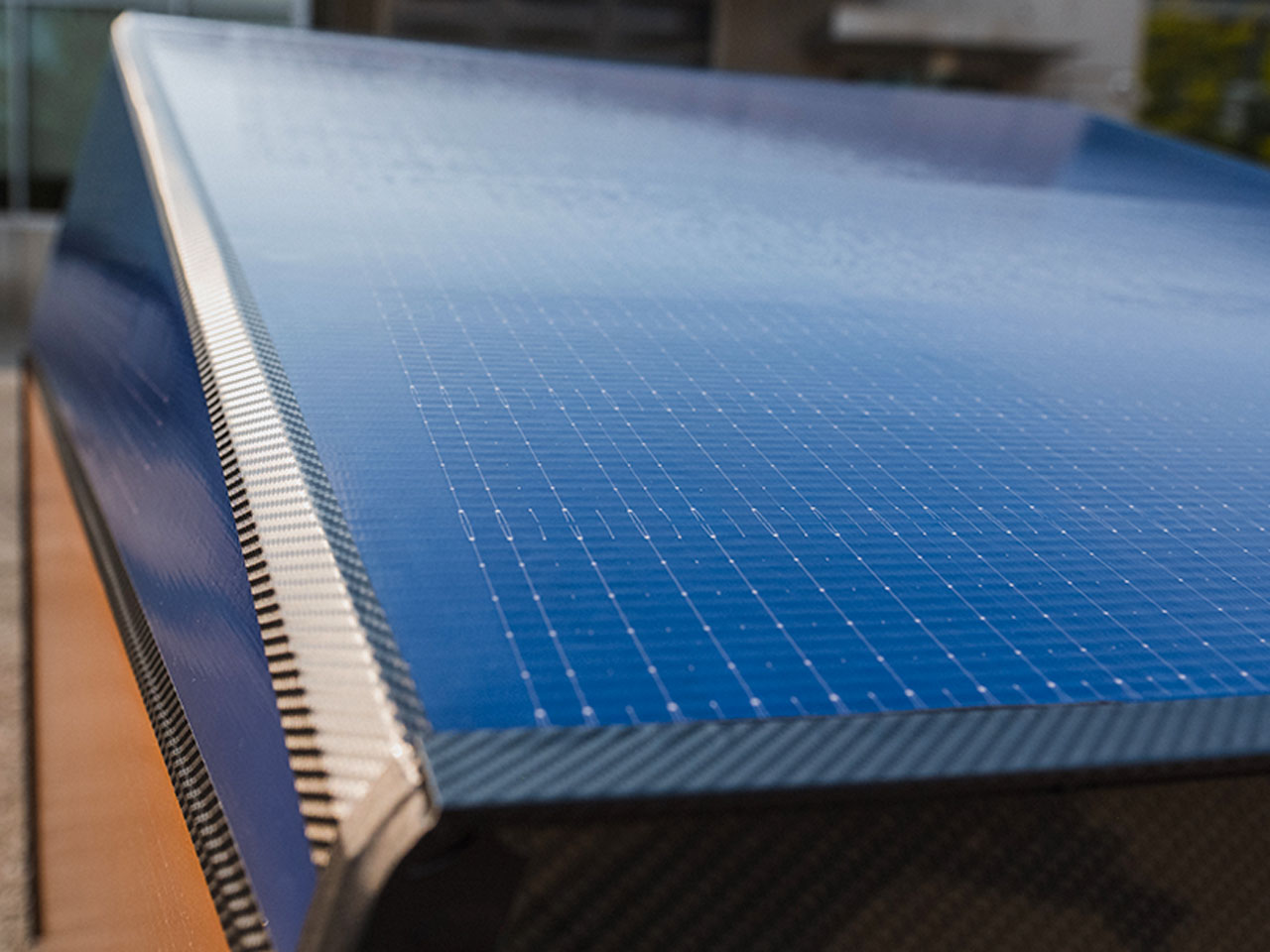
Its shape follows the same efficiency-first philosophy. Inspired by the boxfish, the exterior combines a streamlined profile with a surprisingly practical volume for a compact two-seater. The final prototype is an EV that looks less like a conventional production car and more like a physical experiment in aerodynamic sculpture.
Energy recovery is built into the driving experience as well. Regenerative braking captures some of the energy normally lost during deceleration, while torque distribution and drivetrain controls are optimized to minimize unnecessary consumption. Rather than chasing headline acceleration figures, the project focuses on a more fundamental question – how little energy can a car need to perform its everyday job?
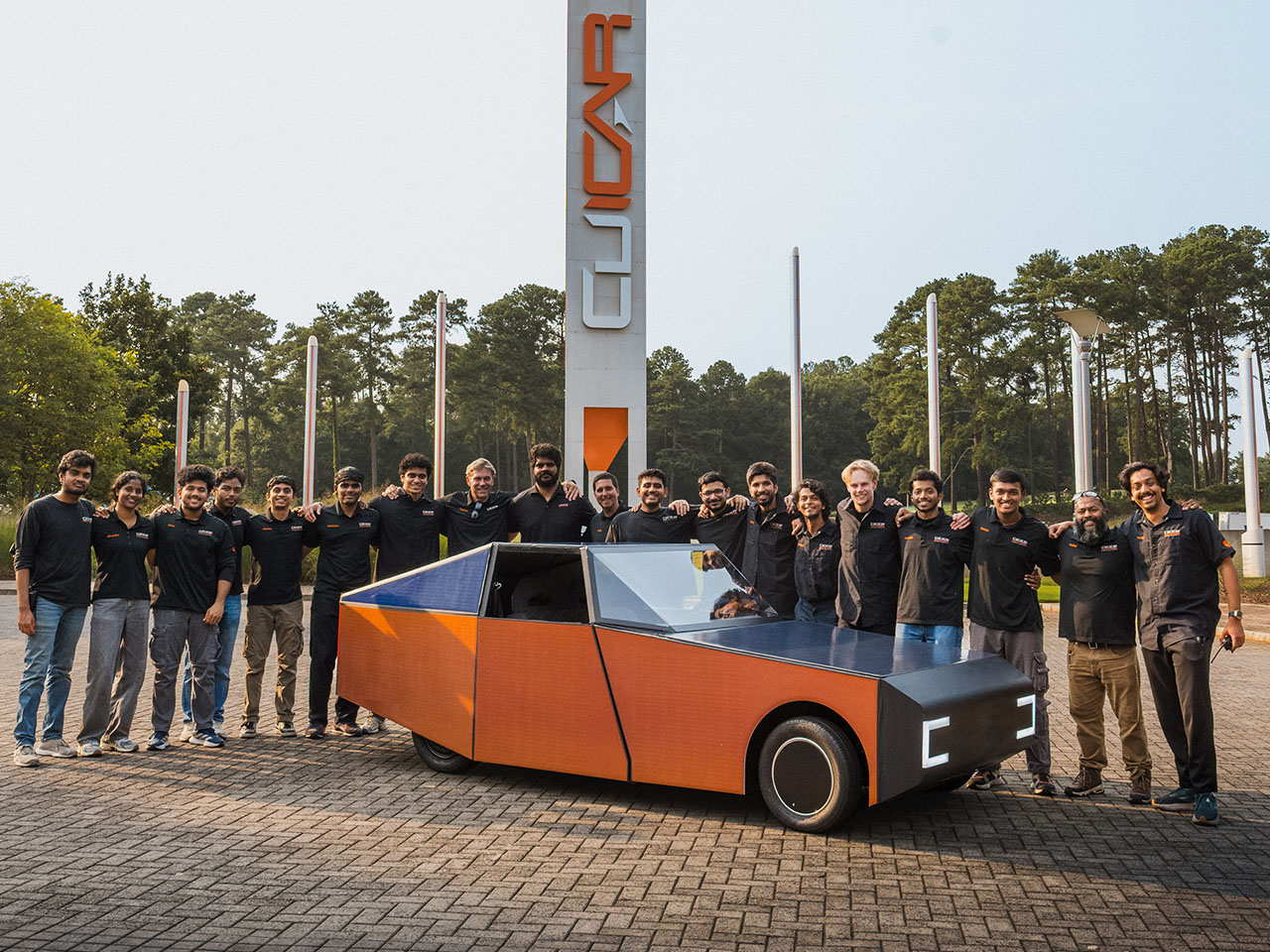
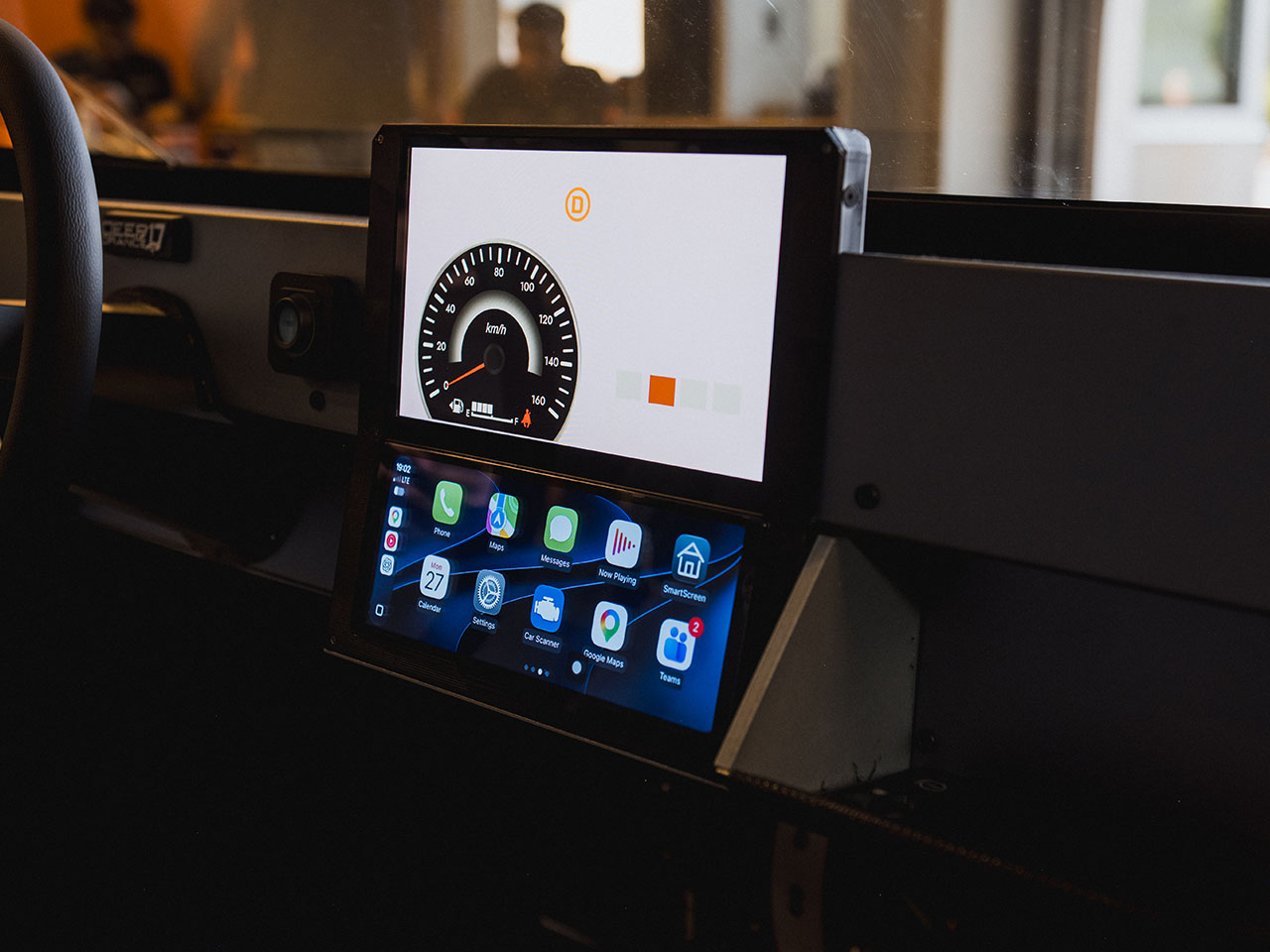
Inside, the experimental approach becomes more familiar. Luminetta features a custom interface for displaying live vehicle data alongside Apple CarPlay and Android Auto, giving the futuristic concept some everyday usability. Developed by 16 graduate automotive engineering students through Clemson’s Deep Orange program, the project took roughly two years to move from an industry challenge to a working prototype. It is not intended to be a production vehicle right now, but as a research platform exploring what an energy-positive EV could look like.