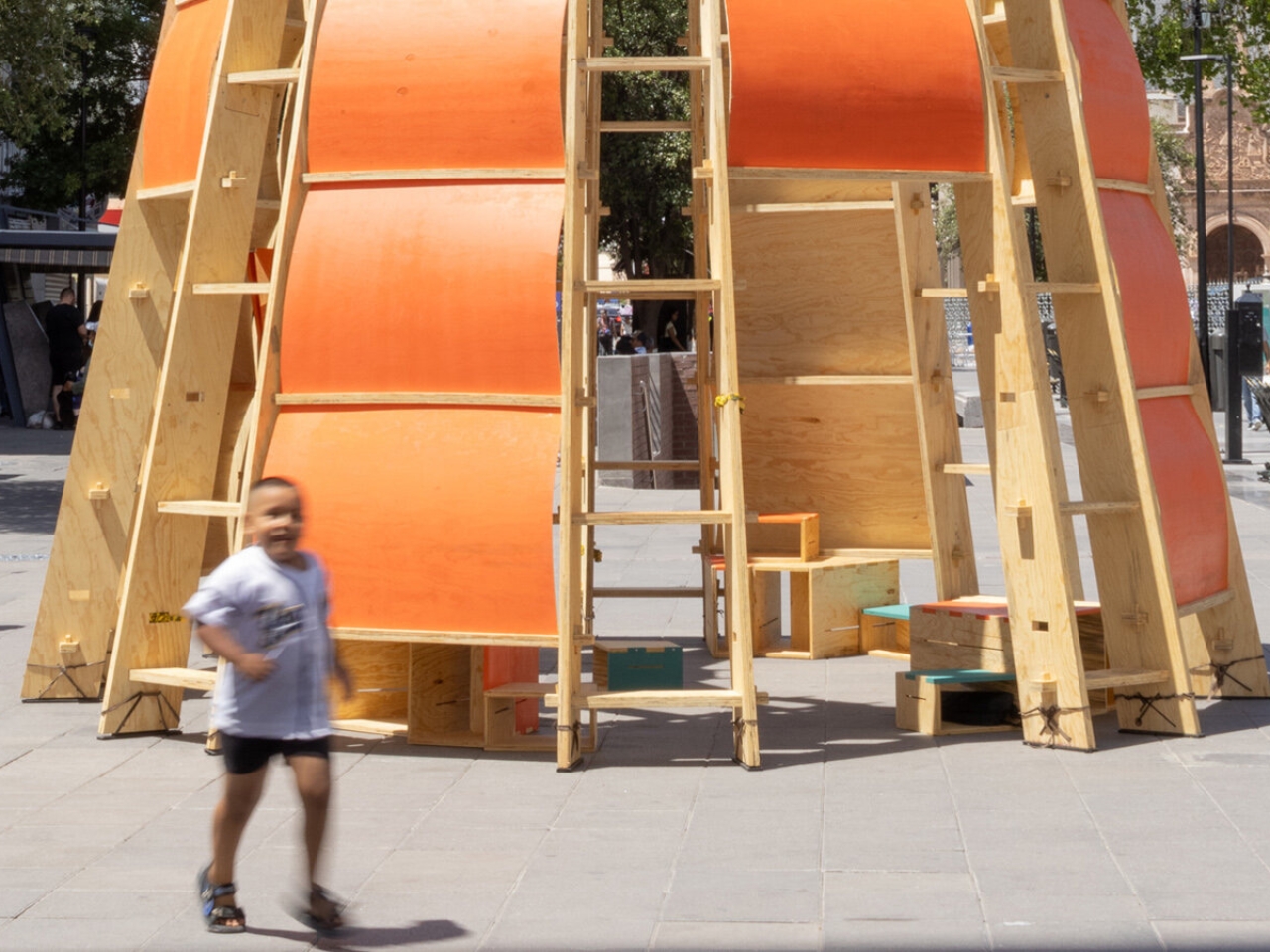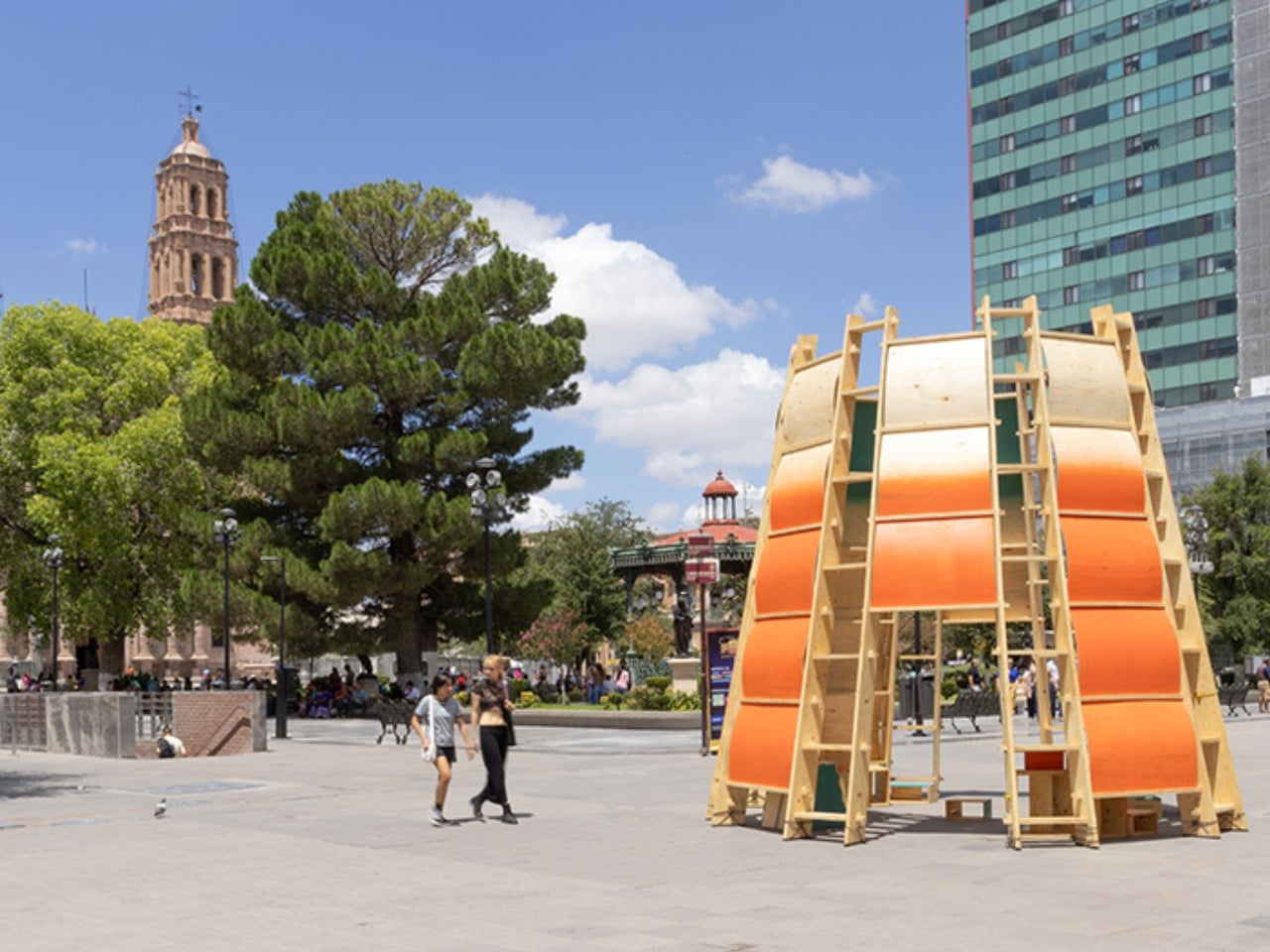

It doesn’t happen often that a temporary structure actually stops you mid-step. Paso Nara, a curved plywood pavilion now sitting at the intersection of Avenida Independencia and Calle Victoria in Chihuahua’s Plaza de Armas, manages to do exactly that. Not because it shouts. Because it doesn’t. It earns your attention through restraint, which is one of the harder things for a piece of architecture to pull off, especially one built by students.
That’s the first thing worth saying about this project: it came out of a classroom. Specifically, the 2026 Taller del Desierto, an intensive design-build workshop run through the Instituto Superior de Arquitectura y Diseño, better known as ISAD. The program is built around a simple but demanding premise: students design and construct full-scale work, in real public spaces, with real constraints. No mock-ups. No scaled models that never leave the studio. Under advisors Daniel Romero Valencia, Mauricio Rey Villarreal, and Juan Castillo Cruz, the team worked through 16 repeated modules arranged in a radial structure and then actually built the thing. That distinction matters more than people give it credit for.
Designer: Instituto Superior de Arquitectura y Diseño
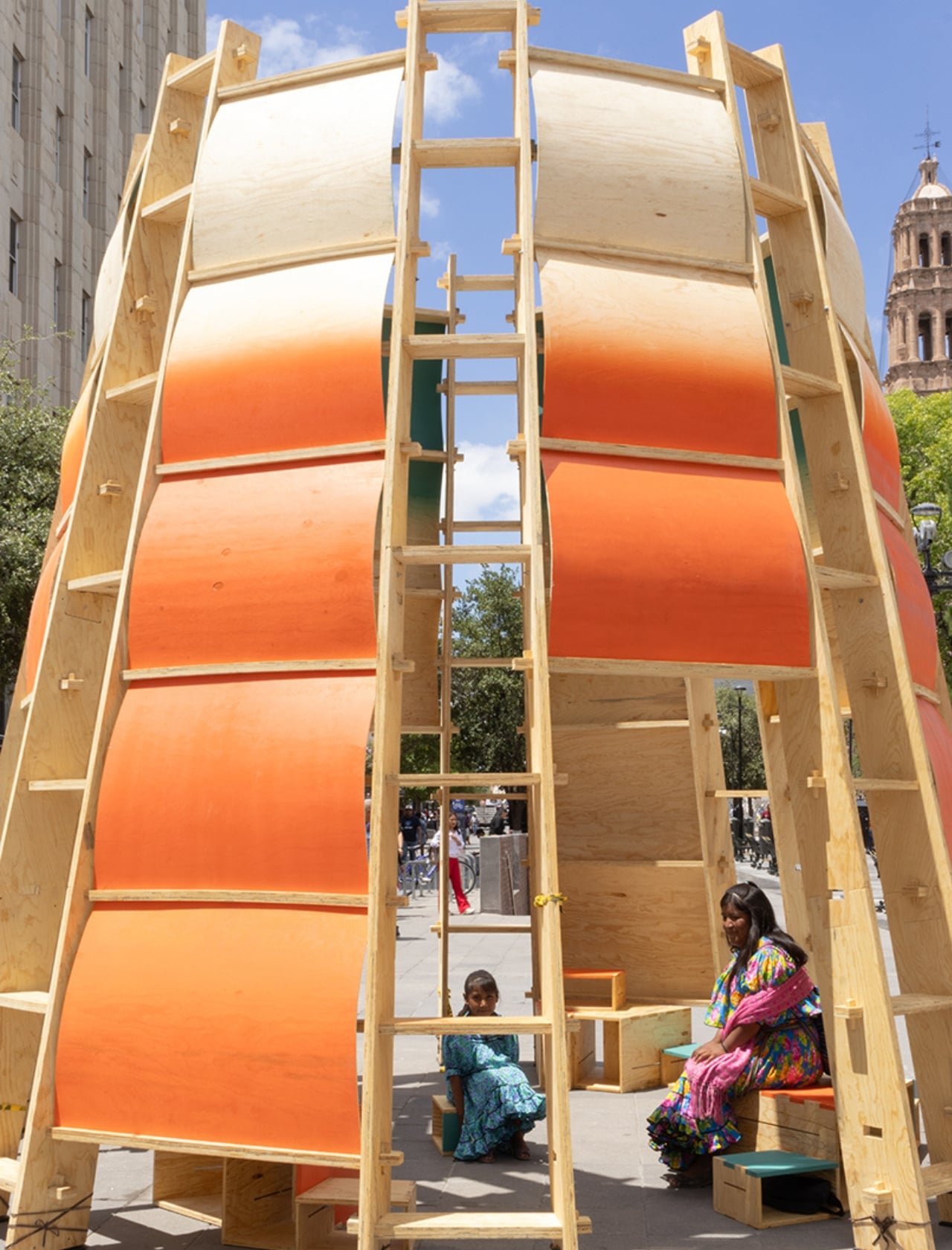

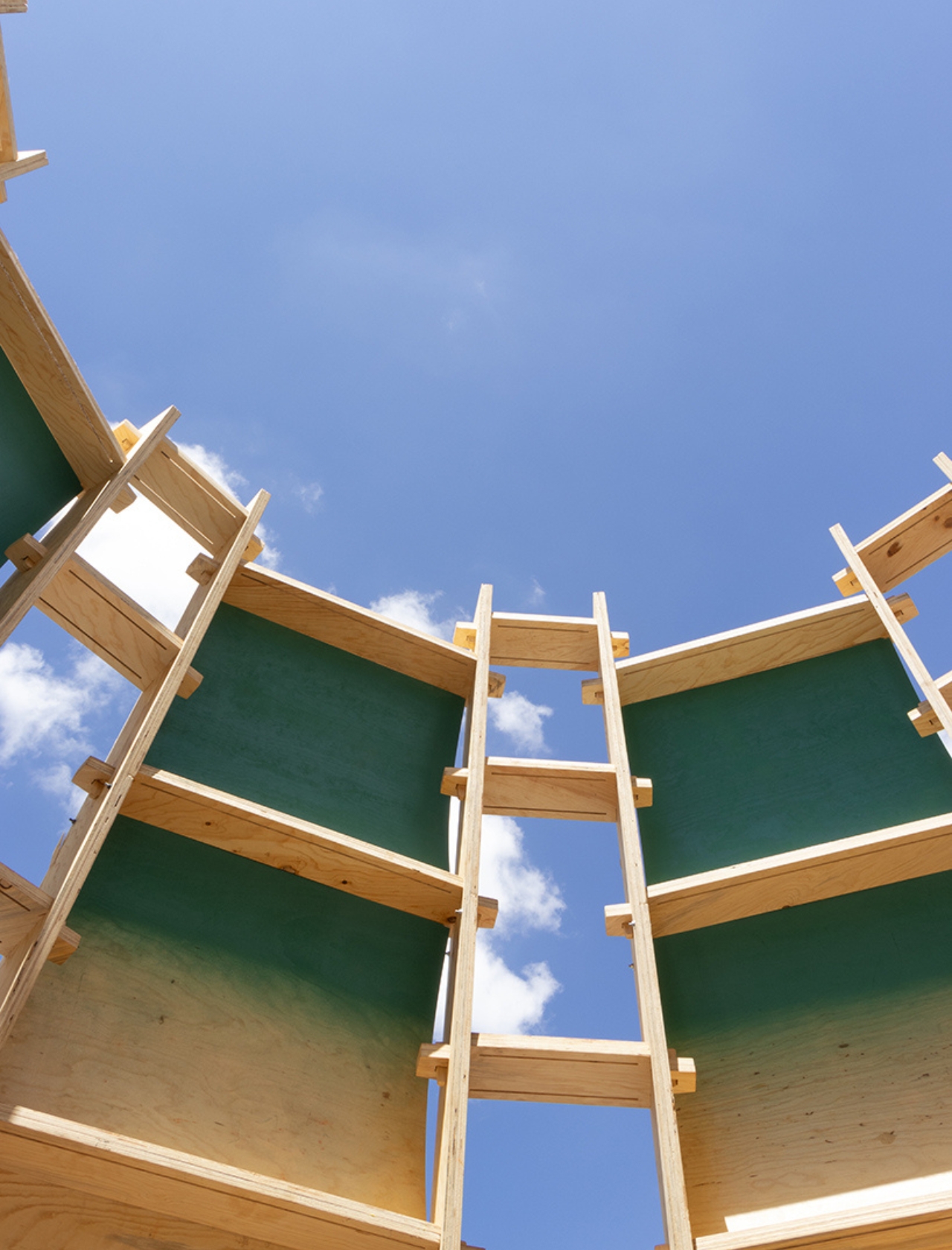
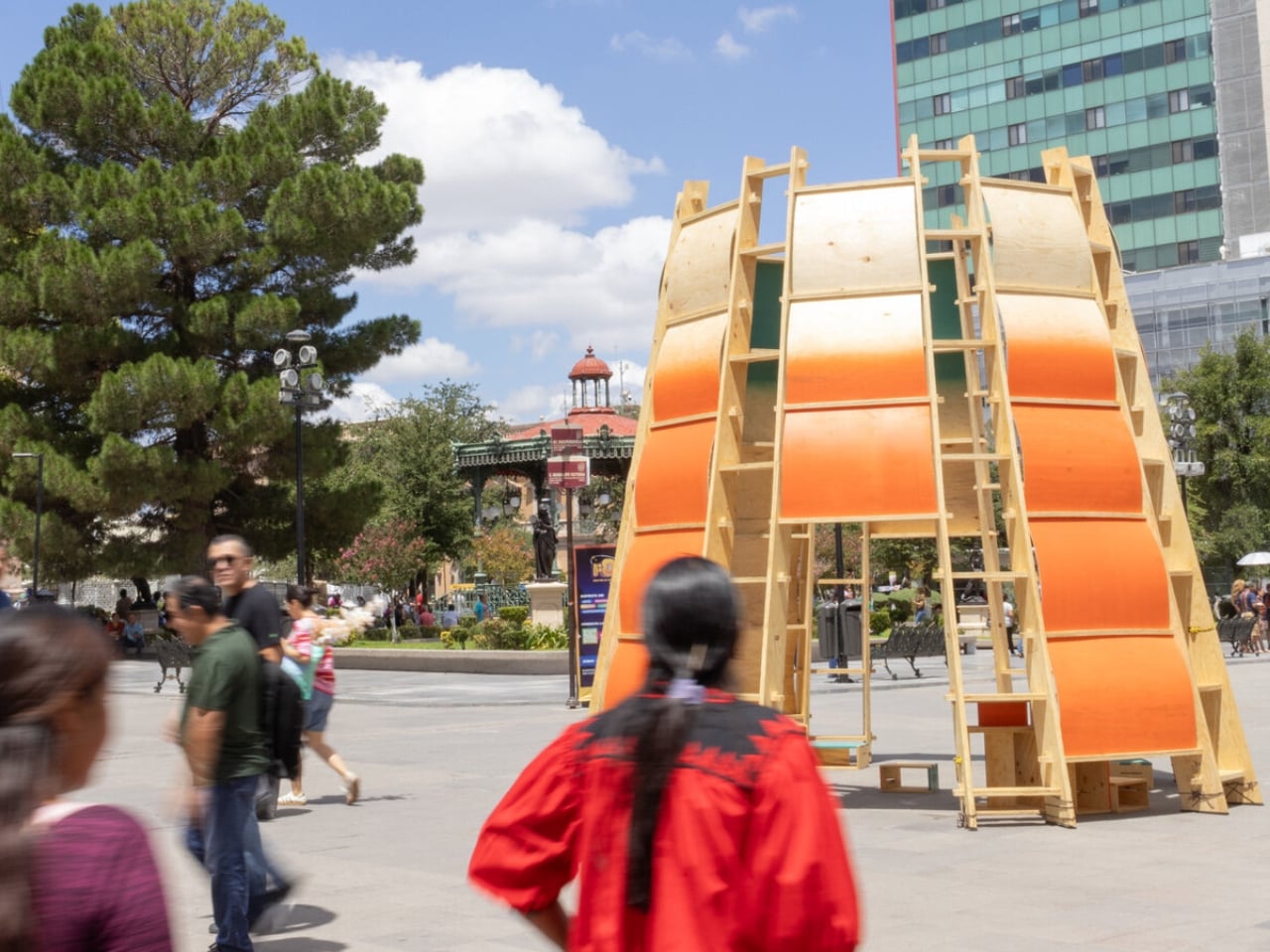
The material choice is one of the most honest decisions in the project. The pavilion is constructed entirely from curved plywood panels, and rather than masking what plywood does naturally, the design leans into it. The panels bend into a continuous lightweight shell that reads as both structural and sculptural. As the day moves, the geometry shifts how light falls across the surfaces, making the pavilion look like a slightly different object depending on when you catch it. That kind of temporal quality is hard to design deliberately and even harder to achieve with a material as humble as plywood.
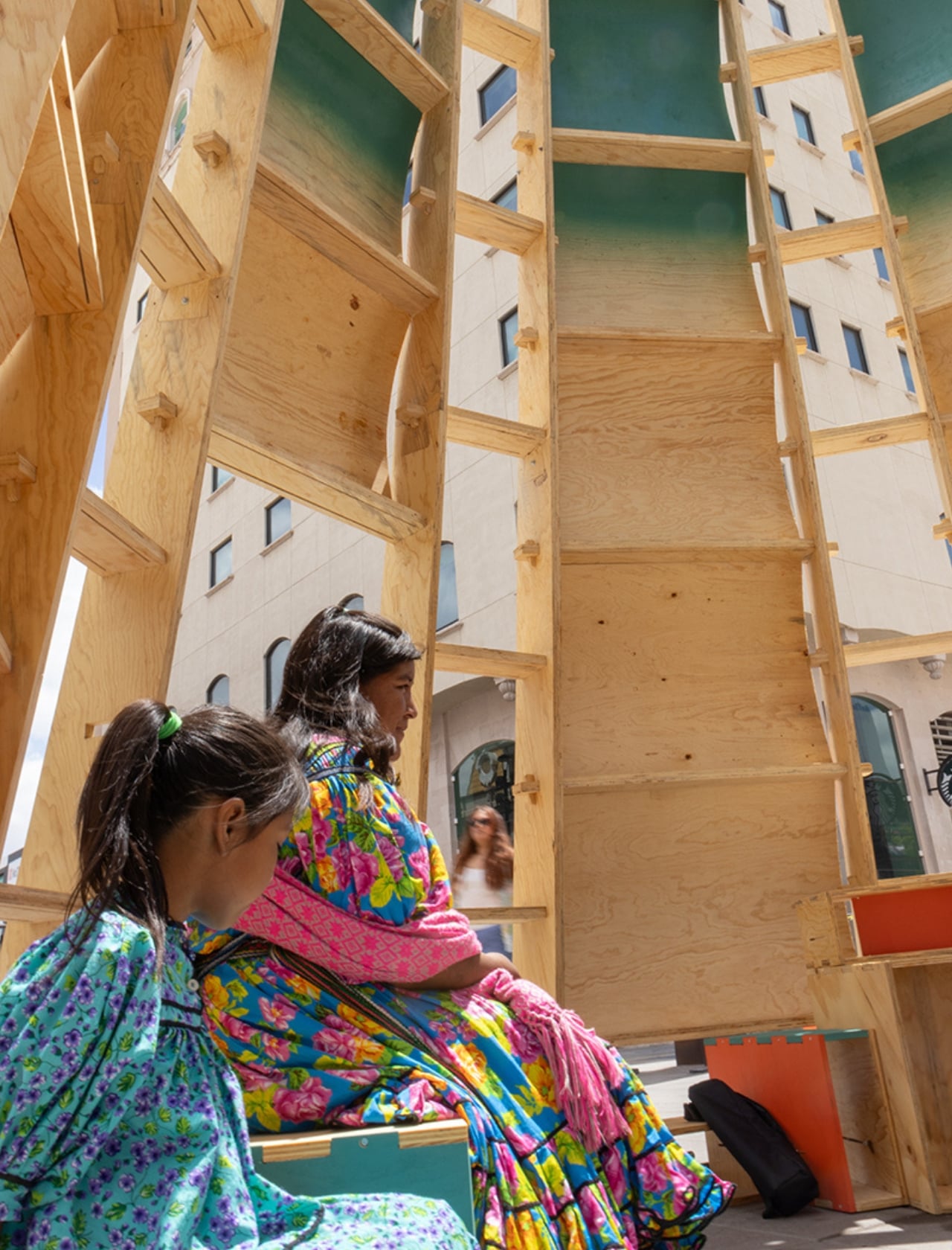
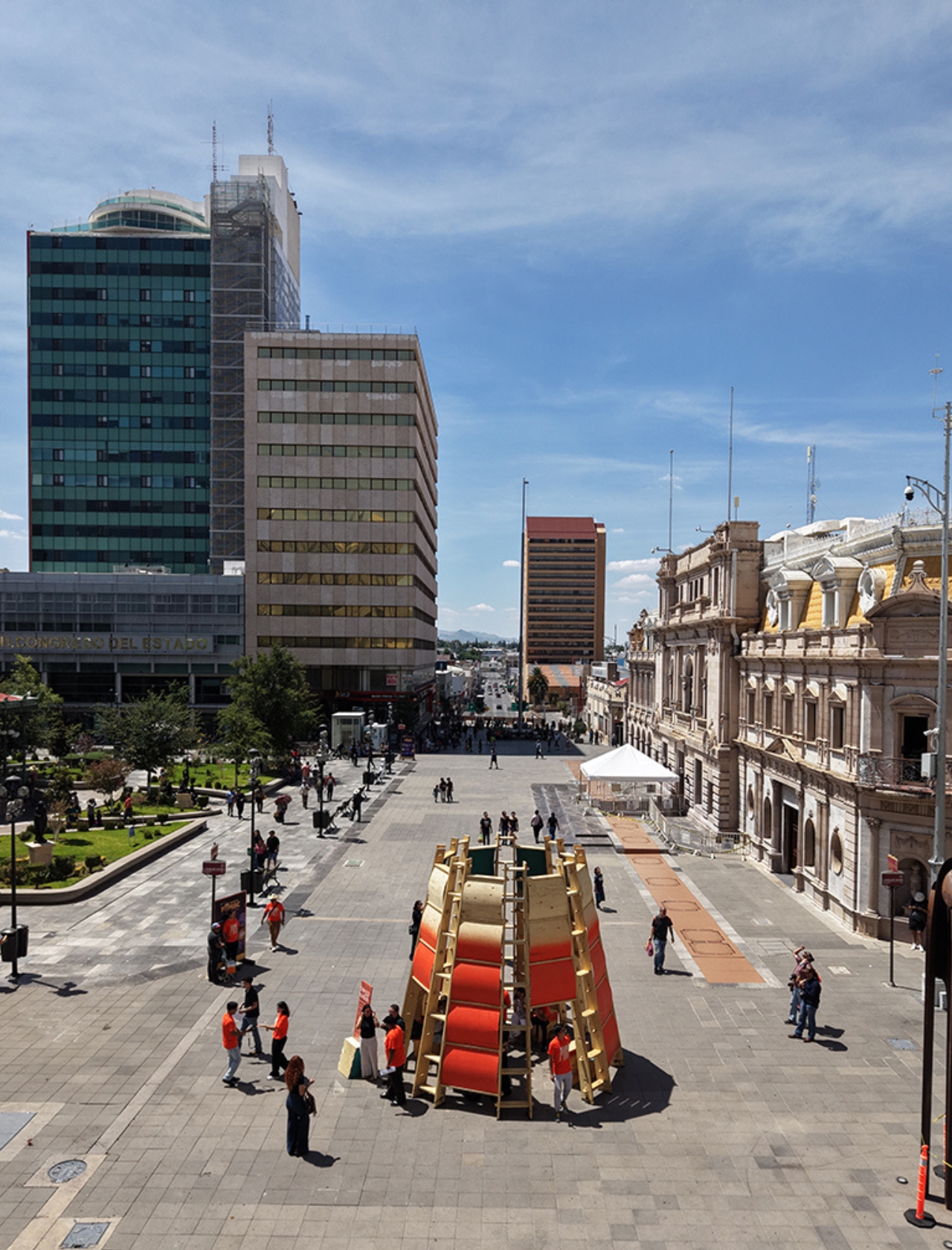
Location adds another layer. Plaza de Armas is the heart of Chihuahua’s historic center, flanked by masonry buildings that have been standing for centuries. Setting a curved timber shell against that kind of backdrop is not a neutral act. The pavilion holds its own without trying to overwhelm its context. It offers contrast without conflict, which is a calibration a lot of more experienced architects miss. The pavilion becomes a shaded pause within one of the city’s busiest pedestrian corridors, and the fact that people actually stop to use it, sit under it, watch the plaza from inside it, tells you everything about whether the design is working.
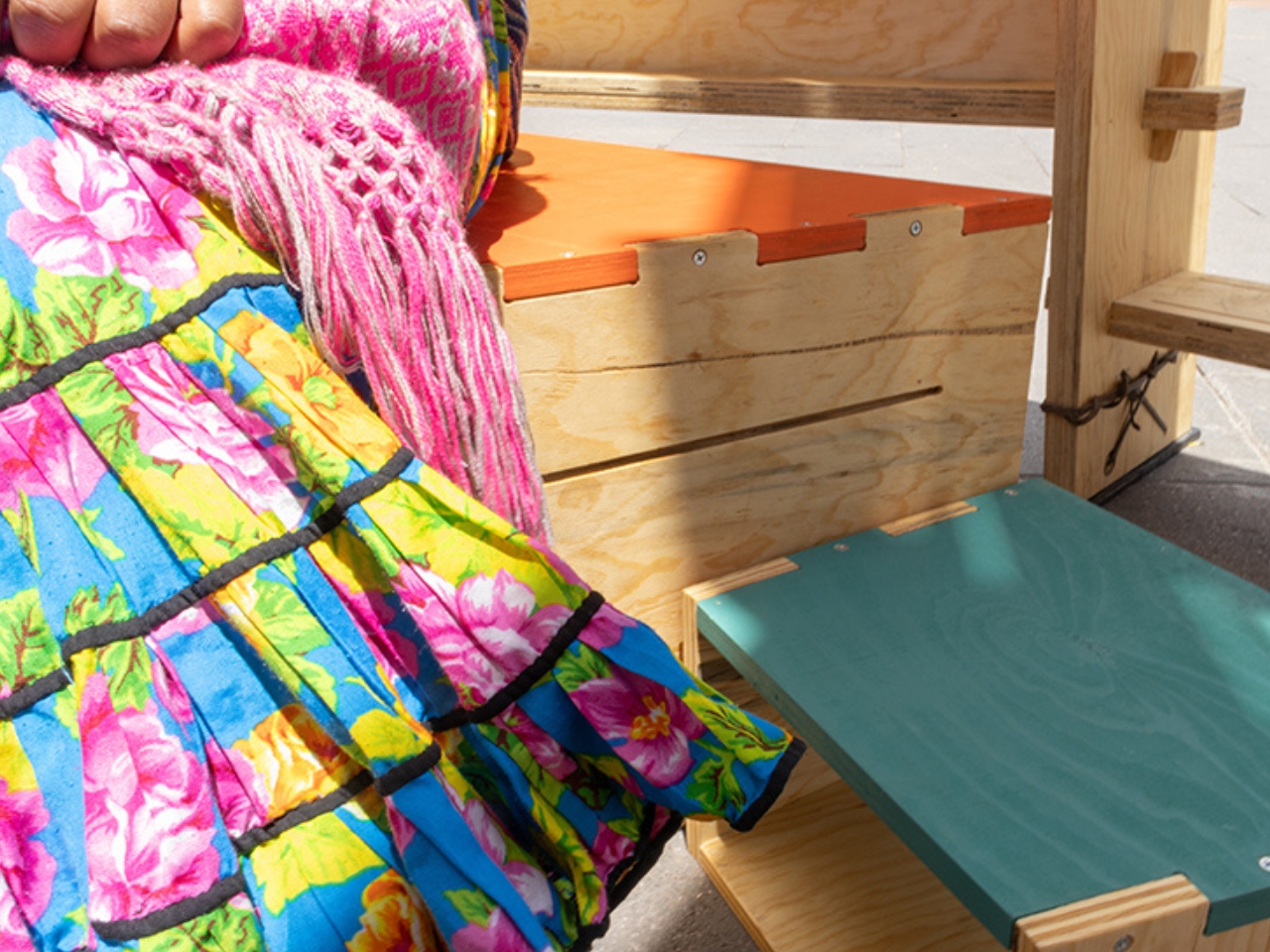
Public pavilions fail in predictable ways. They get photographed for design publications and then stand empty because they were built to be looked at, not occupied. Paso Nara skips that mistake entirely. The interior is generous, the furniture is there, and the shade is real. In Chihuahua’s climate, that last part is not a small consideration at all. Shade isn’t decorative. It’s a basic service to the people using the space, and the pavilion takes that seriously.
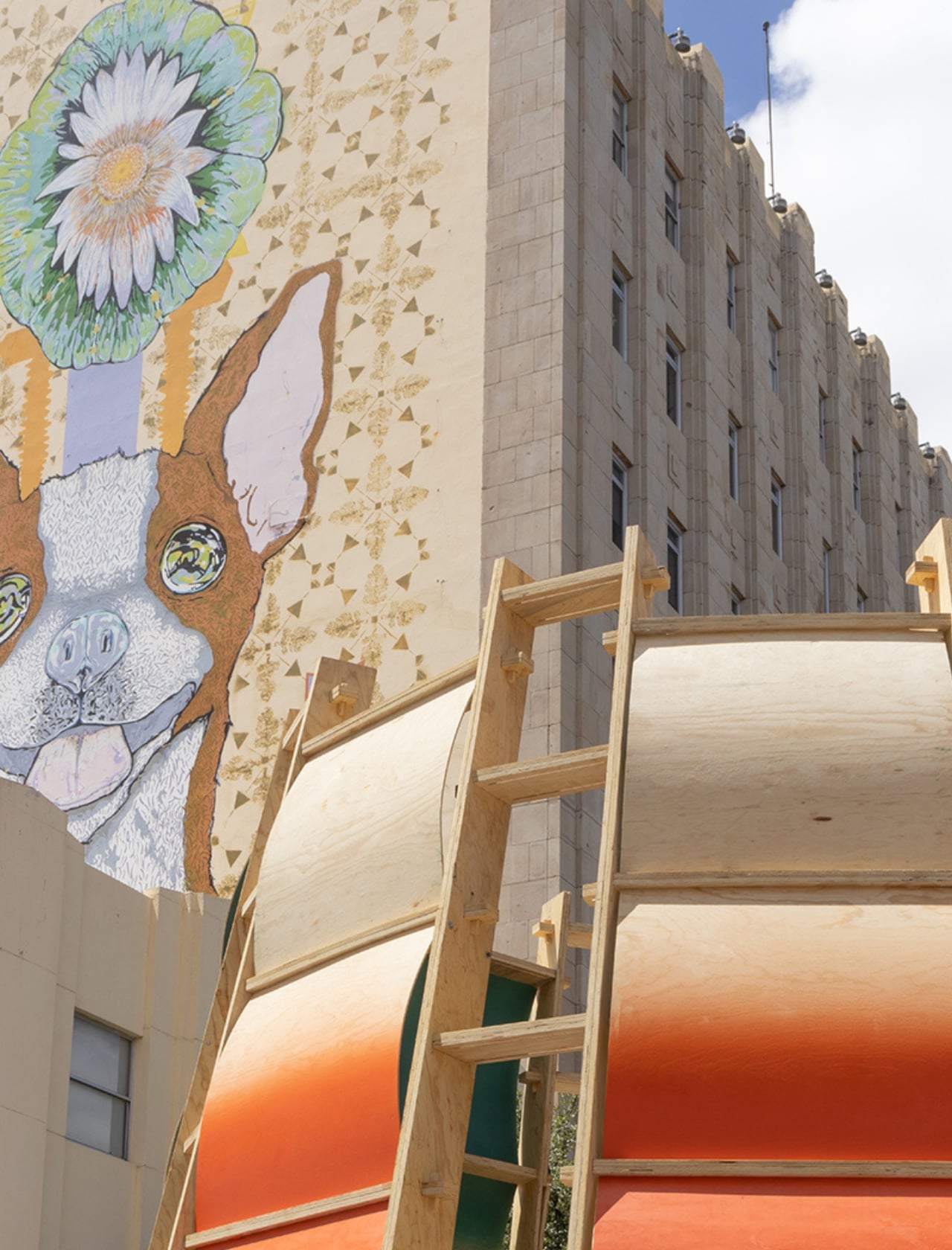
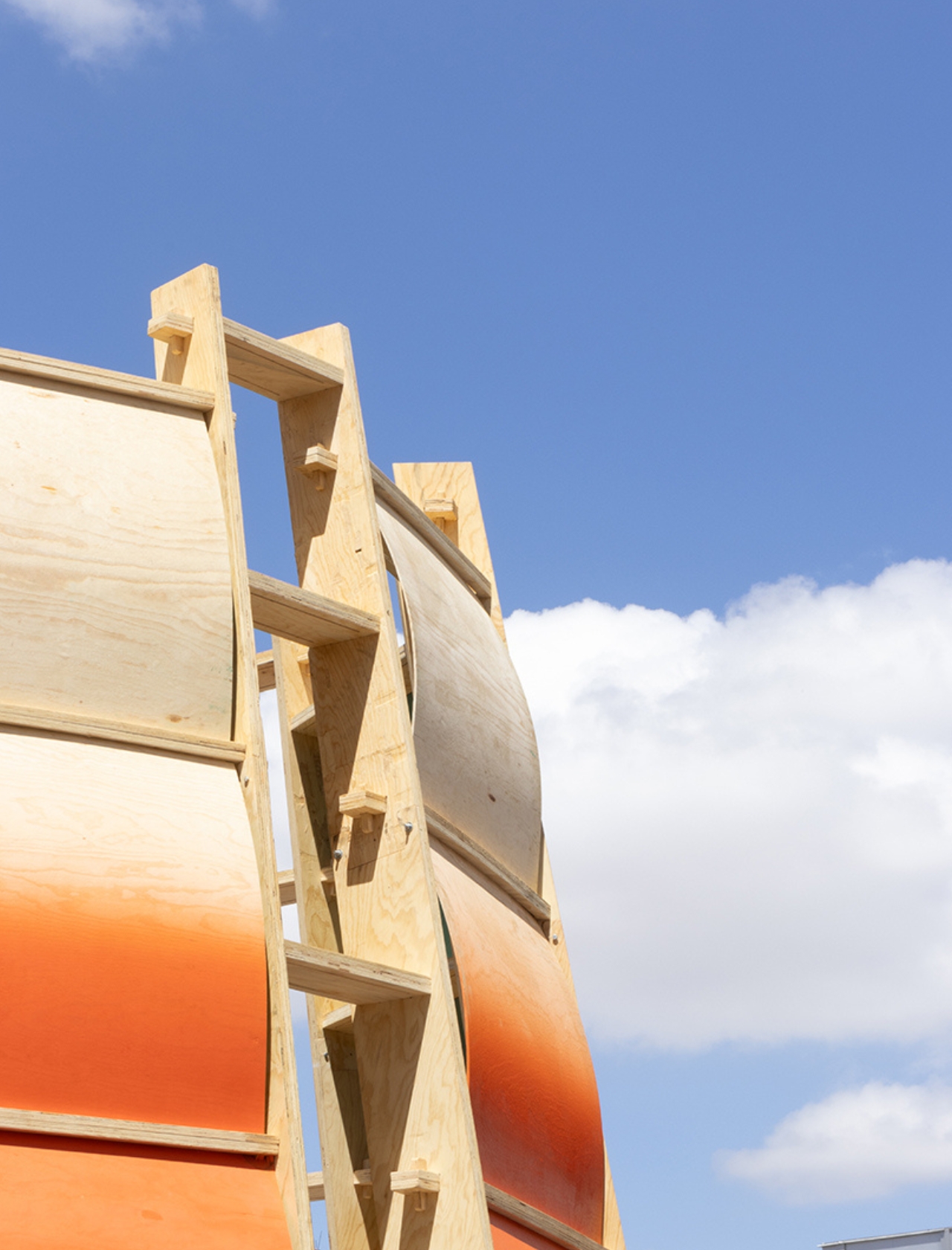
The project is also heading somewhere. Paso Nara is set to be presented at MEXTRÓPOLI, the most important architecture and city festival in Latin America. For a project that started as a student workshop, that’s a significant trajectory. The structure was designed to be dismantled, transported, and reassembled without losing its integrity, which speaks to a design thinking that treats temporality as a feature rather than a limitation. Temporary doesn’t have to mean throwaway.
Student work tends to get handled with a kind of patron condescension, celebrated for its potential rather than its actual output. Paso Nara doesn’t need that kind of grace. The craft holds up. The concept is clear and well-executed. The public is using it. If the constraints of a student workshop produced something this considered, one has to wonder what those same designers are going to do once they have more to work with.
Good design shows up in places you don’t always expect. A curved plywood pavilion in a Mexican plaza, built entirely by students, heading to Latin America’s biggest architecture festival, is one of those pleasant reminders that the best work doesn’t always come from the most obvious sources. That’s a story worth following closely.