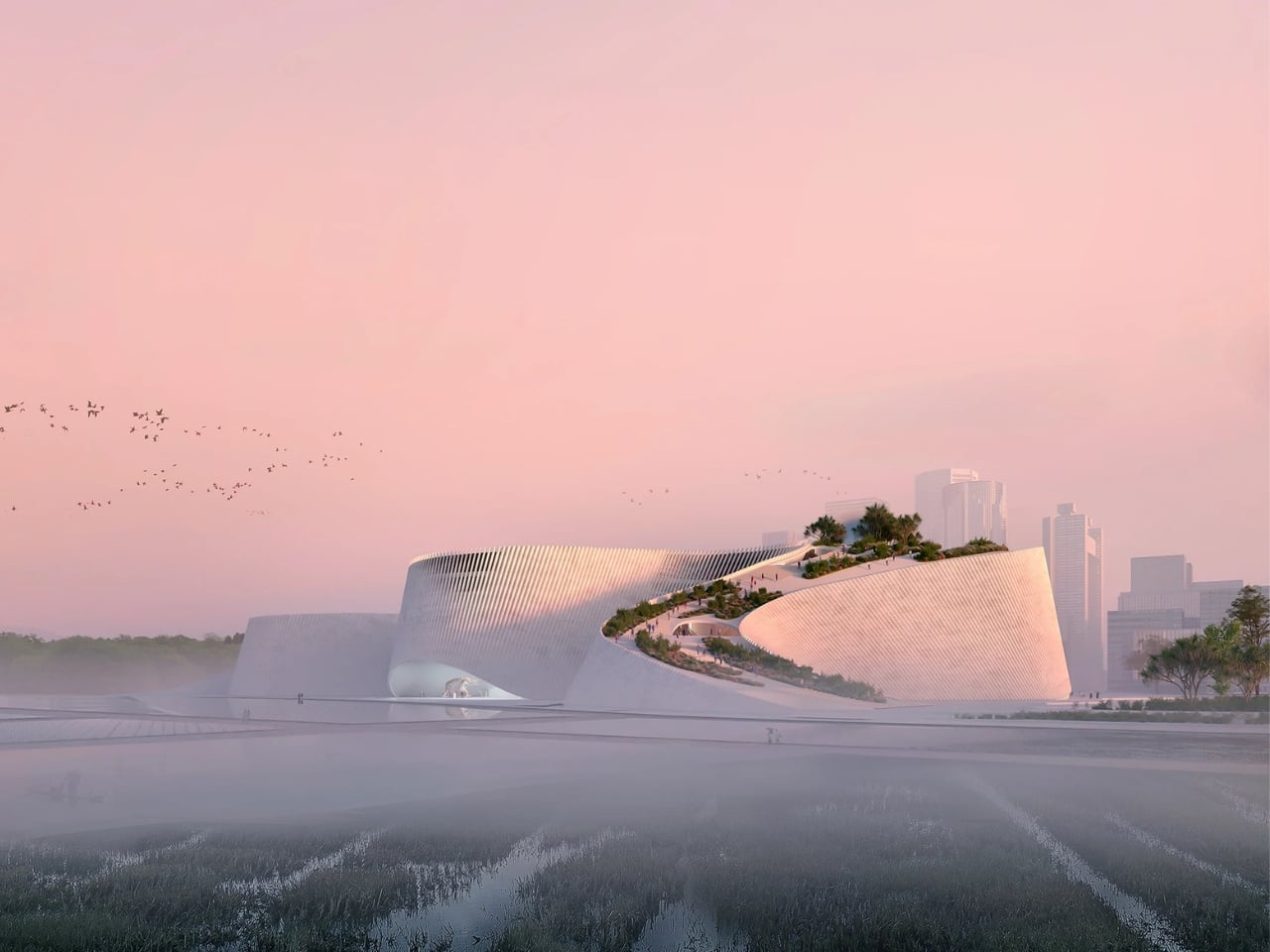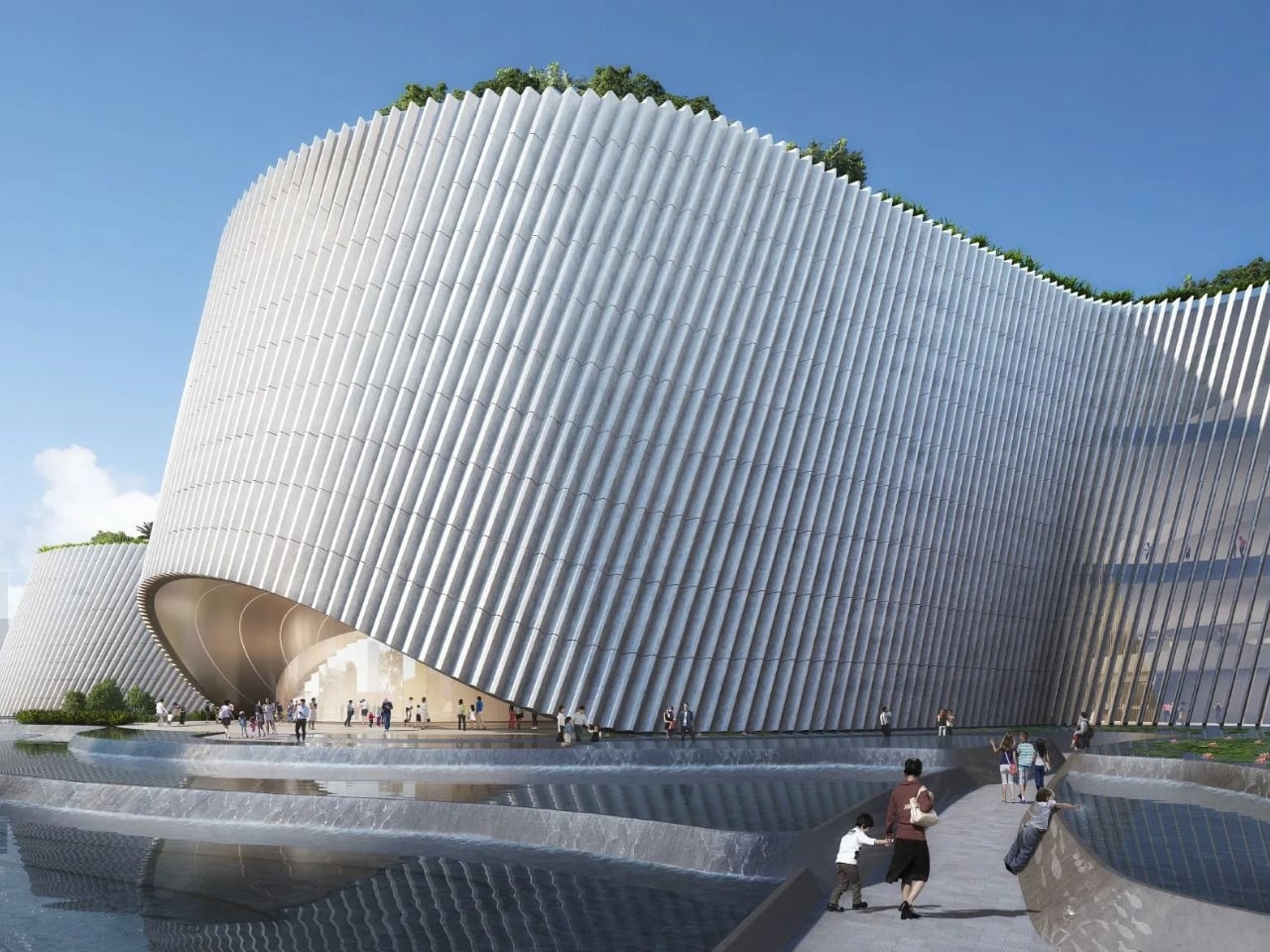

Museums have a reputation problem. For decades, they’ve been temples of quiet reverence: boxy, imposing, slightly intimidating buildings that seem to announce, before you’ve even walked through the door, that you should already be taking notes. So when a museum opens that genuinely looks like the Earth just pushed it out of the ground, it’s worth paying attention.
The Shenzhen Natural History Museum officially opened on July 28, 2026, in the Pingshan District of Shenzhen, China, and from the very first image you see of it, you understand that something fundamentally different was intended here. Designed by a consortium of 3XN, B+H Architects, and Zhubo Design, the 105,300-square-meter complex sits beside Yanzi Lake and rises in a series of fluid, granite-clad forms that look less like architecture and more like an ancient geological formation that was always meant to be there. That’s not an accident.
Designers: 3XN with B+H Architects and Zhubo Design
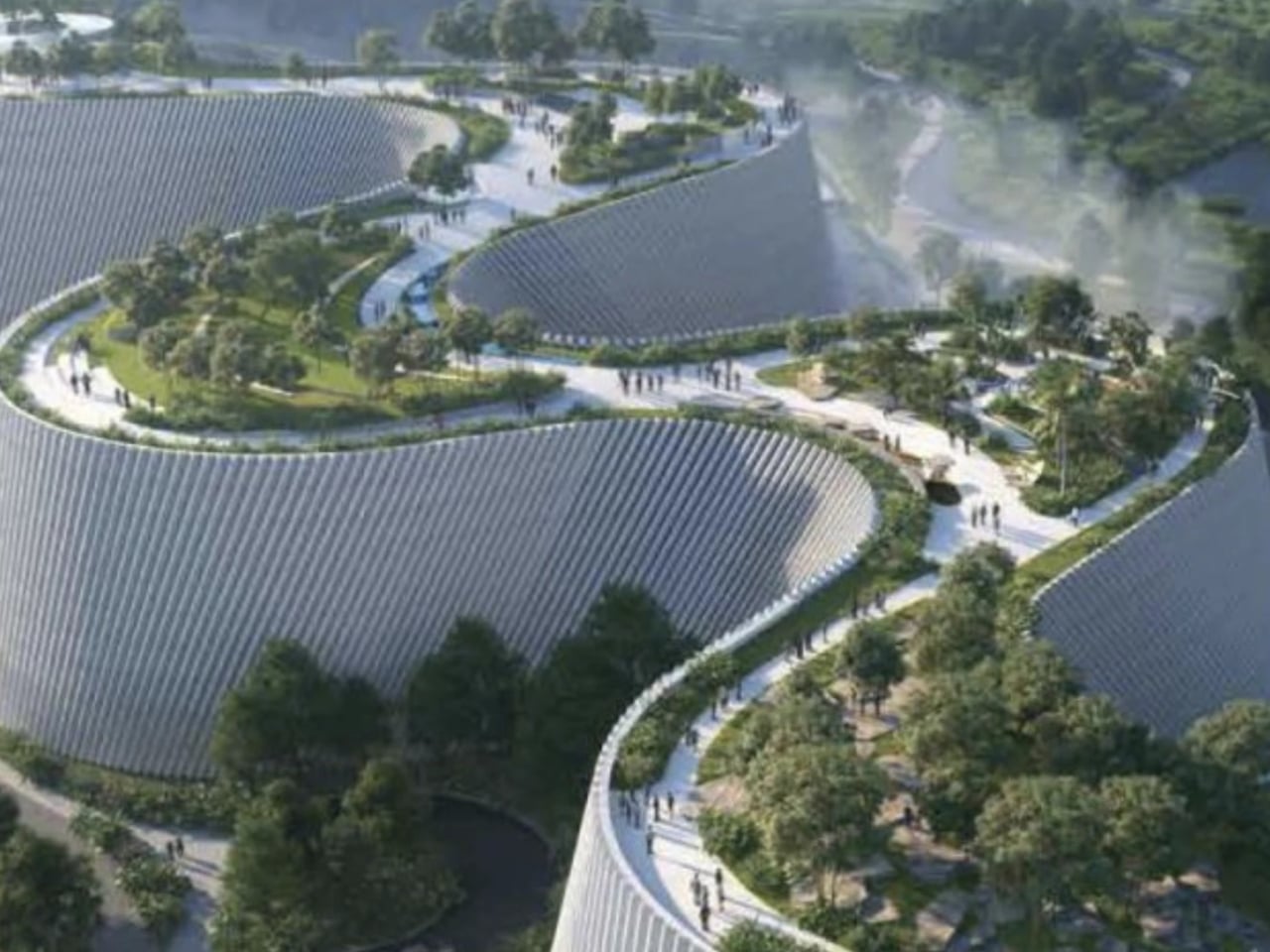
“Nothing in nature is square,” said 3XN founder Kim Herforth Nielsen. “Nature is amorphous, dynamic, and always in formation. From the beginning, the ambition was to create not a building, but a piece of landscape that had always been there, shaped by local geology, water and time.” That quote does a lot of heavy lifting, and the building earns it.
The design process was genuinely collaborative in a way that large-scale architecture rarely manages. 3XN led the concept design. B+H Architects handled project delivery, landscape, and interior expertise. Zhubo Design brought the local technical knowledge that a project of this scale in China absolutely requires. Construction began in March 2022 and wrapped up four years later. For a building that looks like a mountain range and functions like a public park, a museum, and a walking route all at once, that timeline is actually impressive.
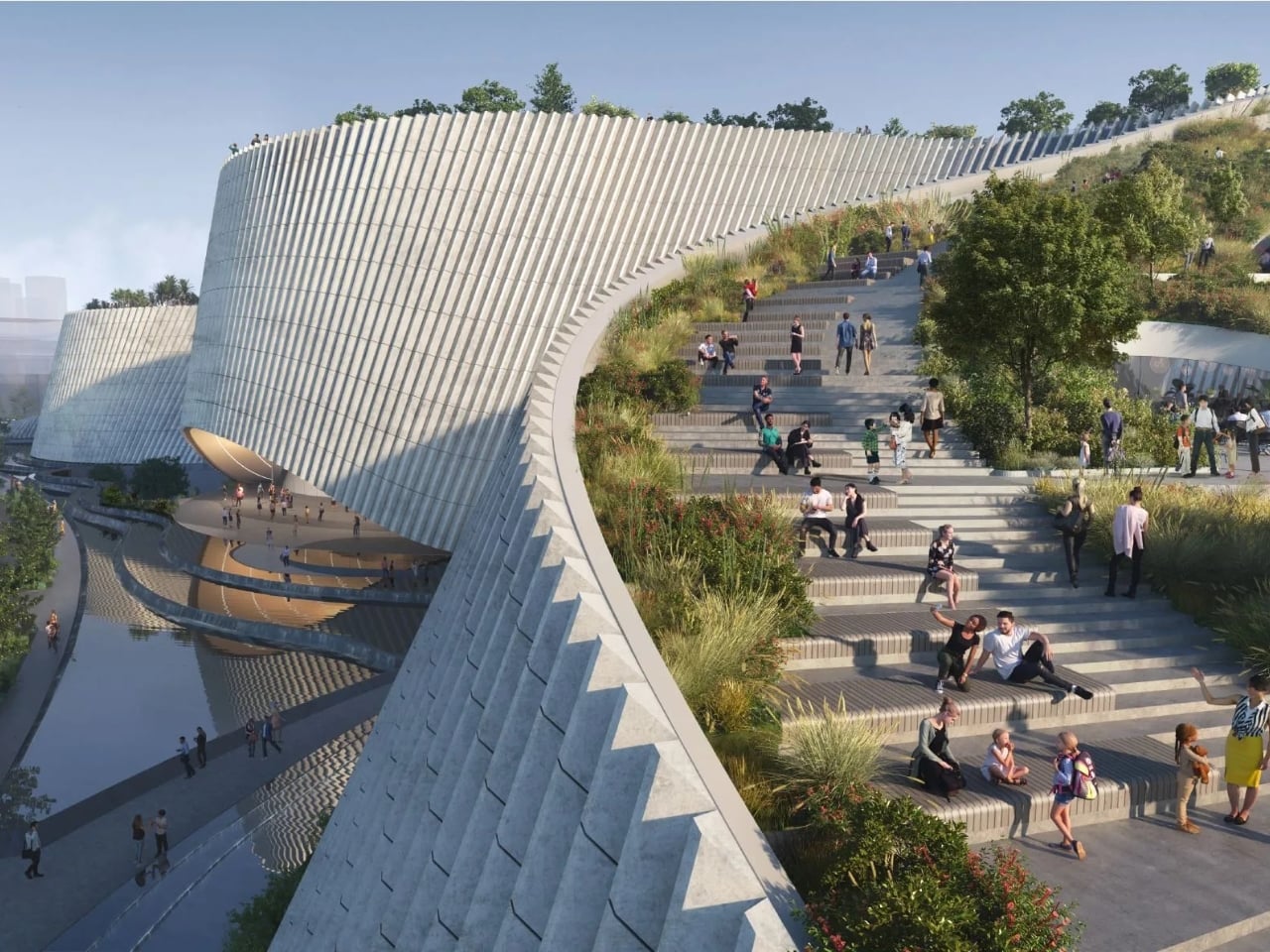
And yes, it functions like all three of those things simultaneously. The roof is walkable. The grounds are public. The building isn’t sitting behind a fence waiting for you to purchase a ticket before you’re allowed anywhere near it. It opens itself to the city, which feels like a deliberate philosophical statement about who science and natural history actually belong to. I appreciate that enormously. Too many cultural institutions operate like exclusive clubs dressed up as public spaces.
Inside, the experience continues the logic of the exterior. The exhibitions were developed with Atelier Brückner and Museum Studio, and the approach integrates the scenography directly with the architecture. Displays curve along the walls, rising through cone-shaped gallery spaces. Cinematic projections and immersive light installations make the galleries feel like environments you move through rather than rooms you stand politely in. If the outside of the building asks you to rethink what architecture looks like, the inside asks you to rethink what a museum visit feels like.
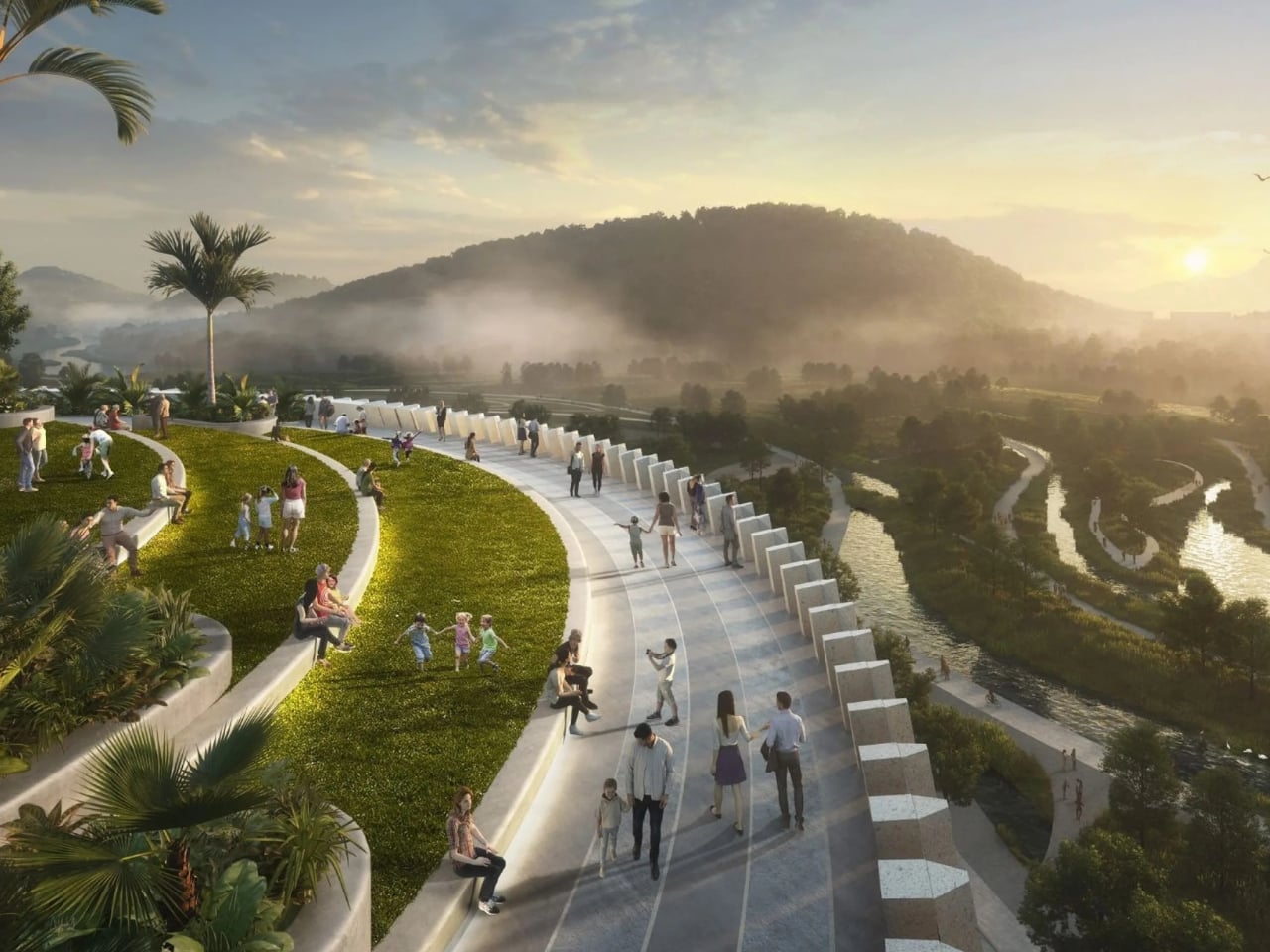
I’ll be transparent: I’ve seen the images, not the building. And images of architecture, especially this kind, are always a bit of a seduction. Photographs flatten and idealize. The real test of a building like this is whether it holds up over time, whether the crowds and the heat and the ordinary chaos of a functioning public institution diminish what feels, right now, like something genuinely extraordinary. That’s a fair question to hold.
But even accounting for that skepticism, the Shenzhen Natural History Museum makes a compelling argument for what museums can be when they stop treating their buildings as containers and start treating them as part of the story. Natural history is a story about a planet forming itself over billions of years. The building looks like a chapter of that story. That coherence is rare, and when architecture and content align that cleanly, it tends to produce something that lasts.
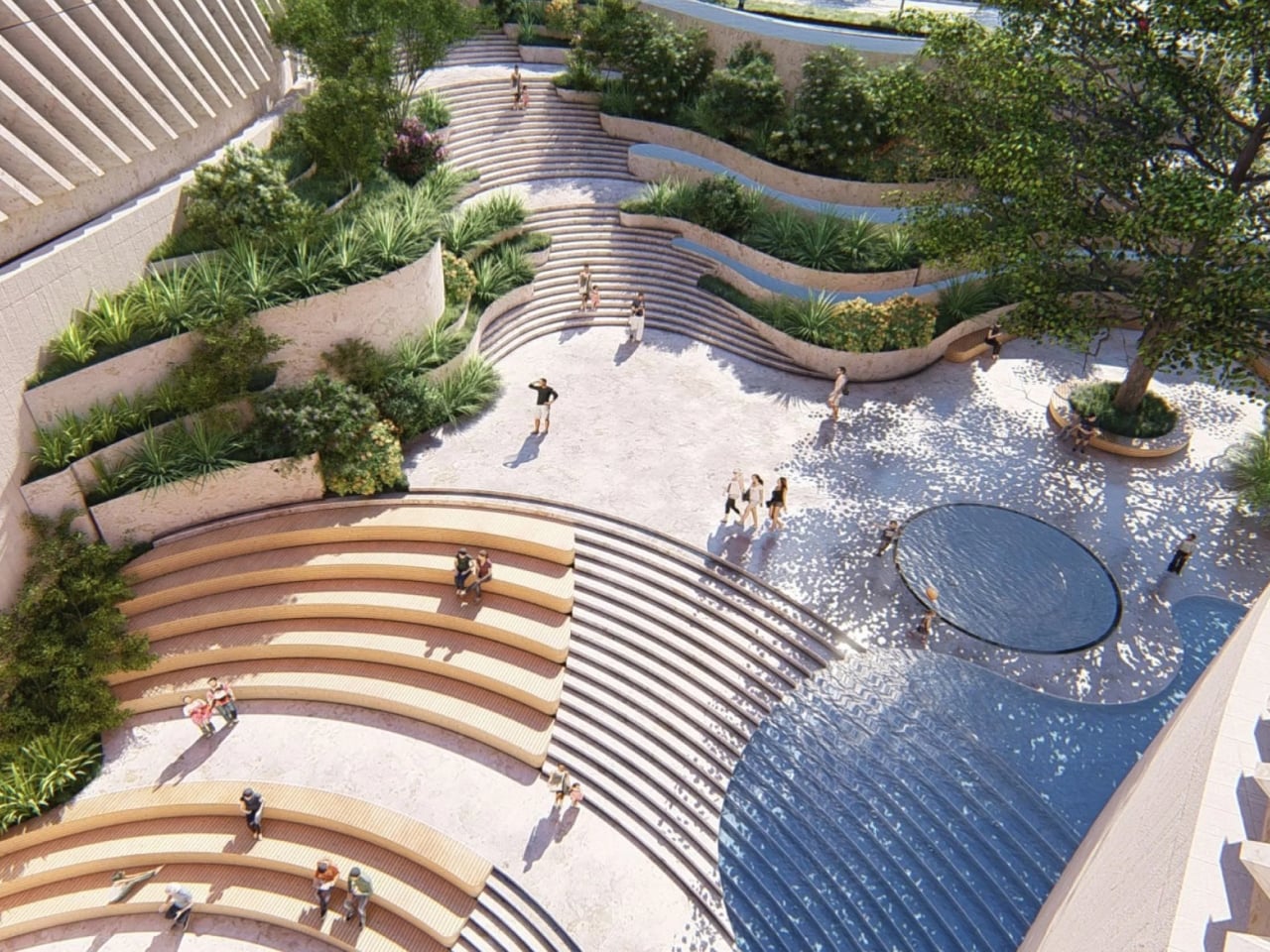
Shenzhen already has a reputation as a city that builds fast and builds bold. It’s the place where skylines get reinvented in a decade. But this museum isn’t bold for the sake of attention. It’s bold because the subject demanded it. And that distinction, quiet as it is, makes all the difference.