
In 1982, Universal Studios looked at Donkey Kong, saw King Kong, and sent lawyers. Standard shakedown stuff, and most companies would have folded and paid up. Nintendo’s counsel Howard Lincoln did some digging instead and found that Universal had previously argued in court that King Kong was public domain, because it suited them at the time. The judge was not amused. Nintendo won, collected damages, and Lincoln eventually ended up running Nintendo of America. A cartoon ape throwing barrels down some girders survived a copyright fight against a Hollywood studio and helped bankroll a company that now sells more hardware than most of Hollywood sells tickets.
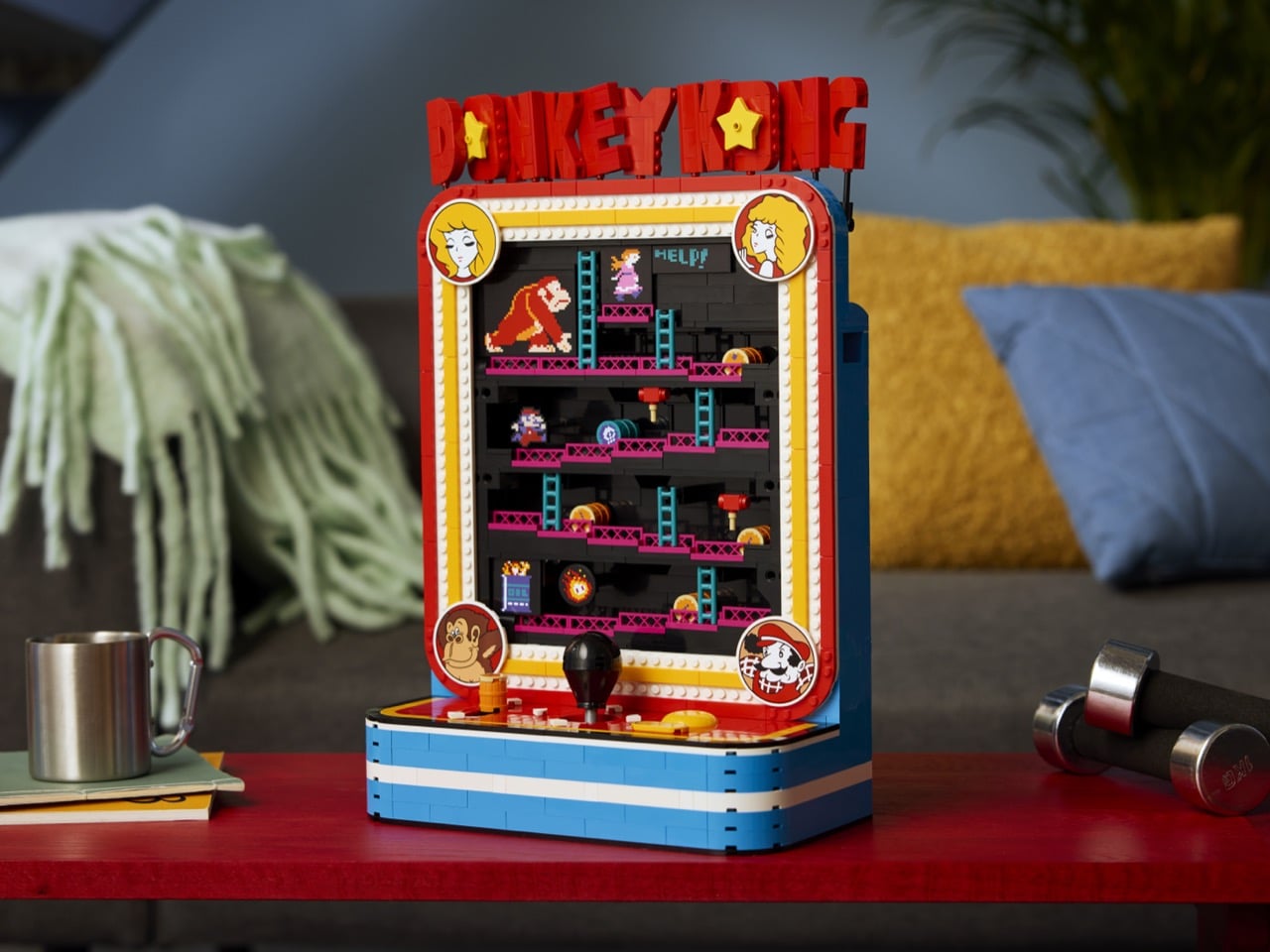
That ape finally gets his LEGO moment with the Donkey Kong Arcade (72051), a 1,367-piece brick cabinet standing 39 cm tall, 27 cm wide, and 15 cm deep. It’s slightly strange that LEGO got to the NES, a Pac-Man cabinet, and a pinball table before touching the game that saved Nintendo from a warehouse full of unsold Radar Scope machines, but here we are. Pull the lever and one of 21 barrels drops into play, rolls down the girders, and loops back around underneath for another run. No motors, no app, no sound. Purely mechanical, in the best possible way.
Designer: LEGO
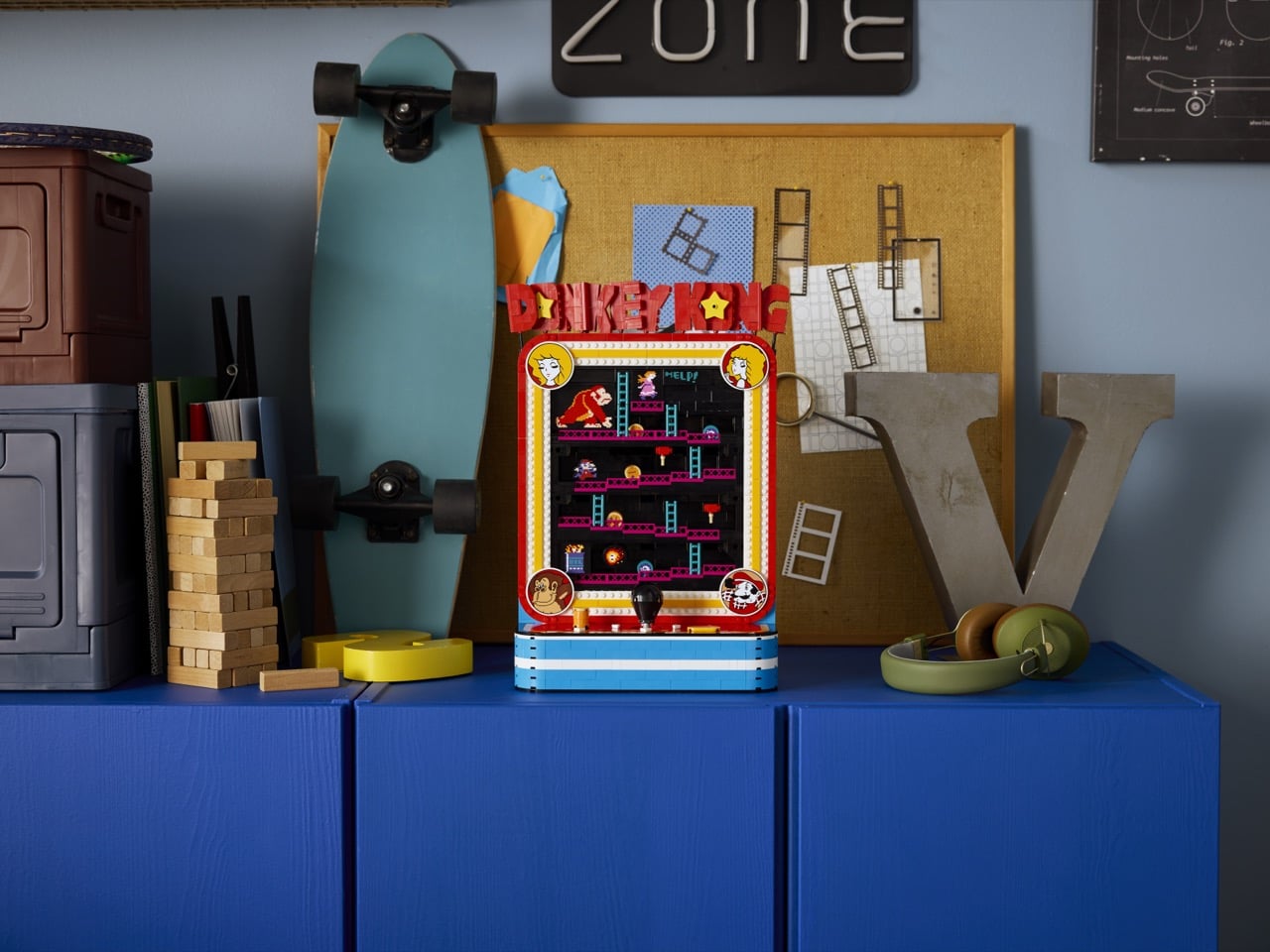
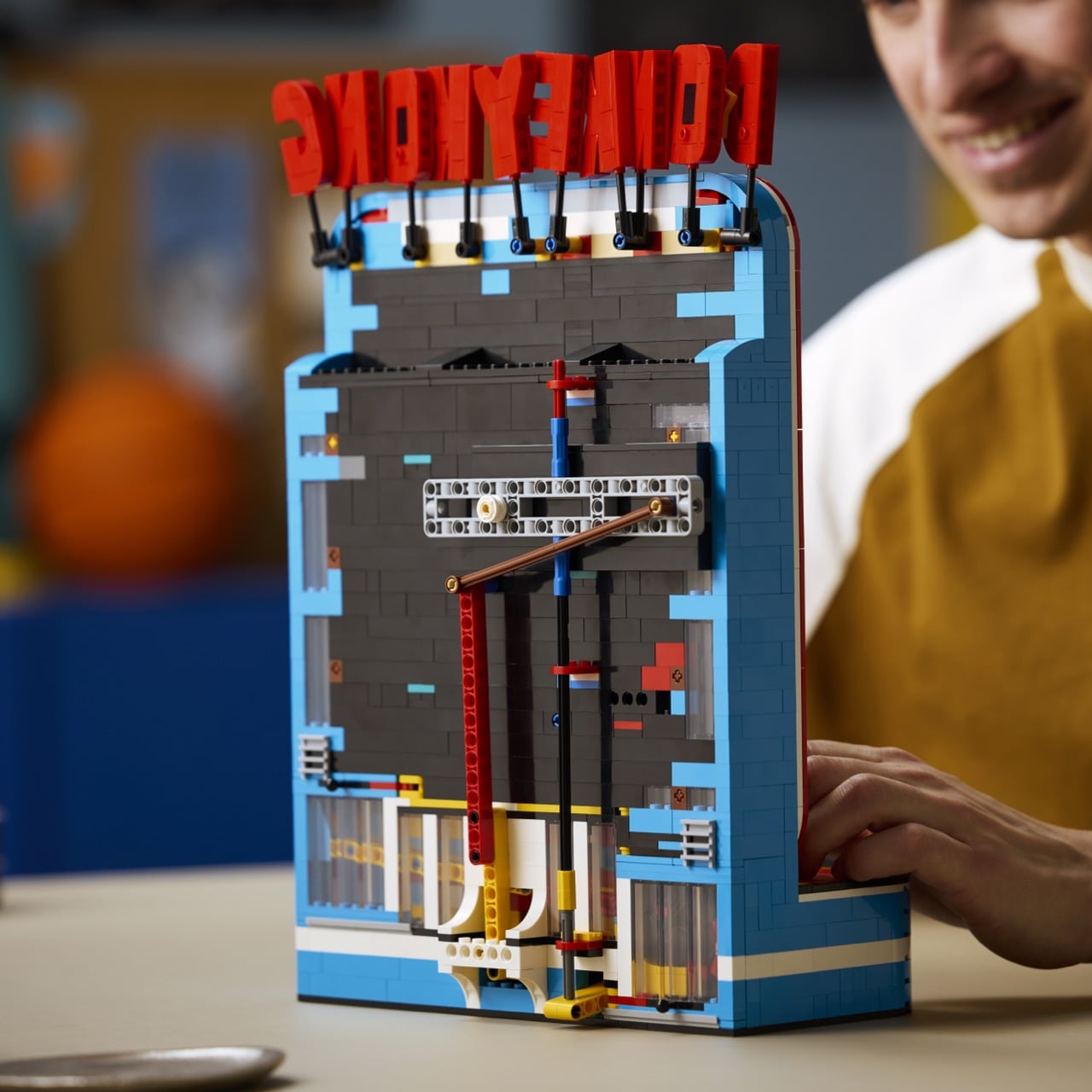
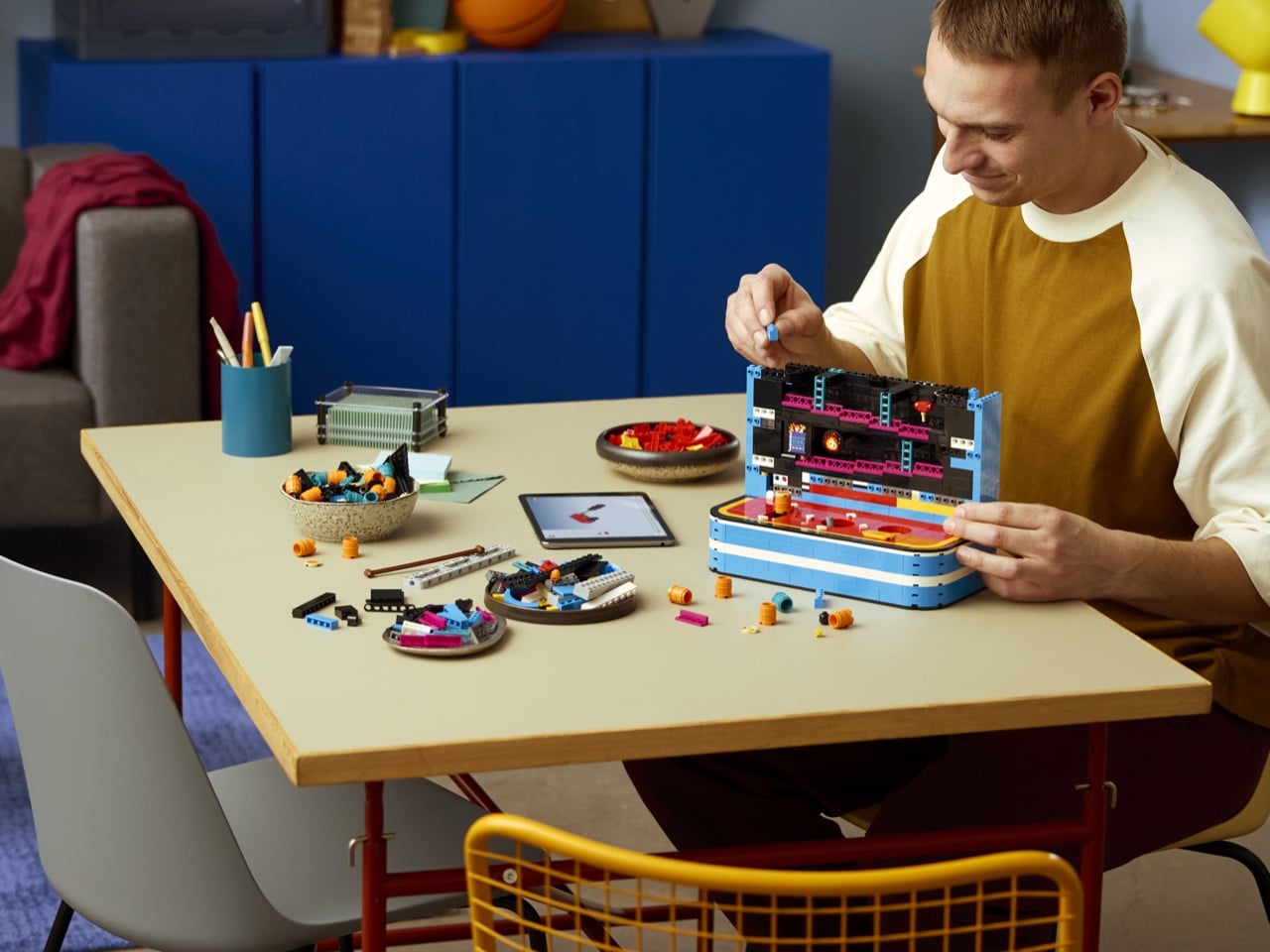
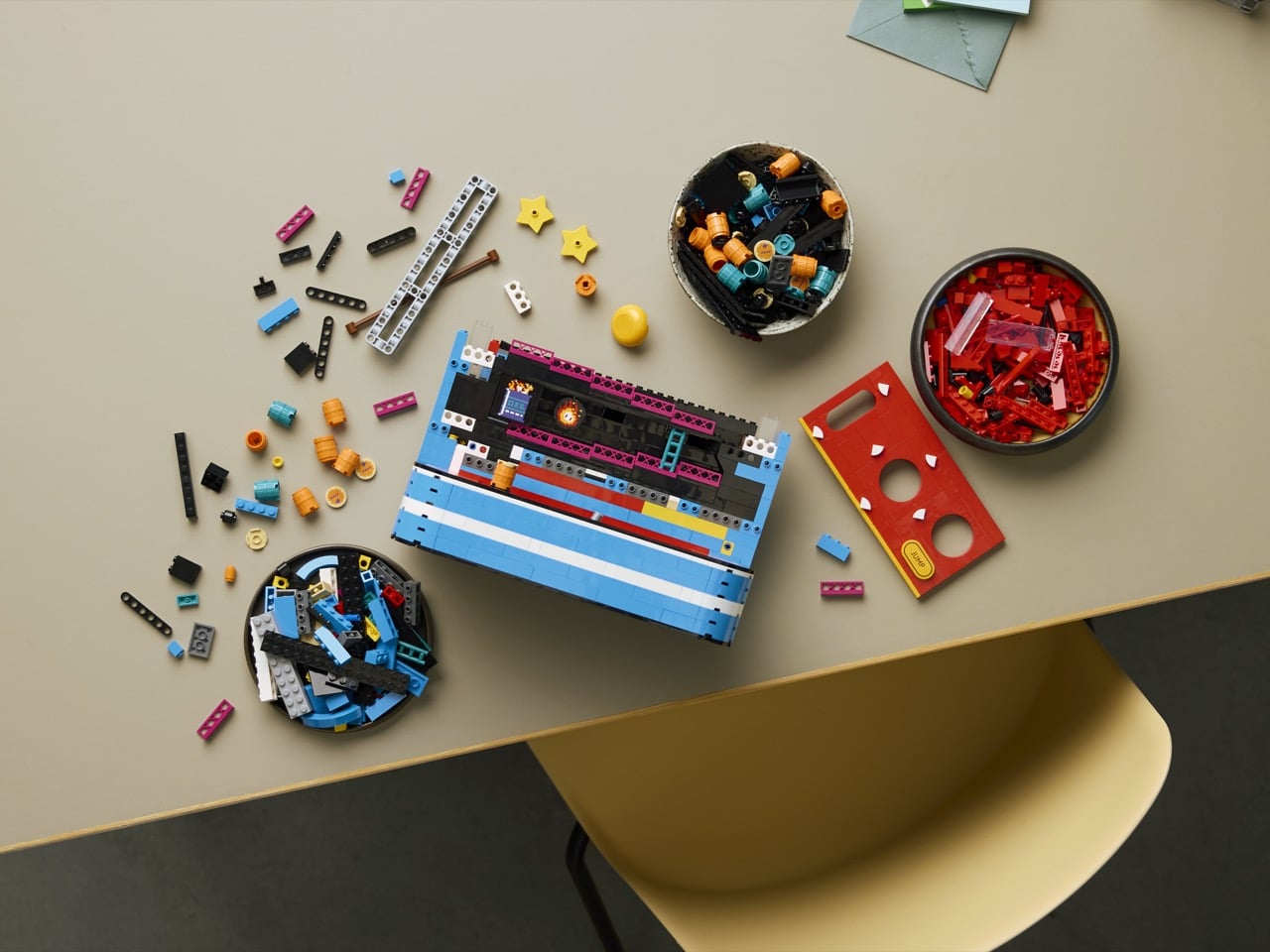
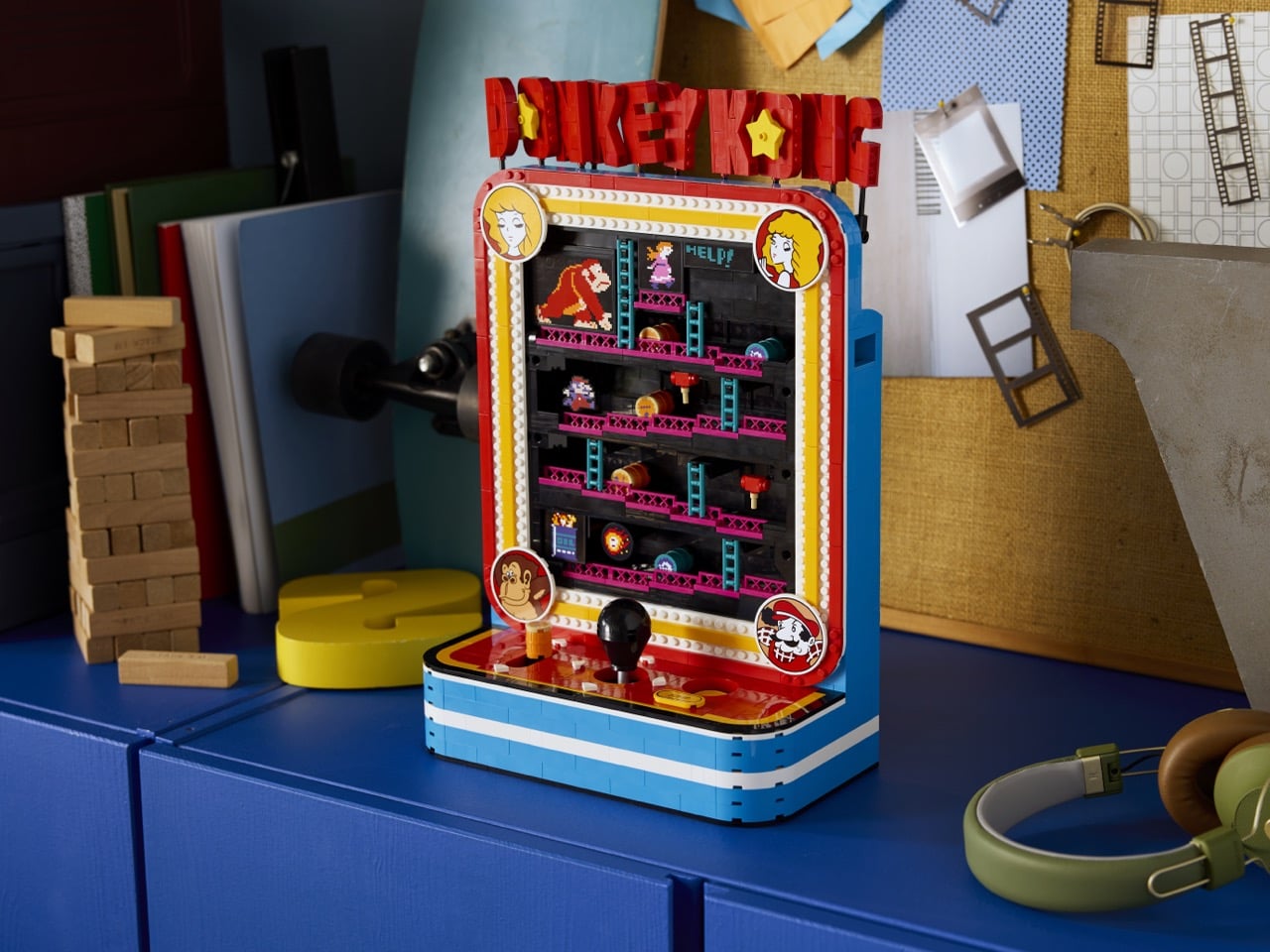
The screen is the showpiece and it’s built as flat pixel art, something that rectangularLEGO bricks do pretty well. Donkey Kong himself occupies the top left in that unmistakable stack of red-brown studs, Lady stands on the highest girder next to a tiled HELP! sign, and Jumpman sits a few floors below in his blue and red. The girders are magenta, the ladders are teal, and the hammers sit waiting on their little pedestals exactly where muscle memory expects them. There’s an oil drum with a flame sprouting out of it, four circular character portraits at the corners of the bezel, and a marquee where every letter of DONKEY KONG hangs off its own individual bar element. That last detail is the sort of thing you only notice from behind, and it’s a lovely bit of overengineering for what is essentially a sign.
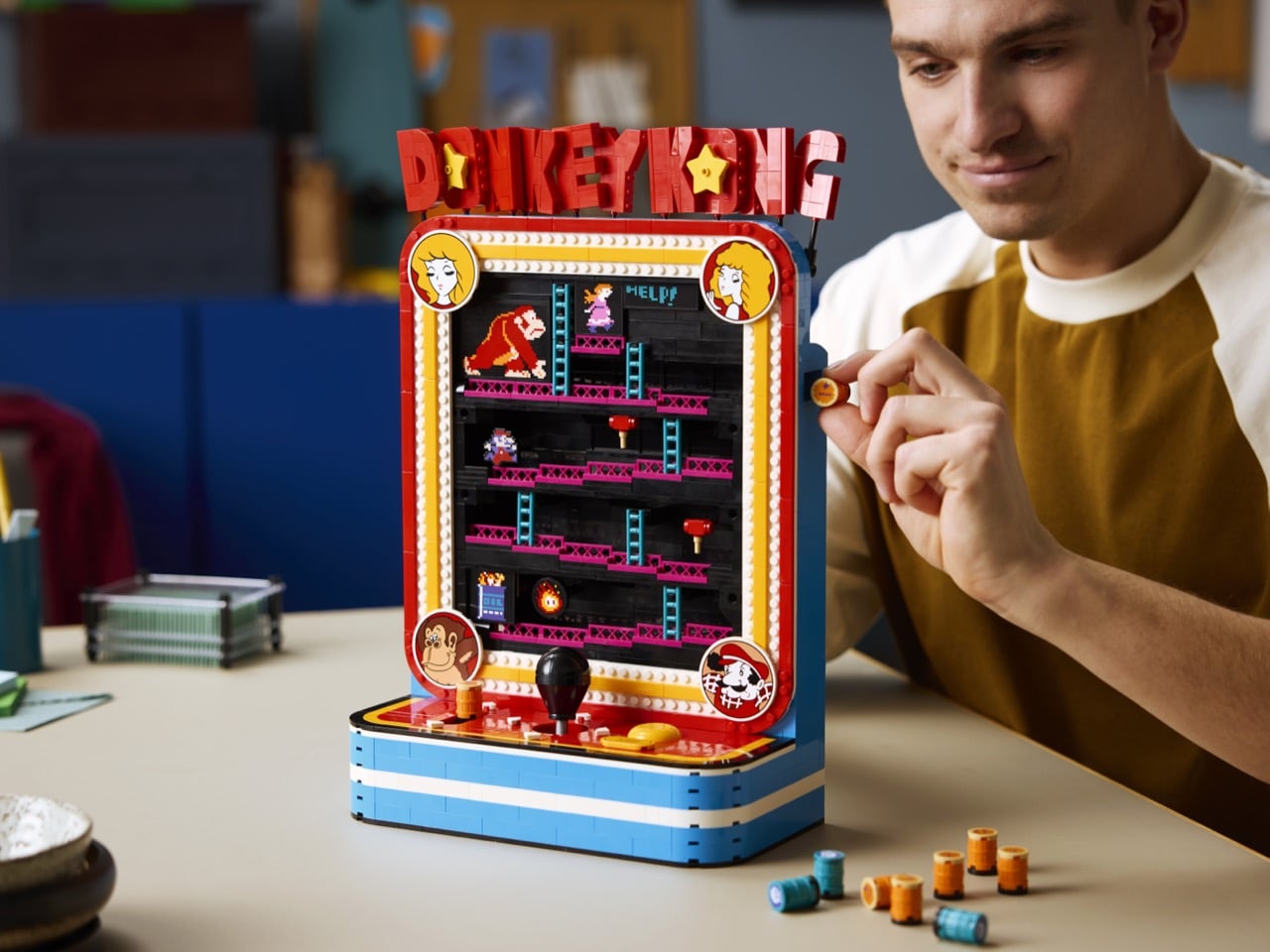
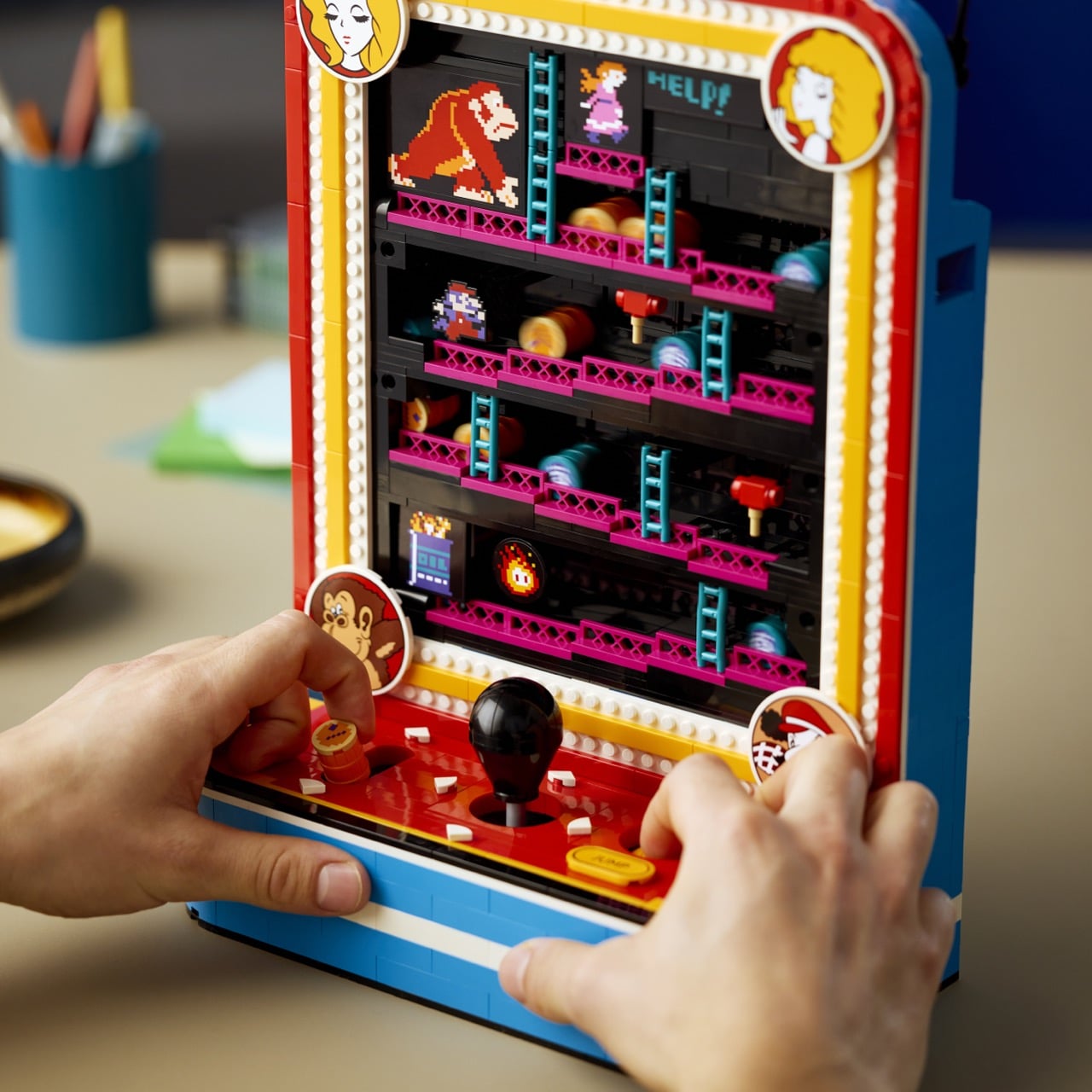

LEGO left the back completely open, which I personally love. Flip the cabinet around and you get the whole mechanism laid bare: Technic linkages, axles, a long lever arm running the height of the build, and transparent chutes at the base where the barrels queue up for their return trip. It reads like an open watch movement, and it does the thing good mechanical design always does, which is make you understand how it works just by looking at it. You load barrels into a slot on the control deck, the lever meters them out one at a time, gravity handles the rest, and the loop feeds them back. For a set that could easily have been a static wall piece, somebody in Billund clearly fought to keep it playable.
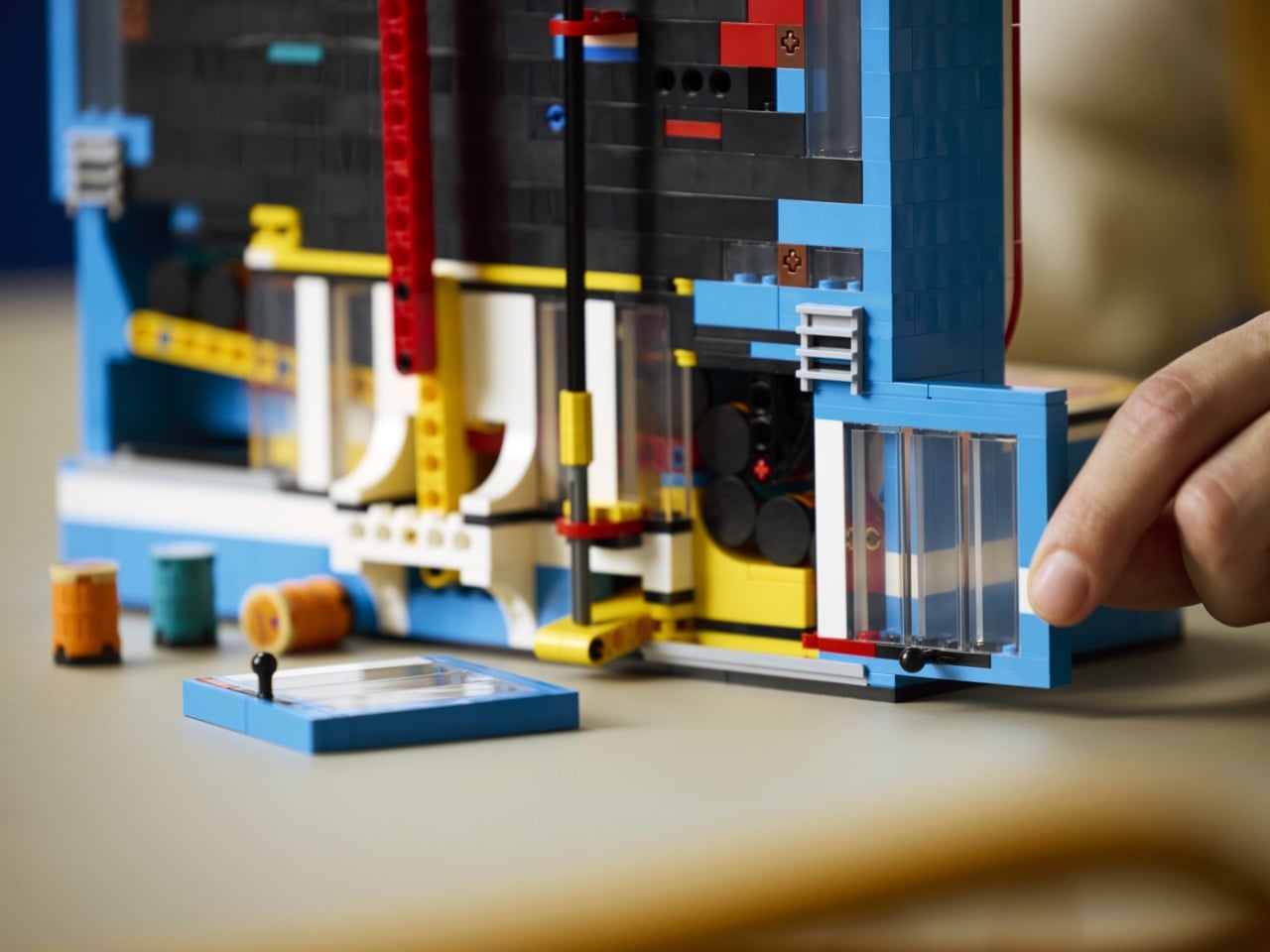
The controls are real controls too. The joystick shifts Jumpman along his girder and the yellow button makes him hop, which means you can genuinely attempt to dodge a barrel and genuinely fail. Purists will note that the cabinet itself is boxier than the 1981 original, with a flat screen where the real thing had a curved CRT and an angled control panel, so don’t expect a scale-accurate replica of the machine that ate your quarters. It’s an interpretation, and the blue and white striped base sells it well enough.
Worth flagging that this lands under LEGO Super Mario rather than Icons, where the Pac-Man cabinet and the Pinball Machine both live. Small thing, but it tells you LEGO is treating Donkey Kong as Mario canon rather than arcade history, which is arguably backwards given who came first.
The Donkey Kong Arcade (72051) is up for pre-order at $199.99 with shipping from August 1, limited to three per household, and it nets you 1,300 LEGO Insiders points if you’re collecting those. LEGO’s own product page can’t decide whether it’s 1,367 or 1,371 pieces, so pick whichever number you prefer at parties. The one thing missing is sound. Give me a brick-built clicker that fires off that opening stomp, or even just a light behind the marquee, and this goes from very good to genuinely unbeatable.

