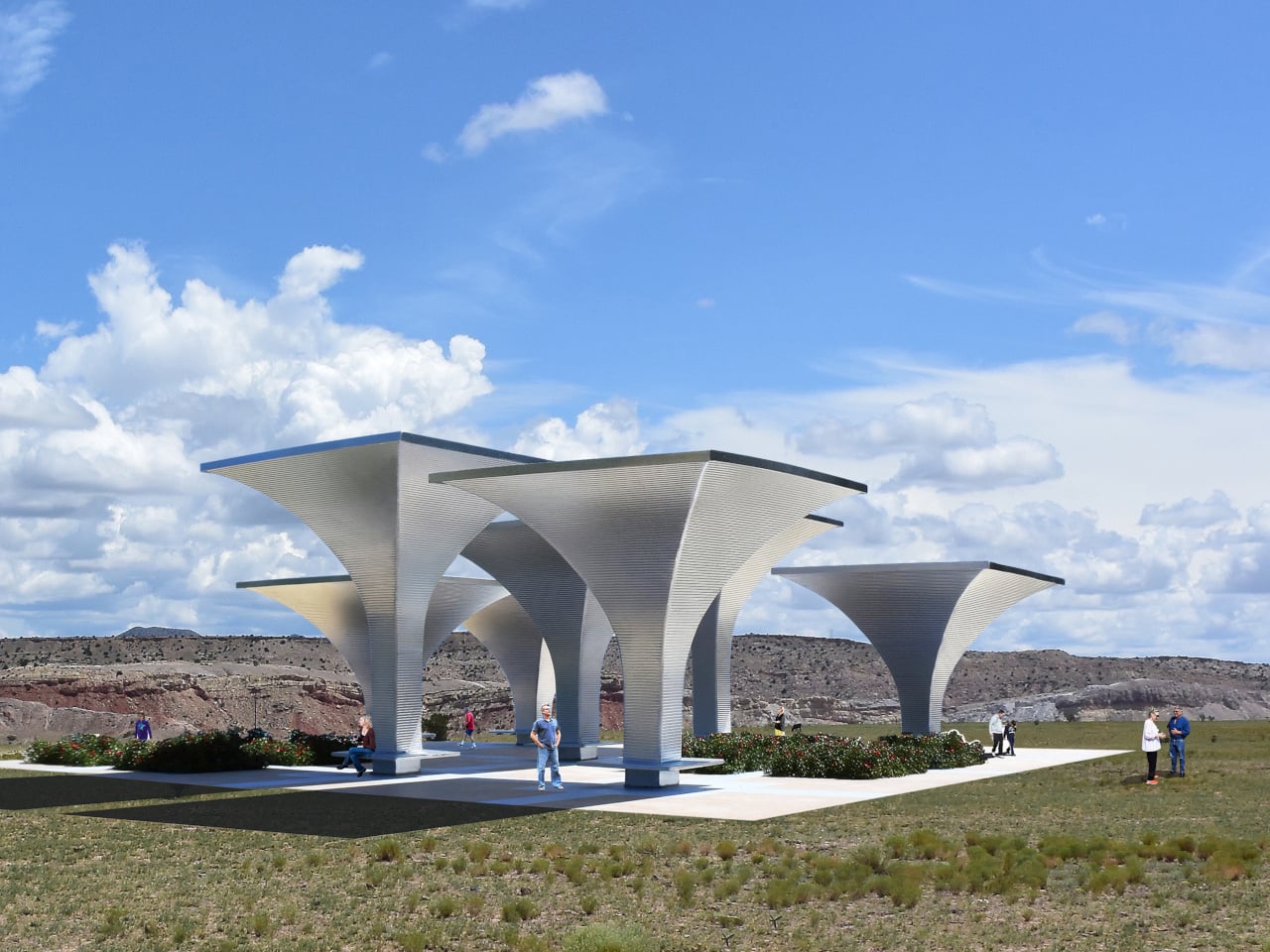

Water scarcity and urban heat are two separate crises that public infrastructure rarely addresses together. Most public spaces are designed primarily for social use, with sustainability features treated as additions bolted on during planning approvals. The result is civic furniture that looks environmentally conscious on paper but often functions in ways that keep each system largely isolated from the others.
The Solar Rain Funnels propose a different model. Each funnel-shaped structure is a prefabricated, modular unit made from galvanized steel that collects rainwater, generates solar electricity, and provides shaded public seating, all from the same form. Rather than treating harvesting and gathering as separate programs, the design bundles them into a single object that does each job without architectural compromise.
Designer: Michael Jantzen
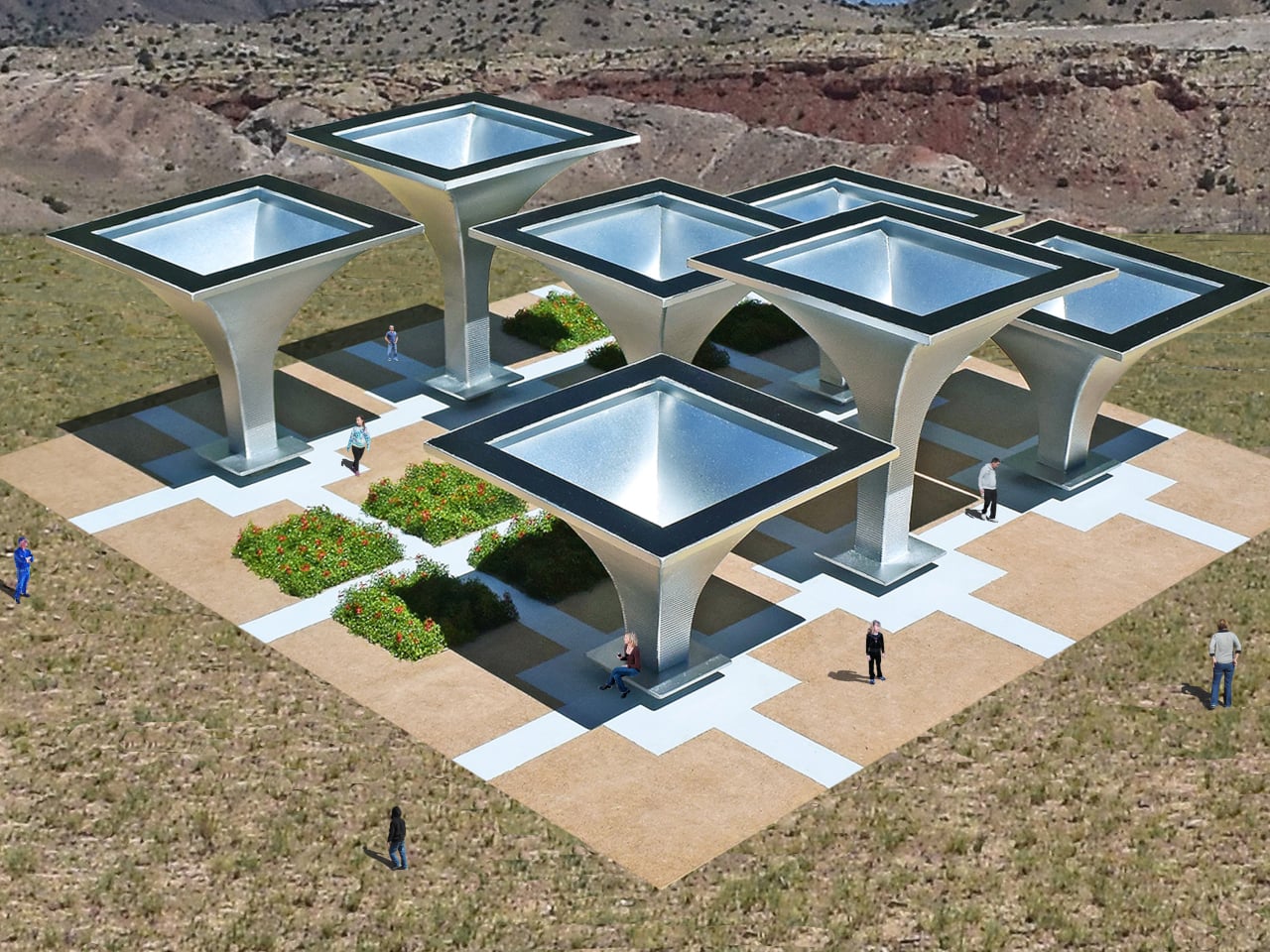
The form does most of the work. Each funnel is wide at the top and narrows toward the base, which means its surface naturally directs rainfall inward and downward into collection channels. Solar cells line the top edge, capturing sunlight from the same surface that intercepts rain. A bench is mounted around the perimeter at the base, completing the third function without requiring a separate structure.
What’s collected below the surface matters as much as what happens above it. Rainwater storage containers, or diversion channels connecting to off-site containment, are installed under the plaza to hold water for later community use. The solar electricity powers the pump that moves water from storage and lights the funnels after dark. Excess power feeds into the local grid, and on-site batteries let visitors charge devices.
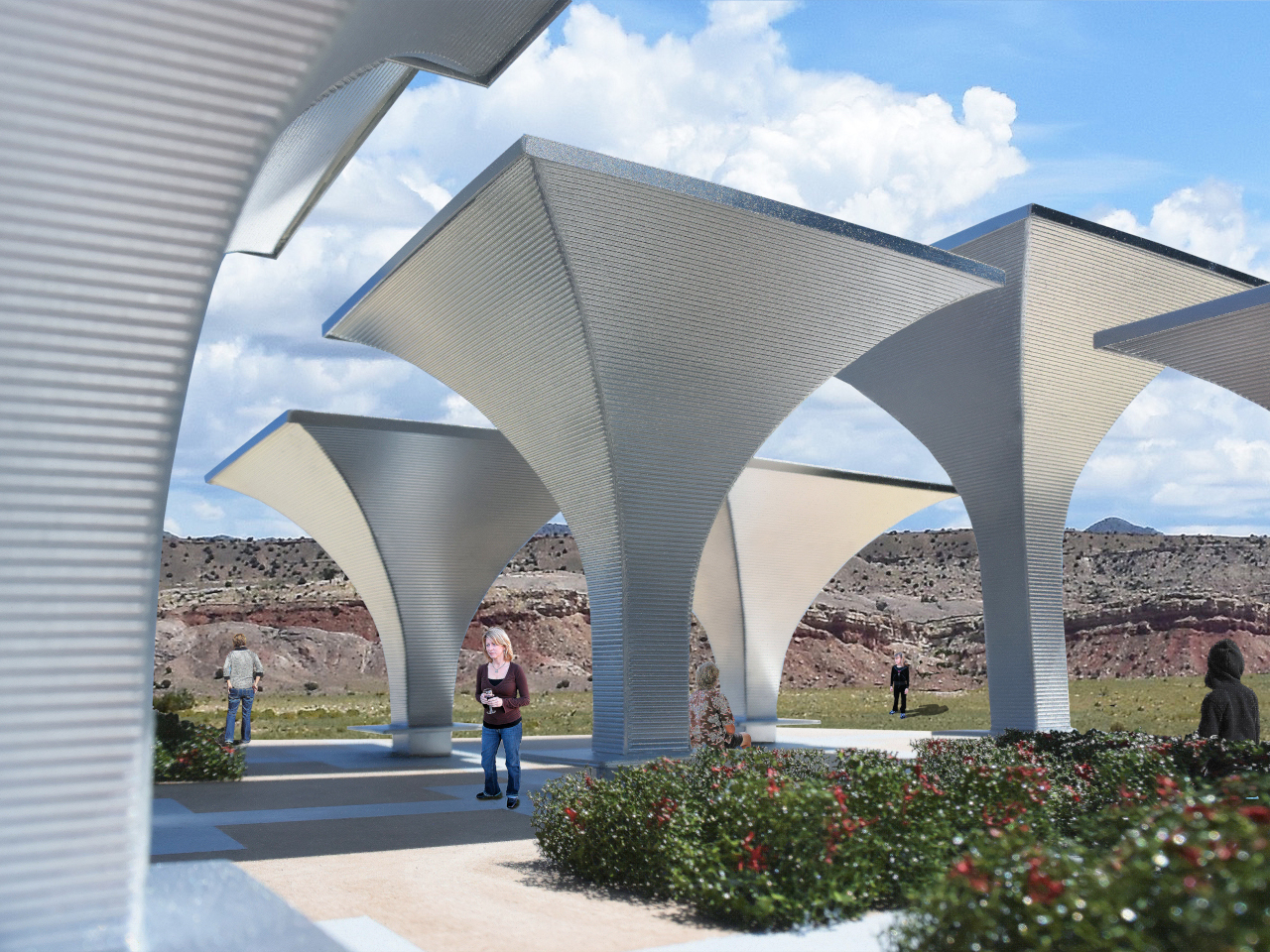
The prefabricated and modular nature of the design means installation doesn’t require building a new structure from scratch each time. Each funnel arrives at the site in pre-made sections that bolt together, and any number of units can be arranged into any configuration the site allows. In the reference proposal, seven funnels are arranged in a grid over a plaza, with drought-tolerant garden plantings filling the spaces between them.
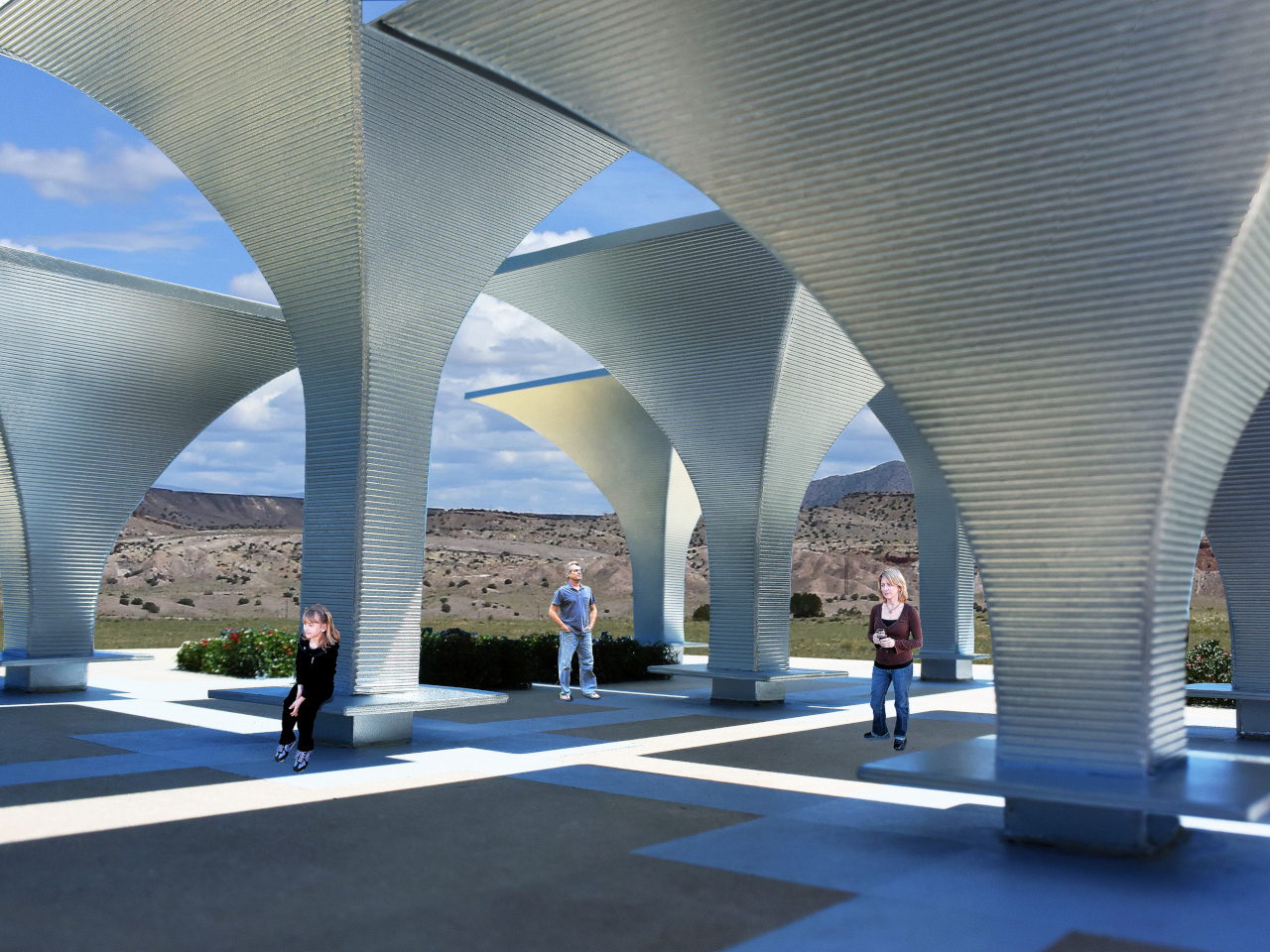
That plaza arrangement gives visitors something more useful than just shade. The overhead canopy formed by the funnel array blocks enough direct sunlight to make the space comfortable in hot, arid conditions, which is significant given that the concept is intended for communities experiencing water stress. Gardens planted with low-water-consuming species fill the gaps between funnels, making the plaza functional as a green space even in dry climates.
Size is treated as a variable rather than a fixed specification, because the concept anticipates installation across different kinds of sites. A smaller cluster of funnels might serve a neighborhood corner or transit stop, while a larger array could anchor a civic plaza or regional park. The galvanized steel construction and bolted assembly make each installation relatively straightforward to adapt, scale, and transport to wherever it’s needed most.
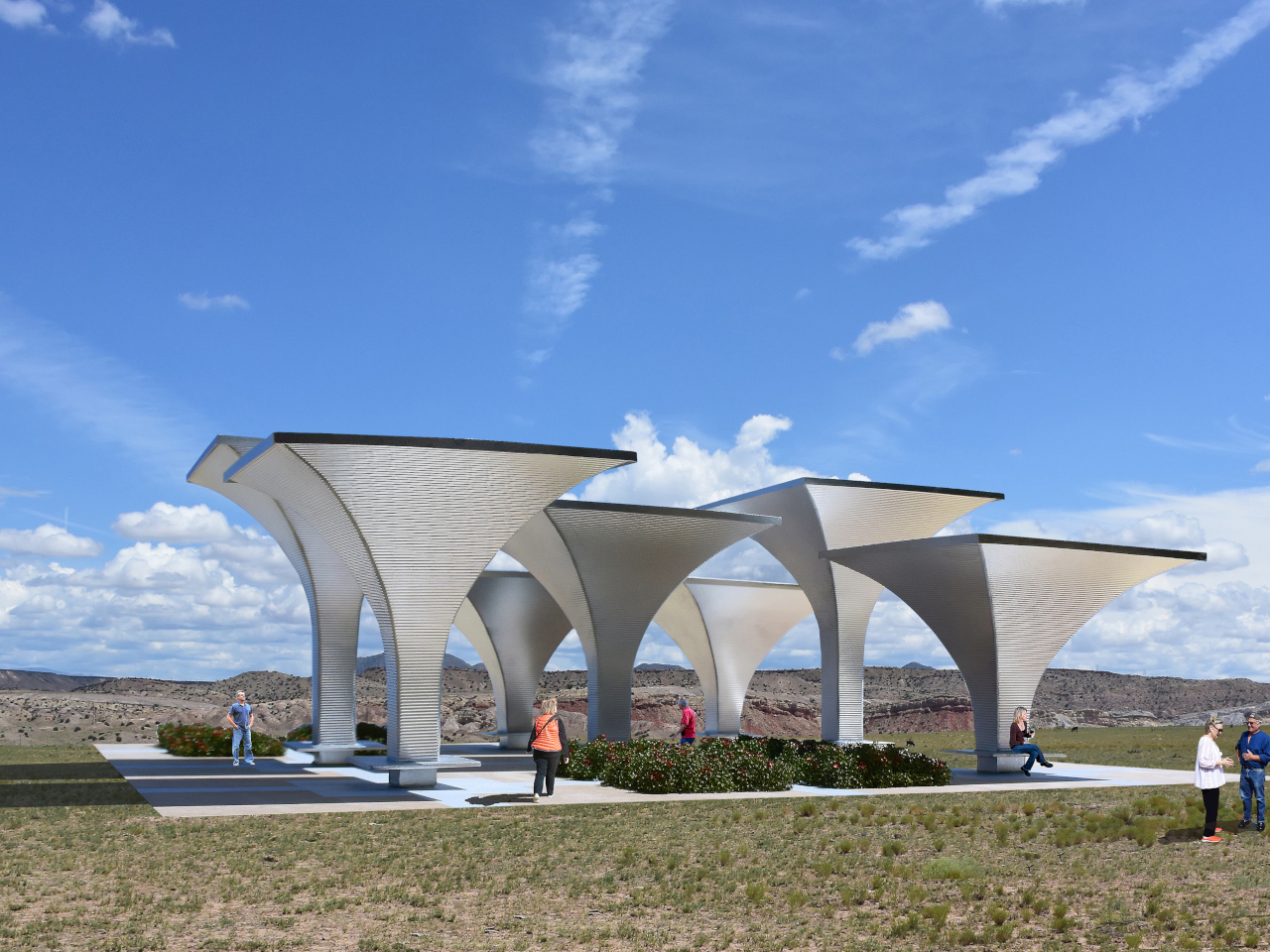
The concept is currently unbuilt, but what distinguishes it from other multi-function proposals is that each function follows directly from the form rather than being added to it. The wide, concave top collects rain. The exposed edge holds solar cells. The shaded base provides seating. Nothing requires the structure to be shaped any differently to perform those jobs, which is the kind of efficiency that makes a proposal feel plausible.

