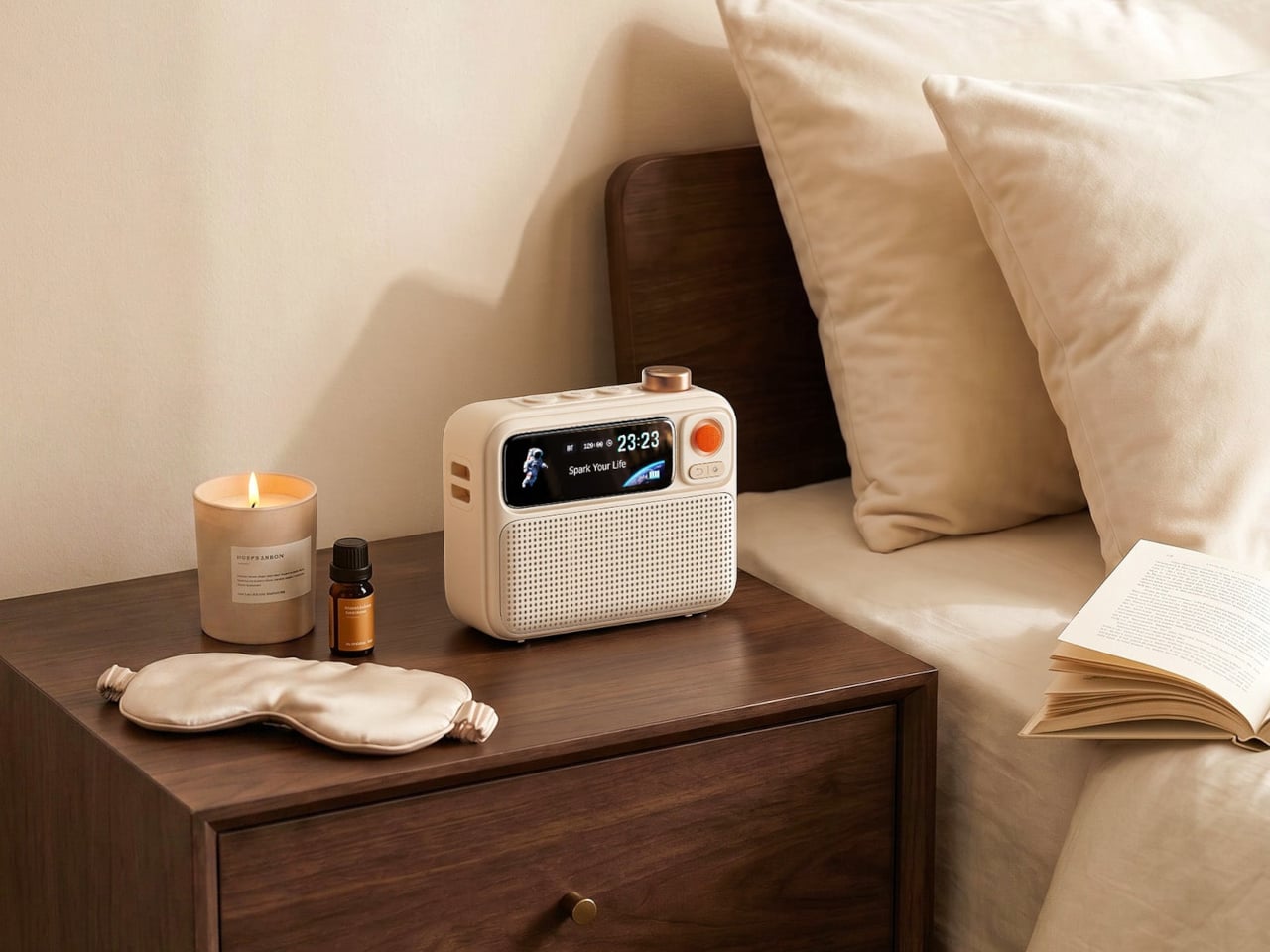

The average nightstand is a collection of individual decisions made at different points of frustration. An alarm clock here, a white noise machine there, a lamp chosen because it was on sale. None of it was designed to work together. Most of it arrived one problem at a time, and collectively it creates a surface that looks more like a staging area than something assembled with any actual intention.
The five products below approach that surface differently. Each earns its place because it occupies a lane the others don’t: sound and wake, passive amplification, sleep tracking, scent, and air quality. None are trying to do everything. They’re each doing one thing well enough that you’d miss it if it weren’t there, which is the only real standard worth applying to anything that gets permanent real estate beside your bed.
1. Divoom FlowToo
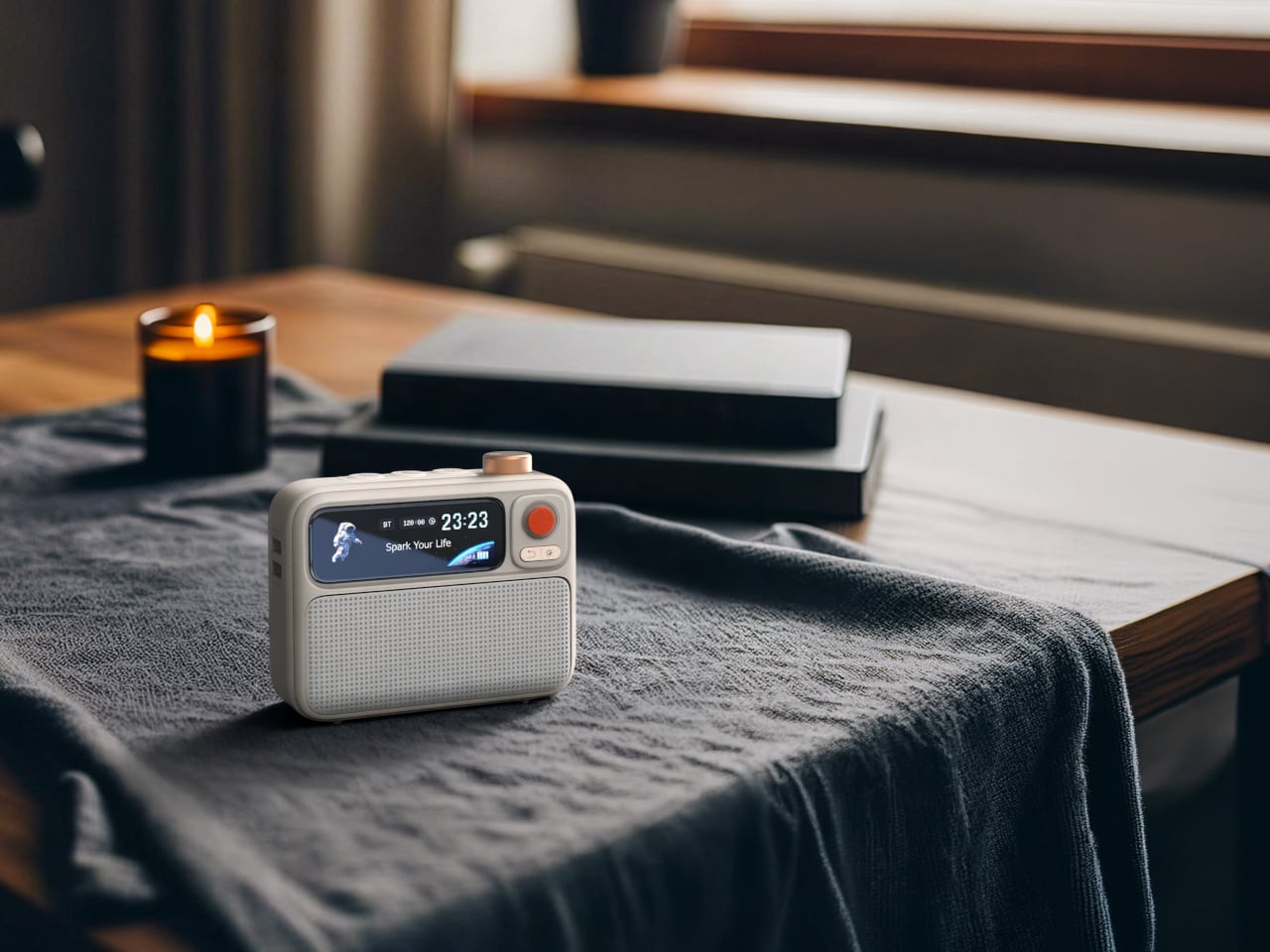
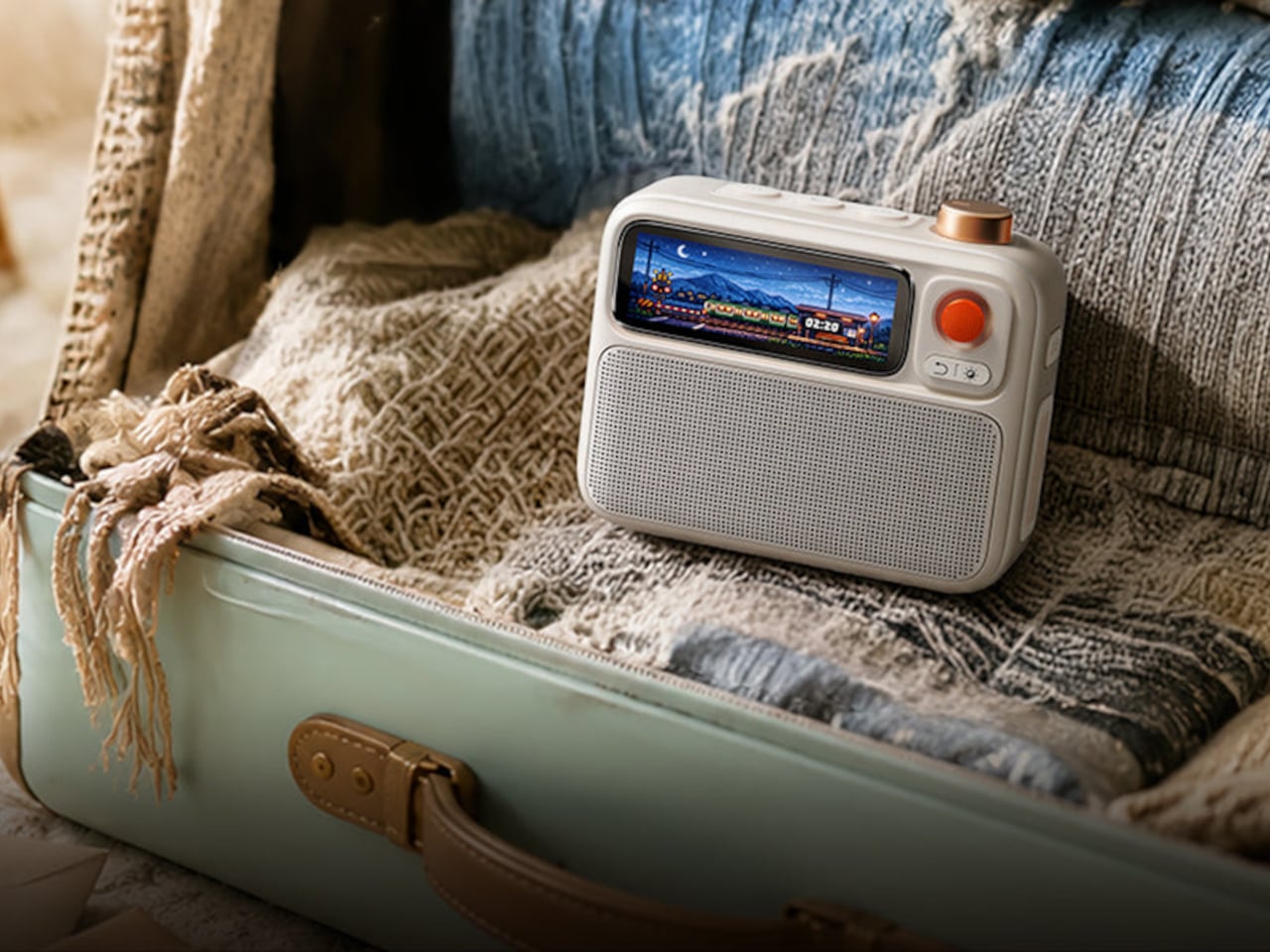
The FlowToo makes the clearest case of any product here for what a modern nightstand gadget should do: replace three things you already own without compromising on any of them. It’s a Bluetooth speaker, a white noise machine, and an alarm clock occupying the footprint of one compact device. At $99.99, it costs less than most dedicated alarm clocks at the category’s upper end, and brings a 10W amplifier and 45mm full-range driver to the audio side of that equation.
The more than 90 built-in sounds cover what people actually reach for at night, from rain and ocean ambience to forest tones and beyond. The 2.26-inch display cycles through clock faces, music visualizers, and sleep scene animations that shift the room’s atmosphere without demanding much attention. The Divoom app handles alarm setting and sound selection from your phone, keeping the device simple to operate without buttons nobody remembers how to press. Waking up gets the same consideration: natural sounds grow gradually louder alongside a gentle light, which makes a real difference to how the morning starts.
What we like:
- The 3-in-1 consolidation is genuine and not a compromise; the speaker, white noise, and alarm functions each stand on their own merits
- The gradual light-and-sound wake replaces a jarring alarm without requiring any meaningful setup
What we dislike:
- The 2.26-inch display may feel small for anyone who wants a clock face readable from across the room
- Full functionality depends on the Divoom app, which adds a layer of dependency a simple alarm clock never carries
2. Battery-Free Amplifying iSpeakers
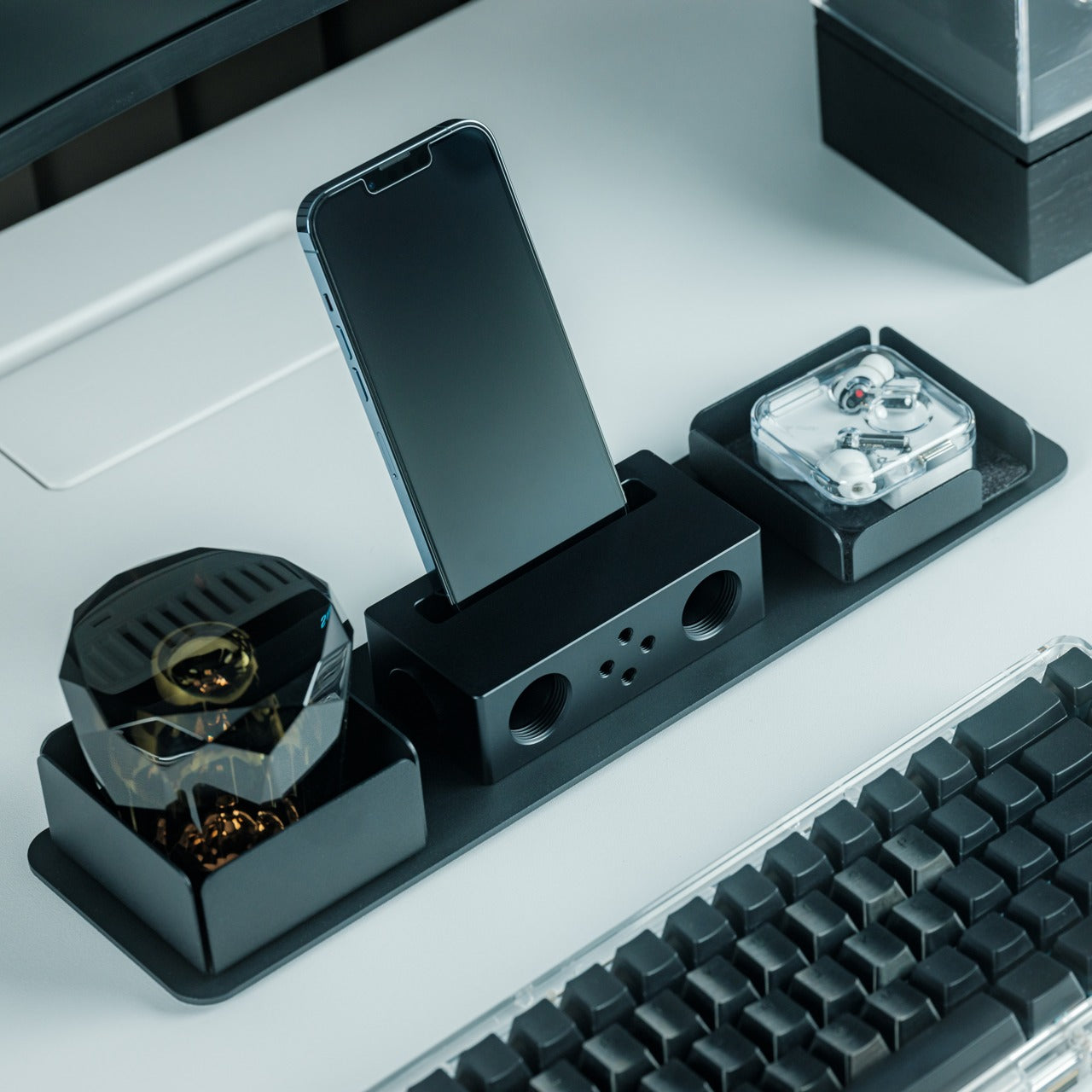

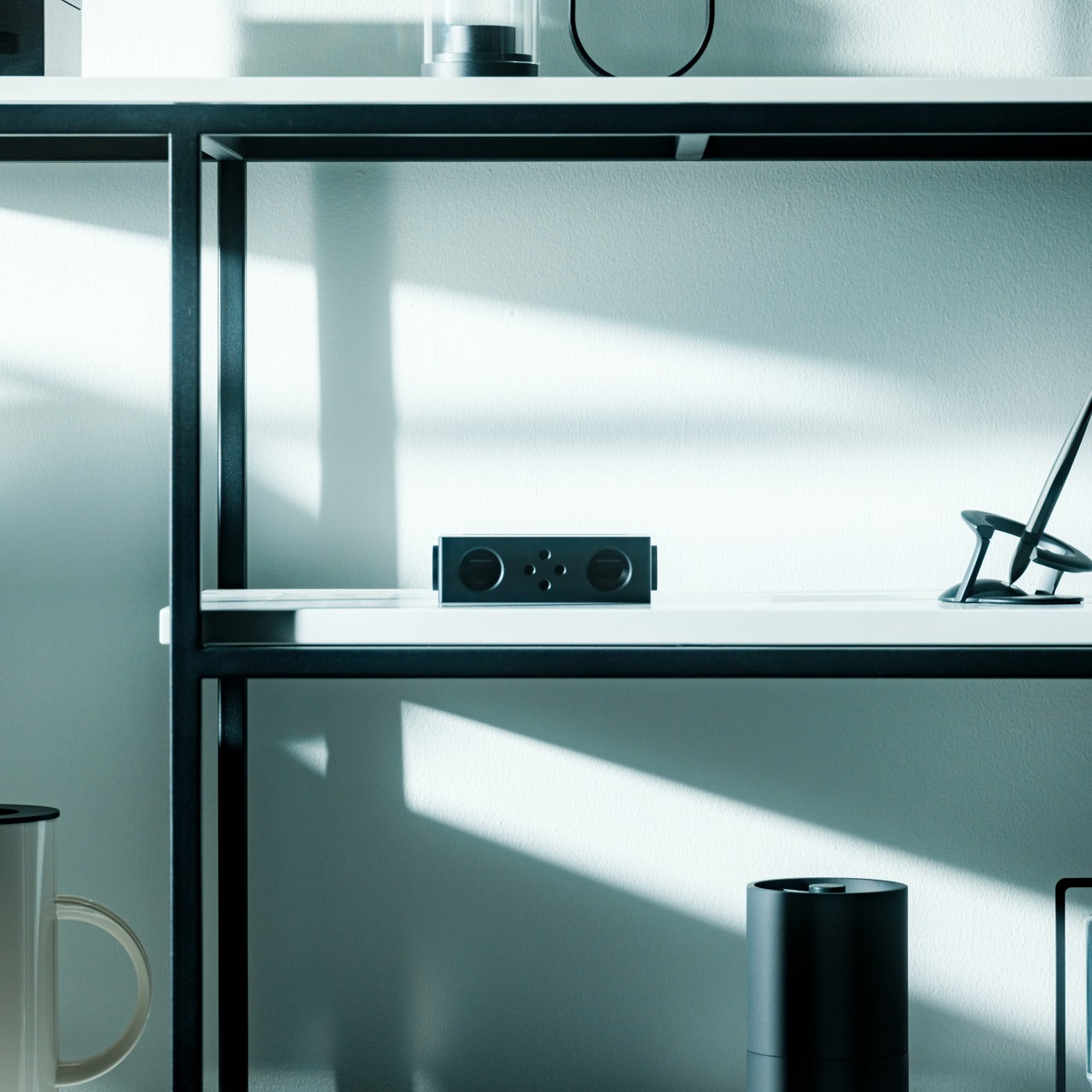
There’s a particular appeal to a speaker that requires no power at all. The iSpeakers amplify passively, using the acoustic properties of their form to direct and increase sound from your device without drawing from a battery or a wall socket. On a nightstand already populated with cables and devices competing for outlets, removing one power dependency entirely is its own design achievement. No setup, no Bluetooth pairing ritual, and no depleted battery to discover at the worst possible moment.
The design sits in a category that gets dismissed as novelty, which undersells what a well-executed passive speaker actually does. Amplification through acoustic shaping rather than electronics produces a warmer, more direct sound character than most powered options at a comparable price, and the absence of digital circuitry keeps the listening experience honest. For bedside use, where the goal is quiet background audio rather than filling a room with volume, the passive approach turns out to be exactly appropriate to the context.
Click Here to Buy Now: $179.00
What we like:
- No battery and no power source means one fewer cable on the nightstand, which is precisely the kind of problem a bedroom gadget should be solving
- Passive amplification produces a naturally warm sound that suits quiet, close-range listening well
What we dislike:
- The volume ceiling is set by acoustic design rather than adjustable electronics, so louder listening simply isn’t on the table
- Sound quality is device-dependent; the iSpeakers work with whatever your phone’s driver gives them
3. Sleepal
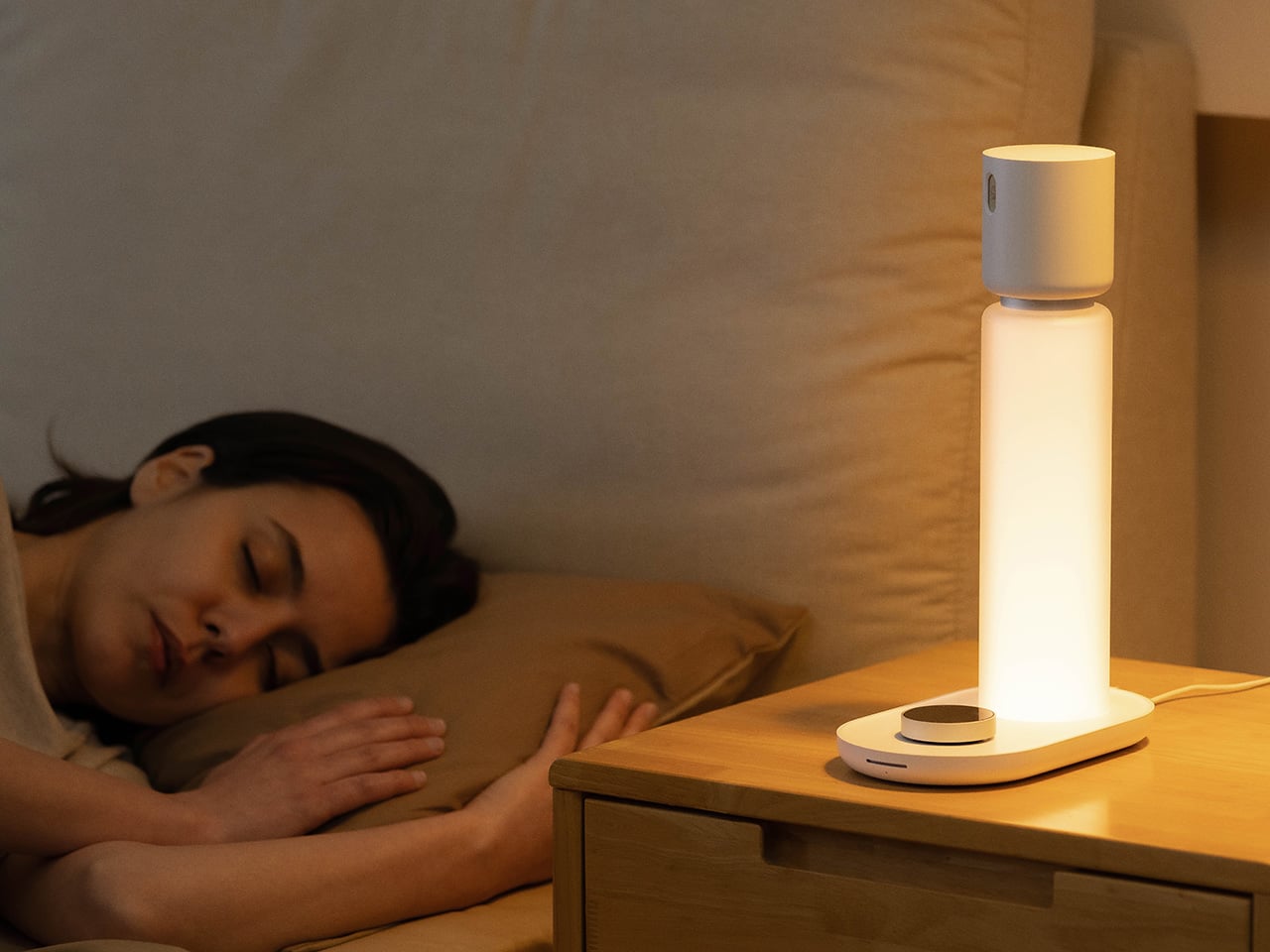
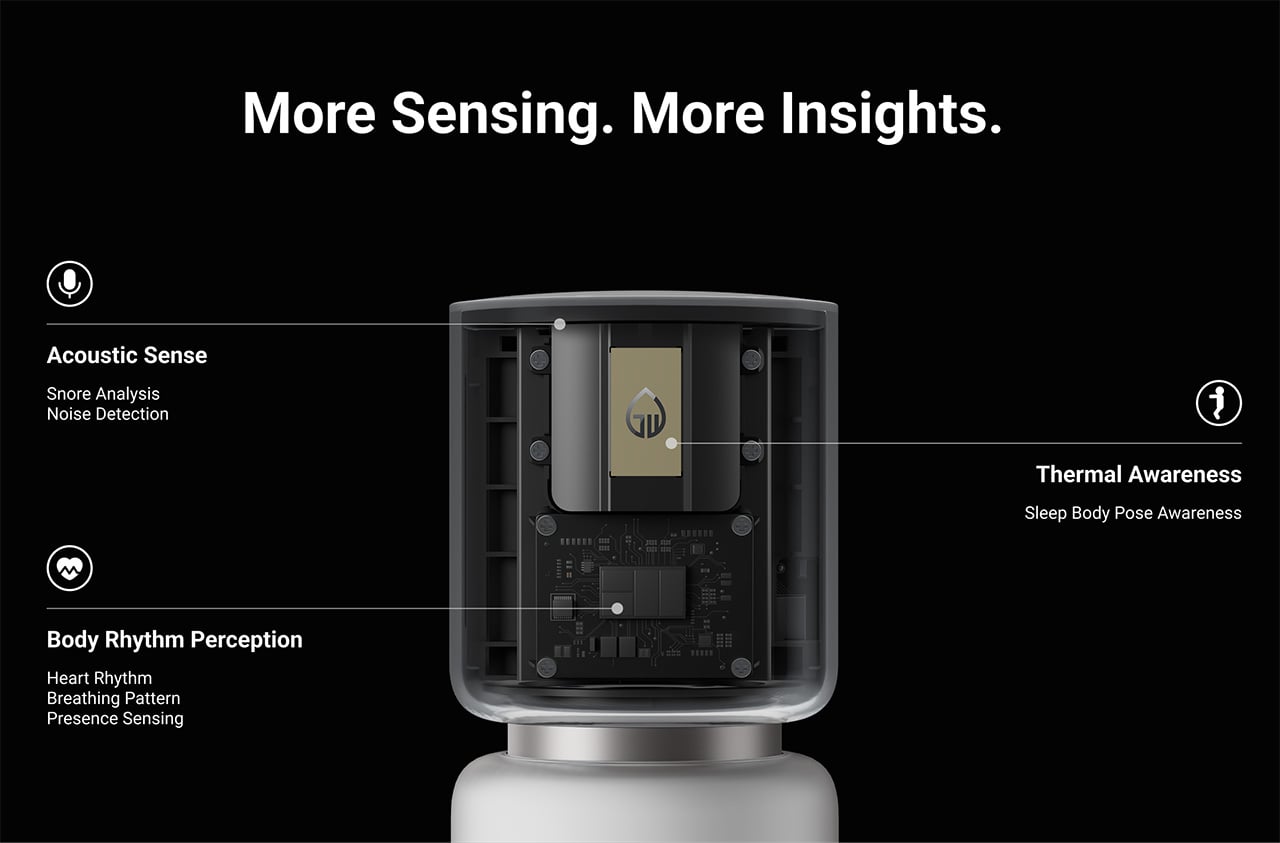

The most honest criticism of sleep tracking wearables is that they make you physically aware of your body at the one moment you most need to forget it. Sleepal sidesteps that problem entirely by building 60 GHz millimeter-wave radar into a bedside lamp, detecting chest micro-movements at 0.1mm precision without any contact. You set it up once, and after that it just works. No ring to charge, no watch to put on, nothing to adjust before getting into bed.
Behind the lamp form sits a sleep AI model trained on nearly 100 million parameters and a clinical database built alongside polysomnography testing at multiple hospitals. That foundation makes the sleep-stage reporting more accurate than most mainstream wearables, according to Sleepal’s own clinical comparisons. The smart alarm avoids deep sleep and REM to find a more natural exit point each morning, and built-in breathing guidance and relaxation audio give you practical tools to wind down before the tracking even begins.
What we like:
- Contactless tracking removes the physical awareness that most wearables introduce into the very activity they’re trying to measure
- The clinical foundation behind the accuracy claims is grounded in actual polysomnography data, not just product marketing
What we dislike:
- The lamp design is primarily functional; it won’t anchor a nightstand aesthetically the way a more considered light object would
4. Zenflow Personal Aroma Diffuser
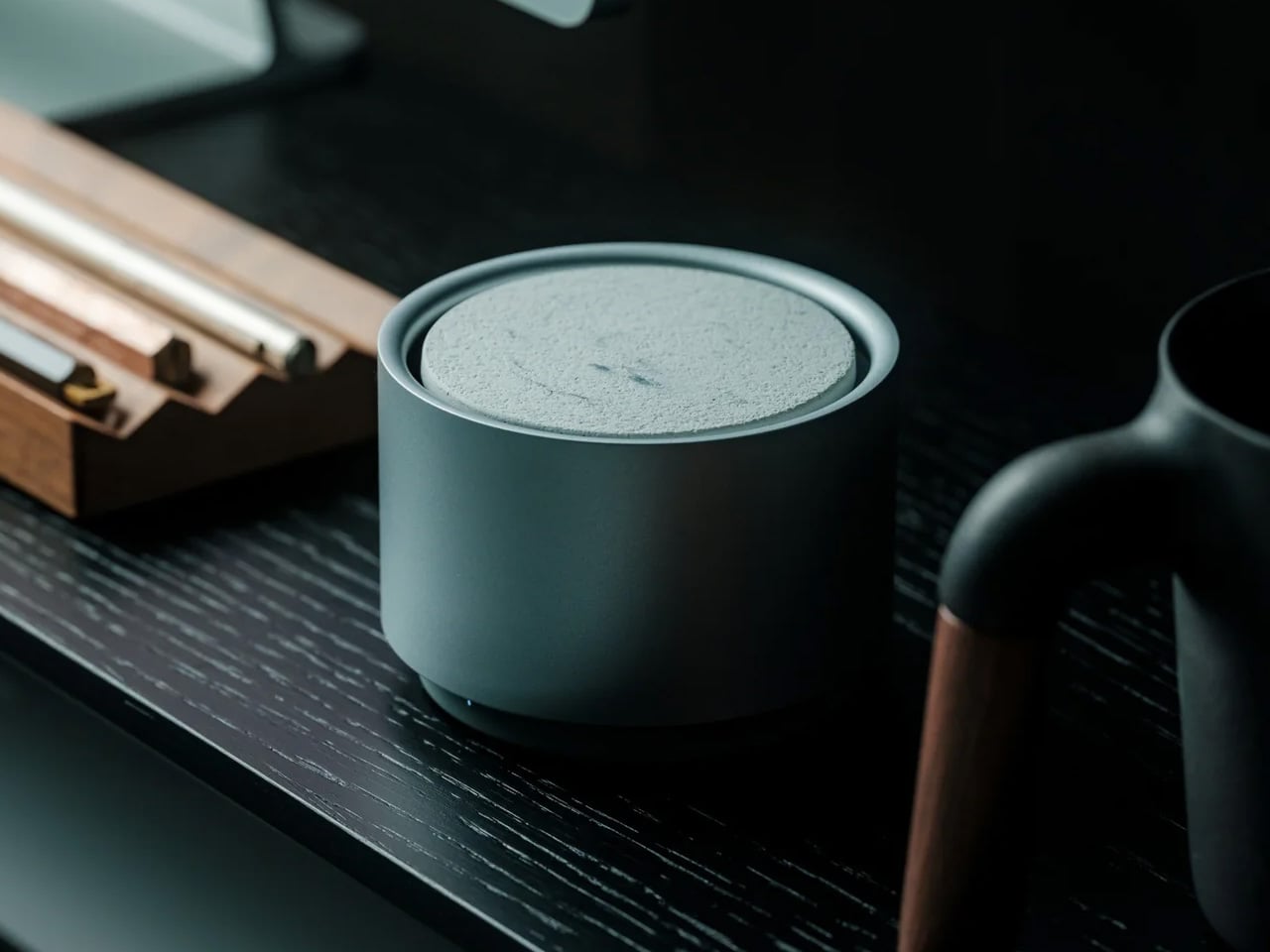

Scent is the most underrepresented variable in the average bedroom setup, which is interesting given how consistently it appears in the research around sleep and relaxation. Lavender, eucalyptus, and cedarwood all have documented effects on cortisol and the body’s wind-down response. The Zenflow is a personal aroma diffuser, sized and designed for immediate proximity rather than filling a room from across it. That distinction matters on a nightstand: you want the effect close and controlled, not ambient and accidental.
The personal scale is worth dwelling on. A full-room diffuser runs until you remember to turn it off and commits the whole space to one fragrance whether you’re in it or not. A personal diffuser concentrates the experience where you actually are, giving you the benefit without that trade-off. The Zenflow is built for that specific use case, sized to sit cleanly among other nightstand objects rather than requiring its own dedicated space or any special accommodation around it.
Click Here to Buy Now: $170.00
What we like:
- Placing the diffuser at nightstand level makes consistent nightly use far more likely than a diffuser sitting on a shelf across the room
- The personal scale keeps the scent effect targeted and easy to control
What we dislike:
- The benefit is highly individual and depends entirely on which oils or scents you choose to use with it
- Personal diffusers require regular refilling, which is a simple maintenance rhythm but still an ongoing one
5. Airthings Renew
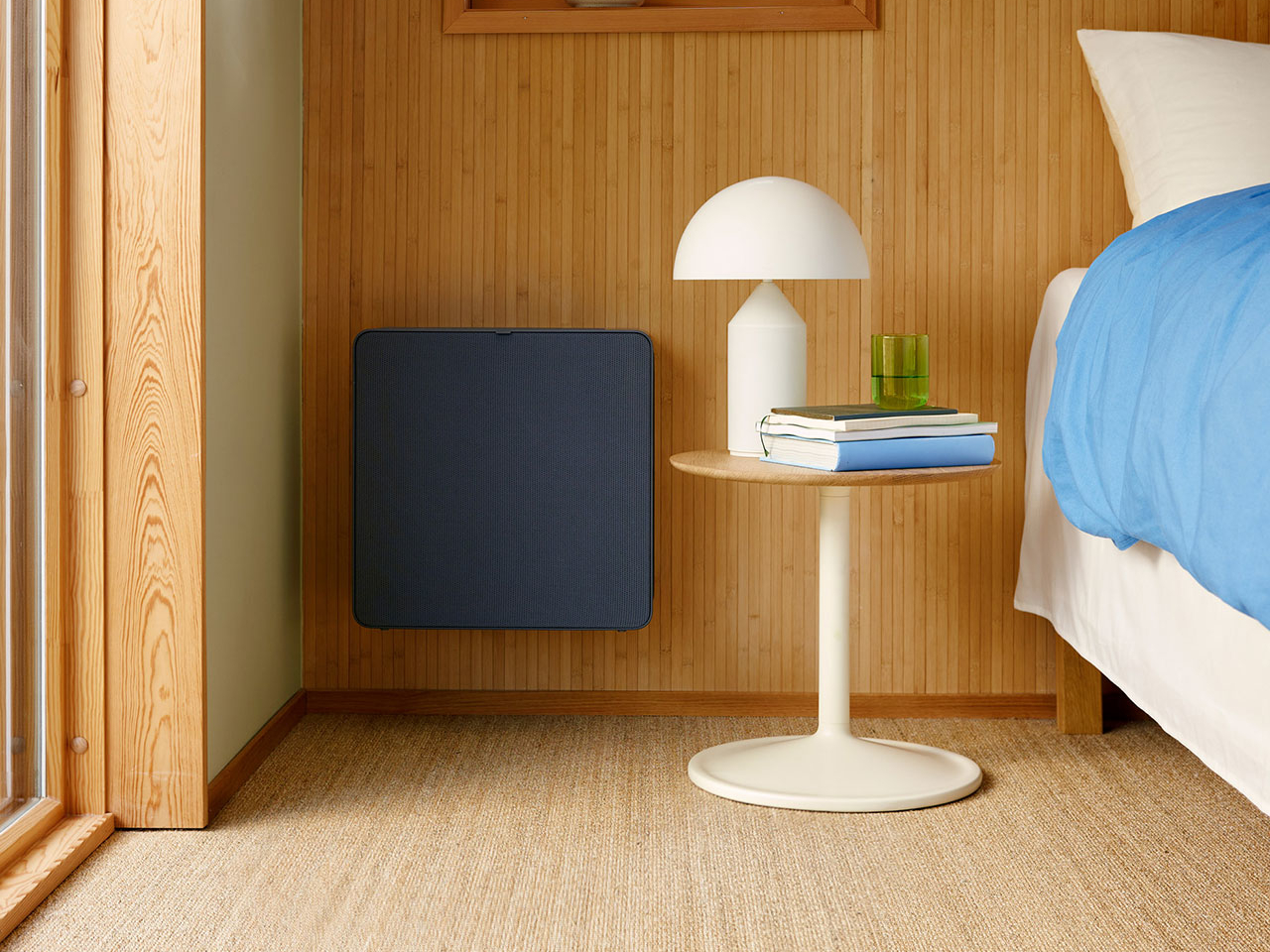
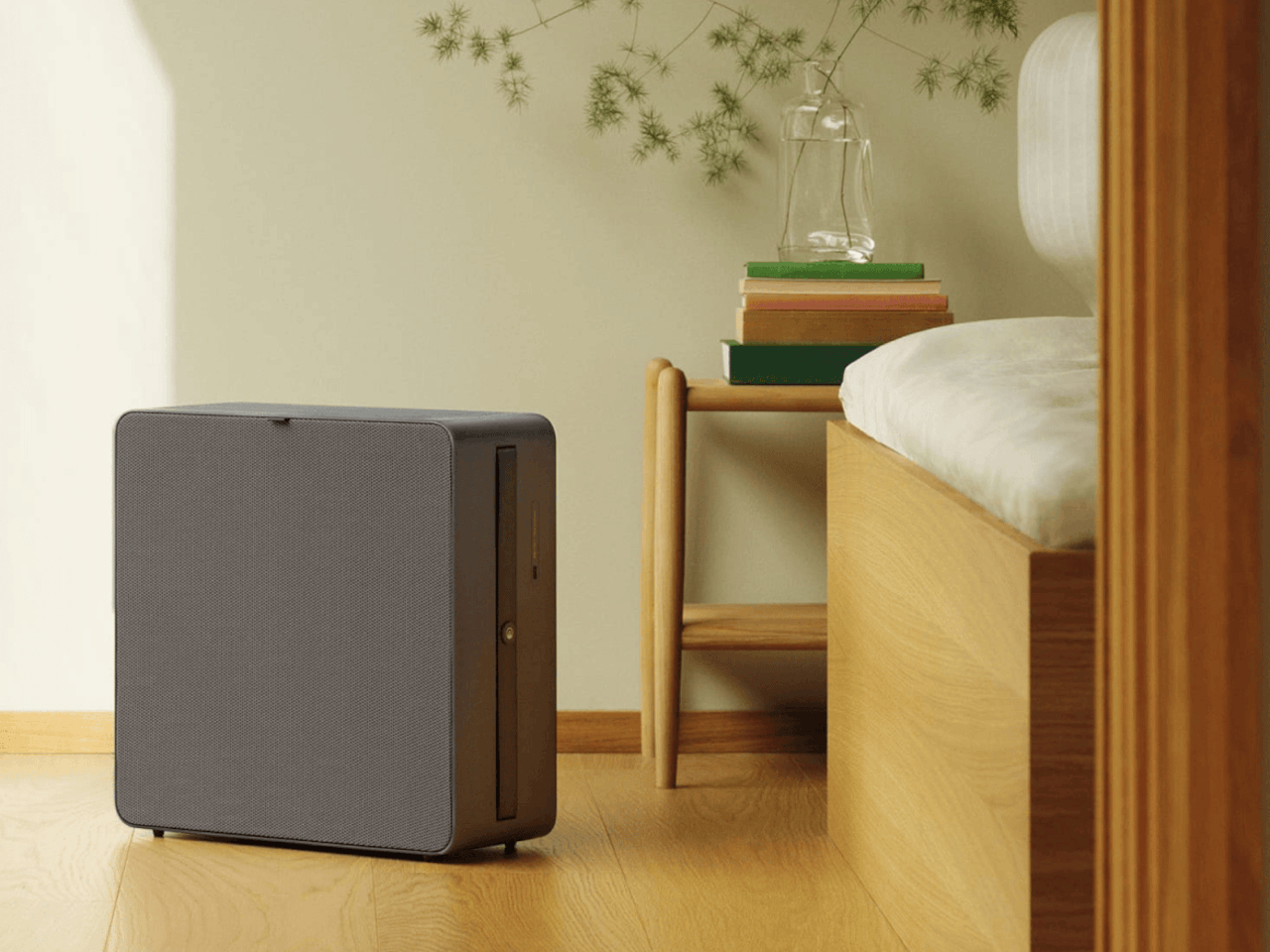
Air quality is the nightstand variable almost nobody thinks about until it becomes a problem. Most bedrooms have minimal airflow overnight with doors closed, and the particulate matter and volatile organic compounds that accumulate in enclosed spaces have a measurable impact on sleep depth. The Airthings Renew handles four-stage filtration, ending with a HEPA-13 filter that removes 99.97 percent of particles down to 0.3 microns, while a real-time laser particulate sensor adjusts filtration intensity automatically through the night.
What separates the Renew from a standard bedroom air purifier is the design language. Inspired by Nordic interiors, it arrives in muted charcoal with soft corners, a matte finish, and a fabric exterior that reads more like furniture upholstery than plastic housing. A Silent mode keeps it inaudible through the night, and the form works vertically or horizontally depending on available space. For anyone already in the Airthings ecosystem, the app ties home-wide air quality data into a single picture alongside everything else the system monitors.
What we like:
- HEPA-13 filtration with a real-time particulate sensor makes the air quality benefit substantive rather than decorative
- The Nordic design language means it can live beside a bed or on a low shelf without reading as a utility appliance that wandered in from another room
What we dislike:
- The Renew is a floor or low-shelf unit rather than a true nightstand object; the air quality benefit reaches the bed, but the device itself won’t sit on one
- The washable pre-filters require periodic cleaning that most people will keep up with initially and quietly stop doing
The Only Standard That Matters Beside Your Bed
These five products together cover the full environmental picture of a bedroom designed for rest: the sound you go to sleep to, the passive audio you keep nearby, the sleep being tracked without your involvement, the scent that marks the shift into rest, and the air moving through the space while everything else does its job. Each earns its place. None are asking you to reorganize your life to accommodate them.
The nightstand test is simple: remove something and notice whether the absence registers the next morning. These five all pass. The FlowToo at $99.99 anchors the list because it does the most and occupies the least. The rest fill in the picture around it, and together they make the case that a well-edited nightstand isn’t about owning fewer things. It’s about being more deliberate with what earns a permanent spot beside the bed.

