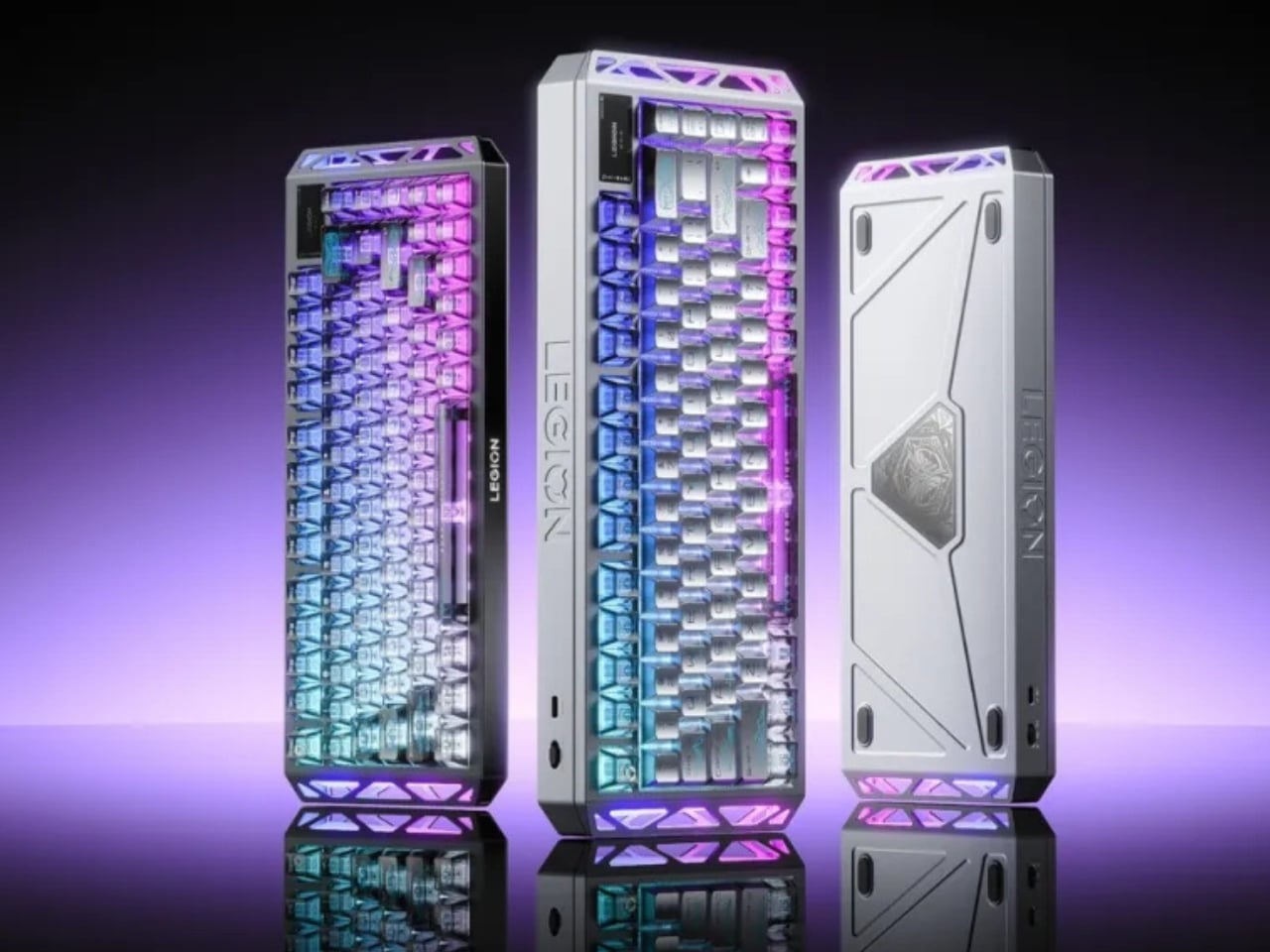

The spec sheet for Lenovo’s new Legion R7 RT75 reads less like a keyboard listing and more like an arms race announcement. Eight thousand hertz polling rate. An internal battery bigger than most flagship smartphones. A tiny built-in screen that can play your GIFs. A CNC-machined aluminum chassis that tips the scale at nearly 1.5 kilograms. At some point, you stop and ask whether we are still talking about a keyboard. Yes. And it is genuinely fascinating.
The R7 RT75 is a 75% layout gaming keyboard, which means it trims the numpad and a few function keys to keep the footprint relatively compact. Lenovo built it around their own Aurora Hall-effect magnetic switches, which allow you to adjust the actuation point anywhere from 0.01mm to 3.4mm. For comparison, most standard mechanical keyboards operate at a fixed 2mm actuation, and you live with it. The Rapid Trigger precision here goes down to 0.01mm, meaning the keyboard registers the smallest detectable physical movement as an input. That matters enormously in competitive gaming where a few milliseconds separate a clean play from a missed one. Lenovo also claims the 32,000Hz scan rate keeps full-key latency fluctuation down to 0.125ms, and the 8K polling rate holds across both USB-C wired and 2.4GHz wireless. That second part deserves attention. Maintaining 8,000Hz wirelessly is not a given, and the fact that Lenovo achieved it here brings the R7 RT75 into a very specific and increasingly competitive tier of peripherals.
Designer: Lenovo
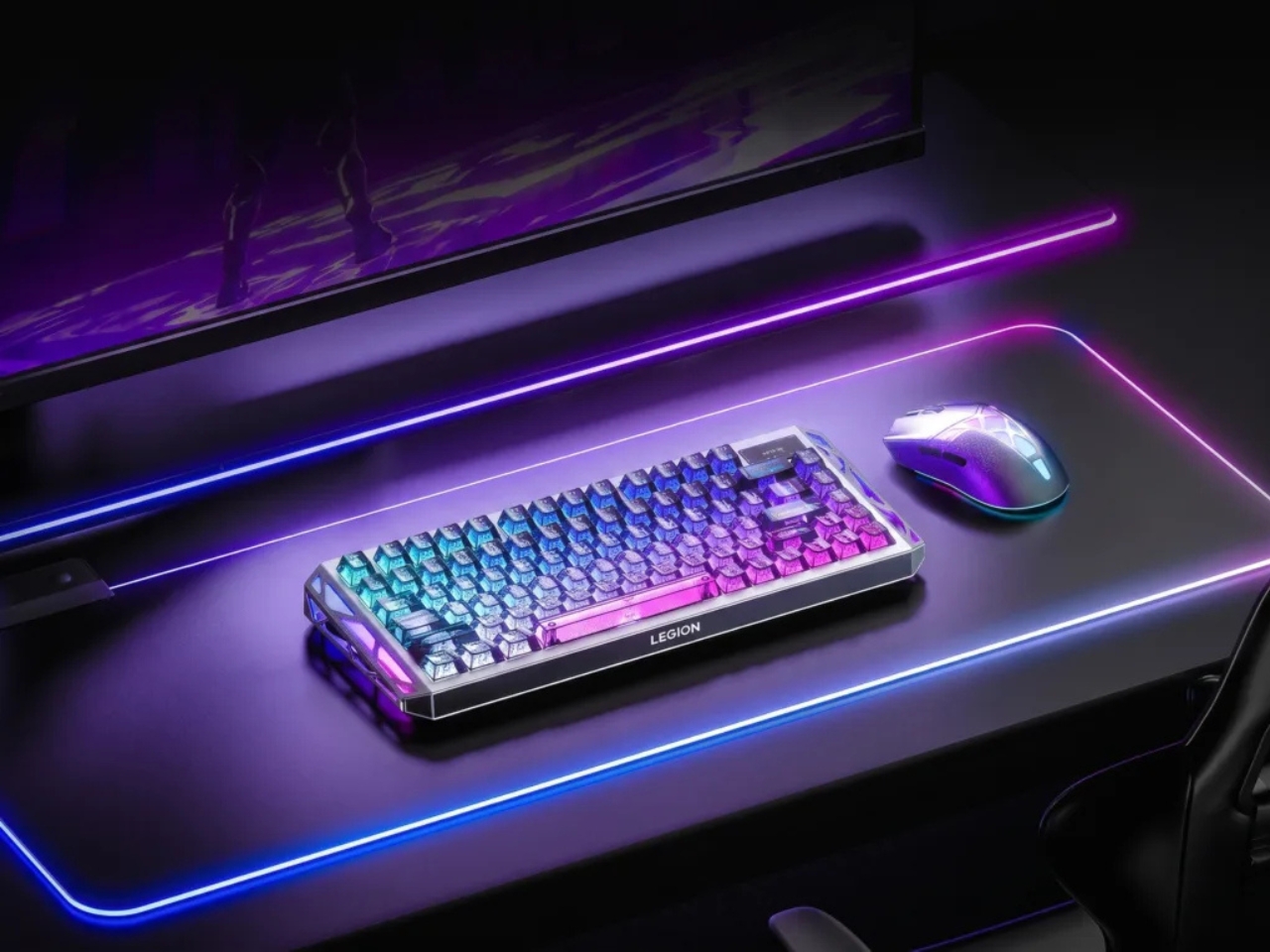
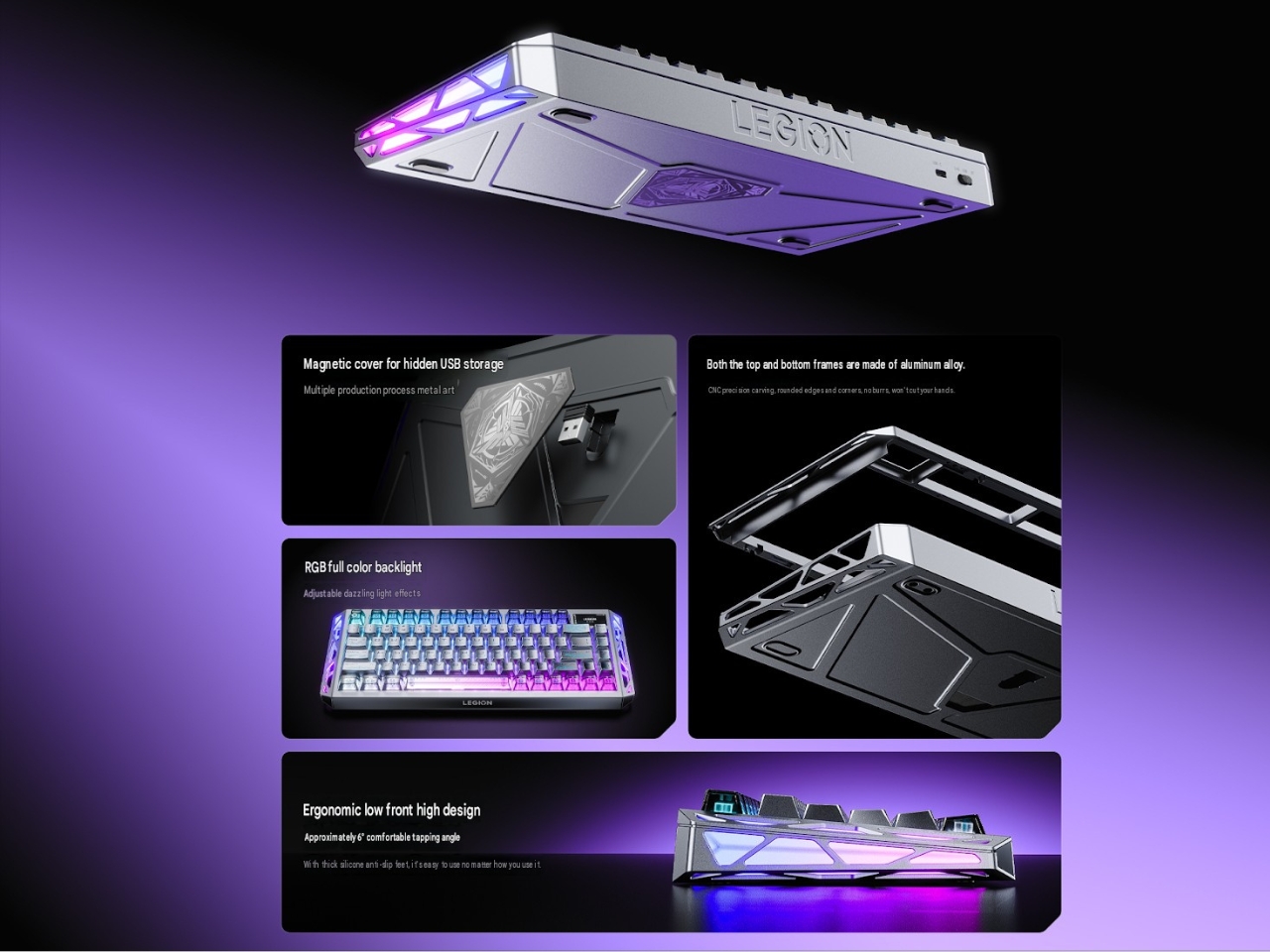
The 8,000mAh battery is the number that stops people in their tracks, and it should. That is the same capacity you would find inside many mid-range smartphones. Lenovo wants the R7 RT75 to be fully usable wirelessly for extended sessions, which is a reasonable goal. The side effect is a keyboard that weighs 1,490 grams, which is more than most laptops you could comfortably carry around. Picking this up and setting it on your desk feels like placing a slab of machined architecture. The build supports that impression: gasket-mounted structure, a carbon fiber positioning plate, five layers of sound-dampening material, and factory-lubricated stabilizers all come standard. It sounds and feels like a product that was built with care rather than just filled with specifications.
The 1.47-inch TFT display in the top right corner will divide opinions, and I think that is half the fun. On a practical level, it shows battery life, connection mode, and real-time system information. On the other hand, it also displays user-uploaded GIFs, which is either a lovable piece of personality or a feature that makes no functional sense at all. I fall on the side of lovable. Keyboards have always been the most utilitarian and least expressive element of any setup. A small screen where you can loop your favorite animation is a minor thing, but it is the kind of minor thing that makes a product feel like it was designed by people who actually enjoy it. Back on the practical side, a magnetic cover on the back of the board hides a storage slot for the 2.4GHz wireless receiver, which is exactly the kind of detail that signals someone paid attention during the design process.
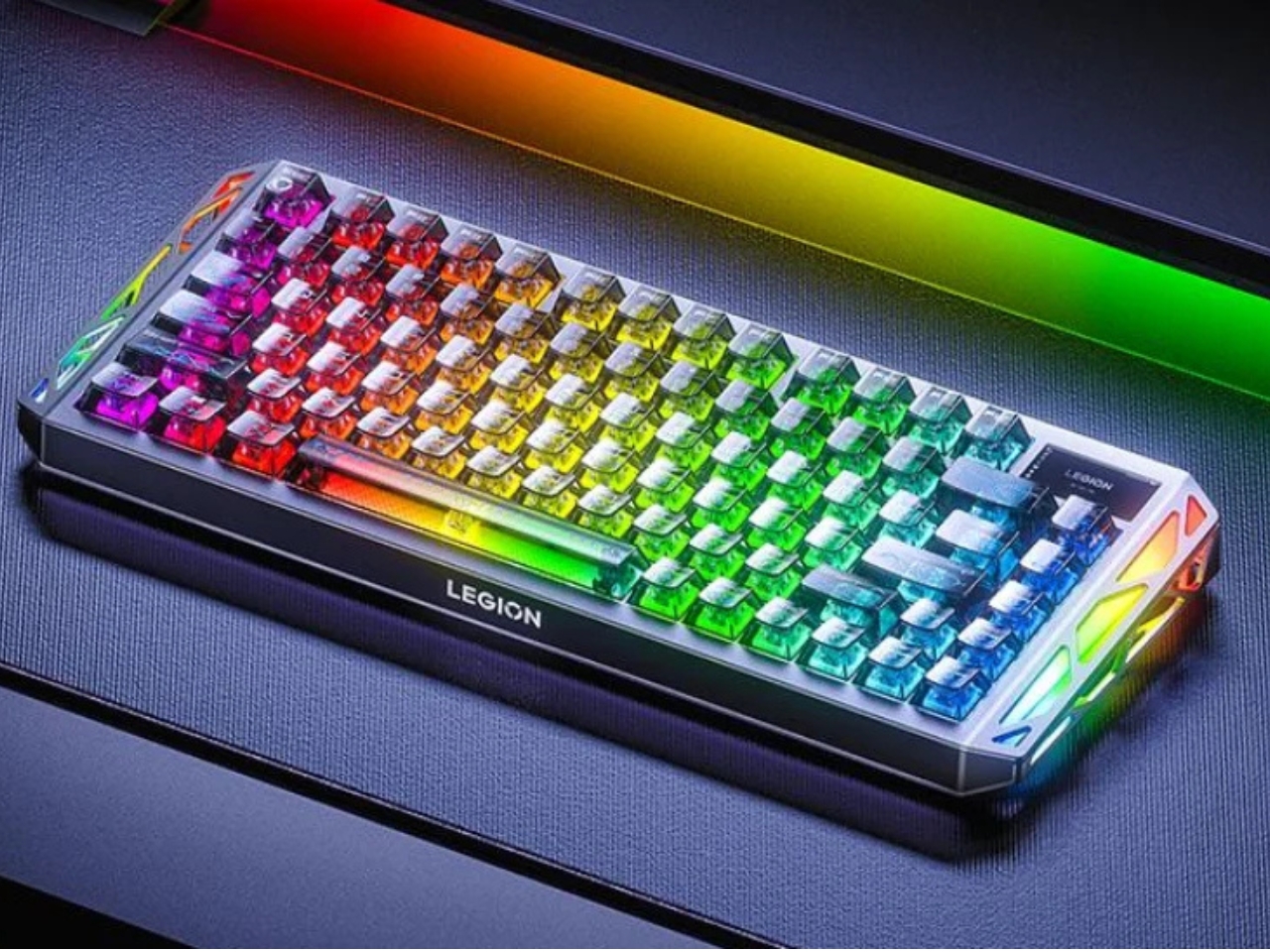
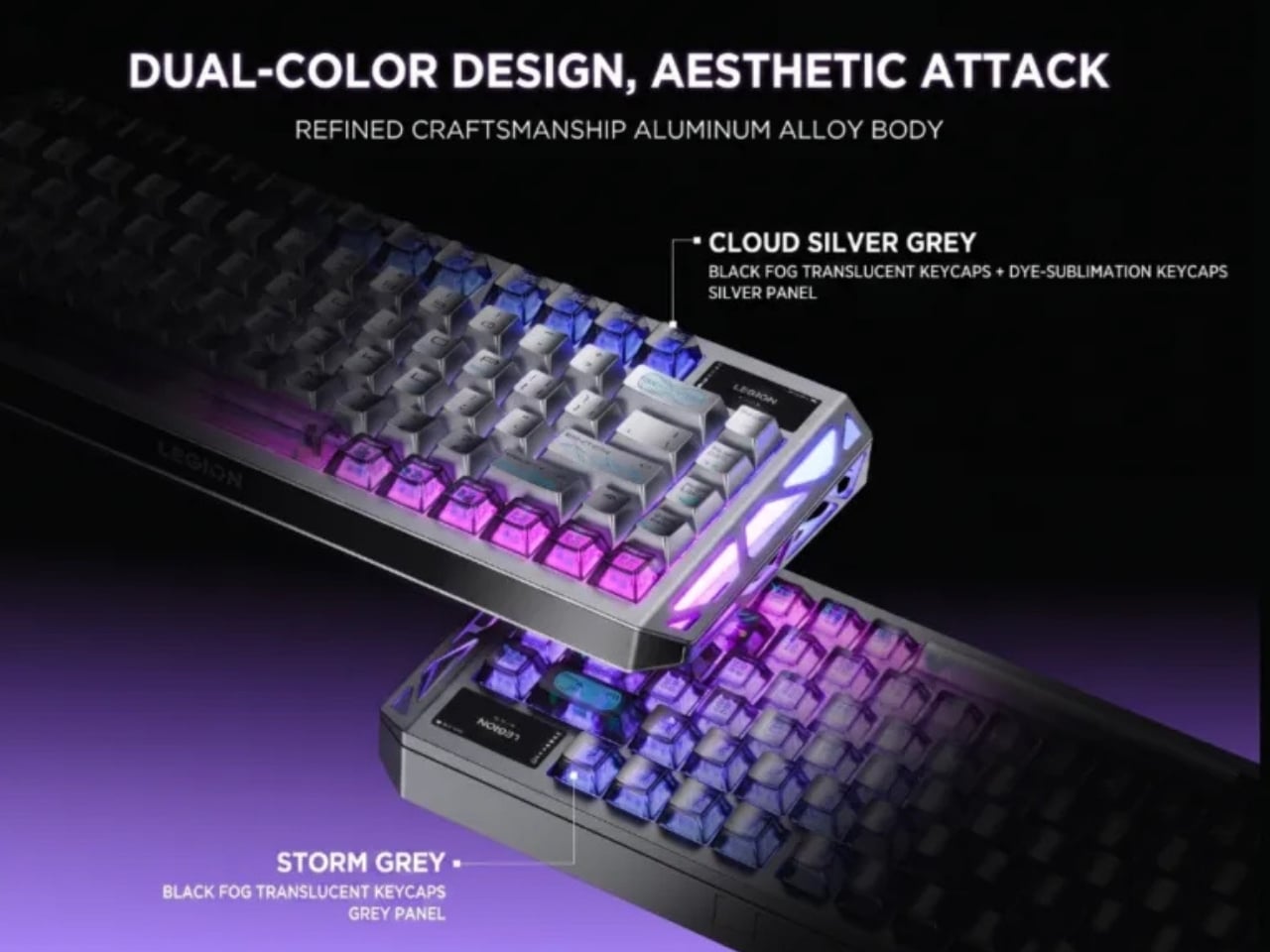
The R7 RT75 comes in Cloud Silver Grey and Storm Grey, and the pricing sits at 1,299 yuan, around $192. That number feels honest given what you are getting: premium CNC aluminum construction, competitive Hall-effect switches, 8K wireless polling, hot-swappable magnetic switch support, and a build quality that rivals keyboards costing considerably more.
Gaming peripherals have been slowly redefining what a consumer-grade input device even means, and the R7 RT75 is a clear example of that direction. The specs are not padding. They are things serious players request, packaged into a product that any buyer can access. Whether your gaming sessions demand 0.01mm Rapid Trigger precision is a conversation worth having with yourself before spending $192. But the ambition behind this keyboard is hard to argue with, and the execution appears to match.