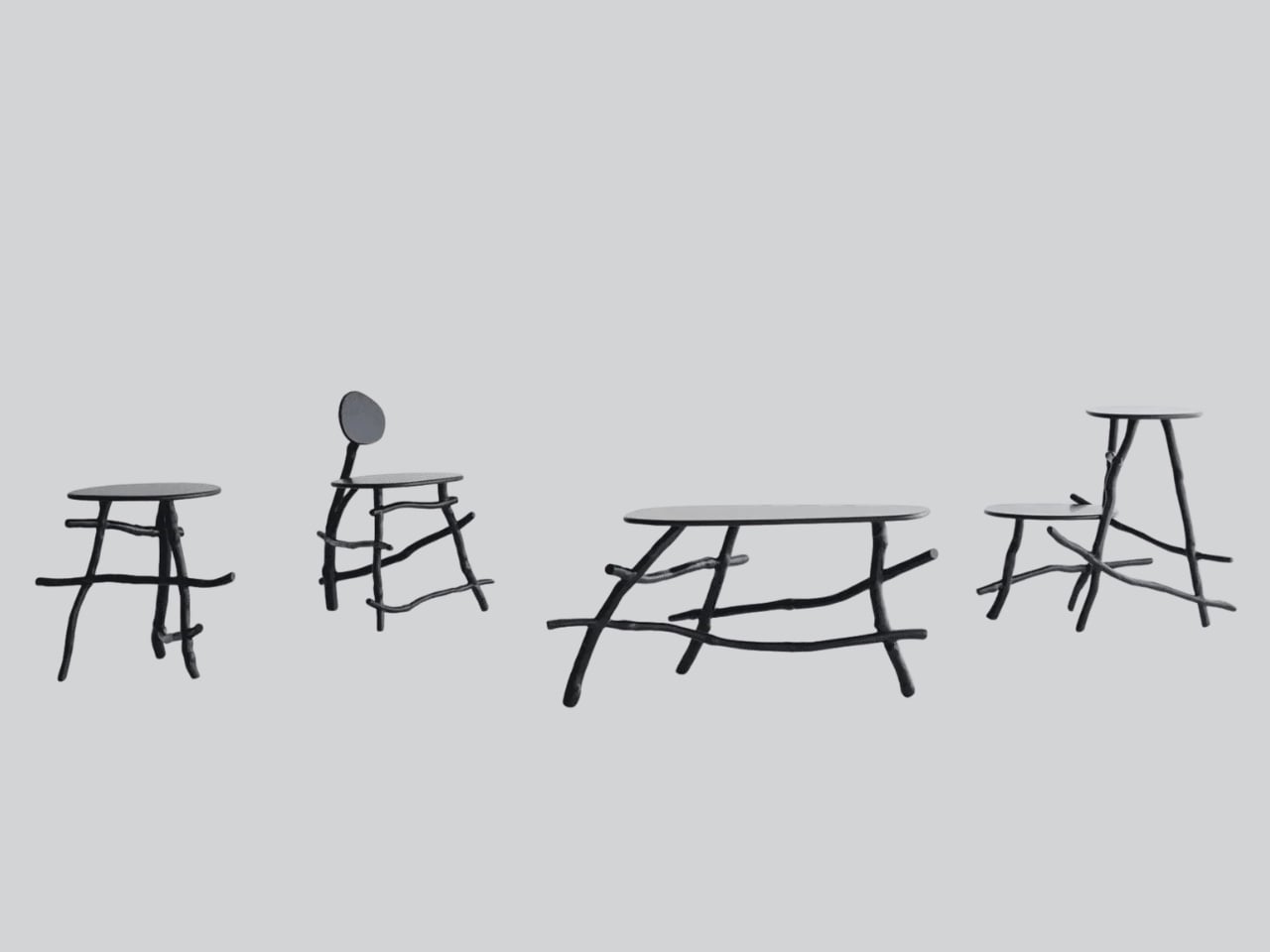
I’ve spent a fair amount of time looking at furniture that claims to be inspired by nature. Most of it amounts to a curved line here, a wood grain there, and a press release about sustainability that reads like it was written by a committee. So when I came across Uneri, a furniture collection by Tokyo-based studio Sotanaka, I actually stopped scrolling. Because the first thing you notice isn’t what it’s made of. It’s the way it looks like it’s still alive.
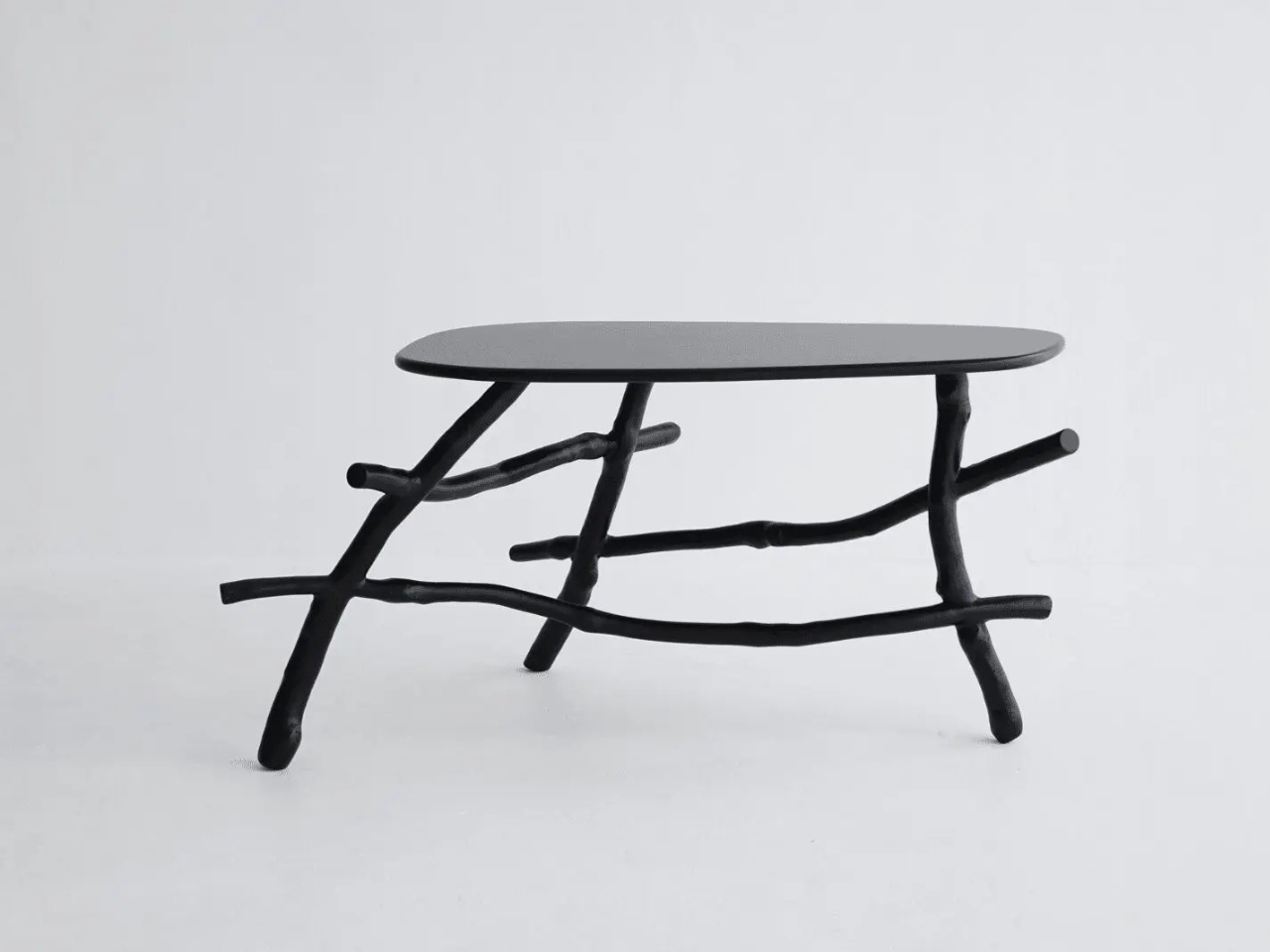
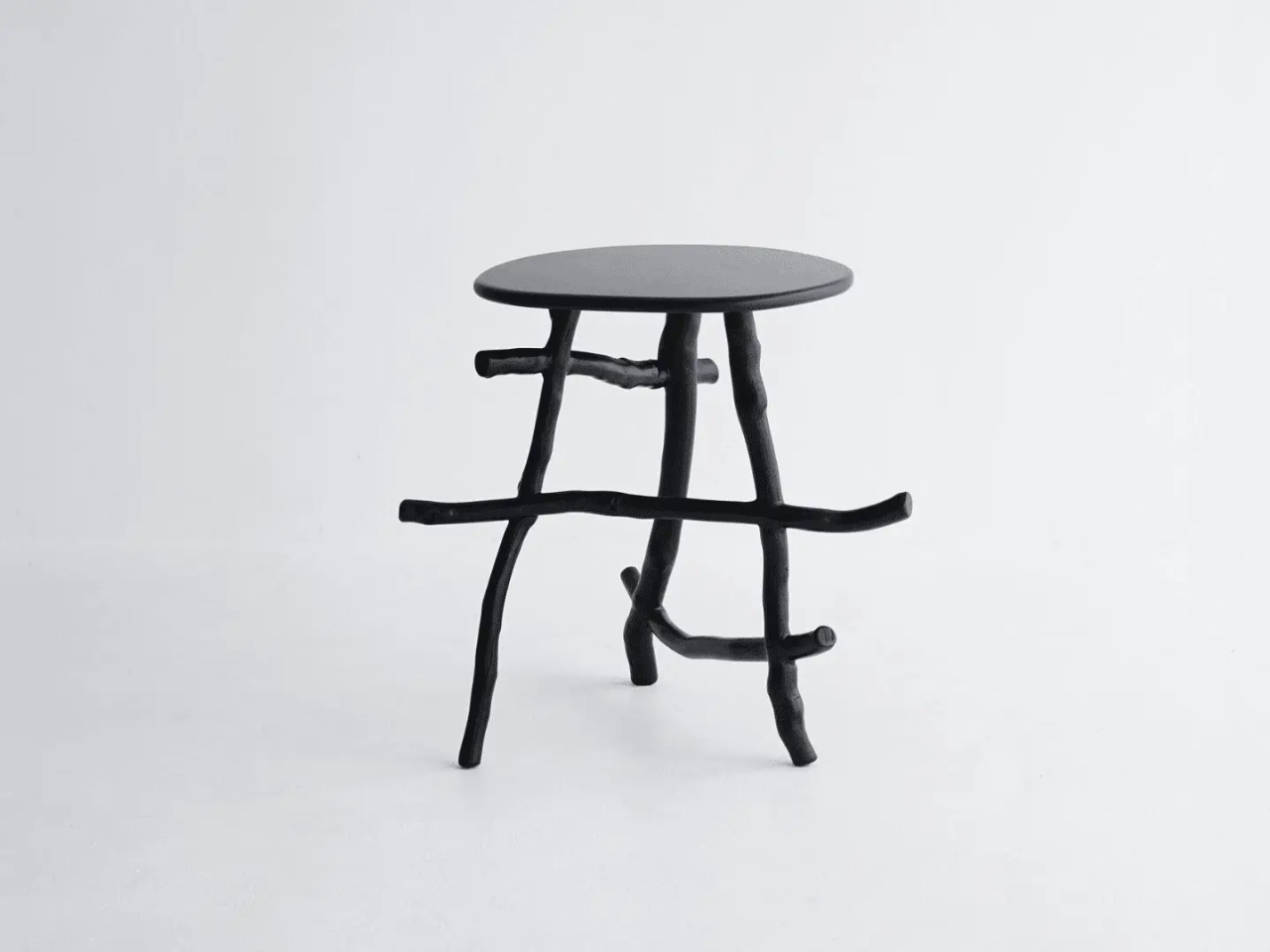
The collection consists of five pieces: a low oval coffee table, a side table, a taller stool, a second side table, and a chair. Each one is finished entirely in matte black enamel, which is the first bold design decision worth talking about. The black unifies the raw, knotted branches into a single coherent visual language without erasing what they are. If anything, the dark finish makes the texture more legible. Every knot, every fork, every irregular bump reads clearly against the clean white backgrounds Sotanaka photographs them against. You see the material in full.
Designer: Sotanaka
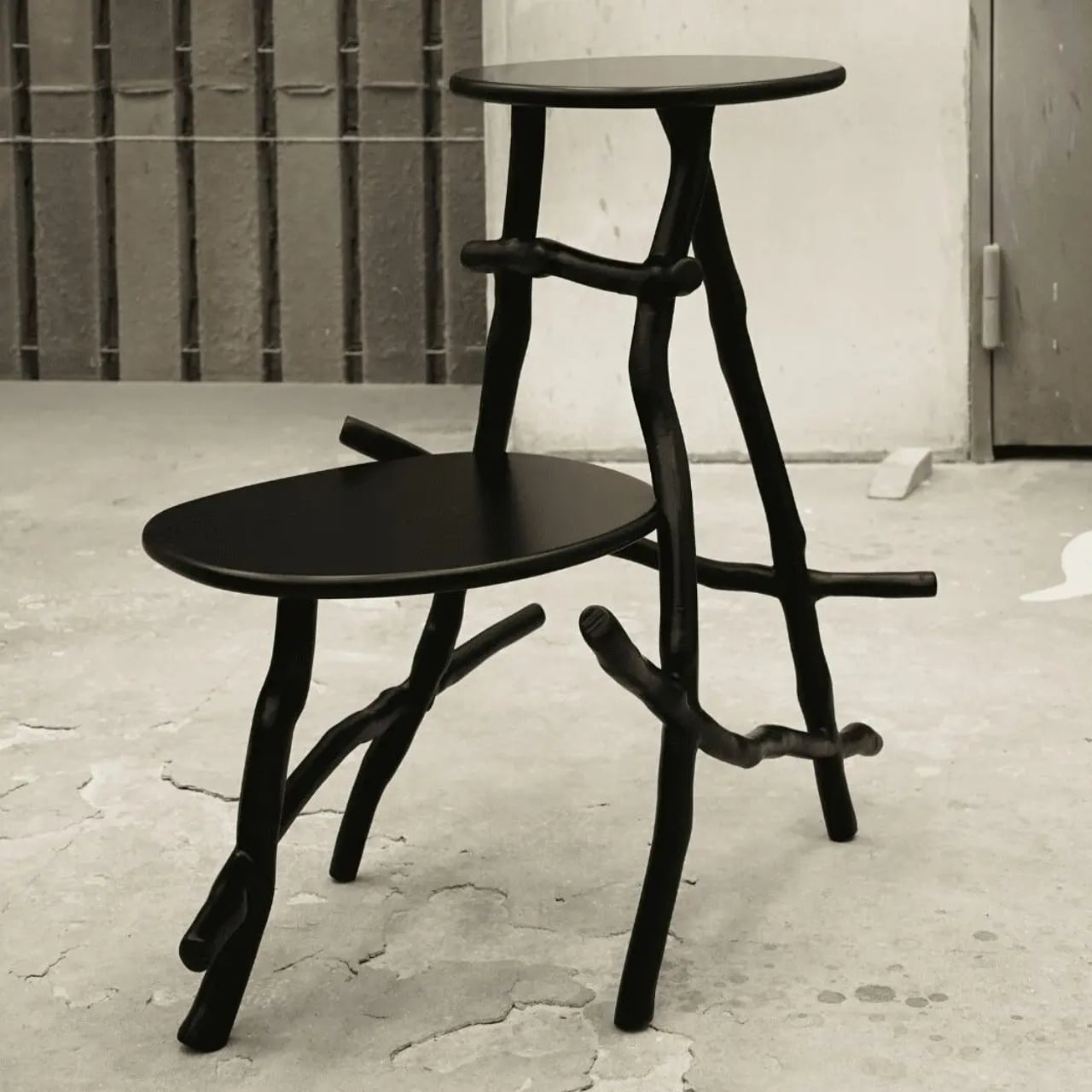
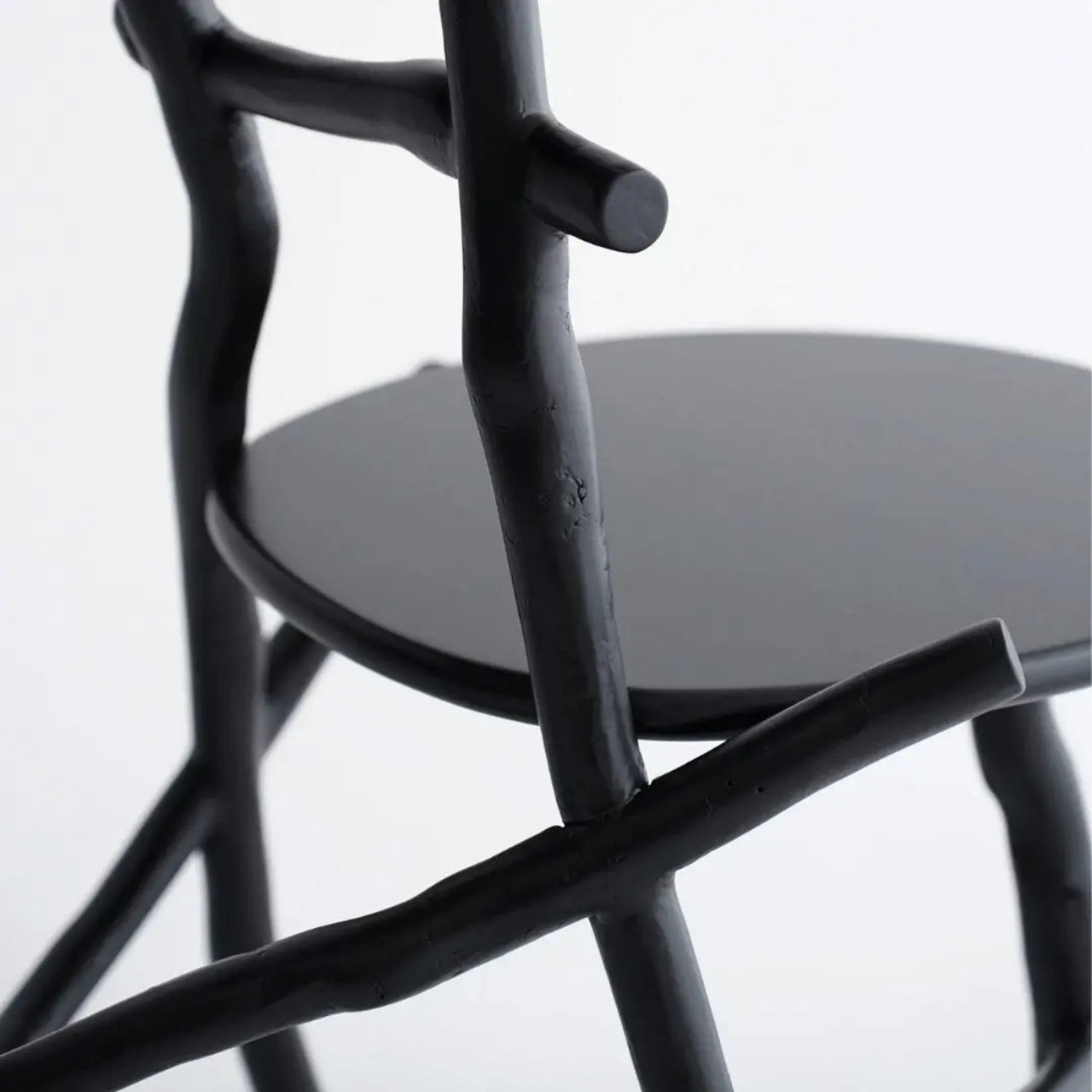
The contrast built into each piece is the thing that makes Uneri so visually arresting. The tops, whether they’re seats, table surfaces, or the chair’s small round backrest, are smooth, flat, and geometric. They sit like quiet punctuation marks above a tangle of branches that look like they’re mid-conversation. That tension between the polished surface above and the wild structure below is deliberate and it works remarkably well. The flat planes give your eye a place to rest. The branches give it somewhere to wander.
Look at the low coffee table up close and you start to understand the complexity of what Soichiro Tanaka, the designer behind Sotanaka, is actually building. The branch framework underneath the oval top isn’t a simple four-legged base. It’s a web of camphor and Zelkova branches crossing, overlapping, and angling in different directions. Some branches run horizontally as stretchers. Others curve upward to meet the top. The intersections where they meet are hand-cut joints, each one filed and chiseled to fit the exact curve of that particular branch. No two joints are the same because no two branches are the same. The structure looks chaotic from a distance and almost impossibly precise up close.
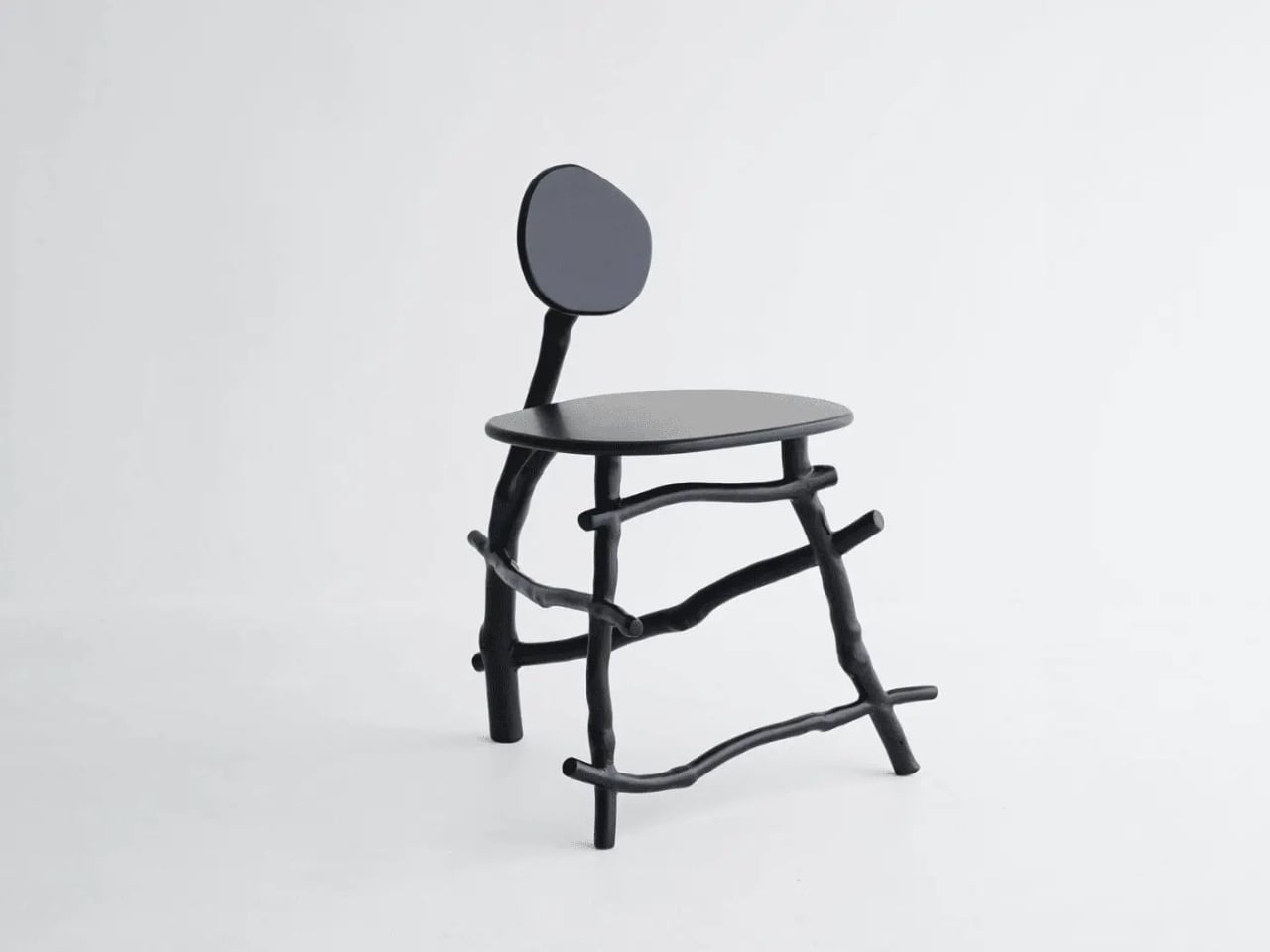
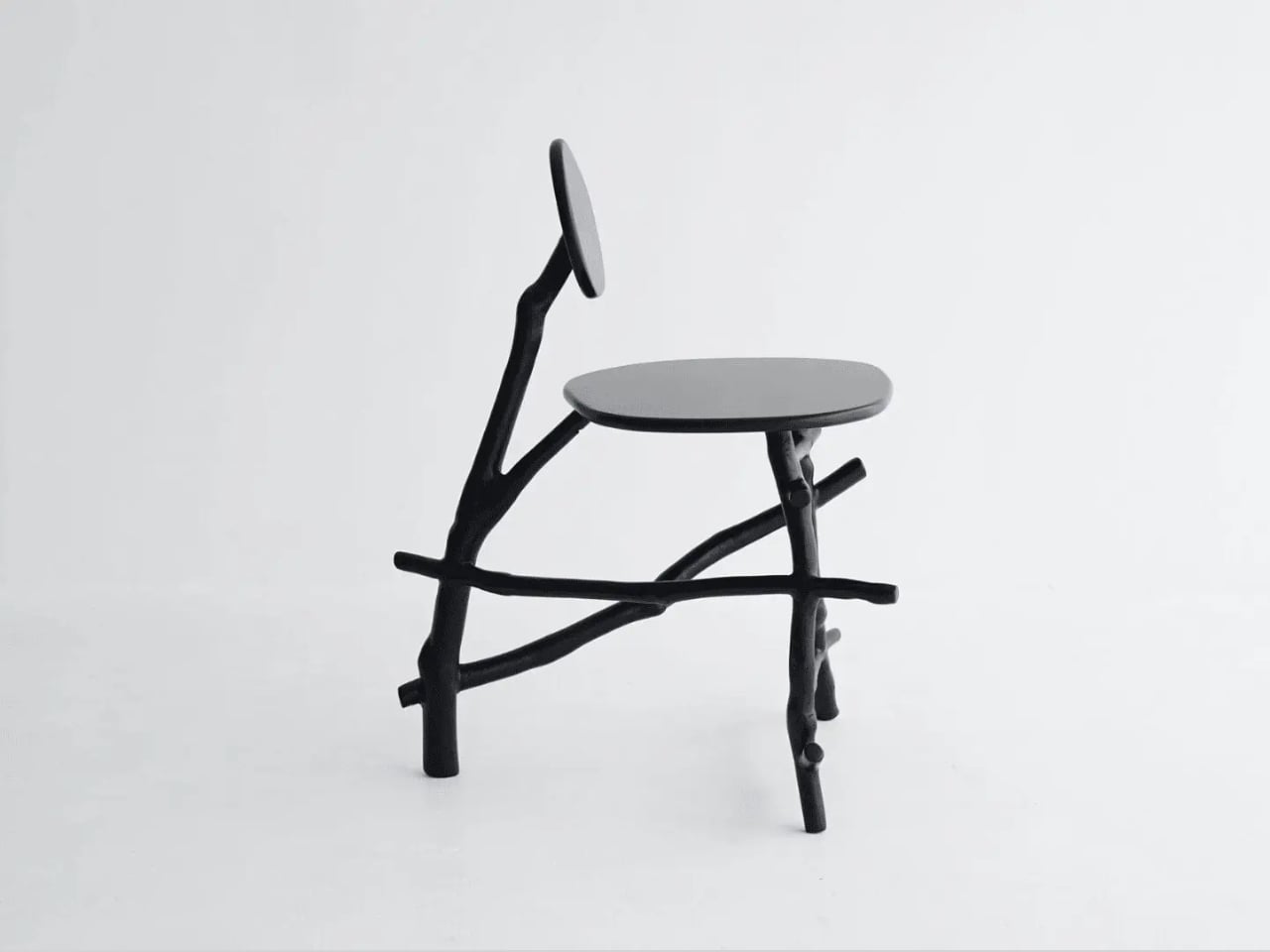
The chair might be the most confident piece in the collection. Seen from the side, the branch that forms the chair’s back leg continues upward in a single sweeping line before splitting to cradle the small circular backrest. It reads like a gesture more than a construction method, like the branch decided on its own to become a chair. From the front, the seat’s oval plywood panel floats above a lattice of crossing branches that form the legs and the lower frame. The enamel finish catches light differently across the curves, giving the structure a quiet depth that photographs don’t fully capture but hint at strongly.
The name Uneri translates from Japanese as an undulating, surging wave, and once you know that, you can’t unsee it. The branches don’t just cross and connect. They move. The low table’s base surges outward. The stool’s legs splay and curve with the same energy as roots pushing through soil. Tanaka developed his own joinery system specifically for this collection, one that lets the branches lock together without forcing them into shapes they don’t naturally want to take. The result is furniture that looks kinetic even when it’s standing still.
Uneri was presented at Three Days of Design 2026, and it deserves the attention it’s getting beyond that context. The pieces work as furniture, genuinely functional chairs and tables, but they also function as a study in what happens when a designer resists the urge to domesticate his materials. Most furniture design begins by taming wood, cutting it into boards, smoothing away everything irregular. Tanaka does the opposite. He finds where the irregularity is most interesting and builds around it.
The matte black finish is the one concession to control in an otherwise unruly collection, and even that reads less like an attempt to civilize the branches than a way to let them speak louder. Uneri doesn’t whisper nature into a room. It drags it in, whole and unapologetic.