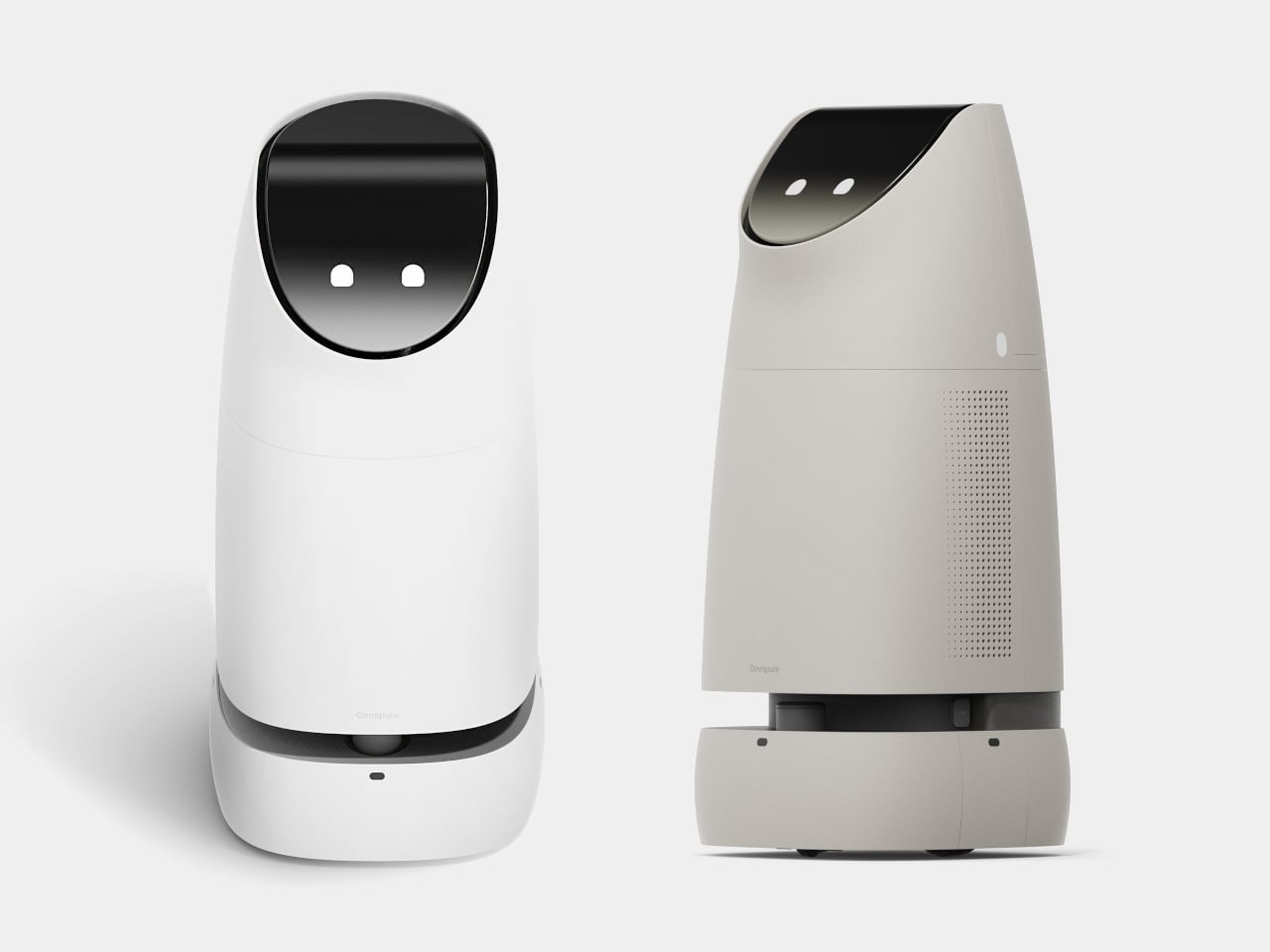
Air purifiers have quietly become household staples, tucked into corners and set to auto, doing their work without much acknowledgment. The fundamental assumption behind every stationary model is that polluted air will eventually drift past the filter if you wait long enough. That’s not entirely wrong, but it means the unit is always reacting to something that’s already spread rather than catching it at the source.
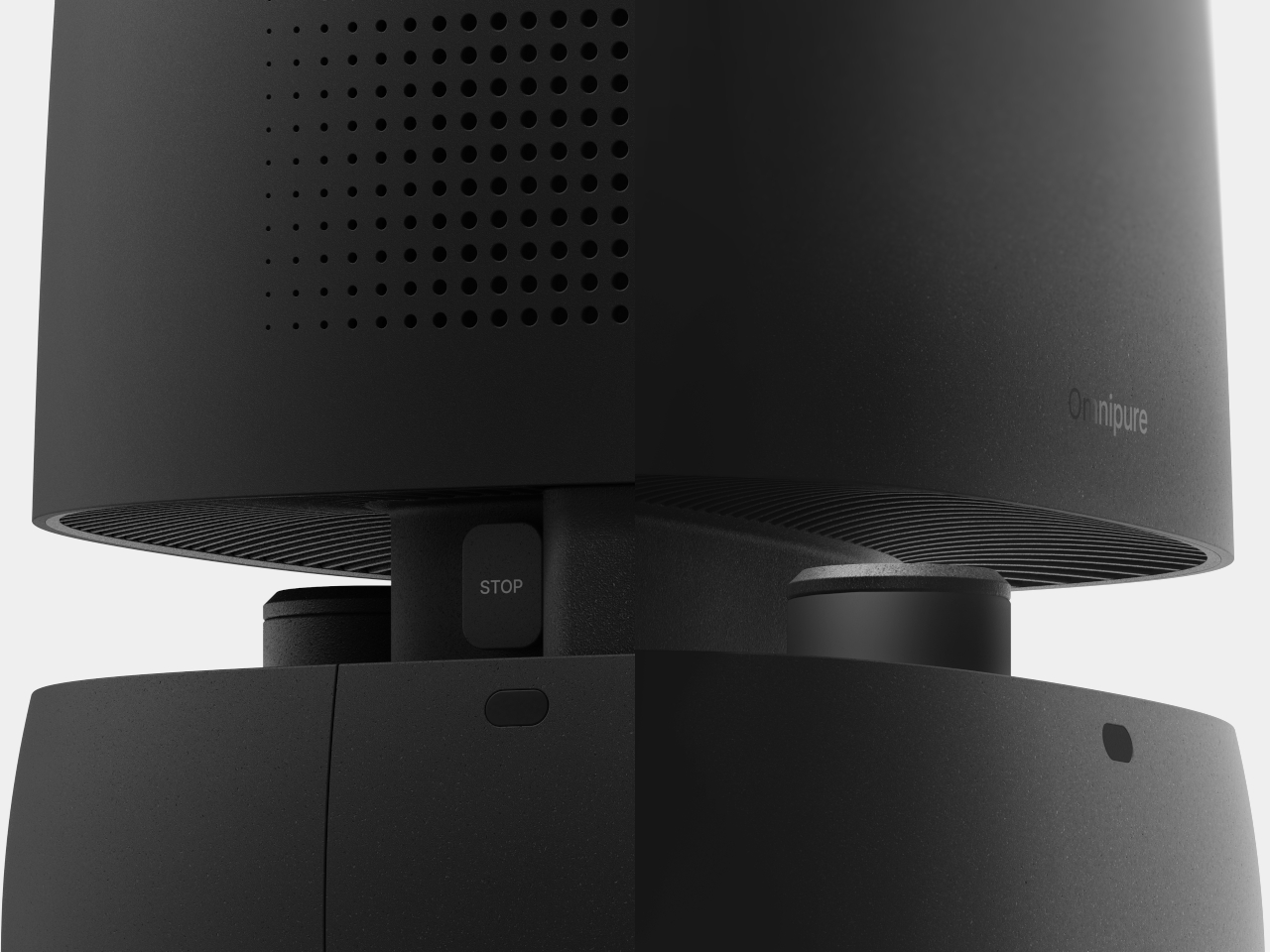
Omnipure reframes the whole premise. Rather than sitting in one corner hoping the air comes to it, this autonomous robot concept maps the home, learns the occupant’s routines, and moves toward pollution before it has a chance to disperse. Catching cooking smoke at the stove rather than after it fills the room is the kind of meaningful difference that makes a purifier genuinely useful rather than marginally helpful.
Designer: Kyuhong Kim
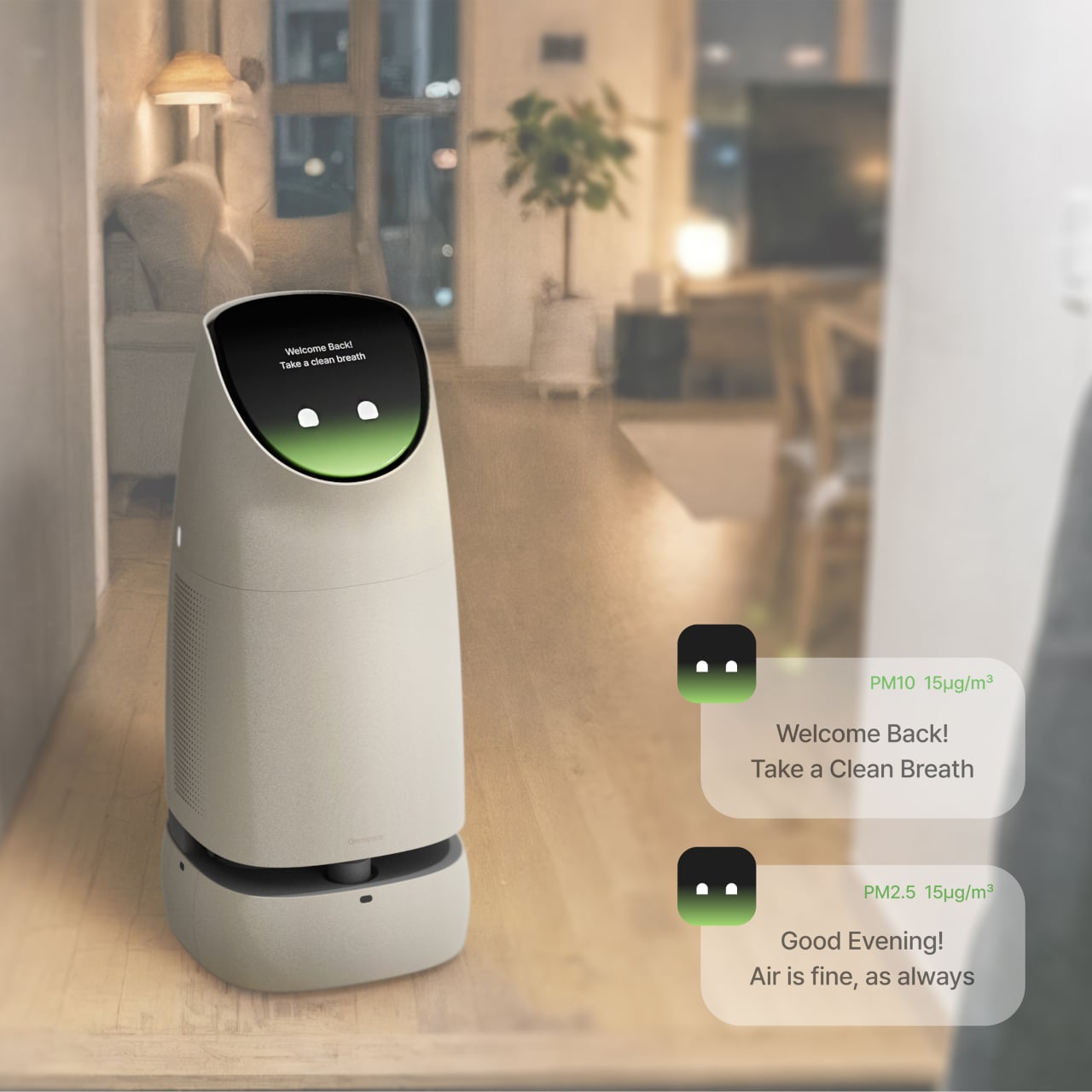
The behavior is where the design makes its most interesting decisions. When someone walks through the front door, Omnipure rolls to the entryway and greets them while clearing entryway dust at the same time. Framing that as a welcome rather than a clinical alert is a deliberate choice. A robot charging toward you the moment you arrive home communicates something quite different from one that simply seems glad you’re back.
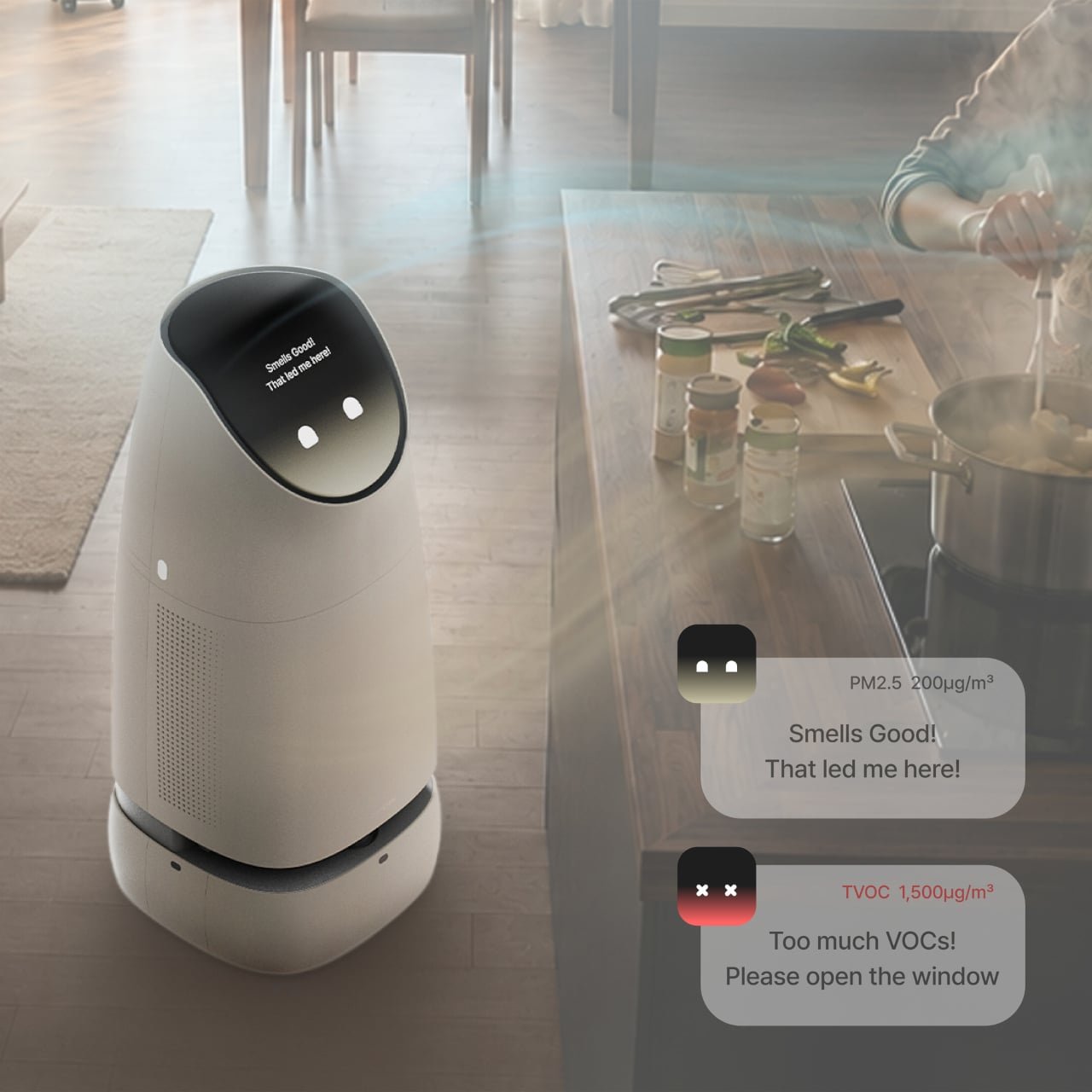
The kitchen scenario captures the same thinking. When cooking raises PM2.5 levels or volatile organic compounds spike from a hot pan, Omnipure navigates toward the source and announces its arrival with “Smells Good!” rather than an alarm. If TVOC levels climb too high, it suggests opening a window rather than filtering at maximum capacity, because the better response to a ventilation problem isn’t a better filter.
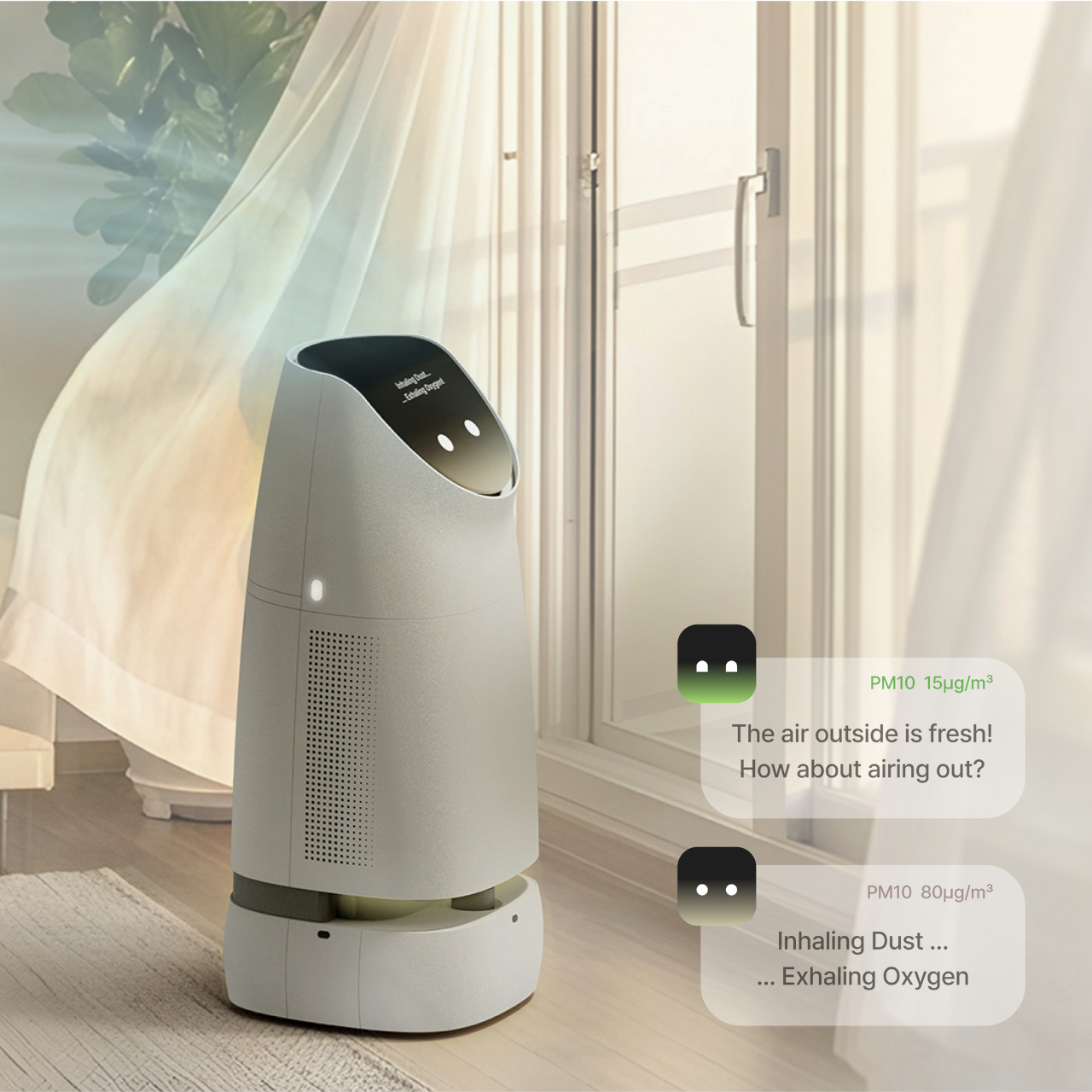
The ventilation behavior adds another dimension. Rather than treating indoor air as automatically preferable to outdoor air, Omnipure monitors both and suggests airing out when outdoor conditions are favorable. When a window is opened, it positions itself in the airflow to filter incoming air before it circulates. The messages it displays at these moments frame its function as a conversation rather than a status readout.
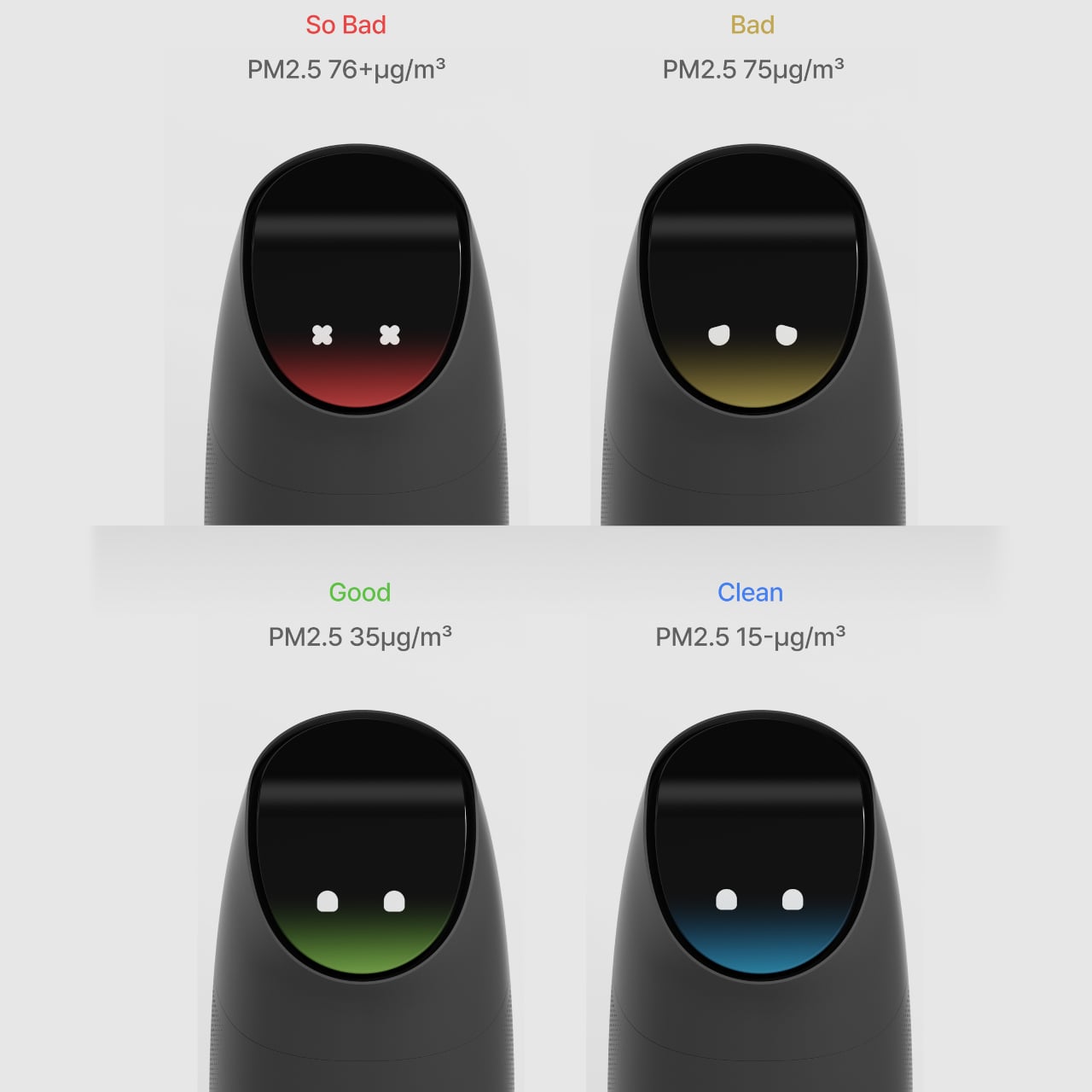
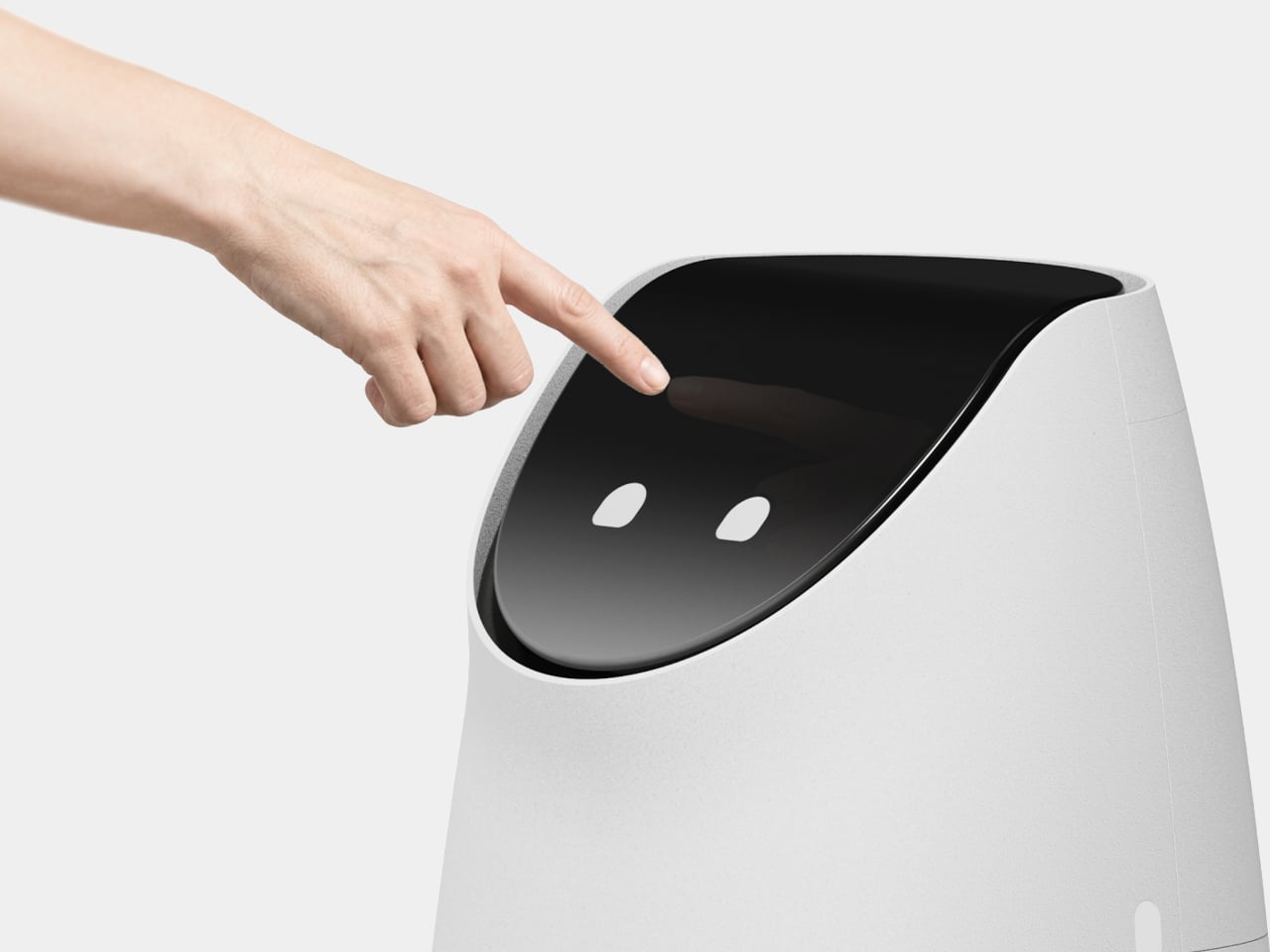
The face display communicates air quality through four states tied to PM2.5 levels. Clean air below 15 μg/m³ reads as a blue glow with relaxed eyes, acceptable conditions around 35 μg/m³ show green, poor air at 75 μg/m³ appears amber, and hazardous readings above 76 μg/m³ trigger a red glow with X-shaped eyes. A glance across the room is enough to know what you’re breathing without unlocking a phone.
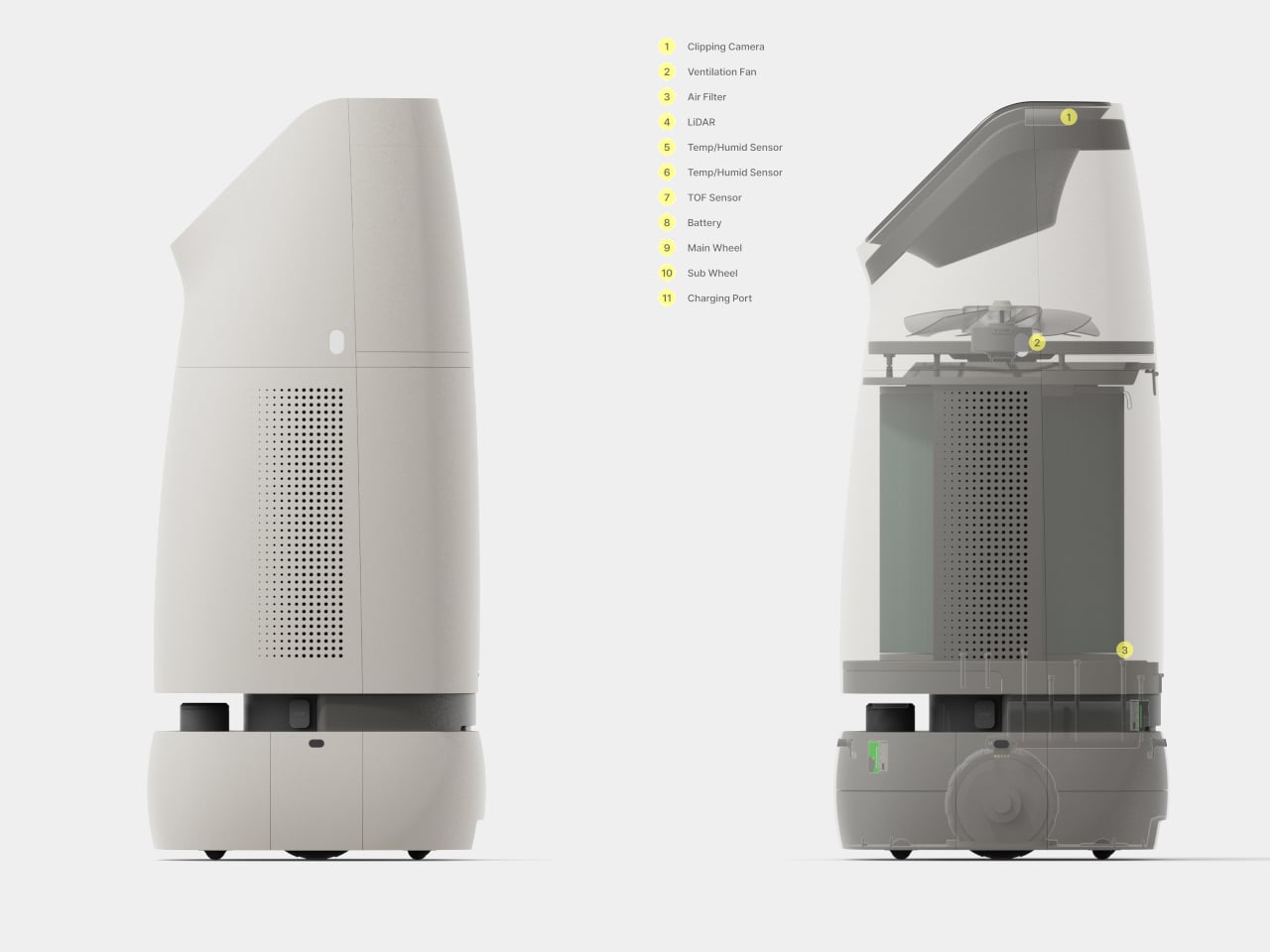
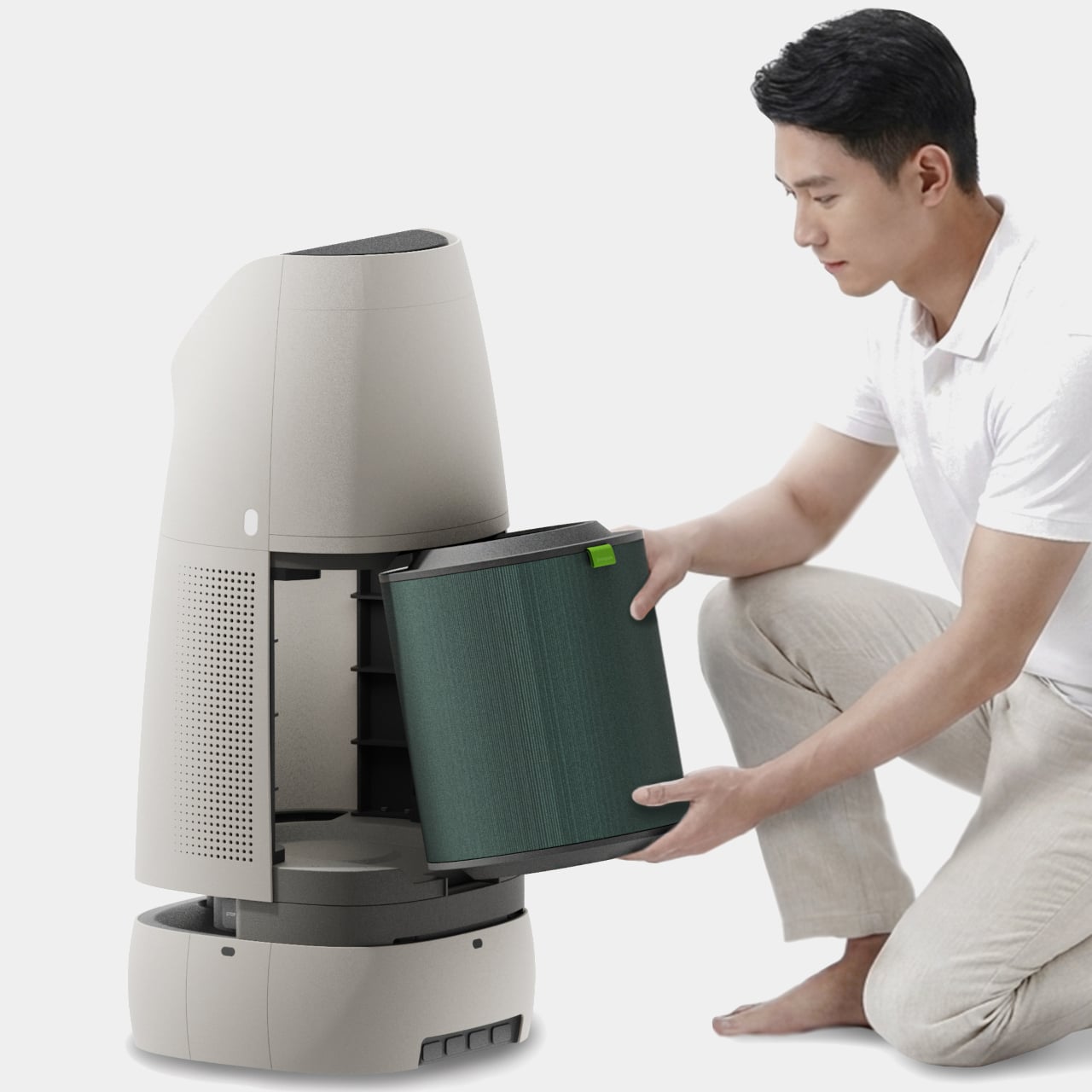
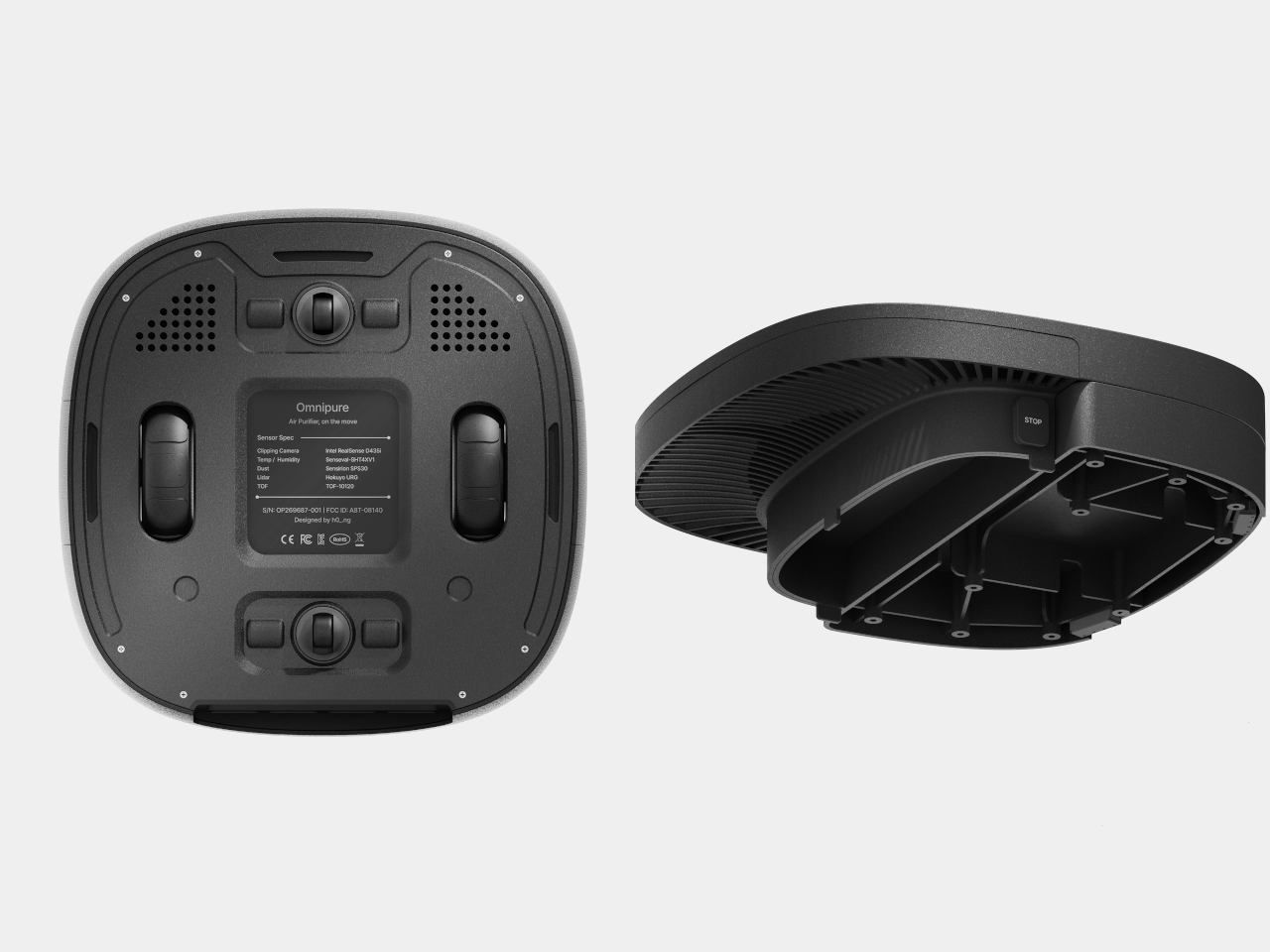
Internally, Omnipure runs on LiDAR and time-of-flight sensors for navigation, a clipping camera, dual temperature and humidity sensors, and a centrifugal ventilation fan drawing air through a large replaceable filter housed in the lower body. The filter slides out from the side for maintenance, which turns what’s usually a buried, tool-required task into something that takes about as long as changing an ink cartridge.
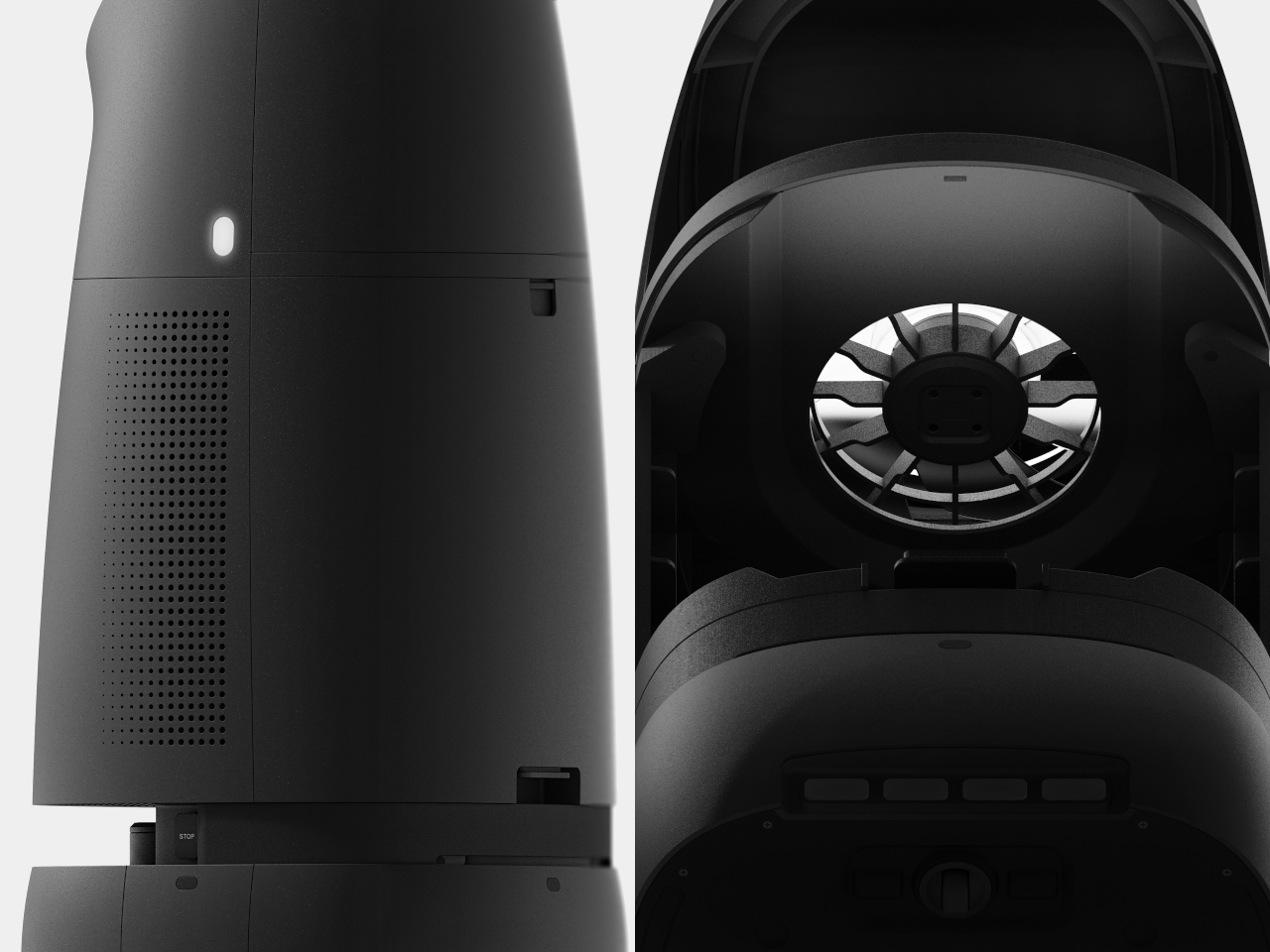
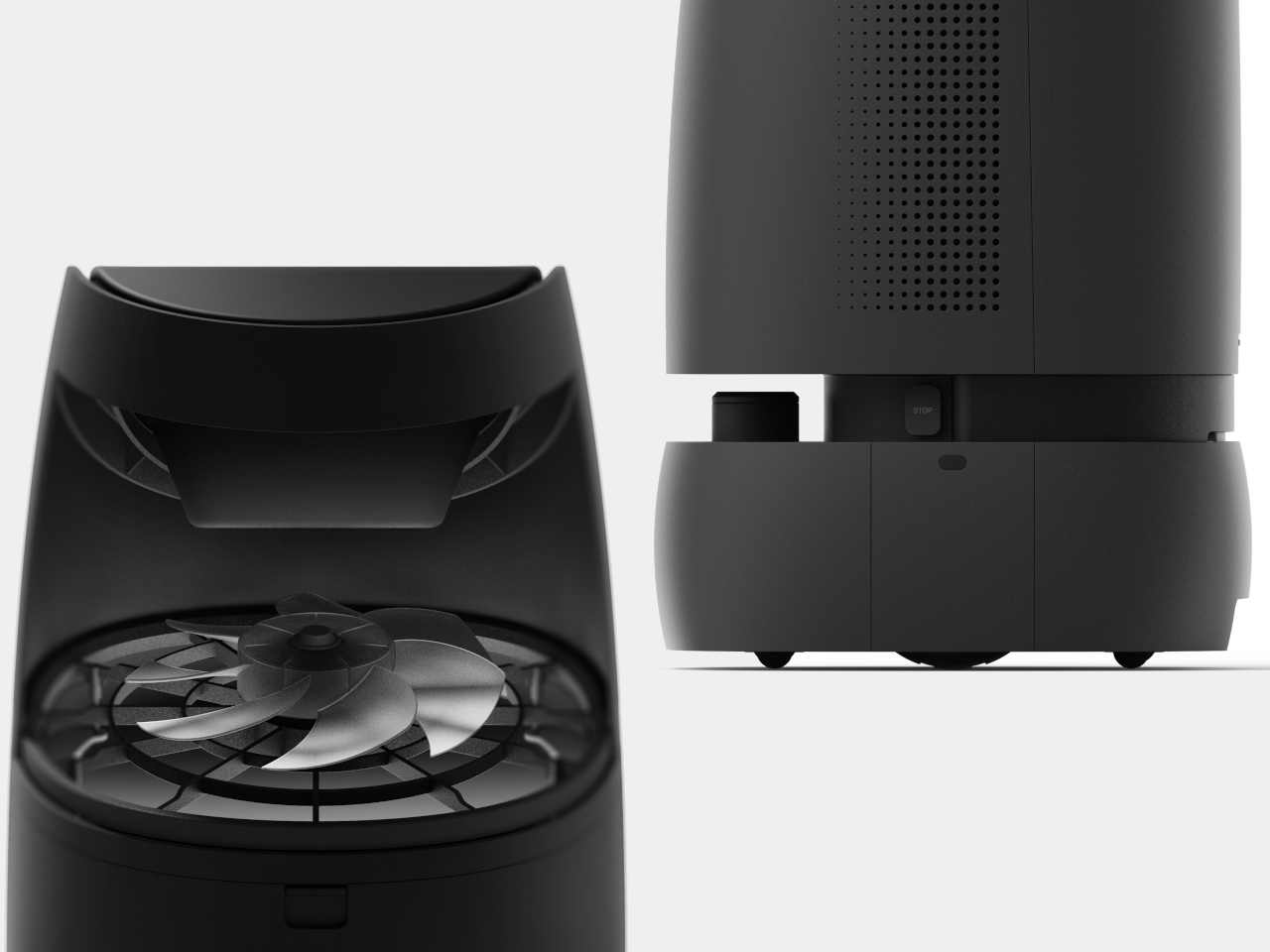
Omnipure is a concept rather than a product on shelves. But the problem it identifies is real: stationary purifiers can only clean the air that eventually reaches them. A device that maps a home, learns activity patterns, and positions itself where pollution is forming solves a fundamentally different problem from one that simply runs on auto in a corner, hoping the air comes to it.