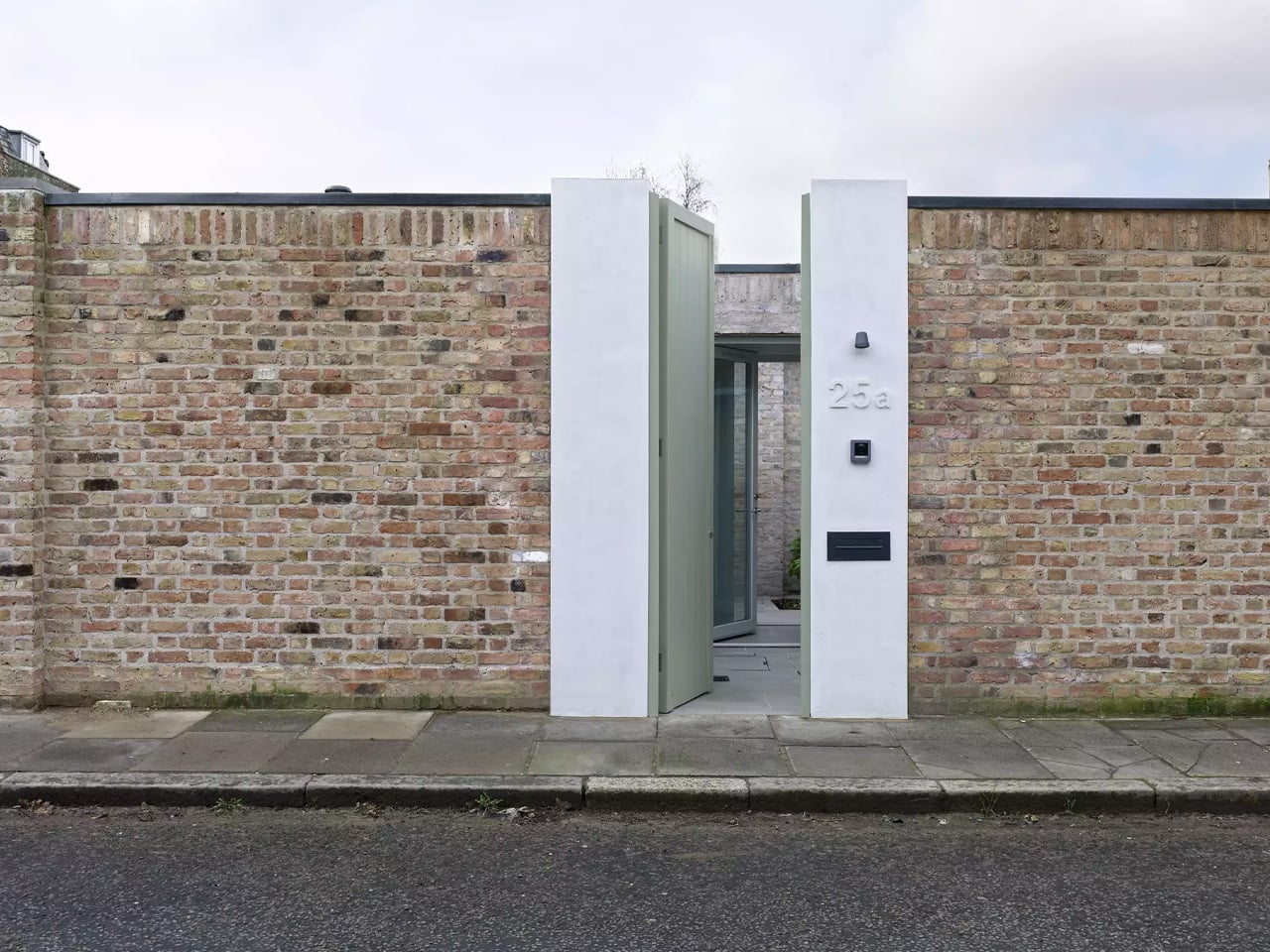
Just past the southeast corner of Cleaver Square in Kennington, south London, sits a weathered brick wall with a painted timber gate. From the street, it looks like nothing more than a garden boundary — unremarkable, quiet, entirely in keeping with the 18th-century square around it. Step through the gate and the story changes completely.
Behind it is the Walled Courtyard house, a single-storey, two-bedroom home designed by London-based architecture studio Inglis Badrashi Loddo (IBLA). It is the first new house built on Cleaver Square in over 175 years — and it was designed to be invisible.
Designer: IBLA
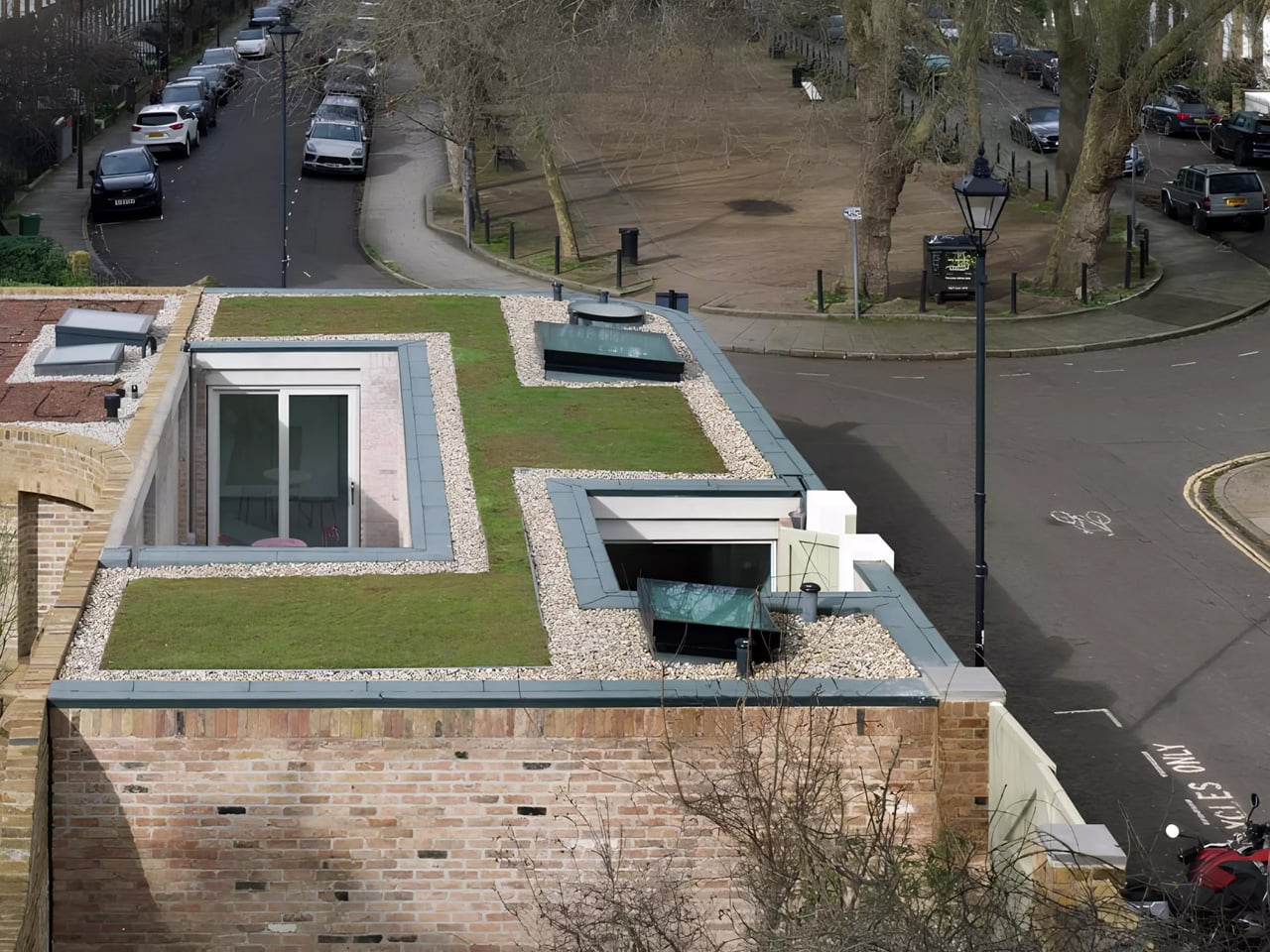
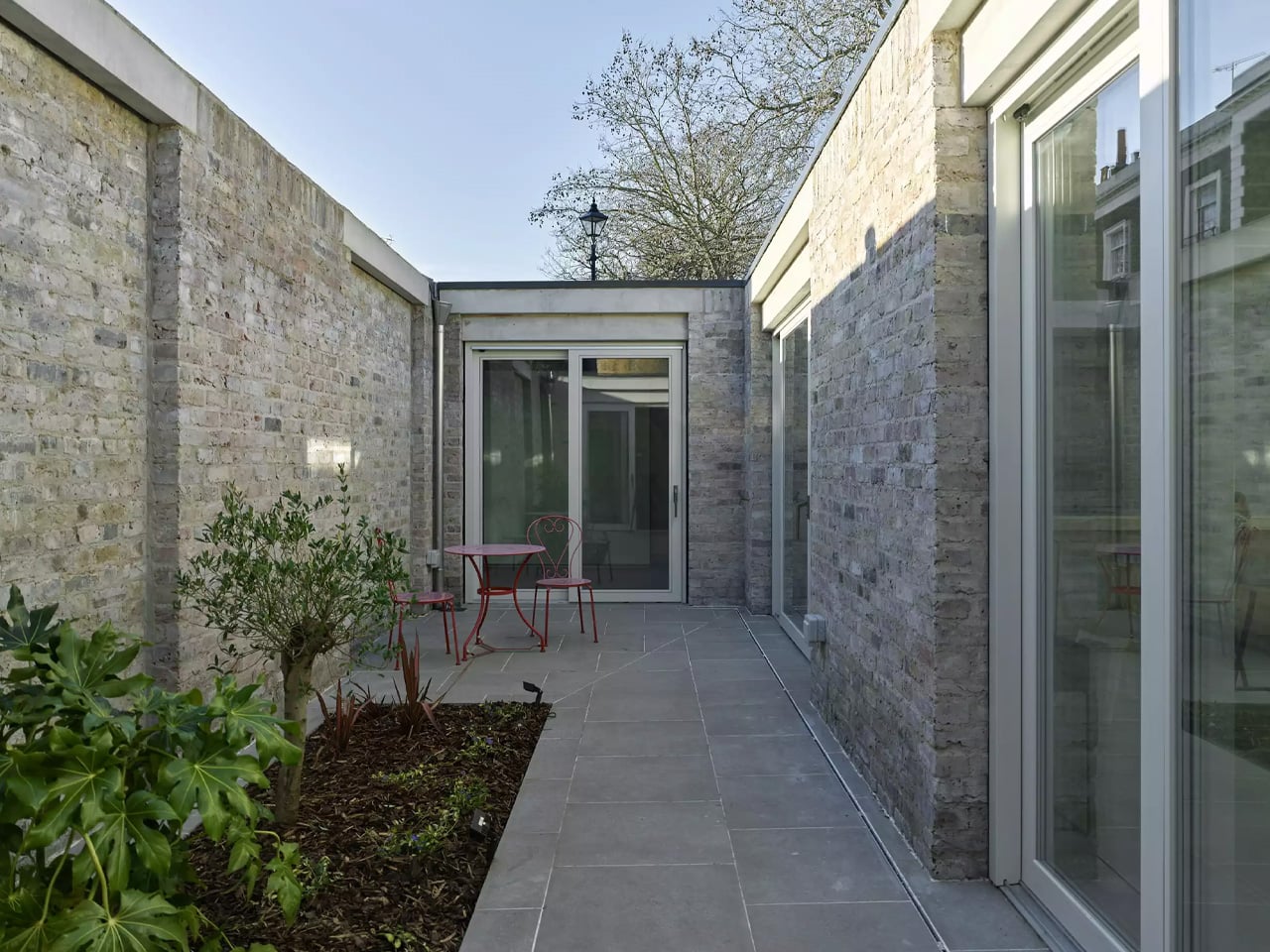
The site, a modest 63 square metres, was formerly a car park. It once formed part of the walled garden of the Grade-II listed Georgian townhouse that sits adjacent to it. The owners of that townhouse commissioned IBLA to design a separate, accessible dwelling on the land — compact, light-filled, and historically sensitive.
IBLA didn’t fight the enclosure. They embraced it. The boundary walls were reconstructed using a combination of salvaged and new London stock brick, deliberately left without windows so the exterior reads as one continuous garden wall. Inside, those same walls are washed in lime-mortar paint, pulling light inward and immediately shifting the atmosphere. “The site is very compact, completely enclosed and inward-looking — our main goal was to create a bright and light-filled home that felt expansive and generous, despite the constraints,” said IBLA director Kim Loddo.
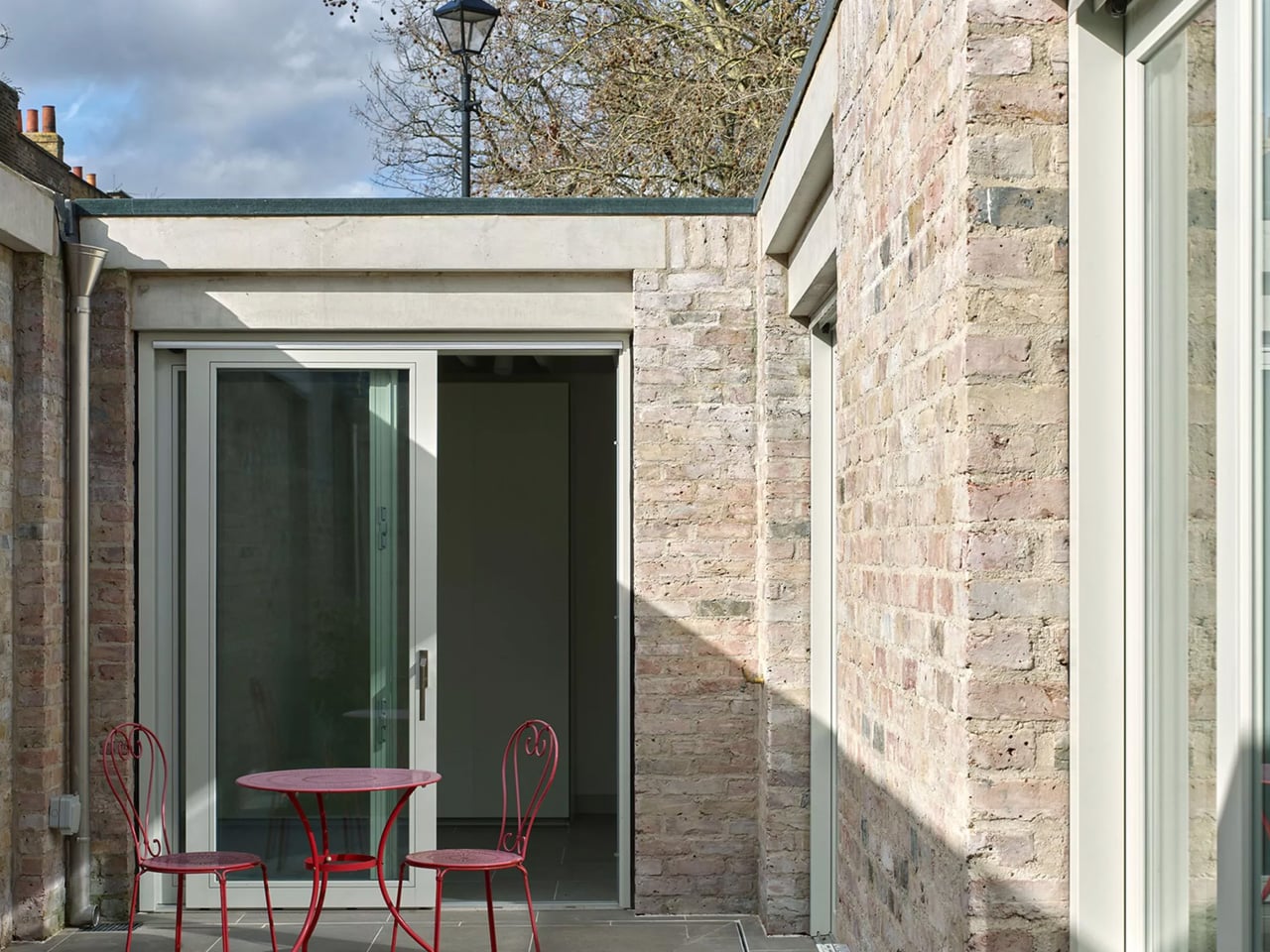
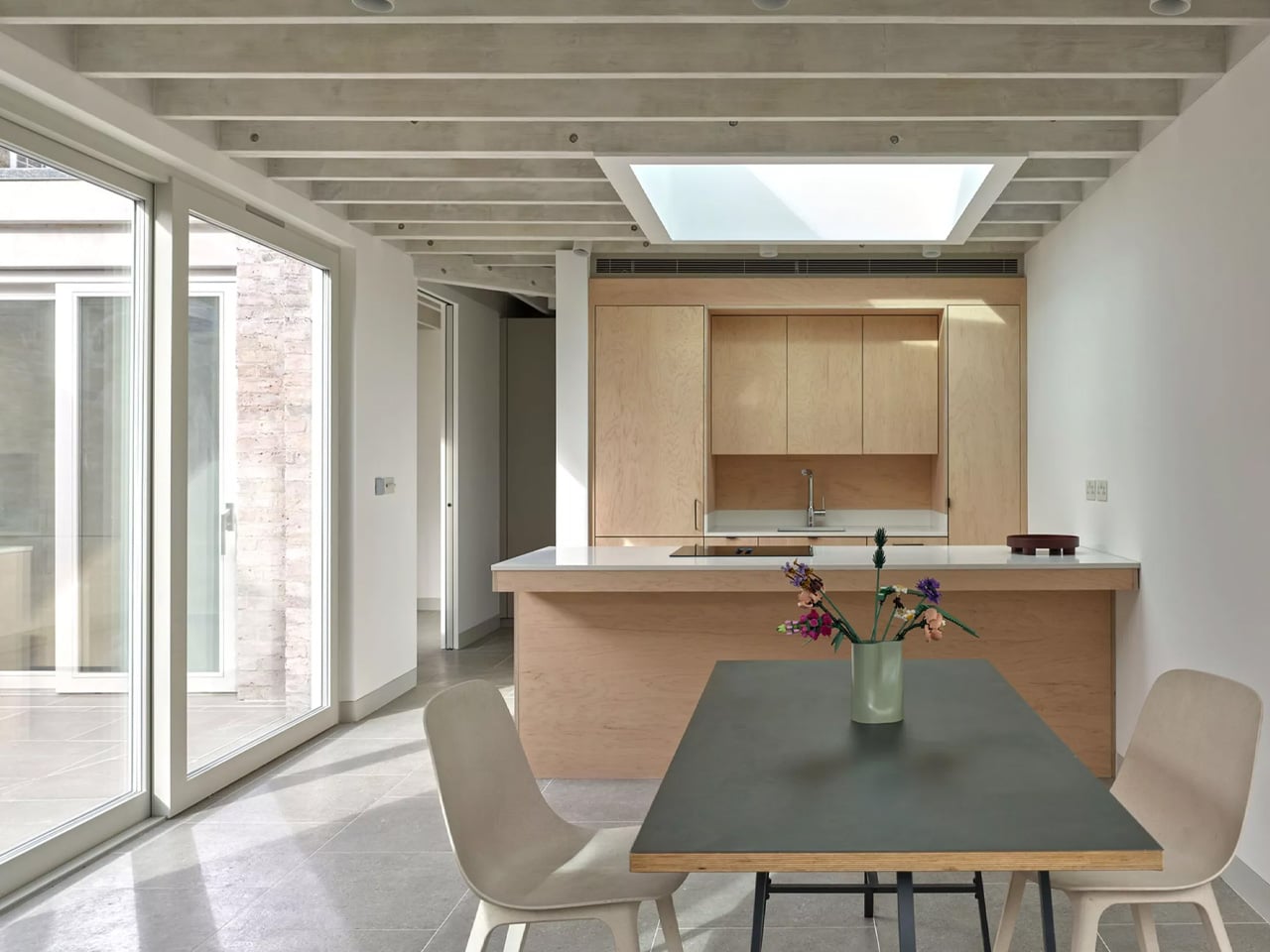
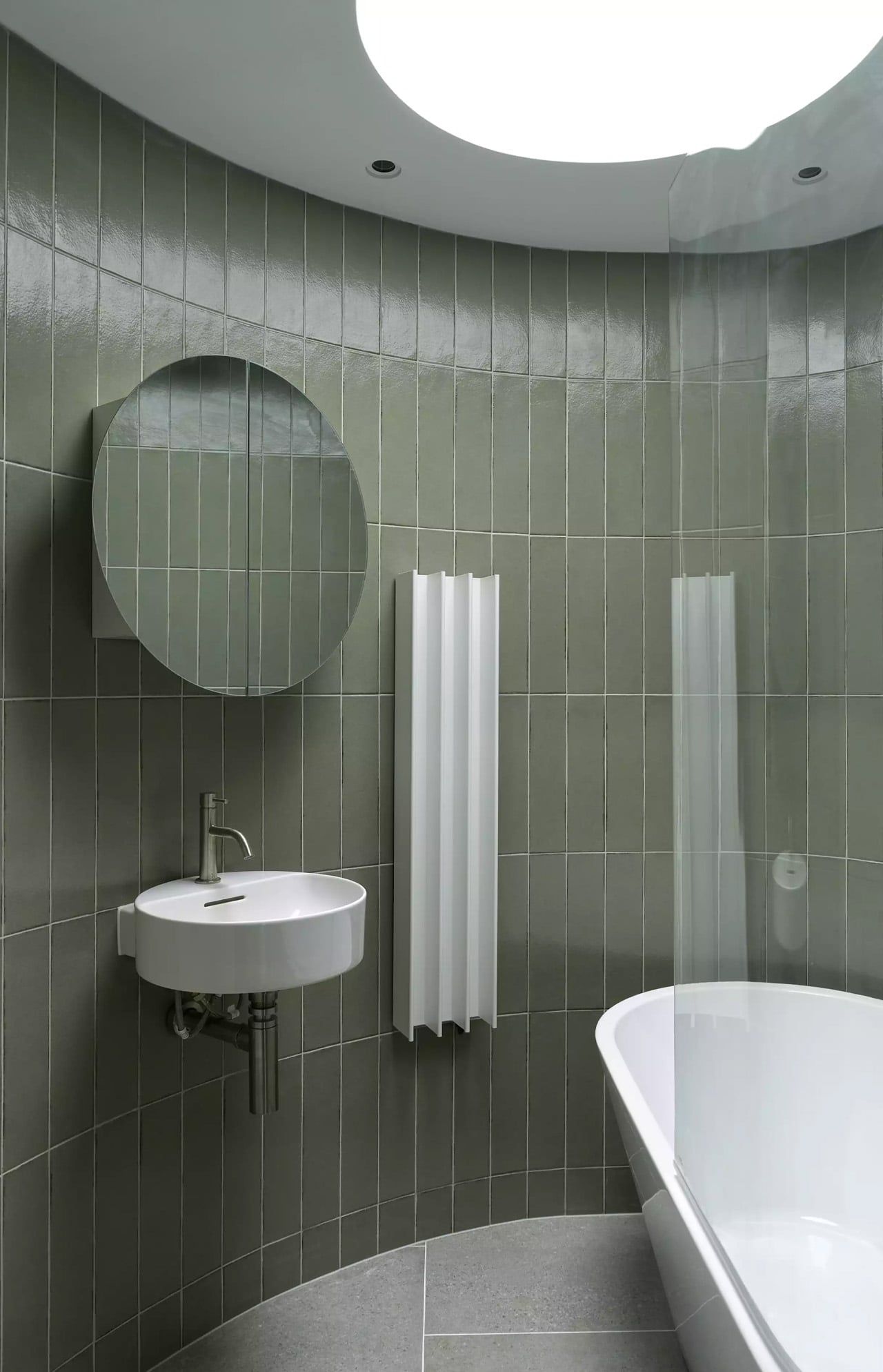
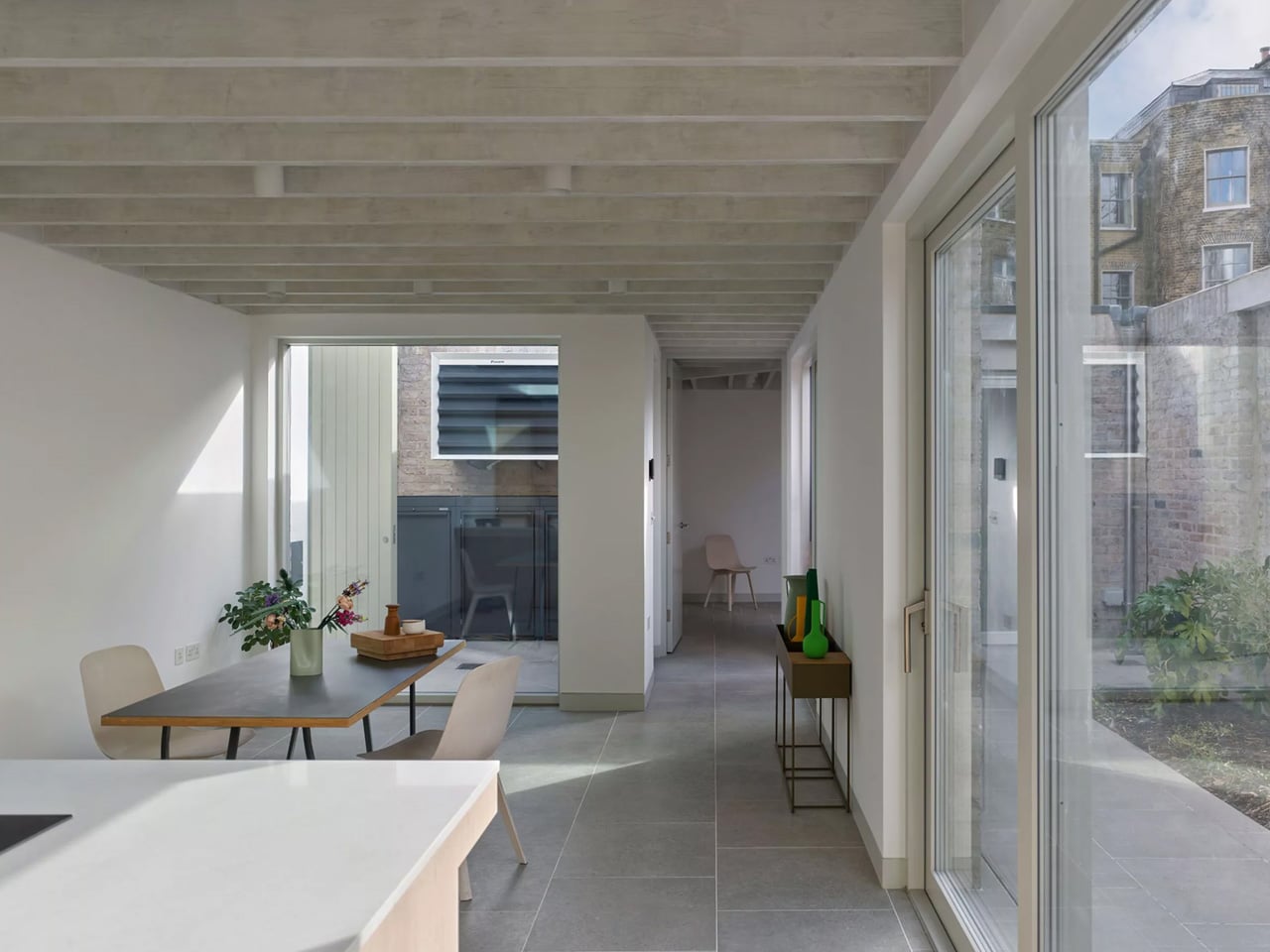
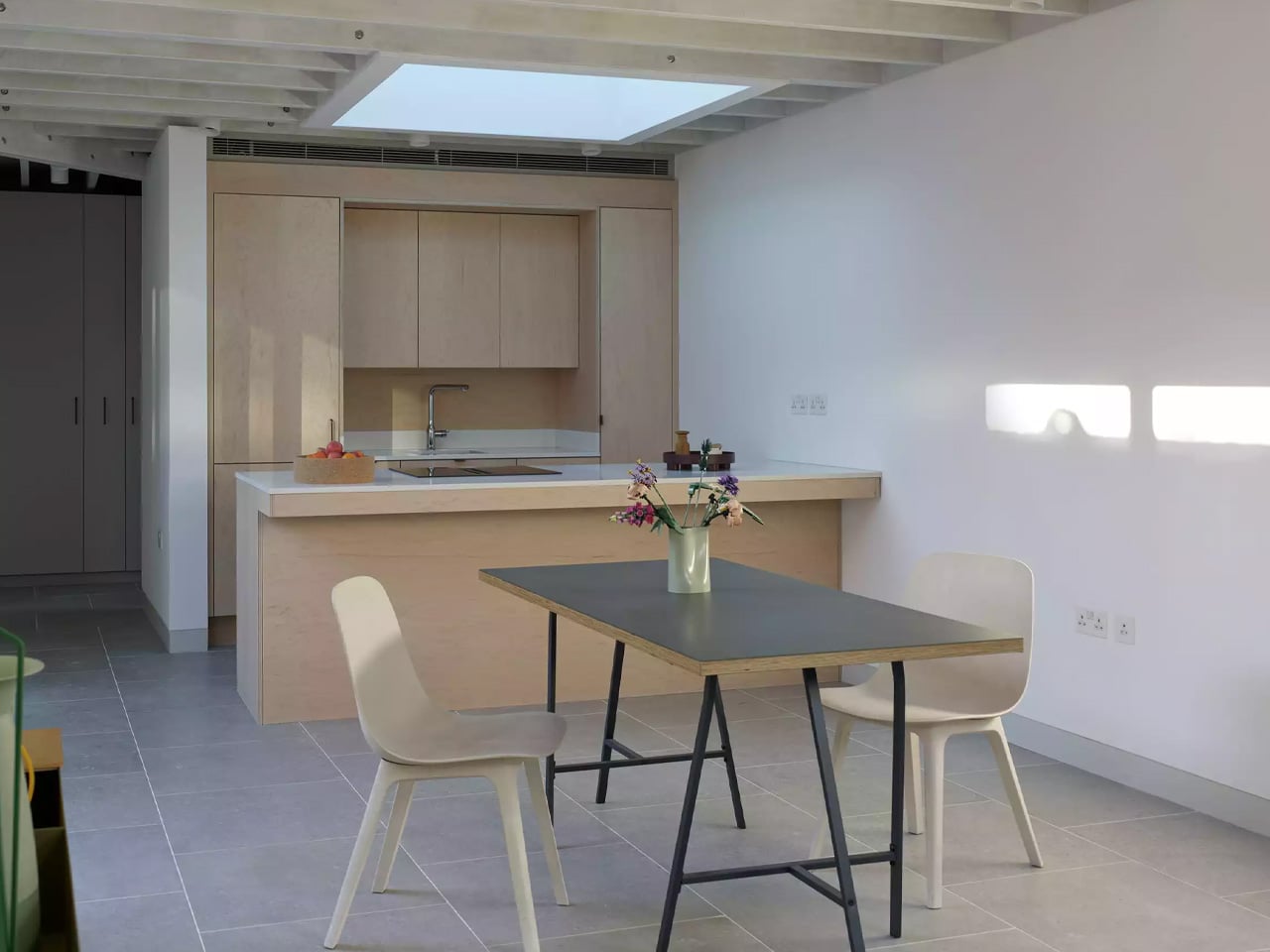
The layout unfolds around a central courtyard garden, with every main room connected to it through full-height sliding glass doors. The main bedroom and ensuite occupy the western end, with long sightlines running through to the kitchen and dining area at the centre. There, custom plywood cabinetry sits beneath a skylight that keeps the space bathed in natural light through the day. To the east, an adaptable room serves either as a second bedroom or a reading snug. The main bathroom, tucked into the curved corner of the site, is lit from above by a circular skylight.
A neutral palette runs throughout — white walls, whitewashed exposed timber roof joists, and grey porcelain flooring — with pocket doors that slide cleanly into wall recesses to keep sightlines open. The joists, as Loddo notes, do real structural work while lending the ceilings an honest rhythm.
For sustainability, the home relies on an air-source heat pump, underfloor heating, high-performance insulation, and a sedum roof that quietly completes its environmental credentials. What IBLA has built here is a masterclass in restraint. A home that holds its history close, hides from the street entirely, and reveals itself only to those who pass through the gate.