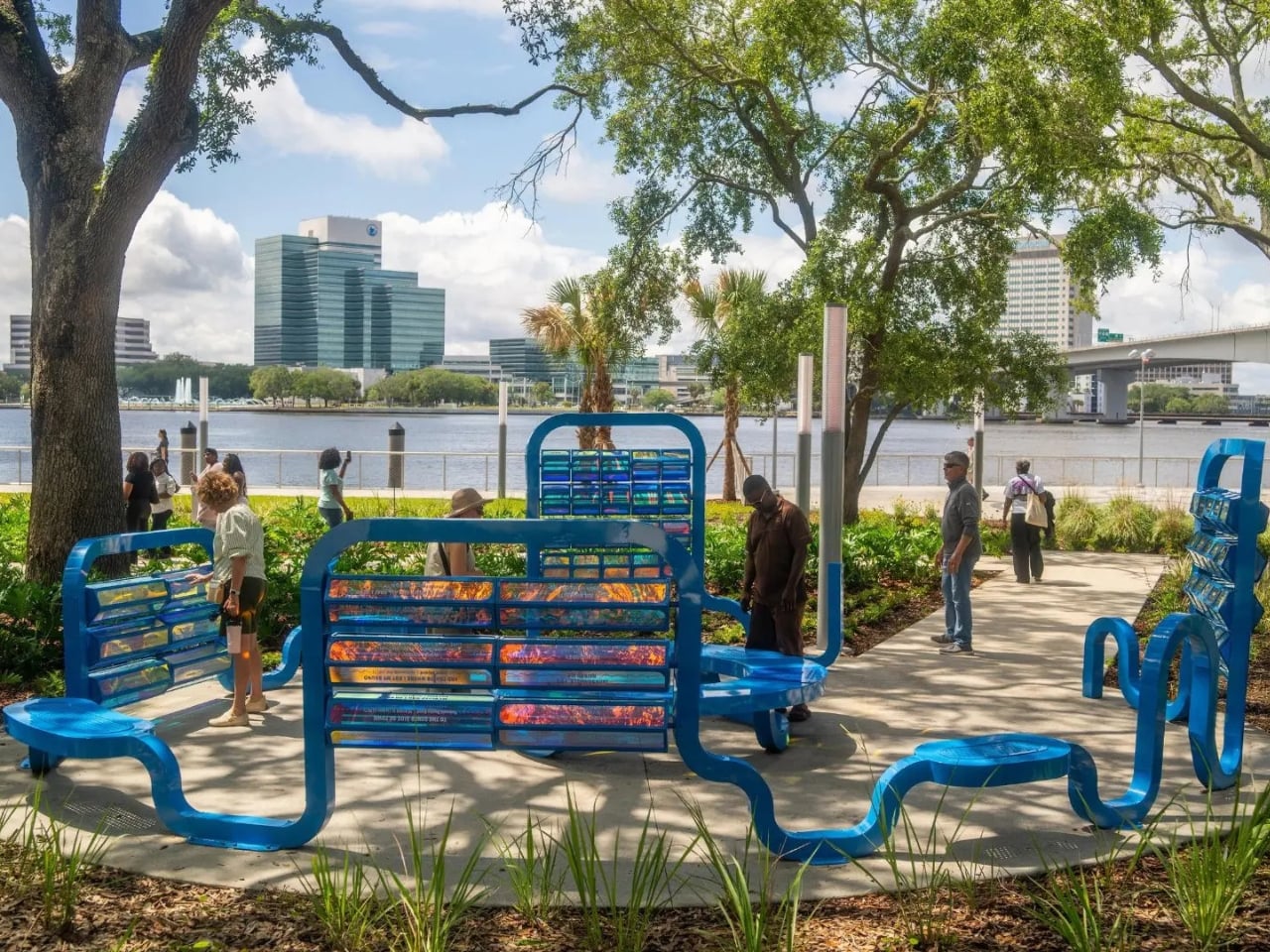
Most public art arrives fully formed. It gets unveiled, photographed, written about, and then gradually becomes part of the background noise of a city. You stop seeing it the way you stop noticing the paint color in your living room. A Cappella, a new permanent installation along Jacksonville’s riverfront, was designed to resist exactly that fate.
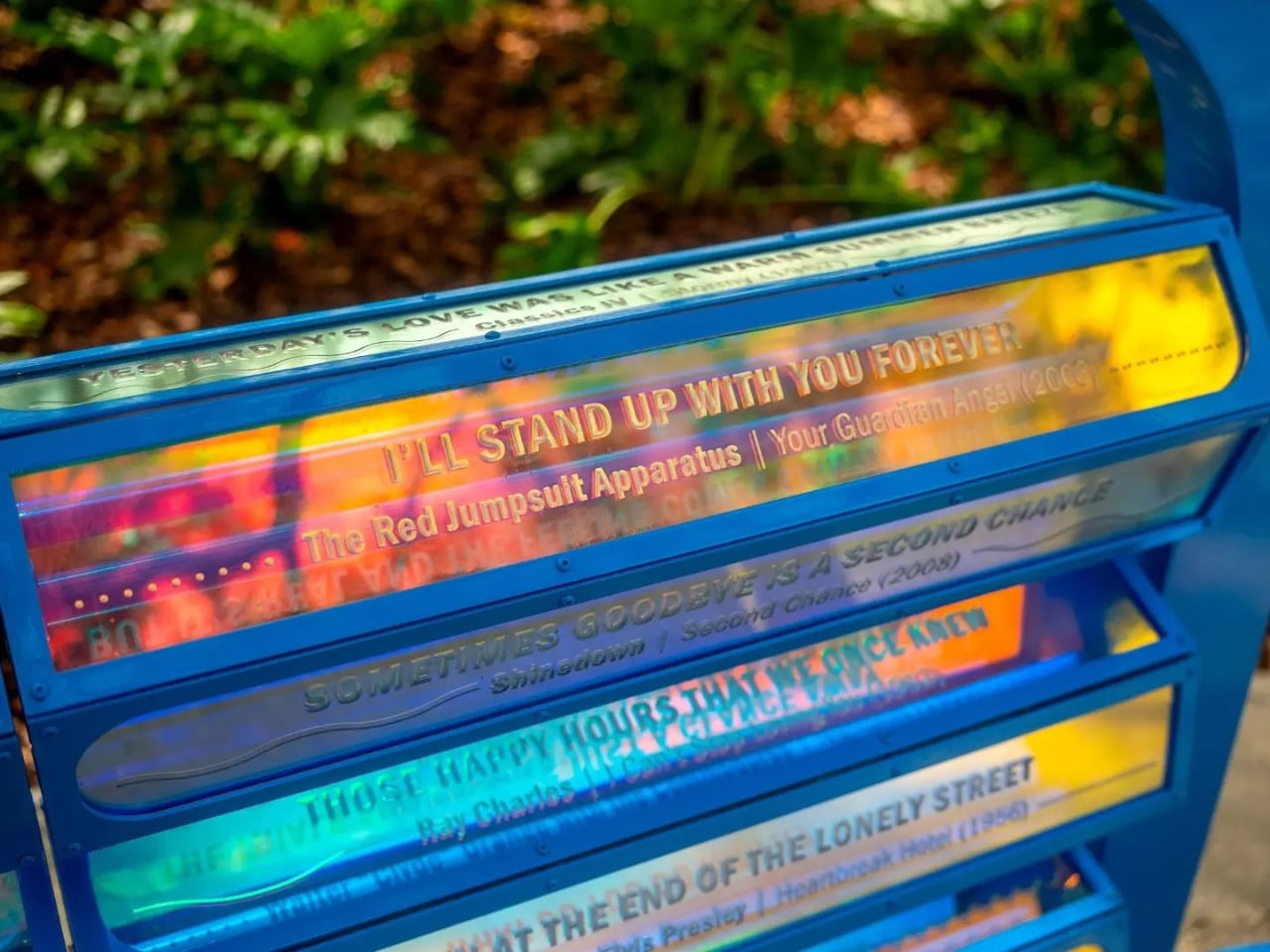
Created by Brooklyn-based studio The Urban Conga and situated within the Jacksonville Riverfront Music Garden along the St. Johns River, A Cappella does something most permanent installations don’t dare to do: it was built to remain unfinished. Not as an artistic statement about incompleteness, but as a genuine structural decision baked into every layer of the project. The installation draws from a collection of 84 songs by more than 60 local artists, spanning an entire century of Jacksonville music from the 1920s all the way to the 2020s. Those songs aren’t decoration. They’re the architecture.
Designer: The Urban Conga
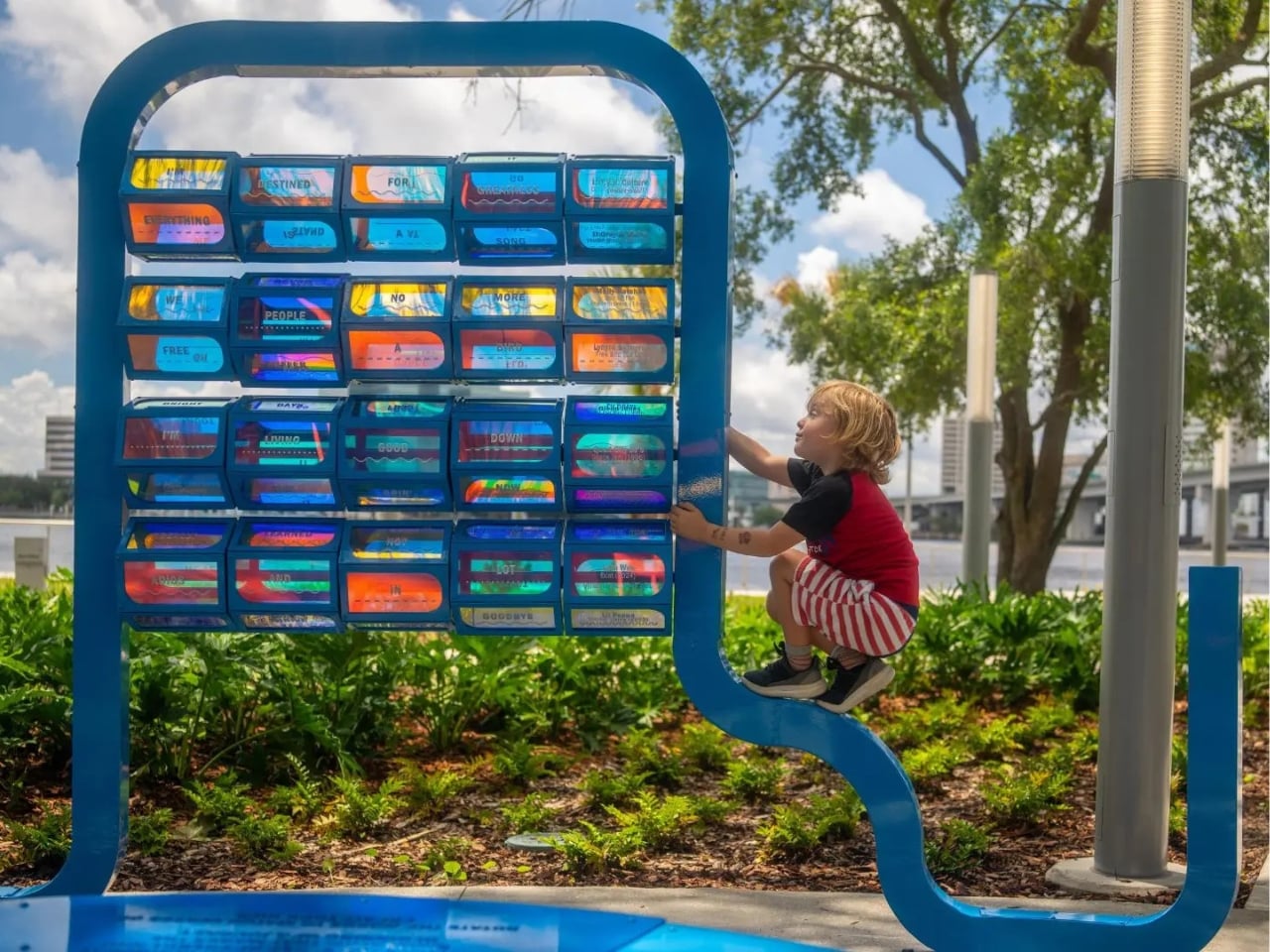
The physical space is carved into the landscape in the shape of a musical note, which already tells you this project takes its metaphors seriously. But what makes it compelling beyond the clever concept is how it’s organized. The installation is divided into four sections that mirror the movements of a symphony: motivation, home, love, and freedom. Each carries its own emotional register, its own atmosphere and pacing. Walking through the space isn’t like looking at a gallery wall. It moves like a piece of music does, with energy and momentum in the early sections giving way to something more contemplative and expansive toward the end. You’re not just reading about the city. You’re moving through its emotional history.
The studio is led by Ryan Swanson and Maeghann Coleman, AIA, NOMA, and The Urban Conga’s whole philosophy centers on what they call “open-ended play” and the idea of building what they describe as playable cities. This isn’t decoration for decoration’s sake. Their work consistently asks what happens when a designed space actually invites people to engage, interact, and contribute rather than simply observe. A Cappella is perhaps the clearest expression of that philosophy yet.
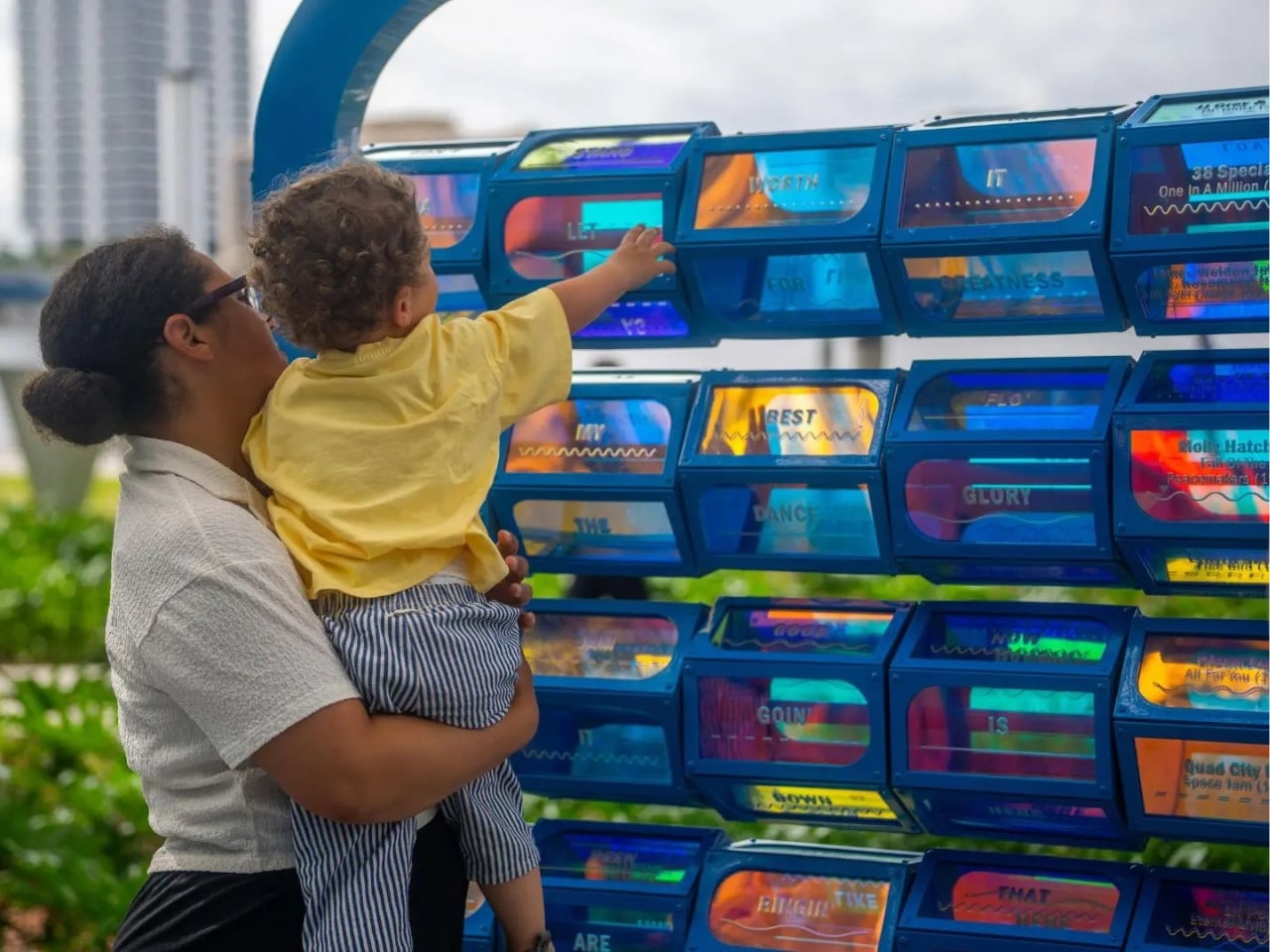
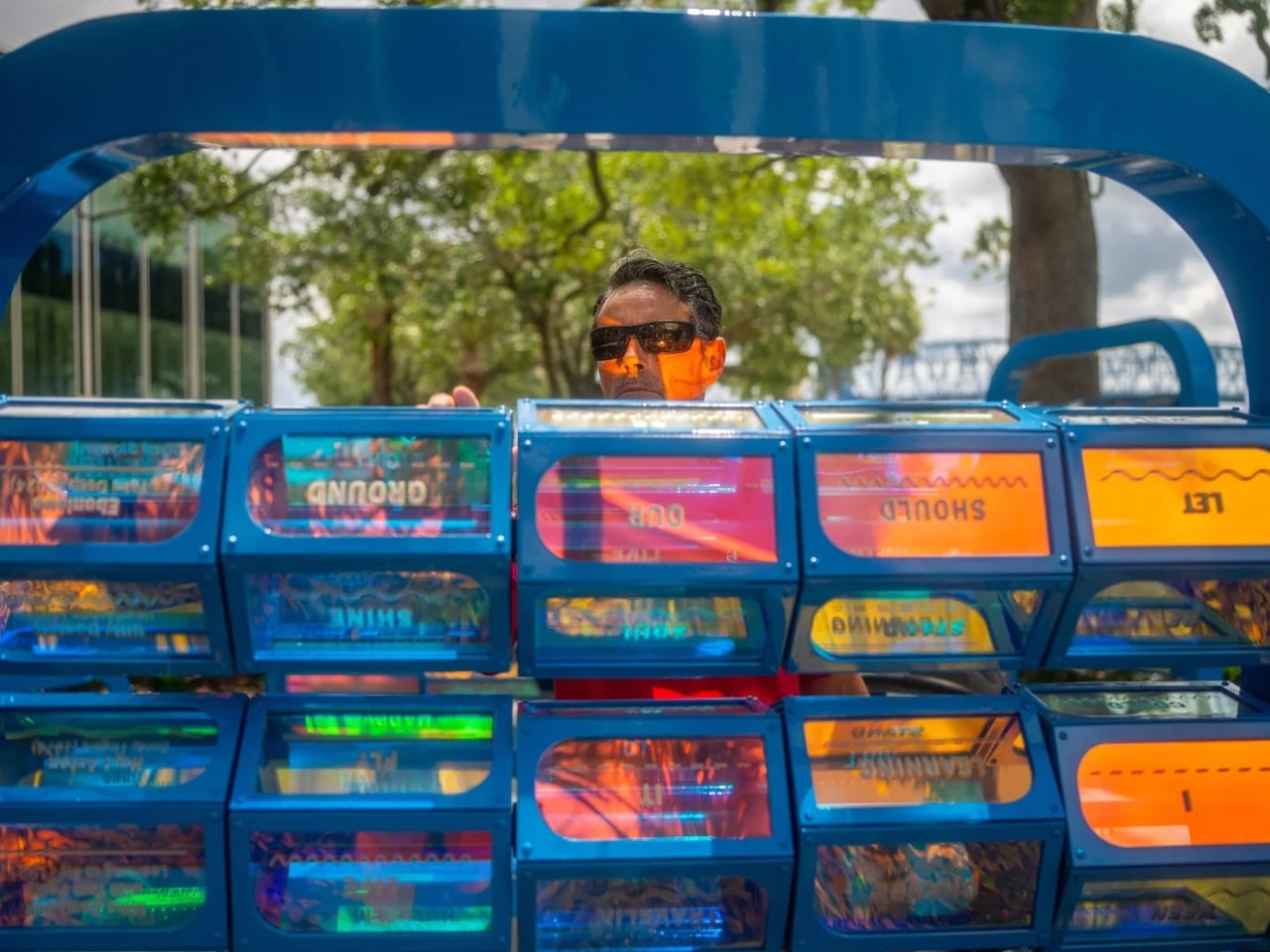
The sourcing of the content is the part that deserves more attention than it usually gets. Jacksonville residents themselves identified the songs and lyrics that shaped this installation through an extensive public engagement process, before a single panel was placed. That distinction is easy to gloss over, but it shouldn’t be. A lot of public art about a community is really just art placed near a community. The difference between being consulted and being included is everything, and this project sits firmly on the included side.
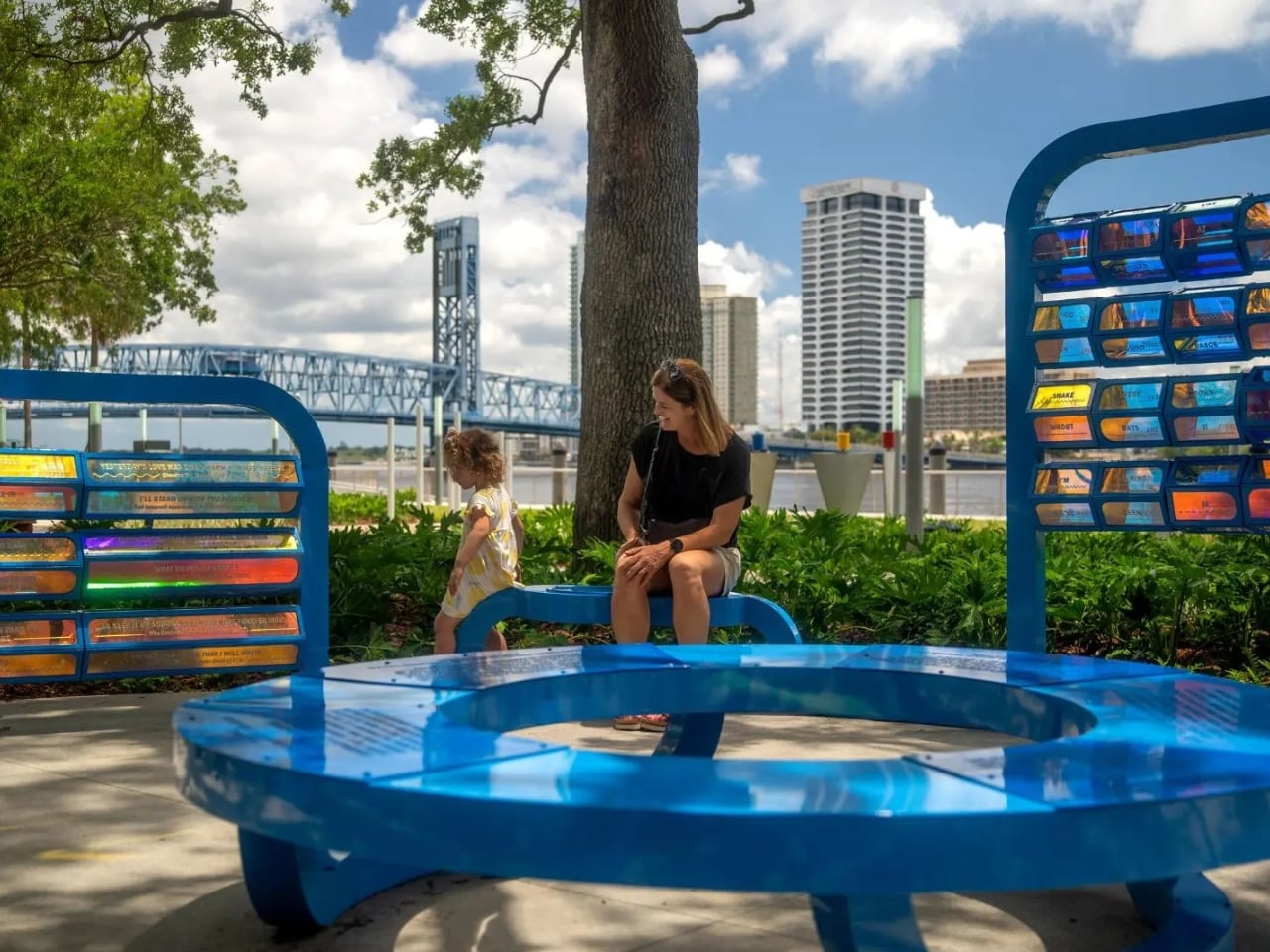
The visual design reflects that same openness. Dichroic and reflective panels shift with changing light, meaning the installation looks genuinely different depending on when you arrive. That’s a detail worth noting, because it means repeat visits reward you with something new. The space doesn’t freeze time; it moves with it.
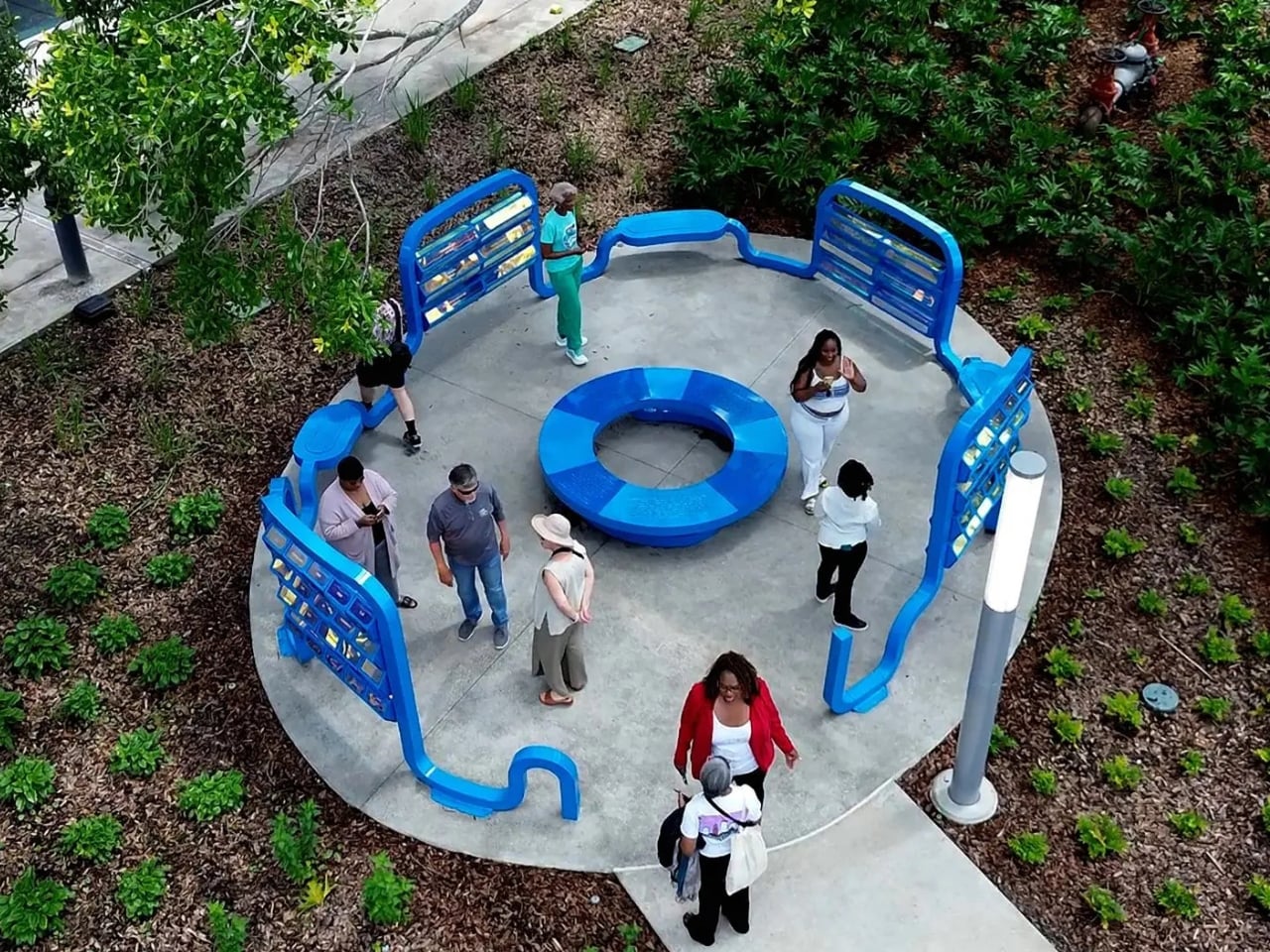
And then there’s the detail that separates A Cappella from most permanent public installations: it’s designed to accommodate new artists over time. As Jacksonville’s music scene evolves, so does the work. New songs can be added. The story doesn’t end with the ribbon cutting. That’s either a very bold design choice or an obvious one, depending on how you look at it. Either way, it’s rare, and it’s right.
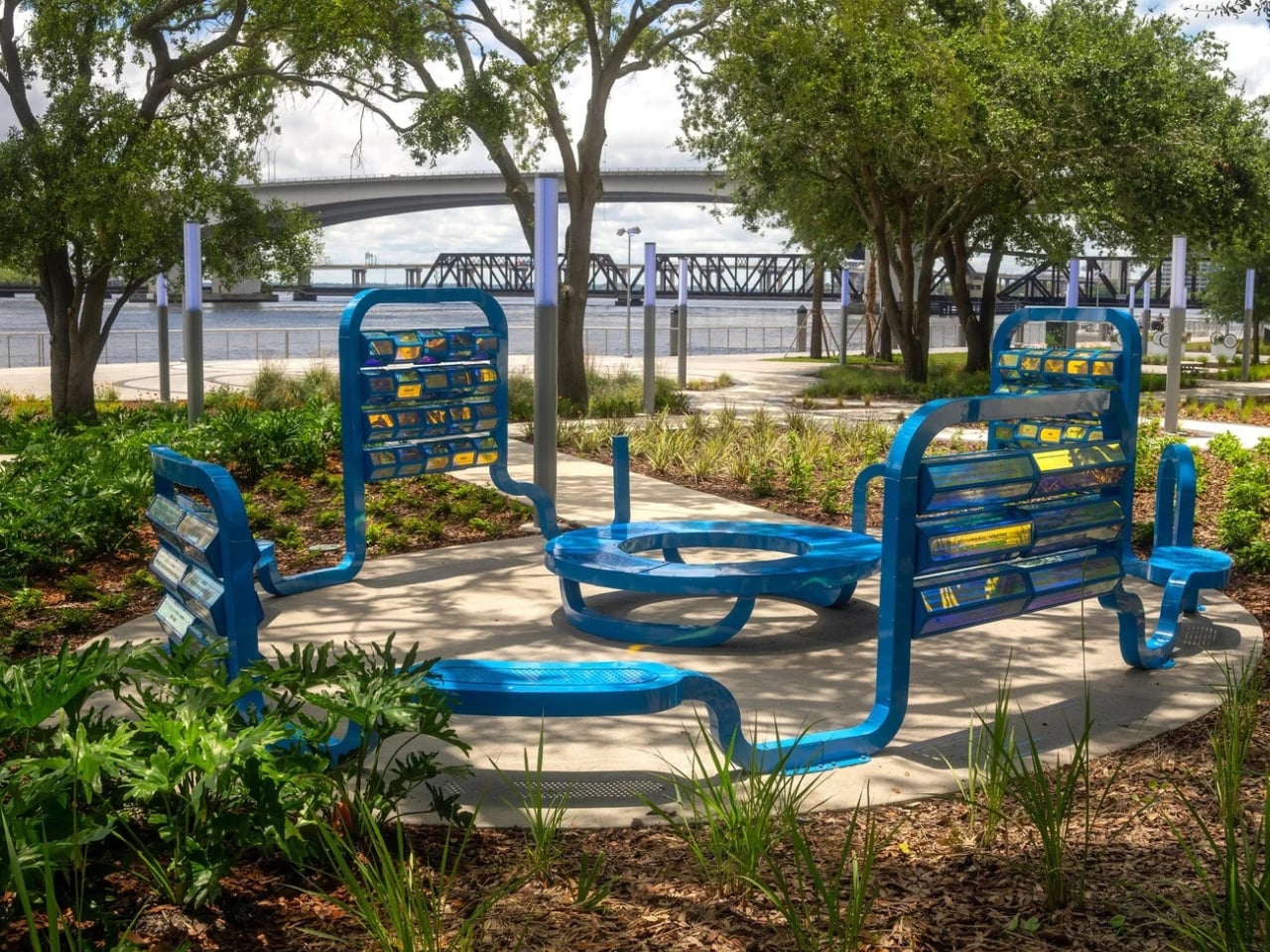
We talk a lot about public space and who it belongs to. Too often the answer is technically “everyone” but practically “no one in particular.” A Cappella makes a real argument that a city’s sonic history is worth preserving with the same seriousness as its built one. Jacksonville has contributed more to American music than it usually gets credit for, and having that legacy embedded in the riverfront landscape, available to anyone walking past on any given afternoon, feels like a meaningful act of civic pride rather than a token gesture. Public art can be many things. At its best, it makes you feel like you belong somewhere. A Cappella seems to be aiming for exactly that.
SHARE