Every summer, the conversation around air conditioning goes roughly the same way. It’s hot, we turn on the AC, the electricity bill spikes, and we quietly wonder if there’s a better way while doing absolutely nothing about it. A design student from Austria named Katja Posch decided to actually do something about it. The result is MALU, a compact, low-tech cooling system built from terracotta and wood that is currently turning heads in the sustainable design world.
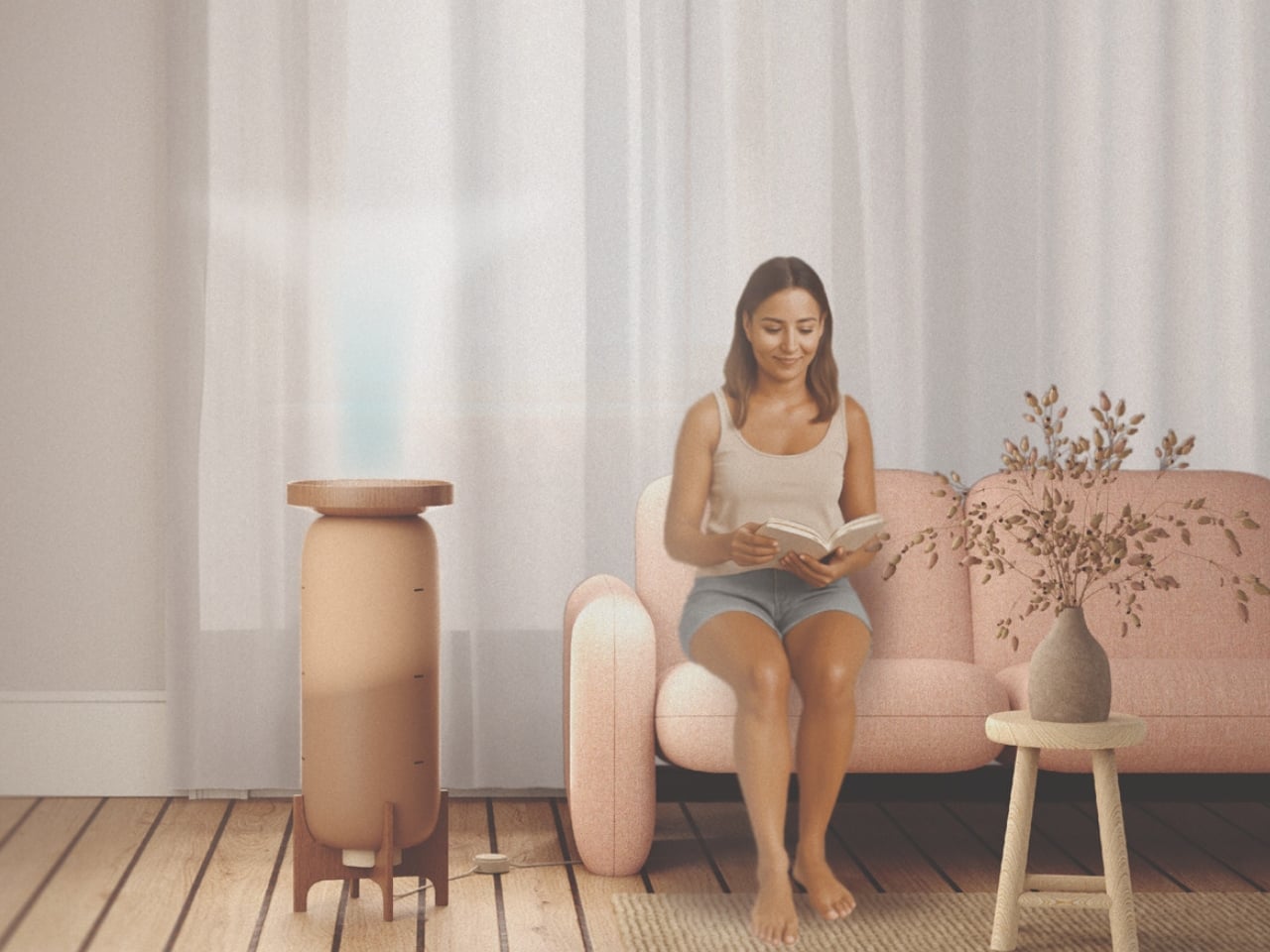
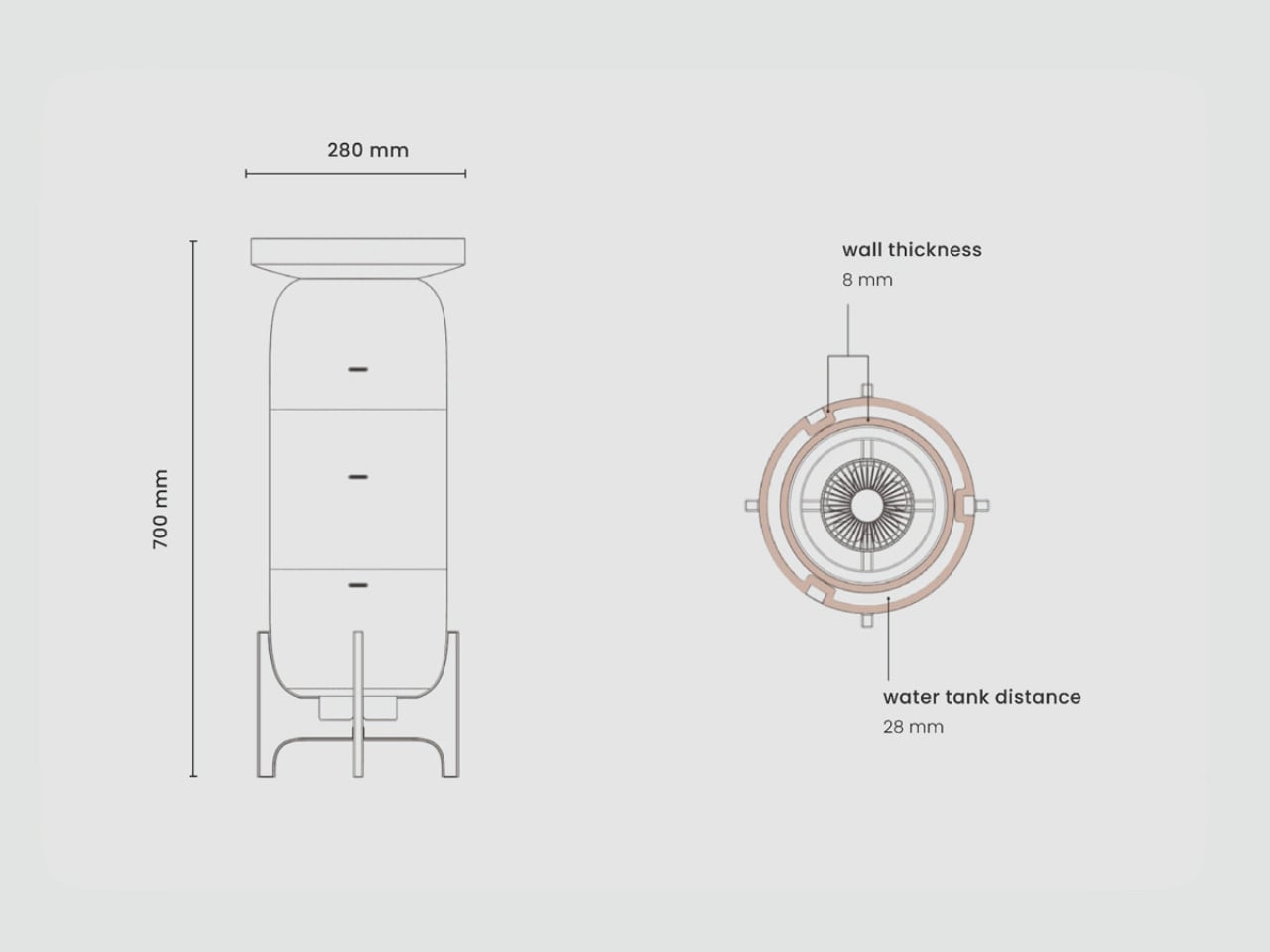
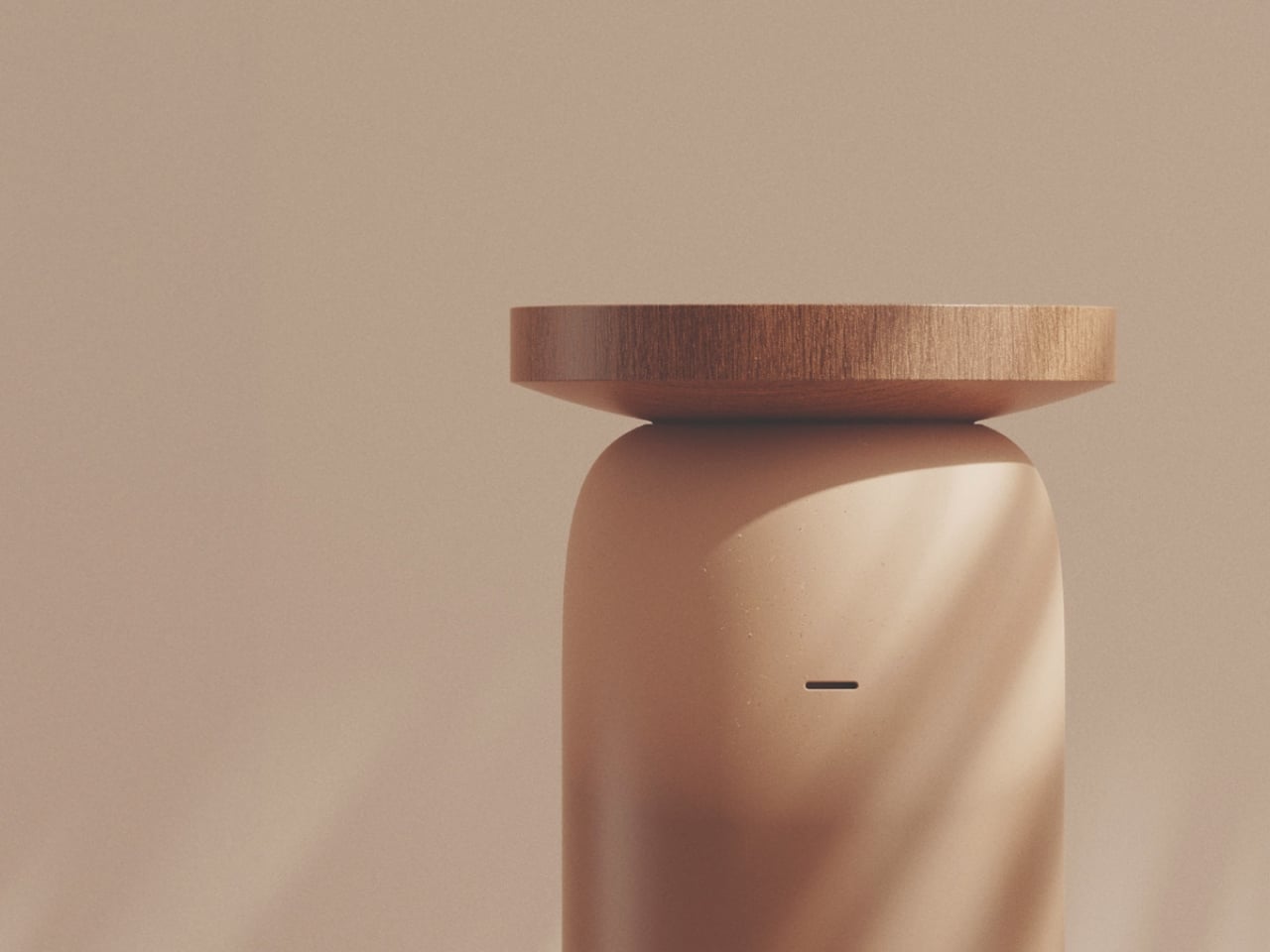
MALU is not trying to be a gadget. That is the first thing that struck me about it. Standing 700mm tall and 280mm wide, it looks far more like a considered piece of furniture than a household appliance. The form is a smooth, rounded terracotta cylinder in a warm sandy tone, topped with a wide circular wooden tray and elevated on a four-legged wooden cradle. It would look at home beside a sofa, and that is very much the point. The design is deliberately simple, rooted in the ancient science of evaporative cooling, the same principle that makes a wet cloth on your forehead feel so immediately refreshing.
Designer: Katja Posch
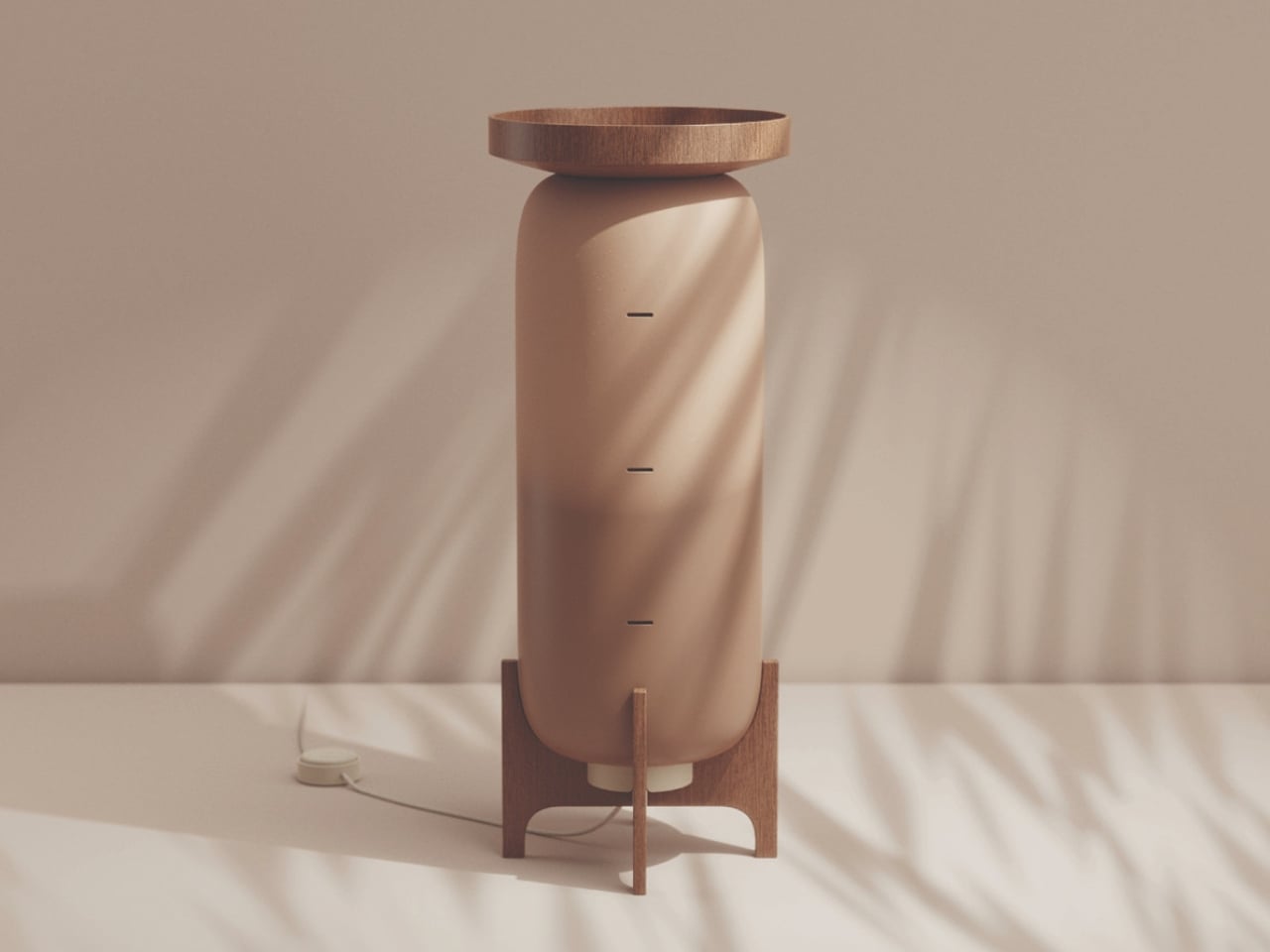
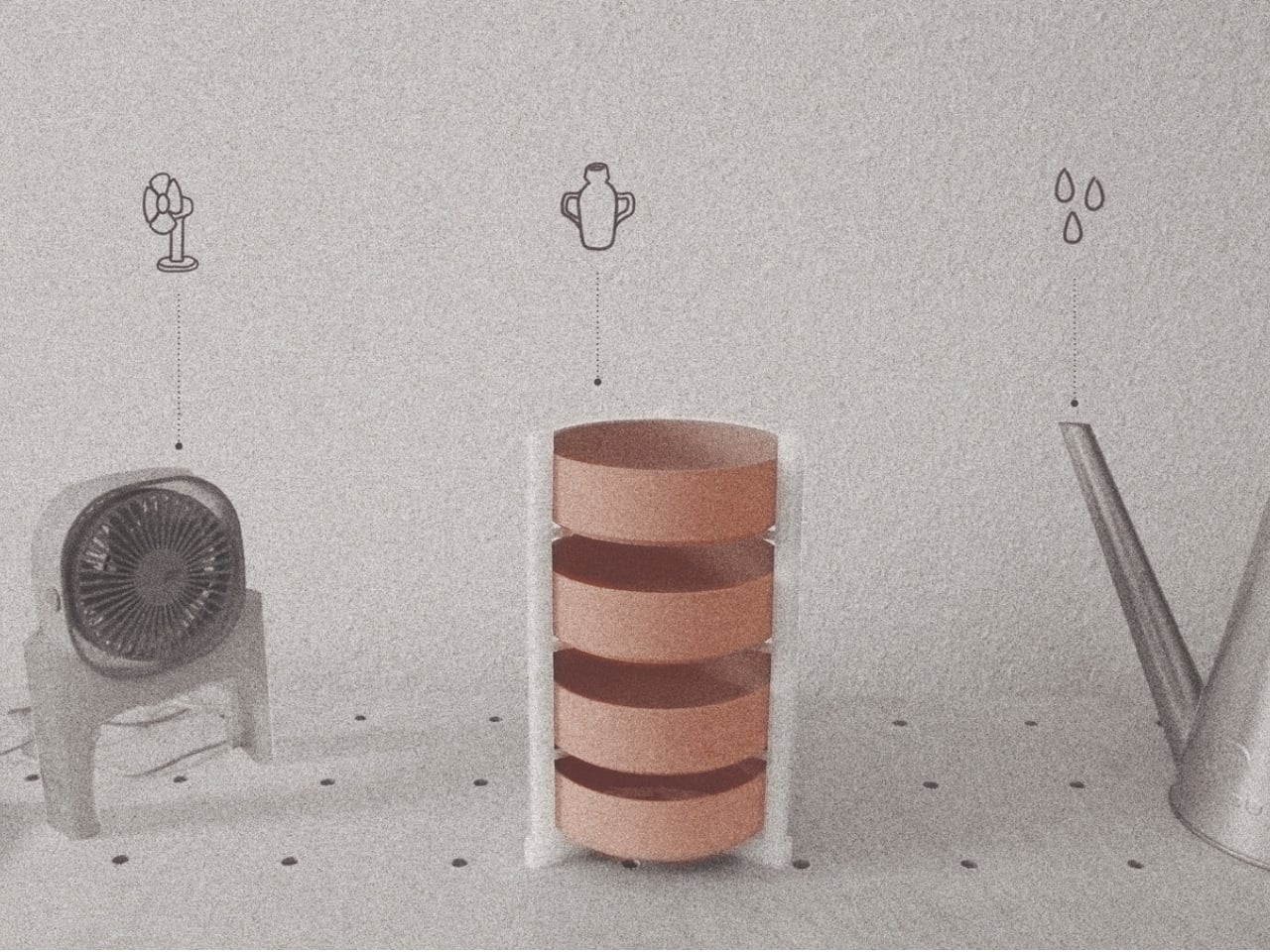
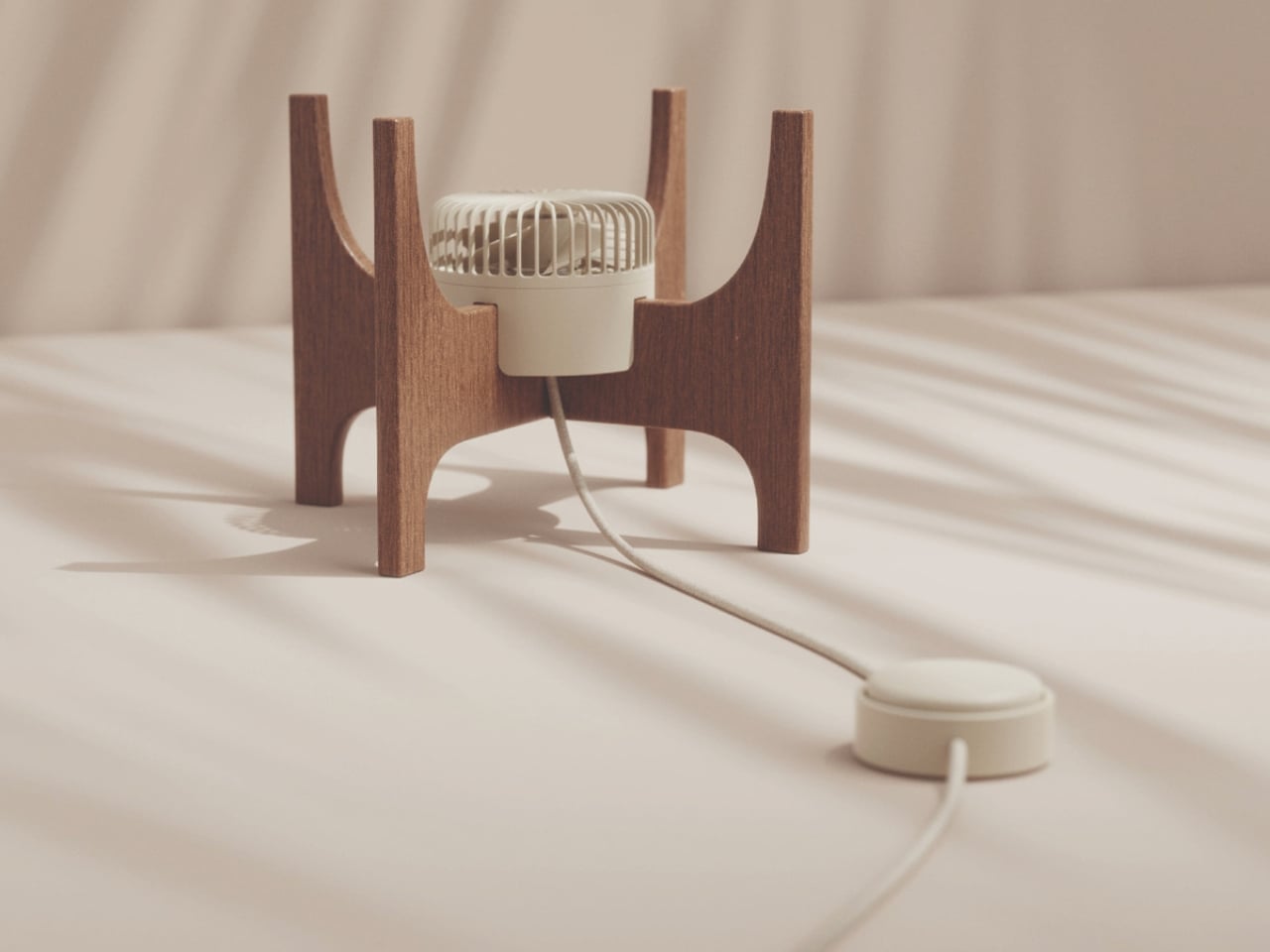
The mechanics are elegant in their restraint. Water is poured into the wooden tray at the top, which feeds slowly down through the porous terracotta body below. With walls just 8mm thick, the terracotta absorbs moisture readily and releases it through evaporation, drawing heat from the surrounding air in the process. Three narrow horizontal vents run along the body, allowing cooled air to escape into the room. At the base, nestled within the wooden stand, sits a small electric fan that draws air upward through the core of the cylinder and out through those vents. The gap between the fan and the terracotta wall is a precisely considered 28mm, enough to let air move through efficiently without overwhelming the passive cooling effect. The fan, however, is entirely optional. A small round controller sits on the floor at the end of a cord, but if you choose not to use it, MALU still works. It simply breathes on its own.
Posch completed MALU as her master’s thesis in Eco-Innovative Design at FH Joanneum in Graz. What she produced is a system that reframes the entire premise of modern cooling. Rather than asking how we make air conditioners more efficient, she asked whether we were solving the problem correctly in the first place. Historically, cultures across North Africa, the Middle East, and South Asia had already developed brilliant answers to that question, using clay, wind, and water to create comfortable spaces long before a single refrigerant was ever synthesized. MALU picks up that thread.
The irony of conventional air conditioning is by now well-documented. It cools your room while heating the planet, running on electricity that often comes from fossil fuels and using refrigerants with a warming potential thousands of times more potent than carbon dioxide. The more temperatures rise, the more we rely on AC; the more we rely on AC, the more temperatures rise. MALU does not claim to be a plug-and-play replacement for industrial HVAC systems, but it offers something the industry has largely forgotten: a way of thinking about comfort that does not come at the environment’s expense.
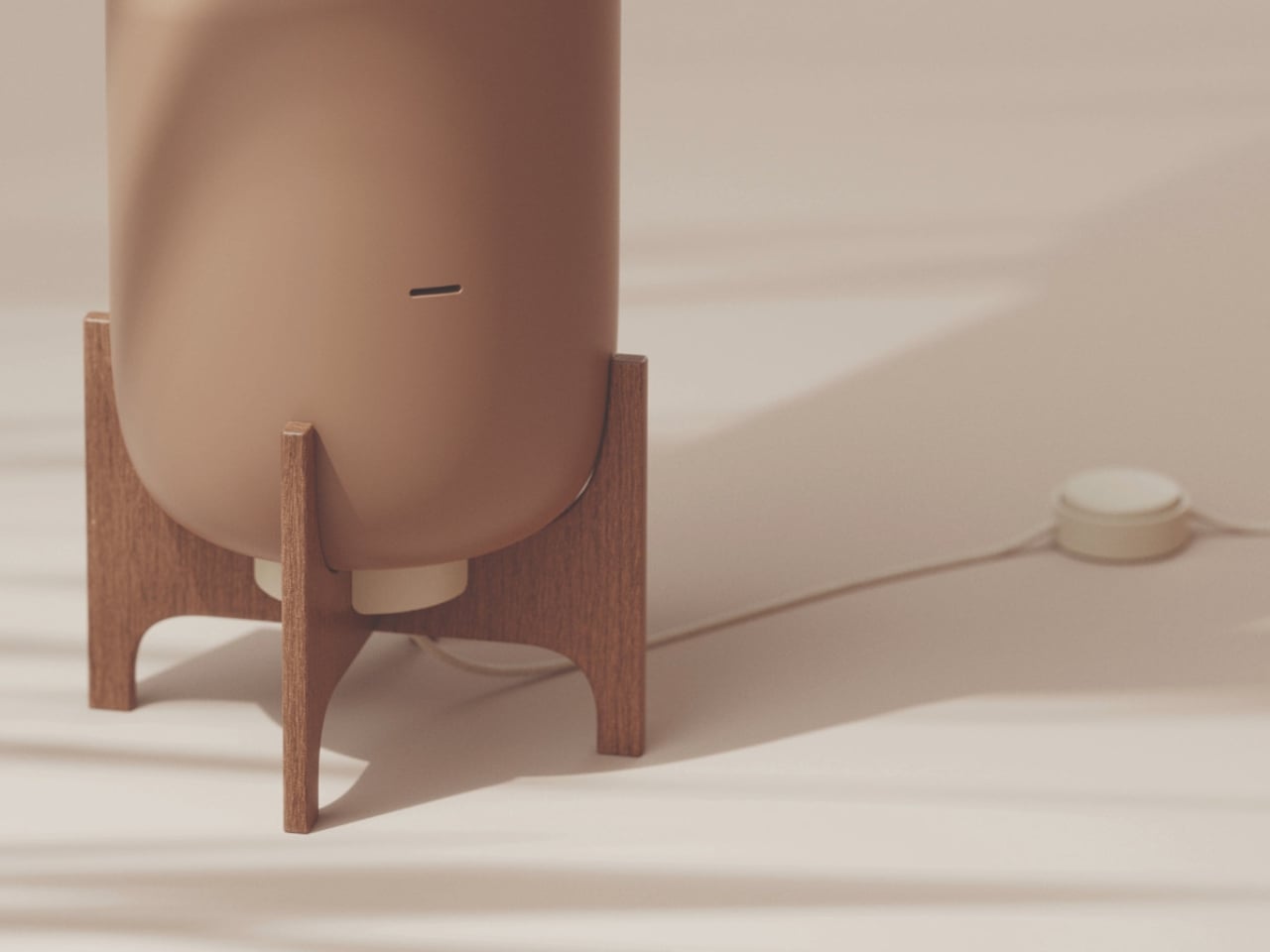
The material choices feel intentional beyond aesthetics. The terracotta body and wooden stand can be separated, repaired, and recycled independently. So much of our technology is designed around obsolescence. Cooling systems break down, become incompatible with updated refrigerant standards, or simply get swapped out for the next model. MALU is the opposite of that impulse. It is the kind of object you could understand, maintain, and eventually pass along.
MALU was recognized as a finalist for the Green Product Award 2026 and received a Special Prize for Design Concept at the Staatspreis Design 2026, Austria’s national design award. It is the kind of recognition that suggests the design community is genuinely warming to ideas that favor restraint over complexity, and that feels like a cultural shift worth paying attention to.
For those of us who have spent summers stacking fans in front of open windows and calling it a strategy, MALU is a genuinely exciting proposal. It will not cool a packed open-plan office on a 40-degree day, and it is not trying to. But as a rethinking of what personal cooling can look like in a hotter, resource-constrained world, it is one of the more compelling designs to come across my radar this year.
SHARE