Count how many umbrellas you’ve owned in your lifetime. Go ahead, try. Most people lose count somewhere around five or six, often because the memory of each one ends the same way: a gust of wind, a bent rib, a mangled heap left in a trash can on a rainy corner somewhere. We accept this as the unavoidable cost of staying dry. But a group of graduate students from the Savannah College of Art and Design decided that was a terrible deal, and they designed their way out of it.
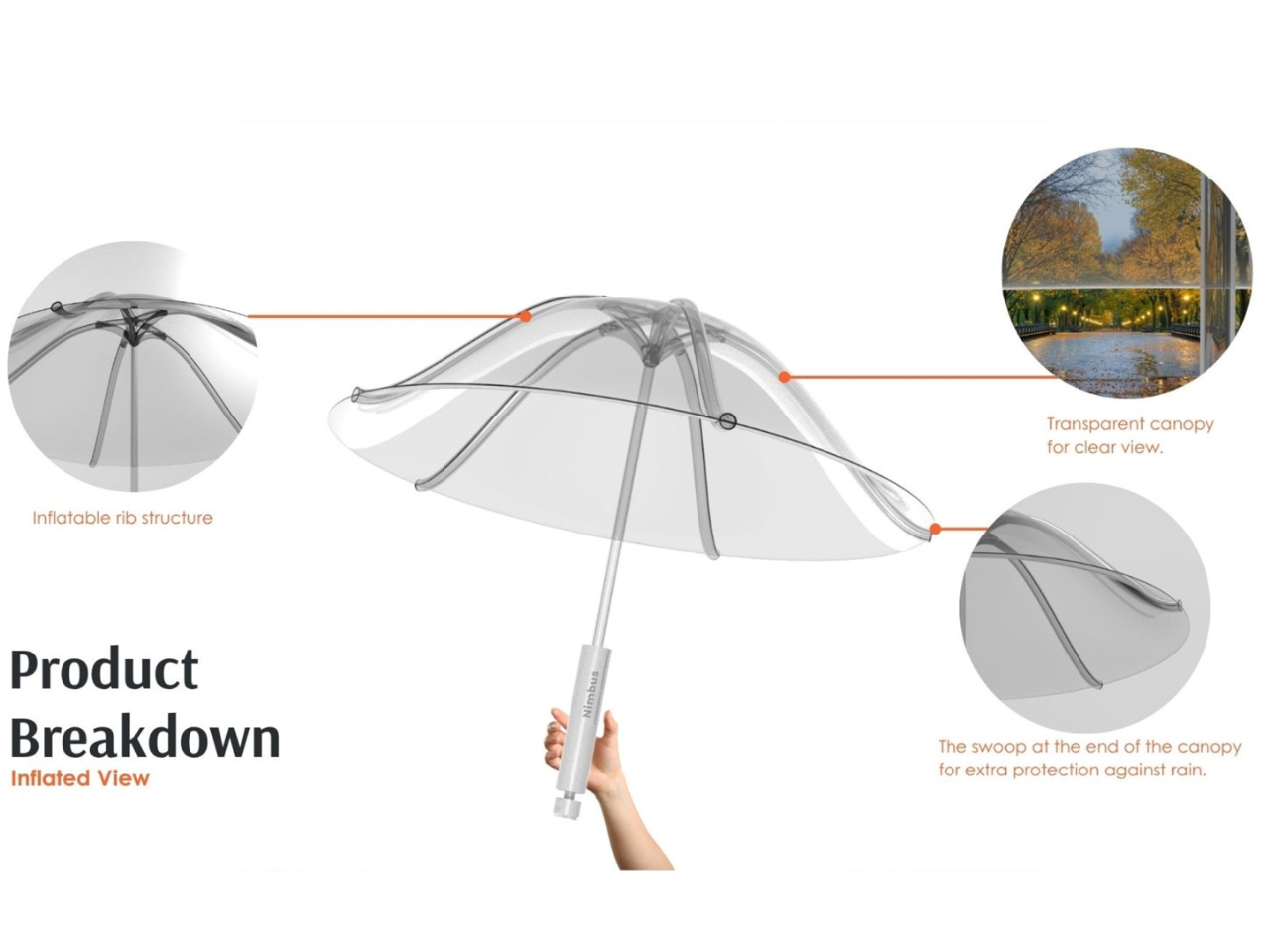
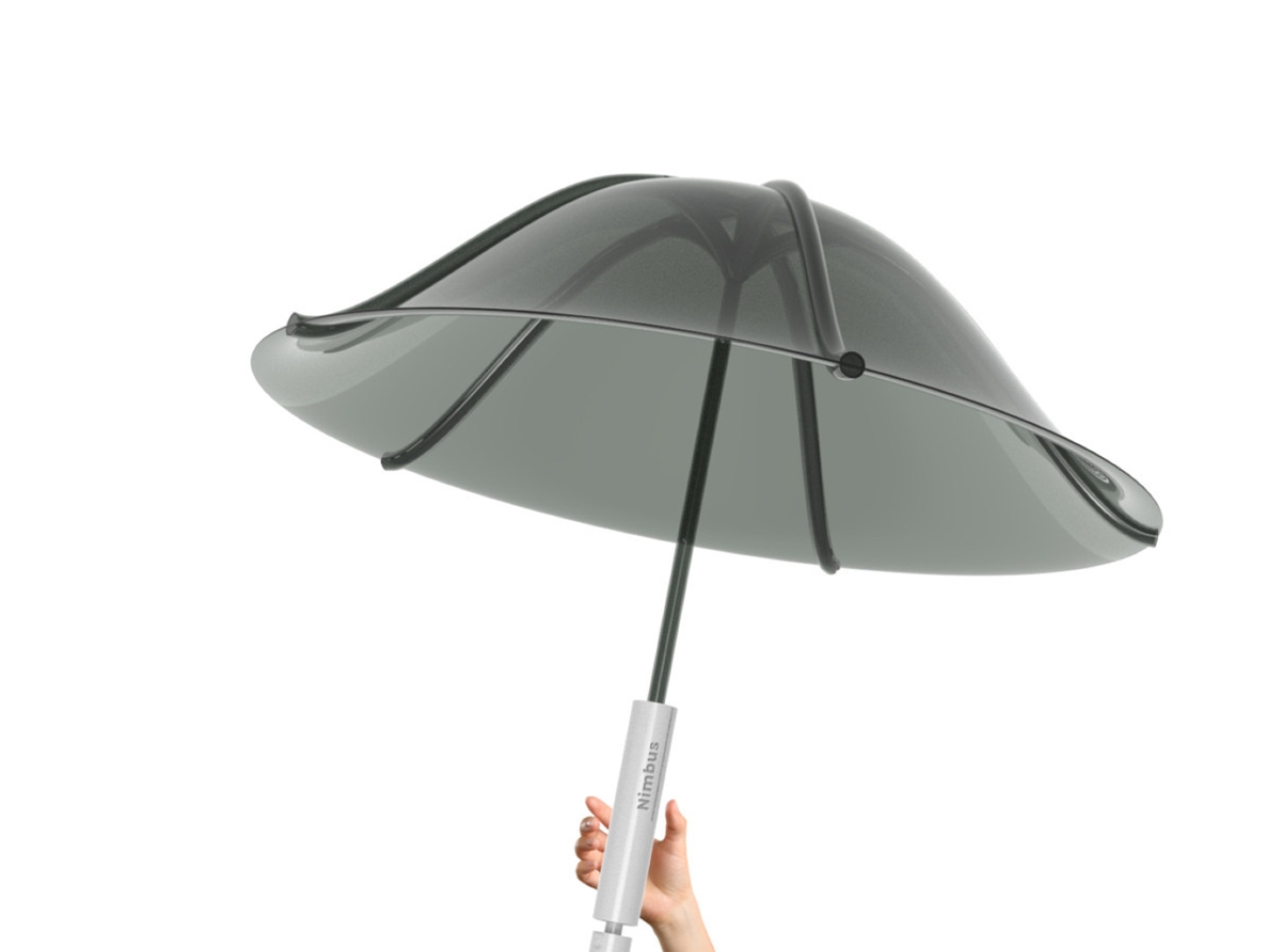
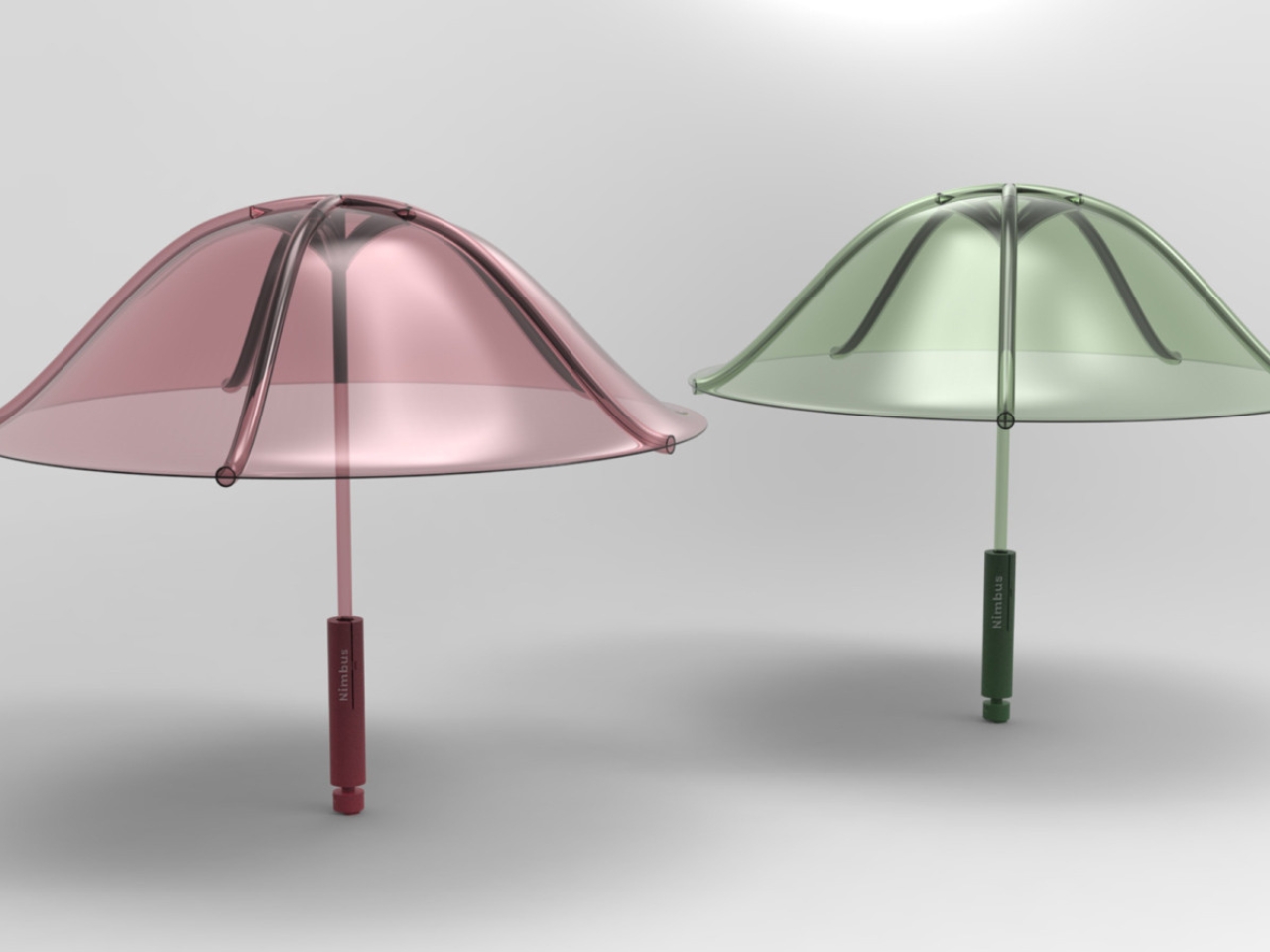
Nimbus is their answer. It’s an inflatable umbrella made entirely from recyclable thermoplastic polyurethane, or TPU, and the absence of the usual suspects is the whole point. No metal ribs. No complex mechanical joints. No layered materials that make recycling a logistical nightmare. Just one material, doing everything.
Designers: Hannah Klein, Vishva Chauhan, Manasi Khatavkar, and Annika Hogan
Hannah Klein, Vishva Chauhan, Manasi Khatavkar, and Annika Hogan created Nimbus as part of their Master’s program in Design for Sustainability at SCAD. Their combined backgrounds span Interior Design, Graphic Design, Studio Arts, and Environmental Science, which is probably why the concept feels so well-rounded. When a team brings that range of perspectives to a single everyday object, it shows. They weren’t just asking how to make a better umbrella. They were asking why we’ve been making them so badly for so long.
The answer, it turns out, is that nobody really stopped to question it. The standard umbrella has looked more or less the same for generations: a metal skeleton, a nylon canopy, a plastic handle, all bonded together in ways that make the whole thing essentially un-recyclable. When it breaks, and it will break, it goes straight to landfill. Multiply that by the sheer volume of umbrellas sold globally every year, and you’re looking at a quiet but significant waste problem hiding in plain sight.
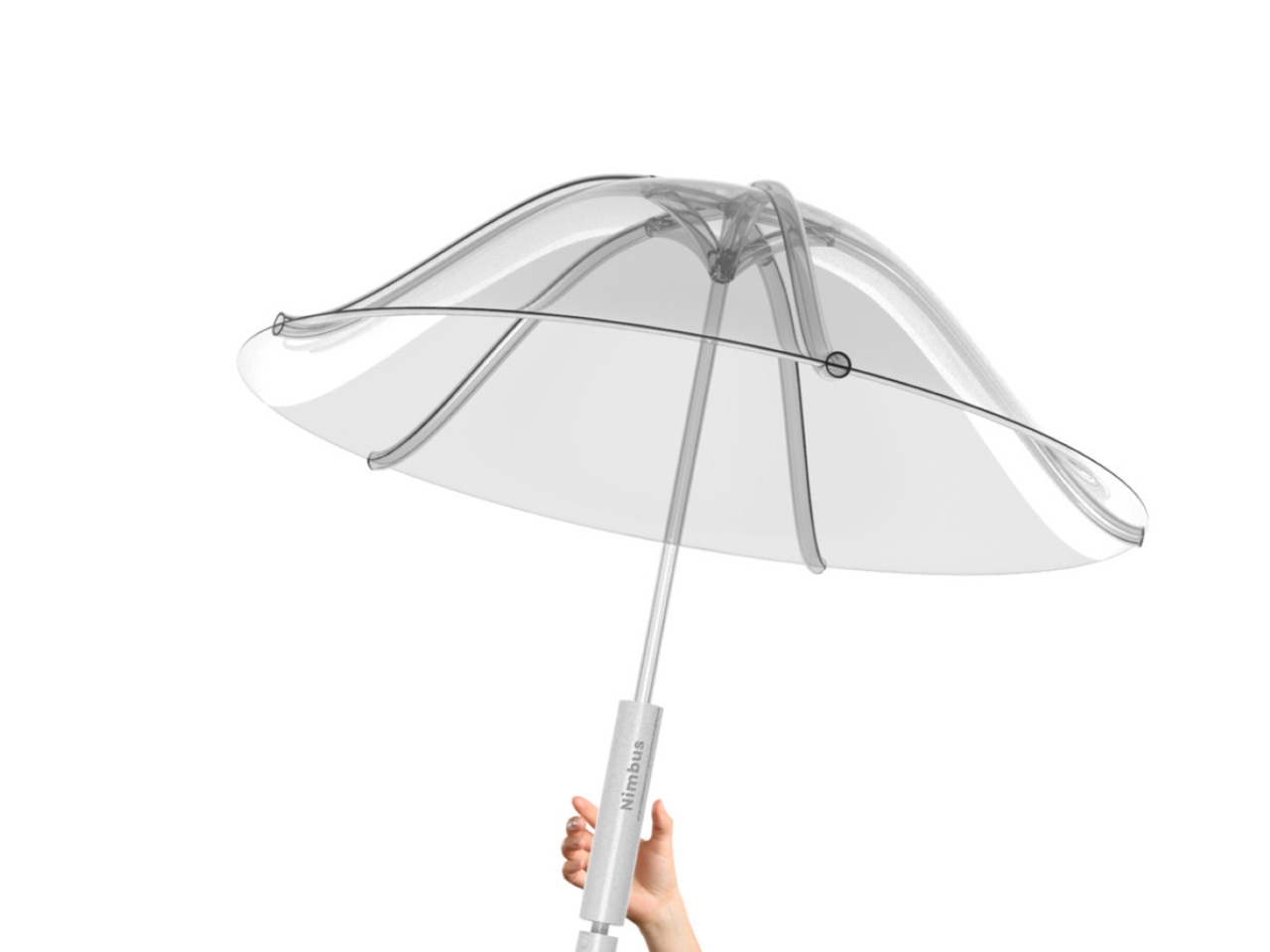
Nimbus addresses this by stripping the design down to its core job: keeping rain off your head. The inflatable structure replaces the rigid rib system entirely, which means fewer points of failure and a much longer functional life. It’s lightweight, designed to be repaired rather than replaced, and when the time does come to retire it, the single-material construction makes it genuinely recyclable. The team has also built in a buy-back program to support that end-of-life process, which tells you they’ve thought beyond the object itself and into the broader system it lives in.
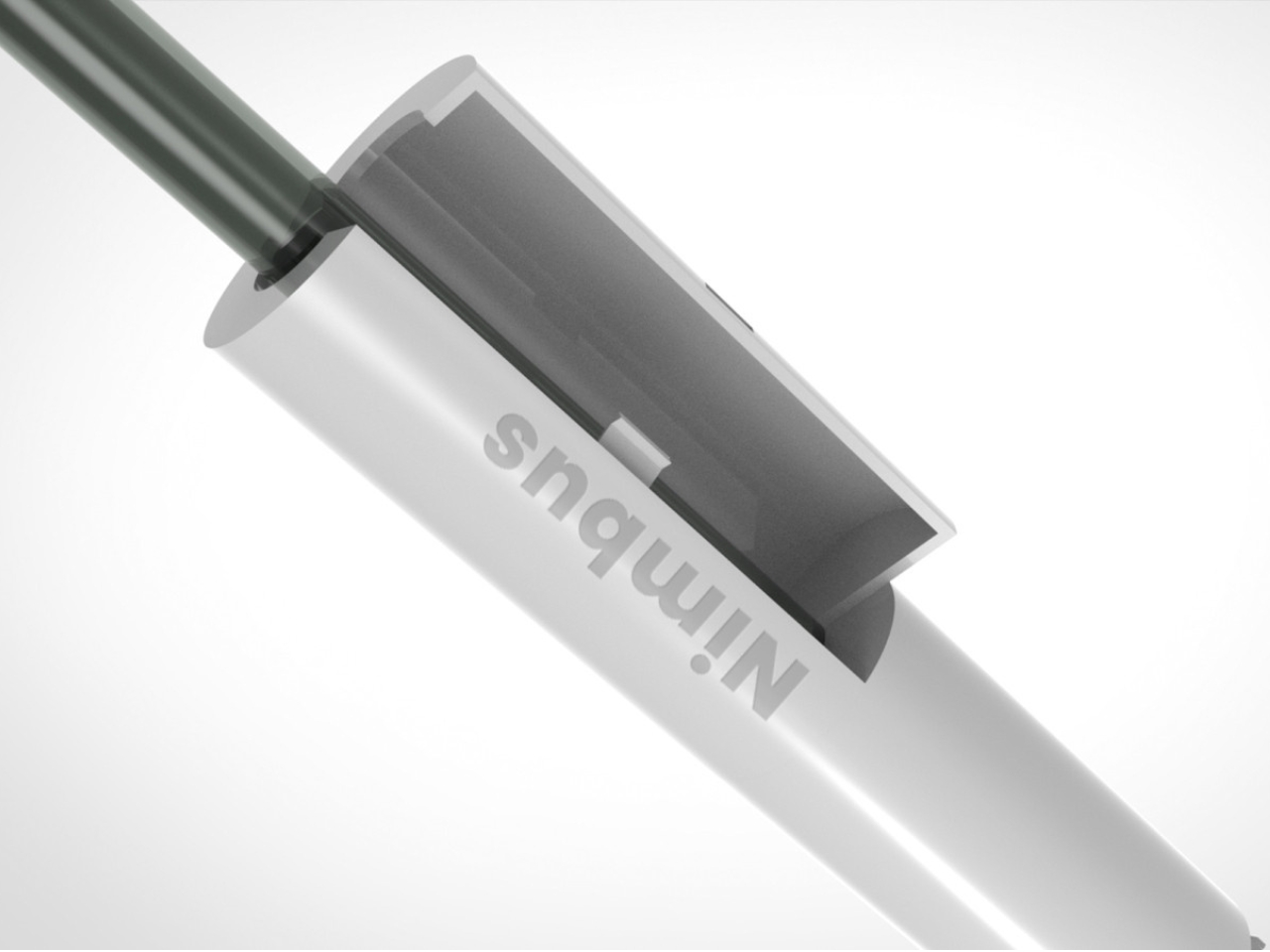
The numbers behind this are worth sitting with. Compared to a standard umbrella, Nimbus carries a 99% lower impact according to life cycle assessment, the metric that tracks environmental cost from production to disposal. That’s not an incremental upgrade. That’s a complete rethink of what the object is allowed to be.
But what I keep returning to is the broader point Nimbus is making about design itself. We tend to celebrate innovation when it arrives in the form of something new, a gadget that didn’t exist before, a category that had to be invented from scratch. But sometimes the more interesting work happens when someone looks at something deeply familiar and asks whether it needed to be done this way at all. An umbrella feels like a settled question. These four designers disagreed.
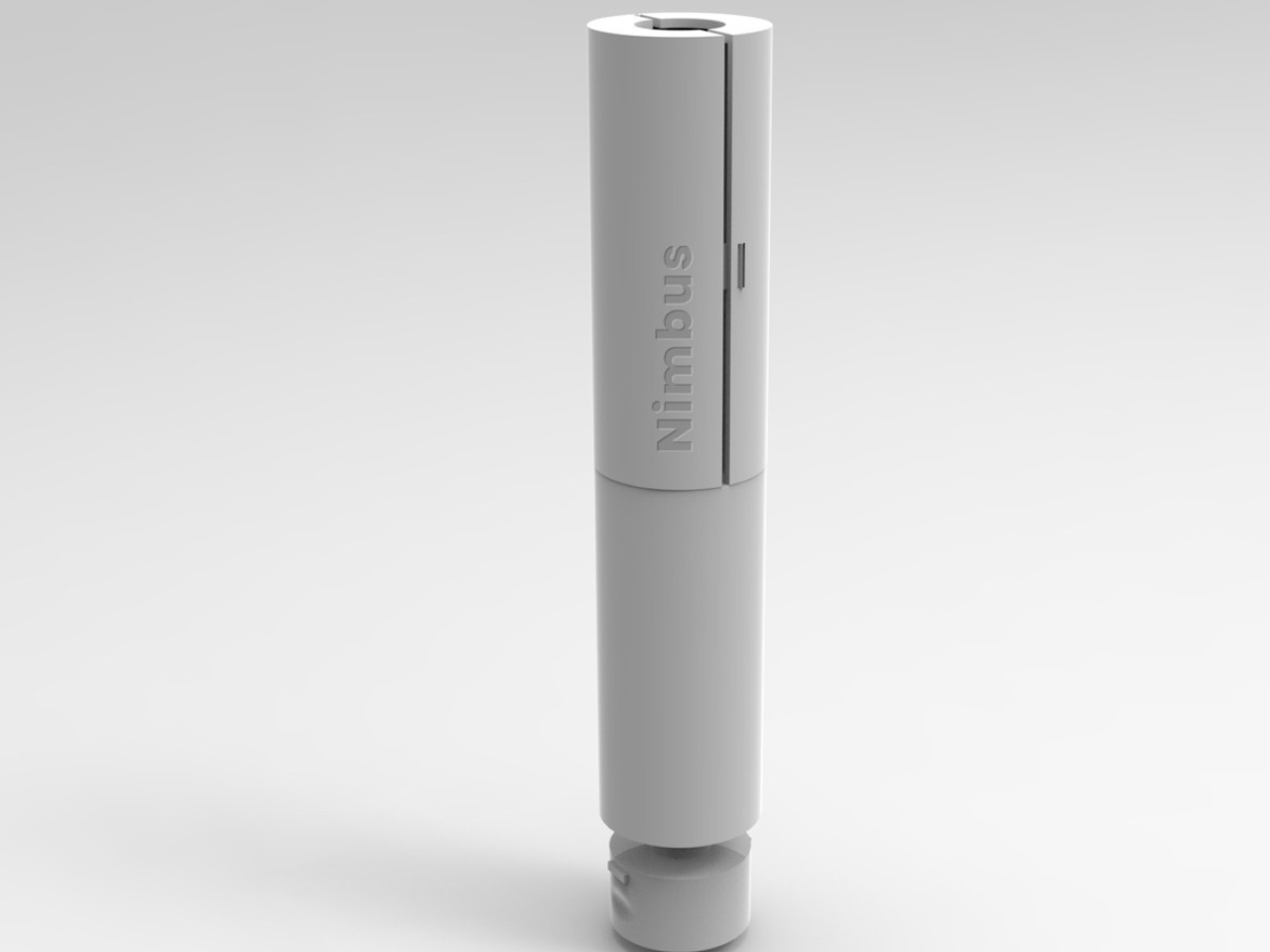
The project has already been recognized by the Green Product Award, which is a good sign that the design community is paying attention. Whether Nimbus moves toward commercial production remains to be seen, but as a concept, it raises the right questions at exactly the right time. Consumers are increasingly asking where their things come from and where they end up. Products that can answer both questions honestly are going to matter more, not less, as those expectations grow.
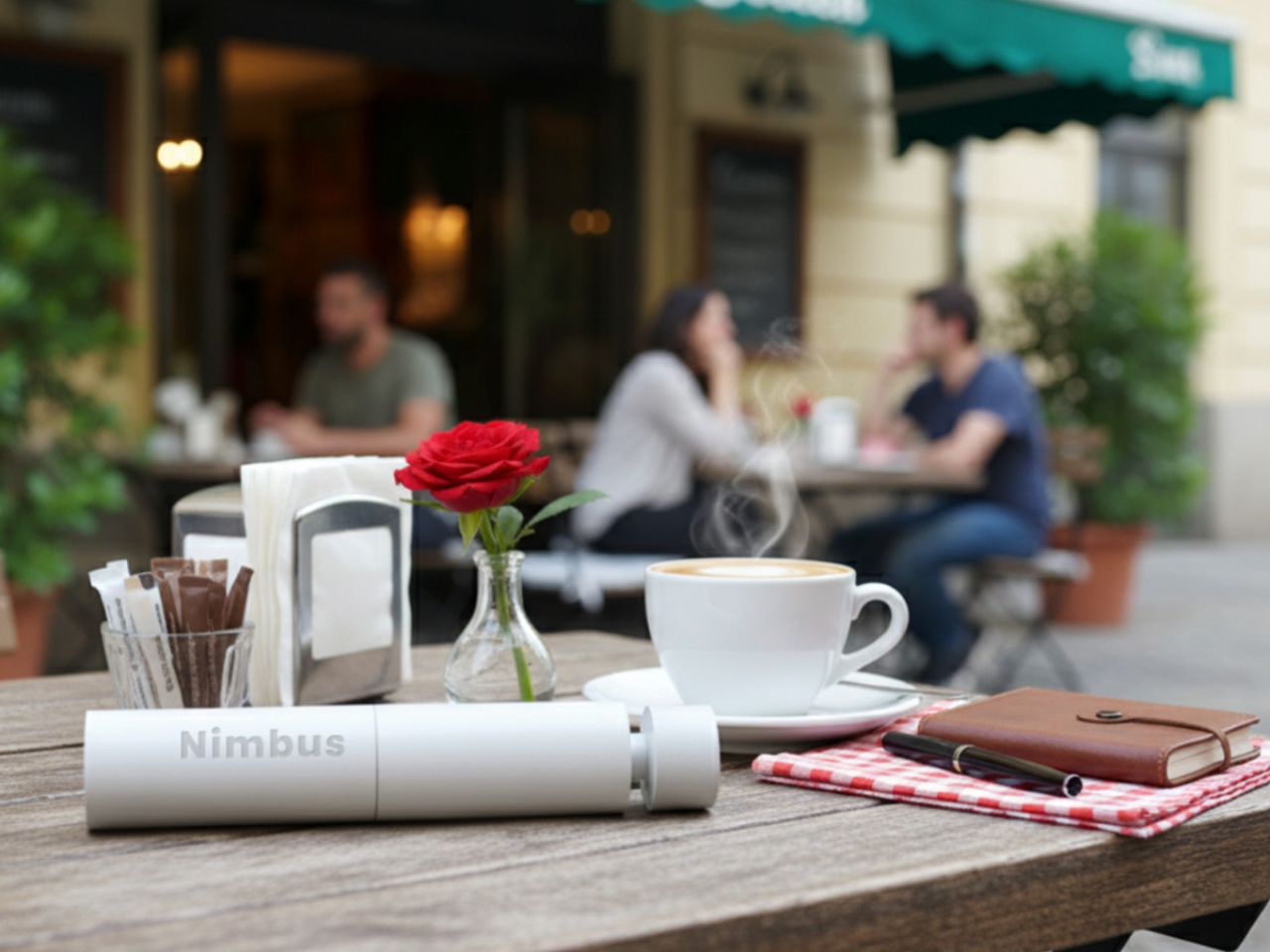
You probably have an umbrella somewhere. Maybe it still works. Maybe it’s one rough commute away from the bin. Either way, Nimbus is a useful reminder that even the most unremarkable objects in our lives are worth questioning, and that sometimes the best design is just someone refusing to accept a bad answer.