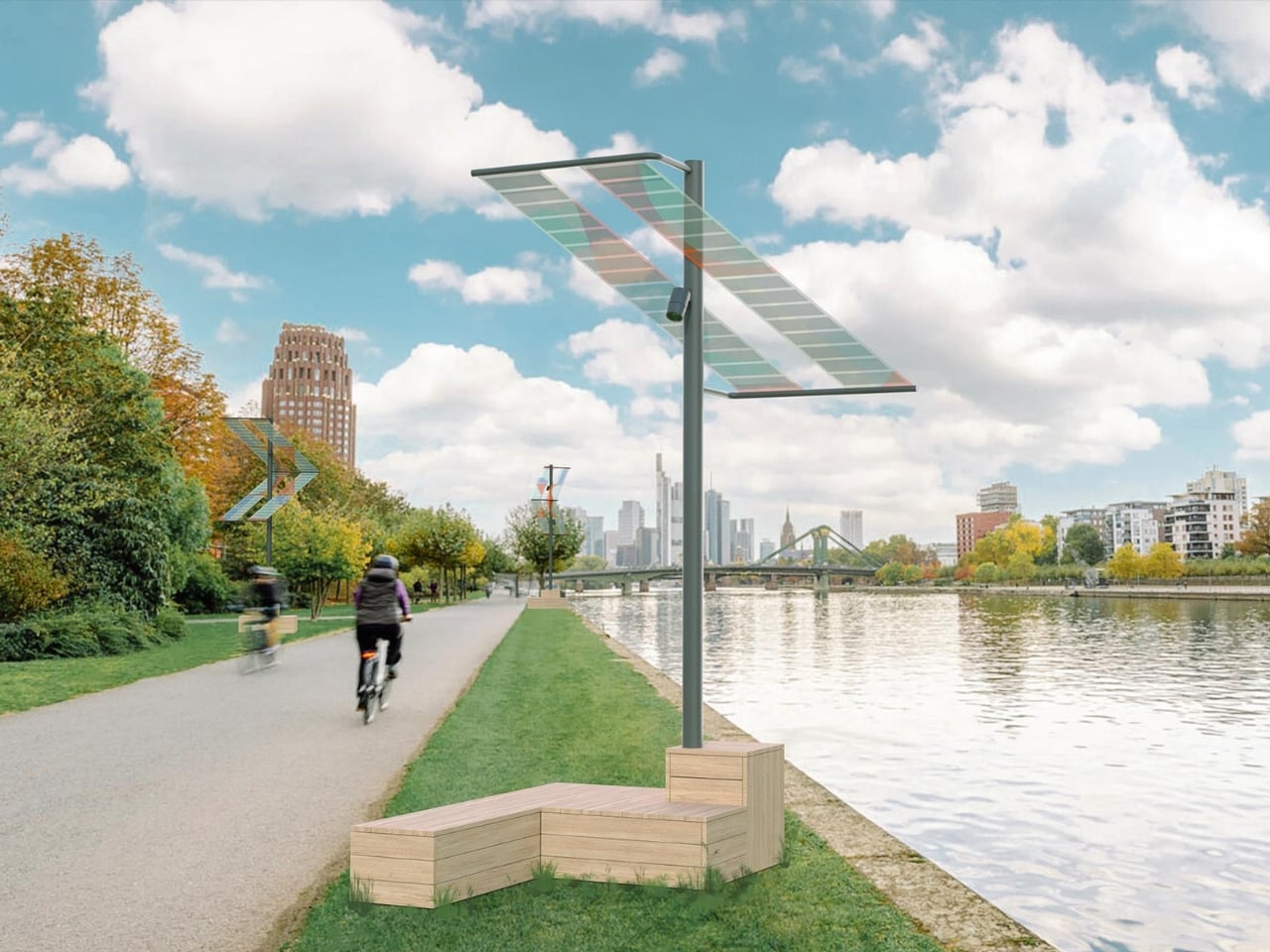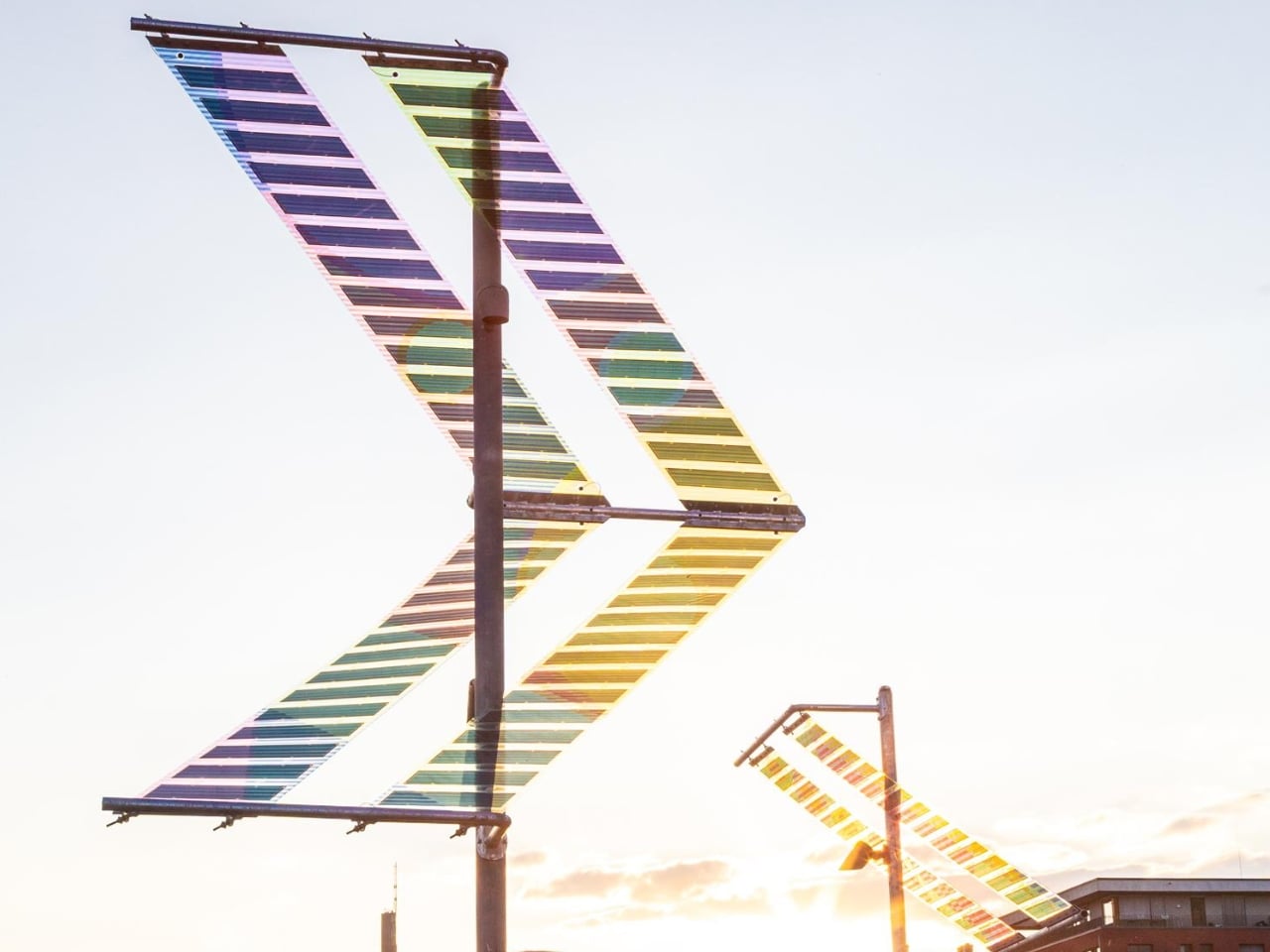
If you’ve ever walked along a riverbank at night and squinted up at a buzzing fluorescent streetlamp wondering who designed that thing and why, Munich-based duo ttal just made that question feel very urgent. Their installation Main Light, currently glowing along Frankfurt’s Weseler Werft as part of the World Design Capital Frankfurt RheinMain 2026 programme, is one of those rare projects that makes you rethink infrastructure entirely.
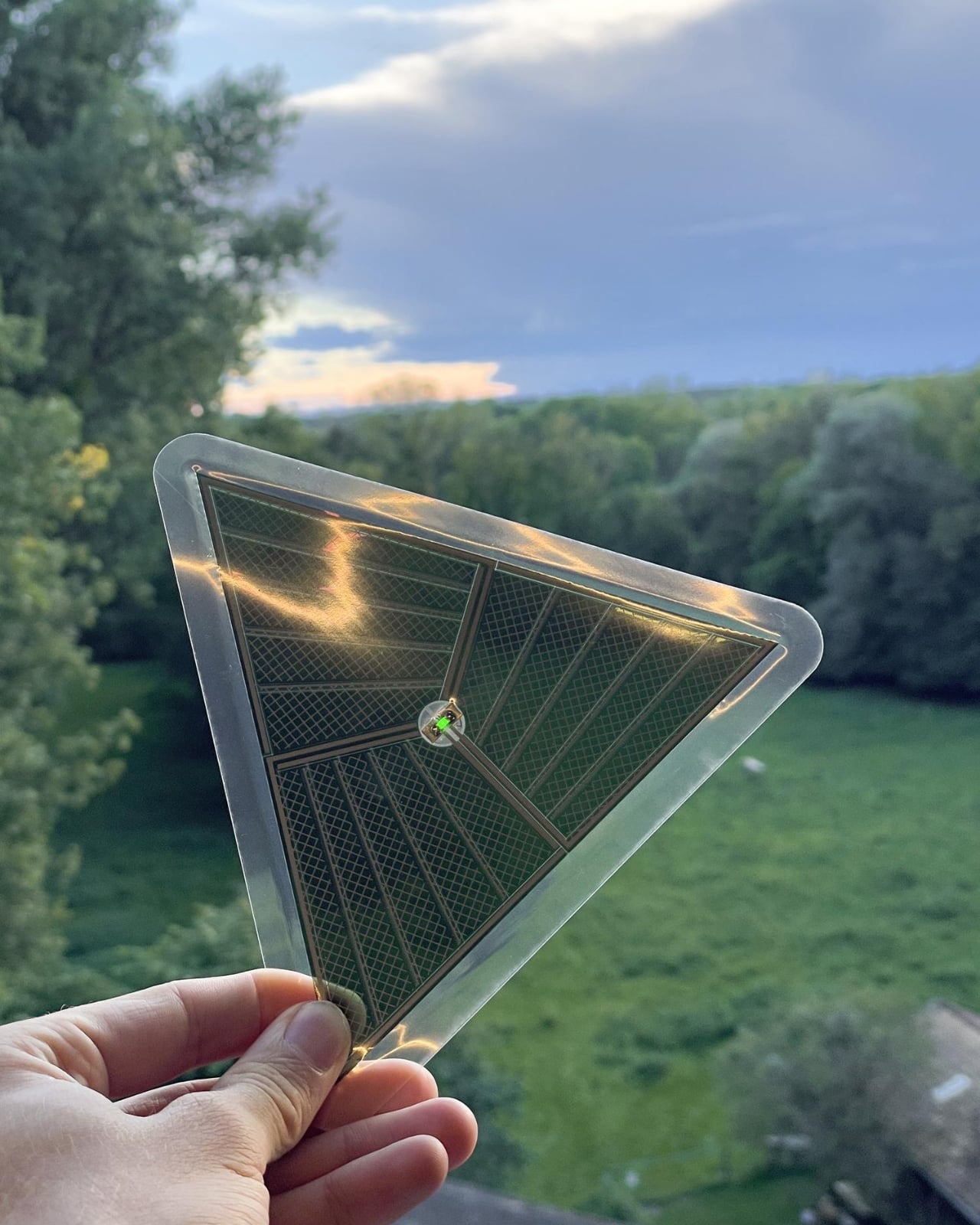
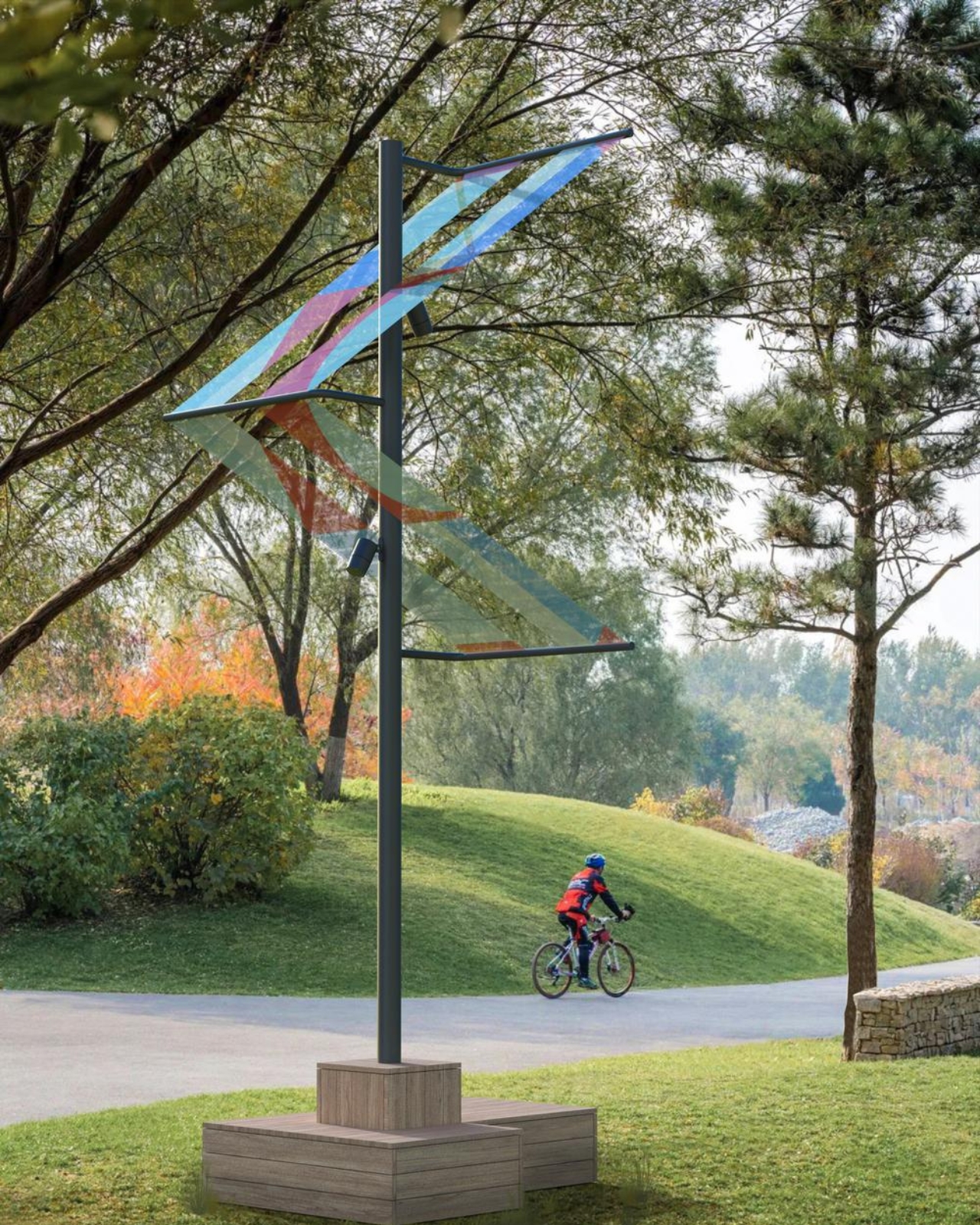
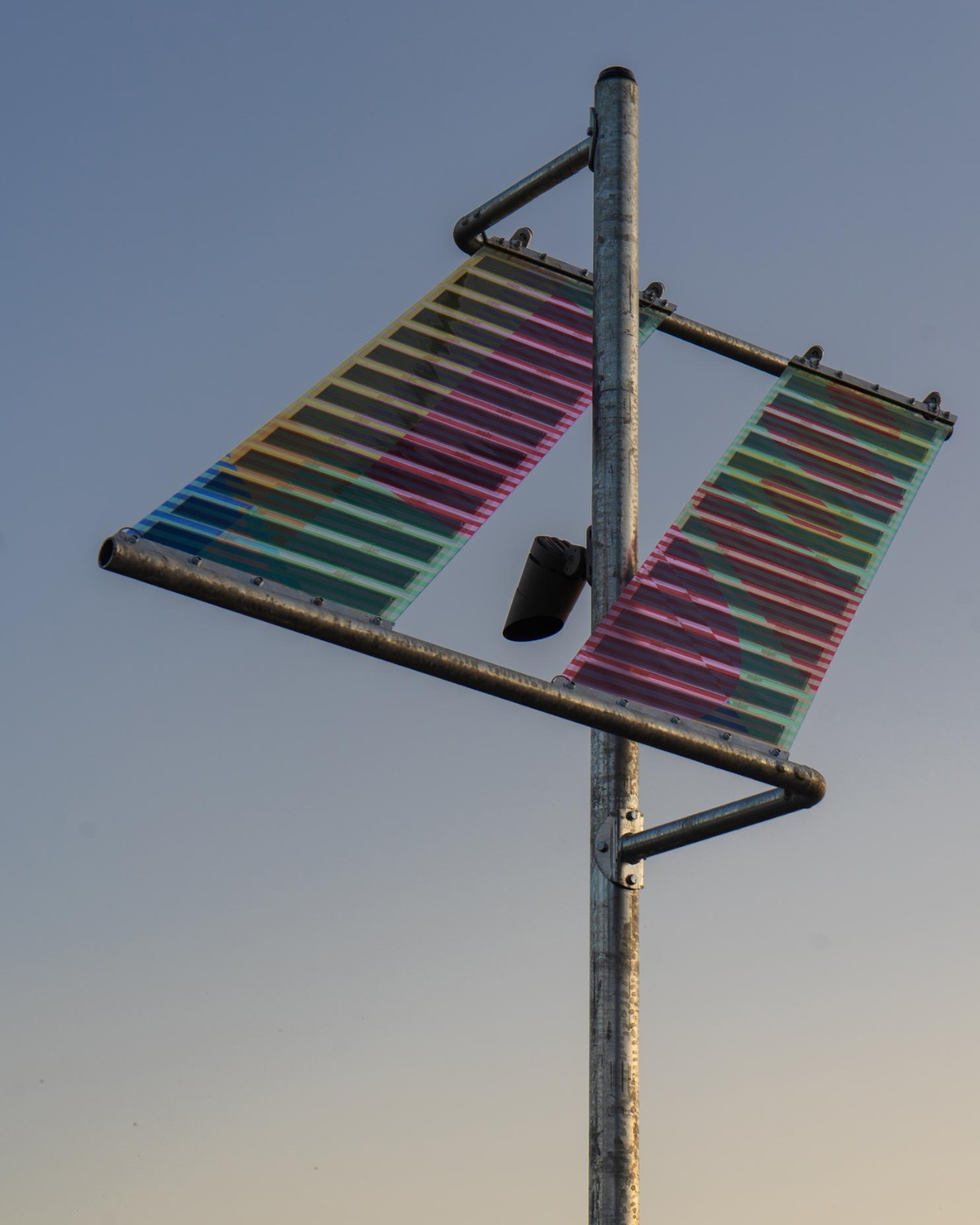
ttal, the design studio formed by Tobias Trübenbacher and Andreas Lang, built Main Light around a deceptively simple premise: public lighting doesn’t have to be ugly, energy-hungry, or ecologically reckless. The result is a self-sufficient solar installation that runs completely off-grid, no power lines buried underground, no permanent excavation, and no connection to the city grid whatsoever. It generates its own electricity through organic photovoltaic (OPV) solar films, those wonderfully colorful translucent panels that make the whole structure look like it belongs in a design museum rather than on a bike path. And that’s exactly the point.
Designer: Tobias Trübenbacher (ttal)
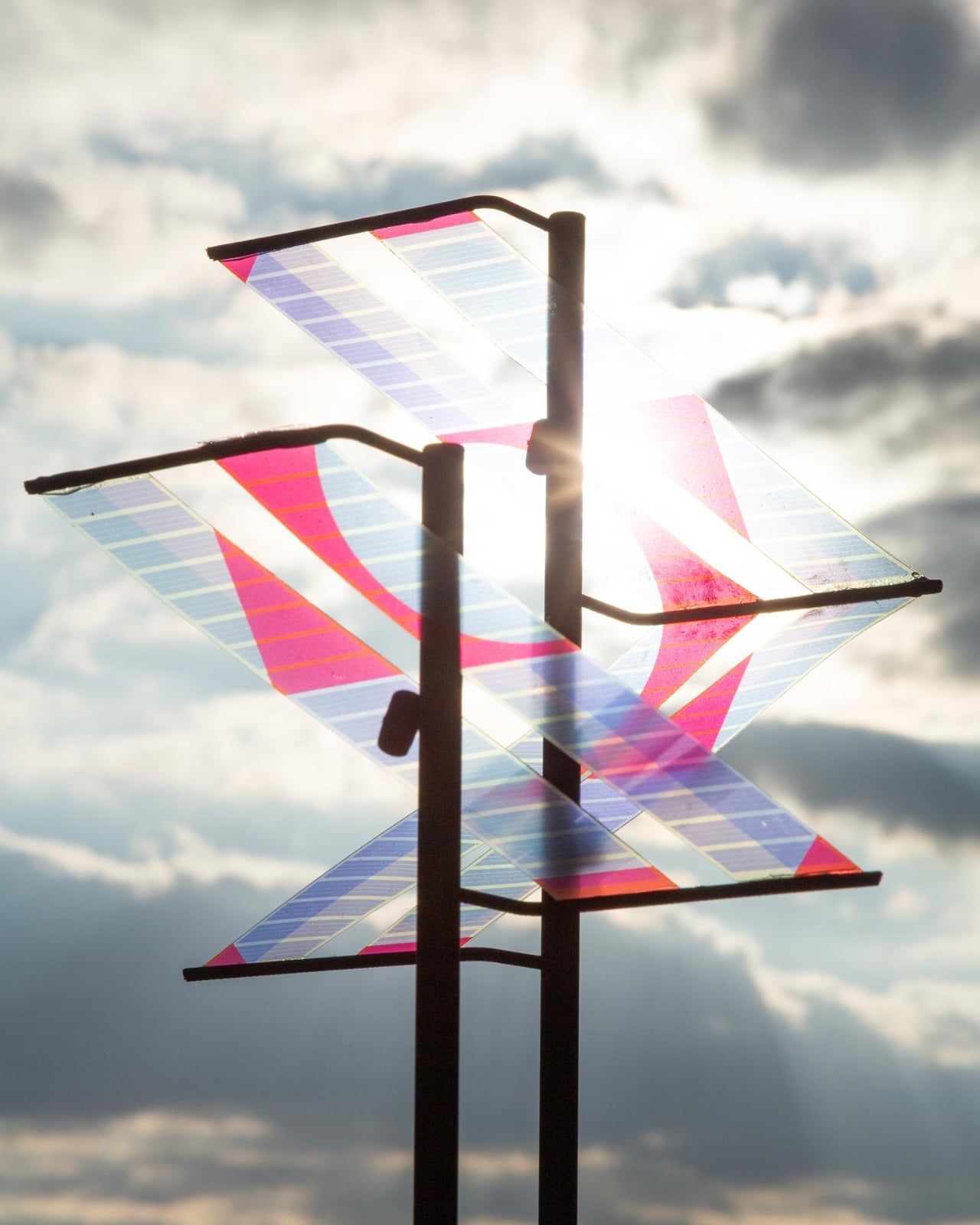
During the day, the solar surfaces catch the light and cast shifting, multicolored patterns across the riverbank. The horizontal stripes of the laminated solar cells aren’t hidden away or treated as a necessary evil. They’re the main visual event. The design essentially says: clean energy can be beautiful, and we should stop pretending otherwise. Trübenbacher, who was named Newcomer of the Year by the German Design Council at the German Design Award in 2023, has described design as a tool for social change, and Main Light reads exactly like that philosophy made physical.
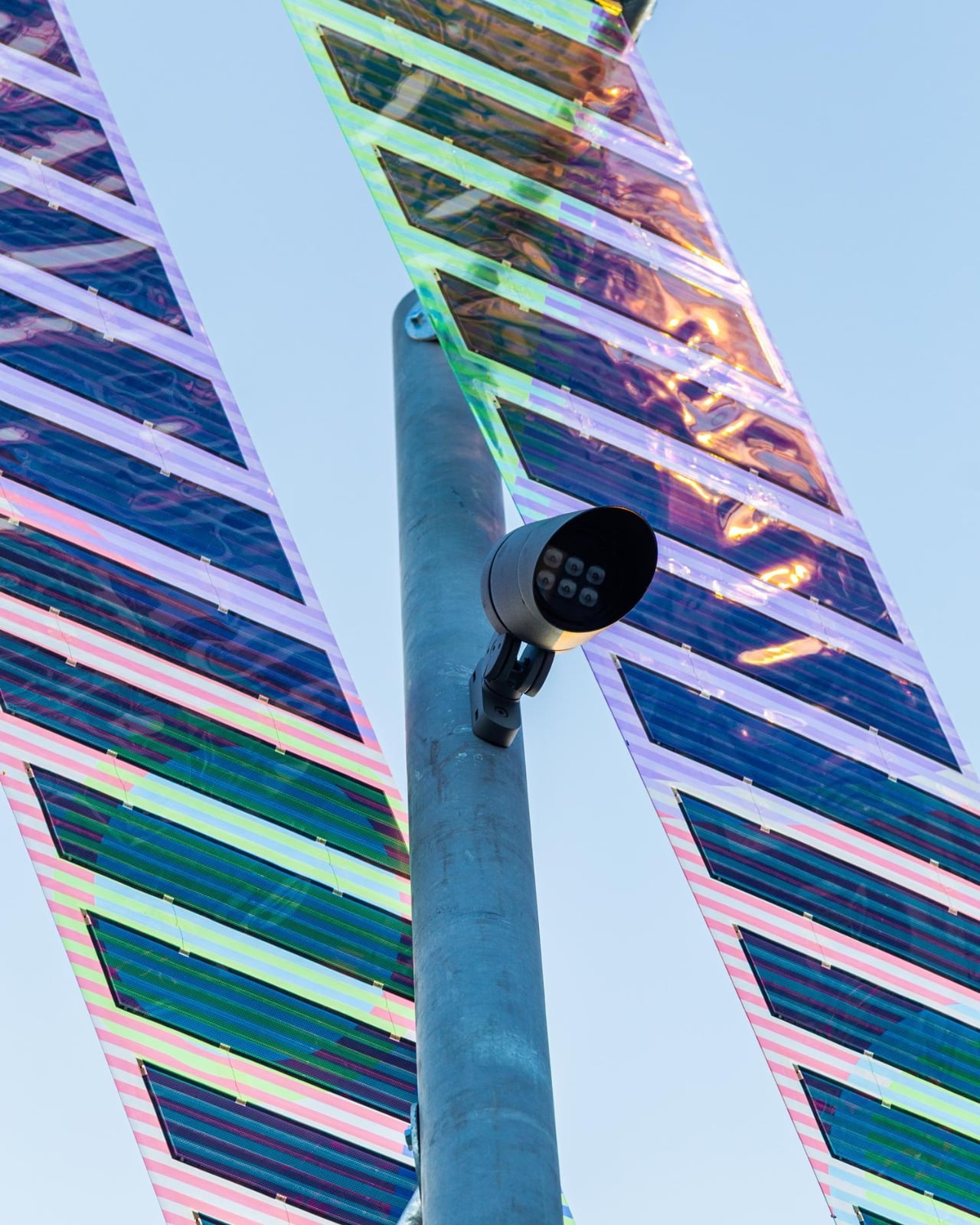
The ecological thinking goes deeper than solar panels, too. Main Light only switches on when a motion sensor detects a person nearby, meaning it doesn’t flood the riverbank with unnecessary light through the night. More quietly significant is its light spectrum. The installation deliberately avoids the blue-heavy frequencies common in most modern LED street lighting, opting instead for an insect-friendly spectrum that’s gentler on nocturnal ecosystems. Light pollution is one of those invisible crises we rarely talk about loudly enough, and seeing it addressed this thoughtfully in a public installation feels quietly radical.
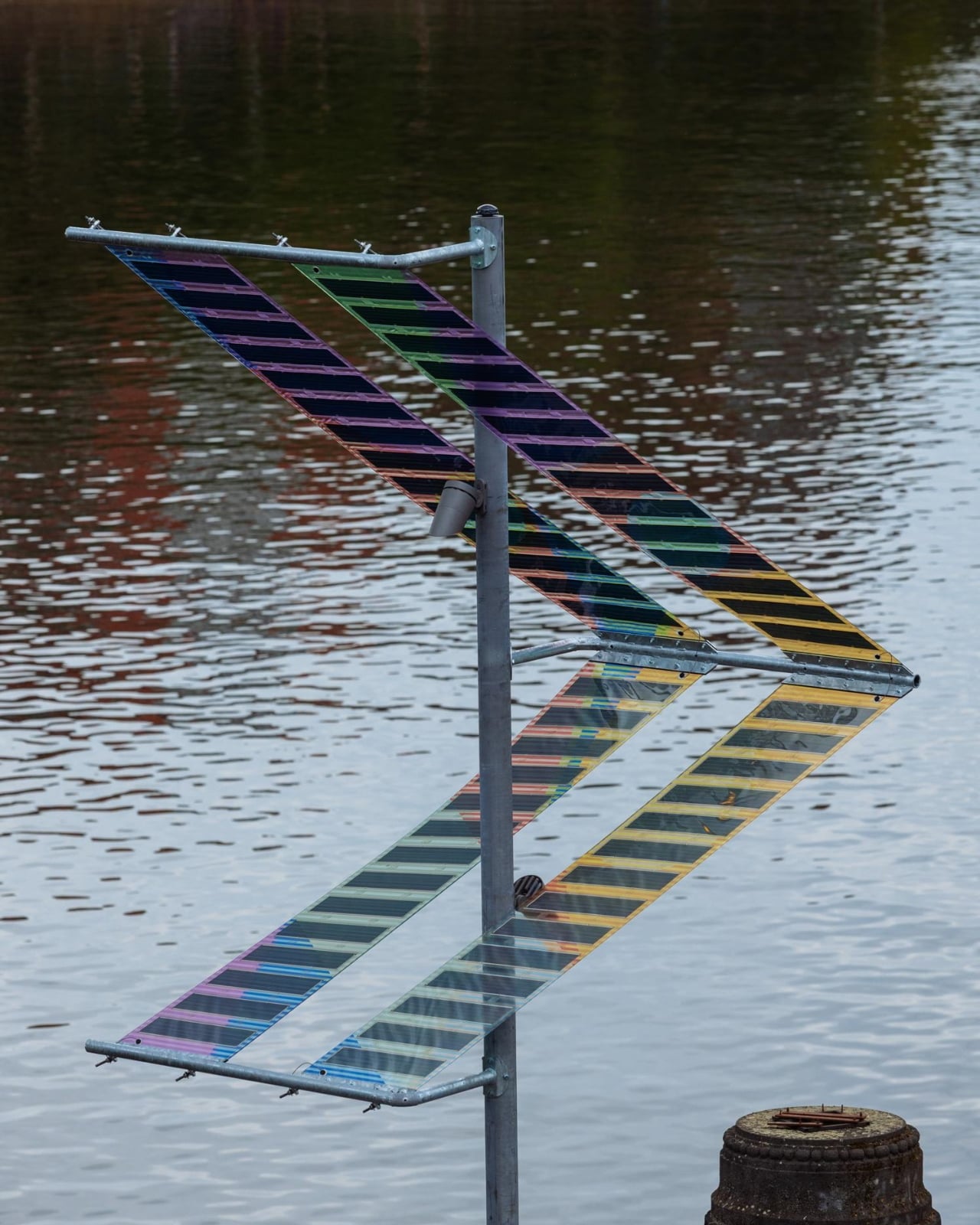
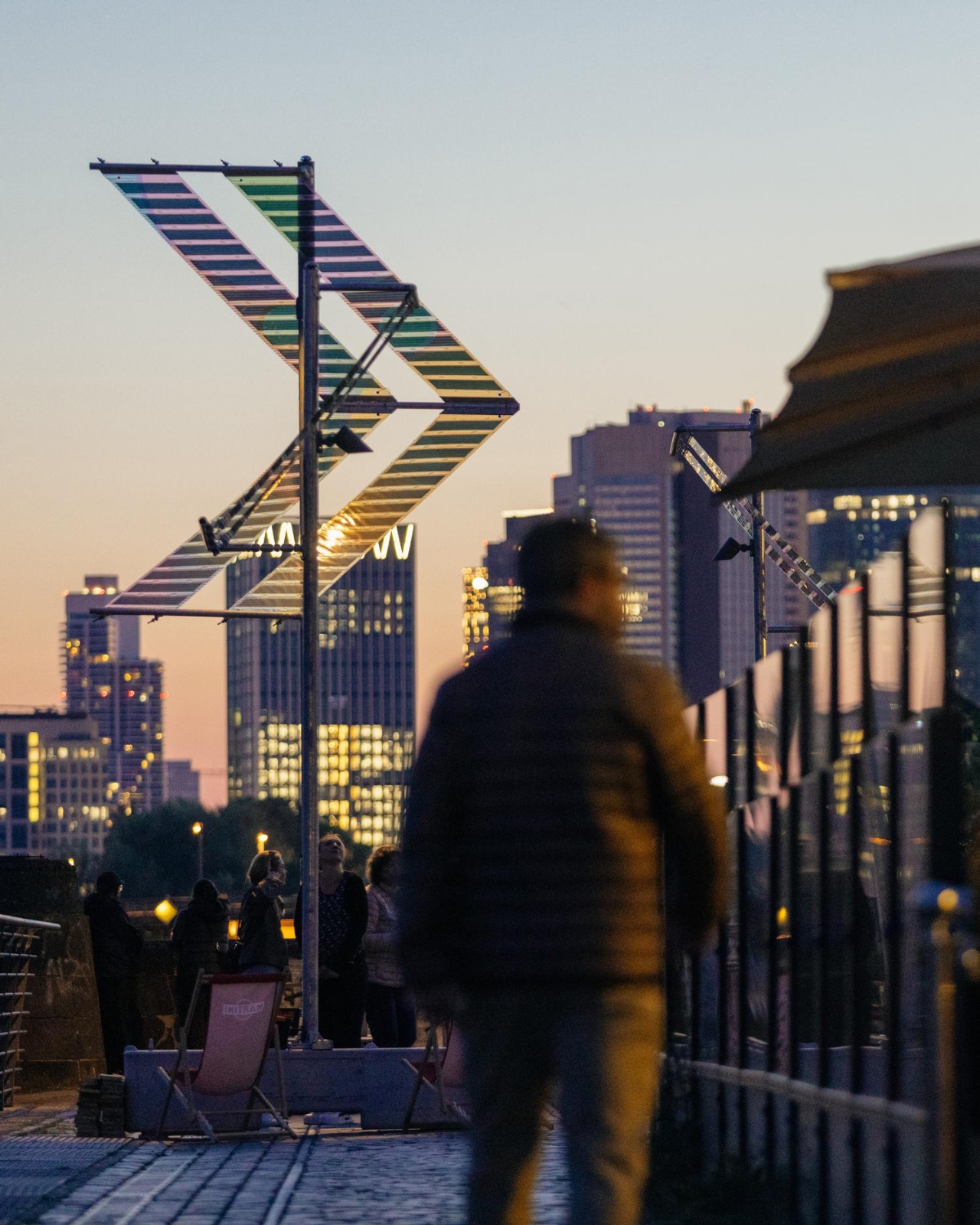
The structural decisions are just as considered. The foundations are reversible concrete bases that also function as urban furniture, places to sit, to pause, to look at the river. Trübenbacher and Lang worked with ewo GmbH on lighting and control technology, ASCA GmbH on the organic photovoltaic systems, and Schake GmbH on the steel construction. Four structures in total were installed near the Oosten restaurant, one large and three smaller units, running from May to November 2026.
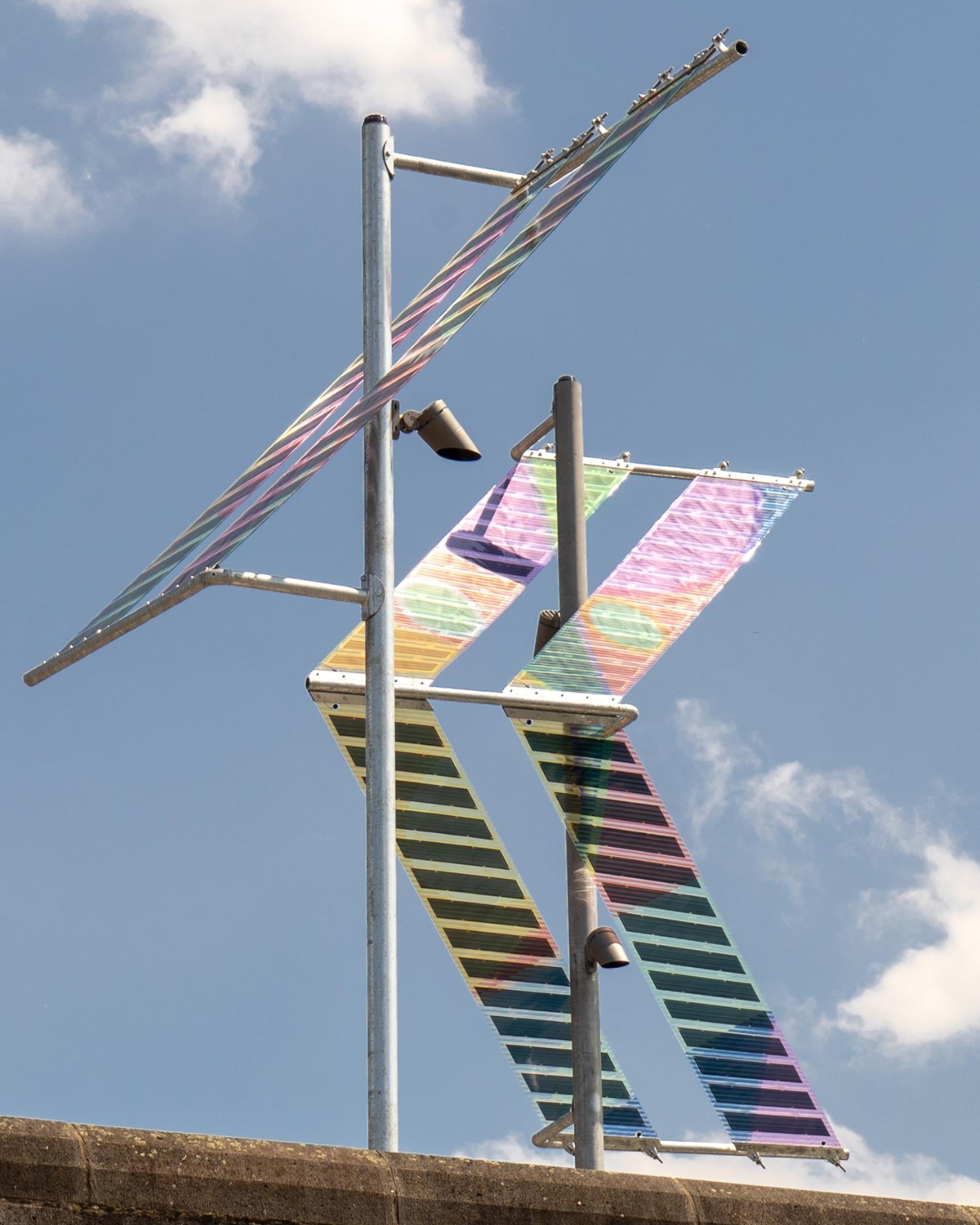
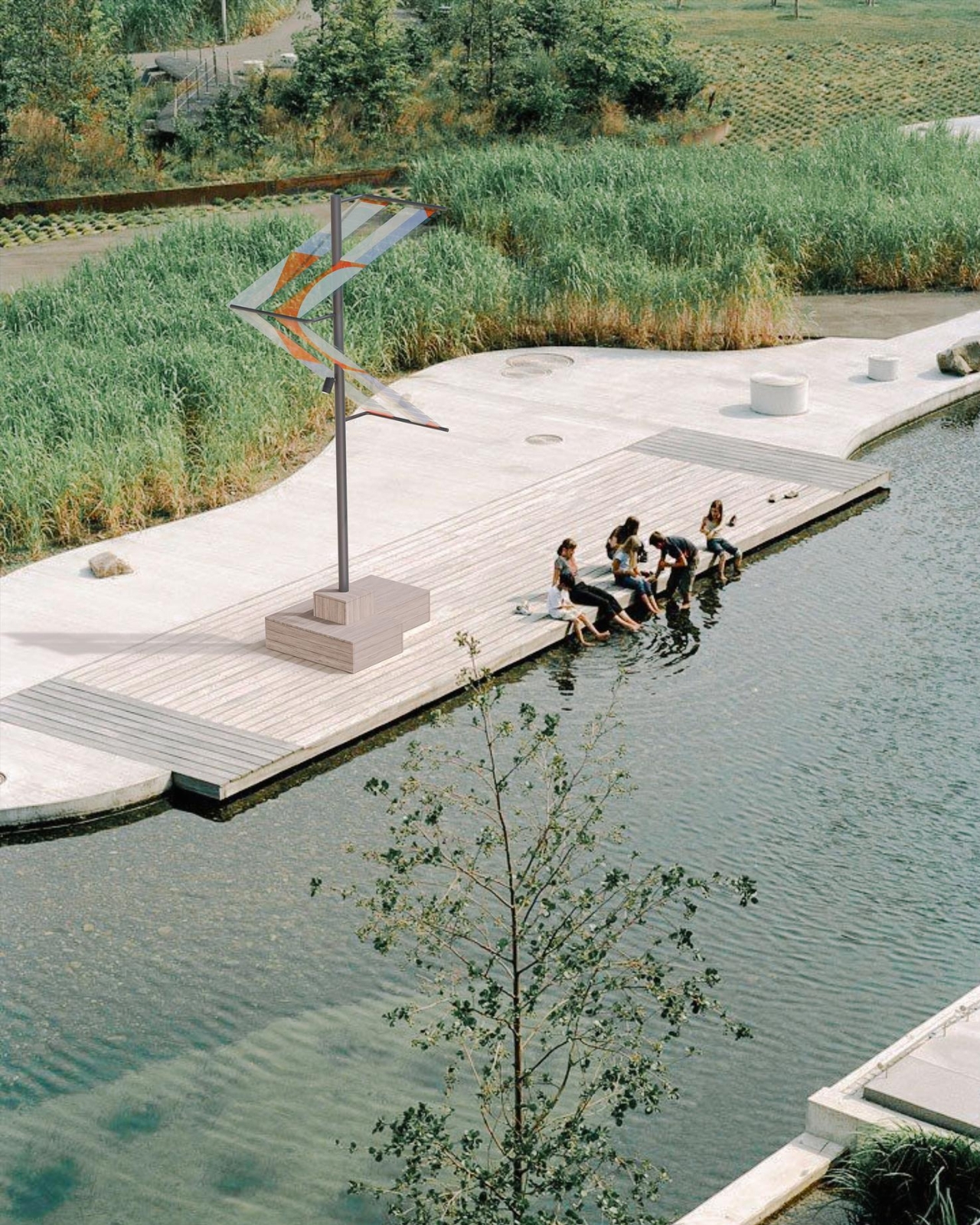
The installation sits within a broader conversation about what public infrastructure is allowed to look like. For too long, sustainability has been sold with a kind of visual apologetics, the clunky panel, the utilitarian form, the implicit suggestion that doing the right thing means sacrificing aesthetics. Main Light refuses that trade-off. The colored OPV panels turn the energy-generation process into something visible, even celebratory, a reminder that the transition away from fossil fuels doesn’t need to be grey and joyless.
The duo is also running workshops and public events alongside the installation through the summer months, which matters. A beautiful object without discourse risks becoming wallpaper. The conversations ttal wants to start are about energy, public space, and who gets to decide what our streets look like. These aren’t niche design industry questions. They affect how livable, how safe, and how ecologically responsible our cities actually become.
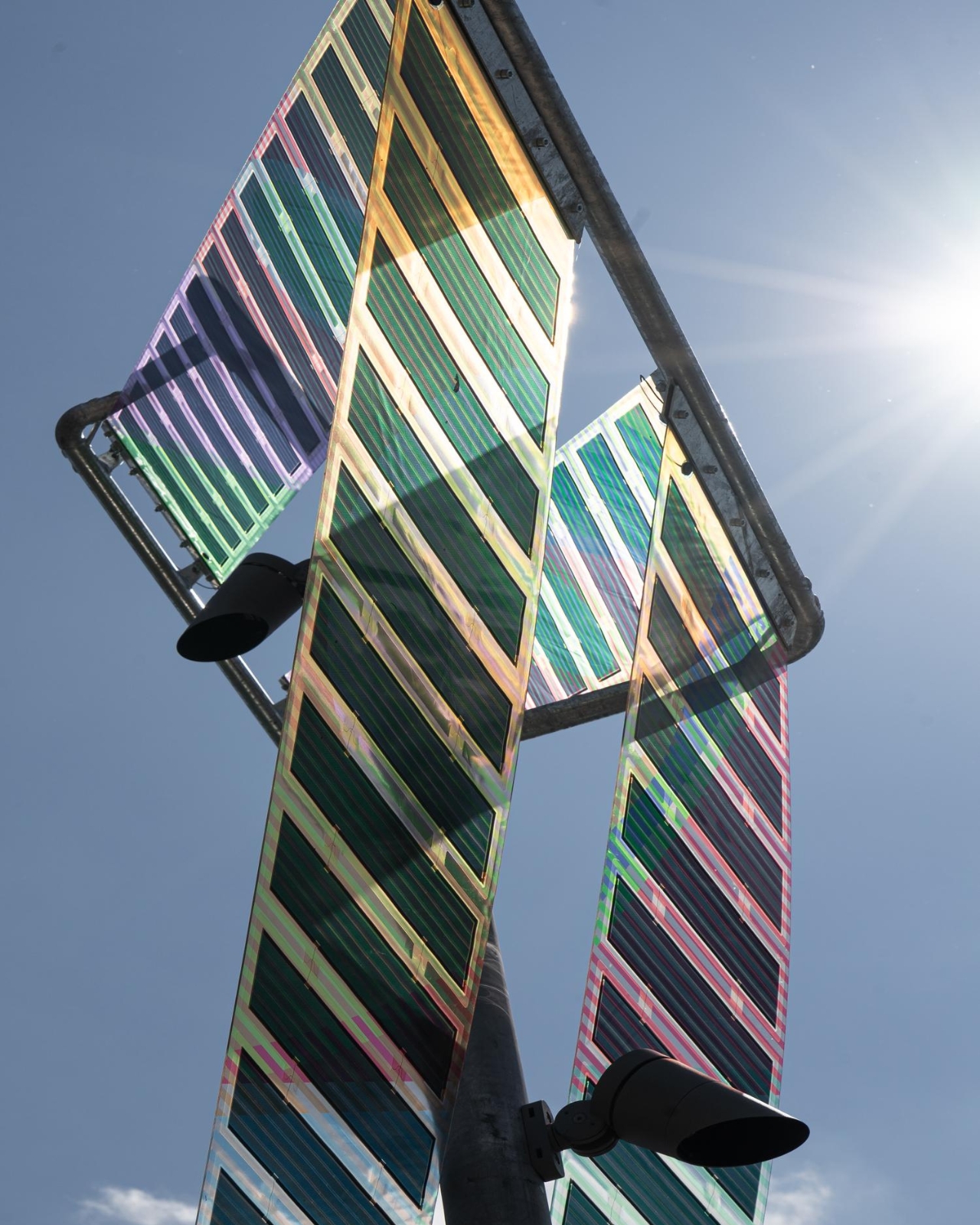
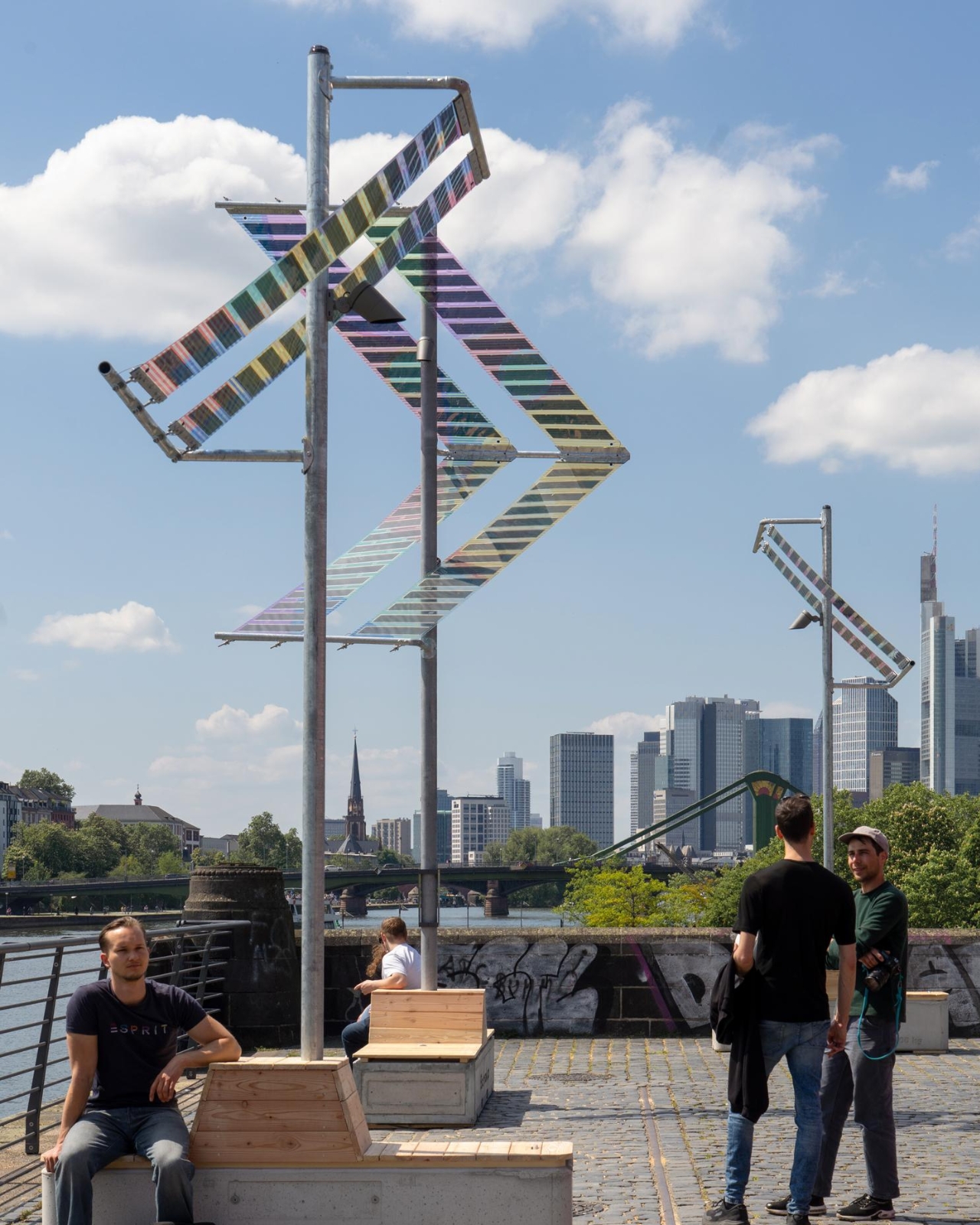
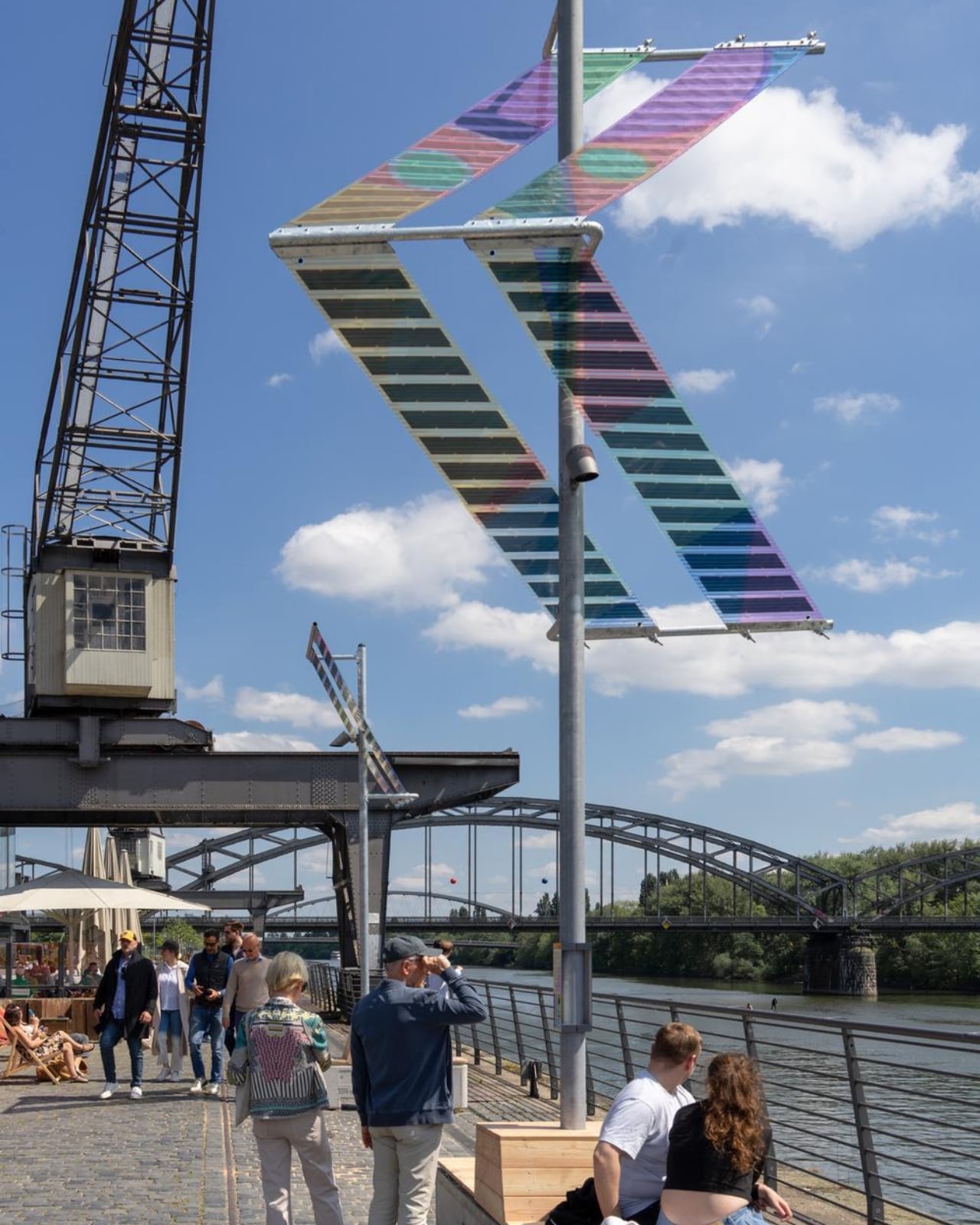
Cities across Europe and beyond are already reaching out about scaling the project, and it’s easy to see why. Main Light doesn’t require the ground to be torn up. It doesn’t need a power grid. It works, it glows, and it looks genuinely gorgeous against the Frankfurt skyline. The bike paths and riverbanks of the world deserve better than what they usually get. Trübenbacher and Lang have proven, at least along one stretch of the River Main, that we’re already capable of delivering it.