Onboard motherboard audio has improved considerably over the past decade, to the point where most users don’t notice a gap. That’s true enough for casual listening, but it starts to fall apart when you plug in a pair of planar magnetic or high-impedance studio headphones that demand more than a motherboard header can cleanly deliver. The signal gets muddier, the background noise creeps up, and the detail you paid for in those headphones quietly disappears.
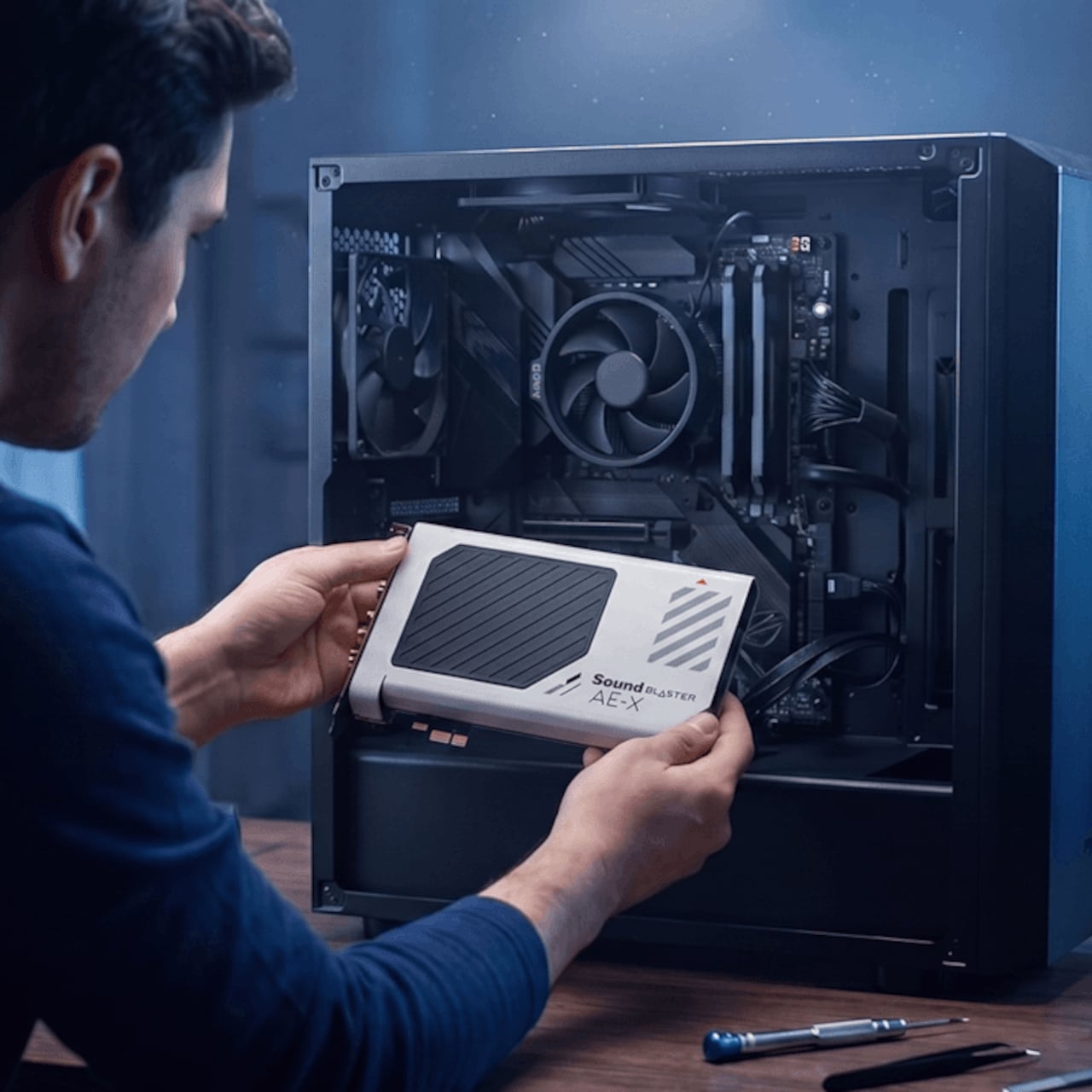
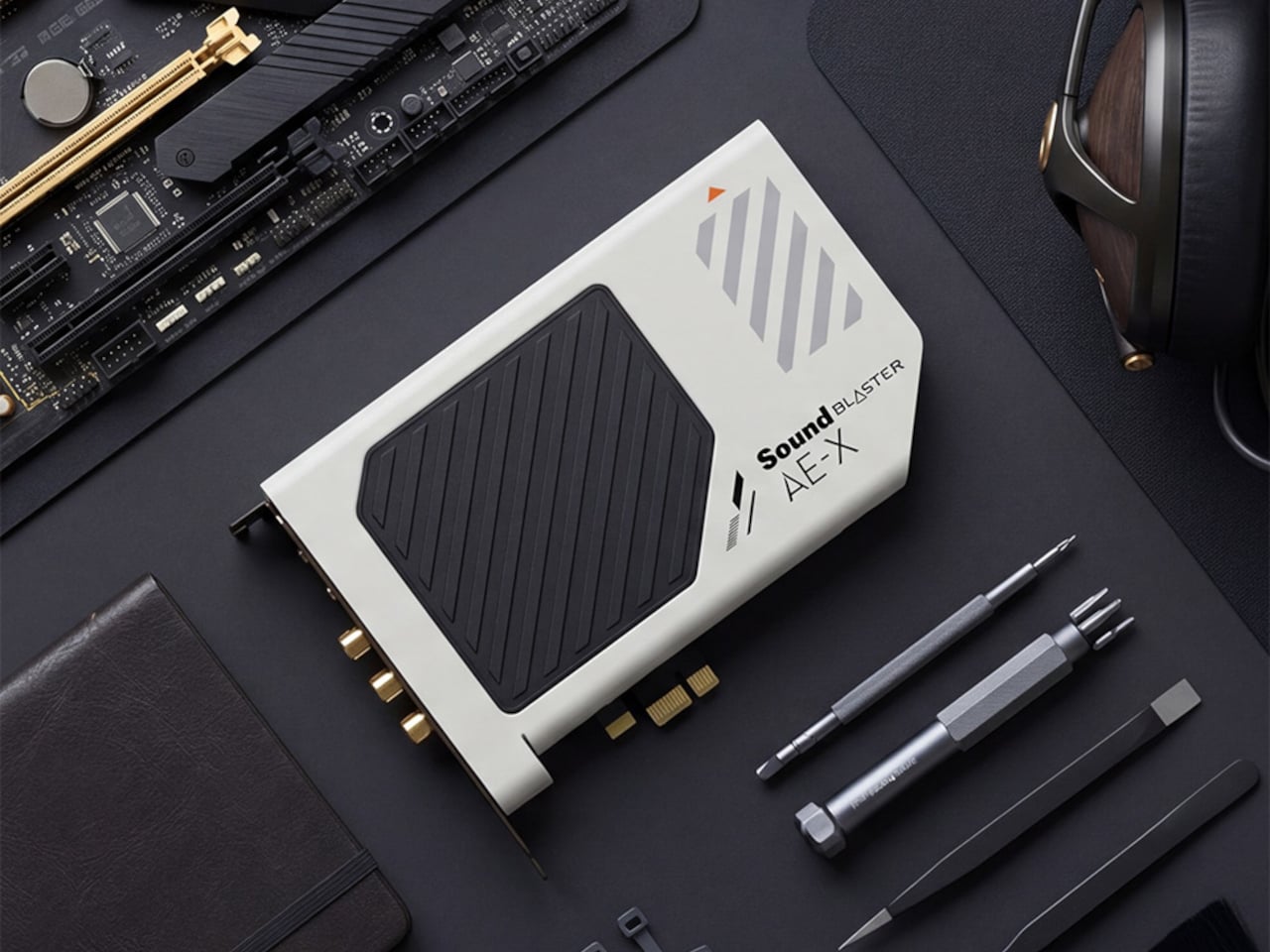
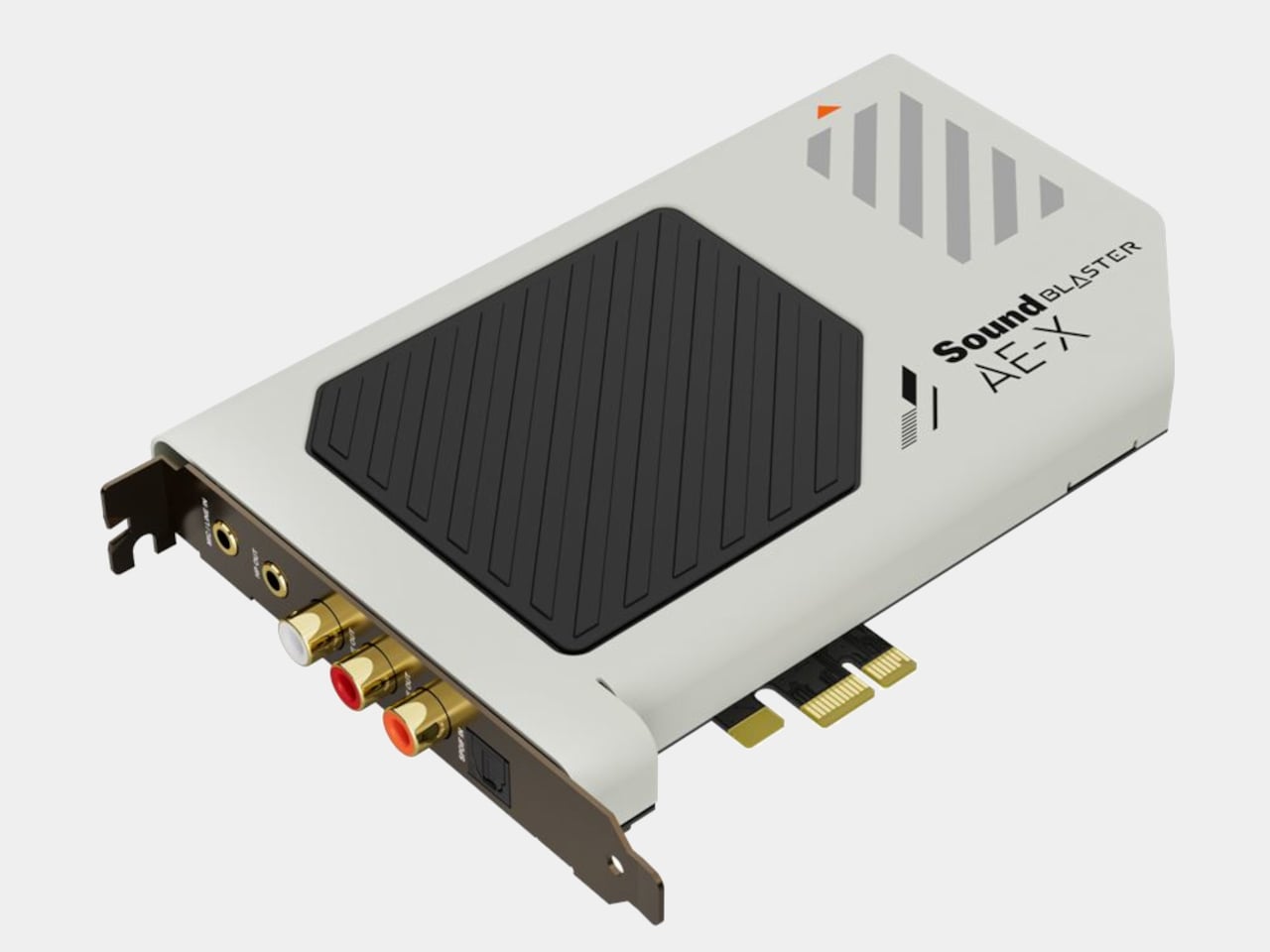
Creative’s Sound Blaster AE-X is a PCIe 3.0 sound card designed for exactly that gap. It slots into a spare PCIe x1 slot and takes audio processing entirely away from the motherboard, handling playback through a dedicated ESS ES9039Q2M dual-channel DAC with HyperStream IV architecture. The claimed signal-to-noise ratio sits at 130 dB, which actually edges out Creative’s own flagship AE-9 on paper, and the card supports direct DSD256 decoding alongside standard 32-bit / 384 kHz PCM playback.
Designer: Creative
The headphone amplification story is where a lot of people buying dedicated sound cards will actually feel the difference. The AE-X integrates Creative’s X-amp discrete amplifier architecture and is rated to drive headphones up to 600 ohms. That covers even the most demanding studio and audiophile headphones that tend to sound underpowered and thin when running off integrated audio. The amp handles each channel cleanly without the crosstalk and noise floor that shared circuits on a motherboard typically introduce.
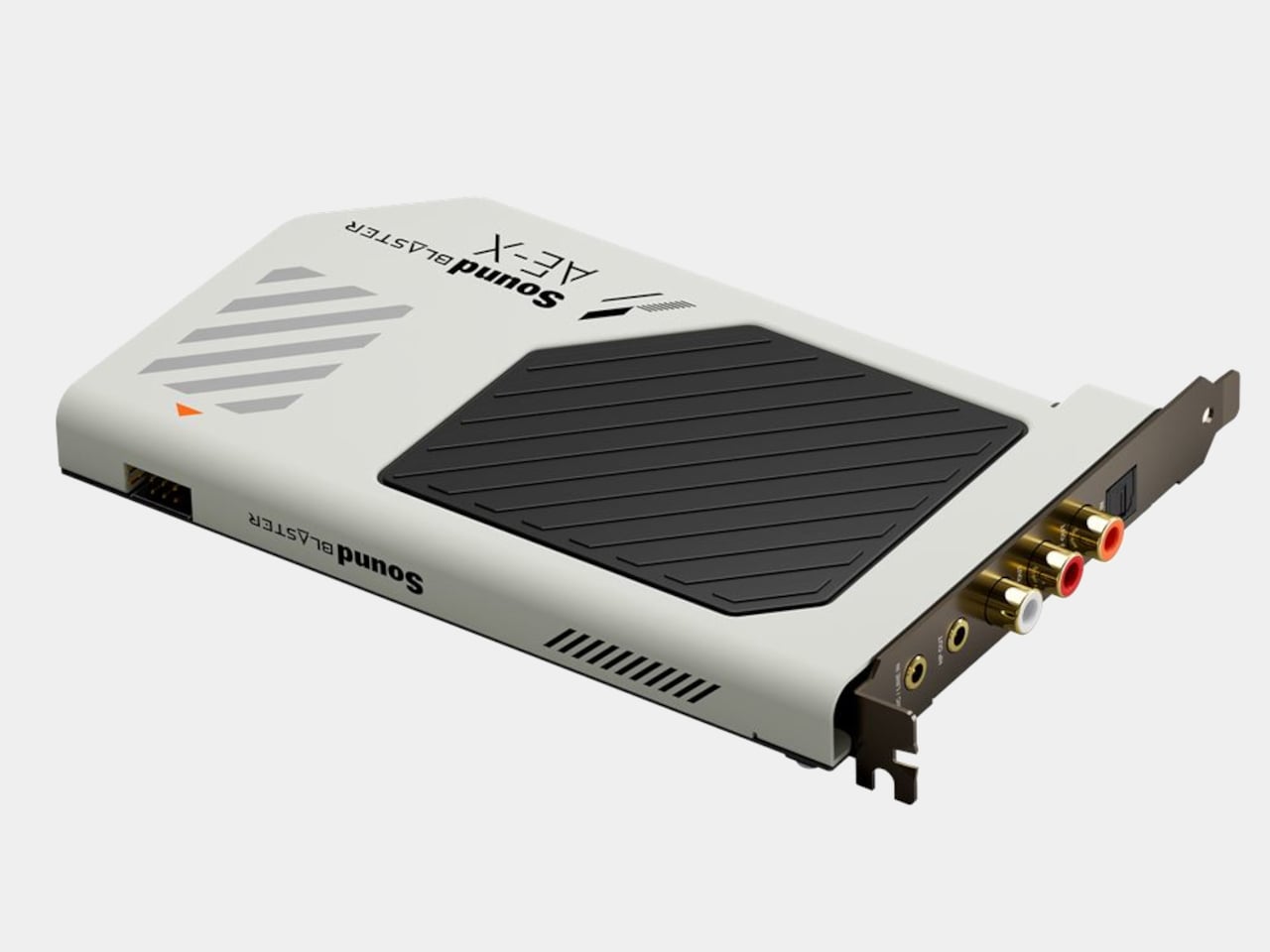
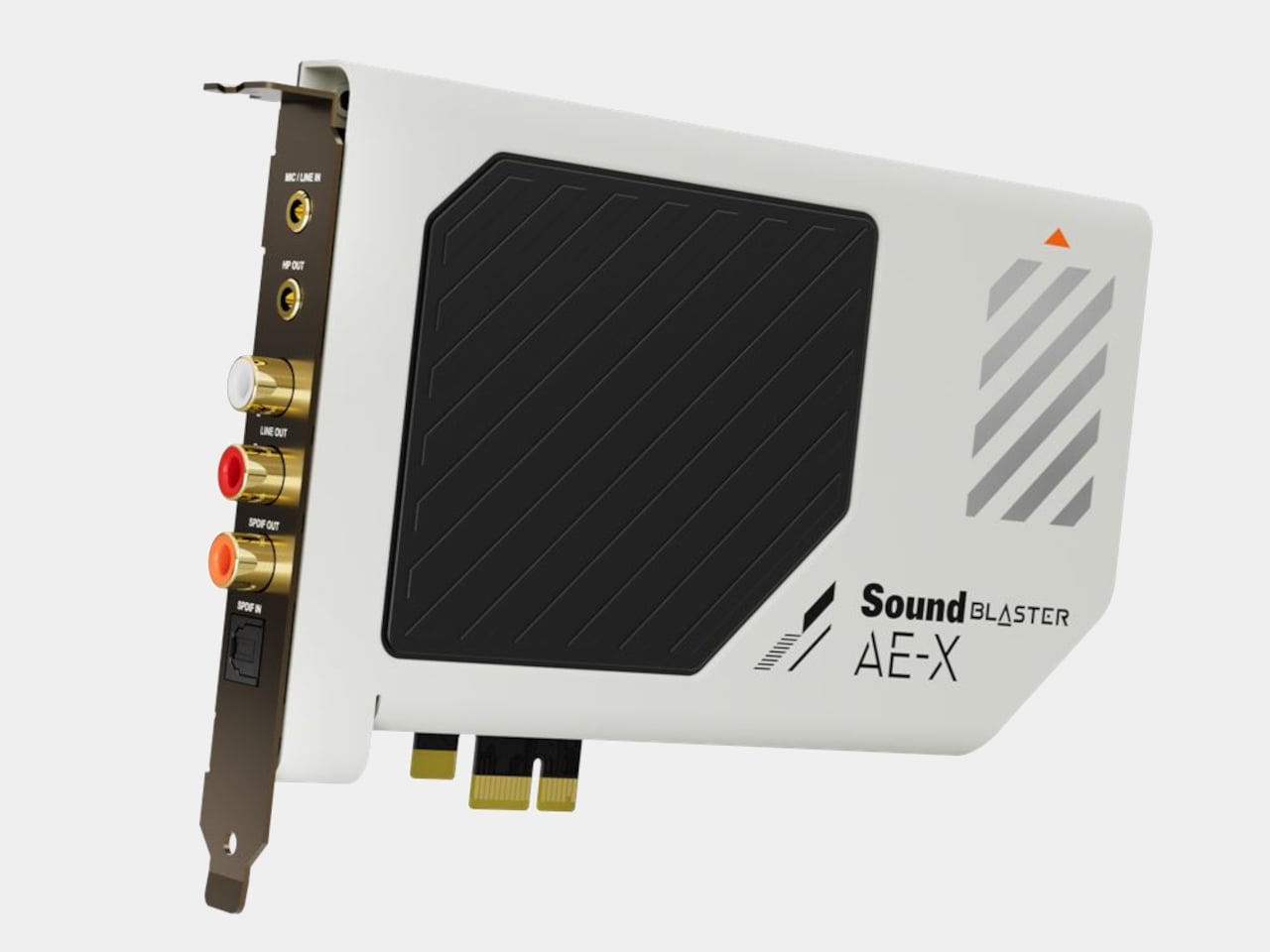
Connectivity covers the main bases: two 3.5 mm audio jacks, optical S/PDIF input and output, a digital coaxial output, and a pair of analog RCA phono outputs for connecting to external speakers or amplifiers. ASIO 2.3 compatibility adds low-latency operation for anyone recording, monitoring, or producing music rather than just playing it back. That same compatibility makes the AE-X a credible option for home studio setups that need clean round-trip audio.
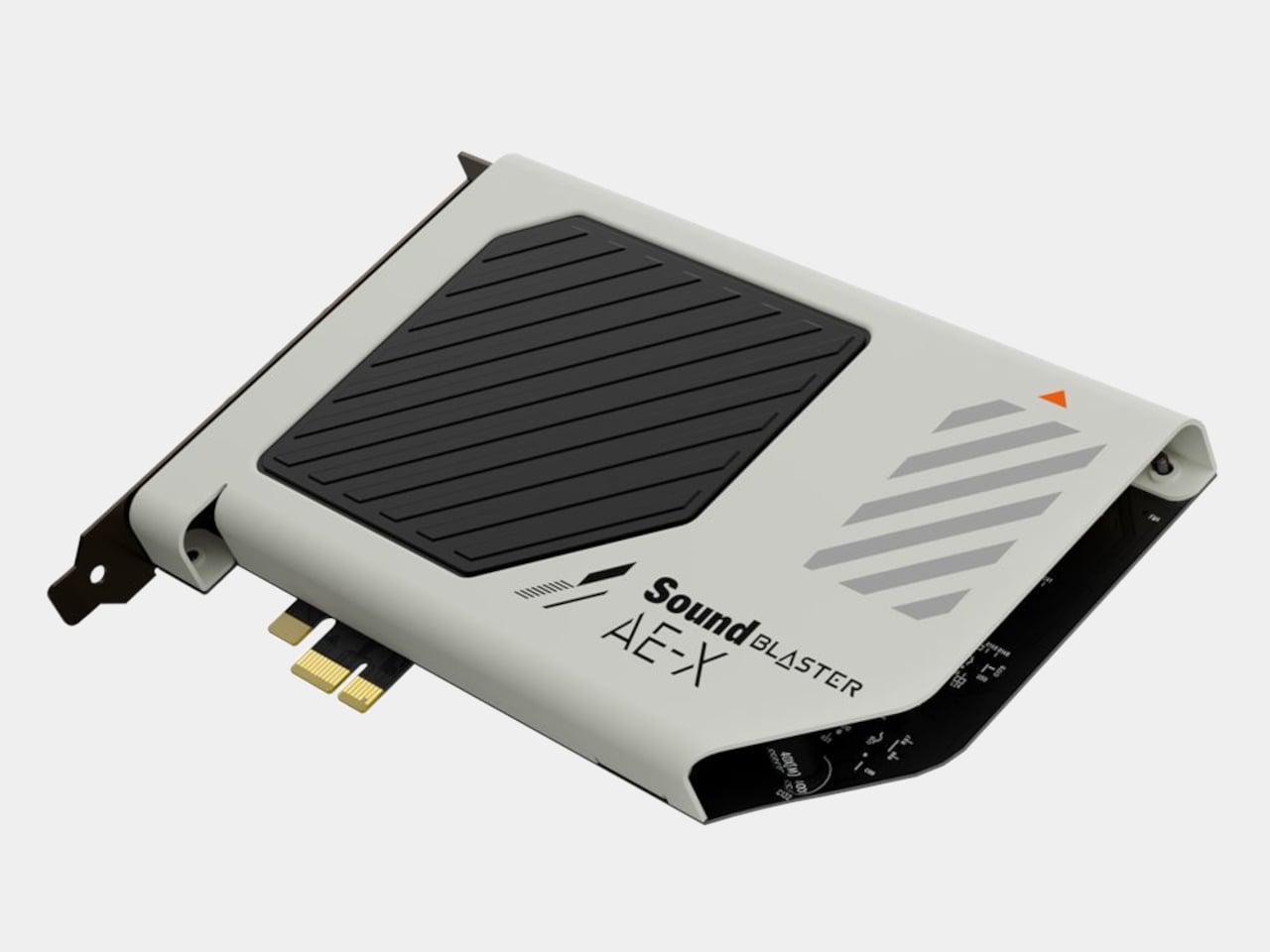
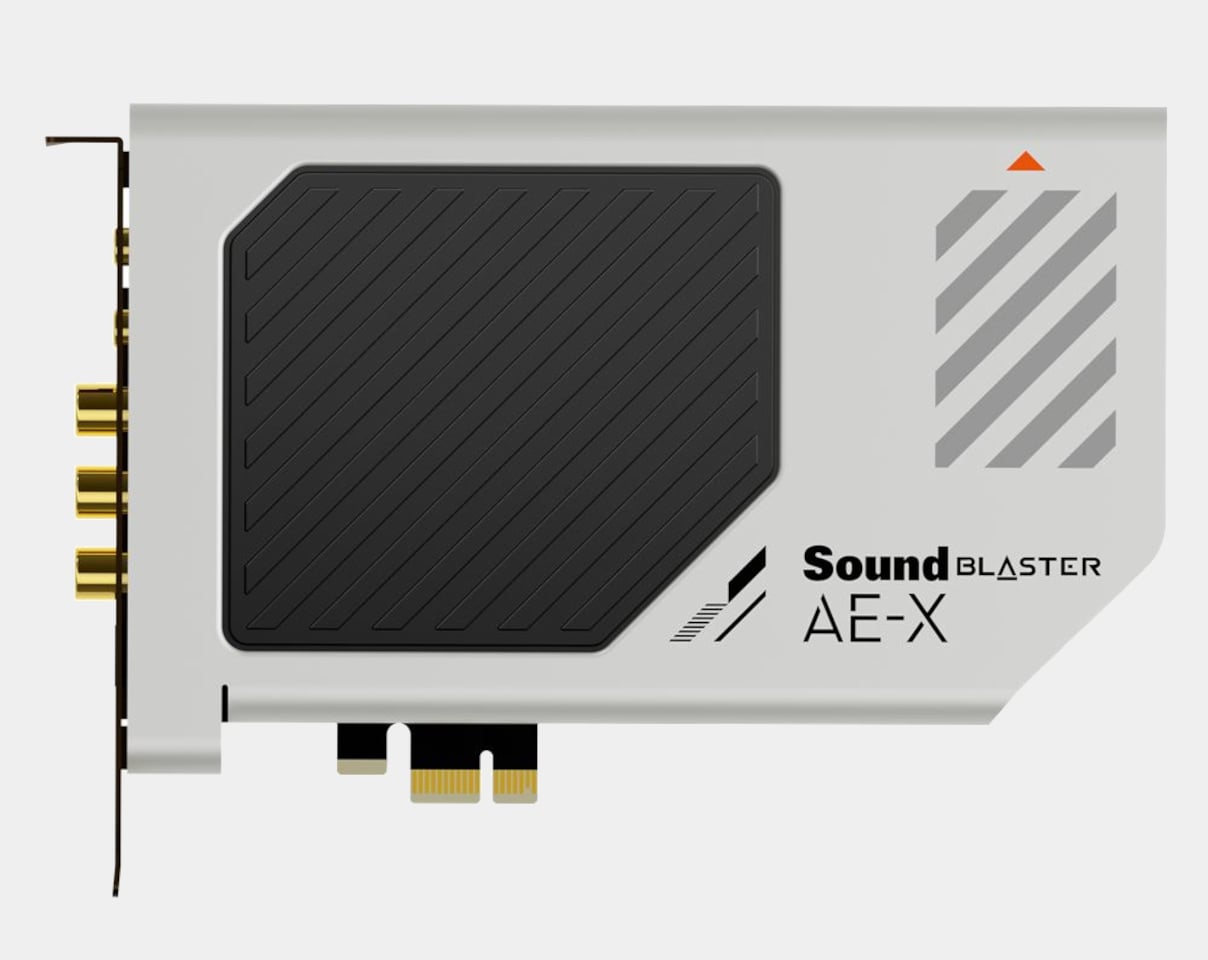
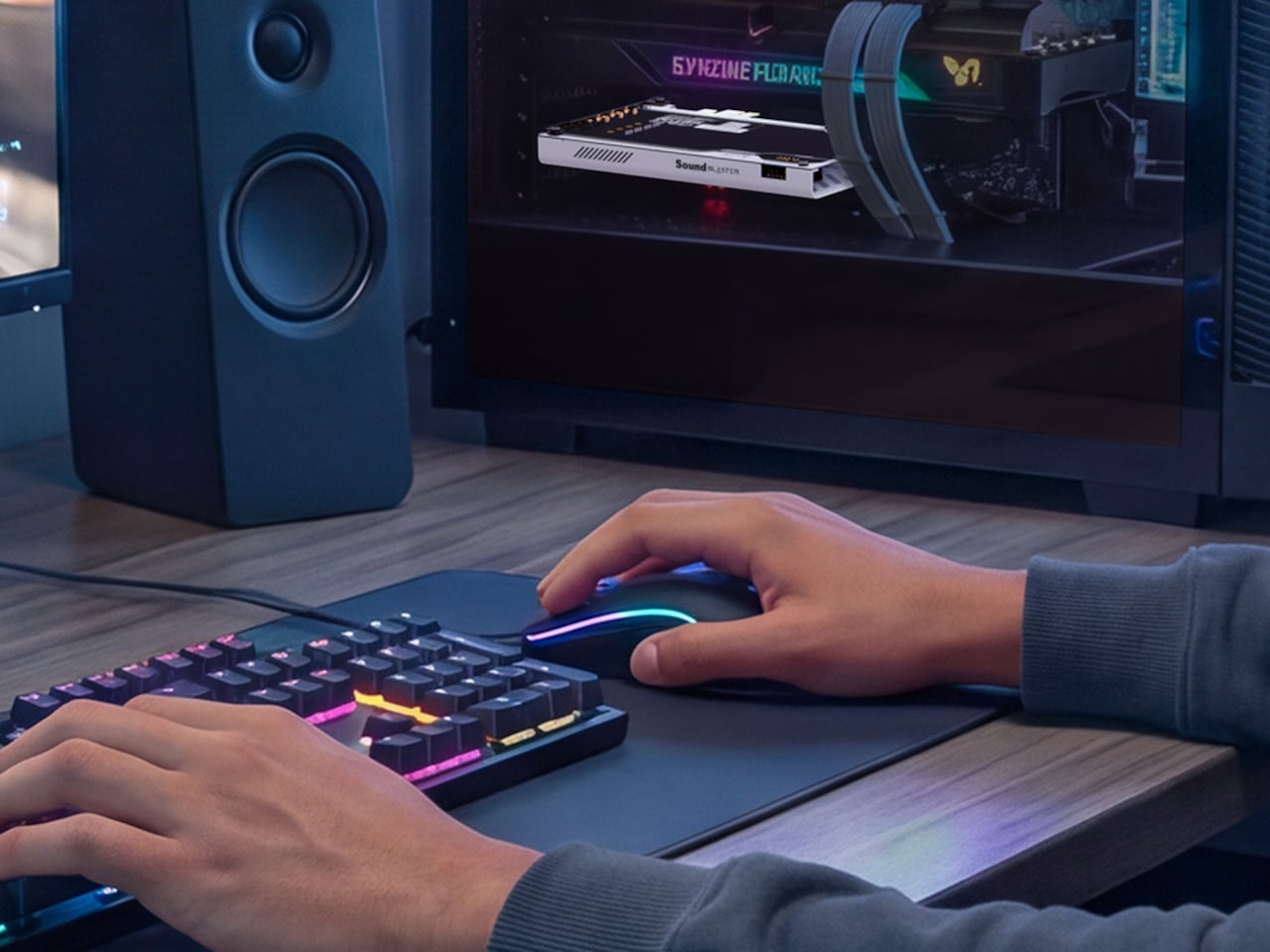
The gaming side gets attention, too. Scout Mode enhances positional audio cues during gameplay, sharpening the directional information that makes it easier to track footsteps and environmental sounds in competitive titles. AutoEQ headphone calibration and customizable sound profiles are managed through the Creative Nexus app, so the card adapts to different headphones without requiring any manual EQ work. The same setup that handles a late-night music session can switch over to a competitive shooter without touching anything.

Pricing puts the AE-X at just under €190 in Europe and $179.99 in the US. That positions it well below the AE-9 while technically bettering it on the spec sheet across SNR and DSD support. For someone already invested in quality headphones or external speakers, a dedicated sound card at this price range stops being a luxury and starts looking like the obvious next step.
Motherboard audio makers have narrowed the gap significantly, but they’ve never closed it entirely. The Sound Blaster AE-X makes a clear argument that the ceiling for dedicated PCIe audio hardware has been raised again, and the ask for getting there hasn’t changed much. For anyone running 300-ohm headphones off a header that was never designed for them, the difference is immediate.