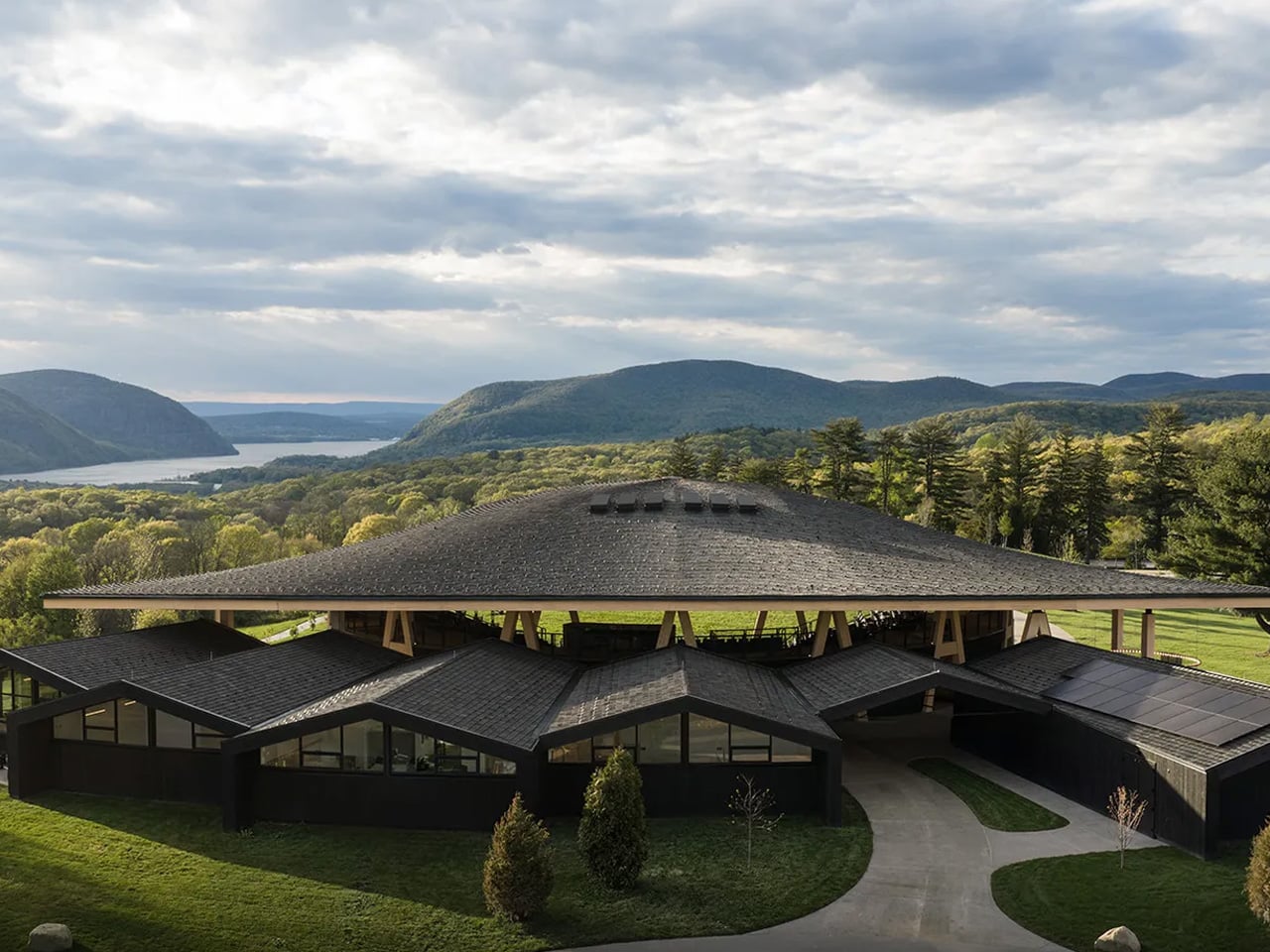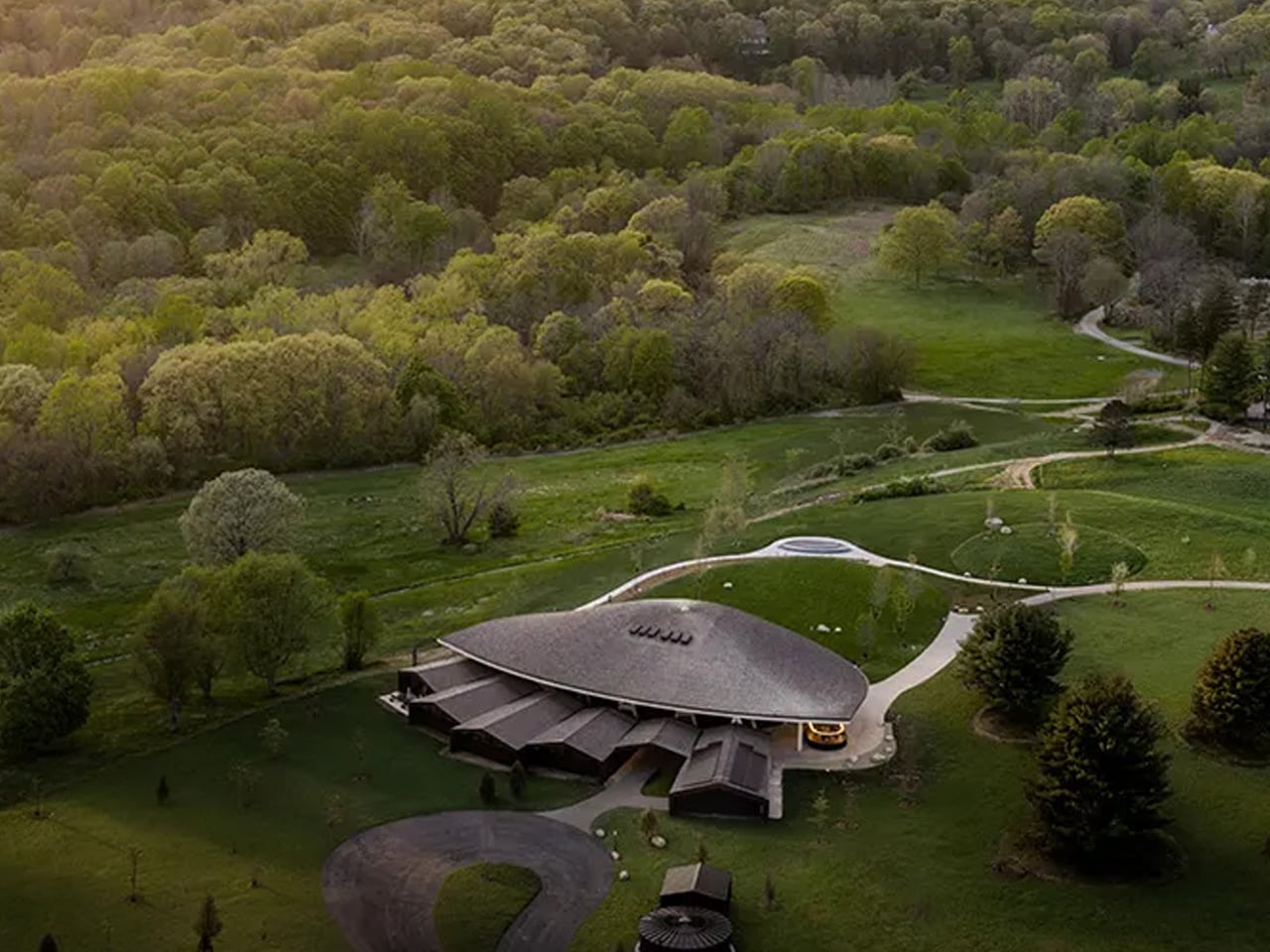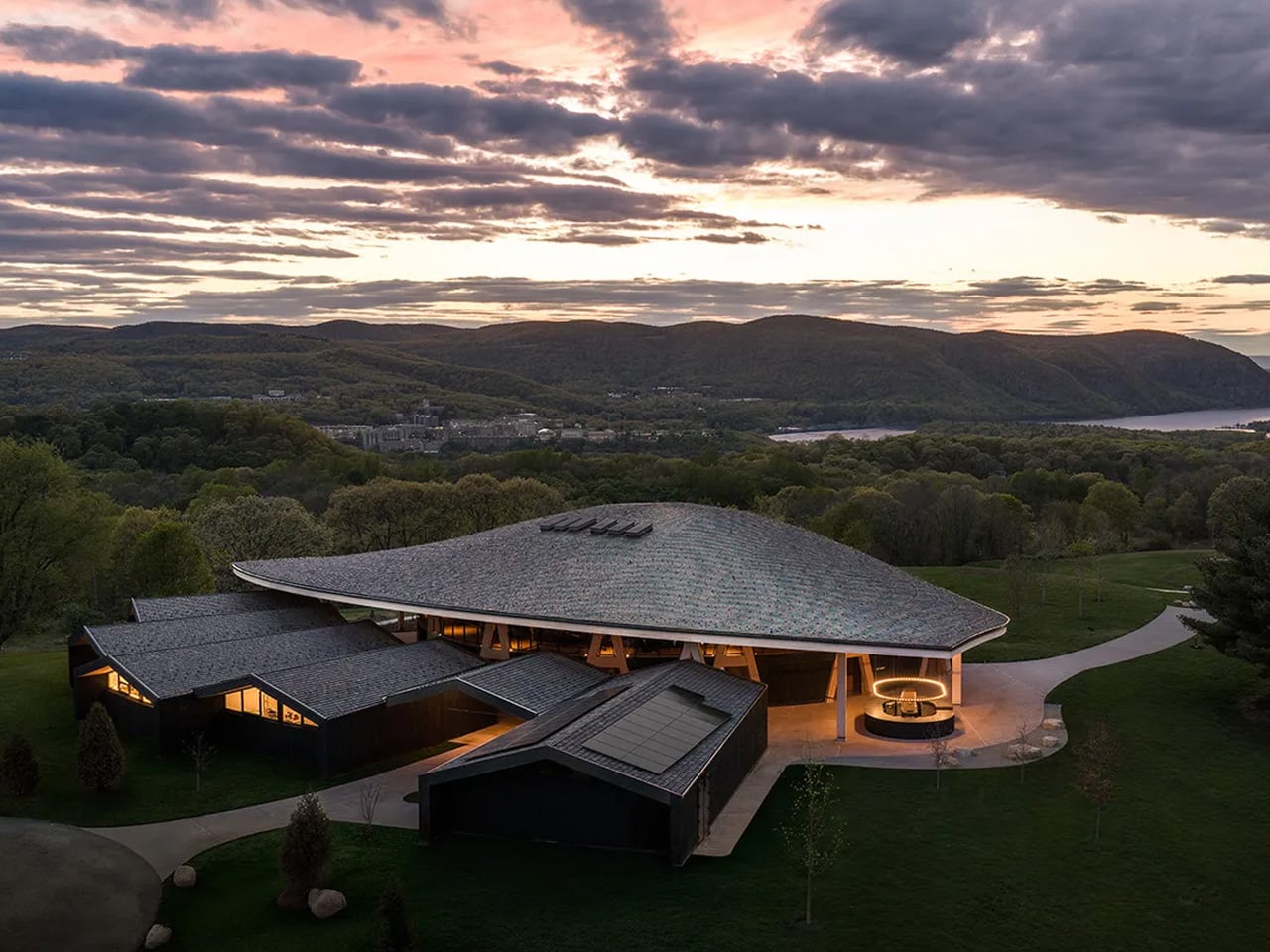
For decades, Hudson Valley Shakespeare performed under a simple tent — seasonal, transient, and entirely at the mercy of the elements. That changed this May with the completion of the Samuel H. Scripps Theater Center in Garrison, New York, designed by Studio Gang. The project marks the first-ever permanent home for Hudson Valley Shakespeare (HVS), and it delivers on every promise the setting demands.
Perched on a 98-acre campus overlooking the Hudson Highlands, the theater is less a building than a landscape intervention. Studio Gang organized the design around a curved, timber-framed grid shell that encloses a 451-seat open-air auditorium. The structure is only partially enclosed, so the rolling hills of the Hudson Valley become a literal backdrop to every performance — a design move that makes the scenery non-negotiable. You don’t look past the landscape here. You look into it.
Designer: Studio Gang
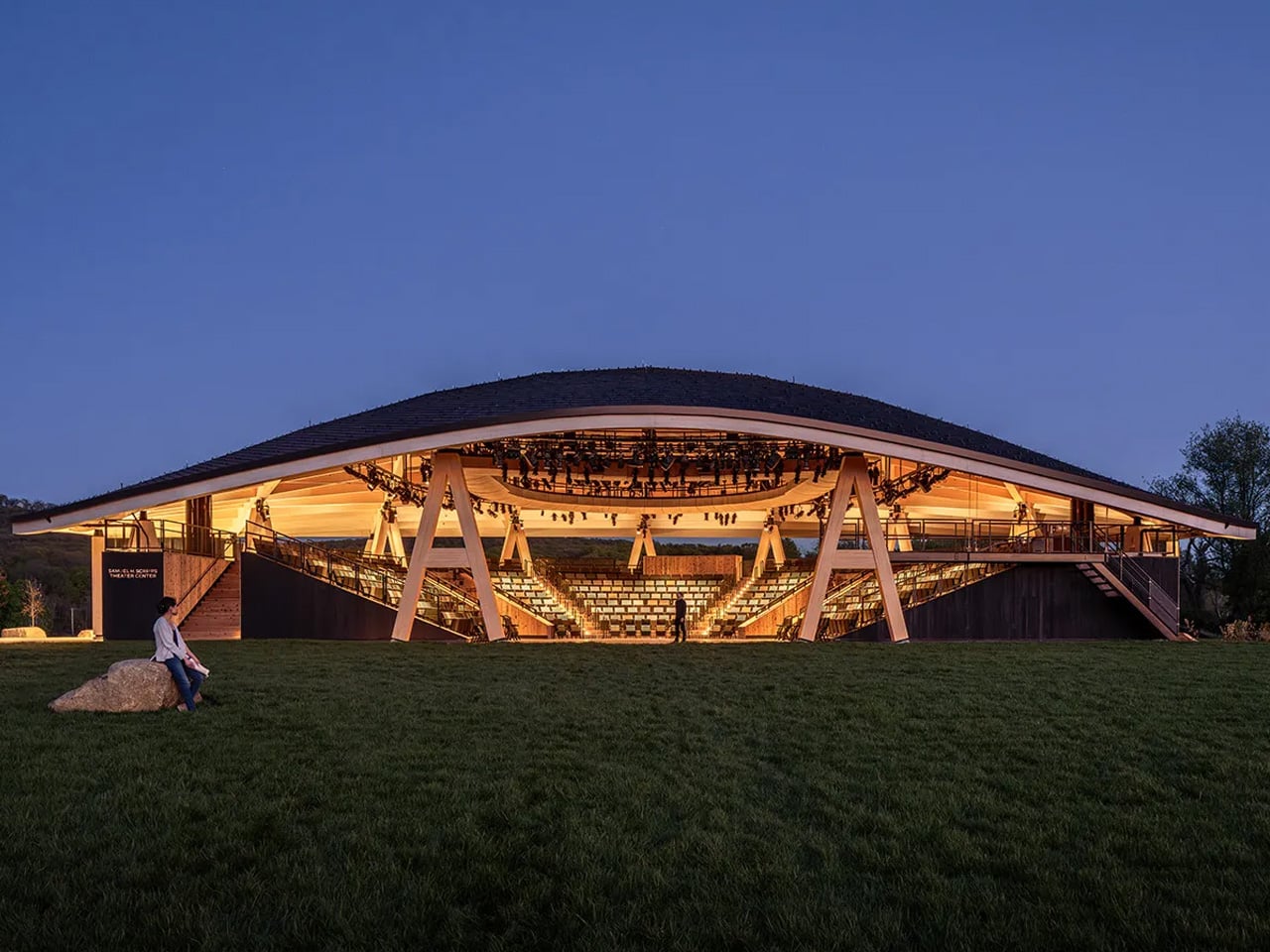
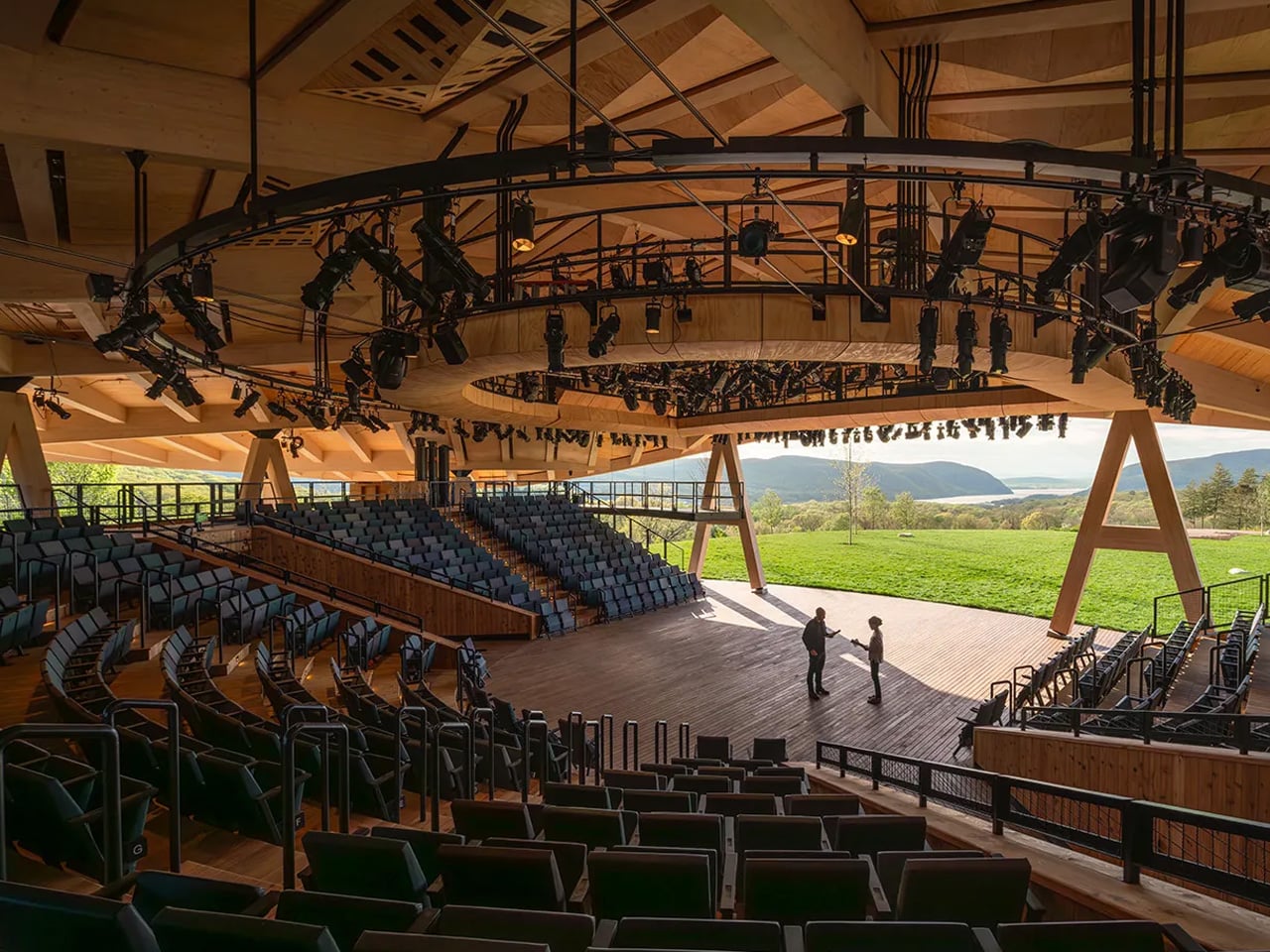
The material choice is where the project becomes truly considered. The domed roof is constructed from mass timber — a prefabricated laminated-timber structure that harmonizes with the site’s natural character while sharply reducing its carbon footprint. Environmental performance was central to the entire design and construction strategy, not an afterthought. The gently curved shell reads differently depending on the hour — warm and structural at midday, almost canopy-like as the light drops. It is the kind of material that gets better with time, not worse.
Founding partner Jeanne Gang put it plainly: “The building’s curved mass timber structure harmonises with the natural beauty of the site while modelling a more sustainable future for cultural and performing arts spaces.” That word — modelling — is doing real work. The Scripps Theater isn’t just a venue upgrade. It’s an argument for what publicly facing cultural architecture can look like when sustainability and site responsiveness aren’t treated as constraints.
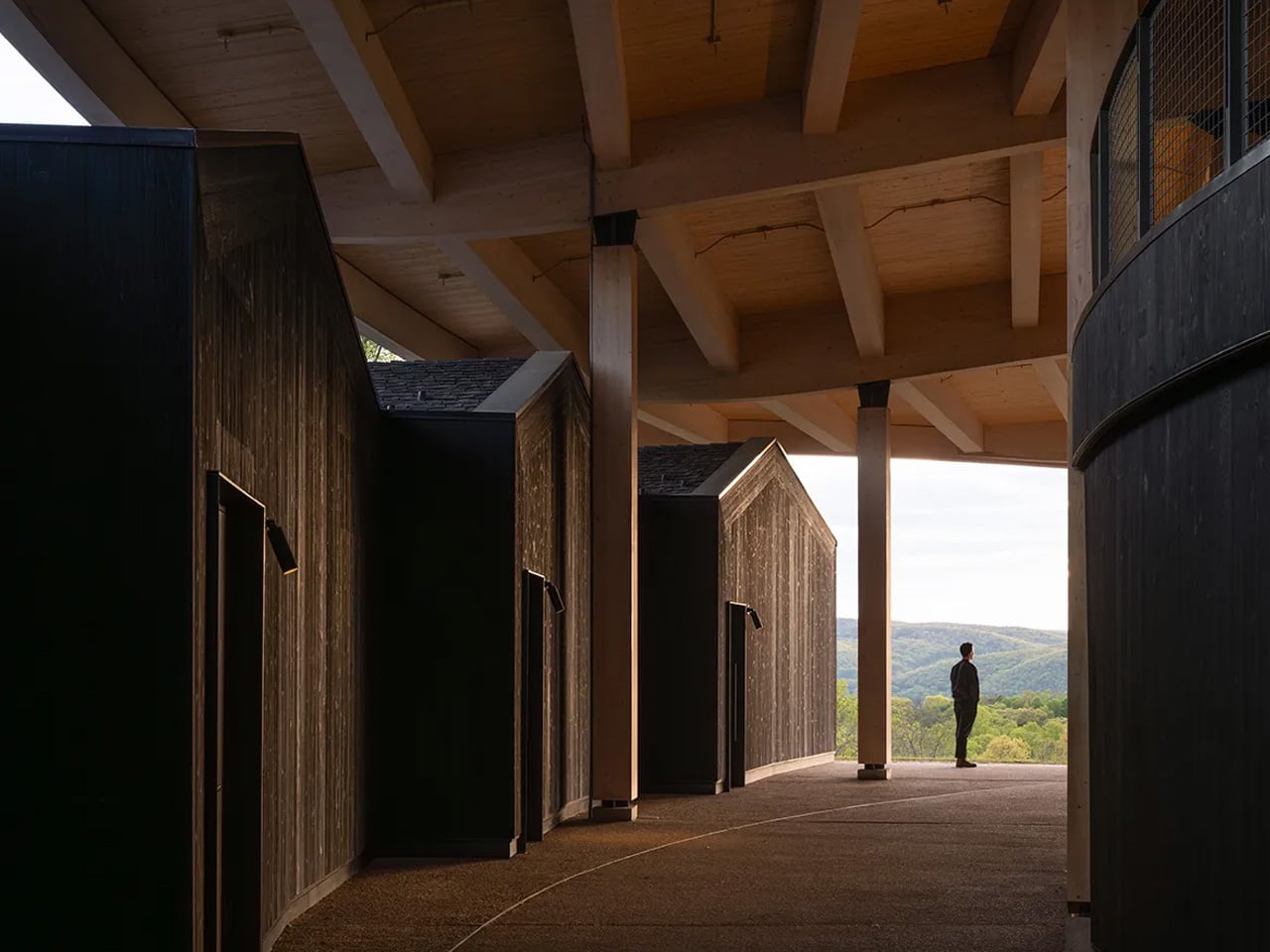
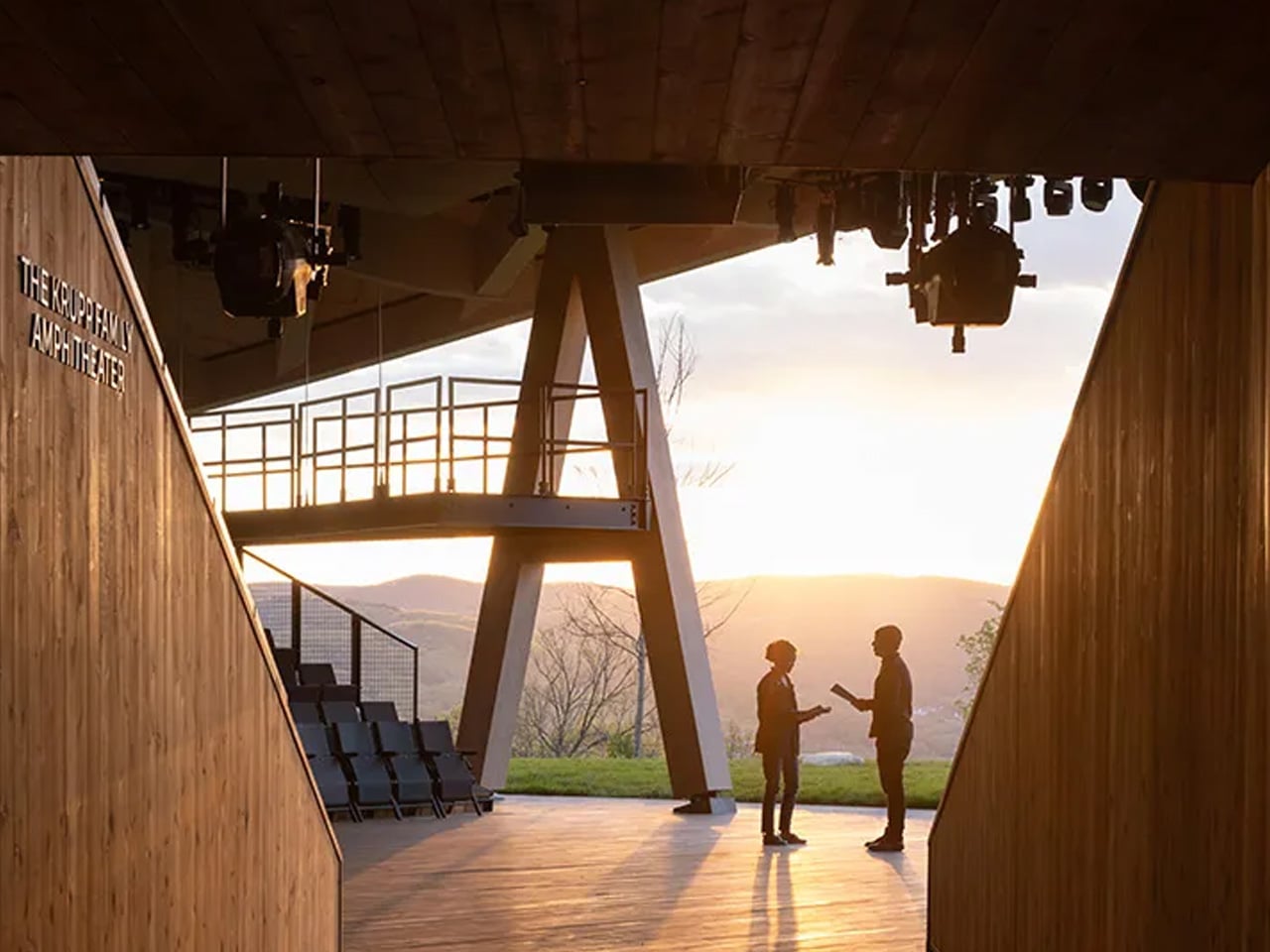
Beyond the main auditorium, the 14,850-square-foot venue folds in rehearsal, administrative, education, and public gathering spaces within a landscape-oriented master plan. Accessibility was expanded. The bird-safe design was factored in. Nothing feels incidental. What Studio Gang has built here is rare — a theater where the architecture earns its place in the landscape rather than competing with it. The Hudson Valley finally has a stage worthy of the view.