Most GaN chargers on the market right now treat 140W like a finish line. Satechi hit it with their ChargeView hub and added a wattage display, which was genuinely useful. Voltix pushed to 180W with 7 ports and called it a day. Belkin went sideways into docking territory with their 146W 11-in-1 hub, bundling in connectivity features that most people opening a laptop at a coffee shop will never touch. The entire category seems to have collectively decided that anything past 150W requires compromises elsewhere, whether in size, port count, or heat management.
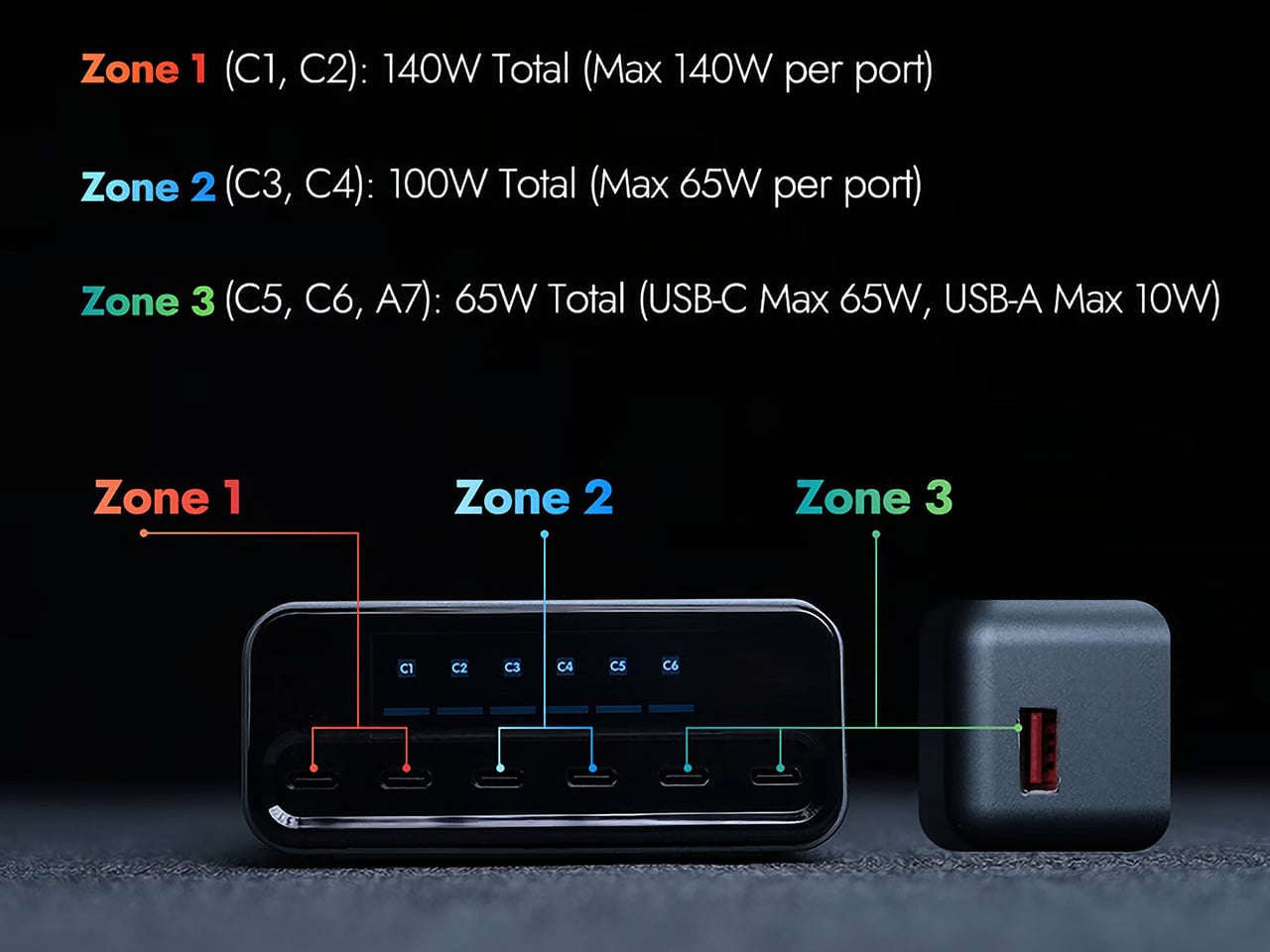
MUITAVY Gen2 delivers 300W across 7 ports without requiring a docking station footprint or a cooling fan that sounds like a jet engine spooling up. The 3-zone distribution system splits power intelligently: Zone 1 covers two USB-C ports at 140W total with 140W max per port, Zone 2 handles two more at 100W total with 65W max per port, and Zone 3 manages the remaining three ports (two USB-C, one USB-A) at 65W total. A switchable LCD display cycles through individual port output, temperature monitoring, and total wattage draw. At 492g and roughly the footprint of two stacked iPhones, it’s heavier than a travel charger but lighter than most docking hubs attempting similar output.
Designer: MUITAVY
Click Here to Buy Now: $119 $200 (40% off). Hurry, only a few left!
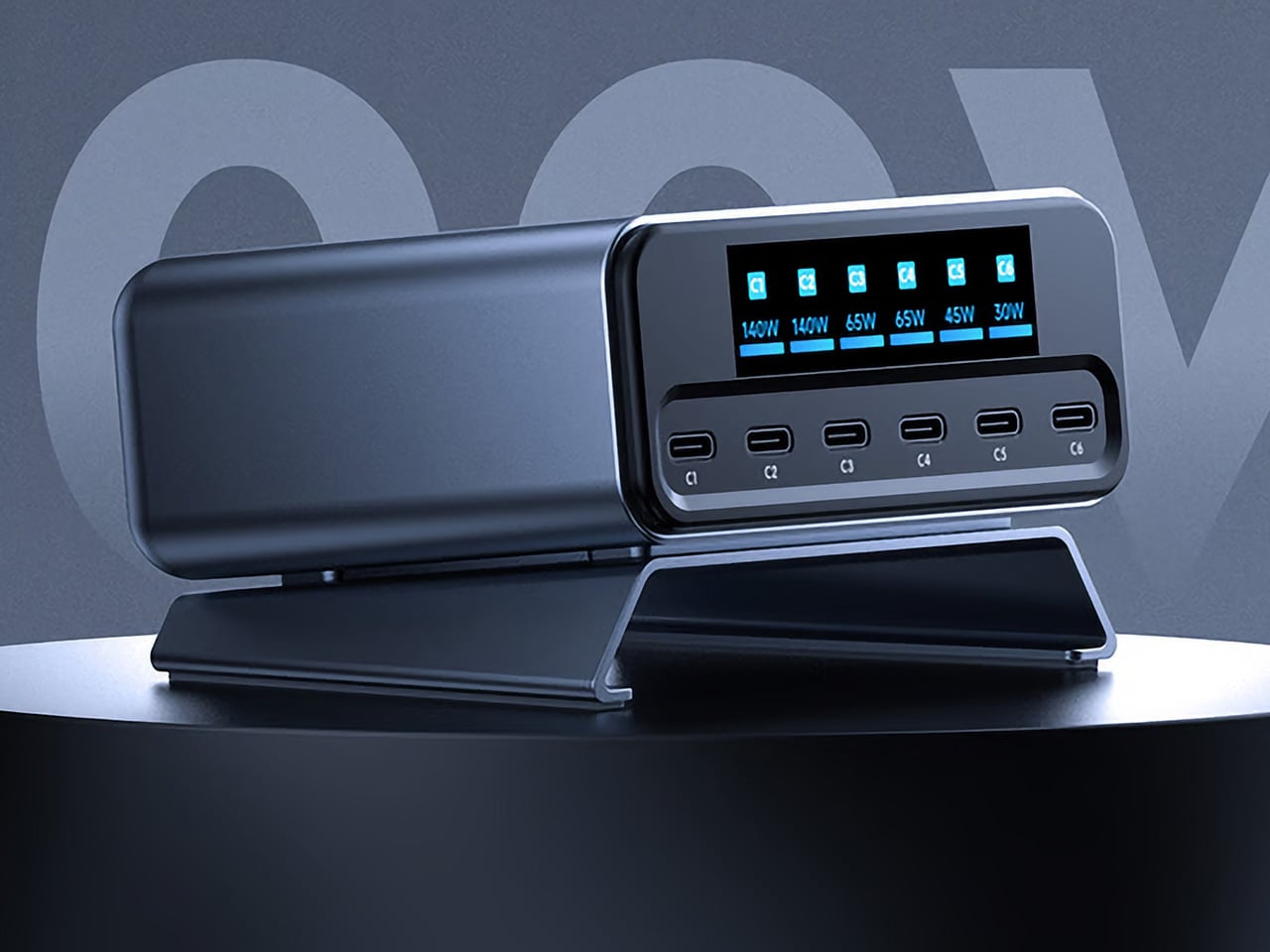
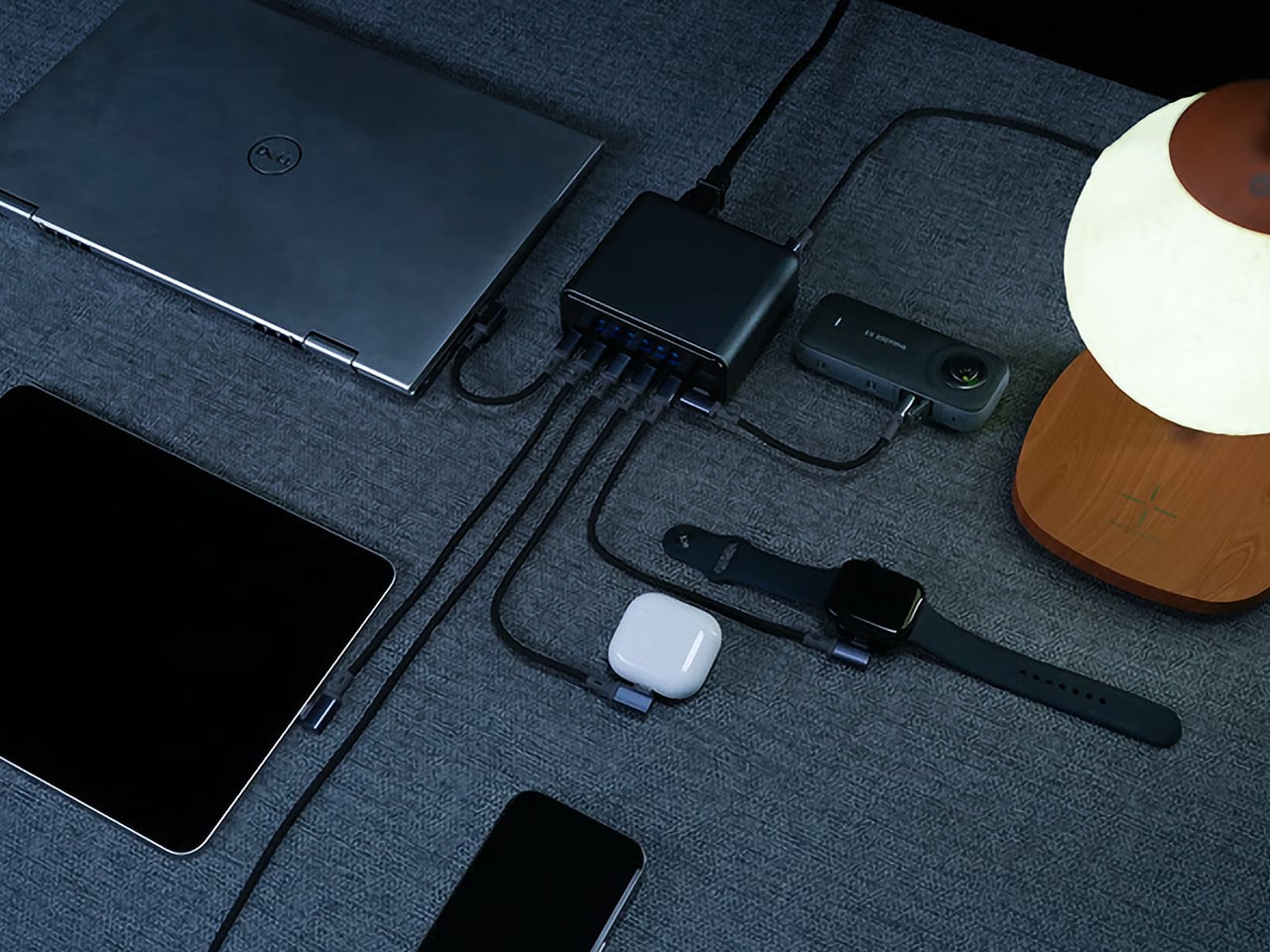
The MUITAVY Gen2 splits its power across three distinct zones. Zone 1’s 140W max per port means you can run a MacBook Pro M5 Max at full tilt on C1 while simultaneously fast-charging an iPad Pro through C2 without either device entering slow-charge purgatory. Zone 2’s dual 65W ports handle the middle tier, perfect for a MacBook Air, a Windows ultrabook, or a Steam Deck that needs a proper feed. Zone 3 covers the accessories: AirPods, a Kindle, a smartwatch, a Bluetooth speaker, whatever low-draw gear is cluttering your desk. The zones don’t borrow from each other, so plugging your phone into Zone 3 won’t suddenly throttle the laptop in Zone 1. That allocation is a lot like having a compartmentalized travel case or backpack with dedicated slots for organizing all your stuff, rather than just one big empty space that you chuck things into and pray for the best.
PD 3.1 handles the protocol layer, which is the same standard powering Satechi’s ChargeView and the top-tier Anker and Belkin hubs. The smart management chip inside the Gen2 reallocates power in milliseconds as devices connect or disconnect, so you’re not waiting for a handshake cycle every time you unplug your phone. The chip also handles trickle charge detection, which matters when you’re topping off a device that’s already at 95% and doesn’t need the full 65W anymore. That freed-up wattage gets redistributed across the other active ports without you lifting a finger. It’s the kind of behind-the-scenes efficiency that GaN was supposed to deliver all along but rarely does outside the premium tier.

The LCD display is where MUITAVY takes a page directly from Satechi’s playbook and expands on it. A side-mounted touch button cycles through three display modes: individual port wattage, temperature and performance stats, and total output. The Satechi ChargeView only shows wattage per port, which is helpful but incomplete. Adding temperature monitoring makes sense at 300W, where heat becomes a genuine concern rather than a footnote in the manual. If the hub is running hot because you’ve got seven devices pulling maximum draw simultaneously, you’ll know about it before anything thermal throttles or shuts down. The display itself is clear, bright enough to read in daylight, and updates in real time rather than refreshing every few seconds like cheaper implementations.

Size and weight sit in a reasonable middle ground. At 102.4 x 92.0 x 43.9mm, the Gen2 is larger than a typical travel charger but smaller than most desktop hubs attempting this kind of output. The 492g weight keeps it stable on a desk without needing a separate stand or adhesive pad to stop it from sliding around when you’re plugging cables in and out. For comparison, the Satechi ChargeView weighs 465g and still ships with a dedicated stand to keep it upright. MUITAVY’s footprint is wide enough that it sits flat without tipping, and the cable ports are positioned on opposite ends so you’re not dealing with a tangled mess of USB-C cables all emerging from the same side.

Universal compatibility extends beyond just USB-C and USB-A port selection. MUITAVY offers four input cable options to match regional plug standards: Type B for the US, Canada, Japan, and Mexico; Type I for China, Australia, and New Zealand; Type E for Germany, France, Spain, and Italy; Type G for Brazil, Hong Kong, Singapore, and Malaysia. That’s a detail most charger manufacturers ignore, assuming you’ll just buy a separate adapter if you’re traveling internationally. At 300W, though, plug compatibility becomes critical. You’re pulling serious current from the wall, and using a flimsy third-party adapter with a high-draw hub is how you blow a fuse or start a small fire in a hotel room. MUITAVY handles it at the hardware level, which is the correct approach.


The Gen2 comparison chart against the original MUITAVY is almost comical. Gen1 topped out at 200W total, 100W single-port max, 6 output ports, and a single power distribution zone with no display at all. It weighed 200g and measured 145 x 72 x 72mm, so it was lighter and taller but delivered significantly less power. Gen2 is a complete rebuild rather than an iterative spec bump, which is rare in a category where most “Gen 2” products just swap the exterior color and call it progress. The jump from 200W to 300W, from 1 zone to 3, and from no display to a multi-mode LCD suggests MUITAVY actually listened to feedback and designed around real-world use cases rather than just chasing a higher number for the product page.
The Early Bird pricing sits at $119 against a $200 MSRP, which positions it directly against the Voltix 180W at full retail and well below the Satechi ChargeView when you account for the wattage and port count difference. At $200 MSRP, it’s competing with premium desktop hubs from Belkin and Anker, but those products typically bundle data passthrough, HDMI outputs, and Ethernet jacks that add cost without adding charging capacity. MUITAVY Gen2 is a pure charging hub with no data connectivity, so the entire 300W budget goes toward power delivery rather than being split across multiple functions. Shipping costs are reasonable for hardware of this class: $19 for a single unit to the US, Canada, EU, UK, or Australia; $15 for Asia. The hub ships with the Gen2 unit, an AC input cable matched to your region, and a user manual. Expected delivery is mid-July 2026, with production ramping up in June.
Click Here to Buy Now: $119 $200 (40% off). Hurry, only a few left!
SHARE