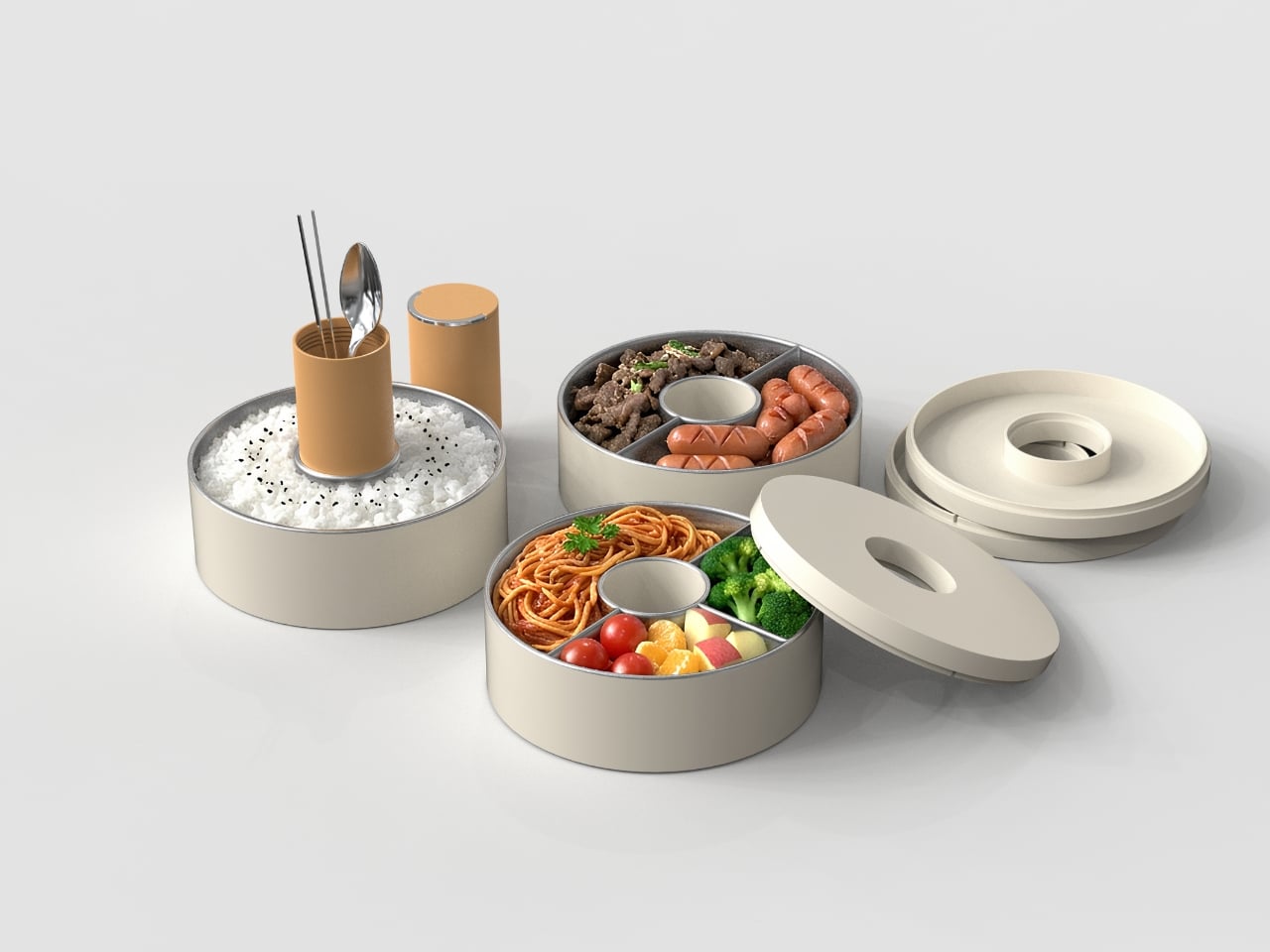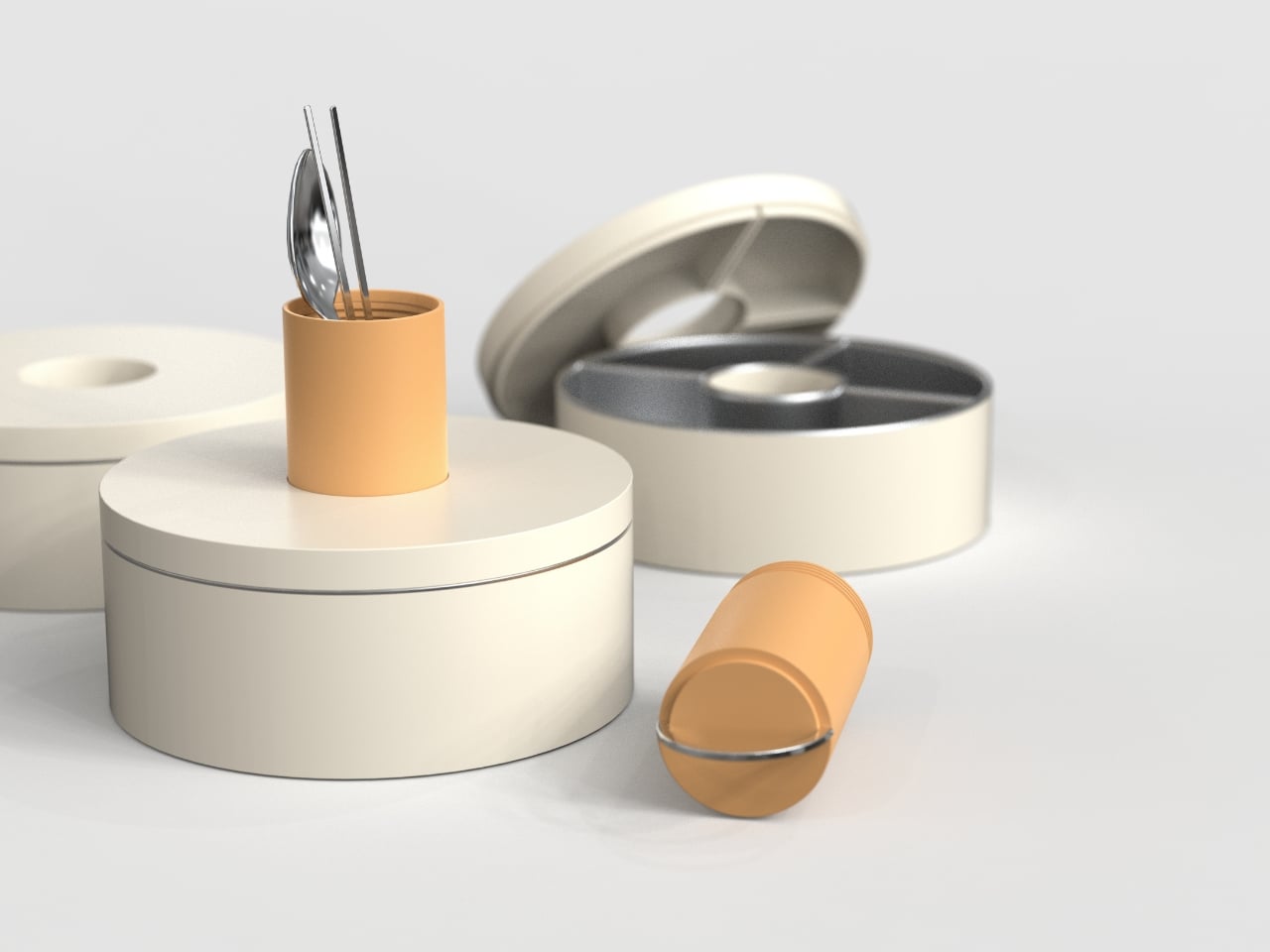
Most lunch boxes start with the food. Designer Heegun Yun started with the spoon. The result is the Ring Lunch Box, a three-tier modular meal kit from the Seoul-based industrial designer that flips the logic of how we think about everyday carry and, frankly, makes you wonder why nobody did this sooner.
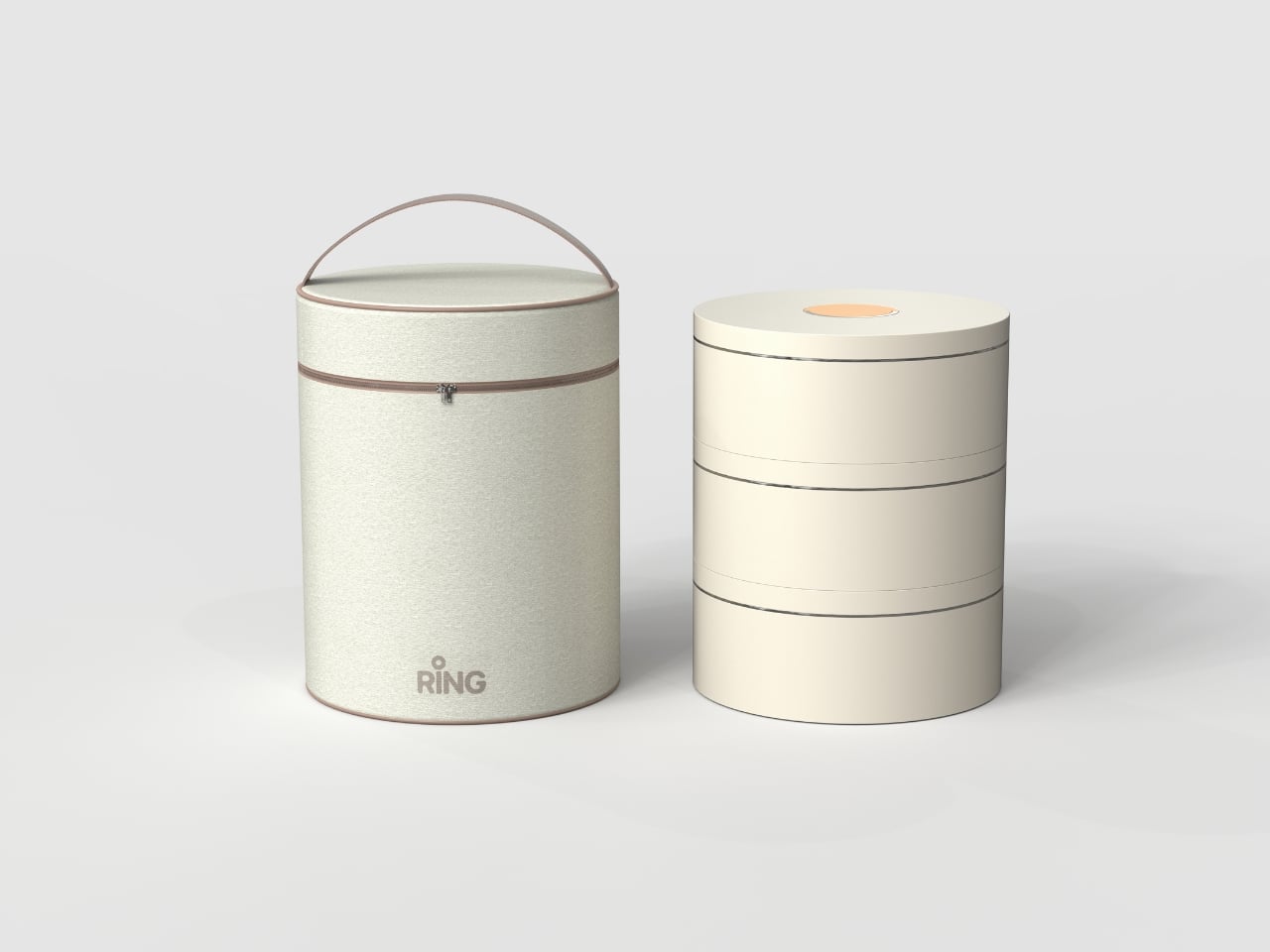
The concept is deceptively simple: a central utensil holder, cylindrical in form, sits at the core of the entire system. Three ring-shaped food containers then slot and stack around it, each one designed to clip onto that central hub in a clean, satisfying sequence. The structure is compact, the assembly is intuitive, and the whole thing comes apart without fumbling. It looks like it belongs in a design museum. It also looks like it actually works, which is a genuinely rare combination.
Designer: Heegun Yun
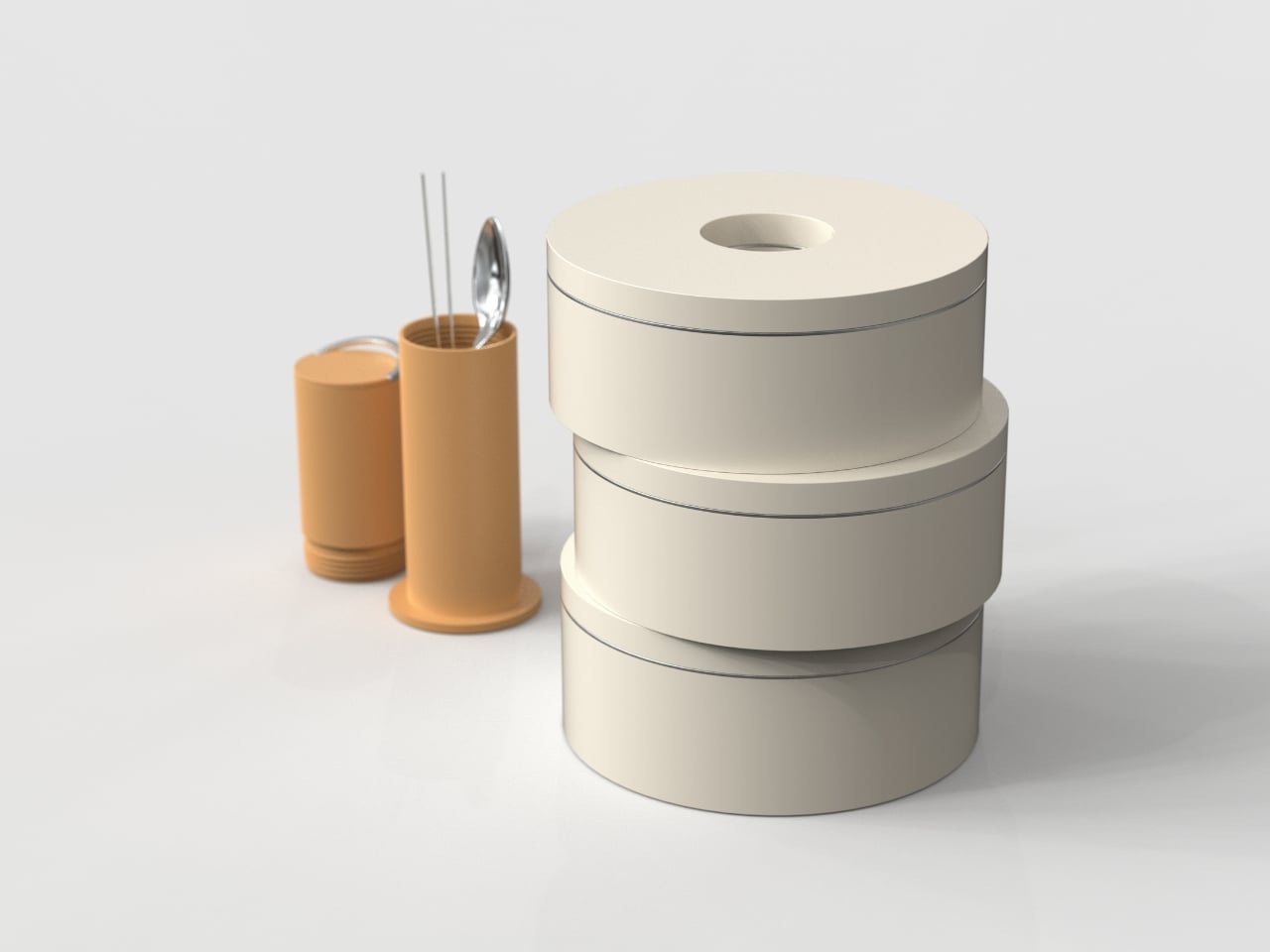
What makes the Ring Lunch Box so satisfying to look at is the way the ring form makes visual sense even before you fully understand the function. The geometry is honest. The containers are rings because they literally surround something. The central piece is cylindrical because it needs to be gripped and carried. Nothing here is decorative for decoration’s sake, and that restraint is what good industrial design looks like when it’s operating with confidence. A lot of design concepts at this level of sophistication tend to overcomplicate things as a way of signaling cleverness. Yun goes in the opposite direction entirely, and the result is more impressive for it.
Yun is a young Korean industrial designer who has already proven that he’s not just technically skilled but conceptually precise. He’s a 2024 iF Design Student Award winner, a European Product Design Award winner from 2023, and a Spark Design Award finalist in 2025. For a designer still in the early stages of building his professional portfolio, that’s a track record that commands real attention and suggests this Ring Lunch Box is far from the last we’ll hear from him.
It’s also worth noting that Korean design culture has been quietly rewriting the rules of everyday product design for a while now. From kitchenware to tech accessories, Korean designers tend to operate with a kind of disciplined elegance that doesn’t perform minimalism so much as just live inside it comfortably. The Ring Lunch Box feels like a natural extension of that sensibility. It doesn’t announce itself. It just works, and it works beautifully.
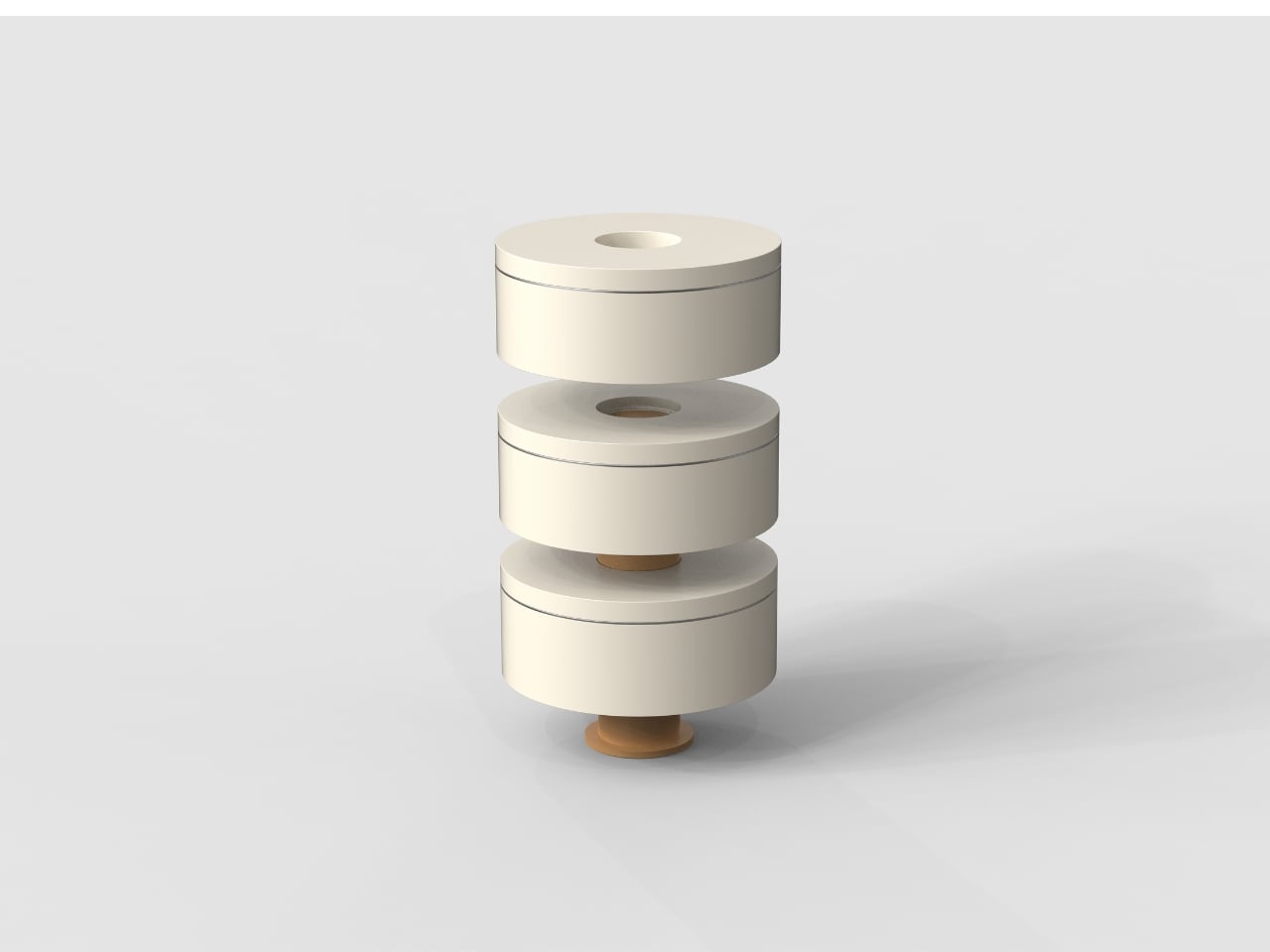
I’m particularly drawn to how the design treats the utensil not as an afterthought but as the literal axis of the whole system. Every lunch box I’ve ever owned had the spoon rattling around somewhere, tucked into a side pocket I eventually forgot about, or worse, kept separately and left behind. The Ring Lunch Box makes the utensil the reason the containers exist in the shape they do. That’s a philosophical shift, not just a practical one, and it changes the way you interact with the object before you’ve even touched the food.
The modular structure also matters in ways that go beyond aesthetics. Each container separates independently, which means cleaning is easier, portion control is genuinely flexible, and you can carry fewer tiers on lighter days without the whole thing feeling incomplete. Modularity in everyday products often sounds better in a brief than it actually functions in practice. Here, the ring geometry enforces the modular logic in a way that’s almost impossible to mess up.
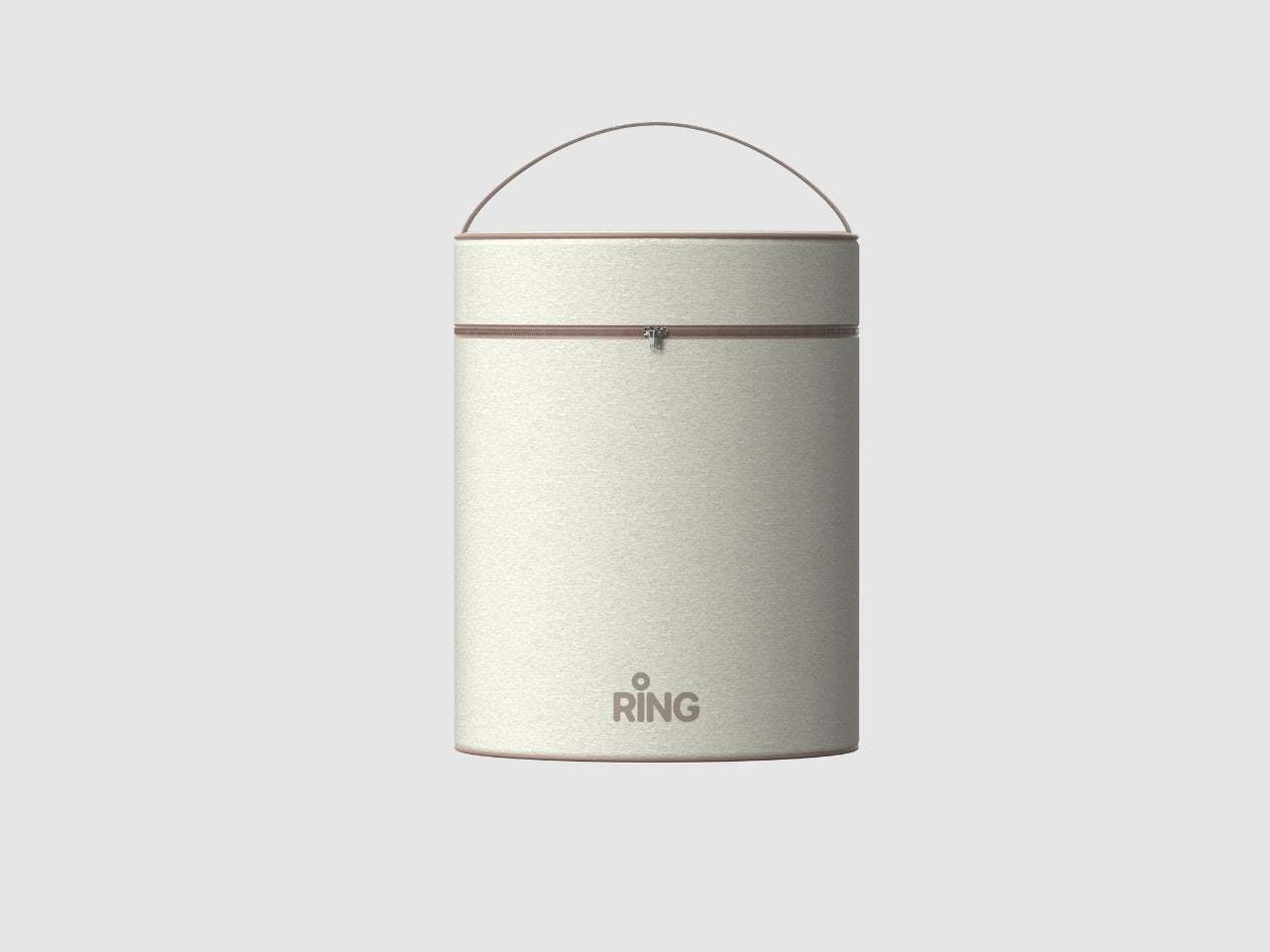
Will the Ring Lunch Box become a commercial product? That part remains to be seen. Right now it lives on Behance as a design concept, but it has the kind of structural clarity that tends to attract attention from the right people in manufacturing and licensing. It doesn’t feel speculative in the way student concepts sometimes do. It feels considered, finished, and ready. And sometimes the best designs are the ones that make you ask not whether they should exist, but why they don’t already.