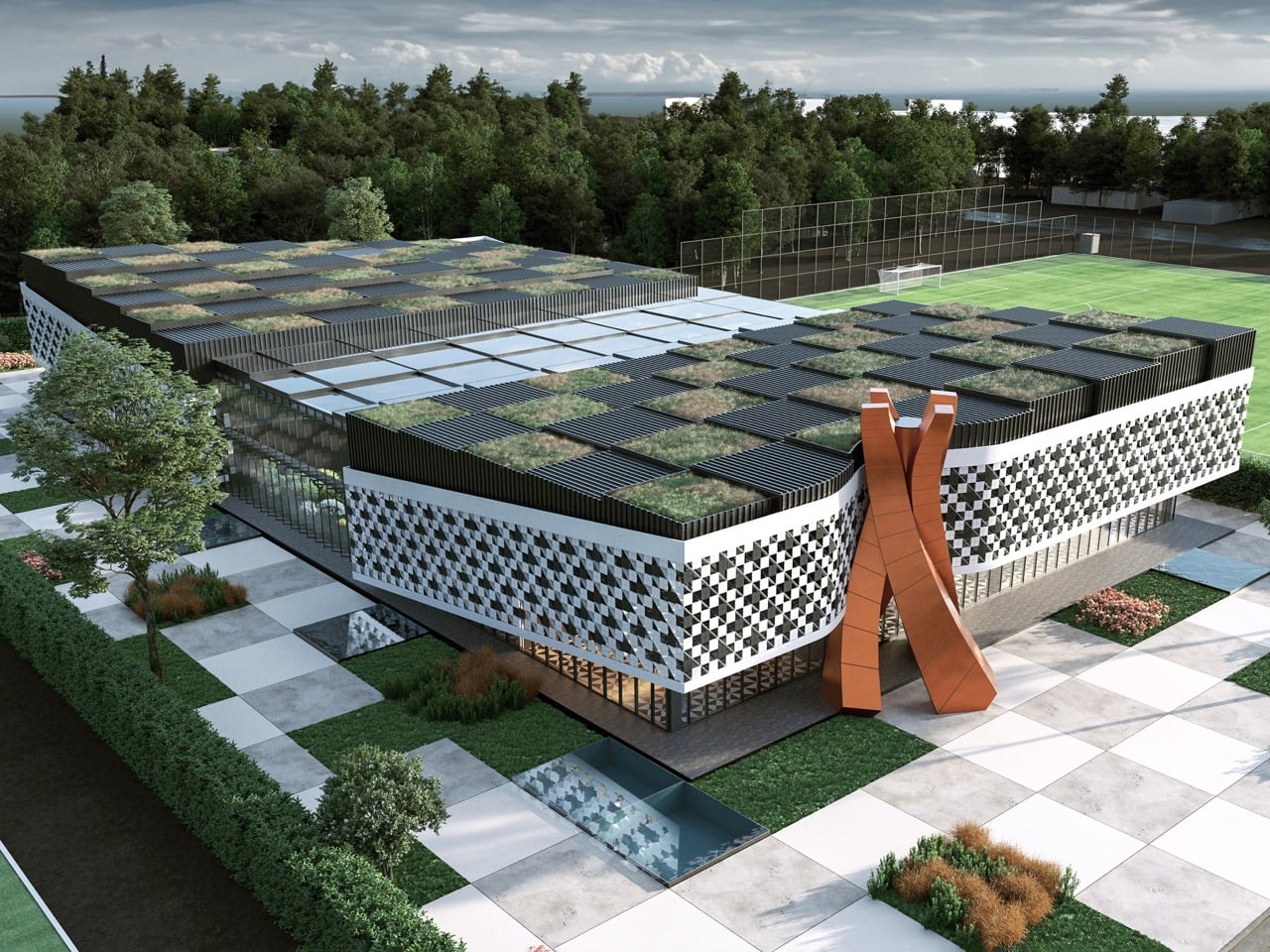
Georgia has a claim on chess culture that goes deeper than most countries appreciate. The nation has produced grandmasters at a rate disproportionate to its size, and the game is woven into its educational and cultural identity in ways that feel genuinely foundational rather than ornamental. Given that context, the decision to build a dedicated Chess Palace in Batumi reads as overdue rather than extravagant, the kind of civic investment that a country with this relationship to the game probably should have made a generation ago.
What makes the Batumi Chess Palace architecturally compelling is that Irakli Emiridze of Alpha Architecture refused to treat chess as mere decoration. The entire building is organized around the game’s visual logic. Its form references an unfolded chessboard, its facades use perforated solar shading to animate a black and white grid pattern with real-time light and shadow, and a dramatic sculptural installation marks the entrance as both functional threshold and symbolic statement. The two-story, 60-meter-deep structure is due for completion in 2027, housing a tournament hall, chess library, hotel rooms, exhibition spaces, a gym, and study rooms.
Designer: Irakli Emiridze, Alpha Architecture
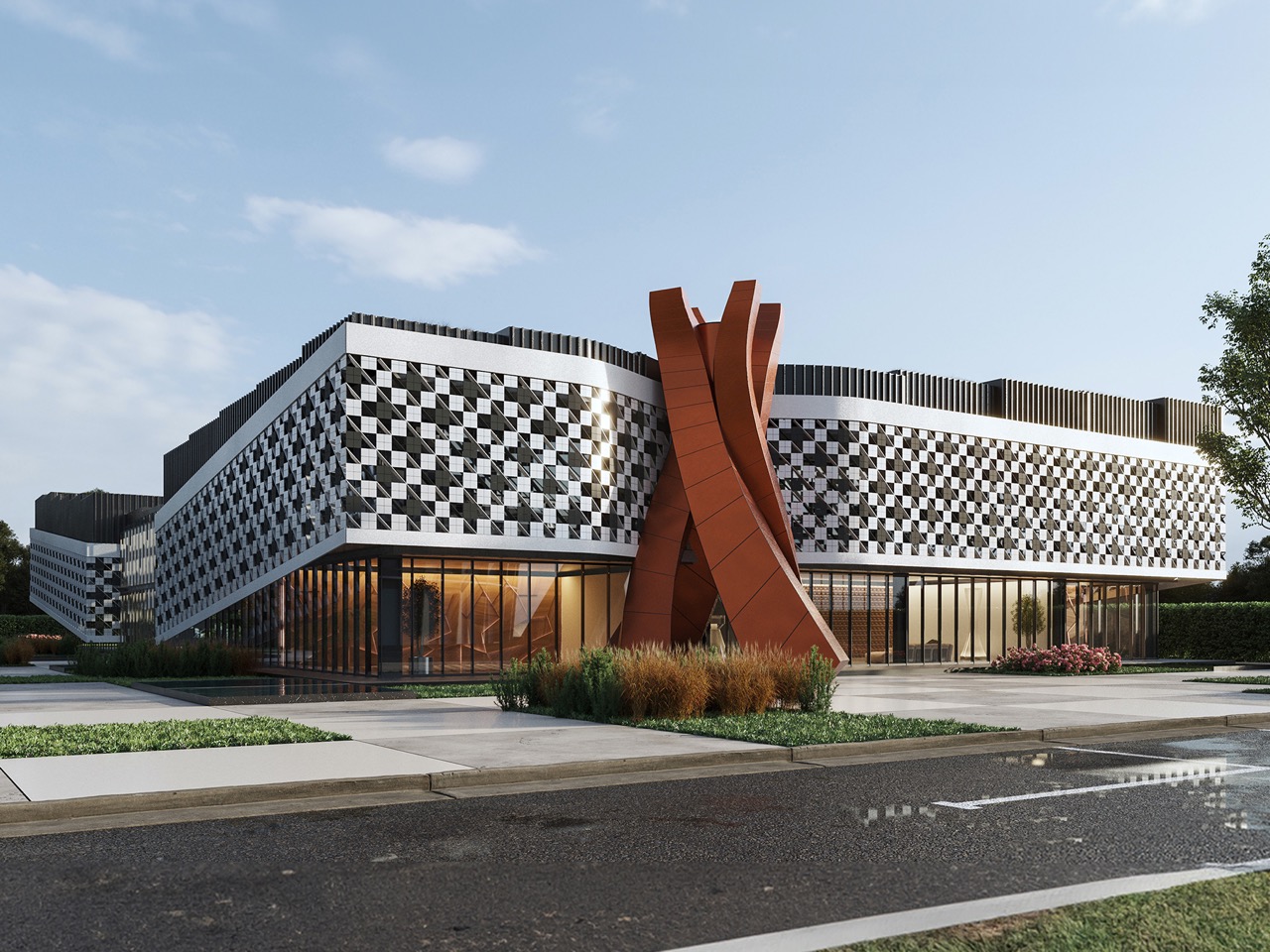
Perforated solar shades wrap all four elevations in a dense, pixelated black and white grid that shifts in depth and shadow as the sun moves across it. In still photography, the building reads as a graphic object, clean and immediate. Experienced over the course of a day, the surface behaves more like a living board mid-game, its apparent pattern changing with conditions outside any designer’s control. That quality, the way the building changes without changing, separates a strong concept from a merely clever one. The HPL panel system that underlies the shading adds durability to what could have been a purely cosmetic gesture.
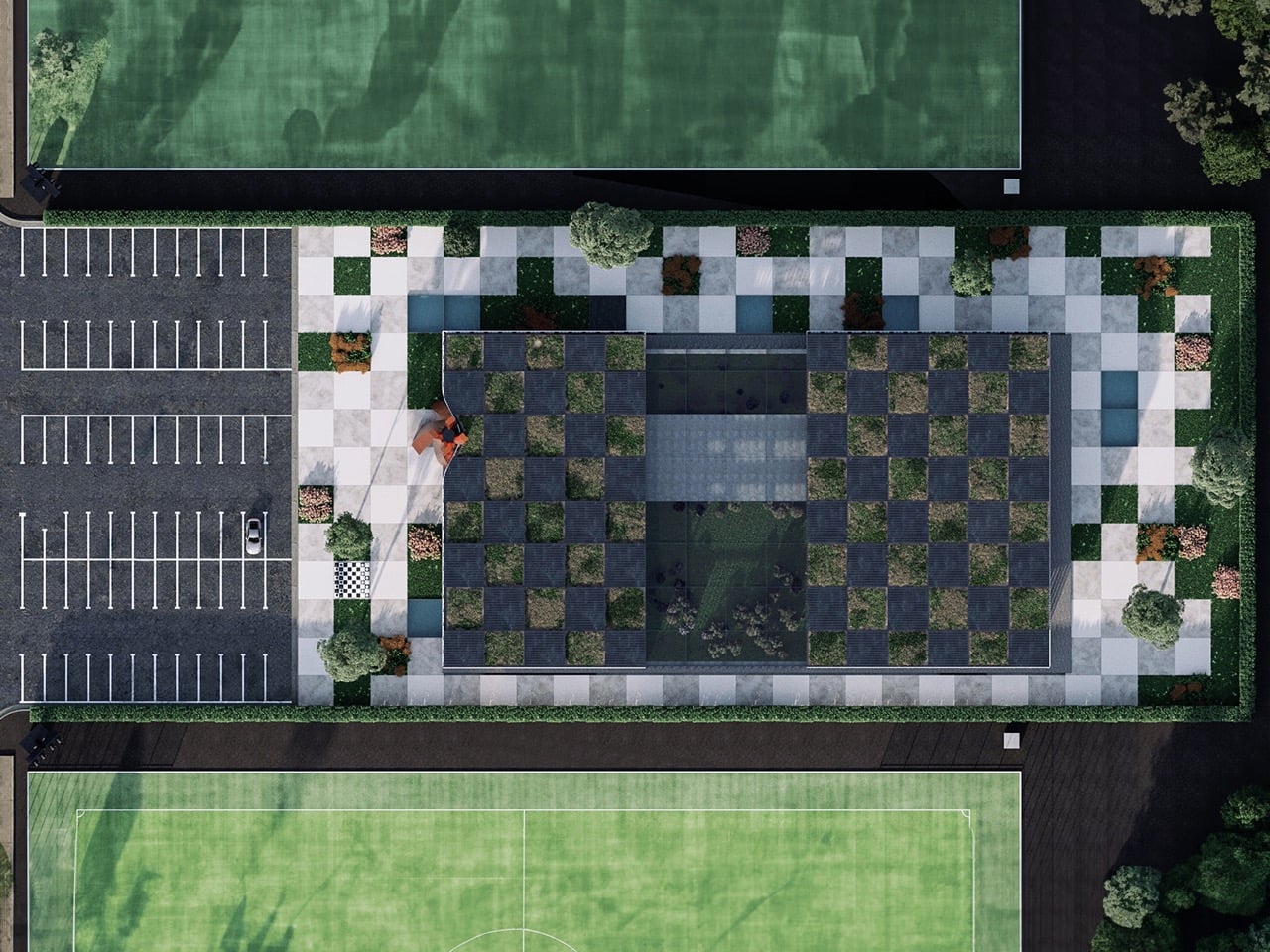
Emiridze has extended the chessboard geometry across the entire site rather than limiting it to the elevations. From above, the rooftop alternates planted green squares against glazed skylights in a grid that mirrors the facade pattern. The ground plane continues in oversized alternating light and dark paving squares that push the building’s visual field outward into the surrounding landscape. Every vantage point, aerial, street level, interior looking out, returns the same binary rhythm, a level of conceptual commitment that most thematic buildings abandon the moment it becomes structurally inconvenient.
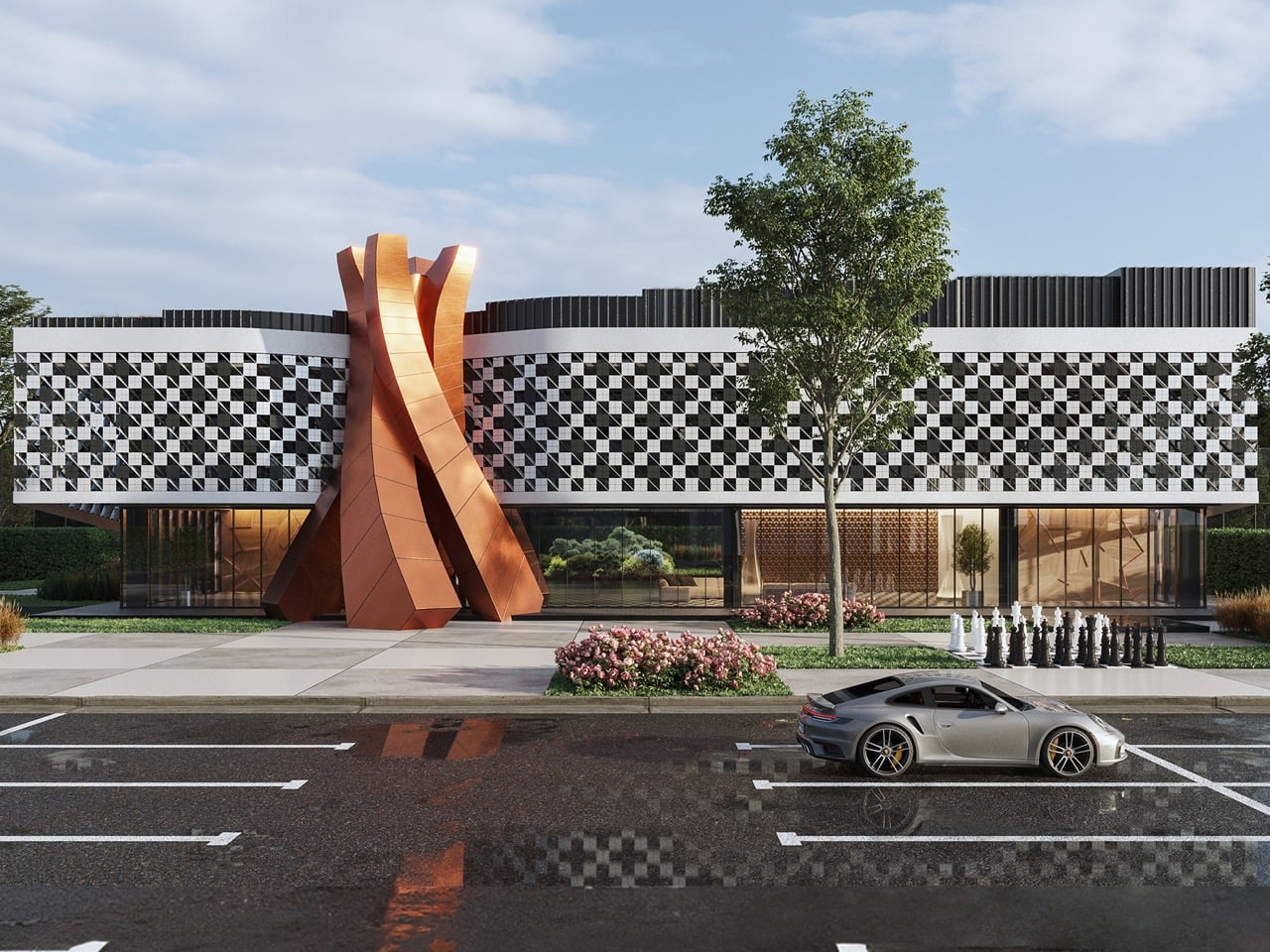
Rather than placing a literal chess piece at the entrance, Emiridze commissioned a tall, twisting corten-steel installation, two interlocking curved fins spiraling upward into a form that hovers between abstraction and figuration. It suggests a chess piece without depicting one, which is the more intelligent move. A literal rook or knight would have read as theme-park signage. This form reads as architecture, and the warm oxide tone of the corten against the monochrome facade gives the building’s street presence a focal point that earns its scale.
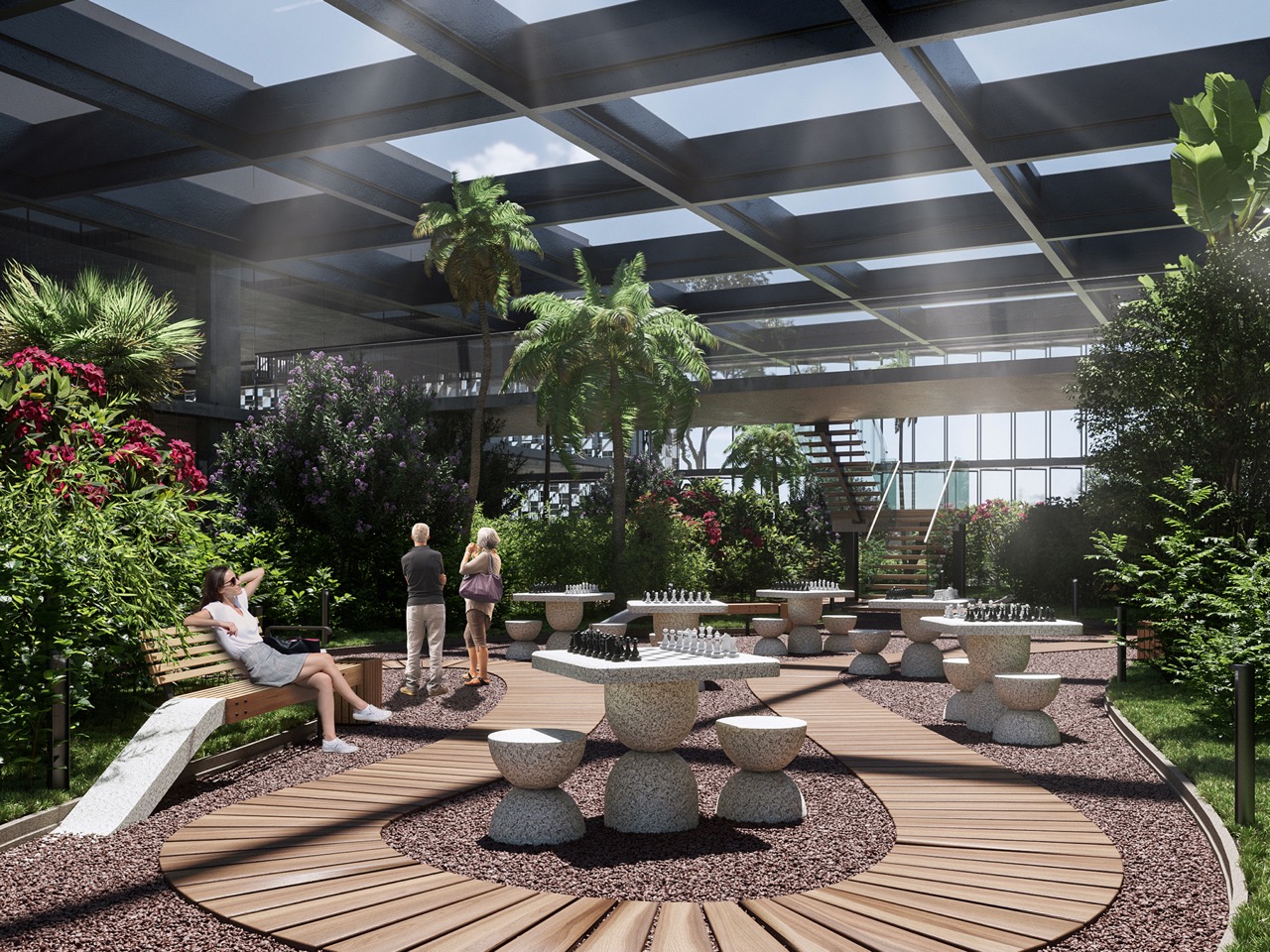
The program signals serious ambition for chess tourism. Beyond the tournament hall and study rooms, the building incorporates a chess library, exhibition space, conference facilities, a sports shop, a food facility, hotel rooms with two adapted for disabled visitors, and a gym. That breadth positions Batumi as a potential international destination for the chess world, a place where a grandmaster could arrive, compete, study, eat, and sleep without leaving the building. Alpha Architecture won this commission through a governmental competition, which means the Chess Palace carries public accountability alongside its conceptual ambition. The real test arrives in 2027, when Batumi either gets a landmark that genuinely serves its chess community, or a building that performed better on screen than on the ground. The bones are strong enough to be optimistic.