The moment Motorola resurrected the Razr as a foldable in 2020, every industrial designer I know had the same thought: the flip form factor was always the right one, the market just needed to catch up. Five years later, the category has matured enough that Samsung, Motorola, Oppo, Honor, and a dozen Chinese brands all compete for the same $800-to-$1,200 buyer, nudging specs up and prices sideways with each generation. Nobody was competing seriously for the buyer who wants the flip experience at a fraction of that figure, because the assumption was that buyer did not exist at scale. Ai+ has decided to test that assumption directly.
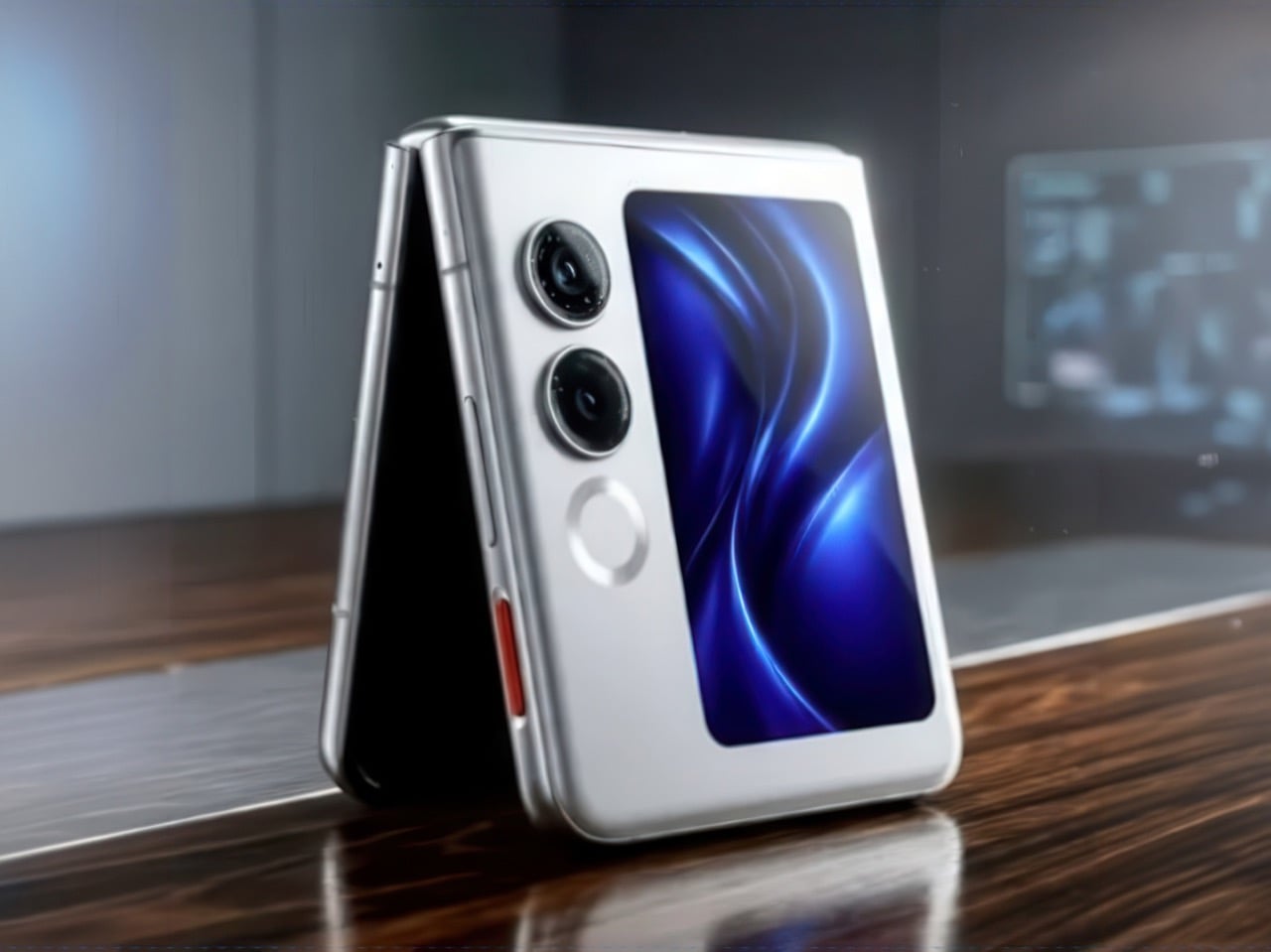
The Nova Flip, unveiled at Ai+’s April 2026 launch event in India alongside the Nova 2 series and a tablet, carries a sticker price of Rs 29,999, roughly $320. The inner display measures 6.9 inches across an AMOLED panel resolving at 2790 x 1188 pixels, complemented by a 3.1-inch AMOLED cover screen. A MediaTek Dimensity 7300 handles processing duties, paired with 8GB of LPDDR4X RAM and 256GB of internal storage. The camera array consists of a 50-megapixel primary sensor, a 2-megapixel depth lens, and a 32-megapixel front camera. Battery capacity clocks in at a surprisingly healthy 4325mAh, with 33W wired charging, 5G, NFC, and IP64 rounding out the headline features.
Designer: Ai+
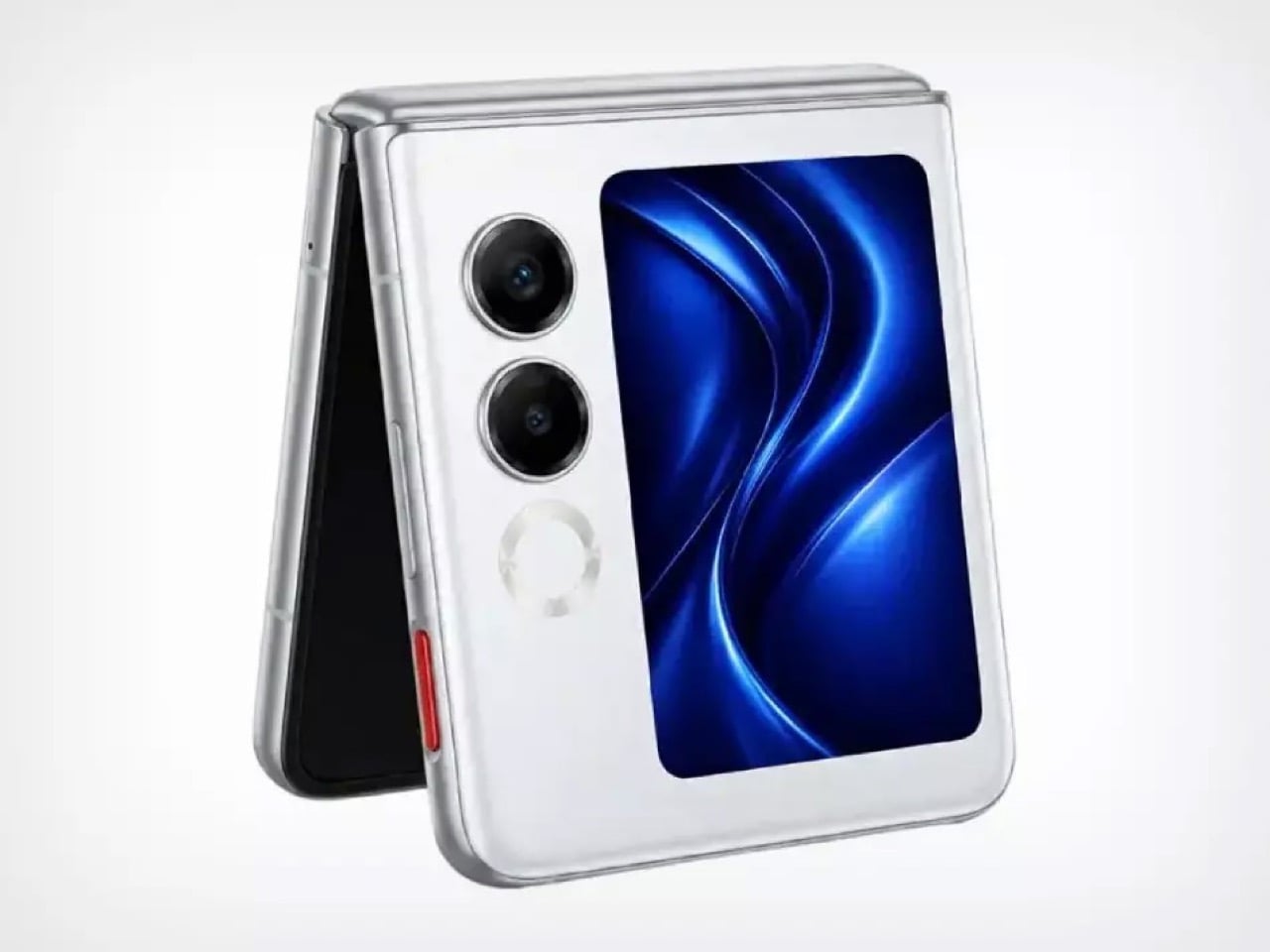
Let’s talk about that battery for a moment, because 4325mAh in a flip phone is genuinely unusual. The Samsung Galaxy Z Flip 6 packs a 4000mAh cell, and Motorola’s Razr Plus 2024 manages just 4000mAh as well, both at prices three times higher than the Nova Flip. Fitting a larger-than-average cell into a folding chassis requires either a very clever internal layout or an acceptance of added thickness, and Ai+ has not published the device’s folded dimensions yet. The 33W charging speed is adequate without being exciting, sitting well below the 65W and 80W speeds that Chinese flagship foldables now routinely offer. For a $320 device, though, adequate is a perfectly reasonable baseline.

The Dimensity 7300 helps keep the cost within its ultra-affordable bracket. MediaTek’s chip powers a range of competent mid-range phones in the $200-to-$400 segment, including several from Oppo and Vivo, where it handles everyday tasks, social media, and casual gaming without complaint. It does not belong in the same conversation as the Snapdragon 8 Elite powering the Galaxy Z Flip 6, and Ai+ is clearly not pretending otherwise. The 8GB of LPDDR4X RAM is similarly mid-range, a generation behind the LPDDR5X specification that flagship devices now ship with. None of this is disqualifying at this price point, but buyers upgrading from a previous-generation Galaxy or Razr will feel the performance delta in sustained workloads and camera processing speeds.

At that price, the fact that the phone comes IP64 rated is frankly surprising. Splash and dust resistance in a folding device requires careful engineering around the hinge mechanism, where gaps and moving parts create obvious ingress points. Many foldables at twice the price ship without any IP certification whatsoever (it also costs money to get the certification), so Ai+ clearing that bar at Rs 29,999 signals a level of build ambition that the spec sheet alone does not fully communicate. The side-mounted fingerprint sensor, dual SIM 5G support, NFC, and USB-C port complete a feature list that would have looked respectable on a $600 phone two years ago.

The real question the Nova Flip poses has nothing to do with its own specifications. It asks whether the Indian market, and potentially the broader emerging market landscape, is ready to embrace foldables as a mainstream form factor rather than a luxury signifier. Samsung has spent five years building the foldable as an aspirational object, priced and marketed accordingly. If Ai+ can deliver a hinge that survives 18 months of daily use, a display that resists visible creasing, and software that stays coherent across the cover screen and inner display, the Nova Flip could do to the foldable category what budget-tier 5G phones did to 5G adoption: accelerate it by years. The Glacier White colorway goes on sale in May 2026, and that month’s sales figures will tell us far more about the future of affordable foldables than any spec sheet ever could.