Most side tables ask very little of you. You set things on them, they hold those things, and that’s the end of the conversation. The Boca table by designer Deniz Aktay is not interested in that conversation at all.
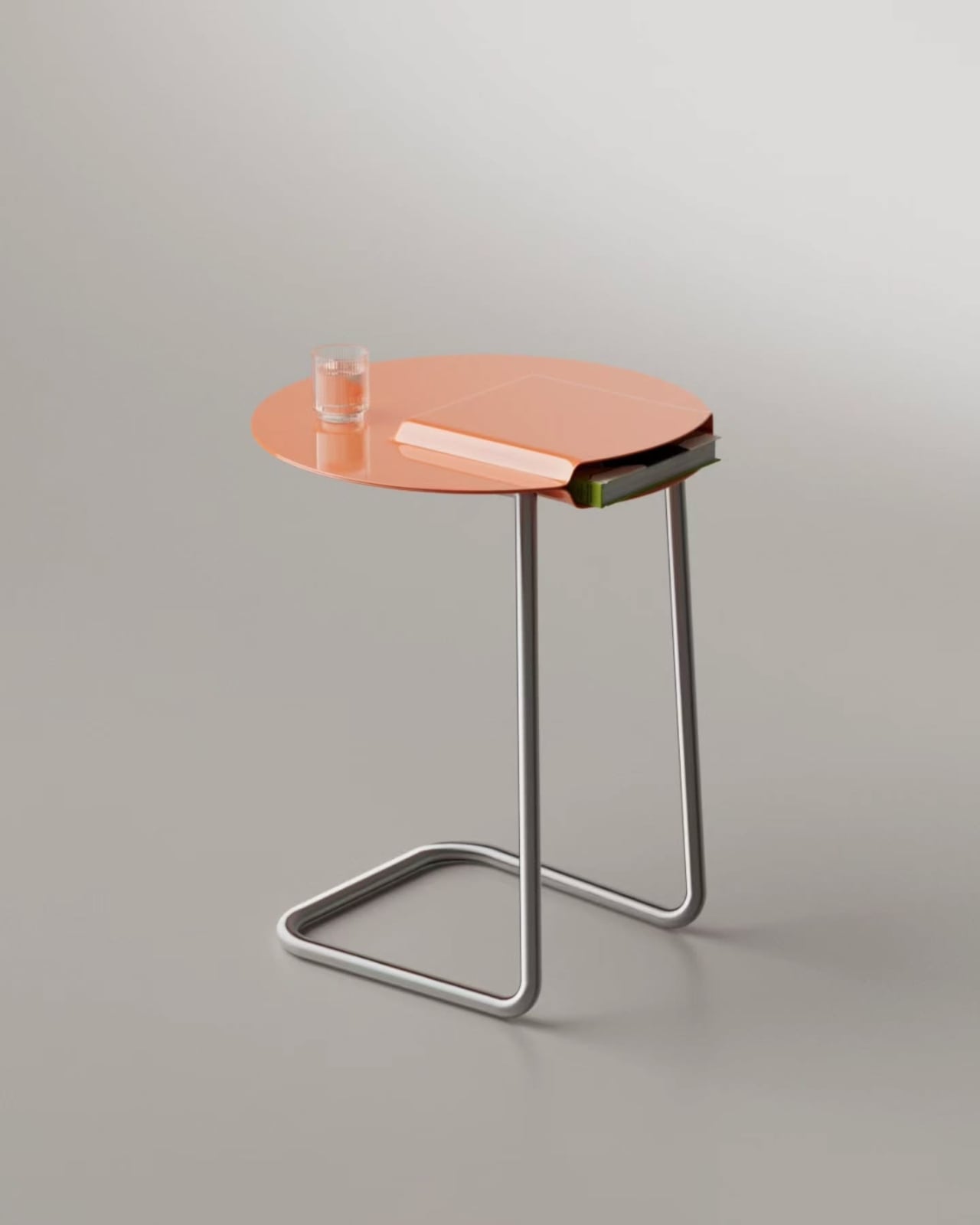
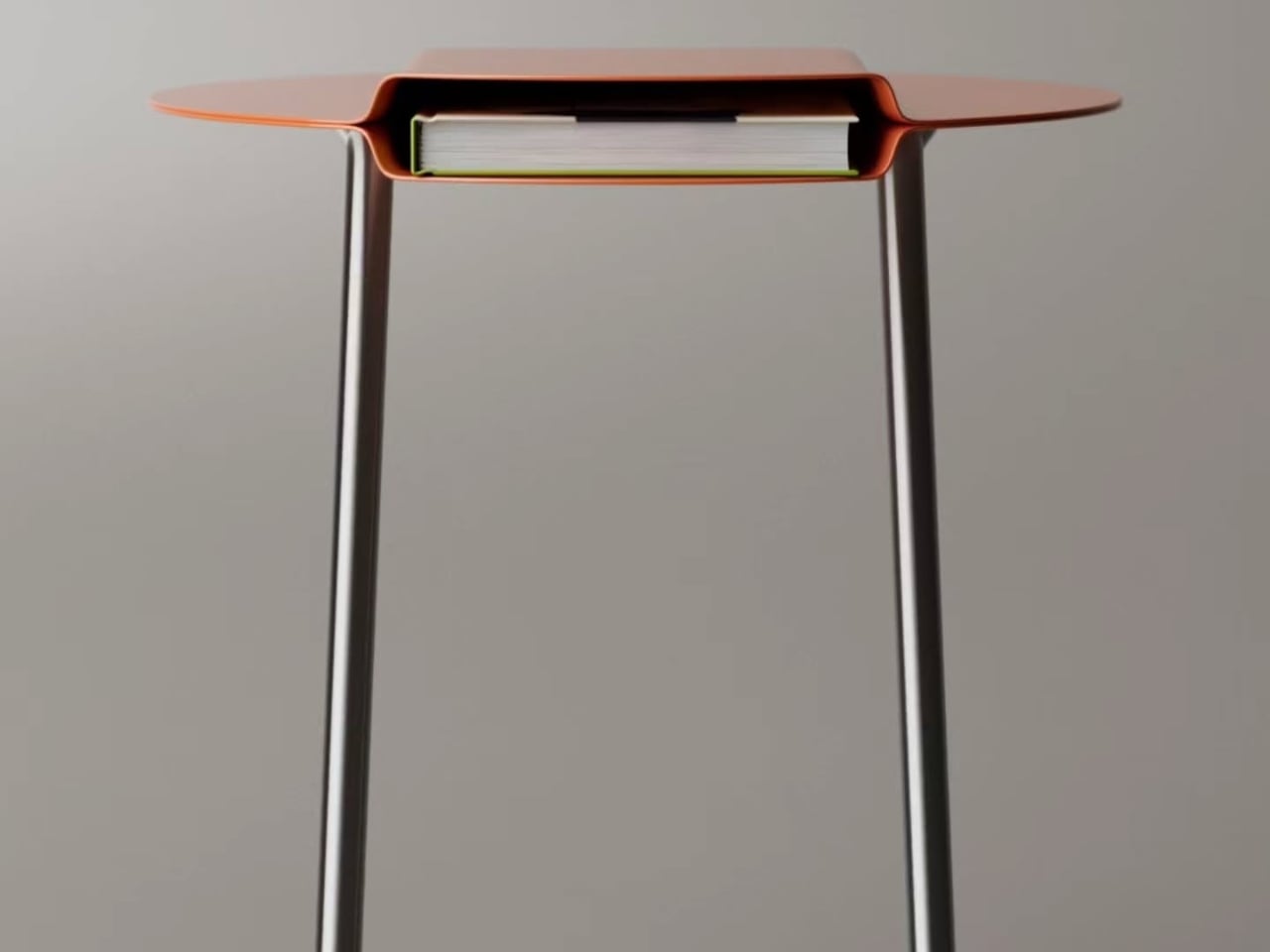
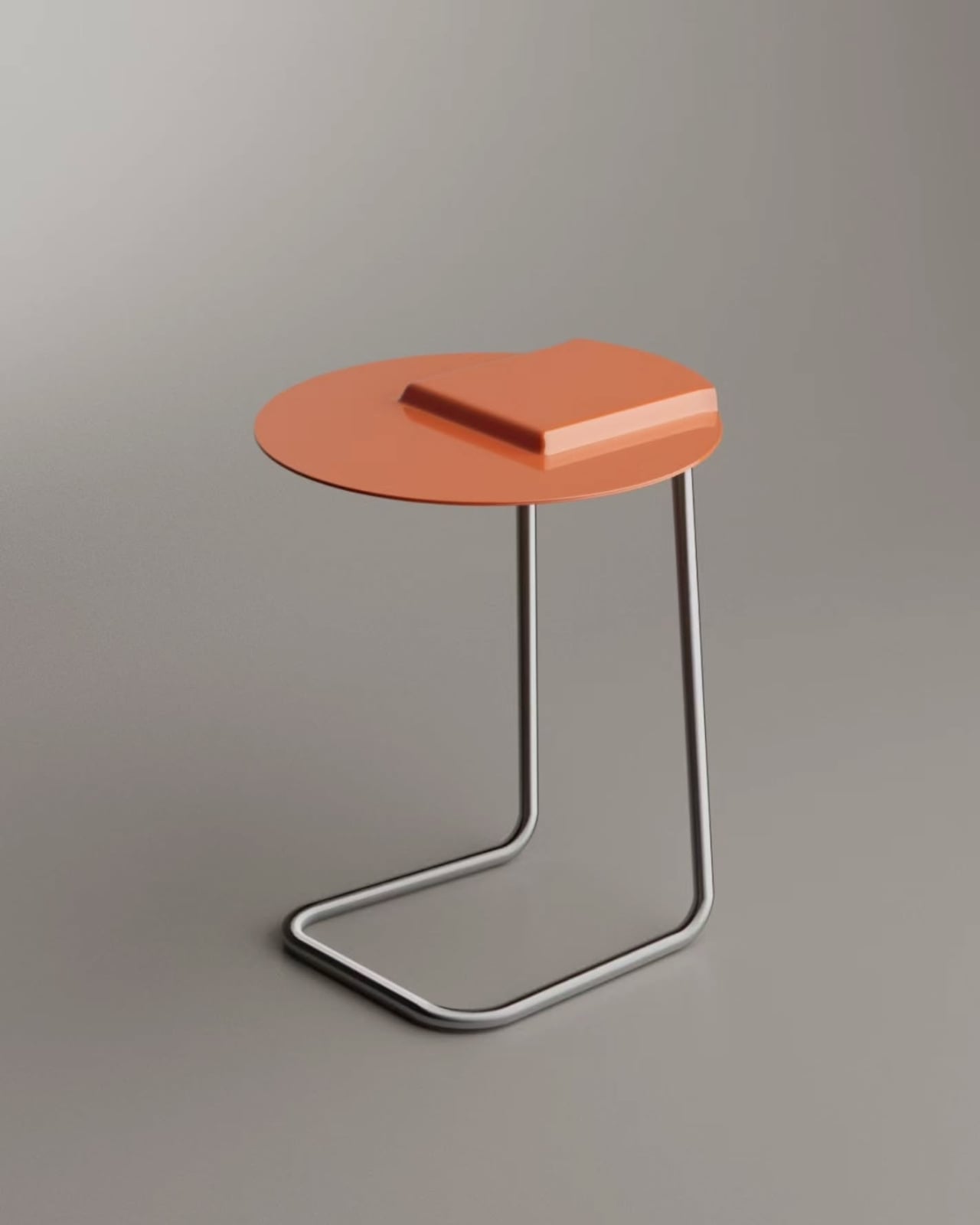
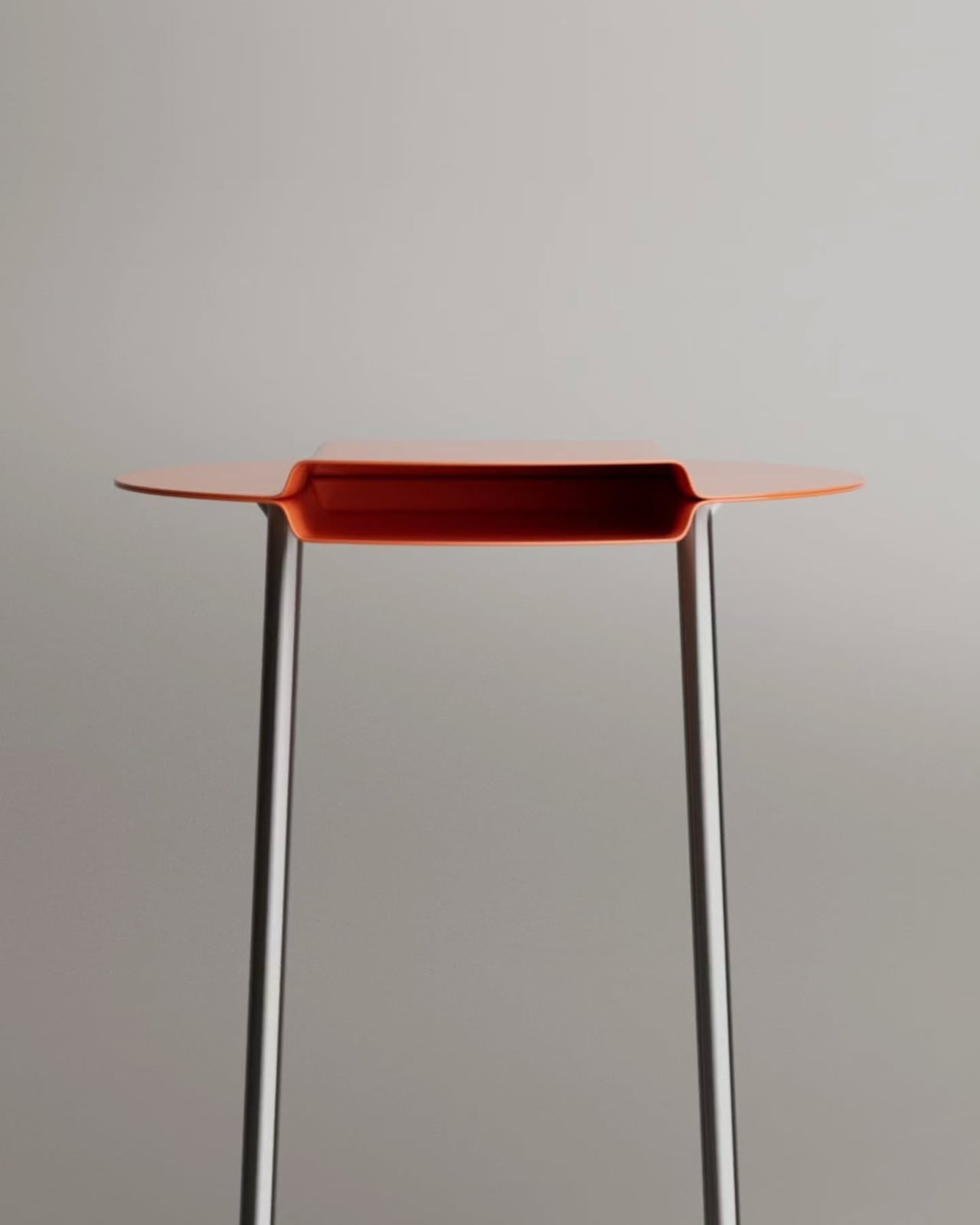
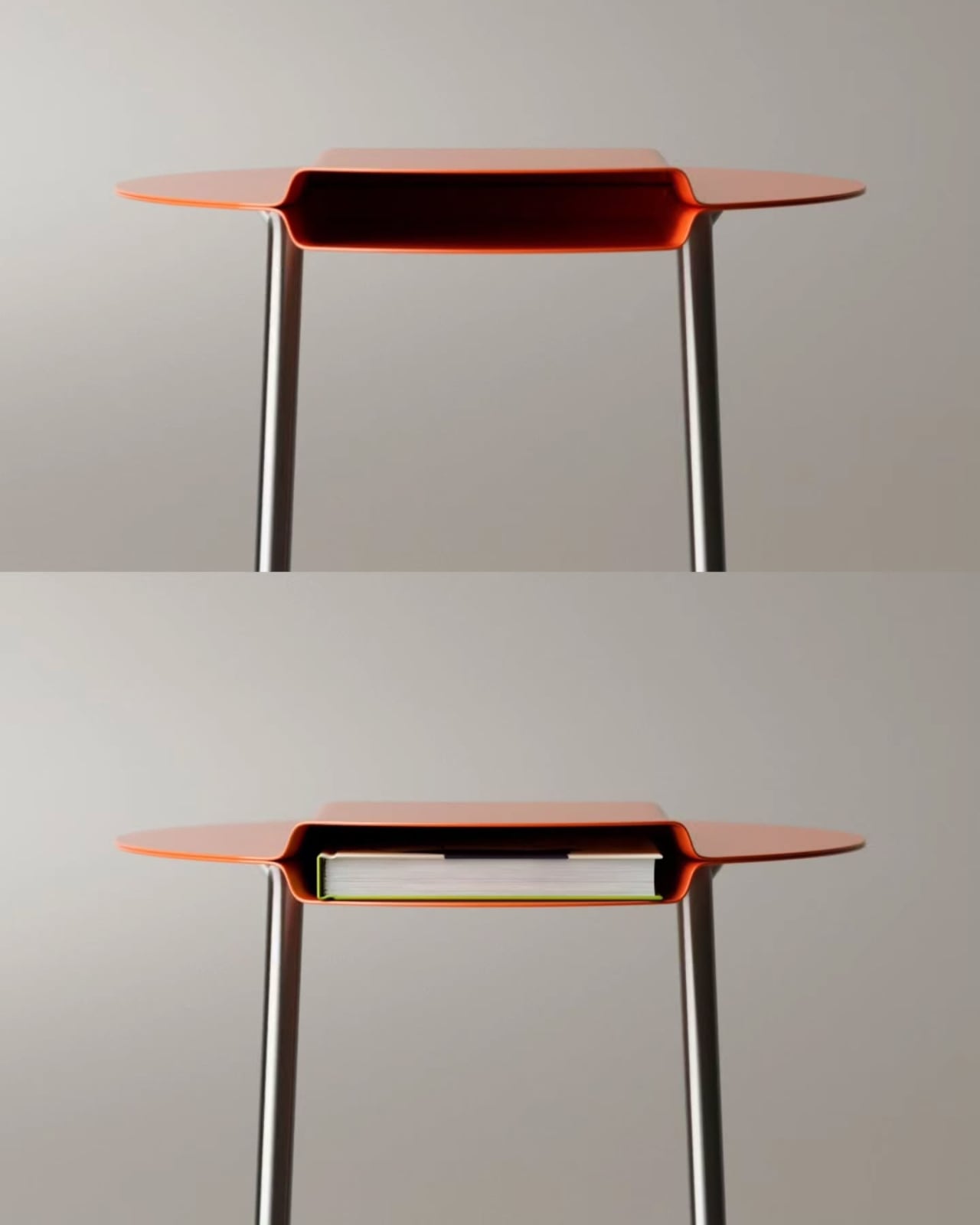
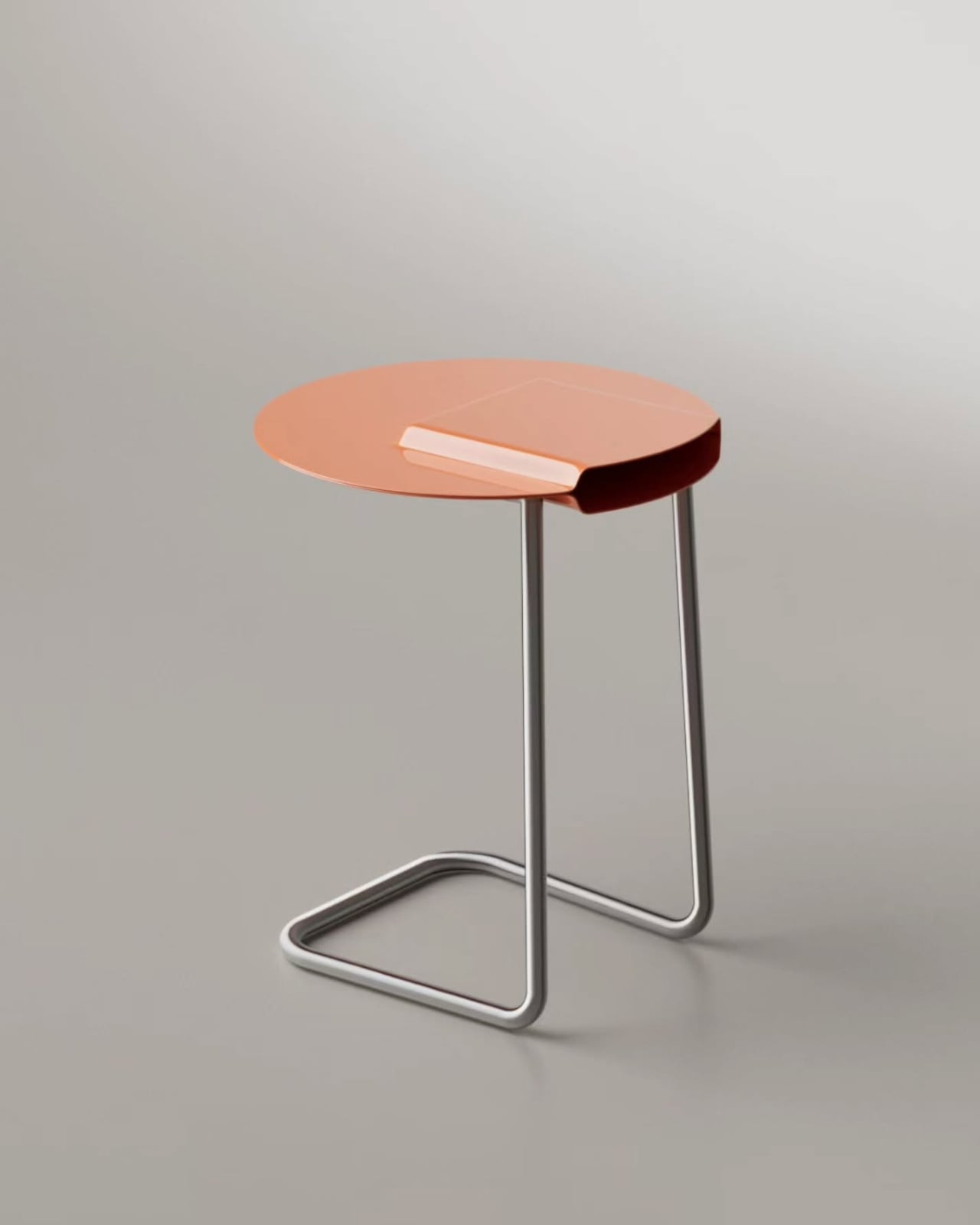
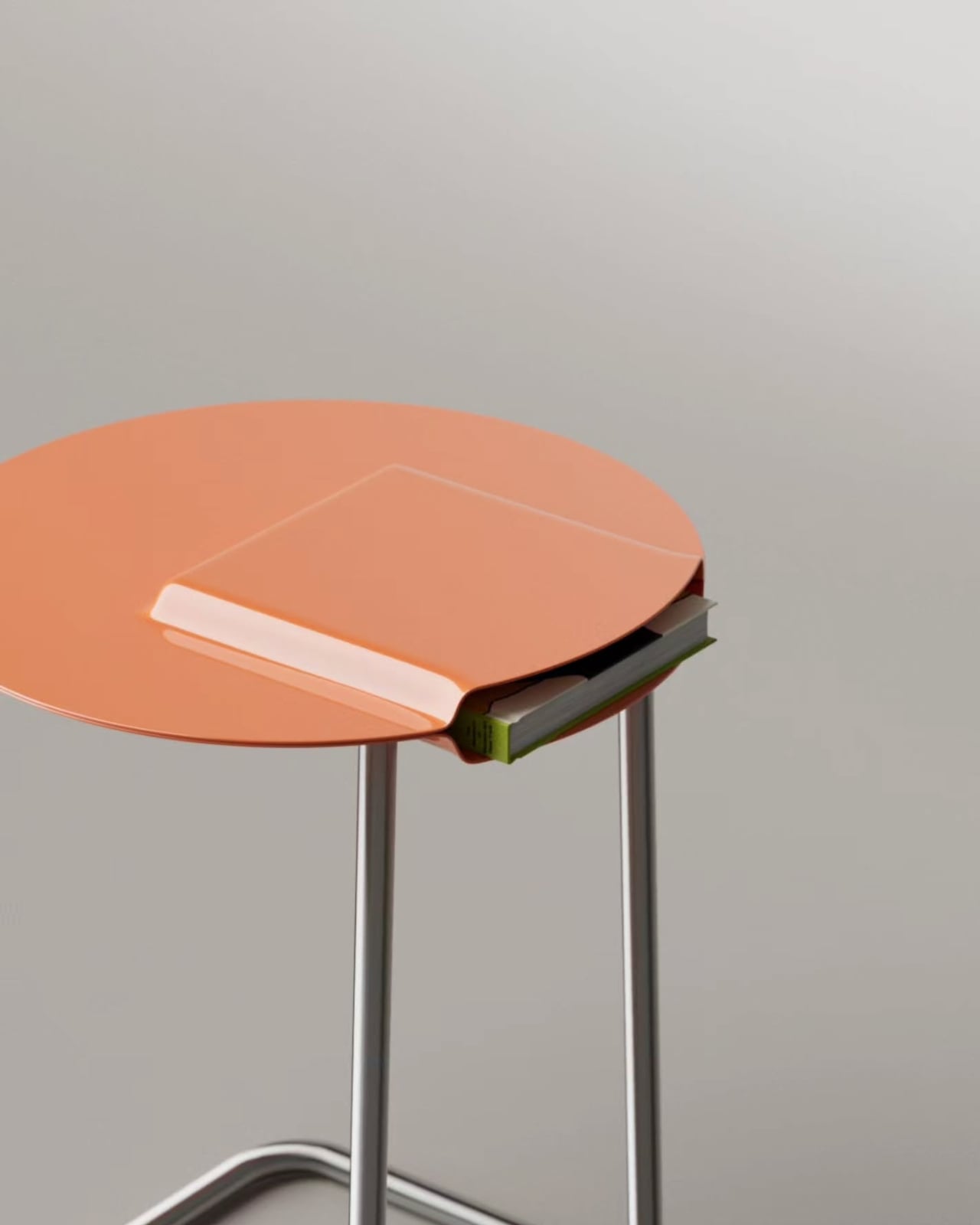
At first glance, it reads as a straightforward piece: a circular metal top, slim tubular legs bent into a smooth C-shaped base, a warm terracotta finish. Tidy, minimal, easy to place. But look at it straight on and something shifts. The tabletop isn’t flat. Its center section dips downward into a rectangular cavity, creating a hidden pocket between two metal layers. That pocket is sized to hold a book flat inside the body of the table itself. Slide one in from the side and just the spine shows, sitting flush at the edge of the circle like a small geometric tab. No separate shelf. No added structure. The storage is built into the form of the top.
Designer: Deniz Aktay
The engineering behind this is worth slowing down for. Aktay took a single metal surface and pressed a rectangular section downward, folding it into a tray-like recess while keeping the surrounding disc level and usable. The result is a top that functions on two planes simultaneously: the recessed channel holds the book, and the flat surface above holds everything else. A glass of water, a phone, a small candle, all of it sits on the upper layer without interference. The table doesn’t ask you to choose between storage and surface. It quietly offers both at the same time.
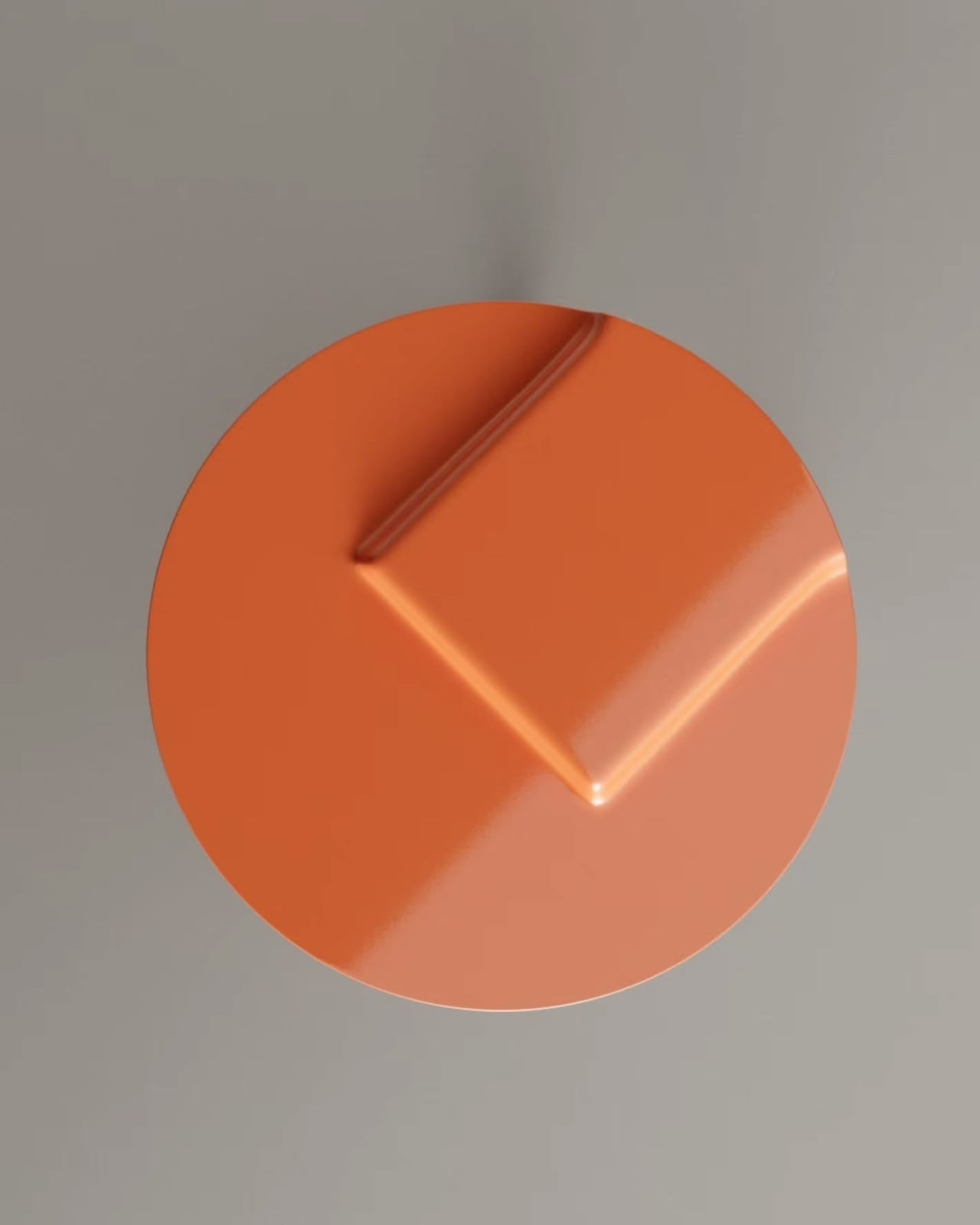
From above, the geometry becomes almost graphic. A flat orange circle with a pressed rectangle at its center, two sharp diagonal ridges fanning outward toward the rim of the disc. It has the kind of topography you’d expect from a relief map or an architectural model, a surface that communicates depth and intention before you even understand the function. Even without a book inside, the form holds your attention. The cavity doesn’t disappear when it’s empty; it becomes a compositional detail, a shadow box pressed into the metal.
The color is doing real work here too. That terracotta-to-coral finish isn’t neutral, but it isn’t loud either. It reads as considered, the kind of color that commands a corner of a room without competing with everything around it. Set against the cool silver of the tubular legs, the contrast is clean and deliberate. The legs themselves are worth noting: bent from a single continuous tube into a profile that tapers from wide at the base to narrower at the top, they give the table a visual lightness that balances the solid weight of the metal disc above. The whole piece feels grounded but not heavy.
What makes the Boca table particularly interesting from a design standpoint is how the form and function are genuinely the same thing. The slot isn’t an addition or an afterthought. It’s the result of shaping the top itself differently. The cavity exists because the metal was bent that way, not because a compartment was attached afterward. That distinction matters more than it might seem. Furniture that achieves storage through added components tends to look like it’s carrying its own extra features. Furniture that achieves storage through form tends to look inevitable, like there was never any other option. Boca belongs to the second category.
There are practical limits worth acknowledging. The fixed-width opening suits standard paperbacks and average hardcovers comfortably, but larger format books won’t fit, and anyone with a habit of keeping thick volumes on their nightstand might find it constraining. That’s a real trade-off. But the specificity of the design is also part of its character. It was made for a particular kind of use, and it doesn’t pretend otherwise.
Stuttgart-based furniture designer Deniz Aktay has been exploring this kind of structural problem-solving across his body of work for years, but the Boca table feels like one of his most resolved ideas yet. The fold does everything. The rest just gets out of the way.