BYD sold 4.6 million new energy vehicles last year. It operates in over 100 countries. It builds its own batteries, motors, semiconductors, and power electronics from the ground up. And yet, in the parts of the world where it most desperately wants to grow, a significant chunk of car buyers still see it as the affordable Chinese option. That perception gap between what BYD actually is and what consumers in Europe and North America think it is has become the company’s single biggest strategic problem. Formula 1, according to a Bloomberg report published this week, might be BYD’s proposed solution. The company is reportedly exploring an entry into the world championship, either by acquiring an existing team or by building its own from scratch.
It would not be the first automaker to use motorsport as a brand perception lever. Hyundai was a budget car punchline before its WRC campaigns rewired how people thought about its engineering. Honda’s F1 run in the late 80s and 90s turned sensible commuters into a byword for high revving precision. BYD has the technical chops to tell a similar story, and F1’s 2026 regulations actually play to its strengths. Roughly half the power unit’s output now comes from an electric motor, a huge jump from previous seasons. FIA president Mohammed Ben Sulayem has been openly courting a Chinese entry, confirming that talks with manufacturers have already happened. The financial hurdle is real, with annual costs pushing $500 million and Cadillac’s grid entry fee alone hitting $450 million, but BYD pulled in $86 billion in revenue last year. The money exists. The motive exists. And the regulatory window has never been more aligned.
Image Credits: @grandprix
The 2026 power unit regulations are what make BYD’s potential entry genuinely fascinating from an engineering standpoint. The MGU K now pumps out 350 kW, nearly triple the previous 120 kW figure, meaning the electric motor is responsible for roughly half of total power delivery to the rear wheels. The sport has also mandated advanced sustainable fuels and significantly increased battery capacity requirements. For context, most current F1 engine manufacturers outsource chunks of their electrical componentry or partner with specialist suppliers for battery cells and power electronics. BYD does none of that. It designs its own lithium iron phosphate battery chemistry, manufactures its own electric motor architectures, and fabricates its own semiconductor chips in house. That vertical integration, the same thing that lets BYD undercut competitors on price in the road car market, could translate into a fundamentally different approach to building an F1 power unit.
Think about what that means in practice. Ferrari, Mercedes, and Red Bull Powertrains all develop their electrical systems with relatively traditional motorsport supplier chains. BYD would show up with an entirely self contained pipeline, from raw cell chemistry to finished power electronics, informed by producing millions of electric drivetrains a year at scale. Nobody in F1 has that kind of manufacturing feedback loop. Whether that actually produces a faster car is anyone’s guess, because high volume production efficiency and single lap bespoke performance are very different disciplines. But the potential for BYD to bring a novel engineering philosophy to the grid, one shaped by mass market EV development rather than wind tunnel obsession, is the kind of wildcard that makes the sport interesting. The last time someone brought a genuinely alien approach to F1 engine design was probably Honda’s split turbo concept in 2015, and that eventually won championships.
BYD also has something else that most F1 newcomers lack: a premium performance sub brand with an actual hypercar. The Yangwang U9 is a quad motor electric supercar that clocked a sub 7 minute Nurburgring Nordschleife lap, making it one of the fastest production cars to ever circle that track. It produces over 1,300 horsepower, uses BYD’s proprietary e4 platform with independent torque vectoring on all four wheels, and was reportedly tested at speeds north of 300 km/h. If BYD enters F1, Yangwang becomes the obvious brand to attach to the racing program, the same way Toyota runs its Le Mans effort under Gazoo Racing or Hyundai channels its WRC work through its N performance division. A Yangwang branded F1 entry would give BYD a clean separation between its mass market identity and its motorsport ambitions, while feeding technology back into its flagship performance car.
China’s track record in international single seater racing is worth acknowledging here, because it adds useful context to how hard this actually is. The team originally called China Racing joined Formula E in 2013 as the second team on the grid, won the inaugural Drivers’ Championship under the NIO banner with Nelson Piquet Jr. in 2015, and then proceeded to spend years stuck at the very back of the field. It got rebranded from NIO 333 to ERT, and was eventually sold to an American investment group that now runs it as Kiro Race Co. under a U.S. license. The one Chinese flagged team in electric motorsport lost its Chinese identity entirely. BYD entering F1 would carry the weight of that unfinished story, and the engineering credibility it brings to the table through its road car dominance would need to survive the brutal reality of competing against teams that have been doing this for decades.
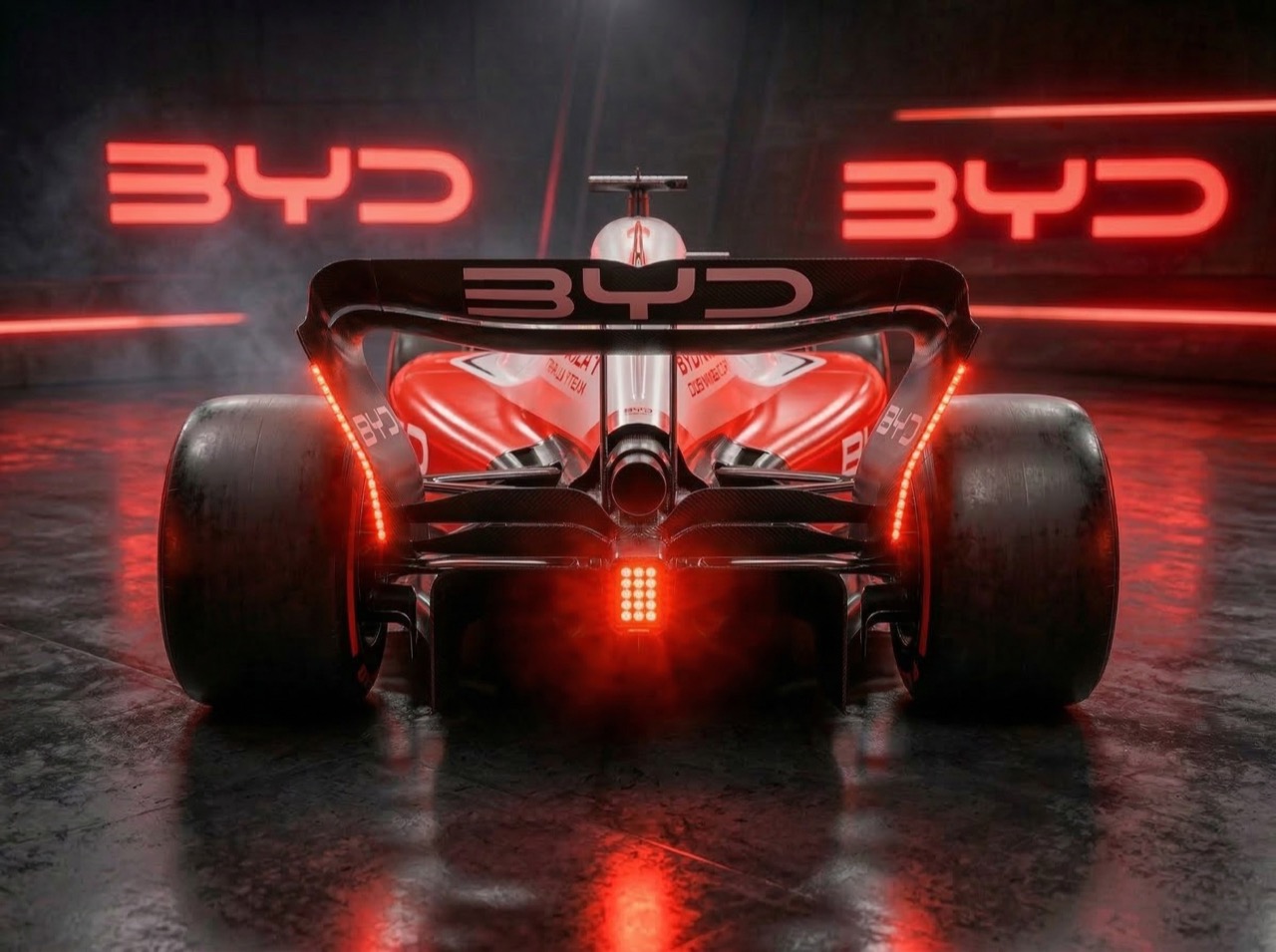
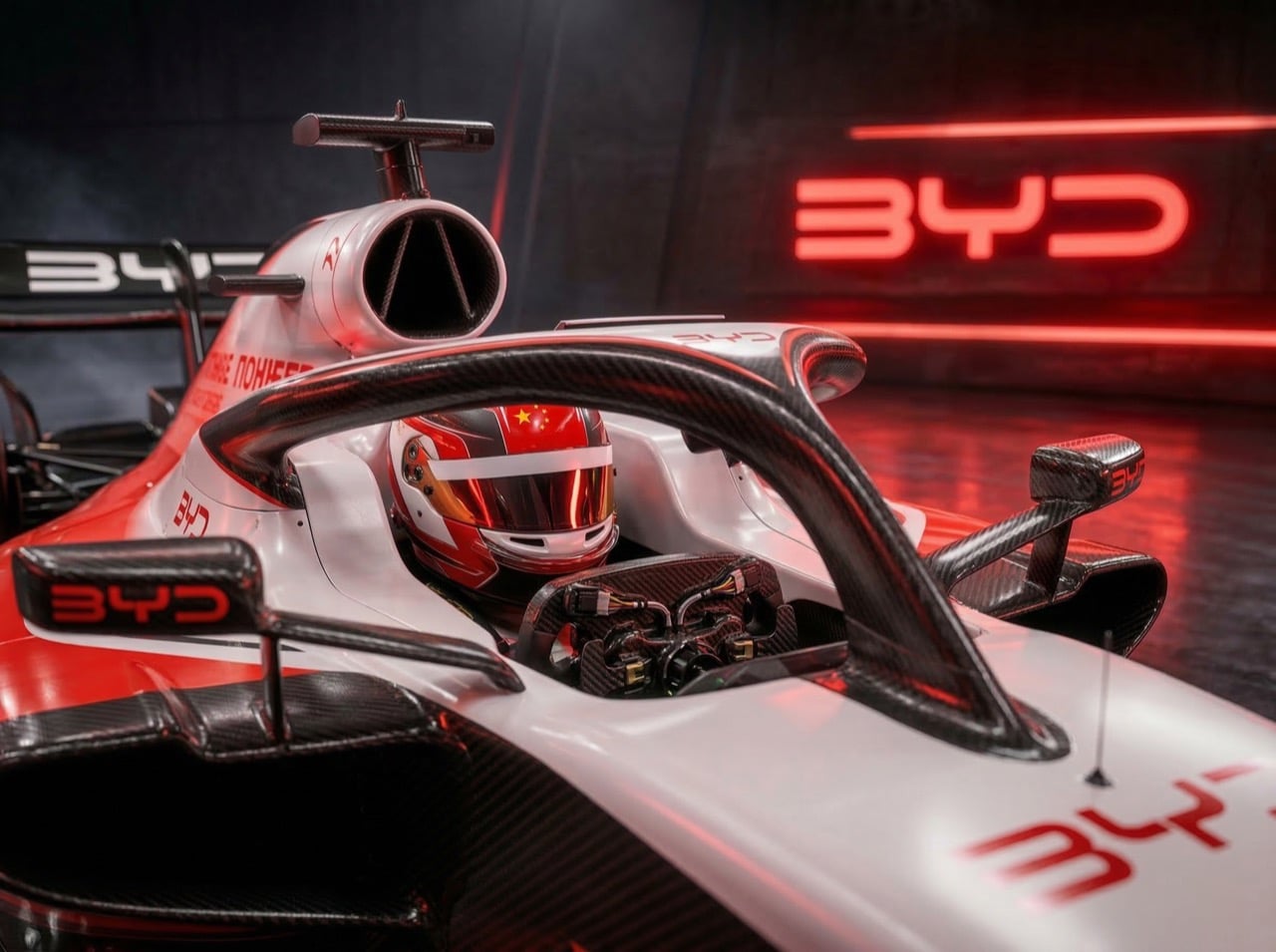
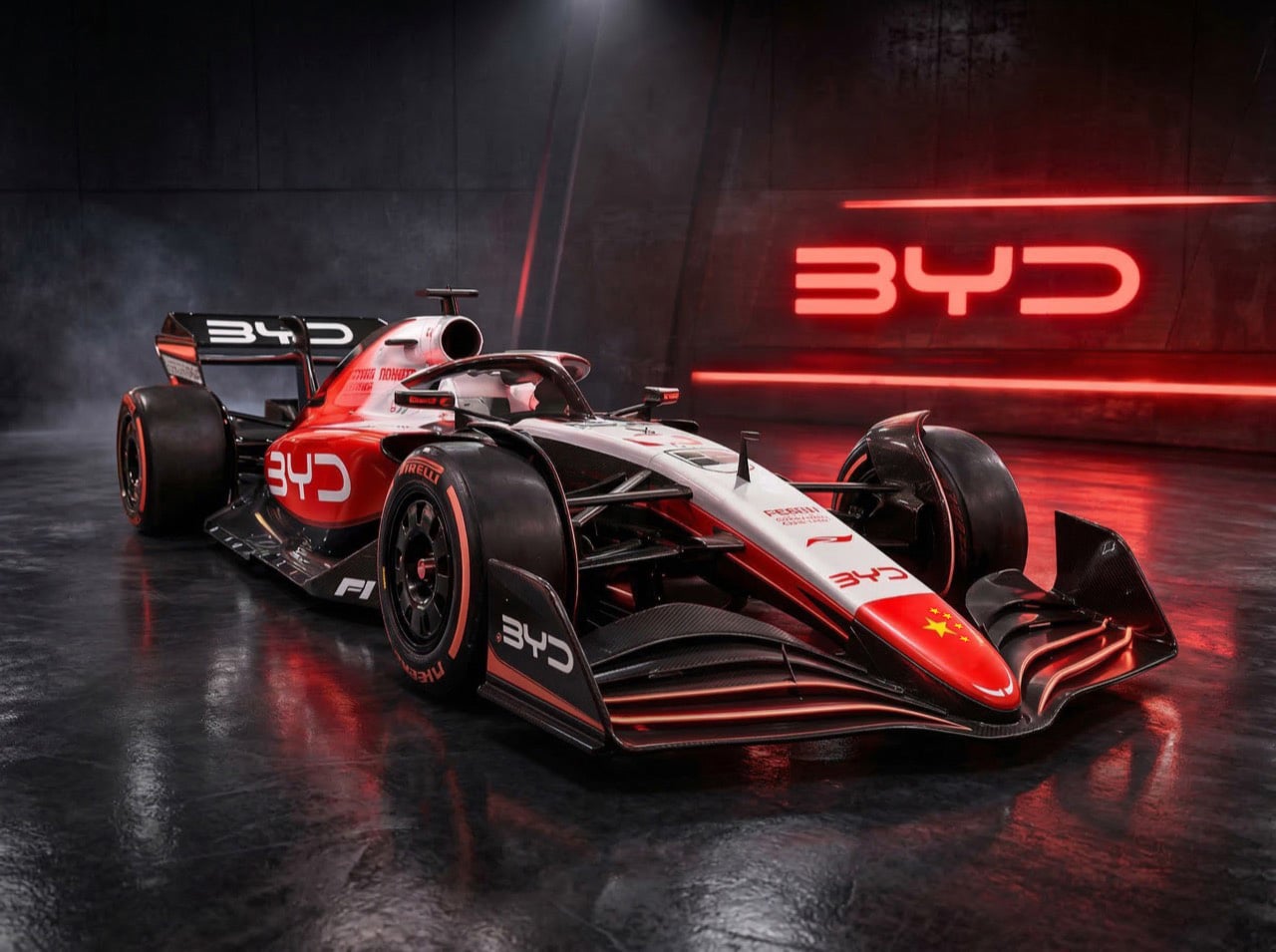
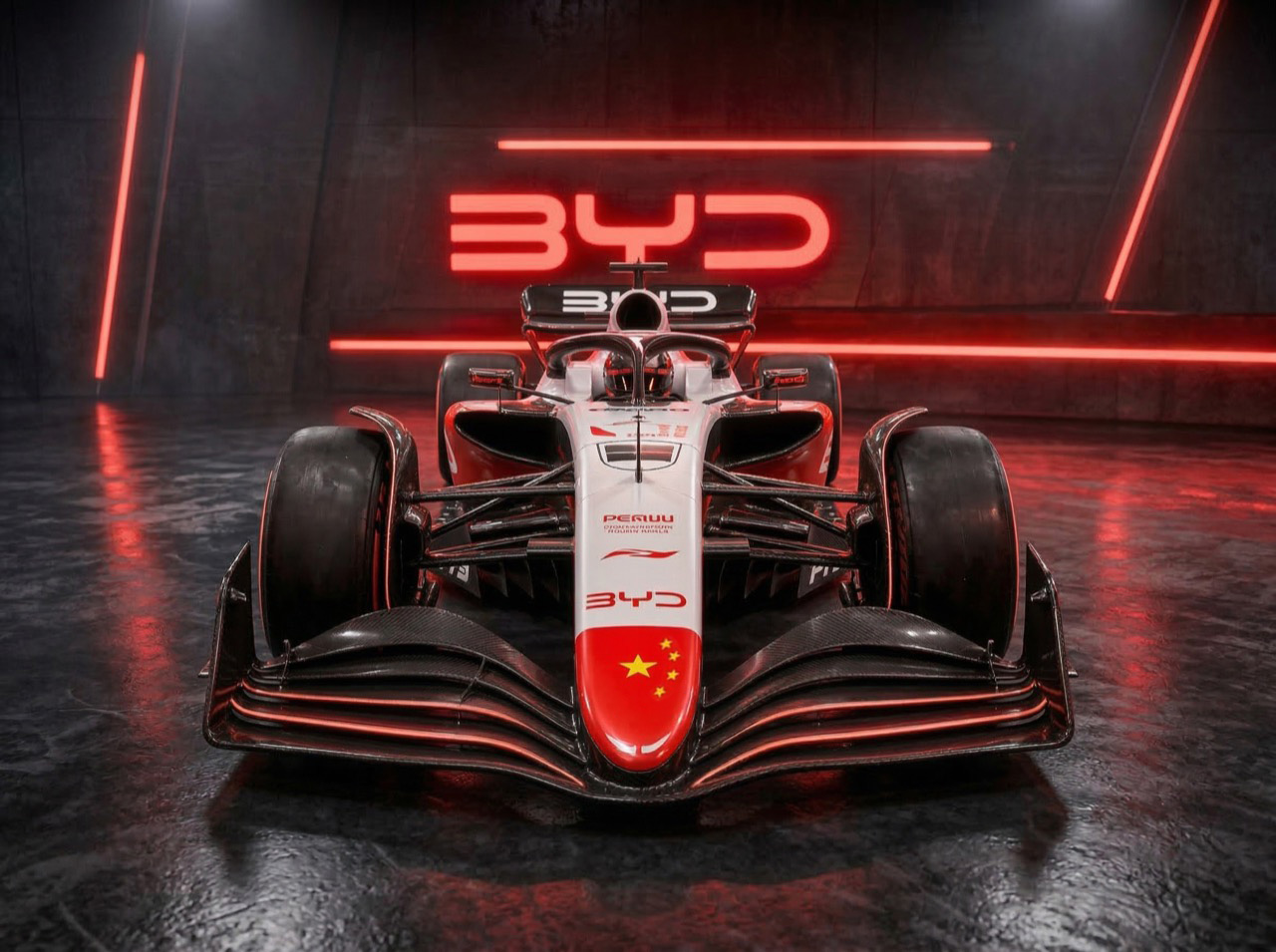
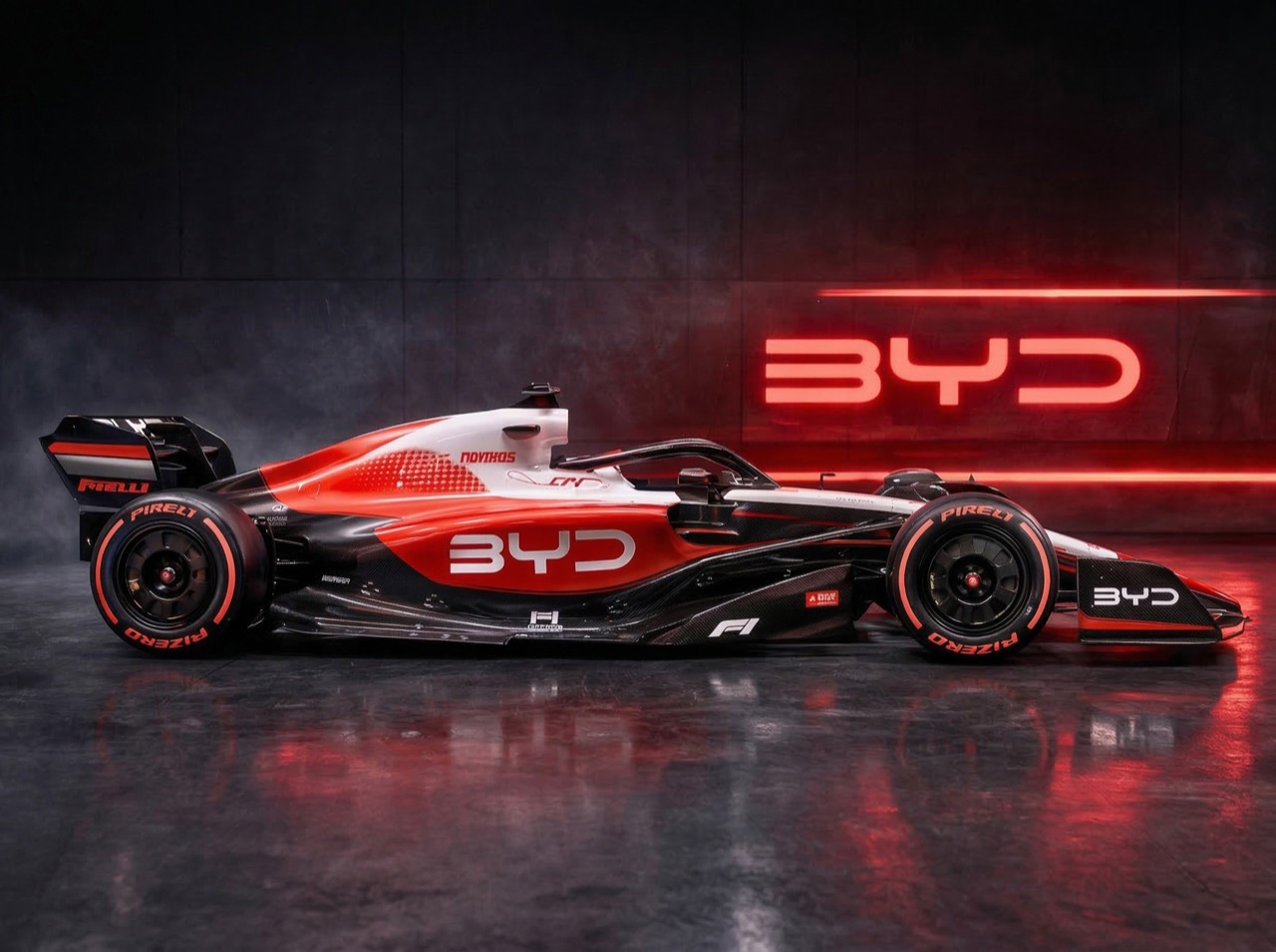
Some AI generated concept renders have been making the rounds online, imagining a BYD liveried F1 car in a black, red, and white color scheme with the company’s angular logo across the sidepods. The renders are speculative, but one detail stands out: the Chinese flag painted onto the nose cone. That is a loaded visual choice, and a historically significant one in F1 terms. Alpine carries the French tricolore on its cars. Force India wore the Indian flag throughout its time on the grid. A BYD car flying the five starred red flag on its nose would frame this as a national arrival, a declaration that China’s biggest automaker is ready to compete at the highest level of global motorsport. BYD’s road car design language has been trending toward clean, sharp minimalism lately, so a livery built around deep red panels, exposed carbon weave, and restrained branding could actually cut through the visual clutter of an increasingly sponsor heavy grid. It would certainly look different from anything else out there.