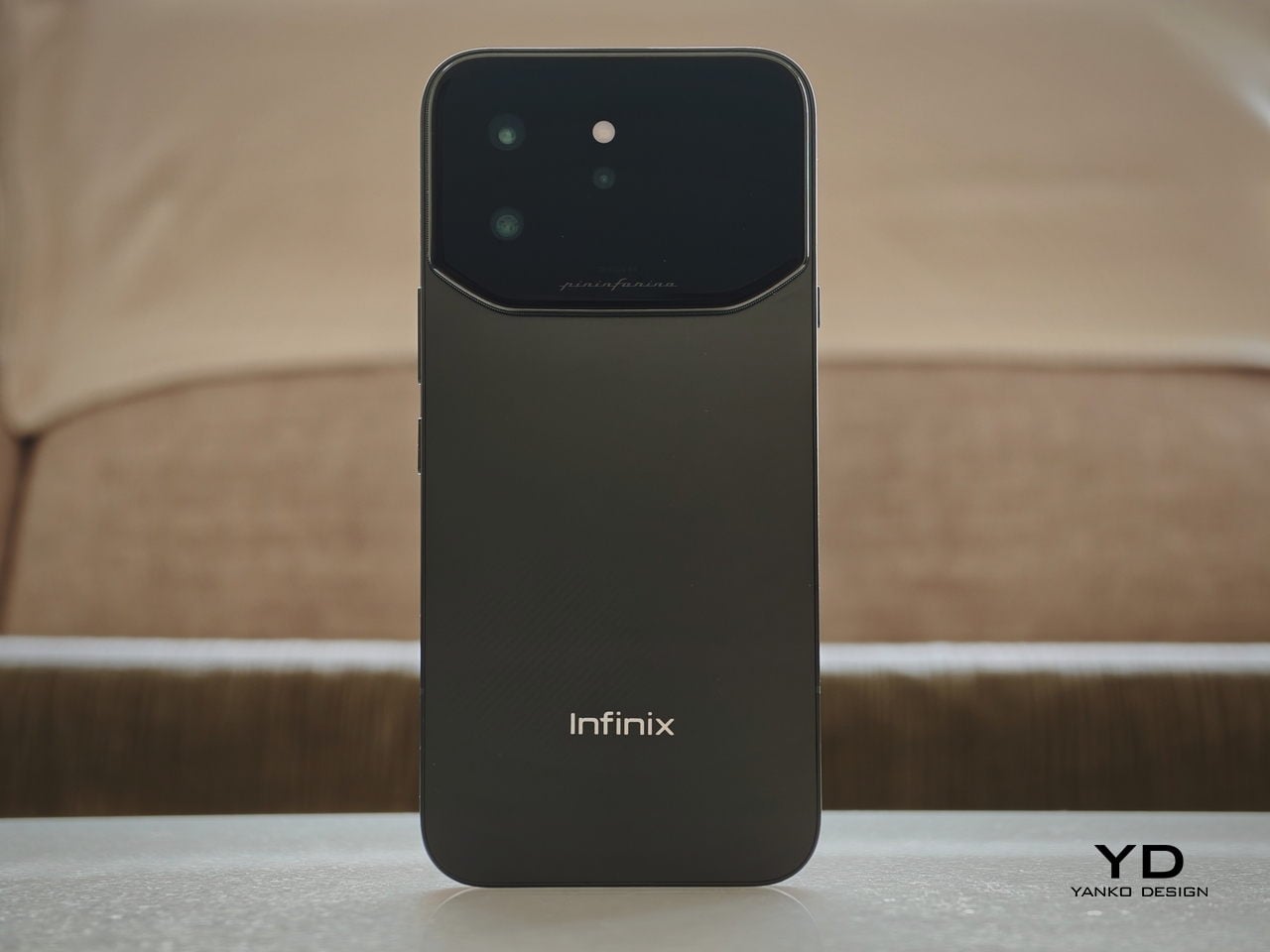
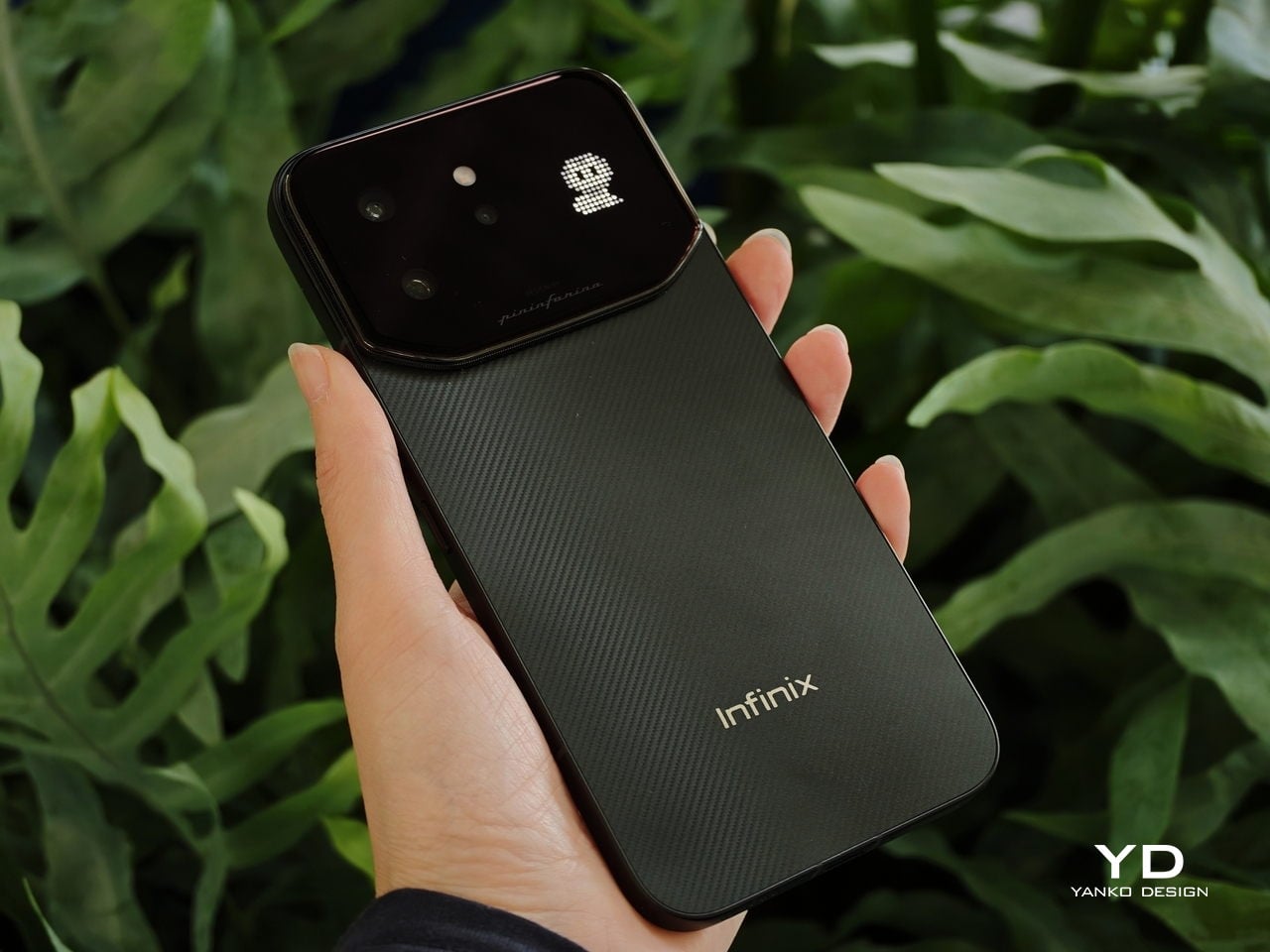
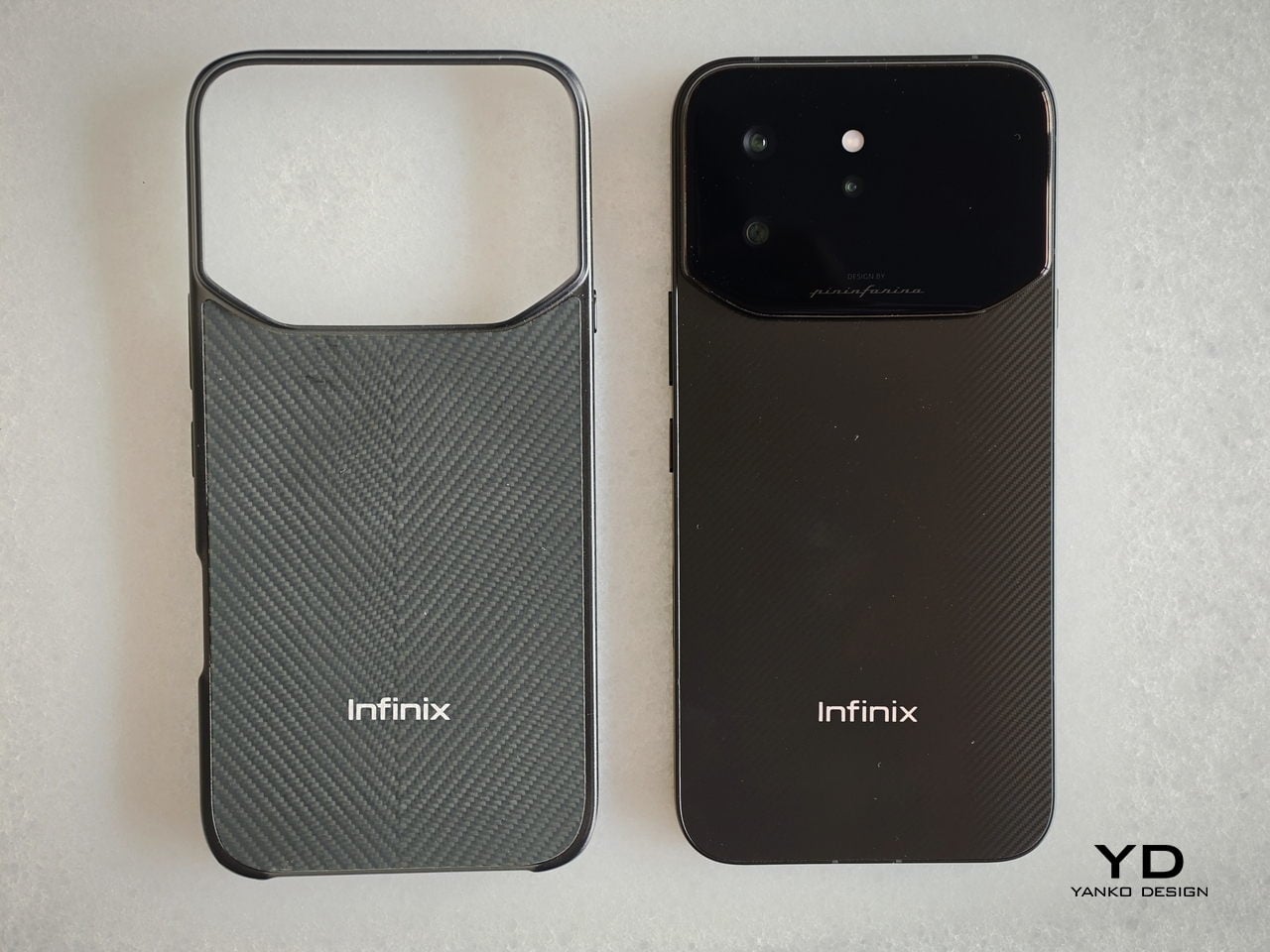
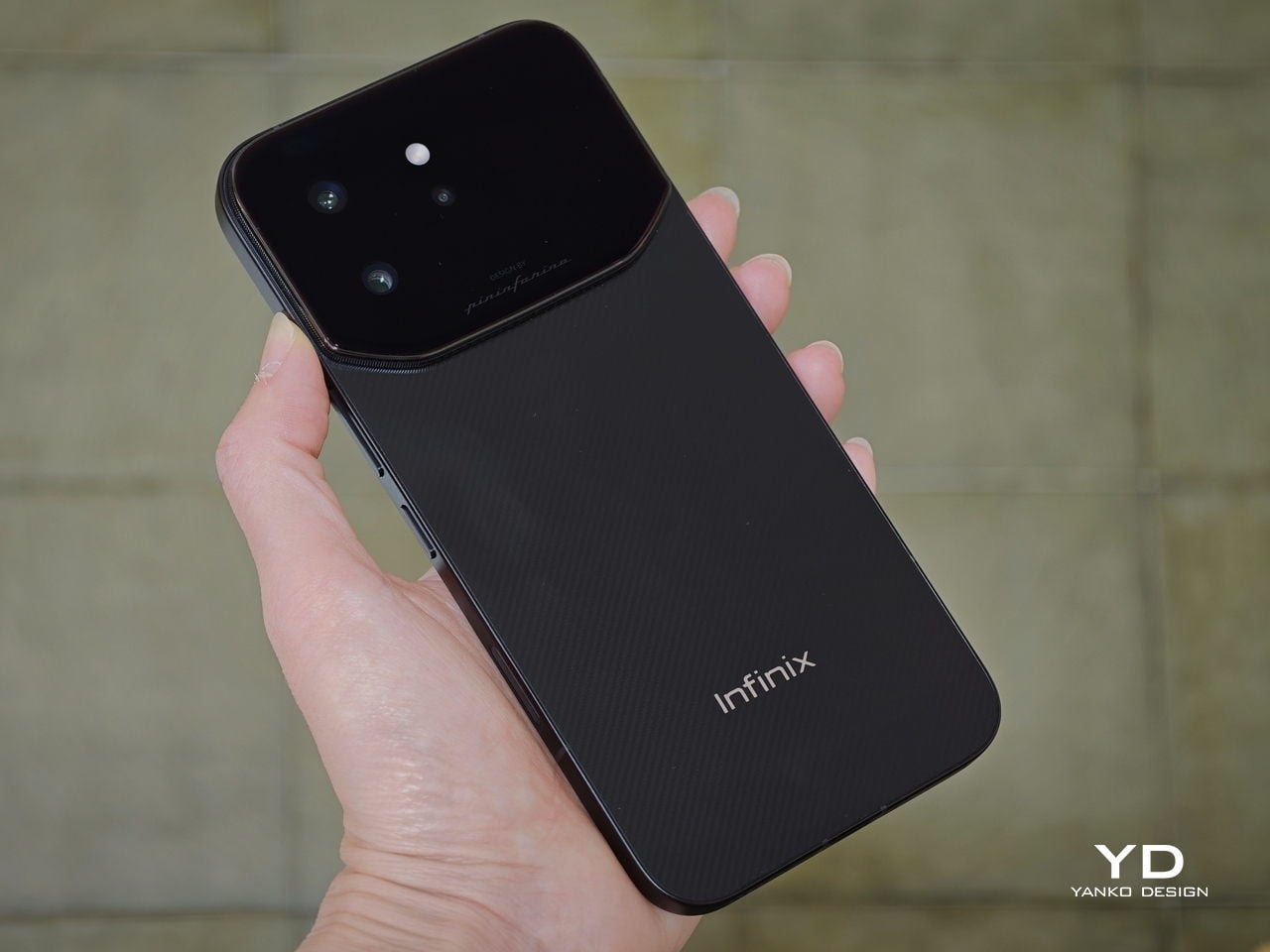
The camera bump problem has quietly become one of those things smartphone designers just accept these days. Every generation, the sensors get bigger, the modules get thicker, and the back of your phone starts looking like a small mountain range. Infinix decided to do something about that with the NOTE 60 Ultra, working with Pininfarina (yes, the Italian firm behind some of the most famous Ferrari bodies ever made) to create a rear panel where the triple-camera array, a hidden notification display, and a lighting strip all vanish into a single flush glass surface.
That design approach has a name: the Uni-Chassis Cam Module. It borrows from the unibody monocoque philosophy that makes sports car bodies both sleeker and more rigid, applying the same logic to a phone’s rear. The entire back is formed from a single continuous sheet of Gorilla Glass Victus, keeping the profile at 7.9mm while housing everything beneath without any visible interruption. The engineering explanation actually makes it look cooler once you know it.
Designer: Infinix x Pininfarina
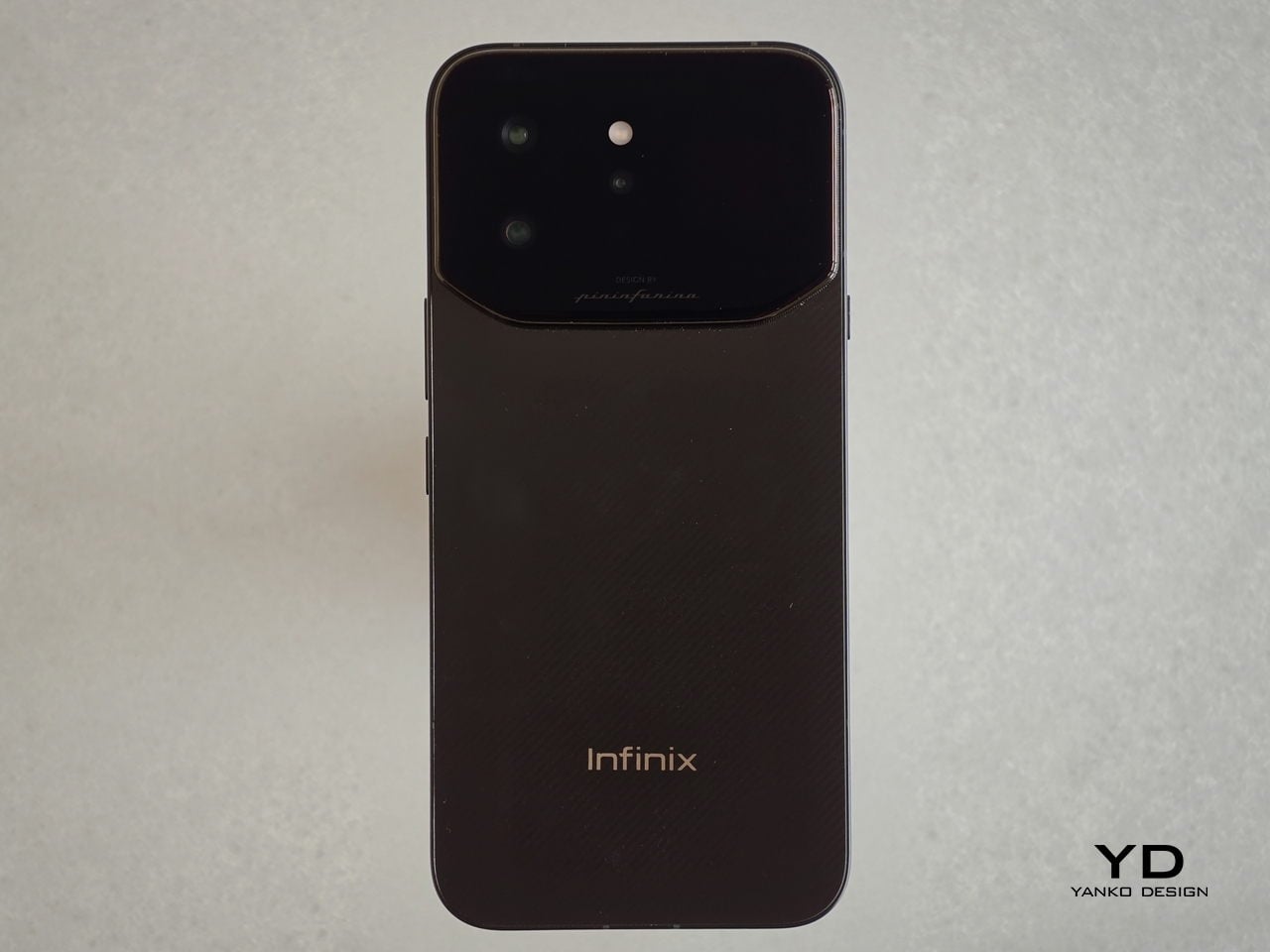
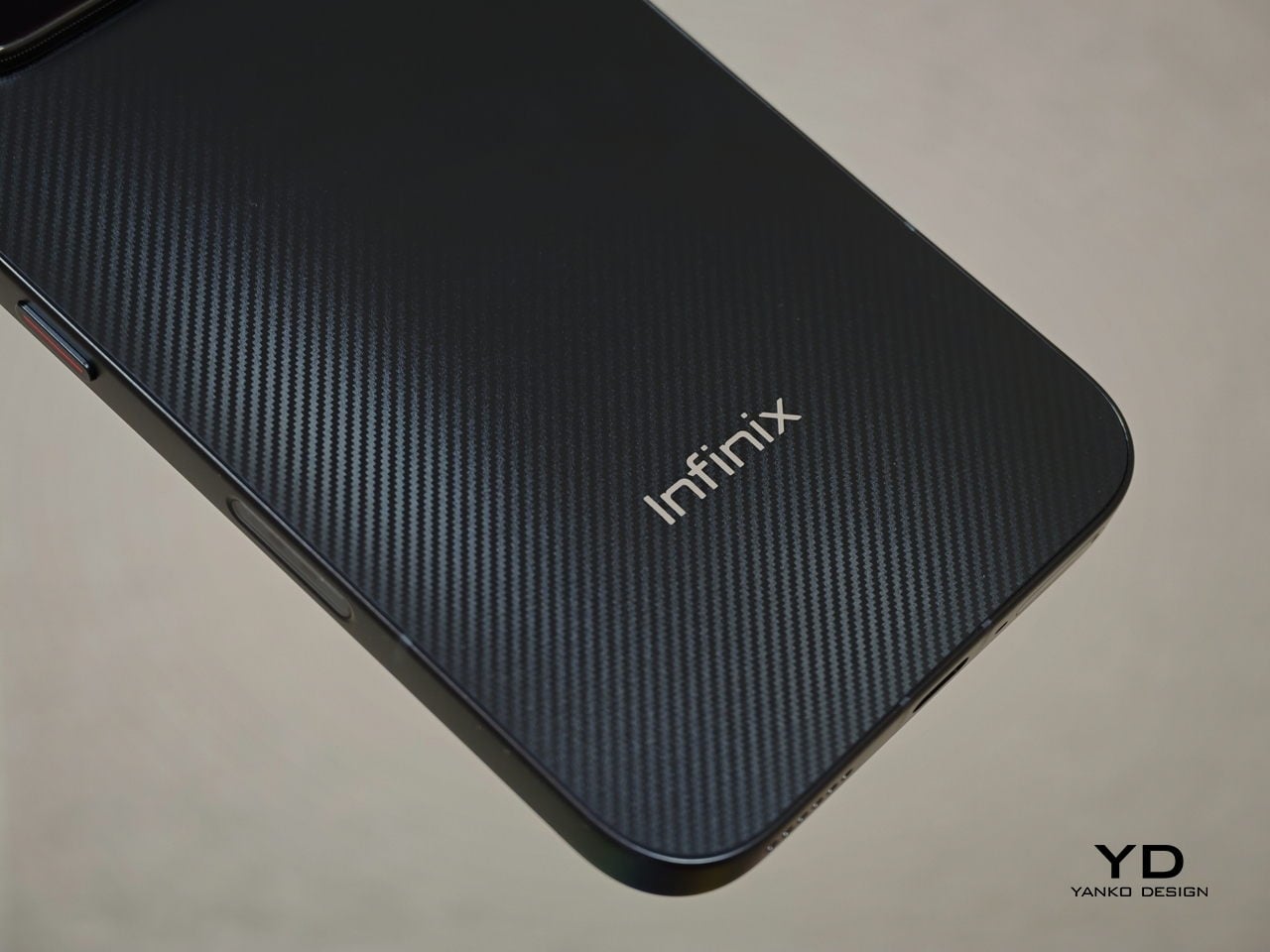
Pininfarina’s influence extends to the four color options as well. Torino Black has a Kevlar-weave texture referencing basalt fiber; Monza Red borrows its surface geometry from the Daytona SP3 grille. Each colorway has a distinct material treatment, not just a tint on a shared base finish. These are details that often disappear between concept and mass production, so the fact that they survived here says something about how seriously the collaboration was taken.
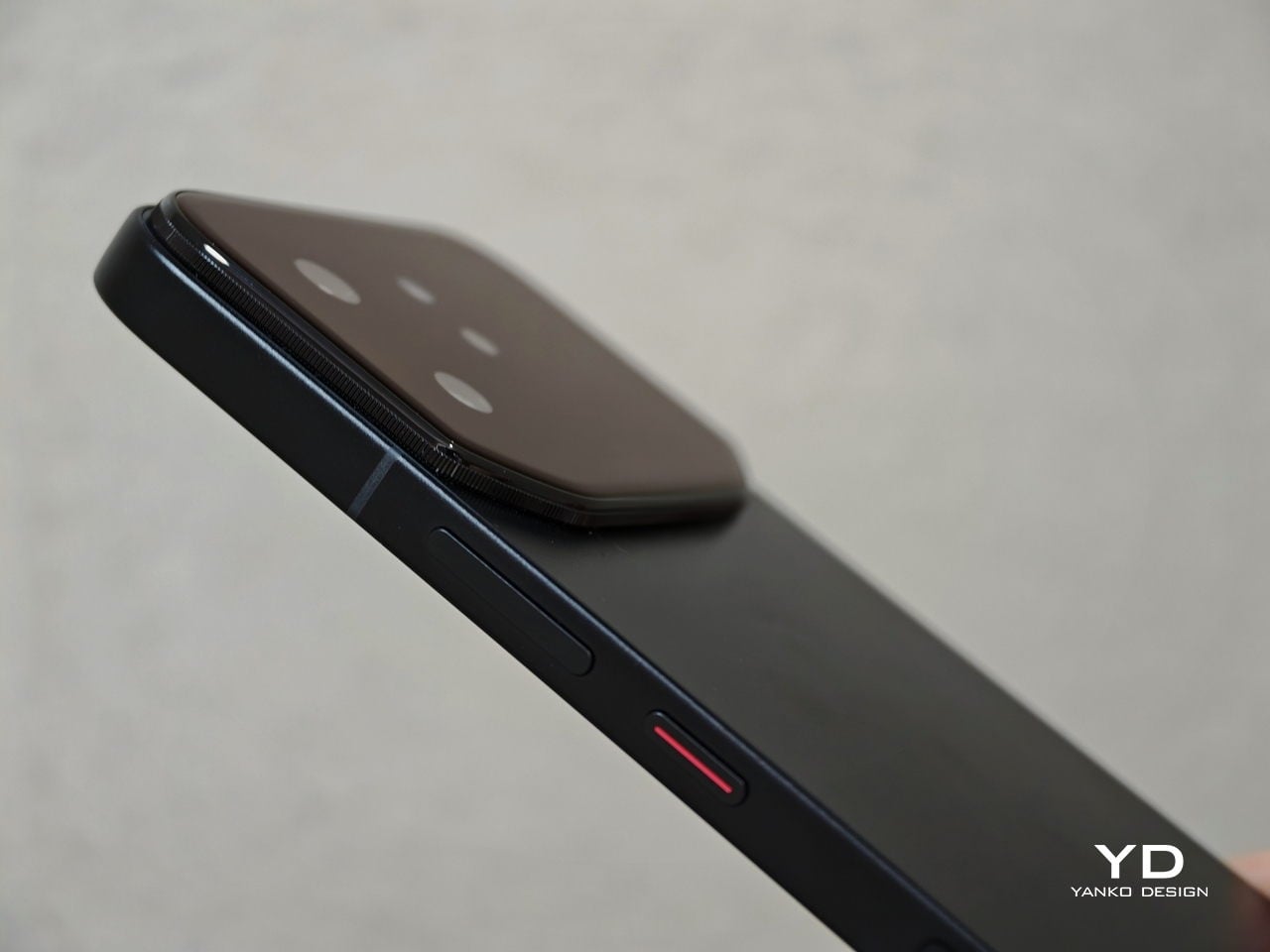
Photography is anchored by a 200-megapixel Samsung ISOCELL HPE main sensor. The 1/1.4-inch sensor area and f/1.69 aperture mean the full-resolution mode captures enough data to crop aggressively without losing sharpness. Paired with it is a 50-megapixel Samsung ISOCELL JN5 periscope telephoto with its own optical image stabilization, offering a native 3.5x optical zoom that extends to 7x losslessly before reaching 100x digitally.
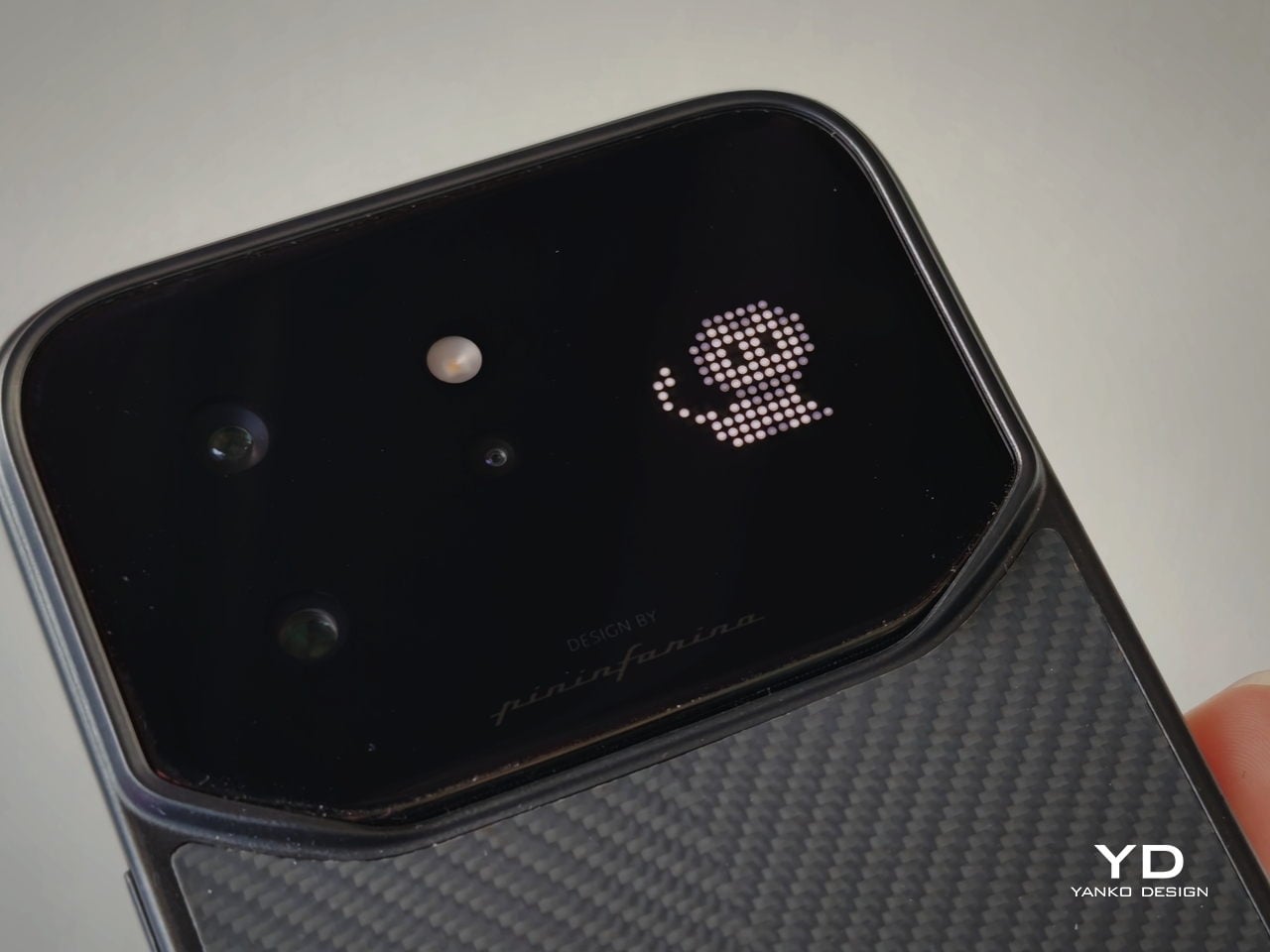
Tucked beneath the glass rear is the Active Matrix Display, a dot-matrix LED panel that surfaces through the glass when needed and disappears completely when dormant. It handles notification alerts, time and weather readouts, animated pixel pets, and two motion-controlled mini-games. The panel draws no power when inactive, leaving the flush rear surface completely undisturbed until it decides it has something to say.
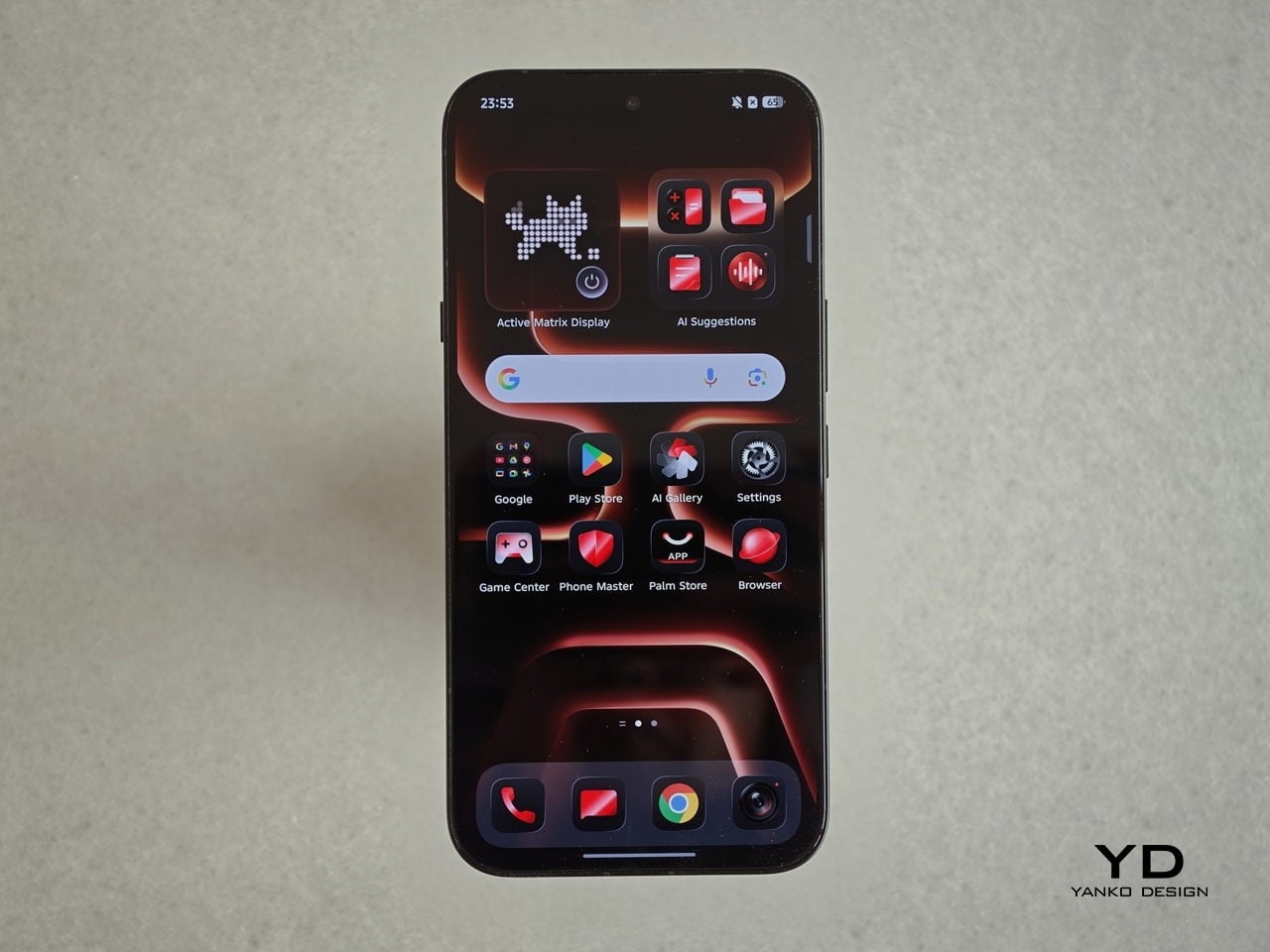
The NOTE 60 Ultra also introduces Infinix’s XDR Image Engine, which applies a full-chain HDR workflow from capture all the way through to the 1.5K display. In practical terms, this means the phone is managing highlight and shadow detail simultaneously when shooting high-contrast scenes, rather than picking one at the expense of the other. That workflow supports 4K 60fps video recording with Full-Link HDR 10+ for footage up to 4K 30fps.
Inside, the MediaTek Dimensity 8400 Ultimate runs an all-big-core architecture where all eight Arm Cortex-A725 cores operate at full performance. Infinix’s own optimization engine manages CPU allocation and background memory compression on top, which is the kind of system-level tuning typically reserved for higher-tier chips. A 3D IceCore cooling system with a 5,142-square-millimeter vapor chamber handles heat across intensive sessions.
The 7,000mAh silicon-carbon battery has twice the silicon content of the previous generation, allowing higher energy density without a thicker body. It charges fully in 48 minutes via 100W wired charging, and Infinix included a self-healing function that runs low-current cycles to slow long-term anode degradation, recovering roughly 1% of battery health every 200 charge cycles. There is also 50W wireless charging for the days when a cable feels like too much effort.
Perhaps the most distinctive addition is the two-way satellite communication via Thuraya’s GEO satellite network, covering around 120 countries across Asia, Europe, and Africa. This goes beyond the one-way SOS messaging seen on other phones: the NOTE 60 Ultra supports actual voice calls at up to 4kbps and two-way SMS, activated through a Thuraya SIM card without any additional registration. For frequent travelers in areas with patchy terrestrial coverage, that is a genuinely useful difference.