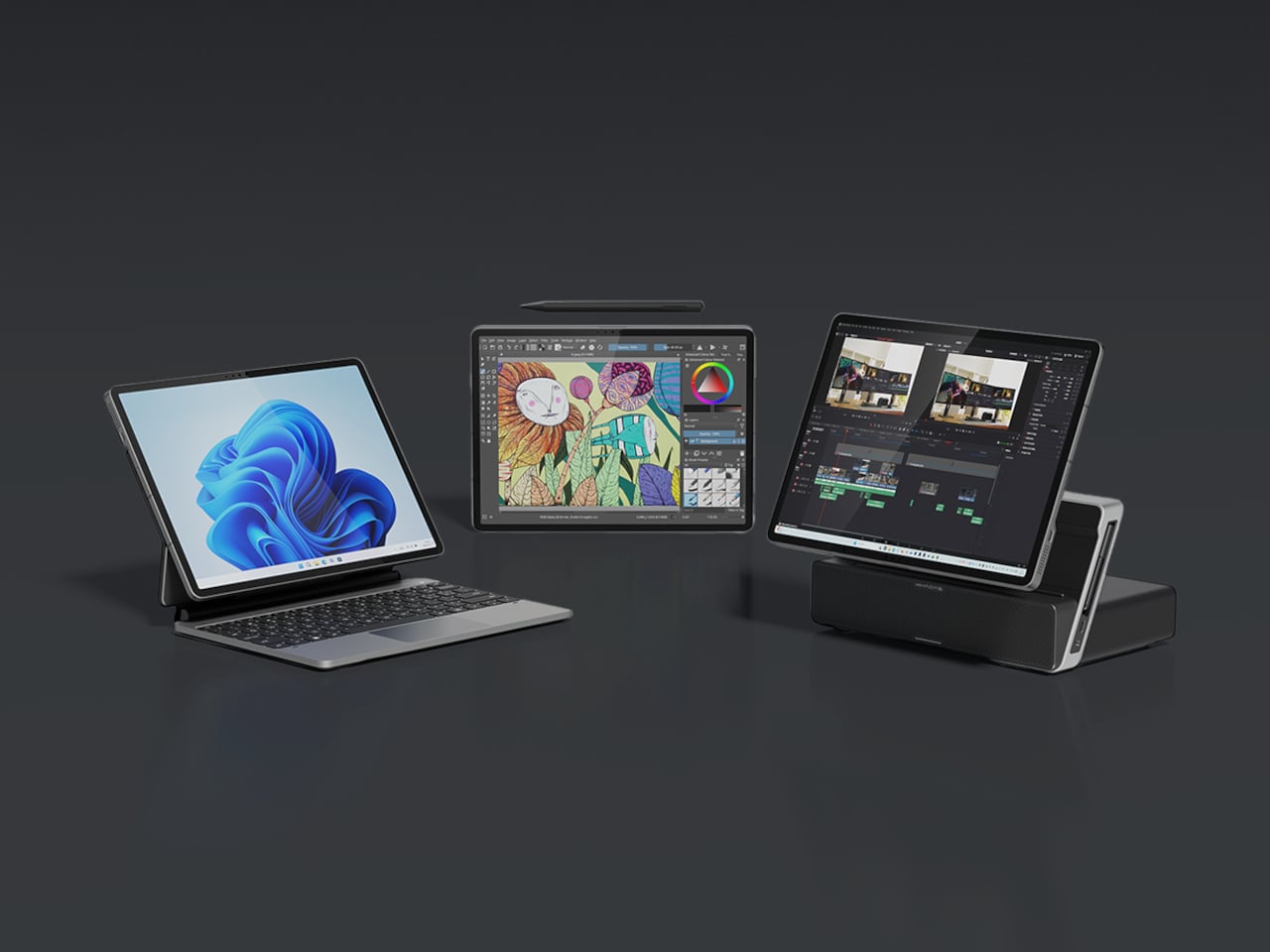
The question of whether a single small device can replace a laptop and desktop without feeling compromised keeps surfacing. Past attempts include phone lapdocks and 2-in-1 tablets that end up either too heavy to hold or too weak to be real workstations. Khadas’ Mind Go tries a different path. Instead of forcing everything into one slab, it lets the form factor grow and shrink depending on what you need.
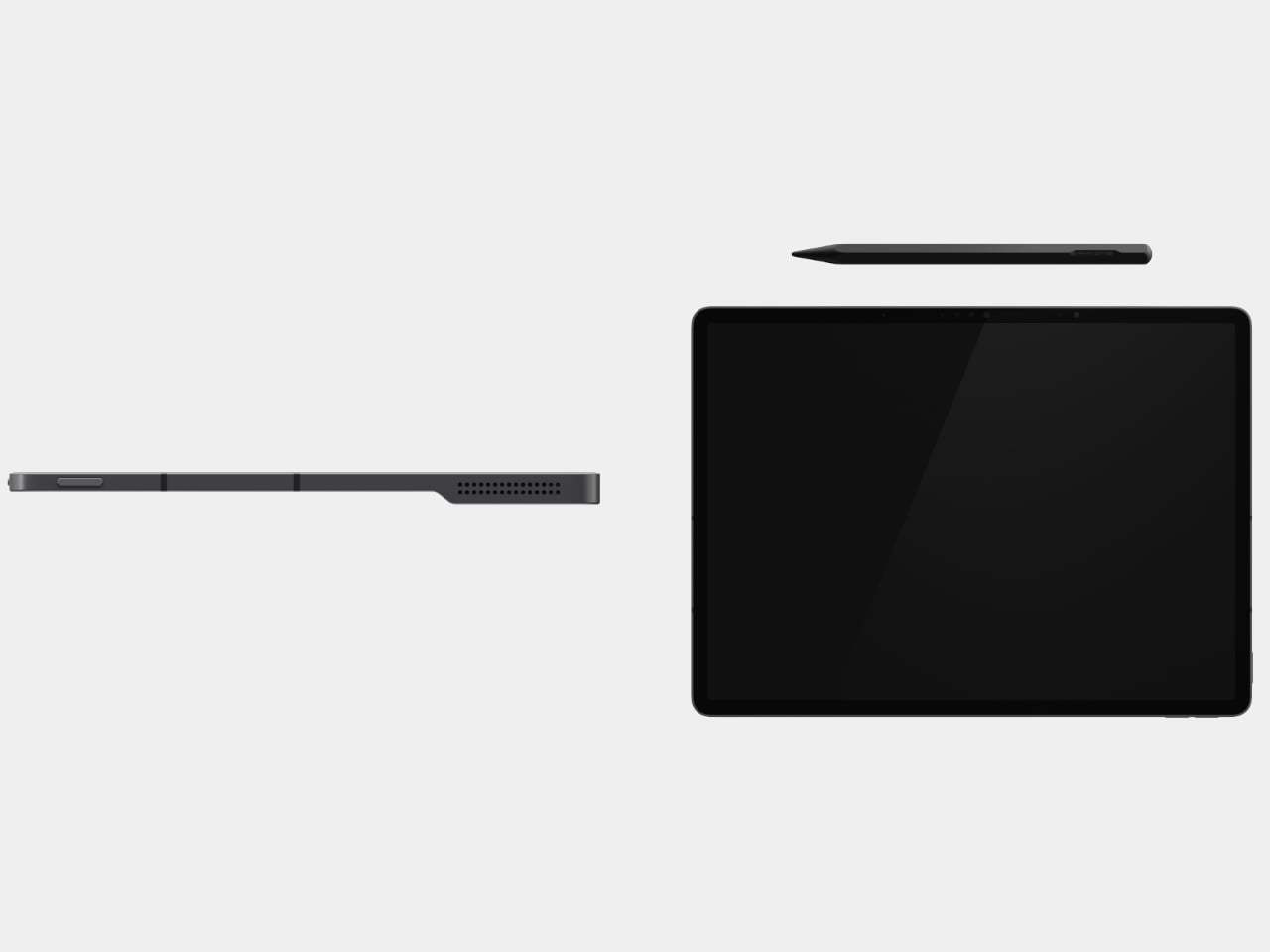
Mind Go is a modular 3-in-1 that starts with an 11.6-inch tablet, weighing around 600g and roughly 6.1mm thick in the current prototype. It is fanless, with built-in speakers, a front camera, Mind Pencil support, and a raised edge on the back that makes one-handed grip easier. The tablet is deliberately not a battery monster on its own because it is meant for shorter, mobile sessions where lightness matters more than runtime.
Designer: Khadas
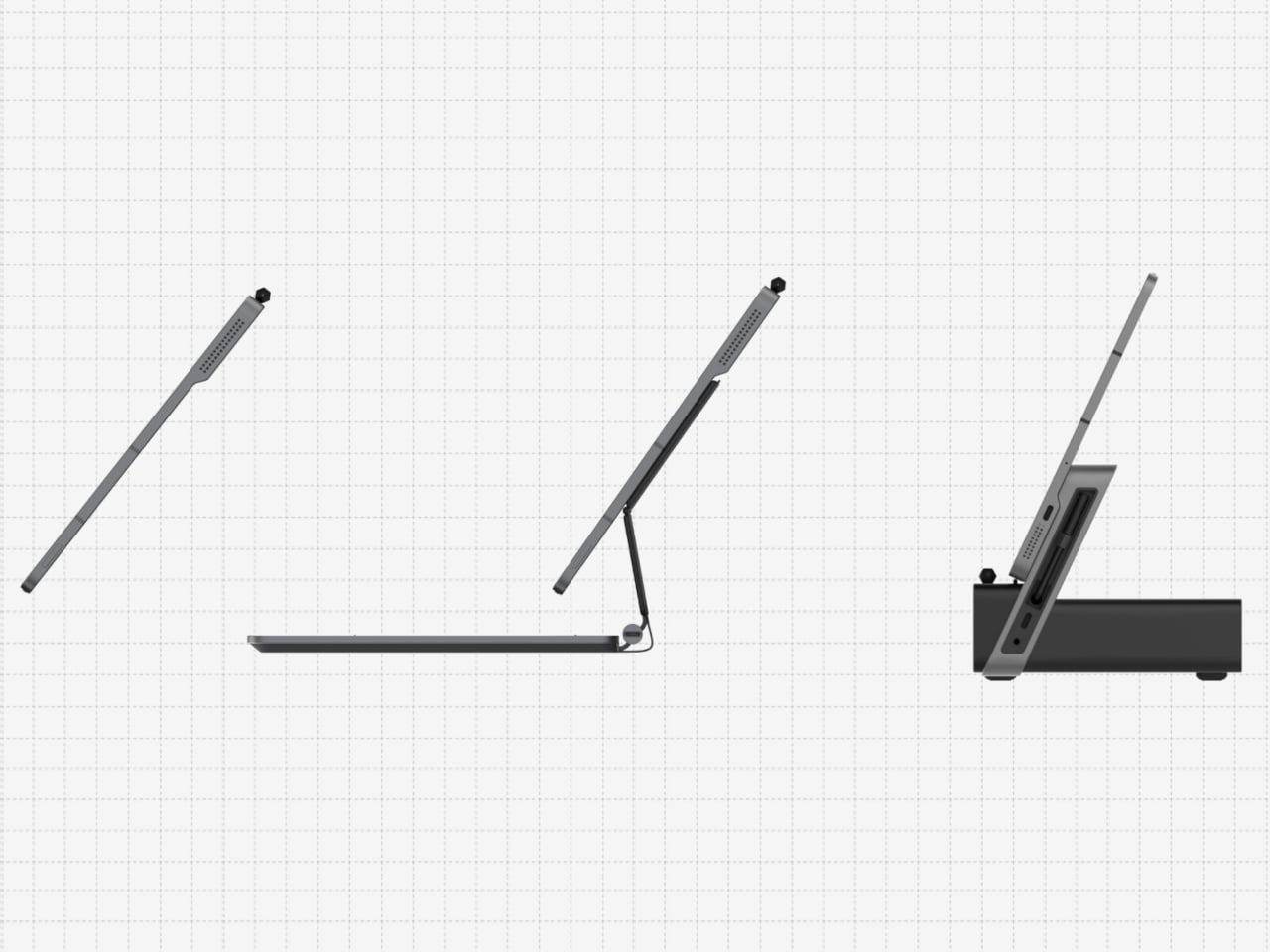
Slipping the tablet into a bag, reading or sketching on the train, reviewing documents while standing, or sharing a screen in a hallway all become easier with the smaller 11.6-inch size. The lack of fans keeps it quiet and cool. You are not running a full workstation here, just doing the kind of light work that benefits from being truly portable and easy to hold without needing a table.

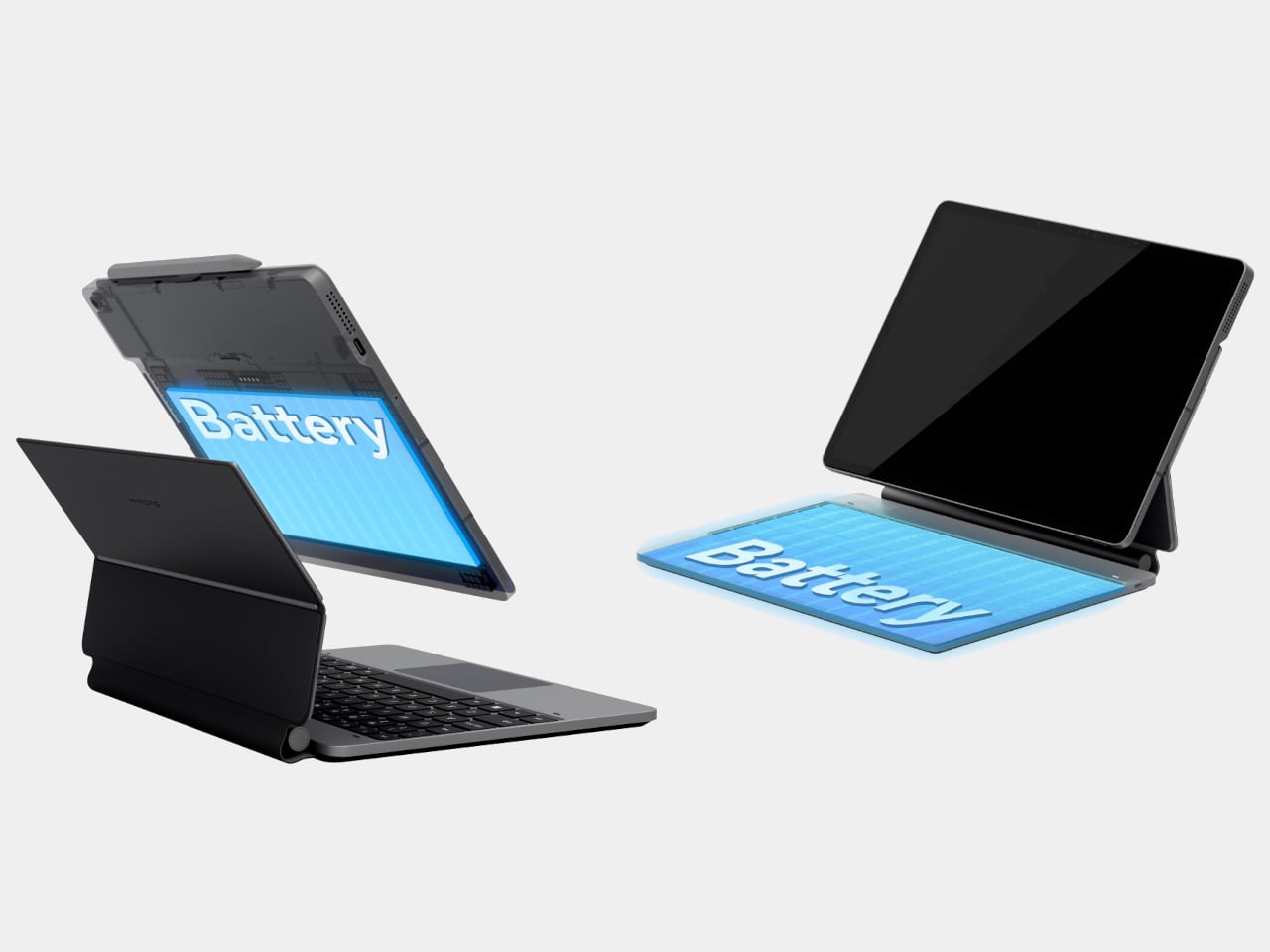
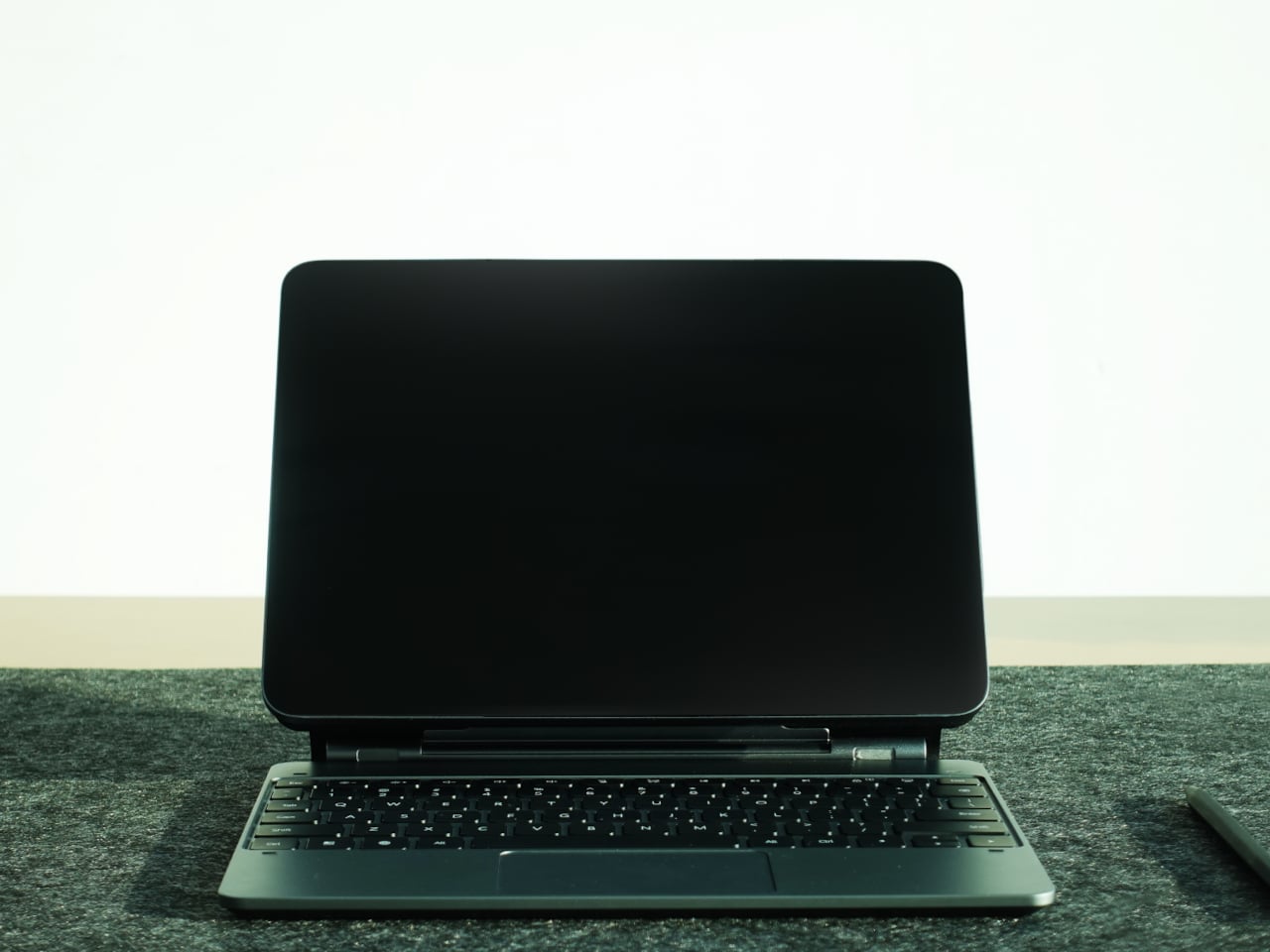
At a desk or café, the tablet drops into the Mind Go Keyboard. The keyboard is both input and battery, connected through pogo pins, bringing total capacity to 45Wh and roughly nine hours of local video playback. The trackpad and full keys turn the setup into a familiar laptop, and you can detach or reattach the tablet without interrupting what you are doing, shifting between seated and walk-around work.
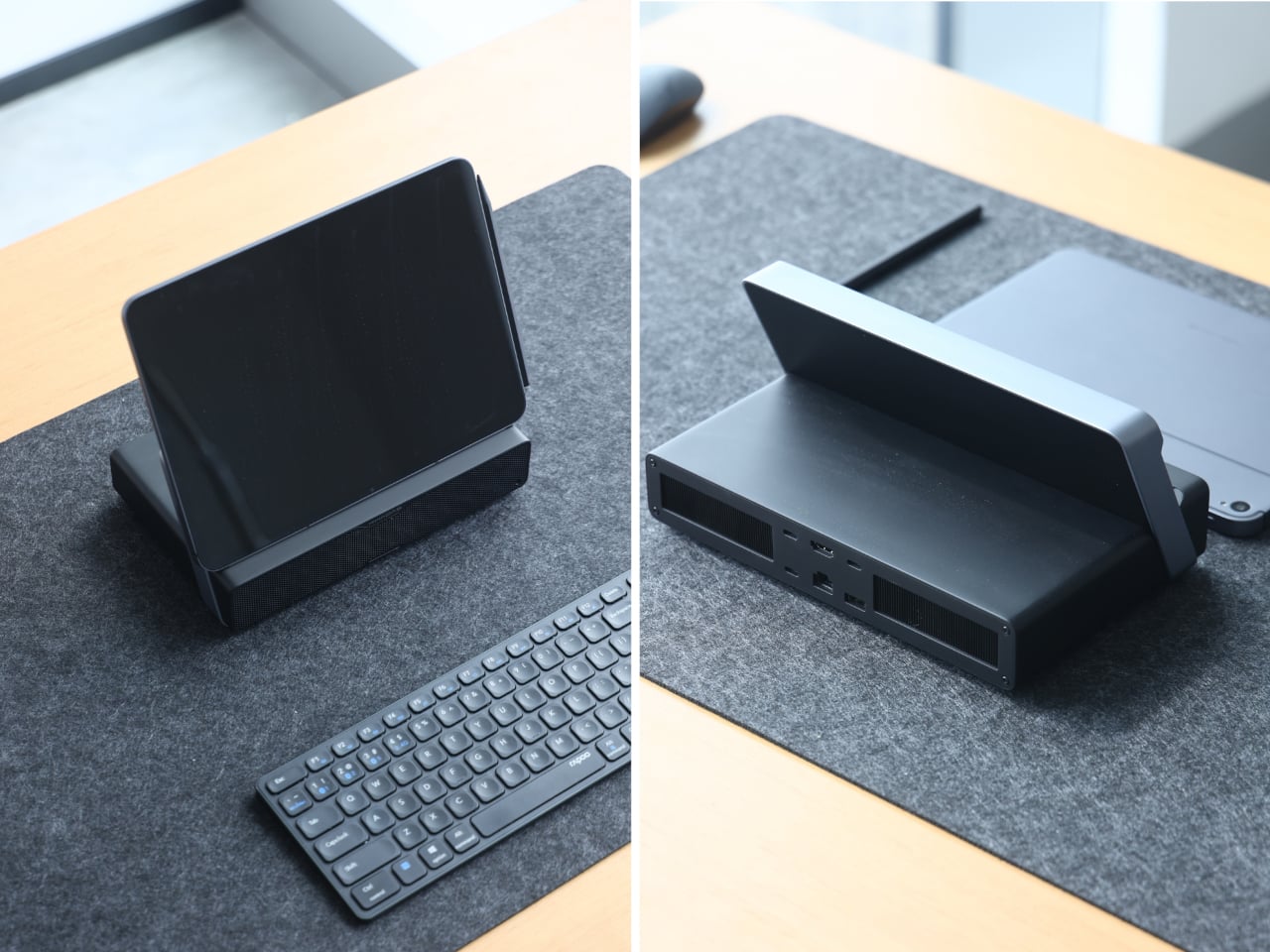
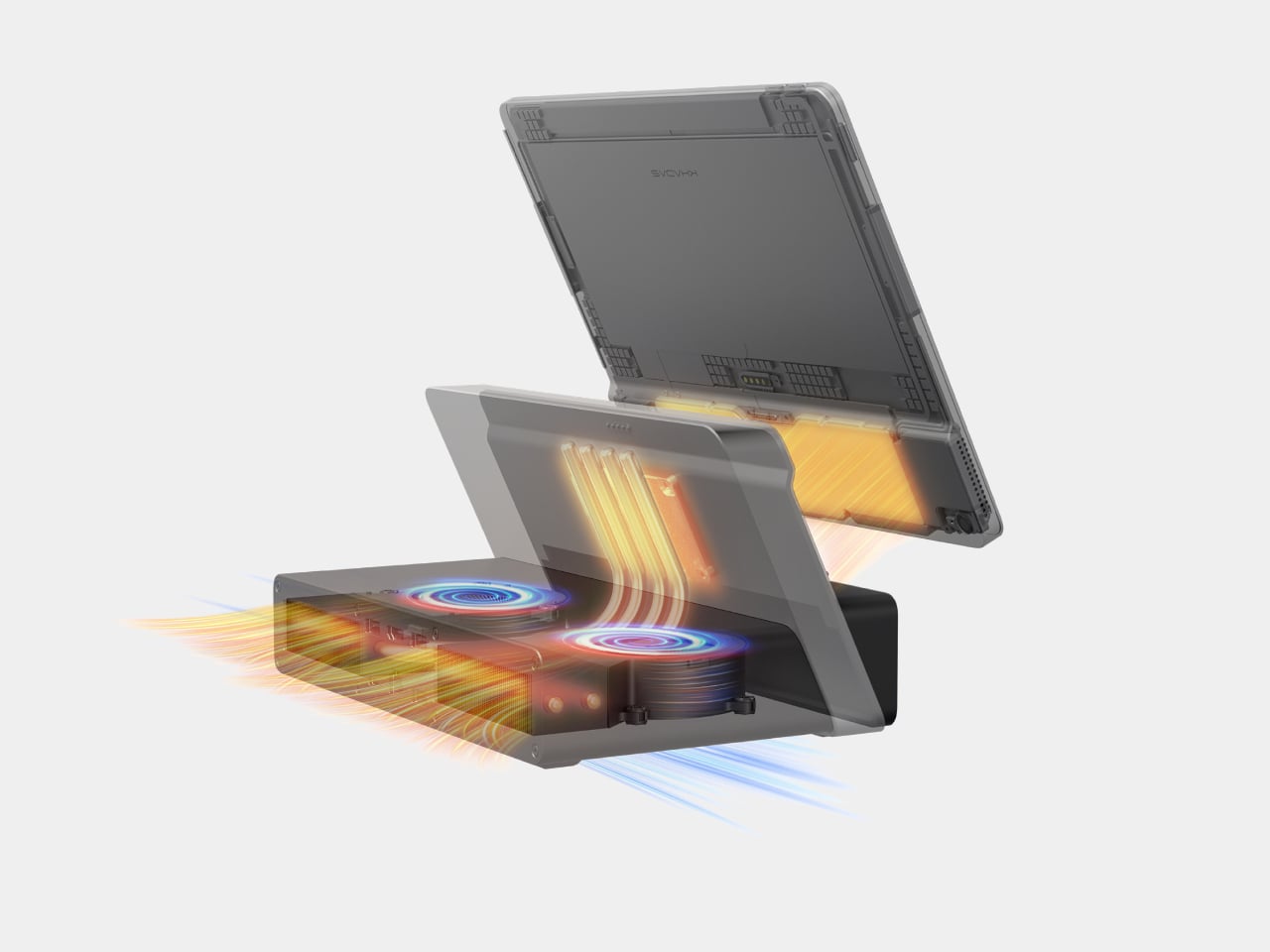
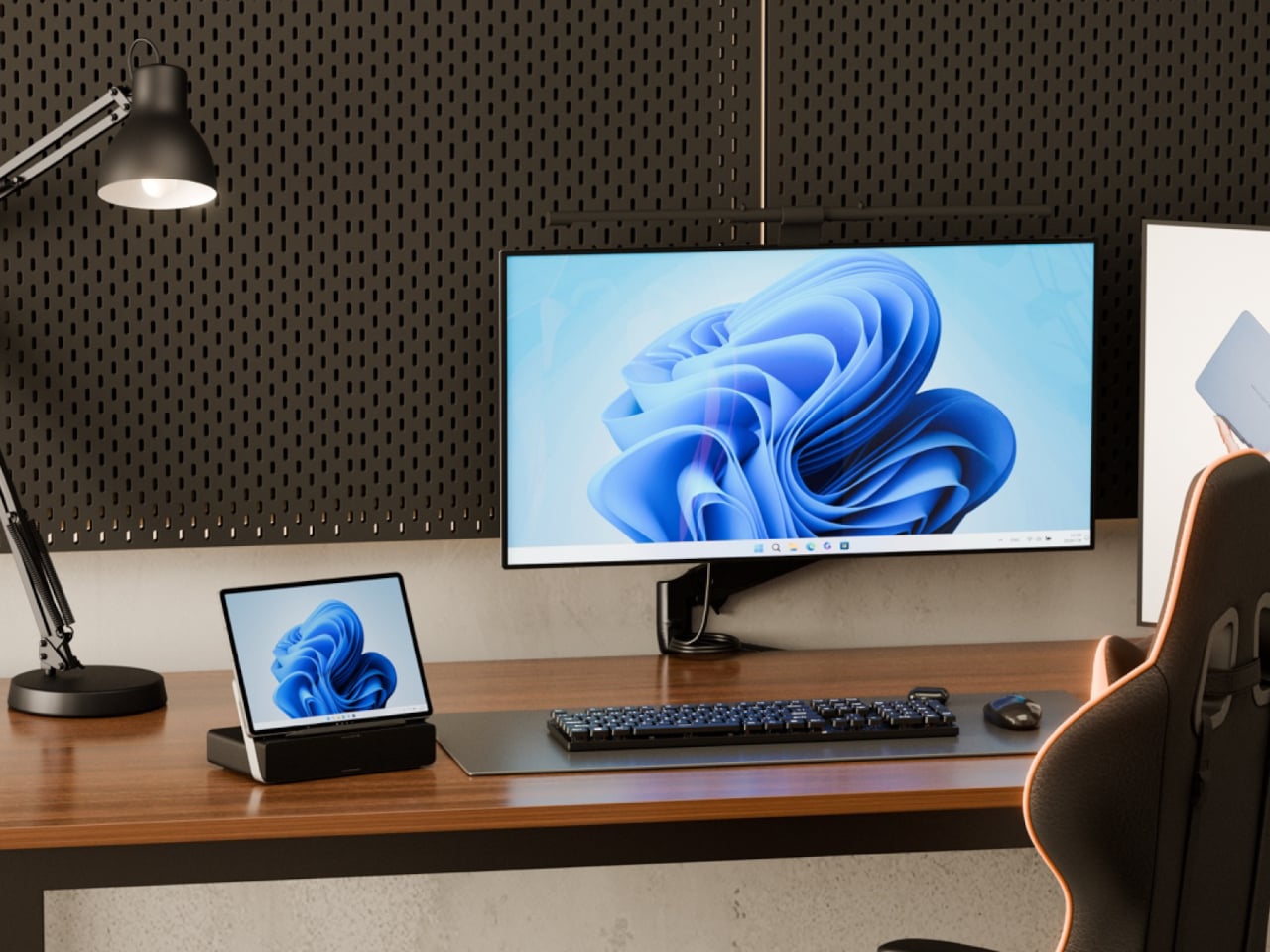
The Mind Go Stand is where the device stops pretending to be just a tablet. The stand adds active cooling and a full set of ports, USB-C, HDMI, USB-A, Ethernet, headphone jack, plus integrated speakers. With sustained cooling, Mind Go can push up to about 30 W of performance, roughly double its tablet mode, and suddenly the small screen is driving multiple external displays and heavier workloads.
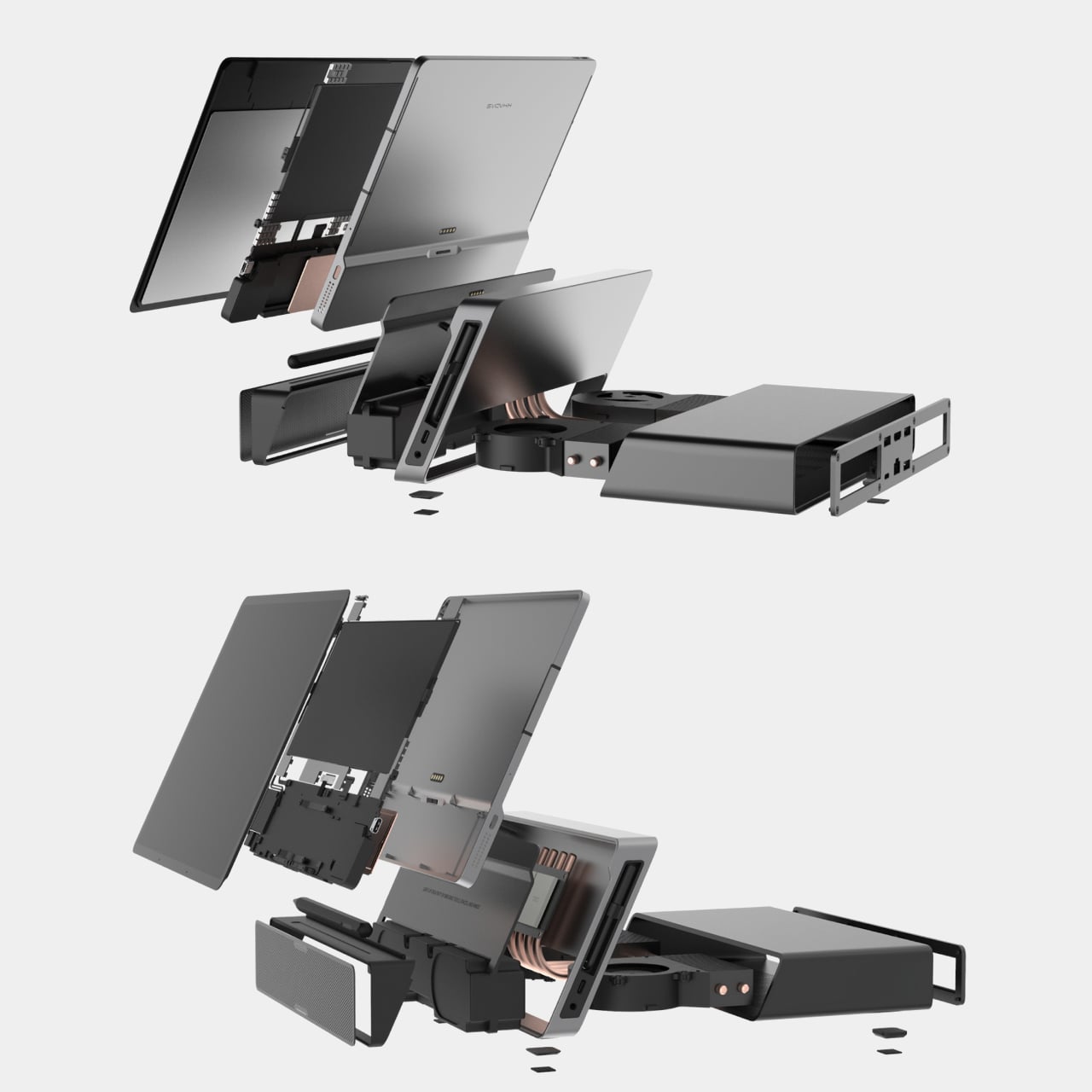
This setup changes the usual dance of syncing files between machines. Your projects live on the same device that moves from commute to meeting to desk. On the way home, you are not hunched over a tiny laptop debating whether to sync to a desktop later. You just drop the tablet into the stand, and your posture, visual space, and performance all expand around the same core without transferring files or logging into another machine.
Mind Go is still in market validation, with Khadas asking the community to help decide big questions, Snapdragon or Intel, 11.6 or 13 inches, LCD or OLED, pogo pins or wired stand, even whether the dock should offer optional GPU support. It is an unusual invitation to shape not just the look but the architecture of a device that wants to be your tablet, laptop, and desktop without pretending those are the same thing.