Retail and hospitality design is one of those rare territories where architecture gets to perform on multiple levels at once. It is not just about function or spectacle, but about storytelling, how materials, light, circulation, and atmosphere come together to momentarily detach visitors from the outside world and immerse them in a carefully choreographed experience. The newly opened Maison Louis Vuitton Sanlitun in Beijing is a compelling example of this ambition realized at an urban scale.
Designed by Jun Aoki for Louis Vuitton, the flagship is located in Beijing’s energetic Sanlitun district. The building brings together retail, hospitality, and exhibition spaces within a single vertically organized envelope, offering an experience that unfolds floor by floor rather than spreading outward. In doing so, it rethinks what a luxury flagship can be in one of the city’s most intense commercial neighborhoods.
Designer: Jun Aoki & Associates
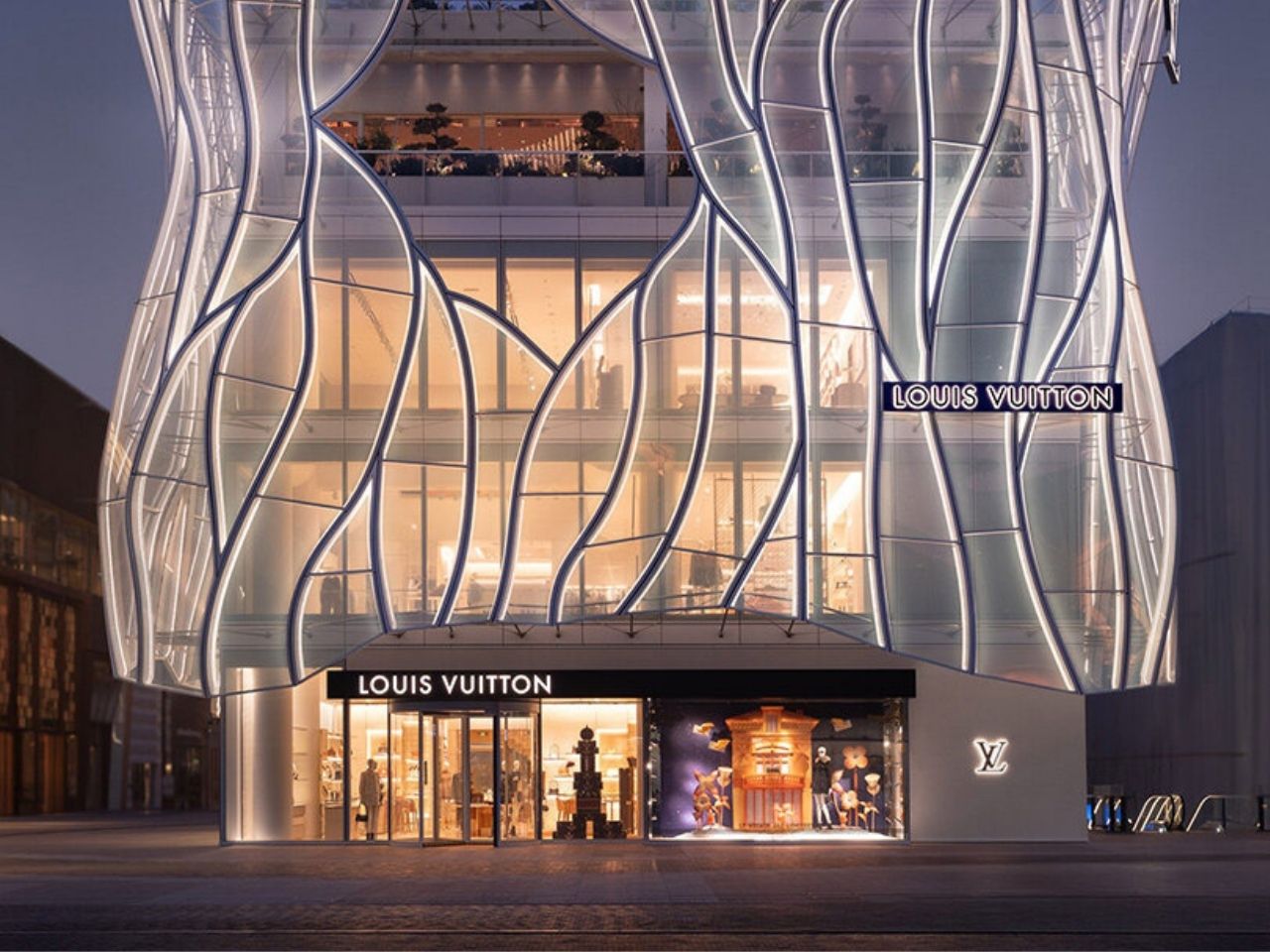
The project continues Jun Aoki’s long-standing collaboration with the House, following earlier Louis Vuitton buildings in Tokyo and Osaka. In Beijing, however, his approach feels particularly attuned to context. Rather than competing with Sanlitun’s visual noise, the building introduces a sense of material depth and calibrated transparency. The architecture does not shout; it subtly absorbs and refracts the city around it.
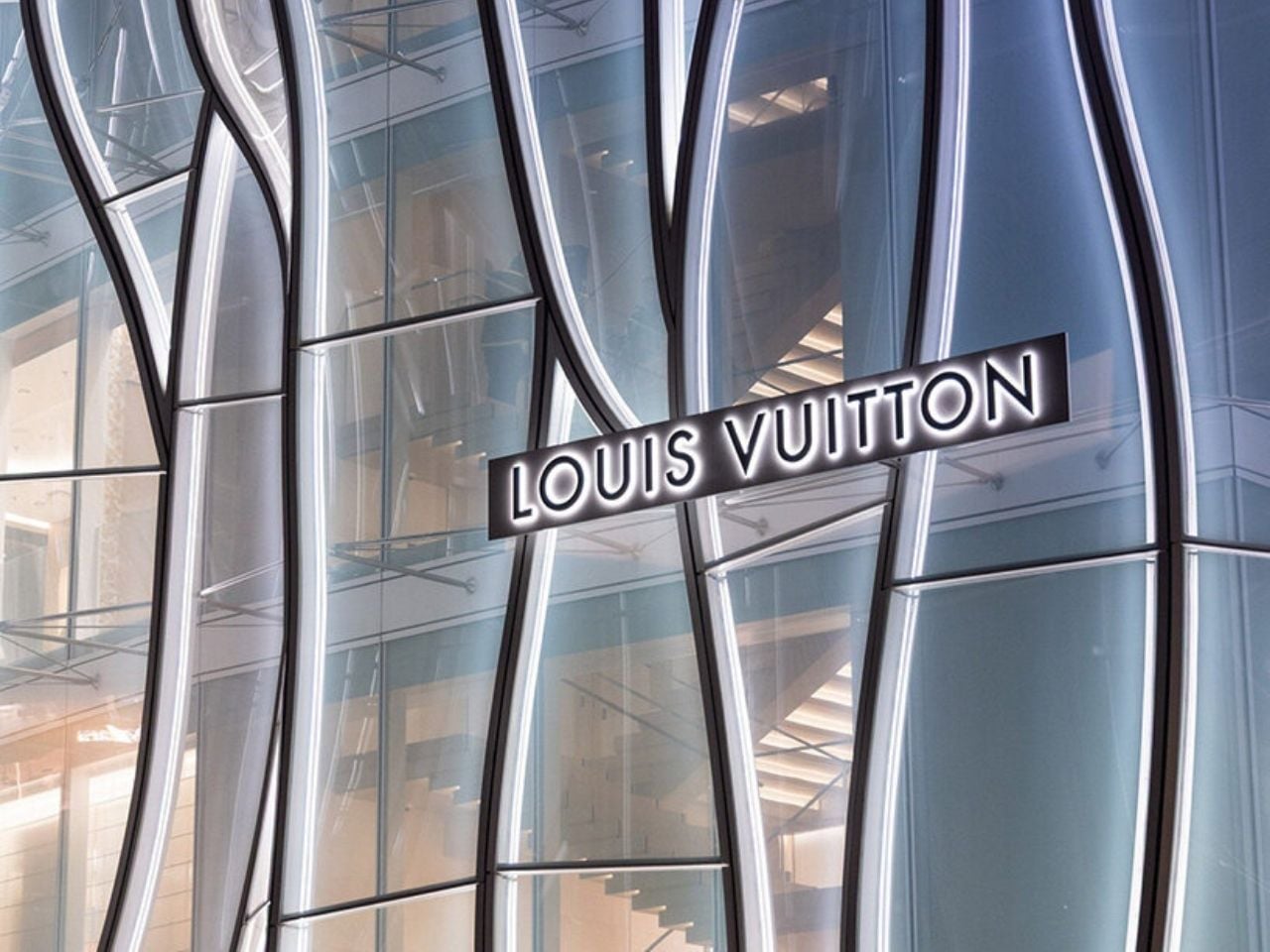
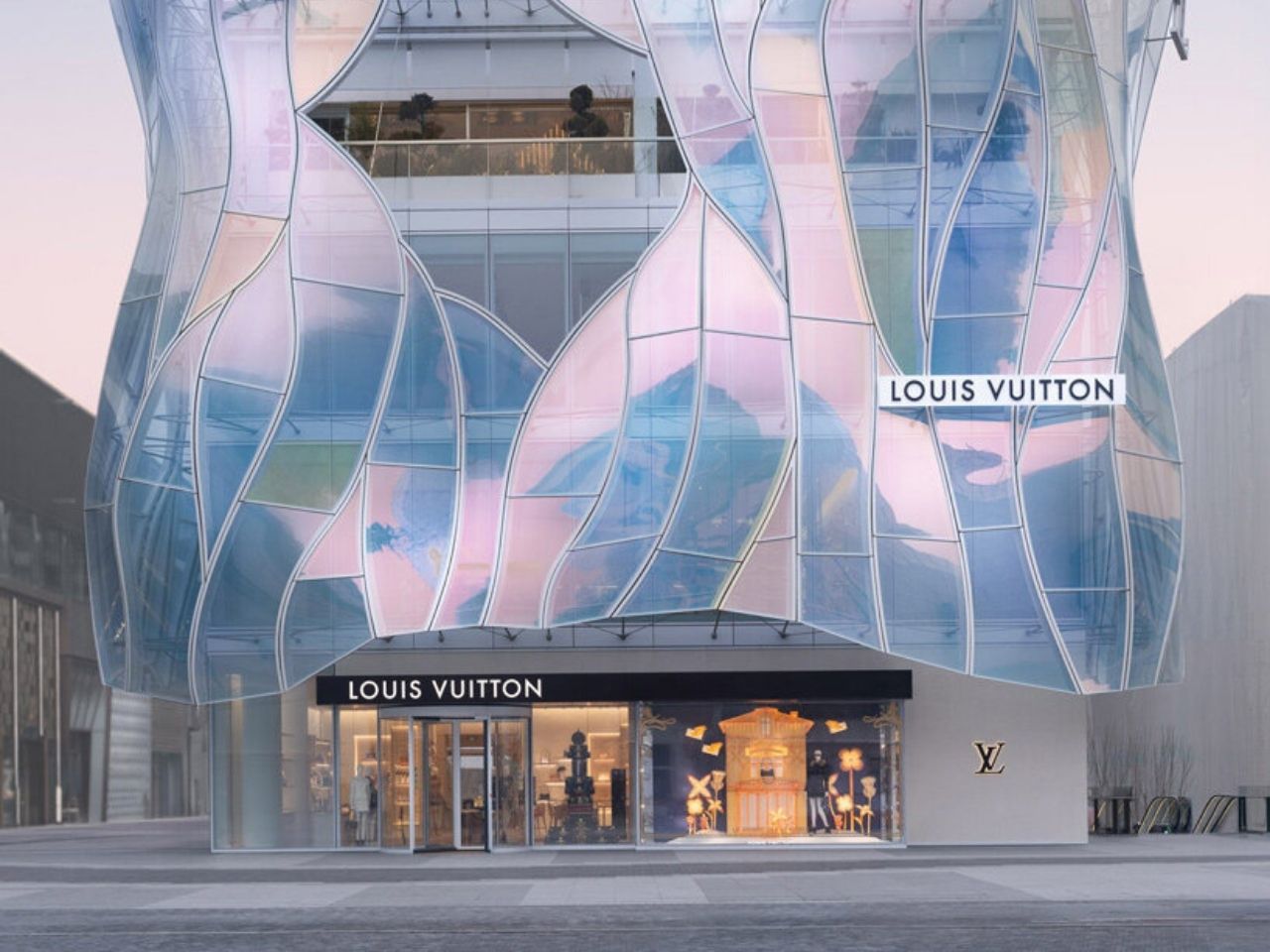
The most striking element is the facade. Drawing inspiration from Taihu stones, scholars’ rocks historically associated with classical Chinese gardens, Aoki translates their eroded, organic character into an outer skin of hand-curved glass panels. Each panel is individually shaped, creating irregular contours and a layered surface that reads differently as daylight shifts. The glass possesses translucent and dichroic qualities, producing chromatic changes that respond to sun angle, weather, and movement. From close range, the facade feels tactile and sculptural; from across the block, reflections stretch and compress, giving the building a constantly changing presence.
Behind this expressive outer layer sits a secondary envelope that handles thermal performance and weather protection. This dual-skin strategy allows the facade to operate simultaneously as cultural reference, environmental filter, and urban interface, an architectural device that balances symbolism with performance.
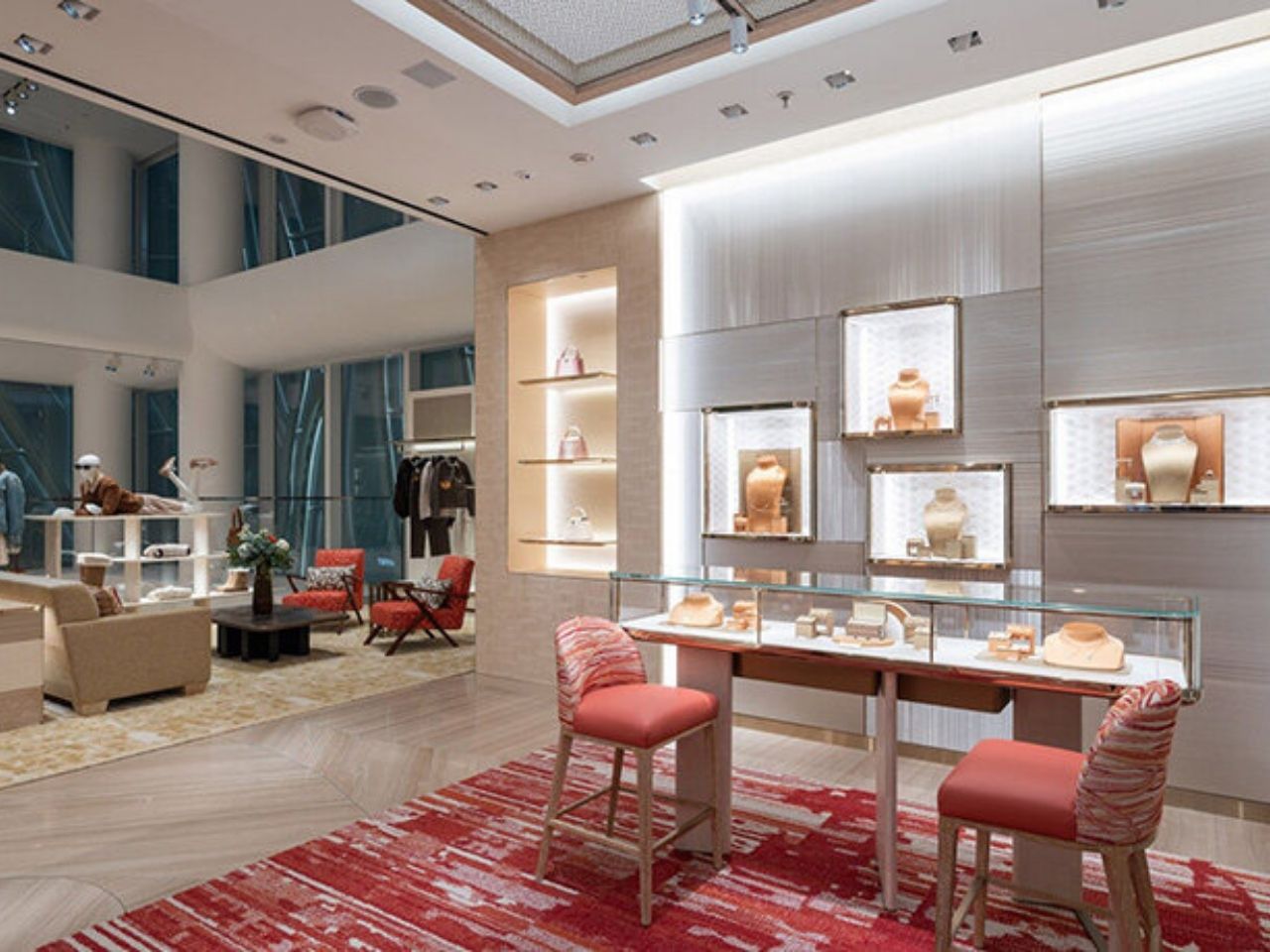
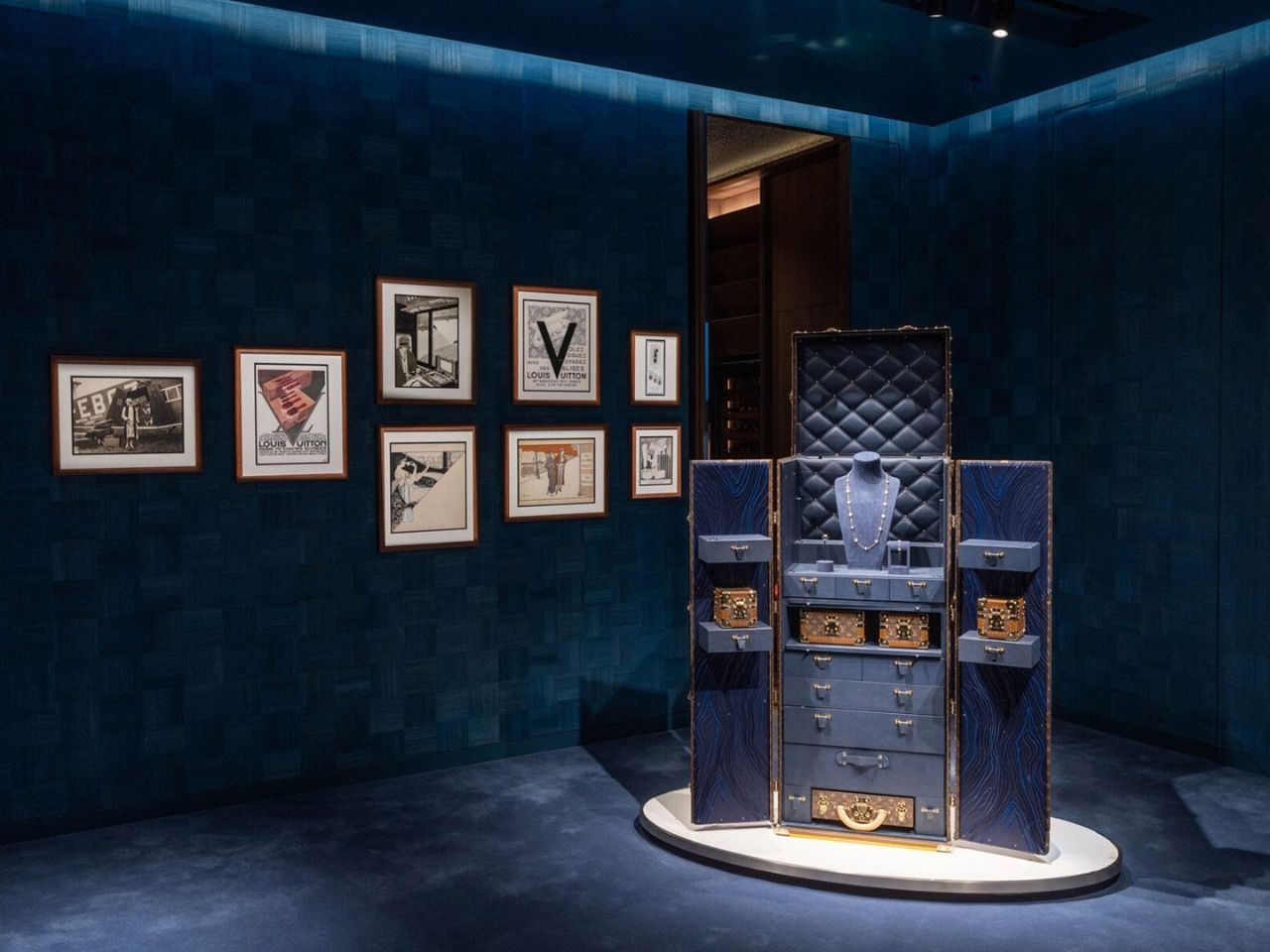
Inside, visitors enter directly into a central atrium that rises through three levels and organizes the Women’s collections. Daylight filters through the glass facade into this vertical void, animating floors, balustrades, and circulation cores. Retail programs are distributed across four levels, housing Women’s and Men’s Leather Goods, Ready-To-Wear, Shoes, Jewelry, Accessories, Perfumes, and Beauty. Movement remains clear and legible, with escalators and stairs positioned to preserve long sightlines through the atrium and back toward the city. More private client lounges are tucked into quieter zones, defined through subtle shifts in material and lighting rather than overt separation.
A distinct tonal shift occurs on the third floor, where the Louis Vuitton Home collection is presented. Furniture, textiles, and tableware by designers such as Patricia Urquiola and Cristian Mohaded are displayed in rooms scaled closer to domestic interiors, with softer finishes and calmer light, allowing the objects to breathe.
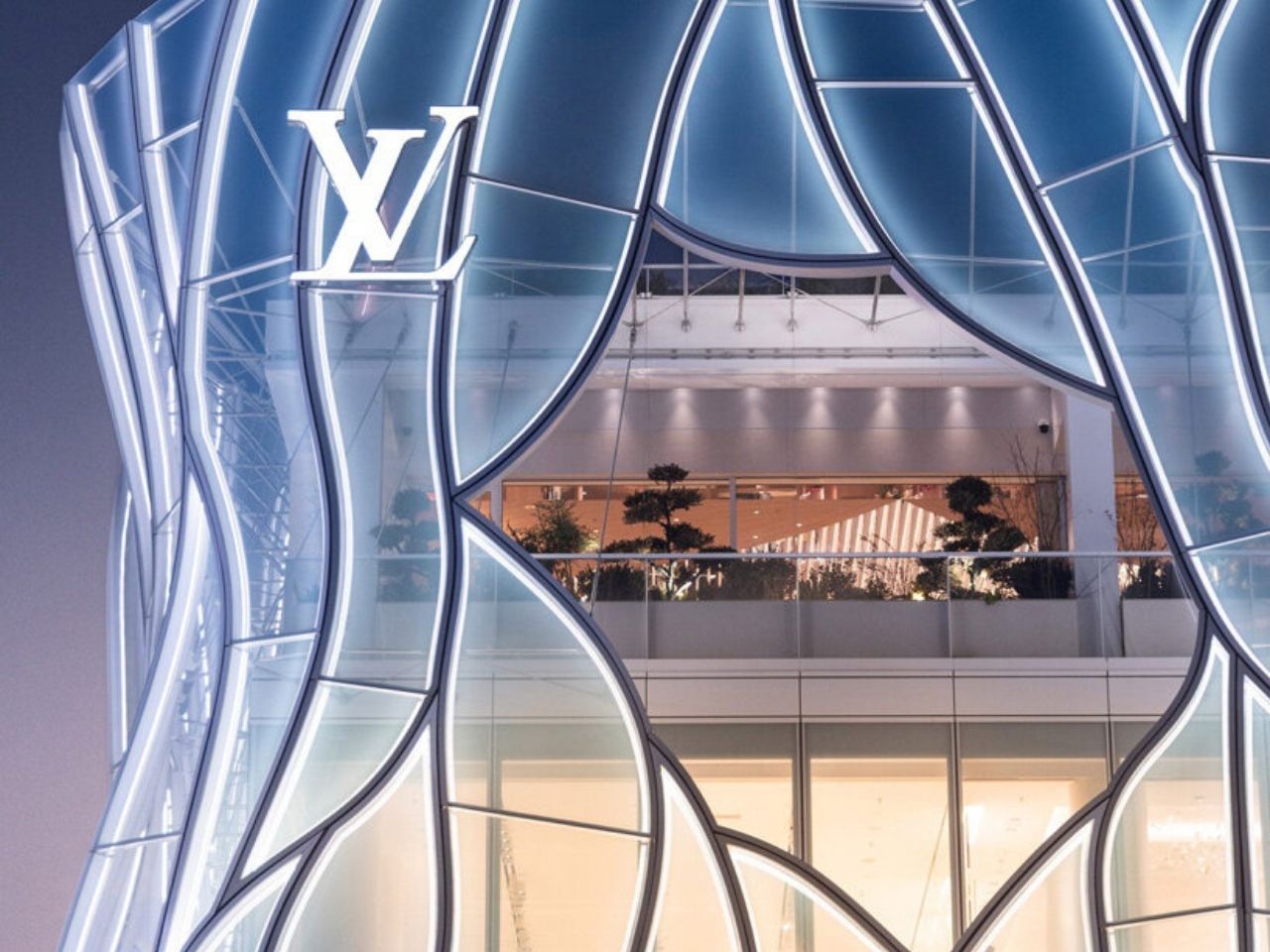
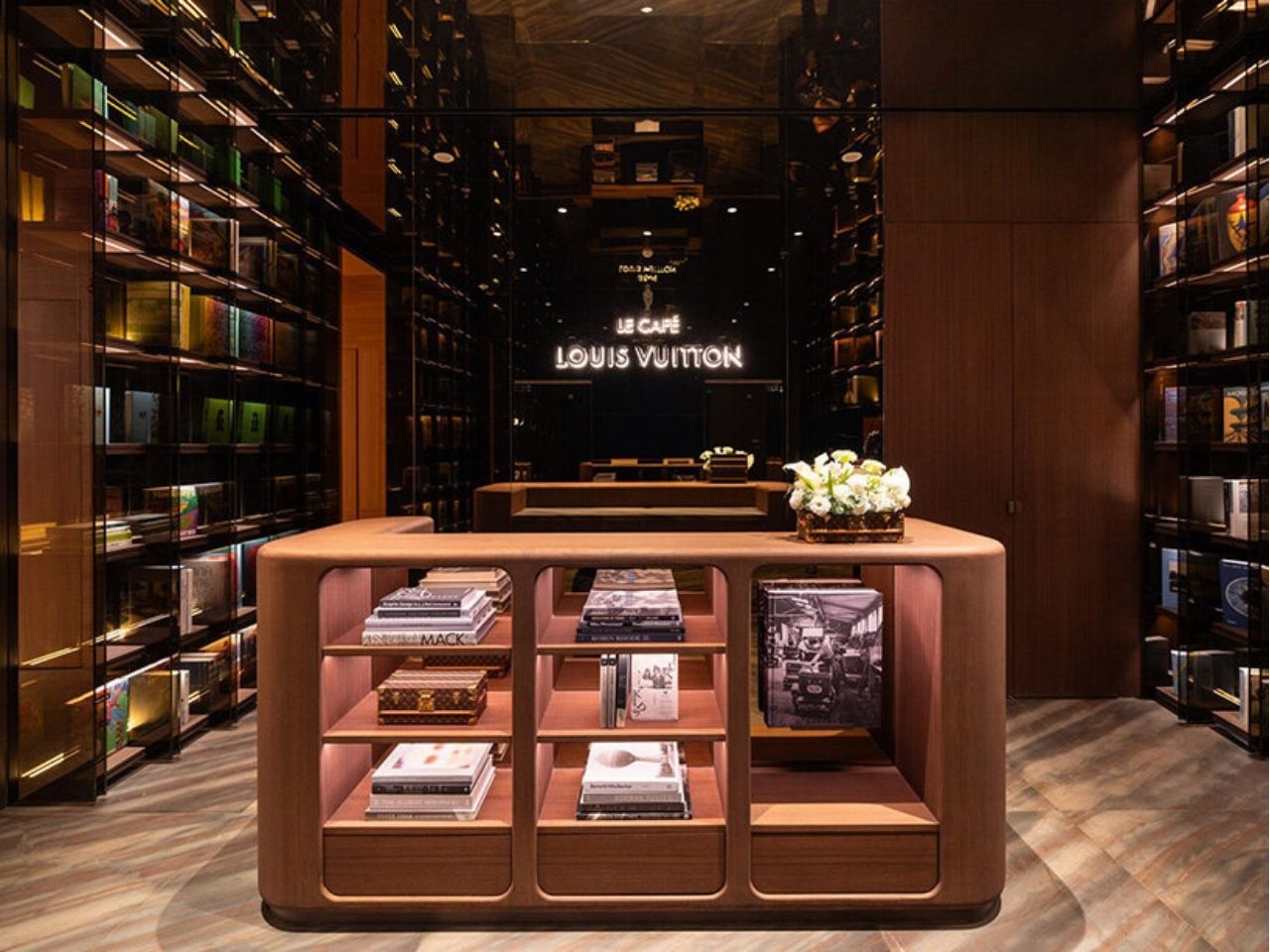
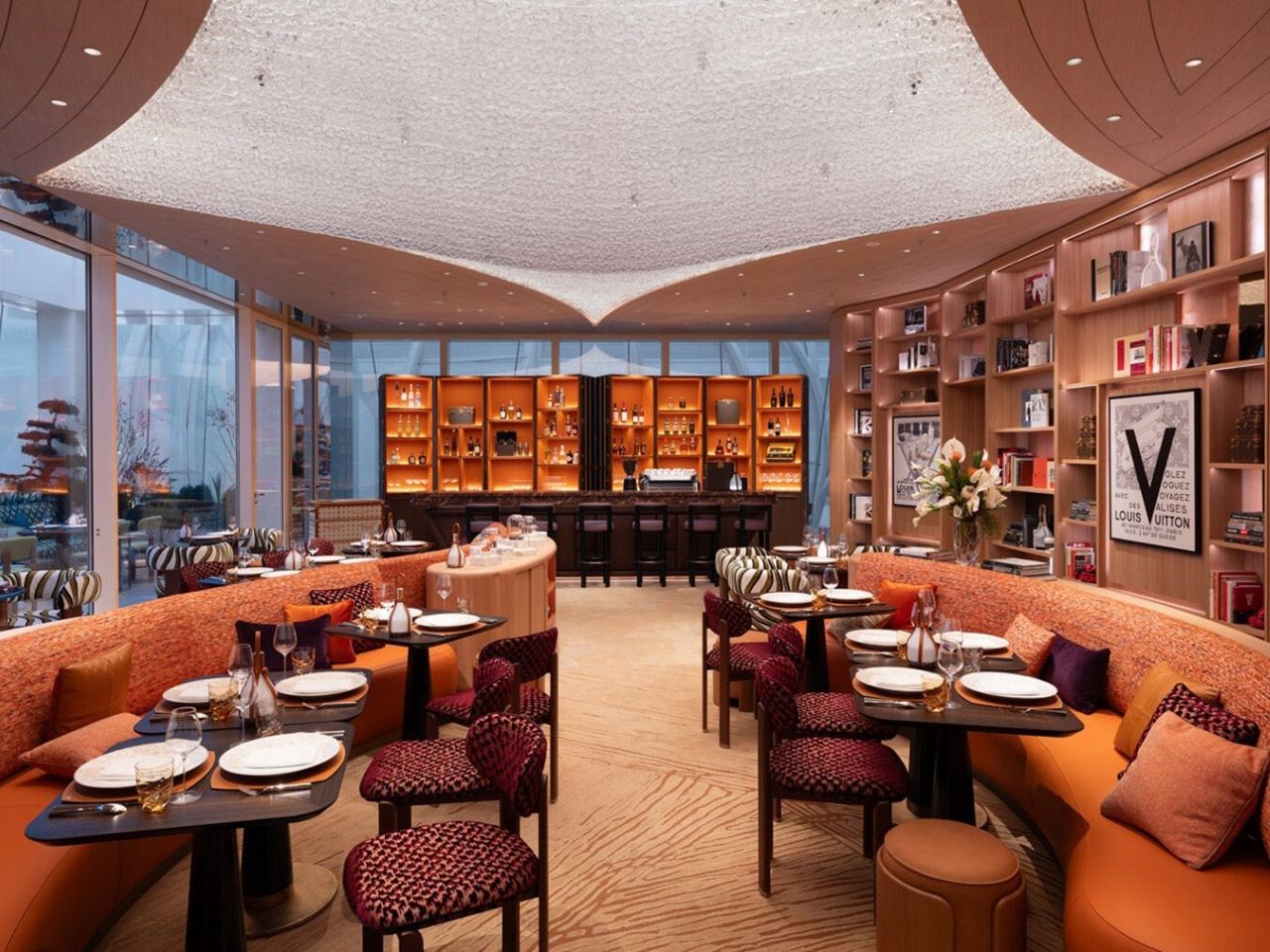
At the top, Le Café Louis Vuitton crowns the building, the brand’s first café in Beijing. Arrival begins with a mirrored vestibule that multiplies reflections before opening into a flowing dining space. The bar references the proportions and layered construction of Louis Vuitton trunks, while a terrace runs along the facade, partially screened by the glass skin and offering views across Sanlitun and the surrounding city.
By combining retail and hospitality within a single architectural envelope, Maison Louis Vuitton Sanlitun demonstrates how experiential design can transcend shopping alone. Through material storytelling, spatial sequencing, and a sensitive response to context, the building creates an immersive world, one that briefly pulls visitors away from Beijing’s relentless pace and invites them into a more deliberate, crafted experience.