Las Vegas in January means two things: CES crowds and overpriced hotel rooms. Global Connect sidesteps both problems on January 5th by hosting wearable tech companies at Mike Tyson’s private villa (no, seriously), giving journalists space to test devices designed to sit on your face, in your ears, or against your skin for hours at a time. Wearables demand different scrutiny than robots or appliances because discomfort kills adoption faster than missing features. AR glasses that overlay useful information but give you a headache after 20 minutes won’t survive. Translator earbuds that work perfectly in quiet rooms but fail in restaurants are useless for actual travel. A stress-regulating wearable that’s supposed to calm you down but feels like a medical device defeats its own purpose.
The lineup spans sensory augmentation, communication, health monitoring, and pet tracking. TCL RayNeo and INMO bring AR glasses with AI embedding. Timekettle has translator earbuds handling real-time cross-language conversations. Vocci’s AI Ring puts an AI notetaker on your fingertips (well, not literally but you know what I mean). Cearvol’s smart hearing solutions adapt to different acoustic environments. ZenoWell’s vagus nerve stimulator uses electrical pulses to regulate stress response. GlocalMe built a wearable tracker and phone for pets. DaÏve created a heads-up display for divers who need data underwater without surfacing. iMpact PR and USA Today are co-hosting with brands that have manufacturing scale and market strategies, not concept sketches. Four hours provides enough runway to discover whether AR glasses cause eye strain, if translator earbuds struggle with accents, or if a vagus nerve stimulator actually makes you calmer or just vibrates annoyingly on your chest.
TCL RayNeo X3 Pro: AR Glasses with Gemini AI
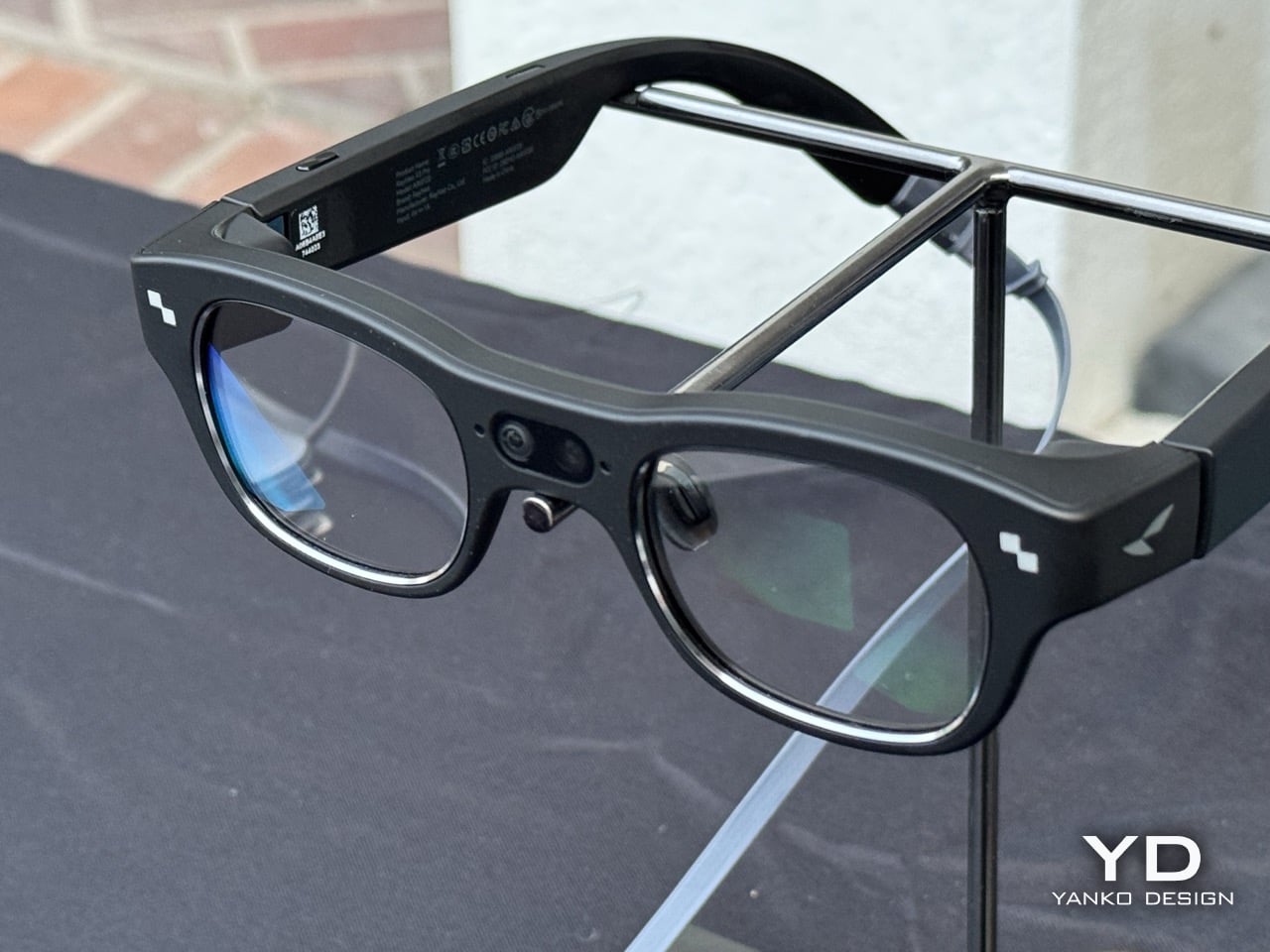
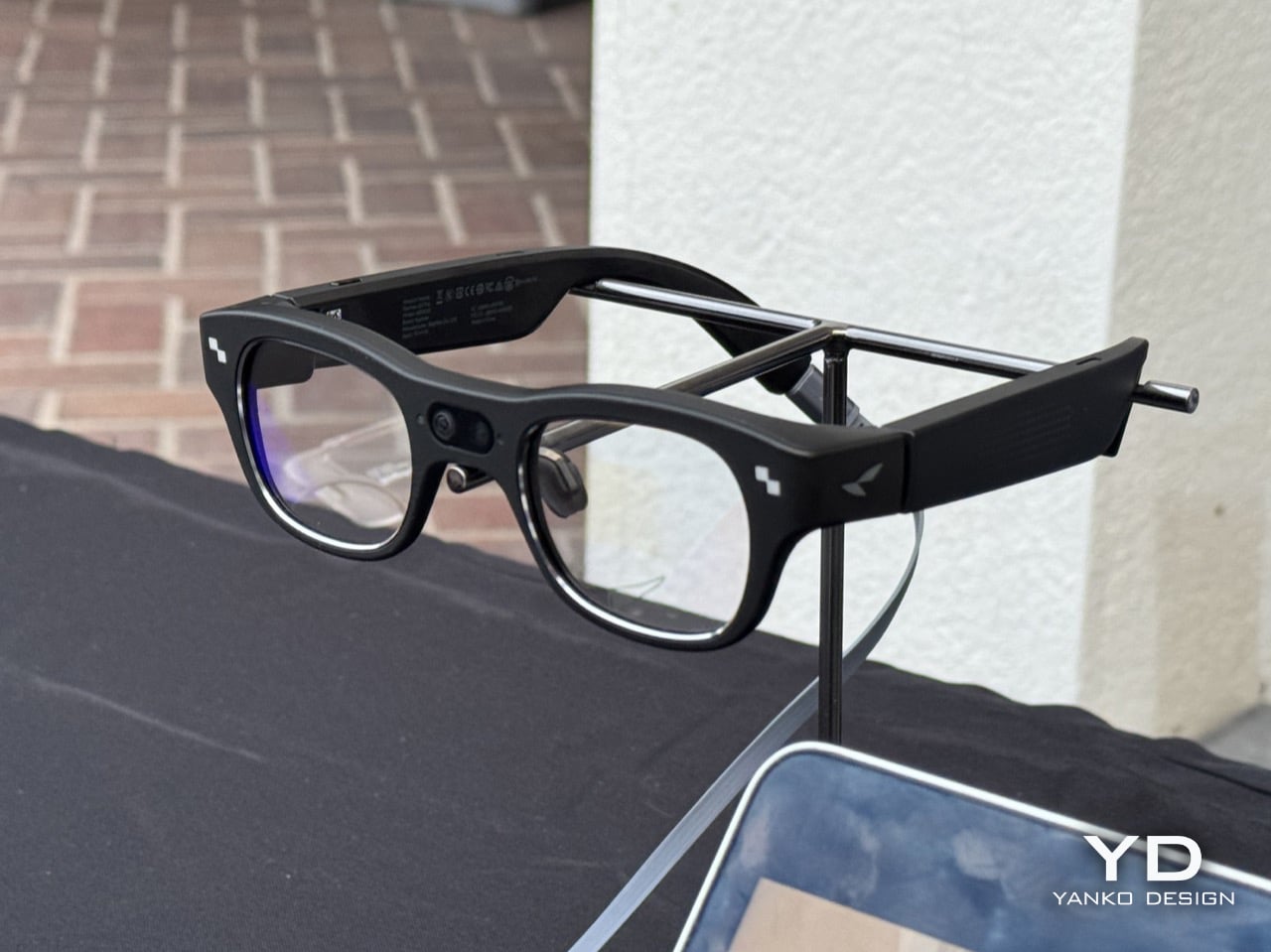
AR glasses have promised to replace smartphones for years, but most prototypes are too heavy, too dim, or too awkward to wear beyond a demo. TCL’s RayNeo X3 Pro addresses those problems by shrinking the optical engine to what the company claims is the world’s smallest MicroLED system, cutting weight by 36% to just 76 grams while maintaining 2,500 nits of brightness that stays visible in any lighting condition. The display projects a 43-inch floating aerial screen into your field of view without blocking your sight, running Google Gemini 2.5 AI for context-aware assistance that understands both voice commands and visual recognition. You can ask it to identify objects, translate conversations across 14 languages in real time using Microsoft’s translation engine, or record meetings and let the AI summarize the content afterward. The glasses run on a Qualcomm Snapdragon AR1 Gen 1 platform with a 245mah battery providing four hours of use and a 38-minute fast charge. Control happens through an intuitive five-dimensional temple interface or voice activation, keeping your hands free while the system processes requests.
TIME named the X3 Pro one of the Best Inventions of 2025, and it’s been available since December 17 at $1,299. RayNeo was initially incubated within TCL before spinning out to focus exclusively on AR technology, and the X3 Pro reflects years of iteration aimed at making augmented reality wearable for actual daily use instead of just trade show demonstrations. The developer-friendly app ecosystem connects the digital world with physical spaces, letting third-party apps build experiences that overlay information, navigation, or entertainment onto your environment. Whether AR glasses become mainstream or remain niche depends largely on whether people will tolerate wearing technology on their faces all day, and the X3 Pro’s 76-gram weight combined with ergonomic design addresses the comfort problem that killed previous attempts. Four hours of battery life won’t get you through a full workday, but it covers meetings, commutes, or travel scenarios where real-time translation and hands-free information access provide genuine utility beyond novelty.
Vocci AI Note-Taking Ring: Recording on Your Finger
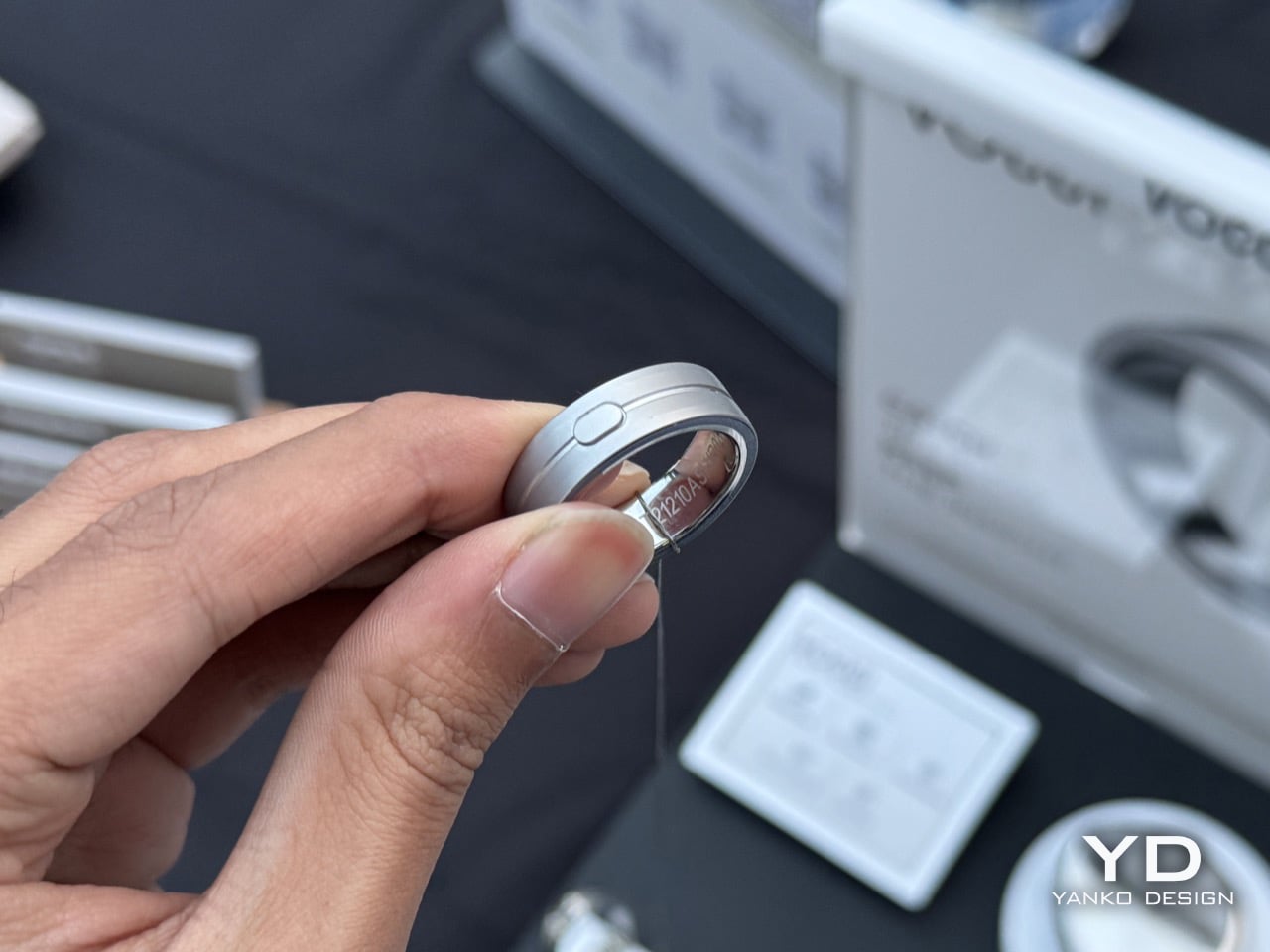
Smart rings usually track heart rate or count steps, but Vocci decided your finger should handle something different: recording and transcribing conversations without pulling out your phone. The AI note-taking ring weighs 3.5 grams, measures 2.8mm thick and 6.8mm wide, and captures audio from a 5-meter effective pickup range with enough battery life for eight hours of continuous recording. You tap once to highlight key moments during a conversation, and the ring records, summarizes, and organizes those insights automatically. Double-tap starts full recording mode, with AI cleaning the audio, understanding context, and structuring your ideas without requiring manual note-taking. The system supports 112-plus languages with multilingual speaker recognition, handling transcription accuracy across different accents and languages while encrypting everything locally before syncing to private cloud storage.
The ring comes with a portable charging case and fast charges in 30 minutes, addressing one of the persistent complaints about wearables that die halfway through the day. IPX4 water resistance means it survives hand washing or light rain without failing. The AI-powered summaries and highlights turn raw audio into organized notes accessible through the companion app, which displays weekly summaries, key insights, and searchable transcripts. This positions Vocci somewhere between productivity tool and memory aid, letting you participate in conversations without simultaneously trying to write everything down or remember to review voice memos later. Whether wearing a recording device on your finger feels natural or creepy probably depends on your comfort level with ambient recording technology, but for people who spend their days in meetings, interviews, or brainstorming sessions, the ability to tap a ring instead of fumbling with a phone or notebook offers genuine workflow improvement. The question is whether you’ll remember it’s there after a week or if it becomes another forgotten wearable gathering dust in a drawer.
Timekettle W4: Bone-Conduction Translation in Your Ears
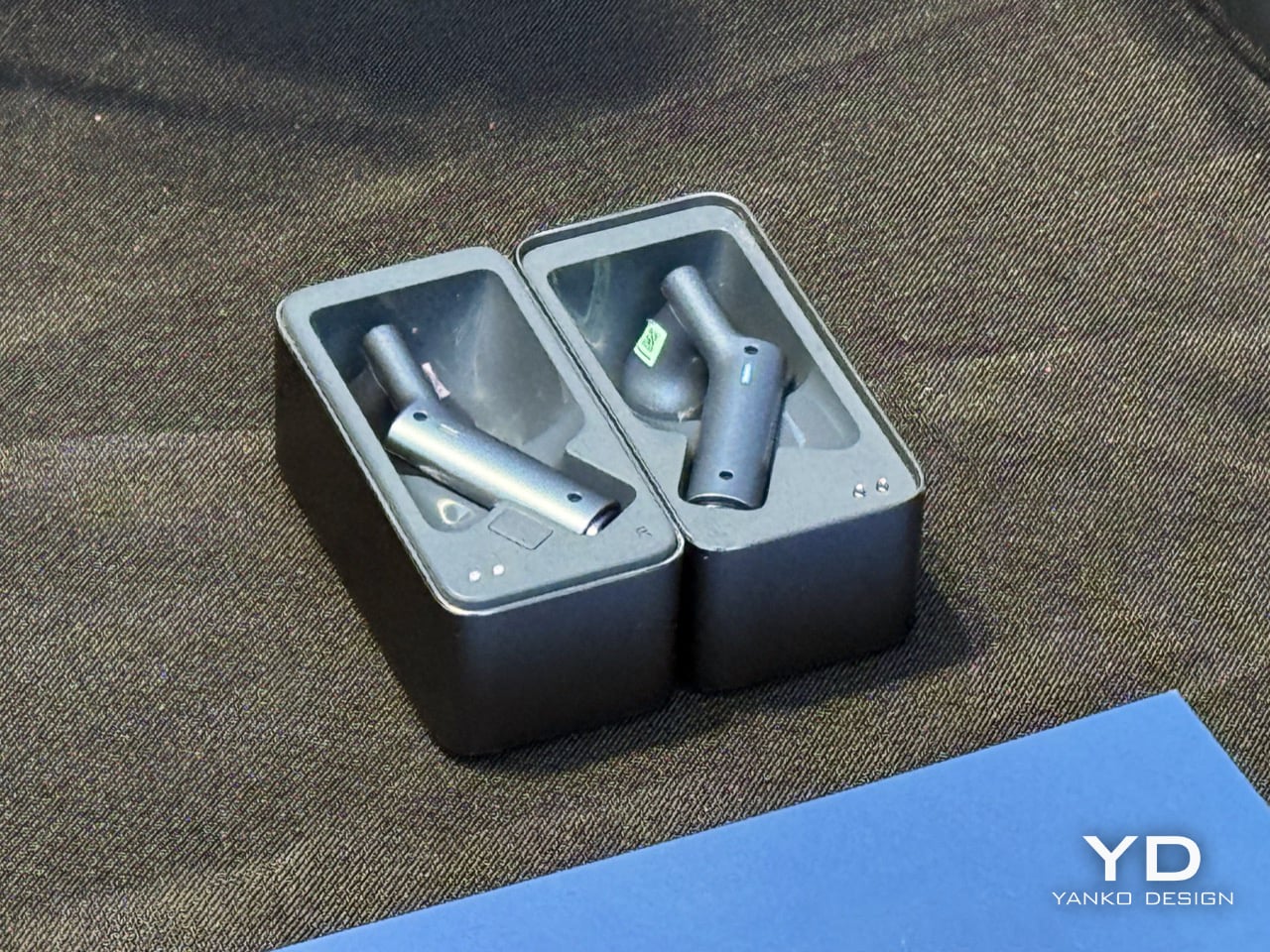
Timekettle has been iterating on AI translator earbuds for years, so the W4 arrives with some history behind it rather than pretending to be a first draft. These are bone‑conduction interpreter earbuds built for sustained, in‑depth conversations rather than quick tourist phrases. A bone‑voiceprint sensor sits in the stem and picks up vibrations from your jaw while directional mics handle the rest, which lets the W4 keep recognizing your speech with claimed 98 percent accuracy even in environments up to 100 dB, like subways, airports, or trade show floors. The hardware runs Babel OS 2.0, Timekettle’s in‑house translation platform, and handles 43 languages and 96 accents with around 0.2‑second latency, so replies feel conversational instead of like waiting on a phone app to catch up. A 30‑degree tilted stem is shaped to hug the face, and the charging case comes in matte Midnight Blue or Sandy Gold, pitched as something you can keep on a conference table without it looking like a gadget museum piece.
The software side is where the W4 differentiates itself from generic translation buds. Large language models do context analysis and self‑correction, so when you say “complement” and it hears “compliment,” the system uses surrounding context to fix the mistake before it reaches the other person. Modes are tuned to specific scenarios: one‑on‑one mode for direct conversations, listen‑and‑play for conferences where you’re mostly listening but occasionally speaking, and a record‑and‑summarize flow that logs meetings, preserves audio, and generates AI summaries of key points afterward. Battery life lands at about four hours of continuous translation or eight hours of music on a charge, stretching to roughly ten hours of translation with the case. They also double as regular Bluetooth earbuds, so you are not carrying a single‑purpose device; you can stream music between meetings and still have an on‑demand interpreter when someone switches languages mid‑sentence.
INMO Air3 and GO3: Two Takes on AR Glasses
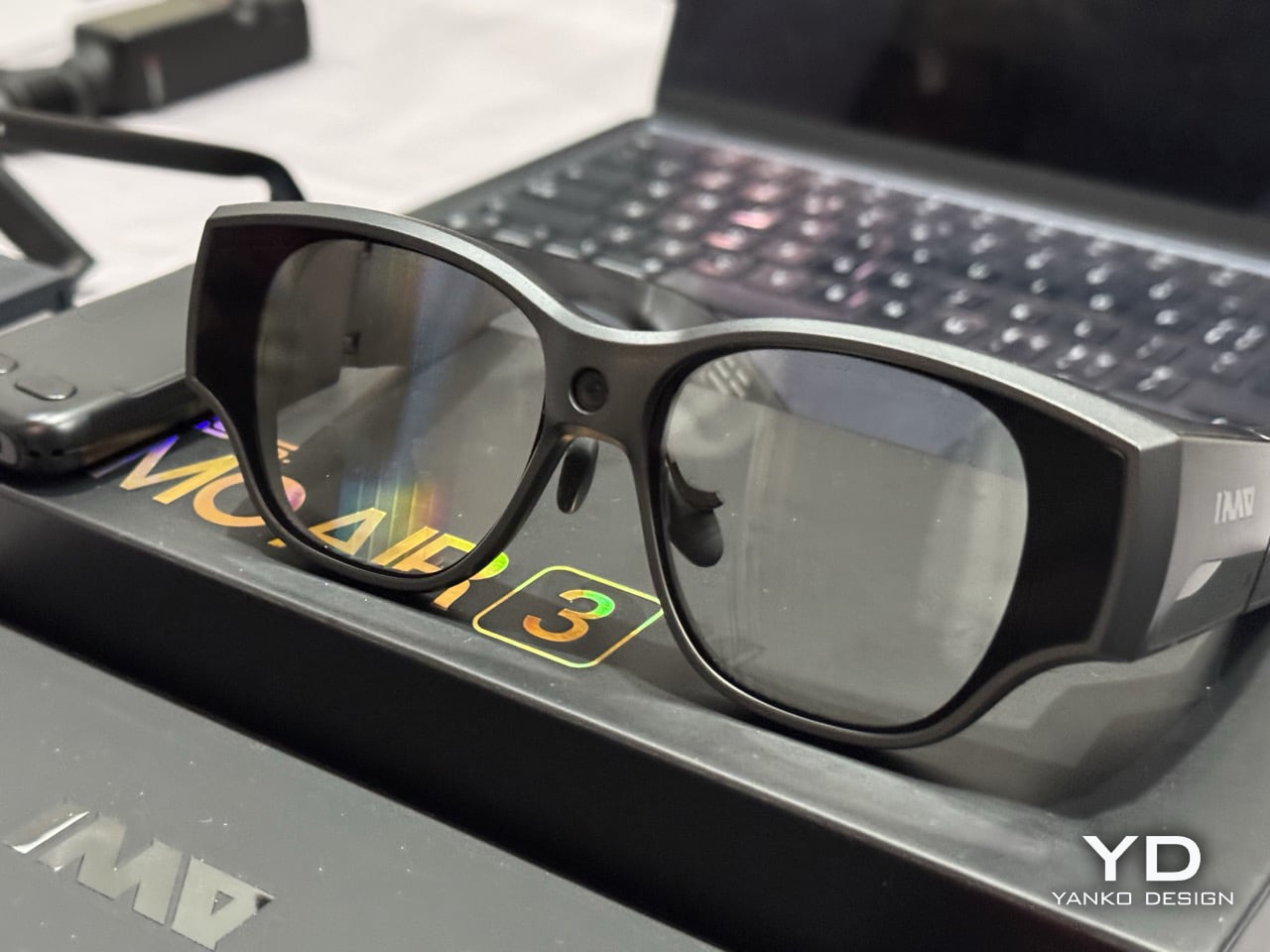
RayNeo built its X3 Pro around Gemini AI and a massive 43-inch virtual display, but INMO is showing up with two models that split the difference between immersive entertainment and discreet everyday utility. The Air3 is the world’s first all-in-one AR glasses equipped with a full-color 1080P waveguide display, using a Sony Micro-OLED panel that hits 600 nits peak brightness and stays visible even in bright outdoor environments. It runs on a Snapdragon XR processor with 8GB RAM, 128GB storage, and comes preloaded with Google Mobile Services, giving you access to the full Android app ecosystem. The 36-degree field of view projects a 150-inch virtual screen for streaming Netflix, browsing YouTube Shorts, or playing AAA games through cloud gaming platforms. Control happens through INMO’s Spatial Ring system, offering button-plus-touchpad controls or iPad-like gesture navigation, with a 16-megapixel ultra-wide camera (120-degree field of view) built in for capturing photos or video. The Air3 is pitched as portable entertainment for camping, fishing, vacations, or anywhere you want a private theater without carrying a monitor.
The GO3 takes the opposite approach by prioritizing subtlety over specs. It uses a dual-eye green monochrome Micro-LED display with 1,500 nits brightness and a 30-degree field of view, looking more like regular glasses than visible tech. At approximately 53 grams, it’s even lighter than the RayNeo X3 Pro, with ultra-slim 8mm temples that integrate the mainboard and battery while maintaining a discreet appearance. The GO3 comes with four interchangeable frame styles designed for professional, academic, casual, and social environments, all with a five-axis CNC-machined matte finish that resists fingerprints. The swappable battery system includes two 270mAh batteries and a charging case, with magnetic battery replacement taking about five seconds so you can stay powered all day. AI capabilities include translation supporting 77 source languages and 200-plus target languages, an AI teleprompter with automatic scrolling based on speaking pace, meeting summaries with speaker identification and transcription, and HERE Maps navigation displayed hands-free. A built-in camera privacy cover physically shields the lens in public or social settings, addressing the creepiness factor that killed Google Glass years ago. INMO’s positioning these as everyday wear that happens to have AI functionality, rather than AR entertainment devices that occasionally get used for productivity.
Dreame AI Haptic Ring
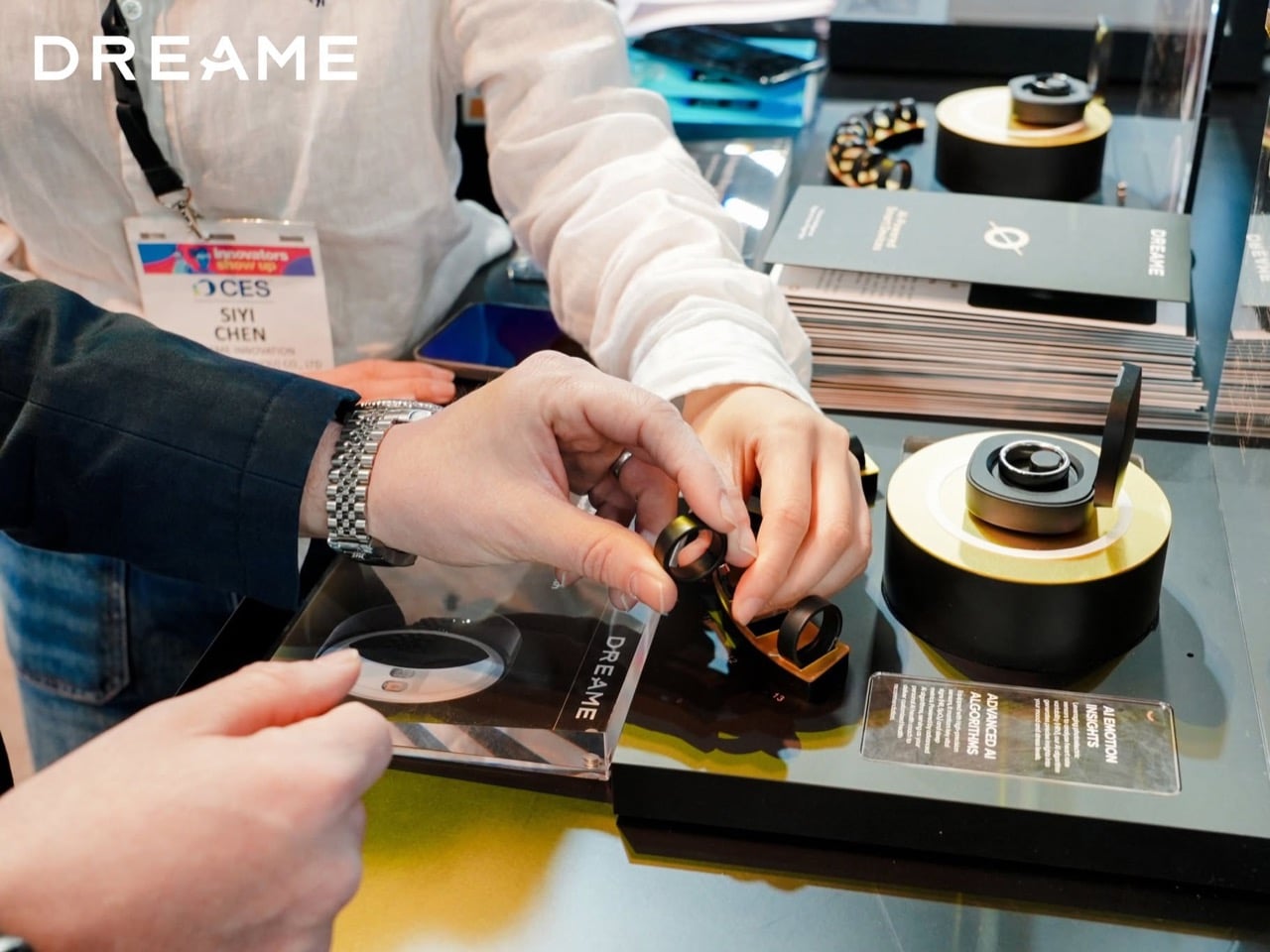
Dreame built its reputation on robot vacuums and smart home cleaning devices, making the AI Haptic Ring a dramatic pivot into wearable health technology. The company is betting that its experience with AI and intelligent manufacturing translates to a category where comfort, continuous wear, and biometric accuracy matter more than suction power or obstacle avoidance. The ring weighs just 5.2 grams with a 2.5 mm profile, using nano-ceramic zirconium on the exterior and antibacterial austenitic steel on the interior. It comes in eight sizes and handles 5 ATM water resistance, meaning it survives swimming and diving without issue. Battery life hits 7 days on a single charge, with the magnetic charging case extending that to over 150 days of total availability.
The core feature is what Dreame calls fingertip haptic interaction, a proprietary micro-motor system that delivers calls, messages, and wellness alerts through subtle vibrations instead of screen-based notifications. This works alongside an AI emotional intelligence model that analyzes PPG signals, body temperature, and motion patterns to identify shifts in physical and emotional states over time, going beyond standard heart rate monitoring. The ring also includes an AI sleep engine that tracks deep sleep, light sleep, and REM phases, plus multi-mode activity tracking for running, swimming, hiking, and other sports. A touch-sensitive zone on the side lets users control music, advance presentation slides, or trigger a remote camera shutter without unlocking their phone.
ZenoWell: Vagus Nerve Stimulation for Stress and Sleep
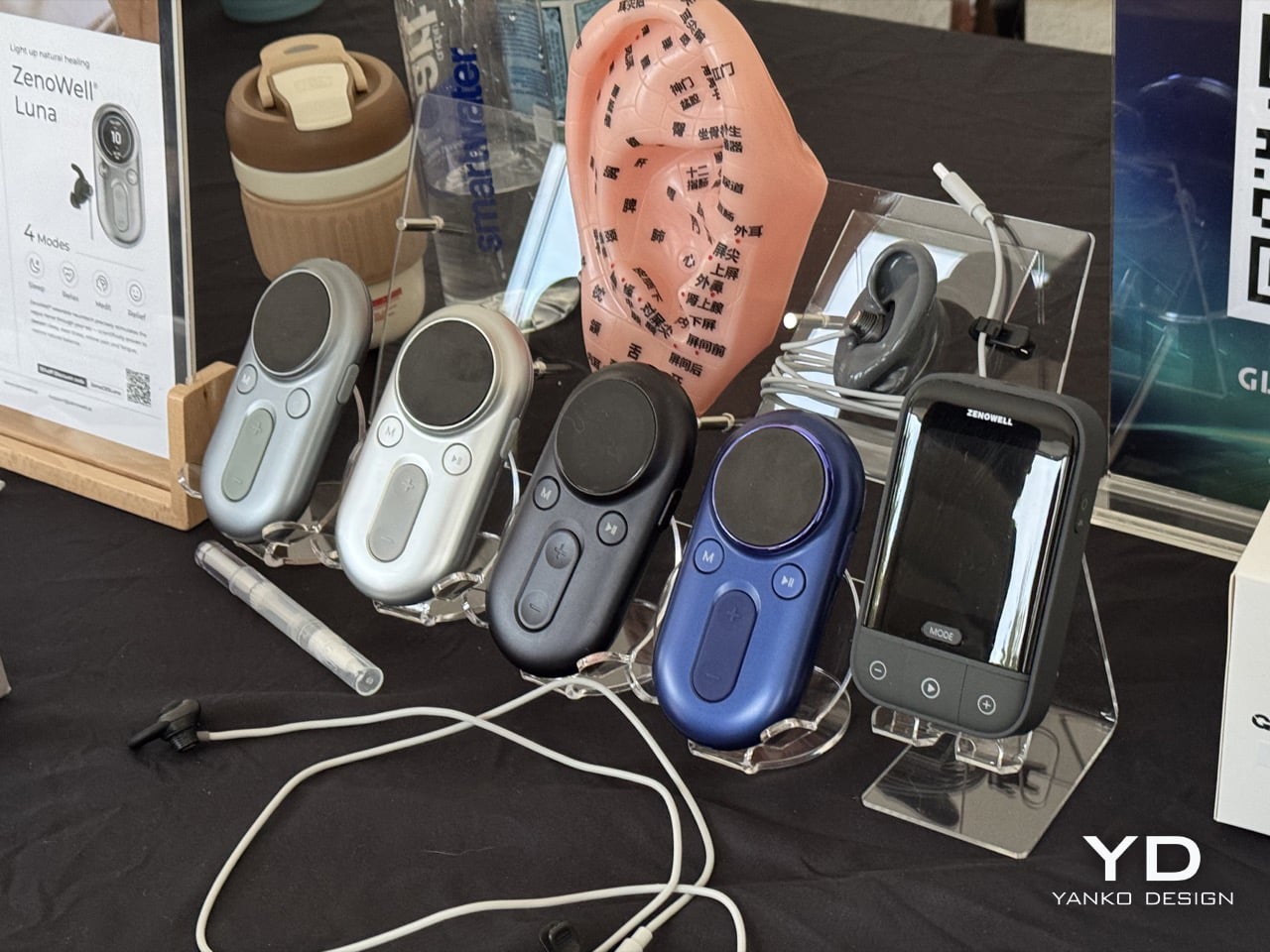
Most wearables track what your body is doing; ZenoWell claims to actively change it by stimulating the vagus nerve through your ear. The company uses transcutaneous auricular vagus nerve stimulation (taVNS) technology, targeting the only branch of the vagus nerve located on the body’s surface with electrical pulses designed to enhance parasympathetic activity, restore balance to the autonomic nervous system, and modulate brain activity and neurotransmitters. Founded in Heidelberg, Germany with engineering in Shenzhen, China, ZenoWell positions itself as wearable neurotech that activates the body’s natural healing power rather than relying on medication or quick fixes. The science backs some of this; a 2024 JAMA Network Open study showed eight weeks of taVNS use resulted in significant clinical improvement for chronic insomnia, outperforming control groups in reducing anxiety, depression, and fatigue, with effects lasting up to 20 weeks and demonstrating good safety and high patient compliance.
ZenoWell has two main devices: Luna and Vita, both offering 100% vagus nerve coverage through ergonomically designed earpieces. Luna includes an enhanced Relief Mode targeting headaches for both acute episodes and long-term prevention, along with modes for relaxation, sleep improvement, fatigue reduction, inflammation management, and body pain relief. Vita focuses on faster sleep onset with 20-minute sessions, deep relaxation, and body-mind balance restoration, claiming better sleep, less fatigue, and reduced body pain within seven days. Both devices offer multiple modes: Sleep Mode for insomnia and sleep disturbance, Relax Mode for stress and anxiety, Medit Mode for body pain and inflammation, and Relief Mode for headaches including migraines and cluster headaches. The system requires consistent use; most benefits appear after two to four weeks, with full effects observable after 24 weeks depending on the condition being addressed. Whether strapping a nerve stimulator to your ear feels like self-care or medical intervention probably depends on your tolerance for wellness technology that requires daily commitment, but for people exhausted by sleep medications or chronic stress who want alternatives beyond meditation apps, ZenoWell offers a science-backed approach with published clinical results instead of just marketing promises.
GlocalMe PetPhone: Connectivity for Everyone, Including Your Dog
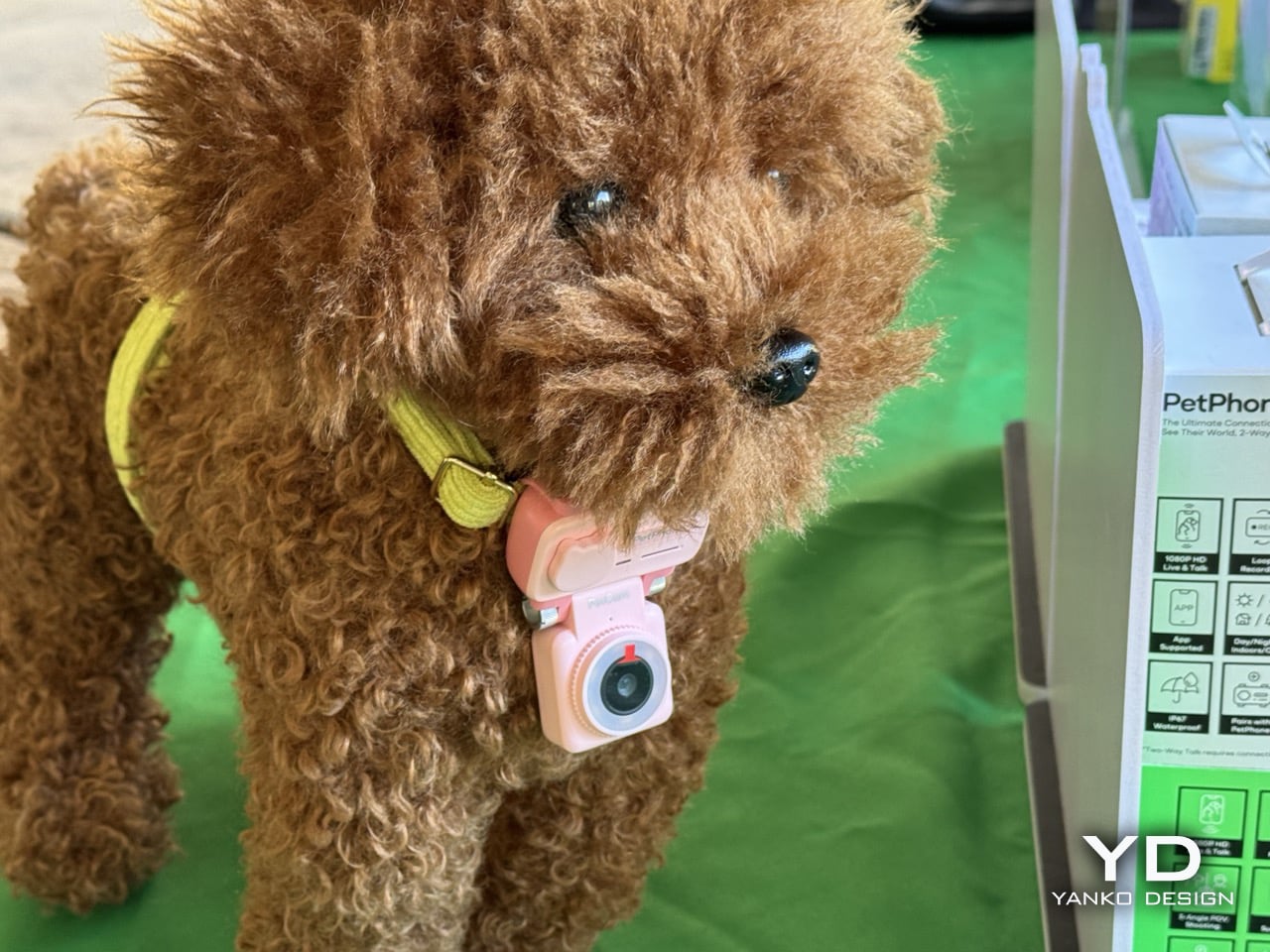
GlocalMe built its entire brand around a patented Cloud SIM technology that virtualizes SIM cards, letting devices automatically connect to the best available network across 200-plus countries without needing a physical card. This obsession with seamless connectivity has produced a surprisingly diverse product lineup, from the Numen Air 5G mobile hotspot and GuardFlex Pro backup router to the UniCord, a charging cable with a built-in emergency hotspot and GPS. The company, a brand under uCloudlink, even offers the RoamPlug, a travel adapter that doubles as a 4G LTE hotspot for up to 10 devices. While these gadgets solve connectivity problems for remote workers and international travelers, GlocalMe’s most ambitious product applies that same technology to a user who can’t complain about dropped calls: your pet.
The PetPhone bills itself as the first smartphone for pets, and it makes a surprisingly strong case for the title. While most pet trackers are just GPS tags that tell you where your dog is, the PetPhone adds two-way audio, letting you call your pet and talk to them in real time to ease their loneliness when you’re away. You can also play soothing music, send recorded voice messages, or set alarms for feeding times and potty breaks. The tracking itself is more robust than standard GPS, using a six-fold positioning system (GPS, AGPS, LBS, Wi-Fi, Bluetooth, and Active Radar) that provides precise location data even in dense forests or indoor areas where other trackers fail. It runs on GlocalMe’s SIM-free Cloud SIM network, connecting to over 390 carriers worldwide to eliminate dead zones. The AI health features monitor activity over six weeks to establish a baseline for your pet’s normal routine, sending alerts if they move significantly less than usual. With an IP67 waterproof rating and a five-day battery life, it’s designed for actual pet life, not just a walk around the block.
Cearvol: Hearing Aids That Don’t Look Like Hearing Aids
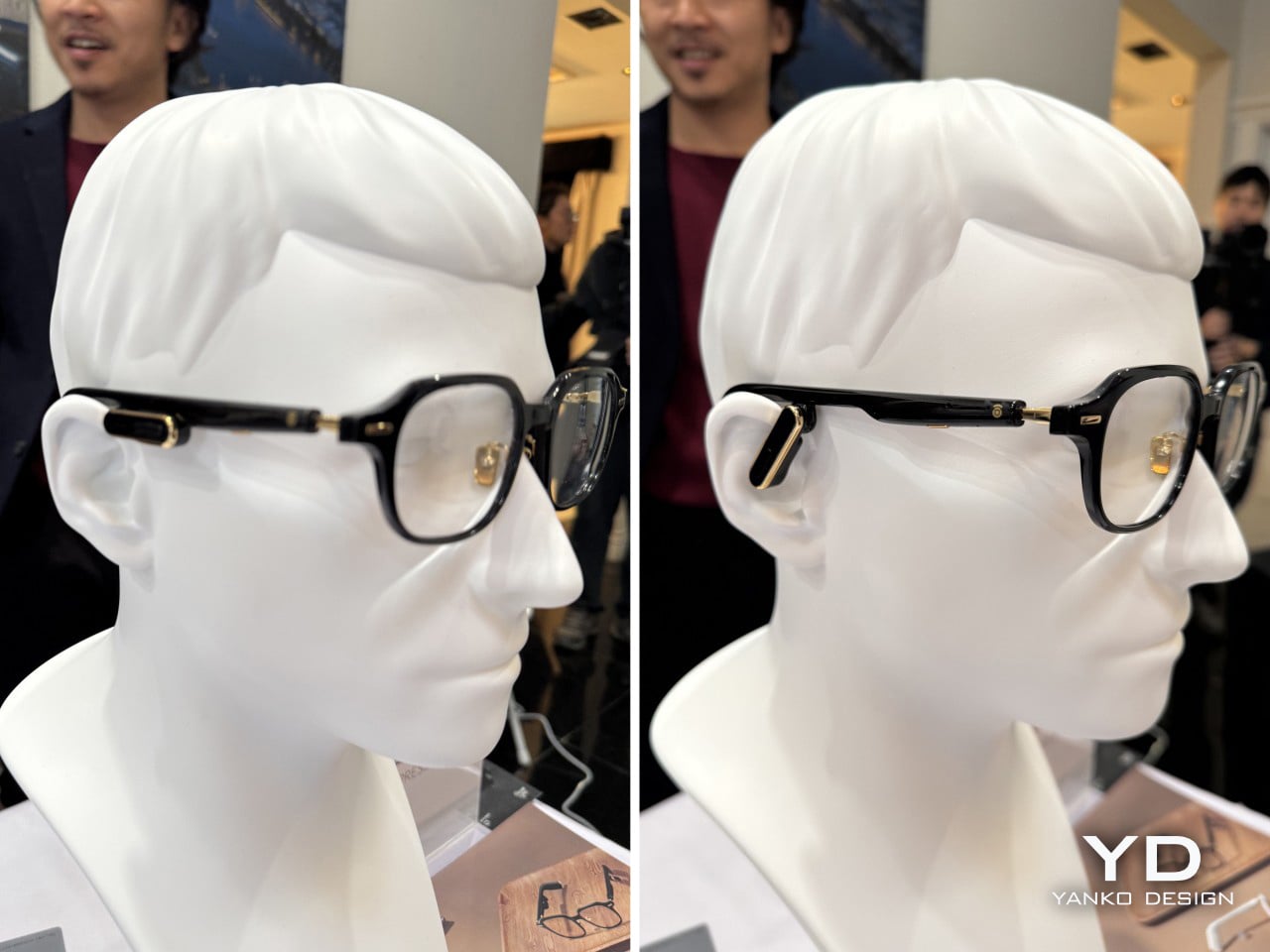
Hearing aids have a persistent image problem, often looking more like medical devices than modern technology. Cearvol, a company with a 20-year history in acoustics developing products for brands like JBL and Sennheiser, is tackling that stigma head-on by designing hearing solutions that look and feel like consumer electronics. Their entire product line, from the Diamond X1 and Liberte earbuds to the discreet Nano in-the-canal device and the more traditional Aurora, is powered by NeuroFlow AI 2.0. This DNN-based system learns complex acoustic patterns from real-world data to compensate for hearing loss, balancing sound across frequencies for clear listening without the over-amplification that makes traditional hearing aids sound harsh. The goal isn’t just to restore hearing but to create companions that people actually want to use, integrating Bluetooth streaming and stylish designs that blend in rather than stand out.
Two products at Global Connect showcase this philosophy perfectly. The Lyra integrates a 24-channel hearing aid directly into a pair of stylish glasses, combining optical vision with seamless hearing assistance in a single device. With a 14-hour replaceable battery, Bluetooth 5.3 for audio streaming, and an AI noise reduction system powered by three omnidirectional microphones, it’s a clever solution for people who already wear glasses and want an all-in-one device. The Wave takes a different approach, packing a 24-channel hearing aid into a pair of earbuds that come with a unique remote microphone. This small, touchscreen-equipped remote can be placed up to 10 meters away to precisely pick up voices in a large meeting room or noisy restaurant, streaming the audio directly to the earbuds. It even has an AUX-IN for connecting to TVs or airplane entertainment systems. Both Lyra and Wave represent a thoughtful re-imagining of what a hearing aid can be, one integrating the technology into an everyday object and the other extending its functionality far beyond what a simple earbud could accomplish.
Momcozy W1 Wellness: Warm-Massage Meets Wearable Pumping
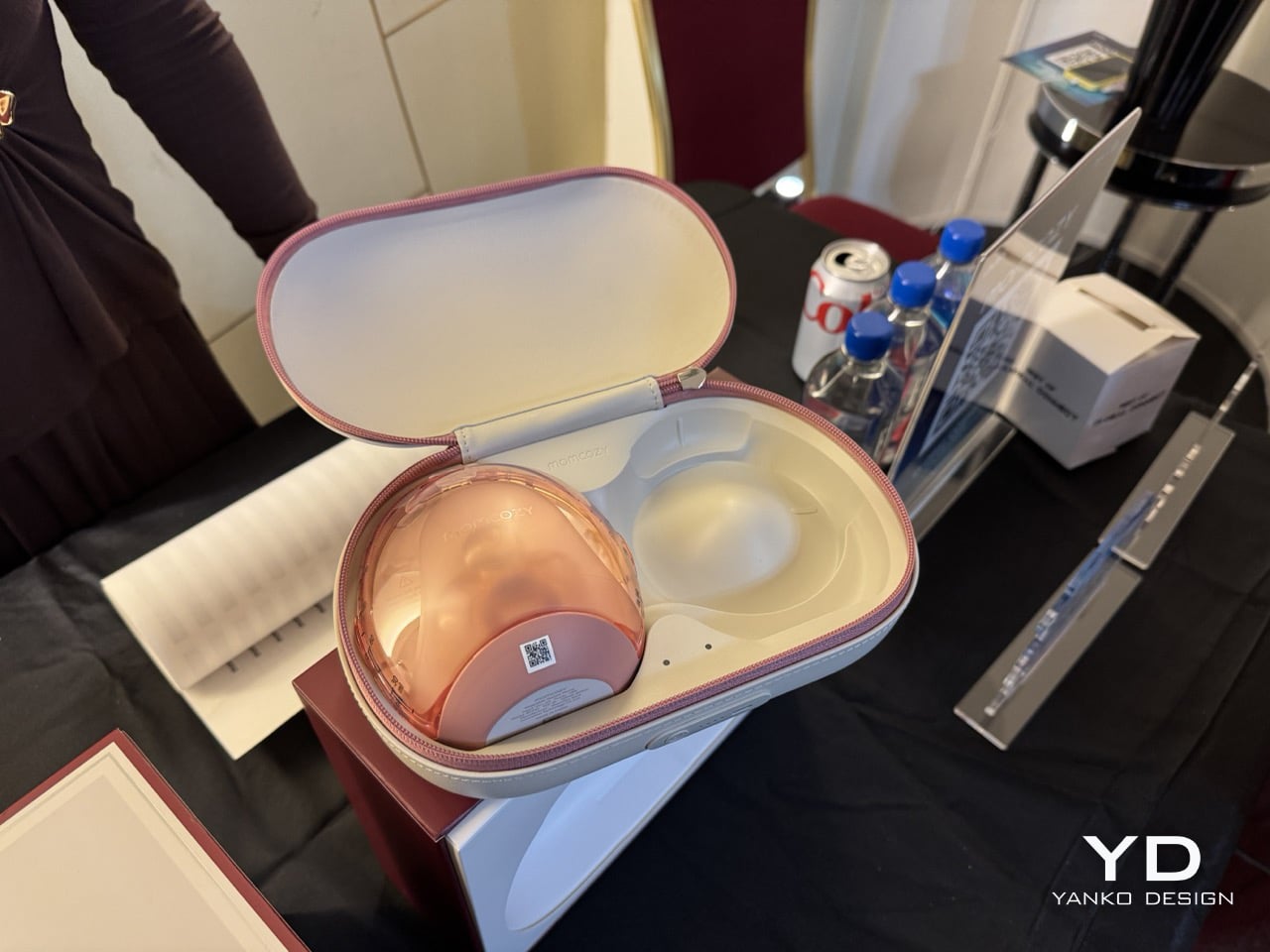
Shown Above – Momcozy Air 1
Wearables usually mean smartwatches, AR glasses, or fitness rings, but Momcozy is demonstrating that “wearable” can also mean medical devices designed to free up your hands while solving real health problems. The W1 Wellness is what the company calls the world’s first warm-massage wearable breast pump, combining technology typically found in wellness devices with the practical needs of nursing mothers. The system integrates adjustable heat (between 99°F and 106°F) with rhythmic vibration massage, both designed to improve milk flow and efficiency. The warming zone envelopes the breast for even heat distribution, addressing one of the limitations of traditional warming options like hot pads that only hit certain areas. Research shows massage improves milk output and helps with complete emptying, and Momcozy is packaging both features into a hands-free system controlled through app-based automated programming.
This positions Momcozy with two different solutions for the same problem. The Air 1 prioritizes discretion and portability for working moms who need to pump during meetings or while traveling, maintaining 62 core patents and awards including a 2025 TIME Special Mention. The W1 prioritizes comfort and efficiency through warmth and massage, targeting mothers who struggle with clogged ducts, slow flow, or discomfort during pumping sessions. Both feature transparent tops for precise alignment, wireless charging for 15-plus pumping sessions, and suction up to 280mmHg, but they’re solving slightly different pain points within the same user base. Whether heat and massage become standard features or remain premium options depends on whether the efficiency gains justify the cost difference, but for mothers dealing with engorgement or flow issues, the W1 offers features that traditional pumps and even other wearables don’t currently provide. Momcozy’s strategy reveals how wearables are fragmenting into specialized variants, each addressing specific user needs rather than trying to be one universal solution.
Daïve HUD: An Underwater Augmented Reality Dive Computer
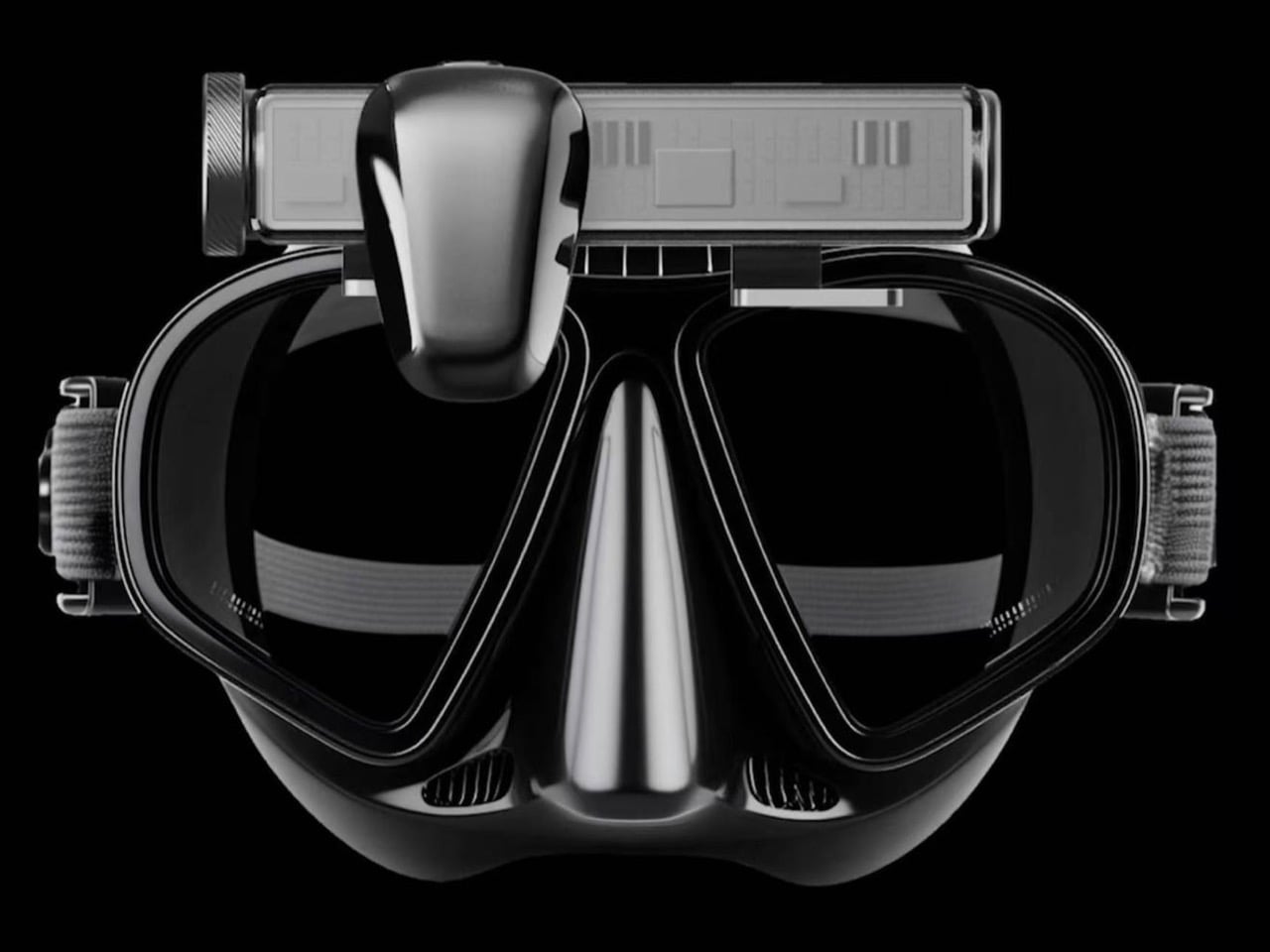
The most persistent interruption in scuba diving isn’t a curious fish; it’s the constant, focus-breaking glance down at a wrist-mounted computer to check depth, time, or remaining air. Daïve’s HUD clips directly onto your existing dive mask to solve that problem, projecting a full-color display into your sightline so critical data feels like a natural part of your underwater view. The system has three modes tailored for recreational, technical, and freediving, with layouts designed for how decisions are actually made in each discipline. It’s controlled with a glove-friendly rotary selector that provides tactile mechanical feedback, a crucial detail for anyone who’s tried to operate a small button with thick neoprene gloves. The display flips up instantly when you don’t need it, and a dual-battery, non-sealed power design supports over 20 hours of use for long days of repeated dives.
What makes the Daïve HUD more than just a convenient display is its connectivity. It pairs with a wireless smart gauge for real-time air monitoring and uses a multi-mode communication system combining optical, near-field RF, and acoustic links for real-time team awareness and coordination with other divers. This isn’t just about convenience; it’s a fundamental shift in situational awareness. For instructors monitoring students, photographers managing cameras, or technical divers navigating caves, reducing the cognitive load of constantly checking a wrist computer is a massive safety and performance upgrade. The entire system is modular, with swappable components and an open software path designed to evolve over time, positioning the Daïve HUD less as a single gadget and more as a long-term platform for underwater augmented reality.