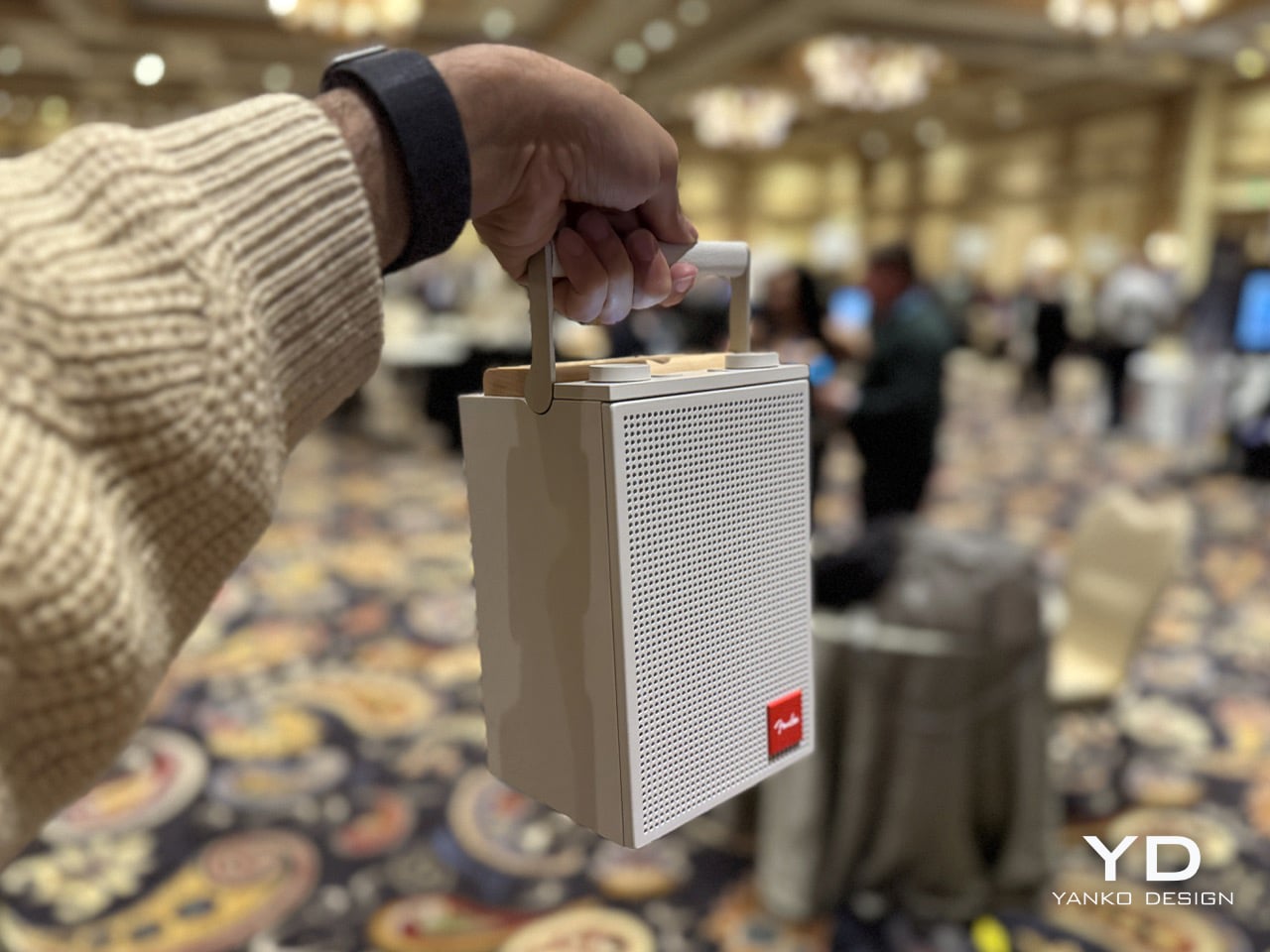
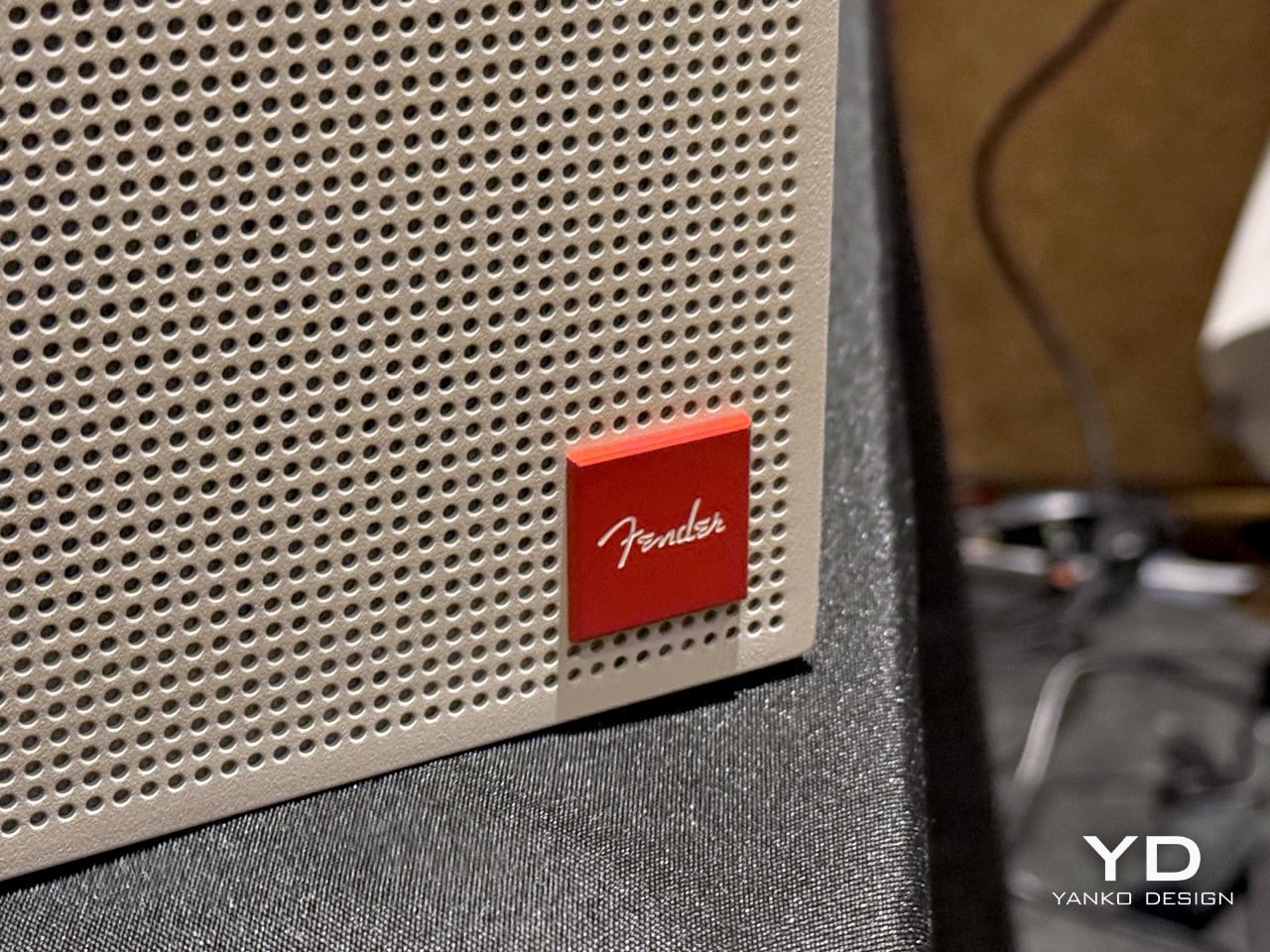
Fender made guitars and amplifiers legendary. Portable Bluetooth speakers seemed like an odd pivot until I saw the ELIE 6 at CES 2026. The design language reminded me immediately of brands like Vifa or Bang & Olufsen, that distinctly Nordic approach where simplicity becomes sophistication. A perforated grille, a wooden handle, clean geometric proportions. Nothing about it shouted “look at me,” yet I couldn’t stop looking.
Audio demos at trade shows rarely impress. Convention center acoustics murder nuance, and most companies crank volume to compensate. Fender’s team played it differently. They let the ELIE 6 perform at moderate levels, and the three-driver configuration with its dedicated subwoofer produced soundstage depth I didn’t expect from something this compact. The wood on that top panel carries particular meaning for anyone who’s held a Fender guitar. It’s actual fretboard wood, the same material musicians touch every time they play. That detail transforms a carrying handle into something that connects this speaker to decades of musical heritage while maintaining the almost-IKEA minimalism that makes it fit anywhere.
Designer: Fender Audio
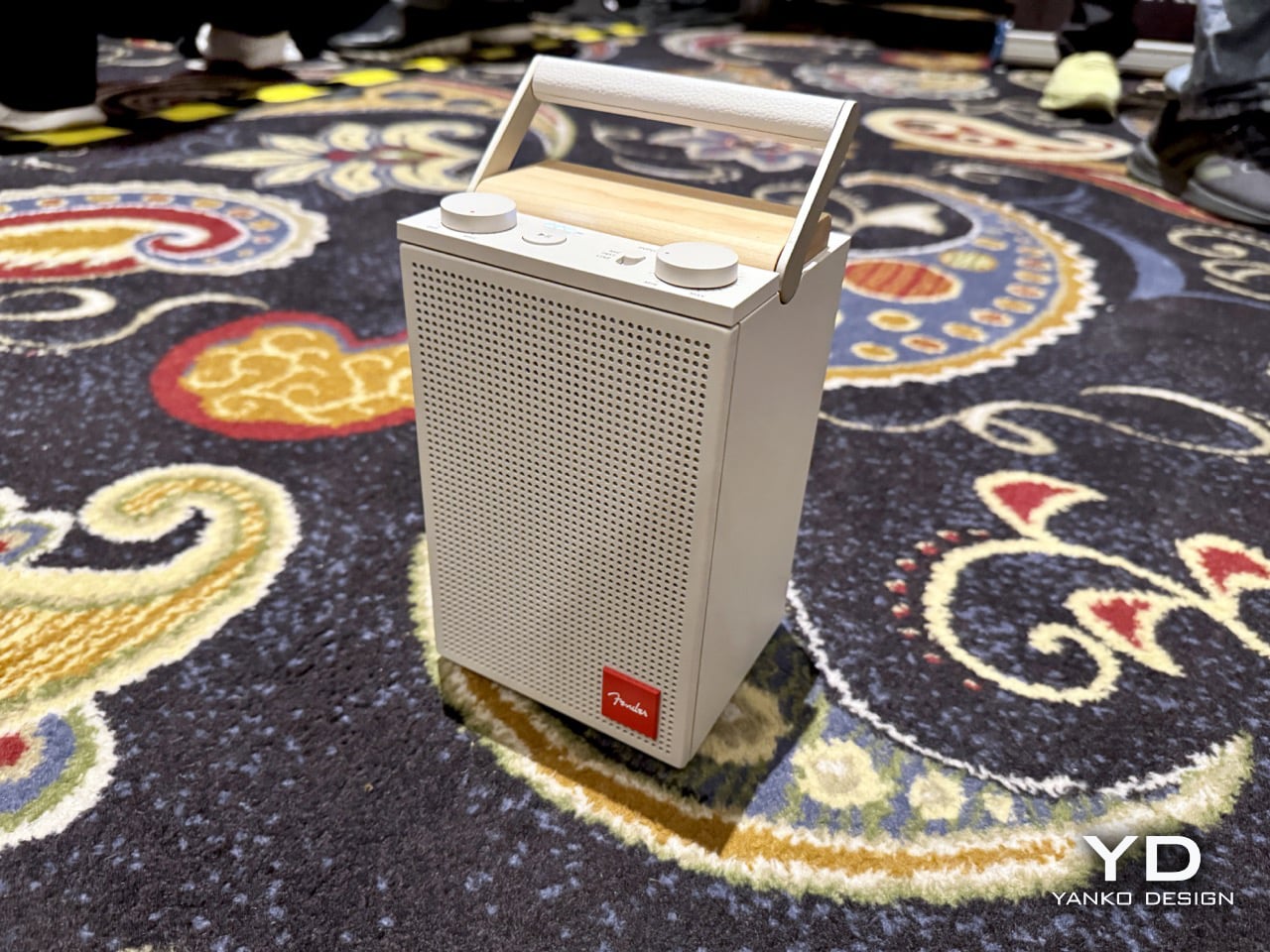
That fretboard wood handle is such a clever, confident move. It signals that Fender understands its legacy without feeling trapped by it. Instead of slapping a vintage logo on a generic box, they integrated a core component of their instrument-making craft into a new product category. This approach feels so much more authentic than the retro-for-retro’s-sake styling we see from competitors. The tactile satisfaction of the physical volume knobs on top reinforces this. In an industry obsessed with pushing every control into a smartphone app, providing simple, direct interaction feels like a luxury. This speaker is built to be used, carried, and touched, not just administered from a screen.
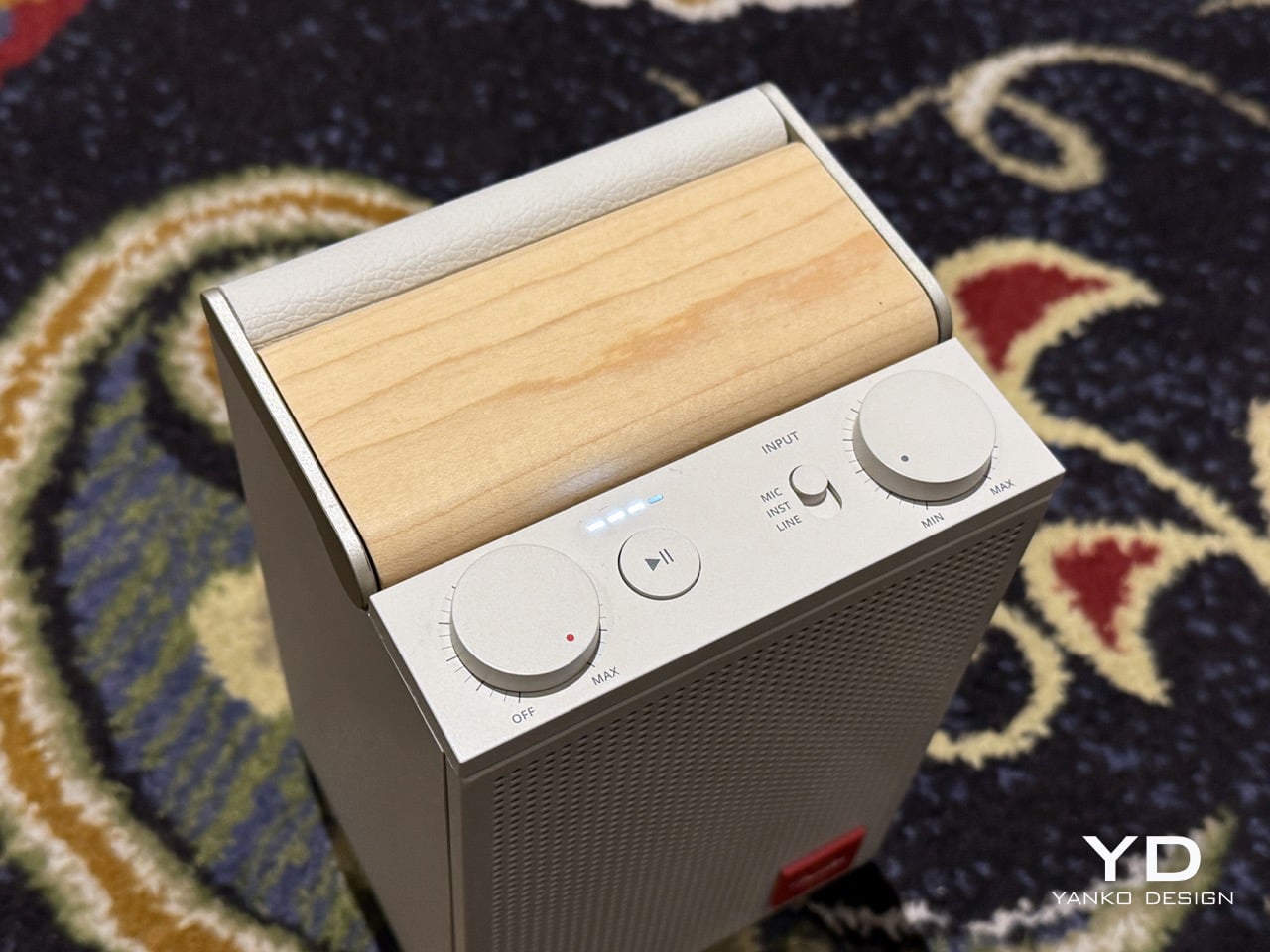
Fender packed a dedicated tweeter, a full-range driver, and a separate subwoofer into this compact frame, which explains the audio fidelity. This three-driver setup is powered by 60 watts and, interestingly, a Waves system-on-a-chip. That SoC is the key to delivering higher output with minimal distortion, a common failure point for portable speakers when you push the volume. The battery life is rated for up to 18 hours, which is more than enough for a full day of use, and a quick 15-minute charge gives you another 90 minutes of playback. These are solid, practical specs that back up the premium design.
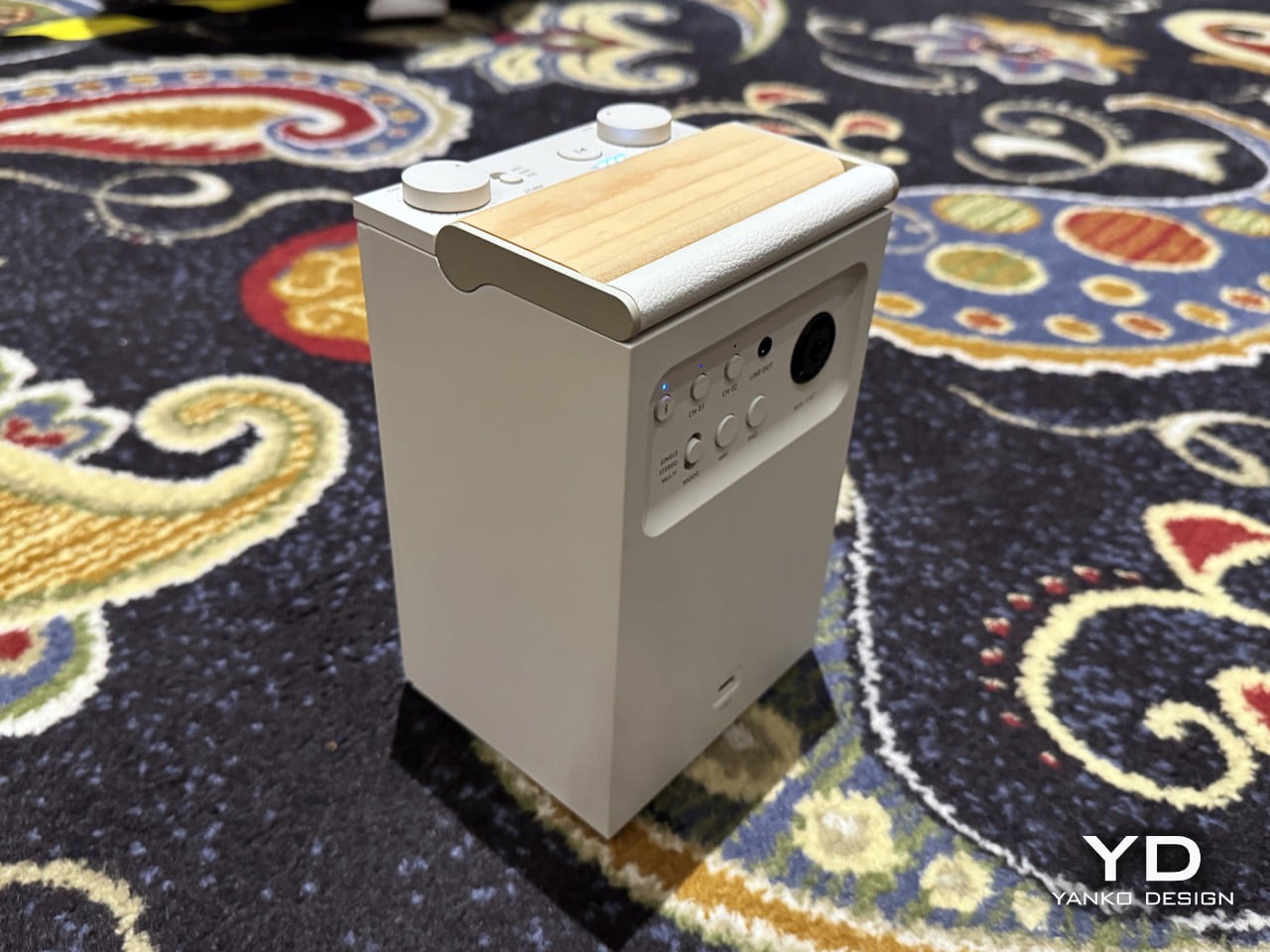
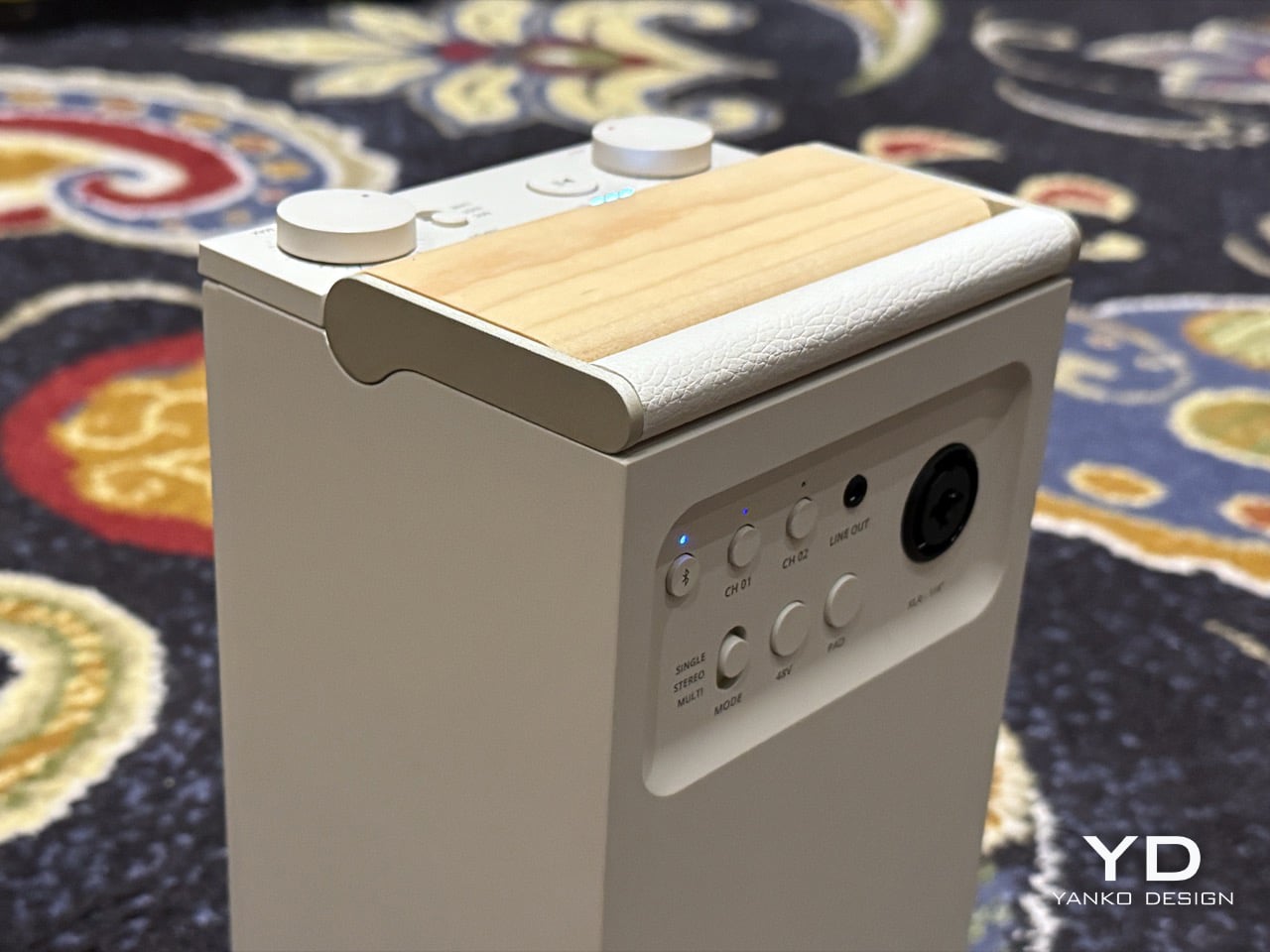
The real surprise is the four-channel input capability. This is where Fender’s deep understanding of musicians and creators becomes obvious. You can connect and mix audio from four different sources simultaneously. Think about the practicality: a guitarist can plug in and play along to a backing track from their phone, or a small group can mix a mic, an instrument, and a laptop for a small performance. This feature elevates the ELIE 6 from a passive listening device into an active creative tool. It’s a thoughtful, useful function that you simply do not find on other Bluetooth speakers in this category, and it makes the $299 price tag feel entirely reasonable.
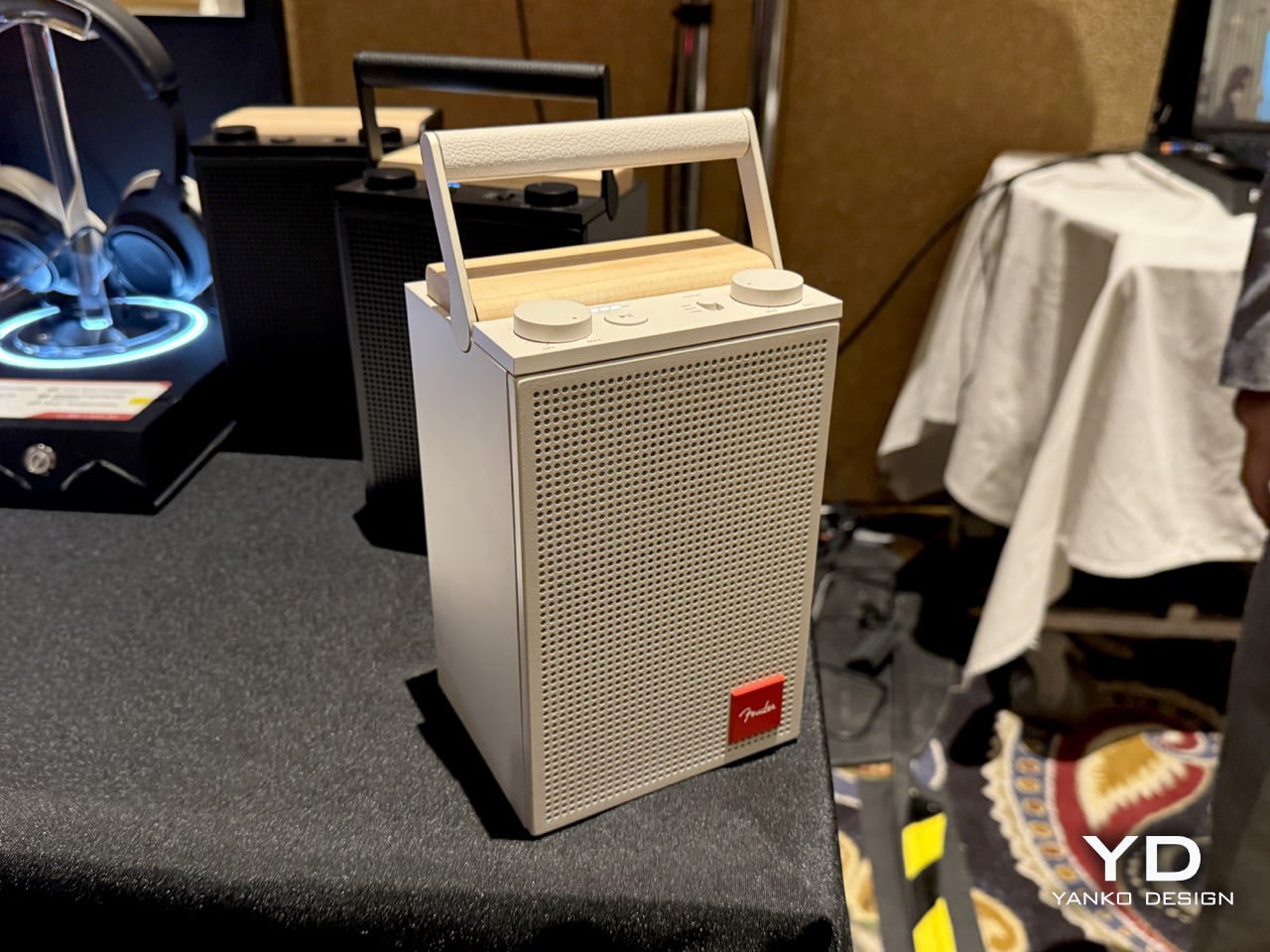
Fender Audio could have taken the easy route by making a speaker that looked like a miniature amplifier. Instead, they built something that respects contemporary design while embedding their DNA in a subtle, meaningful way. The ELIE 6 feels like a complete thought. It balances a sophisticated Scandinavian aesthetic with robust audio engineering and genuinely useful features born from a deep understanding of how people create and interact with sound. It’s a strong first step into consumer audio, and it proves Fender is thinking about its future, not just coasting on its past.