When your car company starts selling pickleball paddles, you know we’ve officially entered a new dimension of brand expansion. Tesla, the same company that brought us electric vehicles and the occasional flamethrower, has teamed up with Selkirk Sport to create the Tesla Plaid Pickleball Paddle, a limited-edition piece of sports equipment that costs more than some people’s monthly car payments.
Let’s talk about that price tag first. At $350, this paddle is basically the Hermès Birkin of the pickleball world. For context, professional tennis players like Carlos Alcaraz swing rackets that cost $299. But here we are, in a timeline where a paddle designed to hit a plastic ball over a net somehow commands a higher price than equipment used at Wimbledon. The paddle sold out in under three hours during its initial release, which either says something profound about consumer behavior or absolutely nothing at all.
Designers: Tesla and Selkirk Sport
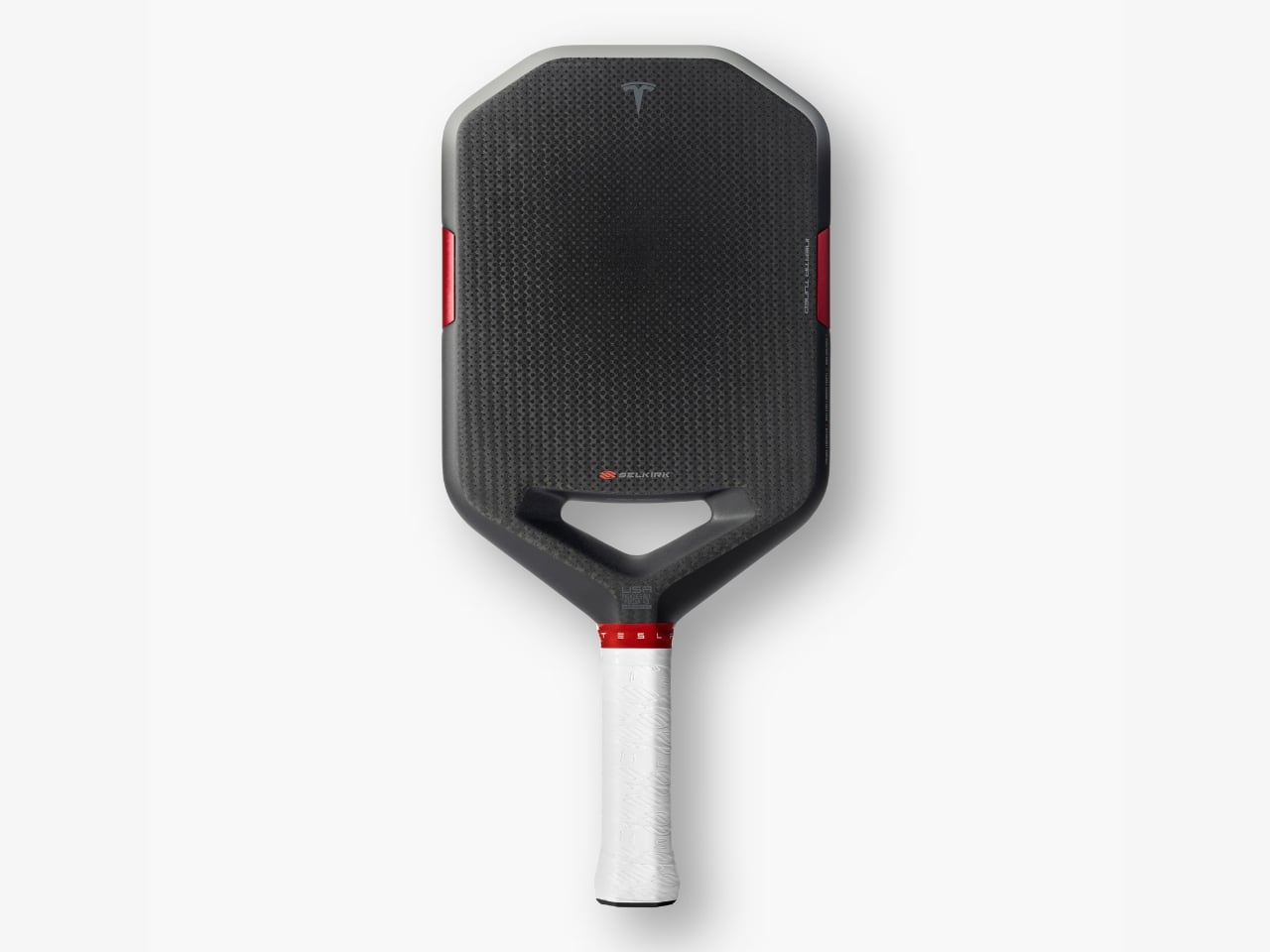
So what exactly are you getting for that eye-watering price? According to Tesla and Selkirk, this isn’t just some branded merchandise with a logo slapped on it. This is apparently a genuine engineering collaboration that involved actual wind tunnel testing. Yes, the same aerodynamic technology that helps Tesla vehicles slice through air resistance has now been applied to your weekend hobby. The paddle features an elongated form with an open-air throat design and rounded, edgeless perimeter, all calculated to reduce drag while increasing your reach on the court.
The specifications read like something from a tech blog rather than a sports equipment catalog. We’re talking about a two-ply carbon fiber face, a full-foam core, and Selkirk’s patent-pending InfiniGrit Surface designed to generate spin. There’s also a MOI Tuning System integrated into the design, because apparently moment of inertia is now a critical concern when you’re playing a sport that was invented in someone’s backyard. The paddle weighs between 7.8 and 8.1 ounces, measures 16.4 inches by 7.5 inches, and comes USAP approved, which means it’s actually legal for official tournament play.
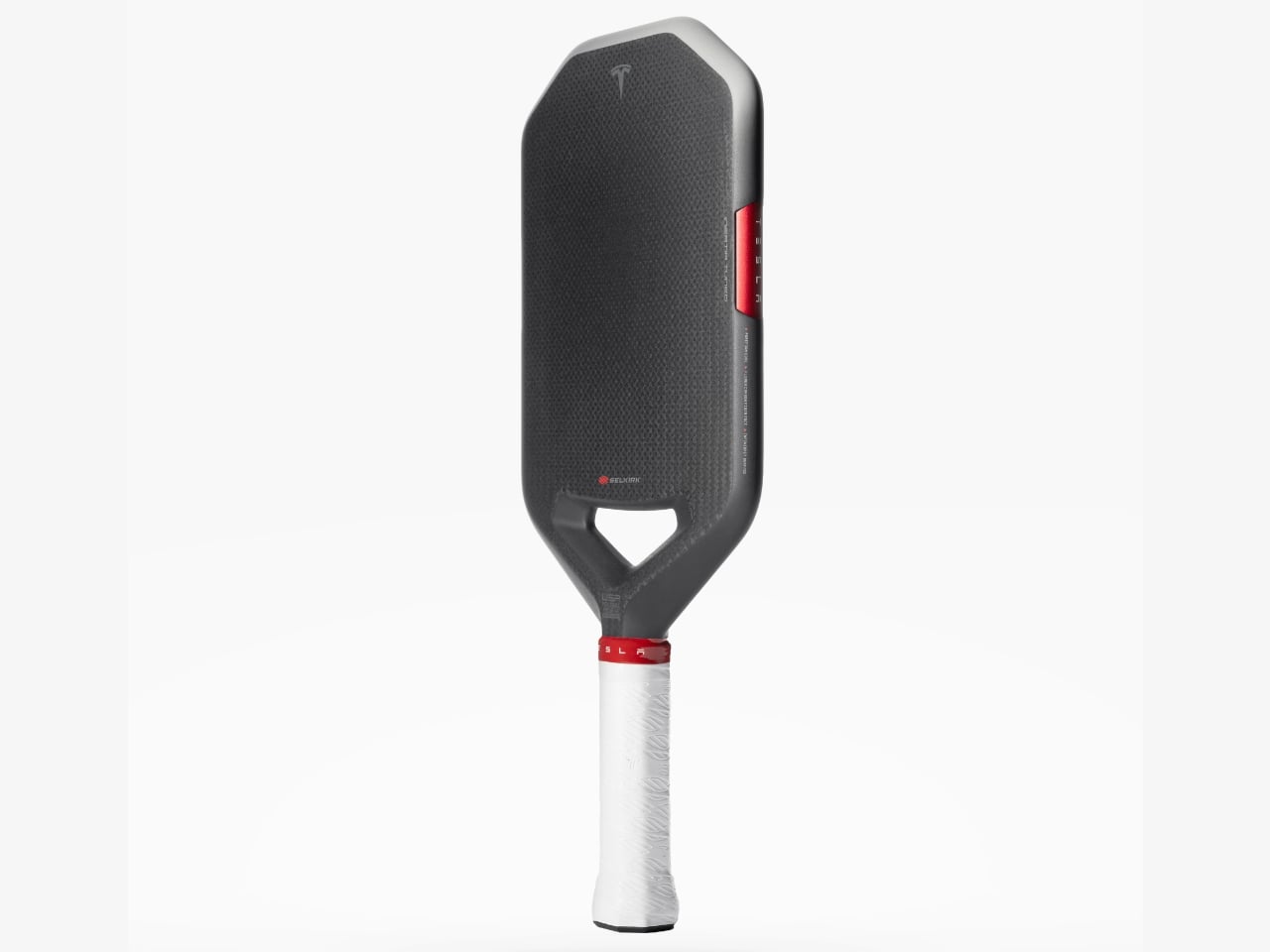
But here’s where things get interesting from a design perspective. This collaboration isn’t just about Tesla lending its name to boost sales. Selkirk’s co-owner and Director of Research and Development has emphasized that Tesla’s aerodynamics expertise was key in determining the paddle’s overall shape. The elongated form and sharp edgeless style weren’t arbitrary aesthetic choices but the result of actual testing in Tesla’s facilities. In a world where most sports equipment collaborations are purely cosmetic exercises, there’s something almost refreshingly nerdy about bringing automotive engineering to a paddle sport.
The secondary market has predictably gone wild. The paddle spawned a thriving resale ecosystem on eBay almost immediately, because of course it did. When something is both expensive and artificially scarce, collectors and resellers descend like moths to a very expensive flame. The paddle dropped again in an even more limited quantity recently, ensuring that the hype cycle continues churning.
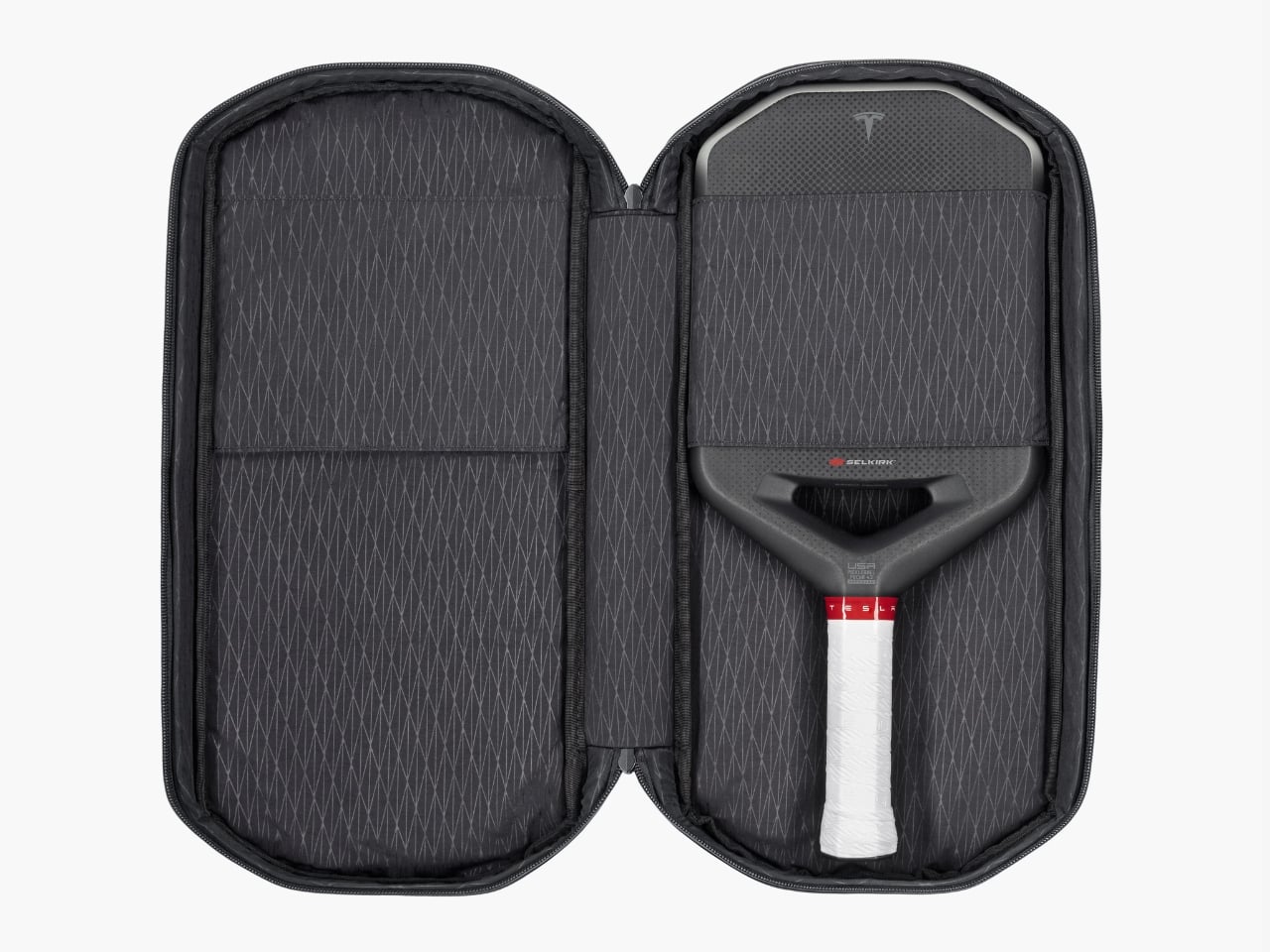
From a pure design standpoint, the Tesla Plaid Paddle represents an interesting collision of worlds. It’s where automotive engineering meets recreational sports equipment, where brand extension becomes an engineering challenge, and where price points lose all connection to reality. The paddle looks sleek in its black and red colorway, clearly drawing visual cues from Tesla’s Plaid mode branding. It’s undeniably cool looking, and there’s genuine innovation in applying aerodynamic principles to paddle design.
But it’s also kind of ridiculous. Pickleball, for all its recent popularity surge, remains a sport most people play on converted tennis courts at their local park. Bringing wind tunnel testing and automotive-grade engineering to that equation feels simultaneously impressive and completely absurd. It’s the design world equivalent of using a sledgehammer to crack a walnut, except the sledgehammer costs $350 and you can’t even buy one because it sold out in three hours.
Whether this paddle actually improves your game or just your Instagram aesthetic is almost beside the point. What it really represents is how far we’ve come in blurring the lines between technology, sports, fashion, and brand identity. And honestly? That’s kind of fascinating.