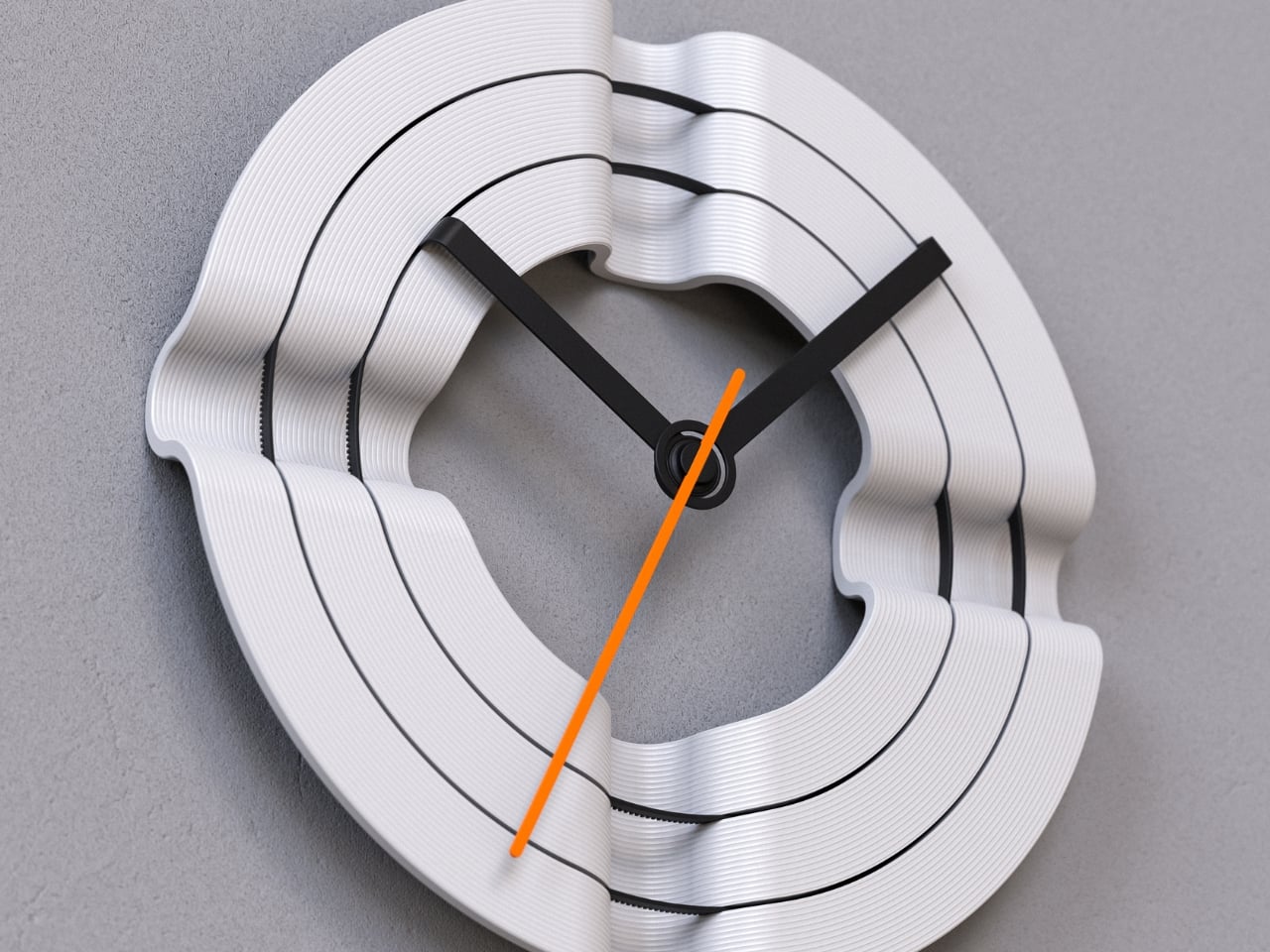
You know that moment when you see something so clever you wonder why it hasn’t been done before? That’s exactly what happened when I came across Denis Turitsyn’s Radius Clock. This isn’t just another minimalist timepiece fighting for wall space in your Pinterest feed. It’s a genuinely fresh take on something we look at dozens of times a day without really seeing anymore.
The concept is simple but brilliant. Turitsyn looked up at the solar system and thought, what if a clock worked like that? Planets orbit at different speeds and distances from the sun, each following their own path. The Radius Clock captures that same energy, turning timekeeping into something that feels alive and kinetic rather than just functional.
Designer: Denis Turitsyn
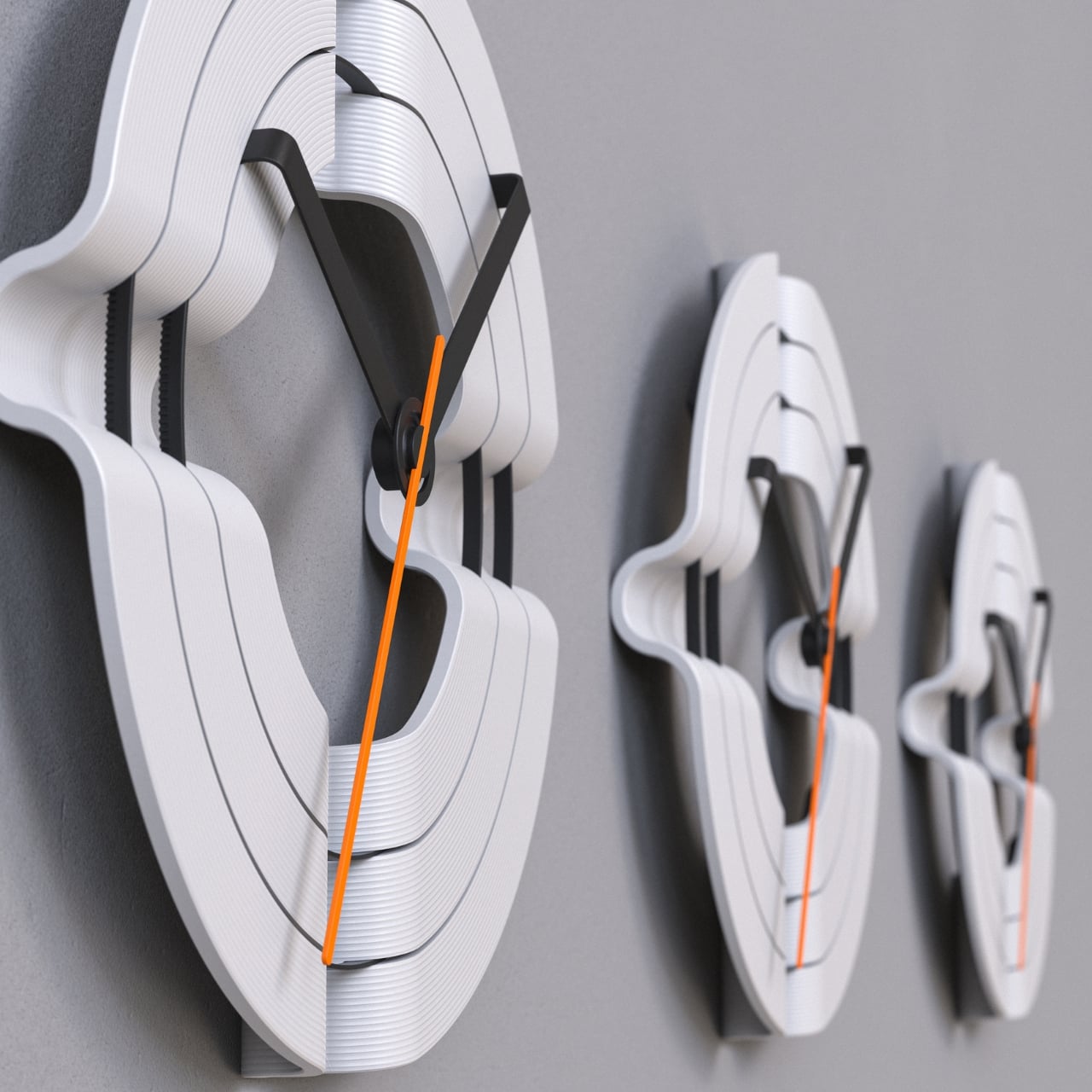
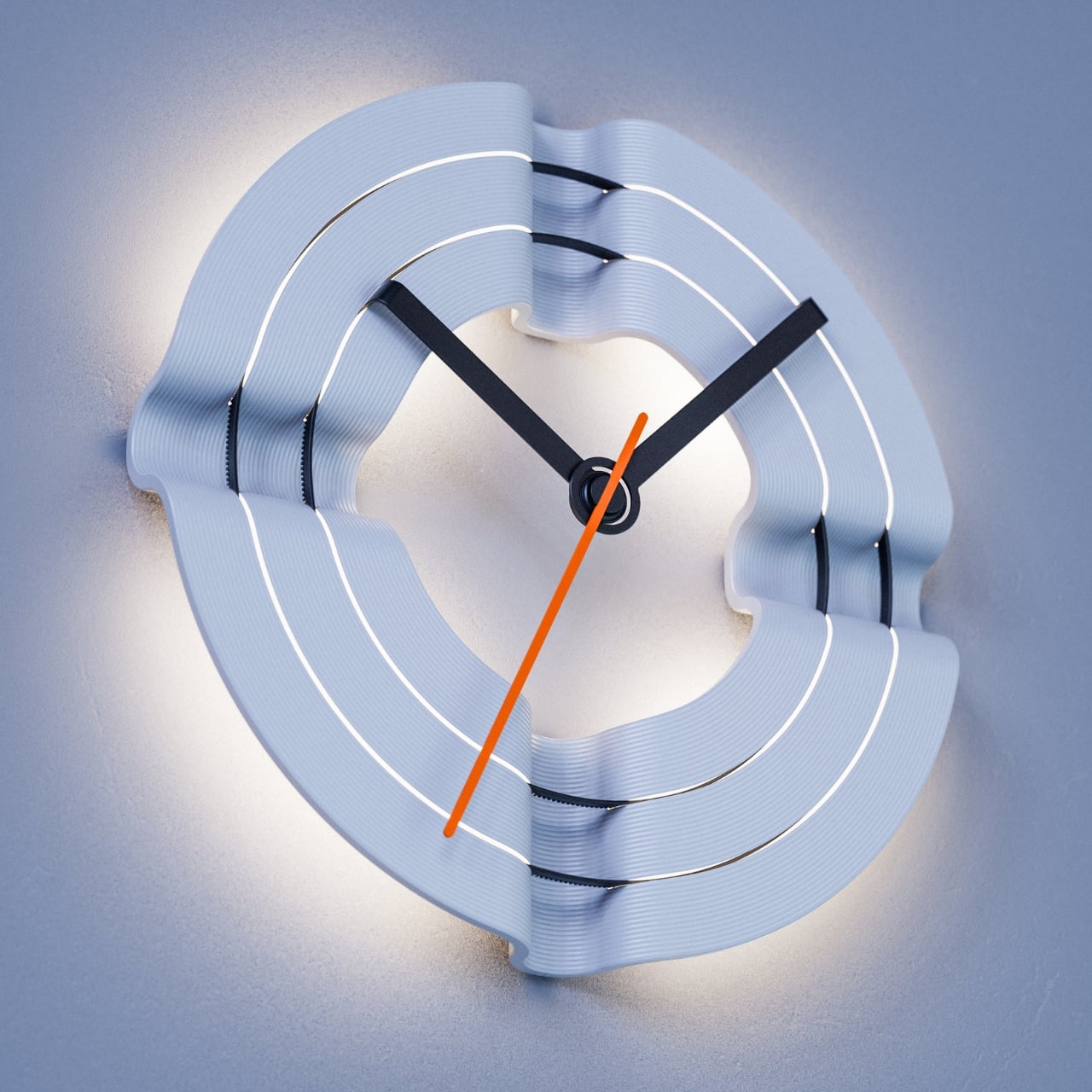
Here’s where it gets interesting from a design perspective. Instead of the traditional center-mounted mechanism we’ve all grown up with, the hour and minute hands on this clock are driven by external rings hidden behind the case. Picture it like invisible tracks guiding each hand at its own pace. The second hand, meanwhile, runs on a completely separate motor that’s mounted right at the base of the hour hand. It’s this layered independence that gives the clock its orbital quality.
What really caught my attention is how Turitsyn balanced artistic vision with practical engineering. The dial is 3D printed using FDM technology on a standard desktop printer. That’s the kind you could theoretically have in your home or studio, not some industrial-grade machine. This accessibility makes the design feel less like an untouchable art piece and more like something that could actually exist in the real world of production and commerce.

The hands themselves are made from a lightweight metal alloy, which might sound like a small detail but it’s actually crucial to the whole operation. Lighter hands mean less mechanical stress on the system, which translates to smoother movement and longer lifespan. It’s the kind of thoughtful problem-solving that separates concept designs from functional products. Behind that sculptural white body, two synchronized motors work in tandem to drive the hour and minute hands. This paired configuration isn’t just redundancy for the sake of it. It keeps the system balanced and prevents uneven load on those hidden rings, which means the clock can maintain precise timekeeping over months and years rather than gradually falling out of sync.
The second hand solution is particularly clever. Its miniature motor comes with an integrated battery and sits directly at the base of the hour hand. This setup lets the seconds tick away independently without adding strain to the main mechanism. It’s a bit like having a parasite motor hitching a ride, but in the best possible way.
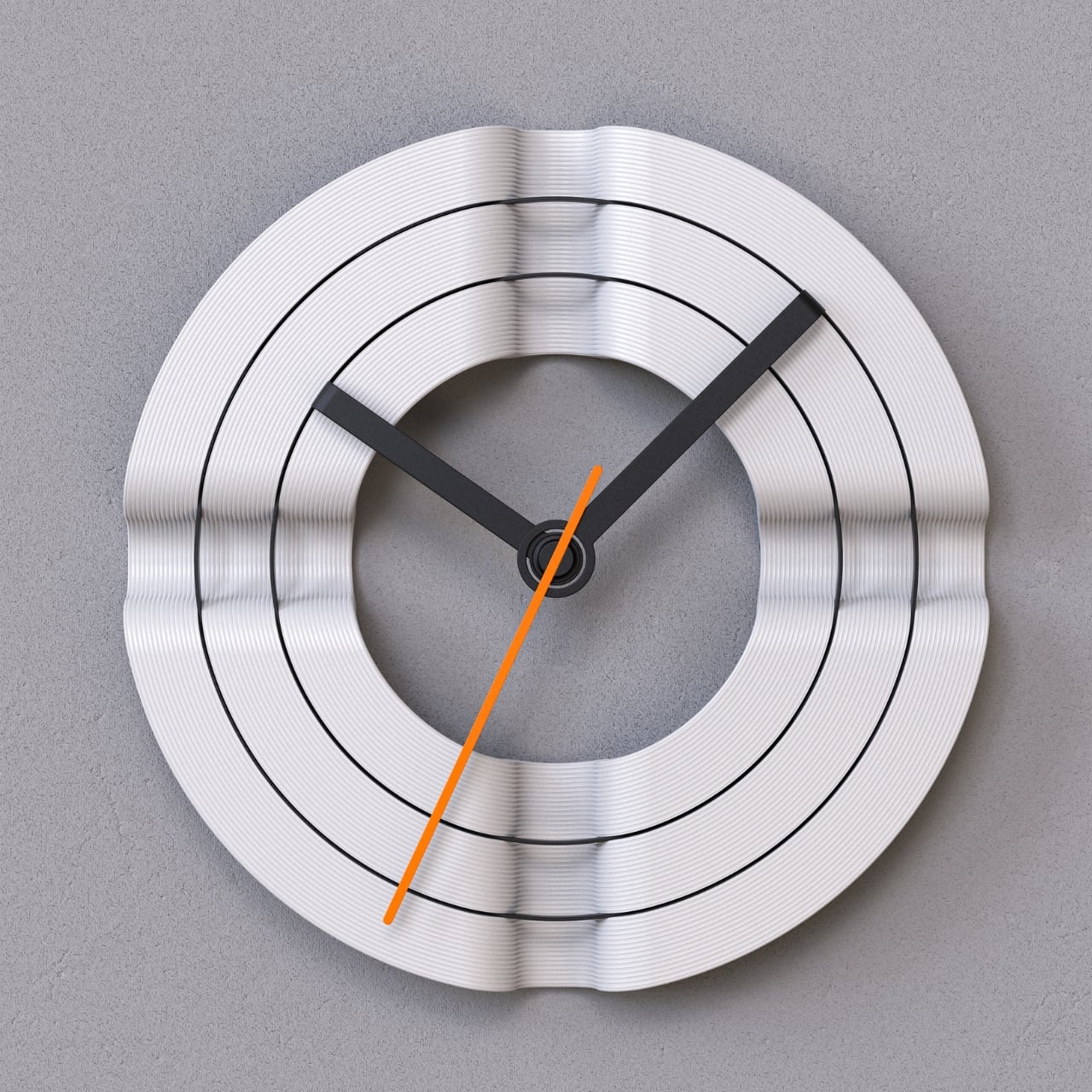
Visually, the Radius Clock has this organic, almost fluid quality. The concentric rings create depth and movement even when you’re looking at a still image. That bright orange second hand provides the perfect pop of color against the white body and black hands, making it feel contemporary without trying too hard to be trendy. You could see this fitting into a modern apartment just as easily as a creative studio or tech startup office.
What strikes me most about this design is how it makes you reconsider something as fundamental as reading time. We’re so conditioned to the standard clock face that we don’t question it anymore. Turitsyn’s orbital approach doesn’t make the clock harder to read, it just makes the experience more engaging. Time becomes something you observe rather than something you just glance at. The modularity shown in the photos, with multiple clocks arranged together on a wall, opens up even more possibilities. Imagine using these to display different time zones, or creating a sculptural installation that turns practical timekeeping into a genuine design statement.

Denis Turitsyn’s Radius Clock proves that even the most familiar objects still have room for innovation. By borrowing from the cosmos and combining it with accessible manufacturing technology, he’s created something that feels both futuristic and strangely timeless. It’s the kind of design that makes you pause and appreciate the everyday objects we usually take for granted.
SHARE